What If Humanity Became an Interstellar Civilisation?
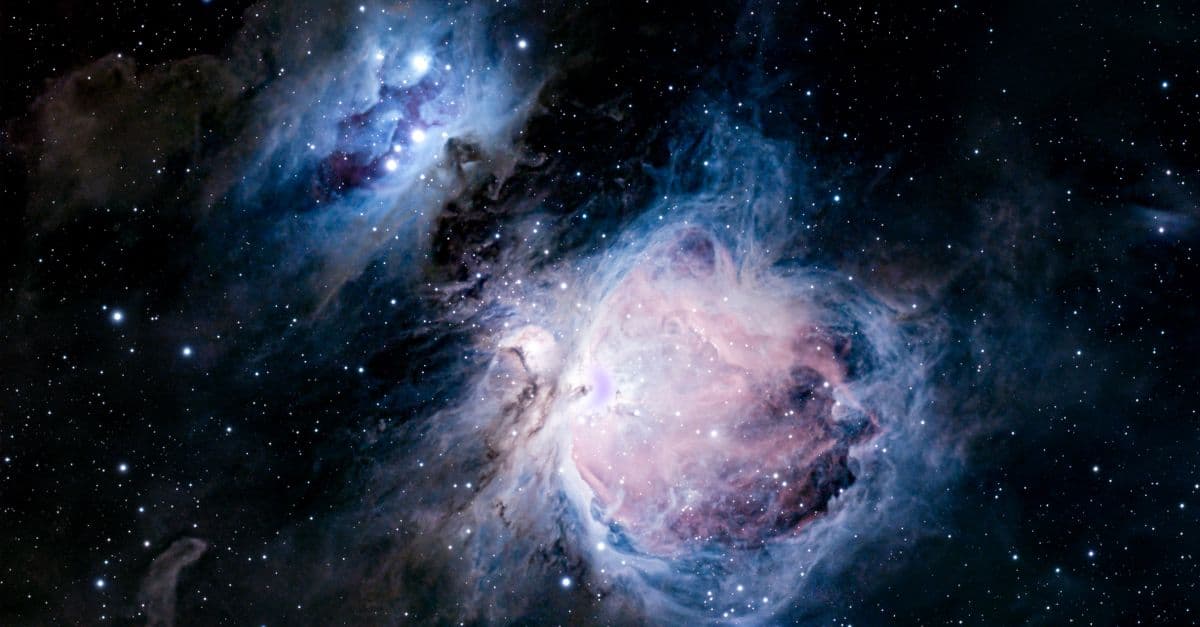
Photo: Ayman Mahmoud / Pexels
The nearest star system — Alpha Centauri — is 4.24 light-years away, or about 40 trillion kilometres. Voyager 1, the fastest and farthest human-made object ever launched, crossed into interstellar space in 2012 after 35 years of flight and is still travelling at roughly 17 km/s (about 61,000 km/h). At that speed, reaching Alpha Centauri would take approximately 74,000 years — and Voyager 1 isn't even pointed at it. The fastest speed any human-made object has ever reached is a small fraction of a percent of the speed of light. Closing that gap, and doing it with living, breathing people aboard, is the central engineering problem of interstellar travel.
Thought experiment. This article explores a hypothetical scenario for educational and speculative purposes. The events described are not predictions and should not be interpreted as warnings, advocacy, or instructions.
What would it actually take for humanity to become a civilisation that spans multiple star systems? The physics, engineering, biology, and sociology involved are staggering in scope, but here's the important distinction: nothing about interstellar travel breaks the laws of physics the way faster-than-light travel does. It's a problem of engineering and endurance, not impossibility. That distinction matters, because it means the question isn't "can we," it's "how long, how expensive, and how much of ourselves are we willing to change to get there."
Key takeaways
- Alpha Centauri is 4.24 light-years away; at 10% of light speed (the rough minimum for a practical crewed interstellar mission), the one-way trip takes about 42 years.
- No propulsion system that exists today can push a crewed spacecraft anywhere close to 1% of light speed; nuclear pulse propulsion is the closest thing to a demonstrated near-term option.
- Relativistic time dilation only becomes meaningful above roughly 10% of light speed — below that, the crew ages at essentially the same rate as people back on Earth.
- Radiation in deep space, both from galactic cosmic rays and from the interstellar medium itself at high speed, is one of the hardest unsolved engineering problems for any crewed mission.
- Breakthrough Starshot, the most credible near-term interstellar concept, has effectively stalled since its 2016 announcement — a reminder that political and funding will matters as much as physics.
- An interstellar civilisation would diverge culturally, and potentially genetically, from Earth within a few thousand years — raising real questions about what "human" continuity even means.
The propulsion problem
Getting to another star requires sustained, enormous propulsion, and the core obstacle is something called the rocket equation. To accelerate a spacecraft, you need propellant. Propellant has mass. Carrying more propellant adds more mass, which requires even more propellant to move it. The relationship isn't linear, it's exponential, and it punishes you harder the faster you want to go.
For chemical rockets — the only propulsion type humans have ever used to launch people into space — exhaust velocity tops out around 4 km/s. To reach even 10% of light speed (about 30,000 km/s) using chemical propulsion would require a mass ratio (starting mass to final mass) of roughly e^(30,000/4), a number so large it dwarfs the total mass of the observable universe. Chemical rockets are simply the wrong tool for this job, in the same way a bicycle is the wrong tool for crossing an ocean. It'll get you moving, but the physics of the vehicle cap how far you can ever go.
This is why any serious interstellar concept throws out chemical propulsion entirely and reaches for something with a vastly higher exhaust velocity or an external energy source.
Nuclear thermal and nuclear pulse propulsion
Project Orion, studied by the U.S. government from 1958 to 1965, proposed propelling a spacecraft by detonating a sequence of small nuclear bombs behind it and absorbing the shockwaves through a pusher plate. On paper, simulations suggested an Orion-style vehicle could reach a few percent of light speed. The physics checked out reasonably well for its era; what killed the project was the 1963 Partial Test Ban Treaty, which prohibited atmospheric nuclear testing, combined with the sheer difficulty and danger of building and launching something that detonates nuclear weapons near Earth. As an unmanned deep-space concept launched from beyond the atmosphere, versions of nuclear pulse propulsion remain the most physically demonstrated near-term option, even though none has ever flown.
Fusion propulsion
Fusing light nuclei, deuterium and helium-3 are the most commonly proposed fuels, releases far more energy per unit mass than fission and could, in principle, produce exhaust velocities high enough for real interstellar missions. The British Interplanetary Society's Project Daedalus study (1973–1978) designed a two-stage fusion pulse rocket intended to accelerate an unmanned probe to about 12% of light speed, reaching Barnard's Star (roughly six light-years away) within 50 years. The design assumed helium-3 mined from the atmosphere of Jupiter, since it's rare on Earth. Daedalus was a paper study, not a built engine, and no fusion rocket of any kind has been built or fired to date. Controlled fusion for power generation on Earth only achieved net energy gain in a laboratory setting for the first time in December 2022, at the National Ignition Facility, which gives a sense of how far fusion propulsion still has to go. Source: Lawrence Livermore National Laboratory, National Ignition Facility achieves fusion ignition.
Laser and light sails
Breakthrough Starshot, announced in 2016 by Yuri Milner with Stephen Hawking as an early advisor, proposed a radically different approach: skip the onboard fuel entirely and push a gram-scale probe with a giant ground-based laser array, using a lightsail only a few meters across to catch the beam. The physics is sound and doesn't require any new propulsion technology, just an enormous, precisely phased laser array delivering upward of 100 gigawatts. Simulations suggested probes could reach 20% of light speed, putting Alpha Centauri about 20 years away. The catch: the probes are tiny, essentially a sensor chip with a camera and radio, incapable of carrying a crew or even much scientific payload, and they can't decelerate once they arrive, since there's no laser array waiting at the destination to slow them down. As of 2025, reporting from Scientific American indicated the project has effectively stalled, with no active hardware development in recent years despite continued billionaire backing. That's a useful reminder that even a technically credible interstellar concept can die from lack of sustained funding and institutional will, not just lack of physics. Source: Scientific American, "The Quiet Demise of Breakthrough Starshot".
Antimatter propulsion
Matter-antimatter annihilation converts 100% of rest mass into energy, the most energy-dense reaction physically possible, compared with roughly 0.7% for fusion and a small fraction of a percent for fission. A theoretically perfect antimatter rocket could approach a meaningful fraction of light speed with a manageable fuel mass. The obstacle is production: the world's particle accelerators, CERN among them, produce antiprotons in quantities measured in nanograms per year, and only at enormous cost. An interstellar mission would need kilograms of antimatter, roughly fifteen orders of magnitude more than humanity has ever produced in total. Antimatter propulsion isn't ruled out by physics; it's ruled out by economics and industrial capacity on a scale that doesn't currently exist and may not exist for centuries.
Bussard ramjets and interstellar scooping
Physicist Robert Bussard proposed in 1960 that a spacecraft could scoop up interstellar hydrogen using a vast electromagnetic funnel and fuse it on the fly, eliminating the need to carry fuel at all. It's an elegant idea and a staple of science fiction, but later analysis by physicists including Robert Zubrin and Dana Andrews found that the drag created by scooping hydrogen at interstellar cruising speeds would often exceed the thrust the fusion reaction could generate, especially given how sparse the interstellar medium actually is (roughly one hydrogen atom per cubic centimetre). The concept survives as a thought experiment more than a viable design.
Comparing the propulsion candidates
None of the concepts above are shovel-ready. Comparing them side by side makes clear why "just build a faster rocket" understates the problem by orders of magnitude.
Table: Interstellar propulsion concepts compared
| Concept | Best-case speed | Crewed? | Current status |
|---|---|---|---|
| Chemical rockets | ~0.005% c | Yes (used today) | Mature, but physically incapable of interstellar speeds |
| Nuclear pulse (Orion) | ~3–5% c | Theoretically | Studied 1958–1965; never flown, treaty-restricted |
| Fusion pulse (Daedalus) | ~12% c | Unmanned probe design | Paper study only; no fusion engine exists yet |
| Laser lightsail (Starshot) | ~20% c | No, gram-scale probe only | Announced 2016; effectively stalled since ~2023 |
| Antimatter rocket | Approaching relativistic | Theoretically | Antimatter production is 15+ orders of magnitude too low |
| Bussard ramjet | Theoretical | Theoretically | Largely discredited by drag calculations |
Speeds are theoretical design targets from each project's own published studies, not demonstrated flight speeds. "c" denotes the speed of light.
The time problem
Even at 10% of light speed, widely treated by mission planners as a rough floor for a "practical" interstellar crossing, reaching Alpha Centauri takes about 42 years. At 1% of light speed, a speed that's still roughly 200 times faster than anything humans have built, the same trip takes 420 years. That's longer than the entire history of the United States. Any crewed mission at realistic near-term speeds has to solve for a journey that outlasts a human lifetime, which narrows the options to three broad strategies.
Generation ships
A generation ship is a self-contained vessel carrying hundreds or thousands of people who live, reproduce, and die aboard the ship, with descendants who never knew Earth arriving at the destination generations later. It sounds straightforward until you total up what it actually requires: a closed-loop ecosystem that can recycle air, water, and food indefinitely without resupply; a governance structure stable enough to survive centuries of isolation without collapsing into civil conflict or losing the mission's purpose; a culture durable enough that great-great-grandchildren still care about a destination their ancestors chose for reasons that no longer feel urgent; and a genetically viable population large enough to avoid the inbreeding depression that would come from a small founder group reproducing in isolation for 20-plus generations. Geneticists studying minimum viable populations for multi-generational space missions have generally put the number in the low thousands, well above what any launched spacecraft to date has carried, and even that estimate assumes careful management of who reproduces with whom, an ethically fraught proposition in its own right.
Suspended animation
If crew could be placed into a deep hibernation state, biological processes slowed dramatically to reduce metabolic demand and, ideally, aging, they could sleep through most of the journey and arrive closer to biologically unchanged. This remains firmly in the research stage. Therapeutic hypothermia, deliberately cooling patients to reduce metabolic and oxygen demand, is used today in emergency medicine for conditions like cardiac arrest, but only for periods of hours to days, not years or decades. Nothing resembling science fiction's centuries-long stasis pods exists, and there's no clear biological pathway from current medicine to that capability. It's not ruled out by physics, but it's currently ruled out by biology as we understand it.
Relativistic time dilation
At speeds close to the speed of light, special relativity means the crew's onboard clock runs slower relative to Earth's. At 90% of light speed, time dilation means the crew experiences roughly 44% of the elapsed time an Earth observer would measure for the same journey. At 99% of light speed, the effect becomes dramatic: a destination ten light-years away, which would take just over ten years by Earth's clock, would feel like roughly one and a half years to the crew. This is real, experimentally confirmed physics (it's the same effect that requires GPS satellites to correct their clocks for relativistic drift), not speculation. The catch is that reaching 90% or 99% of light speed requires propulsion technology far beyond anything on this list, since accelerating any mass to those speeds demands energy that scales toward infinity as you approach c.
The radiation problem
Deep space is a genuinely hostile radiation environment, and the danger only grows as you go faster and farther from the shielding effect of a planet's magnetosphere and atmosphere.
- Galactic cosmic rays: High-energy protons and heavier atomic nuclei, flung outward by ancient supernova explosions, travel through the galaxy at close to light speed and pass through most conventional shielding. Astronauts aboard the International Space Station, still protected somewhat by Earth's magnetic field, receive radiation doses roughly ten times higher than people at sea level, according to NASA's Human Research Program.
- Solar particle events: Bursts of energetic particles from the Sun, most dangerous within the solar system and less of a factor once a spacecraft is well beyond it.
- The relativistic radiation hazard: At low speeds, interstellar hydrogen is effectively inert, a wisp of gas doing nothing. At a meaningful fraction of light speed, that same sparse gas becomes a stream of high-energy particles slamming into the hull, generating secondary radiation as damaging as any cosmic ray.
Water is among the most effective, and most mass-efficient, radiation shielding materials available, since hydrogen-rich substances are good at absorbing and scattering charged particles. But a shell of water thick enough to meaningfully protect a crew over decades adds enormous mass to a vehicle that is already fighting the rocket equation on every front. Magnetic shielding, deflecting charged particles with an artificial magnetic field around the ship, has been proposed as a lighter-weight alternative and is an active area of NASA and ESA research, but it does nothing against the neutral particles and gamma radiation that make up part of the hazard. As of 2026, no shielding concept exists that fully solves the radiation problem for a multi-decade crewed mission without an unacceptable mass penalty. Source: NASA, "Understanding Space Radiation".
The destination problem
Even solving propulsion, time, and radiation gets you nowhere if there's no viable destination waiting on the other end. Since NASA's Kepler mission began operating in 2009, astronomers have confirmed more than 5,800 exoplanets, according to the NASA Exoplanet Archive, but a planet in a star's habitable zone is not the same thing as a habitable planet. Habitable zone status only tells you that liquid water could theoretically exist at the surface given the right atmosphere; it says nothing about whether that atmosphere exists, whether the planet has a protective magnetic field, or whether its chemistry is survivable for Earth-derived life. Source: NASA Exoplanet Archive.
The most-discussed nearby candidates illustrate the problem:
- Proxima Centauri b, roughly 4.24 light-years away, is a candidate rocky planet in the habitable zone of Proxima Centauri, discovered in 2016. Proxima Centauri is a red dwarf flare star, meaning it periodically blasts its close-in habitable zone with intense ultraviolet and X-ray radiation. Whether Proxima b retains an atmosphere and magnetic field strong enough to survive that bombardment is unknown and is an active area of study.
- The TRAPPIST-1 system, about 40 light-years away, has seven roughly Earth-sized planets, with three or four sitting in or near the habitable zone. It's one of the most-studied systems by the James Webb Space Telescope, and early JWST atmospheric data on the inner planets has so far found no clear evidence of a thick atmosphere, though the outer planets remain less well characterized. Forty light-years is nearly ten times farther than Alpha Centauri.
- Tau Ceti e and f, roughly 12 light-years away, are candidate planets in a Sun-like star's habitable zone, though their exact masses and compositions remain uncertain because they were detected via the radial velocity method, which doesn't directly image the planet.
None of these are confirmed habitable, and confirming habitability from light-years away, without physically visiting, is itself a major unsolved observational challenge. A crewed mission that arrives after 42 years to find an uninhabitable planet isn't a disappointing headline, it's potentially the loss of everyone aboard.
What history's slower migrations can teach us
It's tempting to treat interstellar colonization as unprecedented, but humanity has attempted long, high-uncertainty migrations before, just not across light-years. Polynesian navigators crossed thousands of kilometres of open Pacific Ocean in double-hulled canoes starting more than 3,000 years ago, using stars, wave patterns, and bird behavior to find islands they had never seen and weren't certain existed, settling places as remote as Hawaii, Rapa Nui, and Aotearoa. They succeeded because they built redundancy into everything: multiple canoes per voyage, provisions for uncertainty, and a navigational culture passed down orally across generations. It's a rough analogy for a generation ship's cultural challenge, sustaining purpose and skill across a journey longer than any individual's memory of why it started.
A second analogy comes from the Age of Sail. Early transatlantic and round-the-world voyages in the 15th through 17th centuries took months, during which crews had no way to communicate with home, no resupply, and often no reliable knowledge of their destination's habitability. Scurvy alone killed an estimated two million sailors between 1500 and 1800 before its dietary cause was understood, a reminder that even a well-funded, technologically leading expedition can be undone by a problem nobody thought to solve in advance. Interstellar missions will have their own version of scurvy: an overlooked failure mode that only becomes visible decades into a journey with no way to turn back. The lesson from both analogies isn't that interstellar travel is achievable because humans have always been ambitious. It's that success depended on redundancy, cultural transmission, and solving unglamorous survival problems, not on any single dramatic technological leap.
What an interstellar civilisation would actually look like
If humanity did successfully establish even one self-sustaining colony around another star, the consequences would reshape civilisation in ways that go well beyond the achievement itself.
Civilisational divergence. Thousands of years of physical isolation, combined with different gravity, different radiation exposure, different day lengths (or none at all, aboard a generation ship or enclosed habitat), and different selective pressures, would likely produce cultures, languages, and possibly biological variations that diverge sharply from Earth's. After a thousand years of separation, a colony might have less in common with contemporary Earth than any two present-day Earth cultures have with each other.
Communication lag as a hard governance constraint. At 4.24 light-years, a message and its reply take at minimum 8.5 years round-trip. There is no version of real-time coordination, joint decision-making, or centralized governance that survives that lag. Any interstellar colony is, from the moment it's founded, functionally independent, whatever political arrangements are declared on paper.
Identity and continuity. Would descendants born generations after departure, or after arrival, still meaningfully be "human" in the sense we mean today? Genetic drift in a small founder population, deliberate genetic or biomedical modification to cope with a different gravity or radiation environment, and evolutionary pressure over thousands of years could all push a colony's biology in a different direction. This isn't dystopian speculation, it's a straightforward extrapolation from population genetics applied to an extremely small, isolated founder group, the kind of scenario studied in Earth-based conservation biology when biologists model endangered species with small gene pools.
The resilience argument. Even a small, struggling colony around another star star would mean that human extinction requires a catastrophe hitting two separate, light-years-apart star systems rather than just one. That's the argument put forward by figures like Stephen Hawking and various planetary defense researchers for treating multi-planetary, and eventually multi-stellar, expansion as existential insurance: it doesn't have to be comfortable or thriving to matter, it just has to be alive somewhere else.
The Fermi paradox angle. If interstellar colonization is achievable, even slowly, at sub-light speeds, and if even a small fraction of technological civilizations attempted it, calculations by physicists studying the Fermi paradox suggest a single civilization expanding outward even conservatively could, in principle, colonize an entire galaxy within a few million years, a short span on cosmic timescales. That we see no evidence of this happening (yet) is part of why the absence of visible alien civilizations is considered puzzling rather than simply a matter of them being far away.
Common misconceptions about interstellar travel
A few ideas about interstellar travel recur constantly in popular discussion and don't hold up under scrutiny.
"We'll just discover warp drive or wormholes eventually." Faster-than-light travel isn't a matter of insufficient engineering, it's ruled out by special relativity for anything with mass, and proposed loopholes like the Alcubierre warp metric require forms of exotic negative-energy matter that have never been observed and may not exist in usable quantities, if at all. Planning around FTL travel is planning around a physics breakthrough nobody can currently show is achievable, which is a different category of uncertainty than "we haven't built a strong enough rocket yet."
"A generation ship just needs a big enough ship and enough food." The harder constraints are social and biological, not logistical. Keeping a closed population's culture, governance, and genetics stable across 20-plus generations, with zero possibility of resupply or intervention from Earth, is a problem nobody has ever had to solve at that scale, and small-scale historical analogs (isolated island populations, long polar expeditions) show how fragile group cohesion and genetic health can become even over much shorter timeframes.
"Interstellar probes prove crewed travel is close behind." Breakthrough Starshot-style gram-scale probes and a crewed, decelerating, life-supporting spacecraft are different problems by many orders of magnitude, not points on the same development curve. A probe with no crew, no deceleration, and no payload beyond a camera chip solves almost none of the problems, radiation shielding, propellant mass, life support, that a crewed mission has to solve.
"Once we leave, Earth becomes irrelevant." Even an established interstellar colony would remain, for the foreseeable future, entirely dependent on the knowledge, culture, and initial resources it launched with. Earth doesn't stop mattering the moment a ship departs; the entire viability of the mission rests on decisions made and technology built at home before launch.
Frequently asked questions
Q: Has anything human-made ever left the solar system? A: Yes. Voyager 1 crossed the heliopause, the boundary where the Sun's solar wind gives way to interstellar space, in 2012, and Voyager 2 followed in 2018. Both are now in interstellar space, roughly 24 billion and 20 billion kilometres from the Sun respectively, but neither is headed toward another star system, and Voyager 1 wouldn't reach the distance of the nearest stars for roughly 40,000 years even if it were.
Q: How close are we to interstellar travel? A: For unmanned, gram-scale probes at a meaningful fraction of light speed, a working demonstration could plausibly happen within this century if projects like Breakthrough Starshot resume, though the project has stalled as of the mid-2020s. For crewed missions, most serious estimates put a fusion-class propulsion system decades away at best, with a launch-ready crewed interstellar mission likely a century or more out. Full colonization missions are widely regarded as centuries away at minimum.
Q: Would interstellar colonies remain politically part of human civilisation? A: Almost certainly not, given that communication lag alone rules out real-time governance. A colony would be functionally independent from the moment it arrives, regardless of what political framework its founders intended. Whether it remains culturally connected to Earth is a separate question, shaped by what traditions and information the colonists chose to preserve.
Q: What is the interstellar medium, and why does it matter for propulsion? A: It's the extremely sparse gas and dust that fills the space between stars, roughly one hydrogen atom per cubic centimetre on average. At low speeds it's essentially irrelevant, but at a meaningful fraction of light speed, a spacecraft colliding with that gas experiences it as a source of drag and, more seriously, of radiation, since the relative collision energy becomes extreme.
Q: Why does Elon Musk's SpaceX focus on Mars rather than interstellar targets? A: Mars is reachable with propulsion technology that already exists or is in active development, making it a tractable near-term goal, whereas Alpha Centauri requires propulsion breakthroughs, fusion or better, that don't yet exist in any working form. Making humanity multi-planetary within Musk's stated timeline is a decades-scale engineering problem; interstellar travel is, by most credible estimates, a next-century or later problem. Mars functions as a proving ground, not a substitute goal.
Q: Could robots or AI colonize other star systems before humans do? A: It's a commonly discussed alternative. An unmanned probe, or a self-replicating robotic system in concepts sometimes called von Neumann probes, doesn't need life support, doesn't age, and can survive far higher radiation doses than a human crew, which sidesteps several of the hardest problems in this article. No such self-replicating interstellar probe has been built or even fully designed at an engineering level, and it remains a theoretical concept discussed in the astrobiology and SETI research communities rather than an active mission plan.
Q: What speed is actually needed to make interstellar travel "practical"? A: There's no official threshold, but most mission planners and physicists informally treat about 10% of the speed of light as the rough floor for a crewed mission within a human lifetime, since it puts Alpha Centauri at roughly 42 years away. Below that, missions stretch into multi-generational or hibernation-dependent territory; above it, engineering challenges around fuel, shielding, and deceleration escalate sharply.
Q: How does time dilation actually feel to the crew? A: It isn't something the crew perceives directly, their onboard clocks, biology, and experience of time all feel completely normal to them. The effect is only visible when comparing their elapsed time to Earth's after the fact. A crew traveling at 99% of light speed wouldn't feel like they were moving through time slower, they'd simply arrive having aged a small fraction of what people on Earth aged during the same journey.
Q: Is there a maximum size limit on how big a generation ship or interstellar colony could be? A: There's no fixed physical limit, but every added kilogram of mass, life support systems, population, radiation shielding, worsens the propulsion problem described by the rocket equation. Mission designs studied by groups like Project Hyperion (an academic generation-ship design competition) have generally proposed populations in the hundreds to low thousands as a practical balance between genetic viability and manageable mass.
The takeaway
Becoming an interstellar civilisation isn't physically impossible in the way faster-than-light travel is; it's a problem of engineering maturity, funding persistence, and civilisational patience operating on a timescale most institutions aren't built to sustain. Every individual obstacle, propulsion, radiation shielding, multi-generational governance, destination confirmation, has a plausible physical solution on paper, but no one has ever had to solve all of them simultaneously, permanently, with zero chance of a do-over. The nearest star is close enough that a ship capable of 10% of light speed could reach it within a human lifetime. Building that ship, and the civilisation stable enough to fund, crew, and outlive it, remains the real challenge, and it says as much about human institutions as it does about physics.
Related Reading
Follow new articles
Add SciHub101 to your feed reader to see new science and technology stories.
About the Author
SciHub101 is an independent science and technology publication founded and edited by Buğra Sözeri, a software engineer and app developer based in Türkiye. AI tools assist with drafting and research. Source documentation in the existing archive is uneven, and articles are being reviewed and corrected. The Editorial Team byline identifies editorial responsibility; it does not certify specialist or independent human review. Where we compare products, anything built by our own team is labelled as such — see the editorial guidelines and About page for how corrections and disclosures work.
Related Articles
What If We Discovered an Earth-Twin Planet?
Astronomers have found thousands of exoplanets. An Earth-sized planet in a habitable zone isn't exotic anymore. But a true Earth twin — similar size, similar temperature, liquid water, an oxygen atmosphere — would be something else entirely. Here's what would happen if we found one.

What If We Mined the Asteroid Belt?
The asteroid belt contains enough metal to give every human being 100 billion dollars' worth. It also contains the raw materials to build hundreds of thousands of O'Neill habitats. Here's what asteroid mining would actually look like — and what it would do to the world economy.
What If You Traveled at the Speed of Light? — Science Explained
What would actually happen as you approached the speed of light? The energy bill diverges, your clock slows, the sky bunches up ahead of you, and the empty space between stars turns into a particle beam. The reason the limit exists is more interesting than the scenario.

What If Earth Doubled in Size? — Science Explained
What would actually happen if Earth suddenly doubled in size? Surface gravity would crush most life, the atmosphere would thicken into a lethal blanket, and reaching space might become impossible.

What If Time Travel Was Possible?
Forward time travel already happens. This is what it would actually cost a person who chose to use it — a one-way ticket, physically real.
What If You Fell Into a Black Hole?
Two perspectives, one terrifying destination. From spaghettification to the firewall paradox — the real physics of falling into a black hole.