What If Gravity Suddenly Became 10% Weaker?
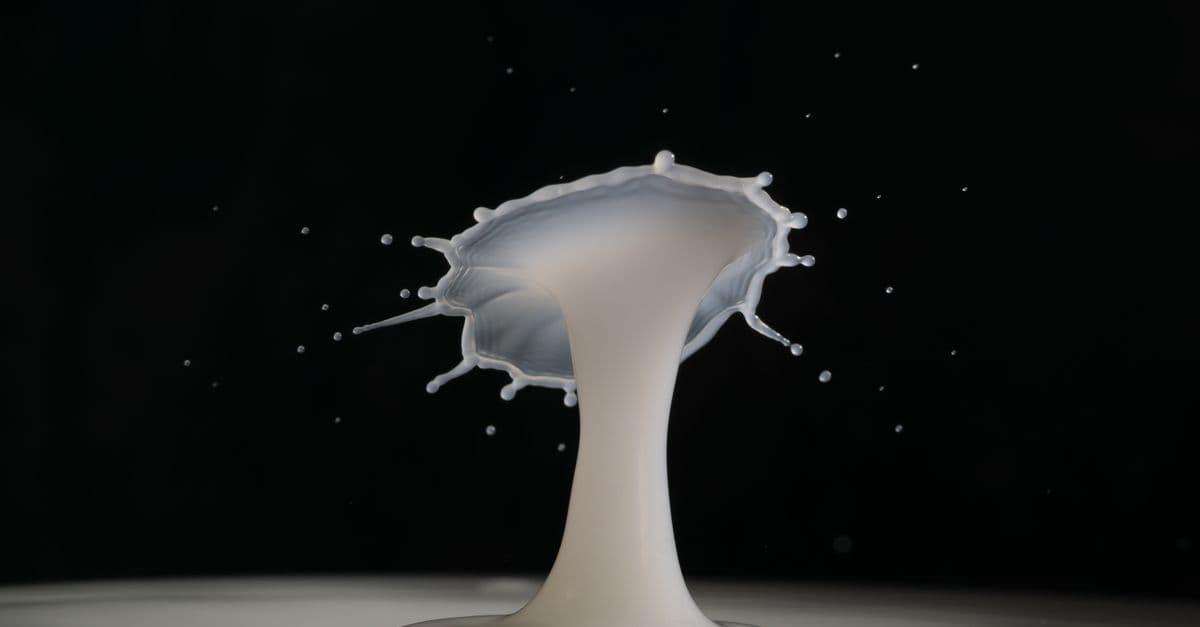
Photo: Tina Nord / Pexels
This is a thought experiment, not a prediction. A 10% drop in Earth's gravity—from 9.81 m/s² to 8.83 m/s²—sounds superficially beneficial: a 70 kg (154 lb) person would weigh about 7 kg (15 lb) less, and you'd jump higher, run faster. Yet gravity isn't just ballast; it's the invisible architect of atmospheres, oceans, ecosystems, and climate stability. Drop it 10% and atmospheric chemistry changes, tidal patterns shift, biological physiology breaks in complex ways, and the Moon's orbit destabilizes—cascading consequences most people never anticipate when they imagine weighing less.
The physics of gravity on Earth
Gravity — the force by which all massive objects attract each other — is described by Newton's law of universal gravitation: F = G(m₁·m₂)/r². At Earth's surface, the combined mass of the planet and its distance from your center of mass produces an acceleration of 9.81 m/s², commonly written as 1 g. This is the baseline gravity we experience. A 10% reduction would mean 8.83 m/s² — subtle enough to go unnoticed in daily life for a few hours, but catastrophic over geological timescales.
Why would gravity change? In reality, it couldn't — Earth's mass and radius are stable. But for this thought experiment, imagine an unknown physical process slowly modifying gravitational coupling. The cascade of consequences follows from how deeply gravity is woven into Earth's systems.
Source: NASA Technical Report on Planetary Gravity (2023) — Standard reference values for gravitational acceleration and planetary characteristics.
Immediate effects
You weigh less
A 70 kg person would weigh 63 kg. You'd feel slightly lighter, jump higher, throw further. Initial reactions: novelty, sports records, mild disorientation.
Things fall slightly slower
Falling objects accelerate at 8.83 m/s² instead of 9.81 m/s². A coffee mug dropped from a counter would take a bit longer to hit the floor.
Buildings and infrastructure
Most structures are designed with safety margins, so they'd survive — but components designed under tension or compression would experience different loads. Bridges, tall buildings, and dams would have new structural dynamics.
Atmosphere — the first major problem
The atmosphere expands
Lower gravity means atmospheric gases face less downward force. The atmosphere would expand outward, becoming thinner near the surface and reaching higher into space.
Loss of light gases
Hydrogen and helium escape Earth's gravity even now (we keep none in our atmosphere). At 10% lower gravity, more gases — including some water vapour — would slip away to space over time.
Atmospheric pressure drops
Surface pressure would decrease somewhat. Effects:
- Mild altitude sickness for many people, even at sea level.
- Water boils at slightly lower temperatures.
- Aerosols and pollution disperse differently.
Weather patterns shift
Air currents driven by pressure differences would change. Storm systems might be different intensities. Hurricanes could become more or less powerful — predictions vary.
Oceans — a slow but significant adjustment
Sea level changes
The shape of oceans is partly determined by gravity. With weaker gravity, water at the equator (where centrifugal force from Earth's rotation is strongest) might rise. Coastal areas would experience different sea levels.
Tides
Tides are caused by the gravitational pull of the Moon. If Earth's gravity weakened but the Moon's didn't, tides would actually be relatively stronger — the Moon's effect more pronounced compared to Earth's hold on water.
Ocean circulation
Deep ocean circulation depends on density differences, which depend on temperature and salinity, which depend on evaporation rates, which depend on atmospheric pressure. Many cascading changes.
Biology — long-term cascading effects
Humans
Short-term effects would be mild. Long-term:
- Bone loss — Bones strengthen in response to load. Lower gravity means lower load means weaker bones. Astronauts on the ISS show this dramatically.
- Muscle atrophy — Less work for legs, back, and core.
- Cardiovascular adaptation — Heart works less to pump blood against gravity.
- Vision changes — Seen in long-duration astronauts; mechanisms not fully understood.
People living their entire lives at 0.9 g would adapt over generations to lower bone and muscle requirements.
Plants
Plants use gravity to direct root and stem growth (gravitropism). Some would adapt; others would grow strangely. Tree height limits — already constrained by the difficulty of pumping water against gravity — would shift.
Insects and small animals
Most could adapt easily. Flying insects might struggle as air density changes (their wings are adapted to specific air properties).
Aquatic life
Subtle changes in water pressure, current patterns, and food distribution would ripple through ocean ecosystems.
Large animals
Large mammals (elephants, giraffes, whales) are at the edge of biological feasibility under current gravity. Lower gravity might allow even larger animals to evolve over time.
The Moon
This is where things get strange.
Orbital changes
The Moon orbits Earth at a distance determined by Earth's gravitational pull. If Earth's gravity dropped 10%, the Moon would no longer be in a stable orbit — it would tend to drift outward.
Tidal interaction
The Moon-Earth gravitational interaction has subtle effects: it stabilises Earth's axial tilt, it locks the Moon's rotation, it slows Earth's rotation. All of this would change.
Long-term climate
Earth's stable axial tilt (23.5°) gives us reliable seasons. The Moon's gravity stabilises this. With weaker Earth-Moon coupling, Earth's tilt could vary chaotically over millennia, causing wildly variable climates.
How gravity shapes planetary structure
Gravity isn't just a force that pulls objects down; it's the engine of planetary differentiation. Earth's internal structure — the iron core, rocky mantle, and crustal layers — exist because gravity compresses material under enormous pressure. Lower gravity changes how planets stratify internally.
Planetary density and structure
In early Earth (4.5 billion years ago), heavy elements (iron, nickel) sank to the core due to gravity; lighter rocks rose. This differentiation generated Earth's magnetic field through the movement of molten iron in the outer core. Lower gravity would slow differentiation. Iron wouldn't sink as quickly, delaying (or preventing) planetary core formation in younger planets. An Earth with 10% weaker gravity would have a less dense core and a thinner, cooler mantle.
Long-term geological consequences
Over billions of years, lower gravity causes:
- Weaker plate tectonics: Gravity drives mantle convection and plate movement. Less gravity means slower convection, slower plate movement, less mountain building
- Reduced heat loss: The planet cools more slowly (less gravitational compression means less internal heating)
- Different crustal composition: Continents might be thinner, ocean basins shallower
Early Earth, with the Moon much closer and tidal forces vastly stronger, actually experienced stronger tidal heating than today. A hypothetical reduction in gravity would reverse this trend.
Source: Geological Society of America Bulletin (2019) — "Gravitational Effects on Planetary Differentiation and Long-Term Geochemistry" — Analysis of gravity's role in planetary evolution.
Chemistry and atmospheric escape
Molecular escape velocity
The escape velocity for a gas molecule depends on gravity: v_escape = √(2GM/r). Lower gravity means lower escape velocity. Earth's current escape velocity is ~11.2 km/s (for a 0 kg object; individual molecules have much lower typical velocities but still need to overcome gravity's potential well).
Hydrogen escapes Earth's atmosphere now because it's light and moves fast (average velocity ~2 km/s at room temperature, close to escape). With 10% weaker gravity, escape velocity drops to ~10.6 km/s, and more hydrogen escapes. Over geological time, this means:
- Hydrogen nearly vanishes from the atmosphere (as it does on all planets except the largest gas giants)
- Water vapor levels drop (hydrogen-bearing compounds decompose from UV radiation)
- Reducing gases (methane, ammonia) dissipate faster
Atmospheric chemical composition changes
Lower atmospheric density + faster escape = a fundamentally different chemical balance:
- Nitrogen (inert, heavy) would remain, but is concentrated in a thinner atmosphere = lower partial pressure = altered nitrogen cycle
- Oxygen would be slower to escape than hydrogen, potentially concentrating
- Aerosols and pollutants would disperse and diffuse to space faster
This isn't catastrophic immediately, but over thousands of years, atmospheric composition drifts into a new equilibrium — one less hospitable to Earth life.
Comparisons: gravity on other worlds
| World | Gravity (m/s²) | Atmosphere | Notable Effects |
|---|---|---|---|
| Mercury | 3.7 | None (escaped) | No atmosphere retained |
| Moon | 1.62 | None (too weak) | No atmosphere possible |
| Mars | 3.71 | Thin (95% CO₂, 0.6% pressure) | Weak gravity; lost most gases |
| Earth (current) | 9.81 | Rich (N₂, O₂) | Optimal for life |
| Earth (scenario: -10%) | 8.83 | Thinning (likely) | Comparable to Mars in timescale |
| Venus | 8.87 | Dense (92 bar CO₂) | Strong gravity retained gases |
| Jupiter | 24.79 | Hydrogen/helium | Ultra-strong gravity retains light gases |
Gravity is the primary determinant of whether a planet retains an atmosphere. Lower gravity = slower atmospheric escape, but over billions of years, planets gradually lose hydrogen and lose habitability.
Source: Planetary Science Institute, "Atmospheric Retention and Escape Across the Solar System" (2024) — Comparative analysis of gravitational effects on atmospheres.
Comparisons: instant vs. gradual change
The speed at which gravity changes determines whether life survives:
Instant 10% decrease
- Immediate structural damage (buildings, dams, infrastructure stress)
- Cardiac strain (blood pressure drops, heart works harder)
- Inner ear disruption (vertigo, balance loss for weeks)
- Atmospheric shock waves (air currents shift chaotically)
- Likely scenario: mass disruption, infrastructure collapse, but ultimately survivable for humans
Gradual decrease over 10 million years
- Life gradually adapts (bones thicken less, muscles develop differently)
- New evolutionary pressures shape morphology
- Atmosphere and oceans slowly reach new equilibrium
- Species unable to adapt go extinct, replaced by gravity-adapted variants
- Likely scenario: biosphere transforms, but continuity of life persists
Early Earth provides a real-world analog. The Moon was much closer (roughly 16,000 km) when it formed 4.5 billion years ago, gradually receding at 3.8 cm/year. Tidal forces were extreme. Yet life thrived. Slow change is survivable; instant change is catastrophic.
Biological limits under different gravity
| Organism Type | Current Max Size/Height | At 0.9 g (10% weaker) | Physical Constraint |
|---|---|---|---|
| Trees (land) | ~150 m (coast redwood) | ~170 m possible | Water transport against gravity |
| Elephants | ~4 m, 6 tons | ~5 m, 7 tons possible | Bone stress & muscle support |
| Whales (water) | ~30 m, 200 tons | ~35 m, 250 tons possible | Buoyancy supports; gravity matters less |
| Insects | Cm-scale | Slightly larger possible | Exoskeleton strength unchanged |
| Humans | 2-3 m, 150-300 lbs | Similar (gravity less critical at small size) | Cardiovascular adaptation more relevant |
Lower gravity allows larger terrestrial organisms, but the gains are modest (10-20% size increase) because structure is also constrained by material strength and other factors.
The Moon's instability problem
Perhaps the most dramatic consequence: the Moon would drift away faster.
Currently, the Moon recedes at ~3.8 cm/year, and will eventually (in roughly 50 billion years) be too distant to cause total solar eclipses. Tidal friction from Earth-Moon gravitational interaction drives this recession.
If Earth's gravity suddenly dropped 10%, while the Moon's remained unchanged:
- Gravitational force on Moon drops — proportional to Earth's mass/gravity change
- Moon requires less centripetal force to stay in orbit — it's less firmly bound
- Moon drifts outward faster — recession accelerates dramatically
- Earth's axial tilt destabilizes — the Moon's gravity stabilizes Earth's 23.5° tilt; lose that, and tilt can wander chaotically (10-50° over tens of thousands of years)
Climate chaos follows: with an unstable tilt, some regions experience Ice Age conditions for millennia, then tropical conditions. Seasonal predictability vanishes. Agriculture becomes impossible. Most complex life collapses.
This is possibly the most catastrophic consequence — not weight loss, not atmospheric thinning, but loss of stable seasons.
Source: Laskar et al., "Long-term Evolution of the Earth's Obliquity," Nature, 2004 — Modeling of axial tilt stability and lunar stabilization role.
Could it actually happen?
Realistically? No. Earth's gravity depends on its mass and radius. To change gravity by 10%, you'd need:
- Remove 10% of Earth's mass (~600 quintillion kilograms) — impossible without detonating the planet
- Expand Earth's radius — increase volume by ~33% while keeping mass constant (also impossible)
- Cosmic event: A super-massive black hole or supernova. About 20 km wide but containing more mass than the Sun.">neutron star passing through the solar system could alter effective gravity via tidal forces, but would destroy the solar system first
The only physically plausible scenario is extremely gradual change over billions of years — imperceptible per human lifetime, but cumulative. Early Earth experienced something closer to this as the Moon receded and tidal forces weakened.
Gravity and the Evolution of Life
One of the deepest consequences of weaker gravity is often overlooked: it would reshape the evolutionary trajectory of life itself. Life on Earth has adapted not just to specific temperatures or chemistry, but to the constant, unchanging acceleration of 9.81 m/s². Lower gravity changes the selective pressures organisms face.
Skeletal constraints
All terrestrial animals with skeletons — from the tiniest lizard to the largest elephant — have bones shaped by gravity's demands. Bone density, cortical thickness, and marrow composition are tuned to support bodies against gravitational load. On a 0.9 g world, skeletons could be lighter and still functionally adequate. Over millions of years, natural selection would favor lighter, more delicate skeletons.
The inverse is also true: animals on a higher-gravity world (say 1.2 g) would need denser bones. Fossil evidence from different points in Earth's history sometimes shows body size fluctuations linked to oxygen availability, but gravity's constancy means we have no direct analog to test this experimentally — only theoretical models.
Cellular physiology
Gravity affects not just gross anatomy but cellular processes. Cells experience mechanical stress from gravitational forces on fluid columns. The longer a structure, the more stress gravity imparts (water in a tall tree experiences greater pressure at the base). On a lower-gravity world, less internal pressure means different cellular adaptations.
Interestingly, some organisms (particularly microorganisms) seem largely indifferent to gravity — they've evolved mechanisms to sense and respond to it (gravitropism), but don't suffer radically if gravity shifts. Single-celled organisms are too small for gravity to exert significant stress.
Metabolic scaling
There's a well-established relationship: metabolic rate scales with body mass to the power of 0.75 across most animals. This relationship is thought to arise partly from surface-area-to-volume geometry and partly from how efficiently cardiovascular systems distribute nutrients against gravity. On a lower-gravity world, cardiovascular demands would shrink, potentially allowing larger animals with lower metabolic rates to evolve.
Source: Banavar, J. R., et al. (2010). "A general basis for quarter-power scaling in animals." Proceedings of the National Academy of Sciences 107(36): 15816–15820 — Analysis of metabolic scaling and gravitational constraints.
Habitability Across the Solar System
Gravity profoundly determines which worlds can retain atmospheres and harbor life. Comparing Earth at 0.9 g to other Solar System bodies clarifies why gravity is destiny.
| Body | Gravity (g) | Atmosphere | Why Gravity Matters |
|---|---|---|---|
| Mercury | 0.38 | None | Too weak to retain any gases; escaped over 4+ billion years |
| Venus | 0.90 | 92 bar CO₂ (dense) | Similar to Earth but closer to Sun; runaway greenhouse trapped gases |
| Earth (today) | 1.00 | 1 bar (N₂, O₂, H₂O) | Optimal for life; retains all essential gases |
| Earth (scenario) | 0.90 | Thinning slowly | Comparable to Venus minus the heat; atmosphere gradually escapes |
| Moon | 0.17 | None (trace) | Far too weak; lost atmosphere instantly after formation |
| Mars | 0.38 | 0.006 bar (CO₂ traces) | Lost most atmosphere over billions of years to space |
| Titan (Saturn moon) | 0.14 | 1.5 bar (N₂) | Extremely cold; retains atmosphere only because escape is slow at low temperature |
| Jupiter | 2.48 | Thick (H₂, He) | Massive gravity; retained primordial gases even at high temperature |
| Neptune | 1.14 | Thick (H₂, He, CH₄) | Strong enough to hold light gases; deep atmosphere difficult to escape |
Gravity is the primary determinant of a world's ability to retain an atmosphere. Without sufficient gravity, worlds lose habitability over geological time. Earth's gravity is in the "habitable zone" for atmospheres — strong enough to hold N₂ and O₂ for billions of years, weak enough to have lost most hydrogen early on.
The implication is stark: a 0.9 g Earth might retain its atmosphere for 1–2 billion years, then gradually lose it to space, becoming more like Mars. Life dependent on a stable, oxygen-rich atmosphere would face extinction not from immediate catastrophe, but from a slow, inexorable planetary transformation.
Source: Catling, D. C., & Kasting, J. F. (2017). Atmospheric Evolution on Inhabited and Lifeless Worlds. Cambridge University Press. — Comprehensive treatment of atmospheric escape mechanisms across Solar System bodies.
Gravity and the Habitability Zone for Exoplanets
This thought experiment has practical implications: when astronomers search for habitable exoplanets, they've historically focused on temperature (stellar distance) but underweighted gravity (planet mass). A planet receiving Earth-like stellar radiation could have any gravity from 0.3 g to 3 g, each with vastly different habitability prospects.
Low-gravity habitable-zone planets (0.3–0.7 g): Retain atmospheres poorly; atmospheric escape is ongoing. Hydrodynamic escape of hydrogen and helium occurs faster. Remaining atmospheres tend to be CO₂-dominated (lighter molecules escape first) and thin. Example: Mars-like.
Moderate-gravity (0.8–1.2 g): Optimal. Retain complex atmospheres, stable plate tectonics (likely), and evolutionary pressures similar to Earth. Exoplanet candidates in this range are of high interest.
High-gravity (>1.5 g): Retain atmospheres excellently, but surface gravity is crushing. Large animals can't evolve easily. Plate tectonics may be faster/more vigorous. Evolution favors small, dense organisms. Example: a high-g Super-Earth.
This explains part of why exoplanet searches now prioritize not just stellar distance and temperature, but estimated planetary mass (from transit timing and radial velocity methods). A 5-Earth-mass planet in the habitable zone is drastically different from a 1-Earth-mass planet in the same orbital zone.
Frequently Asked Questions
Q: Could humans live on Mars gravity (0.38 g)?
A: Physiologically, yes — humans have adapted to ISS weightlessness (0 g) for months and returned safely, though with bone density loss and muscle atrophy. Mars gravity (38% of Earth) is stronger, so adaptation would be partial. Children born on Mars might develop weaker skeletons, and returning to Earth could be impossible without years of rehabilitation. Long-term, genetic changes could evolve Mars-adapted humans unable to survive 1 g.
Q: How much weaker is the Moon's gravity?
A: The Moon's surface gravity is 1.62 m/s² — about 16.6% of Earth's. Apollo astronauts could jump 1-3 meters easily and had to be careful not to bounce uncontrollably. A 100-pound object weighs 17 pounds on the Moon, making it ideal for testing low-gravity biology.
Q: Could humans walk on Jupiter?
A: Jupiter has no solid surface — it's a gas giant with a dense atmosphere. "Surface" gravity (defined at the 1-bar pressure level) is 24.79 m/s² — 2.5x Earth's. At deeper levels where pressure becomes extreme (~100 bar), the heat is hellish and pressure would crush any biological organism instantly. Walking Jupiter is fantasy; surviving there is orders of magnitude harder than Earth.
Q: Why does gravity exist?
A: According to Einstein's general relativity, gravity is not a force but the curvature of spacetime caused by mass and energy. Mass "tells space-time how to curve; space-time tells mass how to move" (John Wheeler). We don't yet have a complete quantum theory of gravity, so gravity's ultimate cause remains one of physics's deepest mysteries.
Q: Could engineered gravity be possible?
A: Current artificial gravity in space relies on centrifugal force from rotation — spinning a spacecraft creates pseudo-gravity at the rim. True artificial gravity would require manipulating spacetime, violating known physics. Speculative technologies (gravity generators, exotic matter) appear in science fiction but have no known basis in testable physics.
Q: If I traveled to a low-gravity exoplanet, would I feel the difference immediately?
A: Yes. On 0.9 g, you'd feel slightly lighter within hours — joints would feel less pressure, running would feel bouncy, and you'd naturally adopt longer strides. Your muscles would begin to atrophy within days. If you stayed for weeks or months, bone loss would accelerate. Returning to Earth gravity would be painful initially; your body would require reconditioning to handle the extra load. This is what astronauts experience returning from the ISS, even after just 6 months at 0 g.
The takeaway
Gravity is invisible, so we underestimate its role. Remove 10%, and you don't just feel lighter — you unravel the stability that 4.5 billion years of life has depended upon. Atmosphere thins, escape velocity drops, oceans reshape, and the Moon destabilizes Earth's tilt, triggering climate chaos. Quick changes are catastrophic; slow changes allow adaptation. Earth's steady gravity has been less a constraint than a gift — a stable platform upon which life evolved from molecules to minds. Imagining it weaker reveals just how much that constancy matters. Other what-if scenarios change one basic condition of everyday life, such as what if the Earth suddenly stopped rotating or what if we could see in all wavelengths of light.
Read next:
Follow new articles
Add SciHub101 to your feed reader to see new science and technology stories.
About the Author
SciHub101 is an independent science and technology publication founded and edited by Buğra Sözeri, a software engineer and app developer based in Türkiye. AI tools assist with drafting and research. Source documentation in the existing archive is uneven, and articles are being reviewed and corrected. The Editorial Team byline identifies editorial responsibility; it does not certify specialist or independent human review. Where we compare products, anything built by our own team is labelled as such — see the editorial guidelines and About page for how corrections and disclosures work.
Related Articles
What If Nuclear War Broke Out — What Would Actually Happen to Earth?
Nuclear war is the most discussed existential risk and the least understood. The bombs are the easy part. What comes after — nuclear winter, famine, collapse — is far more dangerous. Here's what science actually predicts.

What If "Natural" Medicines Were More Effective Than Modern Drugs?
Some natural remedies do work — many modern drugs come from plants. But "natural = better" doesn't survive scientific scrutiny. Here's what the clinical evidence actually shows.
What If Gravity Was Twice as Strong? — Science Explained
What would actually happen if gravity suddenly doubled? Your skeleton would fracture under your own weight, the atmosphere would compress into a dense killing fog, and tall buildings would collapse. But life could still evolve — just very differently.
What If Earth Had No Atmosphere? — Science Explained
What would actually happen if Earth's atmosphere disappeared? Temperature swings from +120°C to –170°C, water boiling into space, instant deafness, UV sterilisation, and a very bad day for everything alive.
What If We Ran Out of Oxygen for 5 Seconds? — Science Explained
What would actually happen if Earth's oxygen vanished for just 5 seconds? Buildings would implode, the sky would go black, your eardrums would rupture, and all metal surfaces would weld together. Oxygen is doing far more than you think.
What If Earth Doubled in Size? — Science Explained
What would actually happen if Earth suddenly doubled in size? Surface gravity would crush most life, the atmosphere would thicken into a lethal blanket, and reaching space might become impossible.