What If the Earth Suddenly Stopped Rotating?
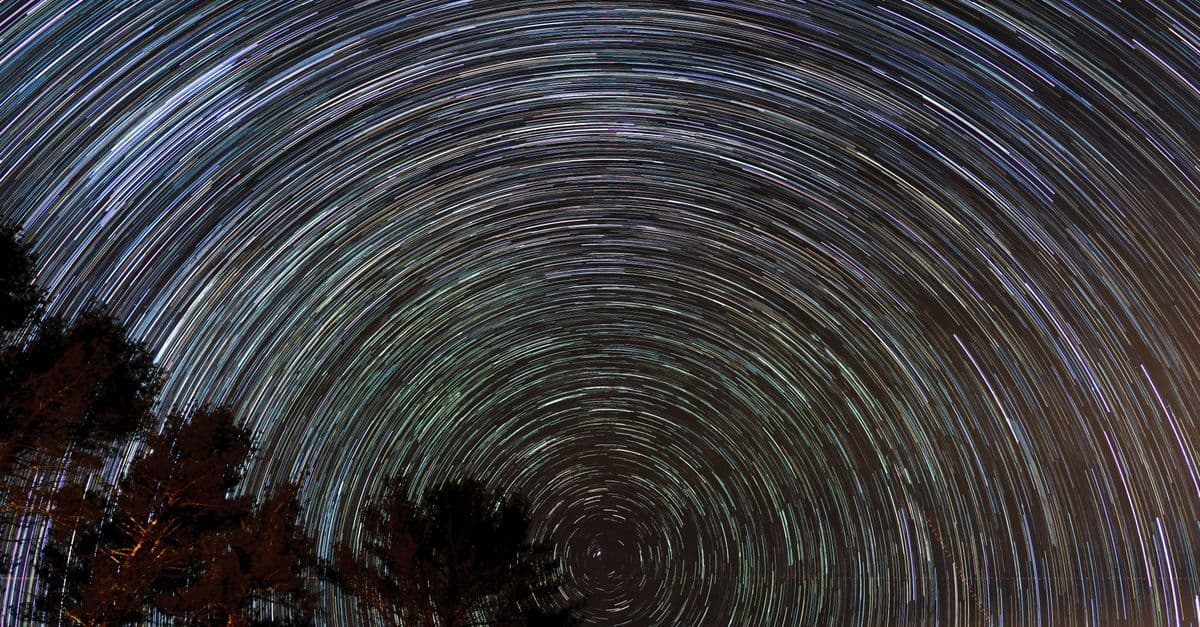
Photo: Skyler Ewing / Pexels
Earth turns once every 23 hours, 56 minutes, and 4 seconds, carrying a point on the equator through space at roughly 1,670 km/h (1,037 mph), according to measurements compiled by Wikipedia's summary of Earth's rotation and corroborated by planetary data from Britannica. That speed is baked into everything on the surface, including you. Every person, ocean, and gust of wind on Earth carries that momentum right now, and the question of what happens if it vanishes is really a question about physics refusing to let something disappear for free.
Thought experiment. This article explores a hypothetical scenario for educational and speculative purposes. The events described are not predictions and should not be interpreted as warnings, advocacy, or instructions.
Why "instantly" is not actually a physical option
Every version of this thought experiment — including the popular "what if Earth stopped spinning in one second" framing — smuggles in an assumption that turns out to be the most important part of the answer: nothing in known physics can stop a planet's rotation in zero time, or even in one second, without breaking a law that has never been observed to break.
The law in question is conservation of angular momentum. A rotating body's angular momentum equals its moment of inertia (a measure of how mass is distributed around the spin axis) multiplied by its angular velocity. For a body as massive as Earth, that quantity is enormous, and conservation laws are not suggestions. They hold in every physical interaction we have ever measured, from subatomic collisions to galaxy mergers, a point explained clearly in university-level treatments of the principle such as the OpenStax University Physics chapter on angular momentum conservation. Angular momentum cannot vanish. It can only be transferred to something else, through a torque, over time.
Here's the analogy that makes this concrete. Imagine a spinning ice skater, arms out, gliding across the rink. Angular momentum is conserved as long as no outside force twists her. She can pull her arms in and speed up, or push a partner away and slow down, but she cannot simply stop spinning by wishing it. Something external has to grab her and apply a twisting force, a torque, over some interval of time. Earth is the skater, and there is no partner in the solar system positioned to grab it and cancel its spin instantly. The Moon's tidal pull is the closest thing to a hand on Earth's shoulder, and it is unimaginably gentle: it is lengthening the day by about 1.8 to 2.3 milliseconds per century, based on historical eclipse-record analysis reviewed in the Earth's rotation entry on Wikipedia. At that rate, shaving off a single hour of day length takes on the order of 200 million years.
So when a thought experiment says "Earth suddenly stops," the honest physics answer is: something would have to apply a torque so violent, over such a short window, that it would almost certainly destroy the planet through the torque itself, well before rotation reached zero. The stopping mechanism is the disaster, not a side effect of it.
What a genuinely instantaneous stop would require
To take the thought experiment at its most literal, imagine some external agent — call it a "magic brake" for the sake of argument — halts Earth's spin over a span of one second rather than zero seconds, since true zero-time change is not just improbable but mathematically undefined (it would require infinite force).
At the equator, the deceleration needed to take a surface point from 1,670 km/h to a dead stop in one second works out to roughly 465 km/s² of deceleration, or about 47,000 times Earth's surface gravity. For scale, sustained exposure above 15 g is lethal to humans, and fighter pilots black out temporarily around 9 g during hard maneuvers, according to aerospace physiology references summarized in NASA human-factors documentation on acceleration tolerance. A deceleration in the tens of thousands of g range does not merely injure a body standing on the ground. It applies forces so far beyond the tensile strength of bone, muscle, and soft tissue that biological structure ceases to exist as biological structure in a fraction of a second.
Everyone standing on the rotating surface — which is everyone, since the entire solid Earth would be decelerating together — experiences this same catastrophic force simultaneously. There is no outrunning it and no bracing for it, because the deceleration would arrive faster than a nerve impulse can travel from your foot to your brain.
Why doesn't the whole planet just crack apart in the process?
It would. A torque strong enough to stop Earth's crust and mantle in one second would exceed the compressive and shear strength of rock by many orders of magnitude. Before rotation reached zero, the crust would already be fracturing along fault lines worldwide, because different points on the globe experience different linear velocities (fastest at the equator, zero at the poles), and a uniform angular deceleration applied to a solid body with that velocity gradient generates enormous internal shear stress.
What the atmosphere and oceans do while the ground stops
This is the part of the thought experiment that reveals the real mechanics, and it is worth walking through slowly because it is the most counterintuitive piece.
The solid Earth — crust, mantle, core — is one connected rigid-ish body, so a torque applied to it (however implausible the source) can, in principle, act on the whole mass roughly together. The atmosphere and oceans are not rigidly attached to that body. They are fluids sitting on top of it, held down by gravity but free to slide horizontally with very little friction compared to solid rock. If something exotic enough to stop solid rock in a second acted only on the solid Earth (the more physically "conservative" version of this thought experiment, since air and water have far less mass and angular momentum to arrest), the atmosphere and oceans would, for a brief window, keep moving at their original rotational speed while the ground beneath them had already stopped.
Think of it the way you'd think of slamming the brakes on a truck carrying a full water tank with no baffles. The truck stops. The water does not know the truck stopped, and it keeps moving until something forces it to change course, sloshing forward with tremendous force. Earth's atmosphere is that water tank. In the seconds after the ground stops, the air at the equator is still moving at roughly 1,670 km/h relative to the newly stationary surface beneath it. That is not a strong wind. It is roughly 1.35 times the speed of sound, meaning the entire atmosphere would suddenly be moving supersonically relative to the ground.
A worked estimate of the atmosphere's kinetic energy at that speed, using a total atmospheric mass of about 5.15 × 10¹⁸ kg (the standard planetary value used in atmospheric science, as compiled in reference data from the National Center for Atmospheric Research's Climate Data Guide), gives roughly 5 × 10²⁷ joules of kinetic energy still moving relative to the ground. That energy has to go somewhere as the air scrubs against terrain, mountain ranges, and itself. The friction and compression heating involved would raise surface-level air temperatures by hundreds to well over a thousand degrees Celsius in the minutes that follow, effectively turning the lower atmosphere into a planet-wide wall of supersonic, superheated wind. Oceans, though far denser and slower to accelerate than air, would similarly keep surging eastward (in the direction of the planet's former spin), producing wave and current events with no analog in recorded history — not tsunamis in the earthquake sense, but a continuous, planet-girdling surge of moving water slamming into every coastline roughly simultaneously.
Would the atmosphere actually be torn off into space?
Some of it, but not most of it in the first minutes. Escape velocity from Earth's surface is about 11.2 km/s, far above the 0.465 km/s differential velocity between a stopped ground and a still-spinning atmosphere. The dominant effect in the opening minutes is not atmospheric loss to space but violent redistribution: supersonic shear winds, shockheating, and mixing, concentrated most intensely near the equator where the velocity mismatch is largest and fading toward the poles, where the ground's rotational speed was already close to zero.
The equatorial bulge: another thing that can't change instantly
Earth is not a perfect sphere. Because it spins, centrifugal effects push mass outward at the equator, giving the planet an equatorial diameter roughly 42.7 km larger than its pole-to-pole diameter, a figure documented in geodetic reference data such as the World Geodetic System ellipsoid parameters used by the National Geospatial-Intelligence Agency. That bulge exists because rock, even under Earth's immense pressures, behaves as a very slow, very viscous fluid over geological time, and it has settled into an equilibrium shape that balances gravity against the outward push of rotation.
Take away rotation, and that equilibrium shape is gone; the planet's "natural" unstressed shape without spin would be closer to a true sphere. But — and this is the part that gets skipped in the more sensational versions of this scenario — solid rock does not relax into a new equilibrium shape in seconds or even years. The mantle's viscosity means that isostatic adjustment (the slow rebound of Earth's shape in response to changing mass distribution) proceeds over thousands of years, the same process that is still, today, causing land in Scandinavia and Canada to rise as it slowly rebounds from the weight of ice-age glaciers that melted more than 10,000 years ago, a phenomenon well documented by the U.S. Geological Survey's glacial isostatic adjustment research. In the first minutes after a hypothetical rotation stop, the bulge does not collapse. What happens instead is that the stress state of the crust changes abruptly and enormously: rock that was in compression under the old equilibrium is suddenly out of balance, and that mismatch is exactly the kind of stored elastic energy that triggers earthquake sequences, not instant topographic collapse.
A table of timescales: what changes when, and why
The single biggest misconception in "Earth stops spinning" thought experiments is treating every consequence as happening on the same timescale. It doesn't. Different physical processes unfold at wildly different speeds, governed by different material properties.
| Process | Approximate timescale | Why this timescale |
|---|---|---|
| Deceleration force on solid ground/structures | Fractions of a second to seconds | Depends entirely on the (physically implausible) mechanism assumed to stop rotation |
| Atmosphere becomes supersonic relative to ground | Immediate, at the moment the ground stops | Air is a fluid with low friction against the surface and retains its prior velocity by inertia |
| Wind shear heating and turbulent mixing | Seconds to minutes | Governed by the speed of sound and turbulent energy cascade in air |
| Ocean surge and current disruption | Minutes to hours | Water is denser and slower to redistribute than air, but still fluid and low-friction against the seafloor |
| Crustal stress redistribution and earthquake triggering | Minutes to years | Elastic stress release along faults happens fast; the full sequence of aftershocks unfolds over years |
| Equatorial bulge relaxation (isostatic adjustment) | Thousands of years | Mantle rock is a highly viscous fluid; glacial rebound observations set the real-world rate |
| Onset of extreme day/night temperature extremes | Weeks to months, if the stop truly held | Requires re-establishing thermal equilibrium under a new, mostly-static solar exposure pattern |
Table: The physical processes triggered by an instantaneous stop of Earth's rotation, ordered by how quickly each would actually unfold, based on the differing material and fluid-dynamic properties of the atmosphere, oceans, crust, and mantle.
What a merely "fast," non-instant deceleration looks like
Because true instantaneous stopping is physically undefined, the more useful version of this thought experiment asks what happens if some agent decelerates Earth's rotation to zero over a short but finite window, say hours to days rather than one second, since a longer window changes the deceleration magnitude dramatically without changing the total angular momentum that must be shed.
Stretch the same stop from one second to one hour, and the deceleration at the equator drops from roughly 47,000 g to about 13 g, sustained for the full hour. Thirteen g for an hour is still far beyond survivable for an unrestrained human body, and 13 g means a person weighing 70 kg would effectively weigh close to a metric ton in force terms, but it is not the instant-vaporization regime of the one-second case. Stretch the stop to a full day, and the average deceleration drops to roughly 0.5 g sustained over 24 hours, which starts to resemble the kind of sustained force a spacecraft crew might tolerate during a hard reentry, uncomfortable and dangerous but not instantly lethal by force alone.
This is the real lesson buried in the "sudden stop" framing: the word "sudden" is doing enormous work, and the outcome for human survival swings from "every person on Earth dies from deceleration alone within a second" to "catastrophic but not universally and instantly lethal from g-forces" depending entirely on whether "sudden" means one second, one hour, or one day. The total energy that must be dissipated (the roughly 2.6 × 10²⁹ joules of rotational kinetic energy) barely changes across these scenarios. What changes is the power, meaning the rate at which that energy is delivered, and power is what determines whether a system fails gracefully or catastrophically. This is the same principle behind why a car crash at 100 km/h into a solid wall is fatal while decelerating from 100 km/h to 0 over several seconds of braking is routine: identical energy, wildly different power, wildly different outcome.
If the deceleration took months or years instead, would it be survivable?
Stretched over months to years, the g-forces involved become negligible or unnoticeable, similar to how Earth's rotation naturally changes by milliseconds per century without anyone feeling it. The catastrophic risk shifts entirely away from deceleration forces and toward the slower-acting consequences: disrupted ocean and atmospheric circulation, a weakening or reorganizing magnetic field as core dynamics change, and, if the stop persisted, the eventual onset of extreme day-night temperature differences once one hemisphere faced the Sun far longer than the other.
Why the magnetic field is part of this story too
Earth's protective magnetic field is generated by convection and rotation-influenced flow in the liquid outer core, a process called the geodynamo, described in detail by the U.S. Geological Survey's overview of Earth's magnetic field. Crucially, the core's rotation is not rigidly locked to the mantle and crust above it. The outer core is liquid and can, and does, rotate at a slightly different rate than the solid mantle, a phenomenon geophysicists have measured through subtle shifts in the travel time of earthquake waves passing through the core.
That decoupling matters for this thought experiment because it means a mechanism violent enough to instantly stop the solid crust and mantle would not necessarily, in the same instant, stop the liquid outer core. For some period after a hypothetical crustal stop, the core could keep spinning relative to the now-stationary mantle above it, which would dramatically increase the shear between the two layers, the exact ingredient the geodynamo runs on. Whether that produces a temporary magnetic field spike, a scrambled and rapidly reorganizing field, or an accelerated collapse toward a field reversal is not something current geodynamo models can answer with confidence, since nothing like this scenario has ever been observed or is expected to occur. What is well established, from geodynamo theory and the USGS's summary of the geodynamo process, is that changing the relative rotation between the core and mantle is exactly the kind of perturbation that would meaningfully alter magnetic field generation, for better or worse.
What people get wrong about this thought experiment
The most common error, repeated across pop-science treatments of "what if Earth stopped spinning," is skipping straight from "Earth stops" to "everything and everyone dies from being flung off the surface at 1,670 km/h, like being launched from a giant sling." That image is vivid but physically backward. Standing on a decelerating surface does not fling you off it the way a slingshot flings a stone; it is the opposite problem. You, the atmosphere, and the ocean are all still moving at 1,670 km/h at the instant the ground stops. The danger is not being thrown off a suddenly-stopped Earth. It is that everything not rigidly bonded to the ground keeps moving at the old speed while the ground no longer does, so the collision is between the fast-moving fluid layers (air, water, and unanchored objects) and the now-stationary solid surface, essentially the reverse of the popular image.
A second common error is treating the equatorial bulge as something that would "slosh" or collapse within the same minutes-to-hours timeframe as the atmospheric effects. As covered above, solid rock's viscosity means that reshaping happens on a geological timescale of thousands of years, not the seconds-to-hours timescale of fluid atmospheric and oceanic effects, even though both are legitimate long-run consequences of losing rotation.
A third error is assuming "sudden" and "instant" are physically interchangeable descriptions with one predictable outcome. As this piece has tried to show, the single word "sudden" spans a range from a one-second stop (universally lethal deceleration alone, before any atmospheric or geological effect even matters) to a one-day stop (survivable deceleration forces, but the fluid-dynamics and crustal-stress consequences described above still apply) to a one-year stop (negligible deceleration forces, dominated instead by slower climatic and geomagnetic effects). Precision about the timescale changes the entire answer.
Why doesn't nature just do this on its own?
It is worth being explicit about why this remains firmly hypothetical rather than a real risk. Earth's rotation is changing, but through the gentlest mechanism physics allows: tidal friction between the Moon's gravity and Earth's oceans, gradually transferring angular momentum from Earth's spin into the Moon's orbit, which is why the Moon is slowly spiraling outward (by about 3.8 cm per year, according to laser-ranging measurements referenced in Earth's rotation entry on Wikipedia) while Earth's day very gradually lengthens. This is angular momentum conservation working exactly as the law demands: nothing is destroyed, it is just slowly redistributed between two bodies locked in a gravitational relationship. There is no known natural process, and no proposed engineering scheme, capable of applying a torque large enough to meaningfully change Earth's spin rate on anything shorter than a geological timescale, which is precisely why every version of "Earth suddenly stops rotating" has to invoke something outside known physics to even get started.
The takeaway
The honest answer to "what if Earth suddenly stopped rotating" is that the premise itself is doing more work than it looks like: angular momentum conservation means nothing can make that happen instantly without an external torque so violent it would be a catastrophe in its own right, independent of anything that follows. Once you accept some torque strong enough to act on the solid Earth in a very short window, the real physics splits cleanly along material lines. Solid rock and everything rigidly attached to it (including every living thing on the surface) decelerates with the ground, at whatever brutal rate the stopping mechanism dictates. Fluids like air and water are not rigidly attached, so they keep moving at the old rotational speed for a window afterward, producing supersonic winds and surging currents as they crash into a surface that has already stopped beneath them. And the slowest-moving consequences, like the collapse of the equatorial bulge or a full magnetic field reorganization, unfold over years to millennia, governed by the viscosity of rock and the dynamics of the liquid core, not by how fast the initial stop happened. Treating "sudden" as a single, uniform apocalypse collapses all of that useful structure into one dramatic but imprecise headline.
Read next:
Follow new articles
Add SciHub101 to your feed reader to see new science and technology stories.
About the Author
SciHub101 is an independent science and technology publication founded and edited by Buğra Sözeri, a software engineer and app developer based in Türkiye. AI tools assist with drafting and research. Source documentation in the existing archive is uneven, and articles are being reviewed and corrected. The Editorial Team byline identifies editorial responsibility; it does not certify specialist or independent human review. Where we compare products, anything built by our own team is labelled as such — see the editorial guidelines and About page for how corrections and disclosures work.
Related Articles
What If the North Atlantic Current Stopped?
The North Atlantic Current (part of the Gulf Stream system) carries warm tropical water northward, keeping Europe mild and habitable. If it stopped due to freshwater influx or climate change, Europe would plunge into ice-age conditions within decades — while other regions experience opposite effects.

What If Mars Terraforming Actually Succeeded? Life on the Finished Planet
Suppose, for the sake of argument, that every terraforming obstacle got solved: enough imported gas, a working magnetic shield, centuries of patience. What would people actually build, grow, and become on a finished Mars — and how would its short year, low gravity, and two doomed moons reshape daily life?
What If Gravity Was Twice as Strong? — Science Explained
What would actually happen if gravity suddenly doubled? Your skeleton would fracture under your own weight, the atmosphere would compress into a dense killing fog, and tall buildings would collapse. But life could still evolve — just very differently.
What If We Discovered an Earth-Twin Planet?
Astronomers have found thousands of exoplanets. An Earth-sized planet in a habitable zone isn't exotic anymore. But a true Earth twin — similar size, similar temperature, liquid water, an oxygen atmosphere — would be something else entirely. Here's what would happen if we found one.

What If We Terraformed Mars — Could Humans Really Live There?
Terraforming Mars has been a science fiction dream for decades. The actual physics suggests it's vastly harder than commonly imagined, and a 2018 NASA-funded study concluded it's basically impossible with current or near-future technology.