What If the North Atlantic Current Stopped?
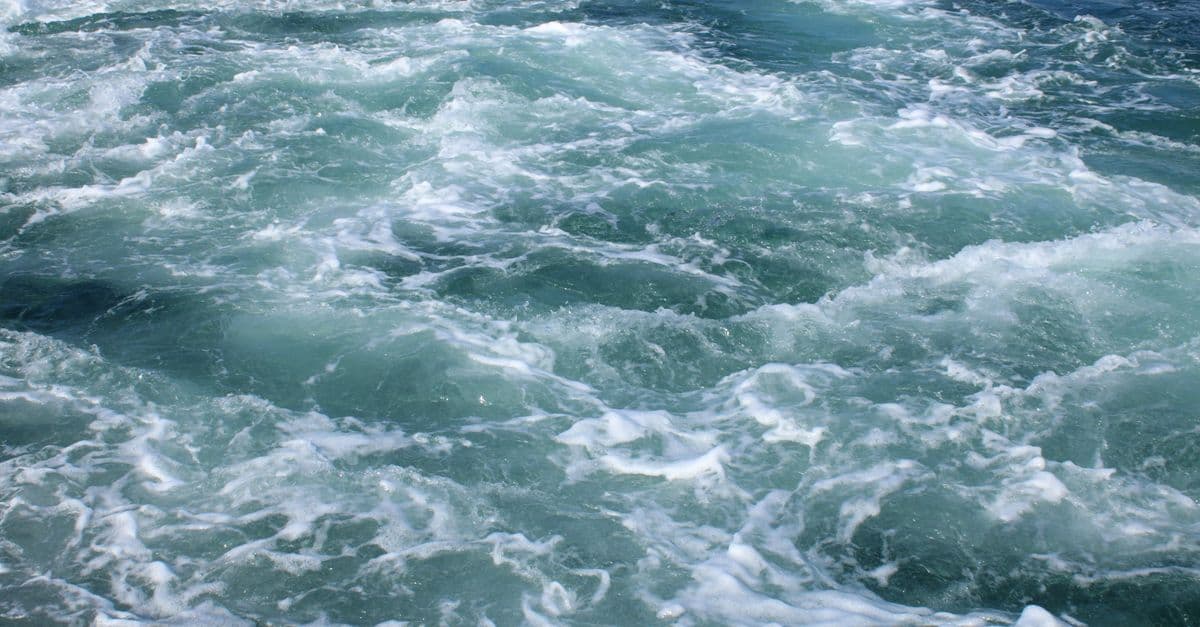
Photo: Emine Nisa Kesgin / Pexels
Thought experiment. This article explores a hypothetical scenario for educational and speculative purposes. The events described are not predictions and should not be interpreted as warnings, advocacy, or instructions.
The North Atlantic Current, the surface-water branch of the larger Atlantic Meridional Overturning Circulation (AMOC), transports roughly 1 petawatt of heat northward from the tropics — about 100 times the entire electricity-generating capacity of the world. That heat is why Bergen, Norway, at 60°N, averages winter temperatures similar to New York City at 40°N, despite sitting 2,200 kilometers (1,370 miles) closer to the North Pole. If this current stopped, that heat subsidy would vanish, and Western Europe would face a cooling event unlike anything in recorded human history. Current observations already show the AMOC at its weakest point in over a thousand years, which is why oceanographers now treat this thought experiment as a live risk assessment rather than pure speculation.
What the AMOC actually is, and why it's not just "the Gulf Stream"
People often use "Gulf Stream" and "AMOC" interchangeably, but they're not the same thing, and the distinction matters for understanding what could actually break.
The Gulf Stream itself is a wind-driven, western boundary current. It forms because trade winds and the Coriolis effect push water westward across the tropical Atlantic, pile it up against the Americas, and force it north along the U.S. East Coast. This part of the system is robust. It's driven mostly by wind patterns and Earth's rotation, and neither of those is going away.
The AMOC is the deeper, slower engine layered underneath and connected to that wind-driven flow. It's a thermohaline circulation — a current powered by density differences that come from temperature ("thermo") and salinity ("halo") rather than wind. As warm, salty water travels north on the surface, it releases heat to the atmosphere (which is precisely how it warms Europe), and evaporation concentrates the remaining salt. By the time this water reaches the Nordic Seas and the Labrador Sea, it has become cold and dense enough to sink thousands of meters to the ocean floor. That sinking water then flows south as a deep return current, eventually upwelling elsewhere in the world ocean to complete the loop. Oceanographers sometimes call this the "global conveyor belt" because it links every major ocean basin into one slow, multi-thousand-year circulation.
This is the part that's fragile. Sinking only happens if the water is dense enough, and density depends on both cold temperature and high salinity. Add enough fresh water, and the surface layer becomes too buoyant to sink, no matter how cold it gets. That is the mechanism behind every AMOC collapse scenario, past and hypothetical.
What is the AMOC and how is it different from the Gulf Stream?
The Gulf Stream is a fast, wind-driven surface current that would keep flowing even if deep-water sinking stopped. The AMOC is the broader density-driven overturning system that includes the Gulf Stream's warm northward limb plus a deep, cold southward return flow. Collapse scenarios concern the AMOC's sinking mechanism, not the Gulf Stream's wind-driven push.
The physical chain that pulls the current apart
Freshwater dilution is the dominant collapse mechanism scientists study, and it has three main sources feeding into the North Atlantic right now.
Greenland Ice Sheet melt. Greenland has been losing mass at an accelerating rate for the past three decades, and that meltwater drains directly into the Labrador and Nordic Seas — precisely where AMOC sinking happens. During the last deglaciation, roughly 8,200 years ago, a catastrophic outburst of meltwater from a collapsing glacial lake dumped an estimated 100,000 cubic kilometers of fresh water into the North Atlantic over a few centuries. The result, known to paleoclimatologists as the "8.2 kiloyear event," was a regional cold snap that dropped Greenland temperatures by an estimated 3.3°C, based on ice-core oxygen isotope records published by the National Oceanic and Atmospheric Administration's paleoclimatology program.
Arctic sea ice retreat. As sea ice melts, it doesn't just remove a reflective white surface (an "albedo" effect that itself accelerates warming); it also adds low-salinity meltwater directly into the surface ocean layer that feeds the sinking zones.
Increased precipitation and river runoff. A warmer atmosphere holds more moisture — roughly 7% more per 1°C of warming, following the Clausius-Clapeyron relationship that governs how much water vapor air can carry. That extra moisture eventually falls as rain, and more of it lands on high-latitude oceans and rivers that drain into the North Atlantic.
Each of these mechanisms points the same direction: less salt, more buoyancy, less sinking. Climate models generally agree that if global warming crosses somewhere between 1.5°C and 4°C above preindustrial levels, the AMOC could pass a tipping point beyond which it collapses on its own, independent of any further human intervention. A widely cited 2023 analysis published in Nature Communications by University of Copenhagen researchers Peter Ditlevsen and Susanne Ditlevsen used statistical early-warning signals in sea-surface temperature records to estimate a collapse could occur as early as 2025 to 2095, with a central estimate around mid-century — though the authors themselves stressed this was a probabilistic estimate carrying substantial uncertainty, not a firm forecast.
Why does adding fresh water stop a current that's driven by density?
Sinking in the AMOC only happens when surface water becomes dense enough to sink below the water beneath it. Density in seawater comes from two things: cold temperature and high salt content. Fresh water is less dense than salt water at any given temperature, so as more of it mixes into the surface layer, that layer resists sinking even when it's cold, effectively jamming the pump that drives the whole circulation.
What recent observations actually show
The scientific record here is genuinely contested in its details but consistent in its broad trend. A landmark 2018 study led by David Thornalley and published in Nature used sediment grain-size analysis from the subpolar North Atlantic to reconstruct 1,600 years of AMOC strength, finding the current has been at its weakest point of that entire record since roughly the mid-20th century.
Separately, direct measurements from the RAPID array, a transatlantic mooring network that has monitored AMOC strength at 26°N continuously since 2004, show significant year-to-year variability but no unambiguous multi-decade collapse signal yet in the direct instrumental record — a reminder that reconstructed proxy data and real-time monitoring sometimes tell overlapping but not identical stories.
In 2025 and 2026, new research shifted attention specifically toward the "cold blob," a persistent patch of anomalously cool water south of Greenland and Iceland that has defied the general pattern of ocean warming elsewhere. Potsdam Institute researcher Stefan Rahmstorf and colleagues published analysis in 2026 linking this cold blob directly to AMOC weakening, describing it as a depth-extended signature of reduced heat transport rather than a separate, unrelated phenomenon. A related 2026 paper in Communications Earth & Environment identified abrupt shifts in the Gulf Stream's physical path as a potential early-warning indicator that the broader AMOC system is approaching an unstable transition.
Not every study agrees on urgency. A 2024 paper in Nature by René van Westen and colleagues used a different high-resolution ocean model and argued the AMOC shows continued resilience even under extreme freshwater forcing scenarios, illustrating that reasonable scientists working from reasonable models can still land in different places on timing, even while agreeing on the underlying physics and the direction of the trend.
A 100-year timeline: how a collapse would actually unfold
Assume, for the sake of this thought experiment, a scenario in which freshwater input from Greenland and the Arctic accelerates steadily and pushes the AMOC past its tipping point over the coming decades. Timelines below draw on the general pattern seen in paleoclimate abrupt-change events like the Younger Dryas, combined with projections used in IPCC assessment reports, and should be read as an illustrative scenario rather than a scheduled forecast.
Years 0–15, early weakening. Sinking in the Labrador and Nordic Seas becomes less vigorous as surface salinity keeps declining. AMOC strength indices, tracked by instruments like the RAPID array, show a clear downward trend beyond normal year-to-year variability. Storm tracks over the North Atlantic begin shifting subtly. Winters in the UK and Scandinavia get more variable — some remain mild, but cold outbreaks become sharper and longer.
Years 15–30, the tipping point. Model studies of past abrupt-change events suggest that once a threshold is crossed, the transition itself can happen surprisingly fast — over a matter of years to a couple of decades, rather than gradually over centuries. AMOC strength drops toward roughly half of its baseline. The UK and Ireland see winters cool by an estimated 3–5°C relative to pre-collapse conditions; growing seasons shorten measurably. Scandinavia, Iceland, and Greenland's coastal margins cool more sharply, by an estimated 5–10°C, and mountain glaciers that had been retreating for decades begin advancing again.
Years 30–50, deep collapse. Sinking in the North Atlantic largely ceases. Paleoclimate analogs like the Younger Dryas, during which Greenland ice-core records show temperatures dropped by roughly 10°C or more within a decade, suggest Western Europe could ultimately settle 5 to 15°C cooler than its pre-collapse baseline, with coastal regions — which currently benefit most from ocean-moderated winters — losing the most ground relative to continental interiors. Sea ice, historically confined mostly north of Iceland, would be expected to extend its winter edge much further south. Permafrost boundaries shift southward. Wheat cultivation, currently viable across most of the UK and northern France, would become marginal or impossible in the coldest-affected zones, and livestock farming would shift toward hardier cold-adapted breeds.
Years 50–100, a new equilibrium. Global atmospheric circulation reorganizes around the changed heat distribution. The Intertropical Convergence Zone (ITCZ), the band of intense rainfall near the equator that migrates seasonally with the sun, would be expected to shift position, since it responds strongly to interhemispheric heat asymmetry. Because collapse would coincide with continued Greenland ice loss under a still-warming background climate, global sea level would keep rising through this period independent of the AMOC's own dynamics — driven by the same ice melt that helped trigger the collapse in the first place.
It's worth being explicit about the uncertainty baked into all of this: paleoclimate analogs like the Younger Dryas happened under a very different background climate (colder, with large ice sheets still present in North America), so applying their magnitude directly to a modern collapse is illustrative, not a precise prediction. Climate models disagree meaningfully on both the exact cooling magnitude and the timeline.
Why Europe cools so much more than its latitude suggests it should
This is where an analogy helps. Think of the AMOC like a radiator loop in a house: a boiler at one end heats water, a pump pushes it through pipes to radiators in cold rooms, and the room only stays warm as long as the pump keeps running. Turn the pump off, and the room doesn't just get "a bit cooler" — it drops all the way toward outdoor temperature, because the artificial heat input that had been offsetting the room's natural heat loss is simply gone. Western Europe is that radiator room. Its actual latitude — Paris sits at roughly the same latitude as Quebec City, and London sits north of Calgary — would put it firmly in a cold, continental climate zone if not for the roughly 1 petawatt of heat the AMOC continuously pipes in from the tropics.
A second useful analogy: imagine a conveyor belt at an airport carrying warm luggage from a sun-heated section of the terminal to a shaded, air-conditioned section. As long as the belt runs, the shaded section stays warmer than its own air conditioning alone would make it. Jam the belt, and that section reverts to whatever the local air conditioning dictates, which in Europe's case is "a cold, high-latitude climate with no compensating heat delivery system."
Why would Europe cool while the rest of the world doesn't?
Because the AMOC currently exports roughly 1 petawatt of heat specifically to the North Atlantic region rather than the whole planet. If that transport stops, the heat that used to leave the tropics and warm Europe would instead stay near the equator, causing modest additional tropical and Southern Hemisphere warming while Europe loses the localized subsidy it had been receiving — a redistribution of existing heat rather than a change in the planet's total energy budget.
Regional impacts, side by side
| Region | Primary effect | Approximate magnitude | Key driver |
|---|---|---|---|
| UK, Ireland, coastal France | Sharp winter cooling, shorter growing seasons | 3–5°C cooling in early phase, up to 10°C+ at full collapse | Loss of Gulf Stream heat delivery |
| Scandinavia, Iceland, Greenland coast | Severe cooling, glacier advance, permafrost expansion | 5–10°C+ cooling | Direct proximity to former sinking zones |
| North Atlantic sea ice edge | Southward expansion | Ice edge could extend toward ~45°N in extreme scenarios | Loss of warm surface water suppressing ice formation |
| Tropical Atlantic and Southern Hemisphere | Modest warming | Estimated fractions of a degree to low single digits °C | Heat that no longer transports north stays in the tropics |
| West African and South Asian monsoons | Disrupted rainfall timing and intensity | Highly variable by model; droughts or excess rain regionally | ITCZ shift from interhemispheric heat imbalance |
| Amazon basin | Compounding drying risk | Model-dependent; adds to existing deforestation-driven stress | Shifted tropical rainfall bands |
| Global sea level | Continued rise, partly independent of AMOC itself | Driven by ongoing Greenland/Antarctic melt, not AMOC collapse directly | Same background warming that helped trigger collapse |
Table: estimated regional consequences of AMOC collapse, drawn from paleoclimate analogs and IPCC-referenced modeling ranges. Figures are illustrative order-of-magnitude estimates, not precise forecasts.
The Younger Dryas: the real historical precedent
The best real-world analog for this thought experiment isn't hypothetical at all — it already happened. Around 12,900 years ago, as Earth was warming out of the last Ice Age, a massive pulse of glacial meltwater is believed to have disrupted AMOC-like circulation in the North Atlantic. The result, called the Younger Dryas after an Arctic wildflower whose pollen shows up in the sediment record from that period, was an abrupt return to near-glacial conditions across the North Atlantic region that lasted roughly 1,200 years.
Greenland ice-core records analyzed by researchers including Richard Alley of Pennsylvania State University show that some of the temperature swings associated with the Younger Dryas transition happened remarkably fast — on the order of a decade or even less for parts of the shift — which is part of why abrupt AMOC change is treated as a genuine tipping-point phenomenon rather than a slow linear response. The Younger Dryas ended just as abruptly as it began, reinforcing the idea that these systems can flip between stable states rather than sliding gradually along a single continuous curve.
A second, smaller-scale precedent is the 8.2 kiloyear event mentioned earlier, triggered by the catastrophic drainage of a proglacial lake (Lake Agassiz) into the North Atlantic. Ice-core evidence indicates Greenland cooled roughly 3.3°C over one to two centuries in that event before recovering — smaller than the Younger Dryas, but a useful reminder that freshwater-driven AMOC disruptions have happened more than once in the relatively recent geological past, and at more than one scale.
Has the AMOC ever actually collapsed before?
Yes. Paleoclimate records show the AMOC-like circulation weakened or shut down multiple times during the last deglaciation, most notably during the Younger Dryas roughly 12,900 to 11,700 years ago and during the smaller 8.2 kiloyear event. Both were triggered by large pulses of glacial meltwater entering the North Atlantic, the same basic mechanism scientists worry about today, though today's background climate and forcing differ substantially from the last Ice Age.
Recovery: could the current start again?
Once collapsed, how long would the AMOC take to restart? This is one of the more sobering parts of the science, because the system doesn't behave like a light switch that flips back the moment conditions improve.
Climate models that include AMOC hysteresis — the property where a system's collapsed and active states are both stable, so it doesn't simply reverse once the original trigger fades — suggest that recovery could lag reversal of the freshwater trigger by centuries. The Younger Dryas is instructive here too: even after the freshwater pulse that likely triggered it subsided, the AMOC-like circulation stayed suppressed for roughly a millennium before recovering.
The practical implication is that even in an optimistic scenario where humanity aggressively cuts emissions after a collapse begins, the AMOC would likely remain in its weakened or collapsed state for a very long time relative to any human planning horizon — plausibly centuries, based on the paleoclimate recovery pattern, even though scientists cannot pin an exact number on it for a modern collapse.
Is AMOC collapse reversible once it happens?
Not on any timescale relevant to living generations. Paleoclimate evidence from the Younger Dryas shows the circulation can remain suppressed for roughly a thousand years even after the original freshwater trigger fades, because the ocean's density structure has more than one stable configuration. Modern climate models that include this hysteresis behavior generally agree recovery would take centuries at minimum.
What people get wrong about this scenario
Myth: "The Gulf Stream is going to stop, and Europe will freeze solid overnight." The Gulf Stream's wind-driven component is not at meaningful risk of stopping; it's specifically the deep, density-driven AMOC overturning that scientists study for collapse risk, and even in fast-transition scenarios drawn from paleoclimate analogs, the shift plays out over years to a couple of decades, not overnight.
Myth: "A colder Europe means global warming was wrong." This misunderstands redistribution versus total energy. AMOC collapse would move heat around rather than remove it from the planet, cooling the North Atlantic region specifically while the tropics and Southern Hemisphere warm modestly, all while global average temperature continues rising from greenhouse gas forcing in the background. A colder London in this scenario would be entirely consistent with, not contradictory to, an overall warming planet.
Myth: "This is settled science with an exact collapse date." It is not. The 2025-to-2095 statistical estimate published by Ditlevsen and Ditlevsen in Nature Communications is genuinely useful and widely cited, but other researchers using different models, including the 2024 Nature paper from van Westen and colleagues, find the AMOC more resilient under comparable forcing scenarios. The honest position is "weakening is observed and well documented; the exact tipping point and collapse timeline remain actively contested."
Myth: "Nothing can be done about it." Reducing greenhouse gas emissions lowers the rate of Greenland ice melt and Arctic freshening, which are the primary drivers pushing the system toward its threshold. That doesn't guarantee avoidance, since some warming and melt are already locked in, but it directly addresses the mechanism rather than treating collapse as an inevitability independent of human choices.
Frequently asked questions
Q: What would happen to global average temperature if the AMOC collapsed? A: Global average temperature would likely change relatively little in the near term, because the AMOC redistributes existing heat rather than adding or removing it from Earth's system. Europe and the North Atlantic would cool sharply while the tropics and Southern Hemisphere warm modestly, with the overall planet continuing to warm from greenhouse gas forcing in the background.
Q: How fast could an AMOC collapse actually happen? A: Paleoclimate evidence from the Younger Dryas suggests some phases of an abrupt AMOC-driven transition can unfold within roughly a decade once a tipping point is crossed, though the full multi-decade weakening leading up to that threshold would likely take longer. Models disagree substantially on precise pacing.
Q: Is the AMOC the same thing as the Gulf Stream? A: No. The Gulf Stream is the fast, wind-driven surface current along the U.S. East Coast; the AMOC is the broader, slower, density-driven overturning circulation that includes the Gulf Stream's warm limb plus a deep, cold return flow. AMOC collapse risk concerns the deep-sinking mechanism, not the wind-driven Gulf Stream itself.
Q: What is currently causing the AMOC to weaken? A: The leading explanation is freshwater dilution of the North Atlantic's surface waters, driven primarily by accelerating Greenland ice sheet melt, retreating Arctic sea ice, and increased precipitation and river runoff from a warmer, moister atmosphere, all of which reduce the salinity and density needed for the current's sinking mechanism.
Q: Has scientific opinion on AMOC collapse changed recently? A: Yes. Research published in 2025 and 2026, including analysis by Potsdam Institute climatologist Stefan Rahmstorf linking a persistent North Atlantic "cold blob" to AMOC weakening, has increased concern among many researchers, even as other groups using different high-resolution models continue to find grounds for caution about near-term collapse.
Q: Would AMOC collapse cause sea levels to rise? A: Sea level rise in this scenario would come mainly from the same background process that helps trigger AMOC weakening — accelerating Greenland and Antarctic ice melt — rather than from the AMOC shutdown itself, though a shutdown could regionally alter sea level patterns due to changes in ocean density and circulation near the North Atlantic.
Q: Could geoengineering prevent an AMOC collapse? A: Proposals exist, including regional stratospheric aerosol injection to cool parts of the North Atlantic, but none have been tested at the necessary scale, and actively managing freshwater input directly is not considered practically feasible with current technology. Reducing greenhouse gas emissions to slow the ice melt driving the freshening remains the most directly evidence-supported lever.
Q: How is AMOC strength actually measured? A: The primary continuous instrumental record comes from the RAPID array, a chain of moorings spanning the Atlantic at 26°N that has measured overturning strength directly since 2004. Longer-term trends beyond that period rely on indirect proxies, such as sediment grain size and sea-surface temperature patterns, reconstructed by researchers like David Thornalley and colleagues.
Q: Did the AMOC ever collapse in Earth's geological past? A: Yes, multiple times during the last deglaciation. The Younger Dryas, roughly 12,900 to 11,700 years ago, is the best-documented example, alongside the smaller 8.2 kiloyear event. Both were triggered by large glacial meltwater pulses into the North Atlantic, the same basic freshening mechanism scientists monitor today.
The takeaway
The AMOC thought experiment matters because it's one of the clearest real-world illustrations that climate change doesn't move in smooth, predictable lines. Instead, it contains tipping points: thresholds where a slowly accumulating stress, in this case freshwater dilution from melting ice, can flip a stable system into a different stable state relatively abruptly, and keep it there for centuries regardless of what happens afterward. What makes AMOC collapse distinct from many other climate risks is that the mechanism is well understood, the weakening trend is measured and real, and yet the exact threshold and timeline remain genuinely uncertain even among leading researchers. That combination, well-characterized risk with a poorly-constrained trigger date, is precisely why oceanographers treat it as one of the higher-priority items in the broader climate tipping-point conversation rather than a settled or a dismissible concern.
Read next:
Follow new articles
Add SciHub101 to your feed reader to see new science and technology stories.
About the Author
SciHub101 is an independent science and technology publication founded and edited by Buğra Sözeri, a software engineer and app developer based in Türkiye. AI tools assist with drafting and research. Source documentation in the existing archive is uneven, and articles are being reviewed and corrected. The Editorial Team byline identifies editorial responsibility; it does not certify specialist or independent human review. Where we compare products, anything built by our own team is labelled as such — see the editorial guidelines and About page for how corrections and disclosures work.
Related Articles

What If We Discovered Intelligent Aliens Tomorrow?
Confirmed contact with an intelligent alien civilization wouldn't just be a science headline. It would trigger a decades-old international protocol, test the resilience of every major religion, and replay a pattern human societies have lived through before: first contact between civilizations of unequal power.
What If the Earth Suddenly Stopped Rotating?
A truly instantaneous stop would violate physics itself. Here's why 'sudden' can never mean zero seconds, and what the real mechanics of a catastrophically fast deceleration would look like in the first few minutes.

What If the Amazon Rainforest Disappeared?
The Amazon holds tens of billions of tonnes of carbon, makes about half of its own rainfall, and shelters roughly one in ten known species. Here is what a total loss would set in motion, and why the forest may not need to be fully cleared to fail.
What If We Used AI to Reverse Climate Change?
AI is already modeling the climate with unprecedented precision. But could it actually run a planetary-scale effort to pull carbon out of the atmosphere and cool the Earth?
What If Antarctica Completely Melted?
Antarctica holds about 26.5 million cubic kilometres of ice — enough to raise global sea levels by roughly 58 metres if it all melted. Coastlines would be redrawn, hundreds of cities flooded, and global climate fundamentally restructured.
What If We Burned All Fossil Fuels on Earth?
Earth's proven fossil fuel reserves alone contain roughly three times more carbon than is compatible with keeping warming under 2°C. Here's what the physics, geology, and history say would actually happen if we burned it all.