What If We Used AI to Reverse Climate Change?

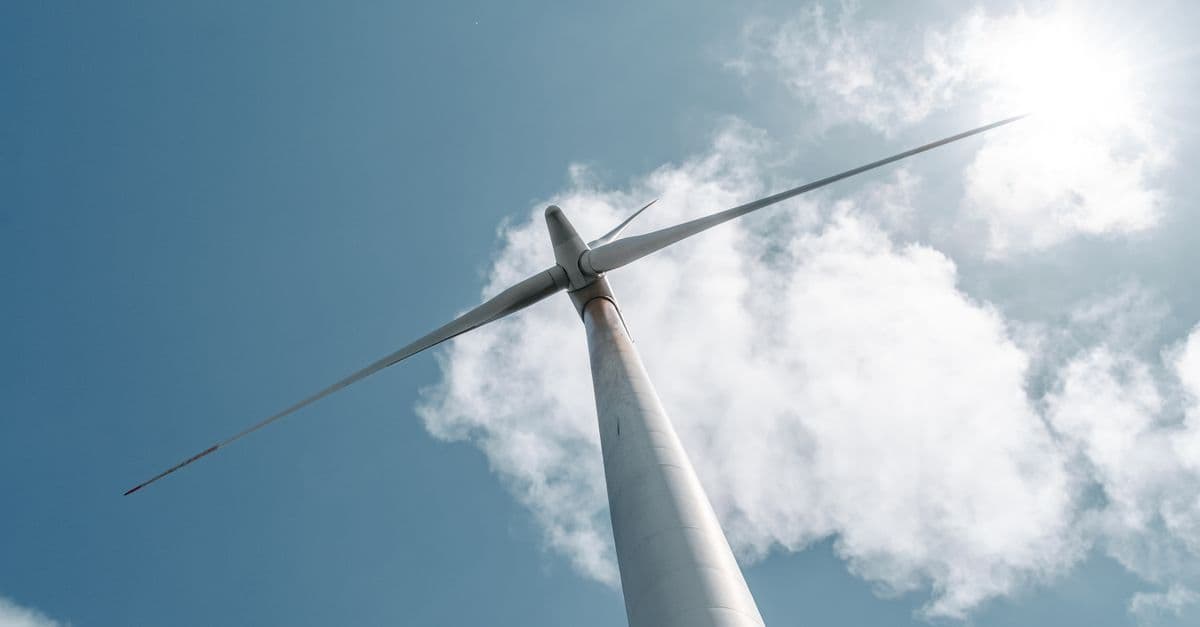
Photo: Francesco Ungaro / Pexels
Imagine a dashboard showing atmospheric CO₂ ticking down instead of up, year after year, coordinated by an AI system that optimizes everything from carbon capture chemistry to grid dispatch across 180 countries. This is a thought experiment, not a forecast. But the underlying question is not speculative at all: AI is already deployed across nearly every technical layer of climate response, from materials discovery to weather modeling. What it cannot do is negotiate treaties, override entrenched political interests, or make the physics of removing a trillion tons of carbon dioxide cheap. Understanding where the real leverage sits, and where it does not, is the point of this exercise.
Thought experiment. This article explores a hypothetical scenario for educational and speculative purposes. The events described are not predictions and should not be interpreted as warnings, advocacy, or instructions.
Key takeaways
- AI is already accelerating individual climate solutions — materials discovery, grid optimization, direct air capture process control, and climate modeling all show measurable gains today, not in some hypothetical future.
- Climate change is a coordination and political problem as much as a technical one, and AI has no lever for treaty enforcement, public consent, or fossil fuel lobbying.
- The scale of reversal is a cost problem, not an intelligence problem. Humanity has emitted somewhere between 1.5 and 2.5 trillion tonnes of CO₂ since industrialization, and even efficient direct air capture runs hundreds of dollars per tonne.
- Geoengineering options carry termination shock risk — if a rapid-cooling intervention is switched off, temperatures can rebound faster than they would have risen naturally, a scenario researchers have studied since at least 2018.
- The energy cost of AI itself is a growing part of the story — data center electricity demand is projected to roughly double by 2030, and AI-focused facilities are growing even faster than that.
What "AI reverses climate change" would actually require
Before getting to what AI can plausibly do, it helps to be precise about what "reversing" climate change means, because the word does a lot of unearned work in headlines. Reversal is not the same as slowing warming or hitting net-zero emissions. It means pulling atmospheric CO₂ concentrations back down toward pre-industrial levels, which in turn means removing carbon that has already been emitted, not just stopping new emissions.
That distinction matters because most of what gets called "AI for climate" today is emissions-reduction work: better solar cells, more efficient grids, smarter industrial processes. Emissions reduction slows the rate at which the problem gets worse. Reversal requires net-negative carbon removal at a scale the world has never attempted, sustained for decades. Those are different engineering problems with very different price tags.
Think of the difference like a bathtub with the tap running. Emissions reduction turns the tap down. Reversal means pulling the plug and draining water faster than any tap could ever fill it, while the tap is still dripping. AI can help with both, but the drain is a much harder problem than the tap.
Where AI genuinely moves the needle today
The scale of what AI already contributes to climate mitigation is real and worth taking seriously on its own terms, separate from the reversal fantasy. Four areas stand out.
Materials discovery. Better solar cells, cheaper batteries, and more efficient electrolyzers for green hydrogen all depend on finding new materials with specific properties. Traditional materials science involves synthesizing thousands of candidate compounds and testing them one by one in a lab, a process that can take years per material. AI systems trained on crystal structure databases can screen candidates computationally before anyone touches a beaker. The GNoME project mentioned above is the clearest large-scale example, and the Rolnick et al. 2019 survey in ACM Computing Surveys, co-authored by 22 researchers including Yoshua Bengio and Demis Hassabis, laid out dozens of similar high-leverage applications across energy, transportation, and industry.
Grid optimization. The single largest technical barrier to a fully renewable electricity grid is intermittency: the sun sets, the wind dies down, and demand does not politely wait for supply. AI systems that manage demand response, forecast renewable output hour-by-hour, and dispatch battery storage can integrate far more variable renewable capacity than static, rule-based grid management ever could. Better forecasting of wind and solar output directly reduces how much fossil fuel backup capacity a grid operator needs to keep on standby, which is one of the more measurable AI-driven emissions reductions happening right now.
Carbon capture process optimization. Direct air capture, machines that pull CO₂ straight out of ambient air rather than from a smokestack, is expensive largely because the chemistry and thermodynamics are unforgiving. For a deeper look at how these systems physically work, see our explainer on how carbon capture works in practice. AI-driven optimization of sorbent regeneration cycles, airflow, and energy scheduling has shown meaningful efficiency gains in pilot deployments, though it has not yet solved the fundamental cost problem, which is discussed below.
Climate modeling. Machine learning-accelerated climate models can run at finer spatial resolution and far faster than traditional physics-based general circulation models, which matters for policymakers trying to understand region-specific consequences of a given emissions pathway or intervention before committing to it.
How does AI actually help fight climate change today?
AI helps mainly by making existing climate technologies more efficient rather than inventing entirely new ones. It screens materials for batteries and solar cells, forecasts renewable energy output to reduce fossil fuel backup, optimizes industrial energy use, and speeds up climate modeling. None of this alone adds up to "reversing" climate change, but it compounds across every sector that touches energy.
The realistic complications: why "accelerant" is not "solution"
The distance between "AI accelerates individual climate solutions" and "AI reverses climate change" is enormous, and it is worth being honest about why.
Climate change is not primarily a technology bottleneck. The core technologies for dramatically cutting emissions already exist and have existed for years: wind turbines, solar panels, electric vehicles, heat pumps, nuclear reactors, grid-scale batteries. The barrier to deploying them fast enough is political, economic, and social, not technical. AI cannot negotiate a global carbon pricing treaty, cannot override the lobbying influence of entrenched fossil fuel interests, and cannot single-handedly persuade a democratic electorate to accept the short-term costs of a rapid energy transition. Those are choices humans make, badly or well, and an algorithm sitting outside that process has no seat at the table.
Then there is the sheer scale of the reversal problem. Estimates of cumulative CO₂ emitted since the start of industrialization vary depending on the start date and methodology used, but they generally fall between roughly 1,500 and 2,500 billion tonnes, or 1.5 to 2.5 trillion tonnes (Carbon Brief; Our World in Data). Removing a meaningful fraction of that from the atmosphere at today's direct air capture costs, which industry estimates place broadly between roughly $250 and $600 per tonne depending on the technology and scale (Forbes, 2024; World Economic Forum), would run into the tens of trillions of dollars even for removal volumes that are a small fraction of cumulative emissions. AI can shave costs at the margins through better process control and materials, but it cannot make thermodynamics free. Pulling a molecule of CO₂ out of a 420-parts-per-million atmosphere and concentrating it takes real energy no matter how smart the software managing the process is.
Geoengineering options exist that could, in principle, cool the planet faster than carbon removal alone: stratospheric aerosol injection, marine cloud brightening, ocean iron fertilization. These approaches manipulate the planet's energy balance directly rather than removing carbon, and they could produce rapid cooling. But they carry enormous uncertainty about regional side effects, and an AI system recommending or managing such interventions at planetary scale would be making decisions with irreversible consequences for billions of people who never consented to the trade-off.
The unintended consequences of an AI-run intervention
Planetary-scale interventions do not distribute their effects evenly, and this is where an optimization mindset, the kind an AI system is built around, runs into trouble.
Stratospheric aerosol injection, the most studied rapid-cooling geoengineering approach, works by dispersing reflective particles high in the atmosphere to bounce a fraction of incoming sunlight back to space, mimicking the cooling effect of a large volcanic eruption. Research led by Rutgers climate scientist Alan Robock and collaborators has found that this kind of intervention could suppress monsoon precipitation over the Asian and African monsoon regions, threatening food and water security for populations that had no say in whether the intervention happened (Robock et al., cited in geoengineering research summaries). An AI system optimizing purely for global average temperature would, by design, be blind to exactly this kind of regionally concentrated harm unless someone explicitly built in constraints for it, and deciding what those constraints should be is itself a political and ethical question, not a technical one.
There is also the termination shock problem. Researchers Peter Irvine and David Keith, along with others including work building on Robock's, have modeled what happens if a solar geoengineering program is switched off abruptly due to war, funding collapse, or political rupture, while greenhouse gas concentrations have kept climbing underneath the masking effect. Because the aerosol layer's cooling effect fades within roughly a year or two of injections stopping (the atmospheric residence time is short compared to CO₂, which persists for centuries), a sudden halt could produce a rapid temperature spike, potentially faster and more disruptive to ecosystems than the gradual warming it was masking (Parker & Irvine, Earth's Future, 2018). Some more recent analysis argues this risk is often overstated relative to a phased, well-managed wind-down, but the core dependency problem, that stopping is harder than starting, remains a legitimate concern that any AI-managed system would inherit rather than solve.
There is also a moral hazard argument specific to technological climate fixes. If a sufficiently capable AI system promises to eventually fix atmospheric carbon, political urgency for the harder structural changes, cutting fossil fuel consumption, reforming industrial agriculture, halting deforestation, may weaken. A technology narrative can become an excuse for postponing the social and economic transformation that actually addresses root causes, rather than a supplement to it.
Finally, the energy cost of AI itself is not a footnote. It is directly relevant to whether an AI-for-climate story is coherent at all. According to the International Energy Agency, global data center electricity consumption reached roughly 415 terawatt-hours in 2024, about 1.5% of global electricity use, and grew by 17% in 2025 alone, with AI-focused data centers growing electricity consumption around 50% that same year. The IEA projects total data center electricity demand will roughly double from about 485 terawatt-hours in 2025 to 950 terawatt-hours by 2030, reaching close to 3% of global electricity demand, with AI-focused facilities' power use expected to roughly triple over that period. If that growth is powered predominantly by fossil generation rather than clean electricity, an AI system optimizing climate solutions while itself running on coal-fired power creates a genuine, non-trivial contradiction at the center of the whole premise.
Could an AI system actually cause an unintended climate disaster?
Yes, in principle, if it were given control over an intervention with global physical effects and insufficient human oversight of regional trade-offs. The risk is not that the AI would be malicious. It is that optimizing a single global metric, like average temperature, can produce locally catastrophic outcomes if the system is not explicitly constrained to weigh regional equity, which is a value judgment humans have to supply.
What the science actually says today
The scientific literature on AI and climate is extensive, and it is broadly optimistic about AI's role as an accelerant for specific, bounded technical problems, while notably cautious about AI as a general-purpose fix. The landmark reference point remains the 2019 paper "Tackling Climate Change with Machine Learning" by David Rolnick, Priya Donti, and 20 co-authors, published as a preprint in 2019 and later in ACM Computing Surveys. It catalogued dozens of high-leverage applications across electricity systems, transportation, buildings, industry, agriculture, forestry, climate modeling, and finance, and it explicitly framed machine learning as a tool that "is not a silver bullet" but can meaningfully reduce the friction in deploying existing climate solutions.
Research since 2019 has largely borne out that framing rather than overturning it. AI-driven weather and renewable-output forecasting has measurably improved short-term grid planning, reducing the fossil fuel backup capacity utilities need to hold in reserve. AI-optimized industrial processes have been piloted across sectors from steel to cement, historically two of the hardest sectors to decarbonize because they require extremely high heat that is difficult to electrify. Materials science, as covered above with GNoME, is arguably the single area where AI has produced results with the clearest and most direct path to real-world clean energy hardware.
The frontier work, and the part most relevant to this thought experiment, is in AI-optimized carbon removal: better sorbent chemistry for direct air capture, AI-guided siting for reforestation that maximizes long-term carbon sequestration per hectare rather than just planting the most trees, and modeling for enhanced rock weathering, a process that accelerates a natural chemical reaction where certain minerals absorb CO₂ as they break down. None of these programs currently operate anywhere near the gigatonne scale required to meaningfully dent, let alone reverse, 150 years of cumulative emissions. But the trajectories are technically credible, which is different from saying the economics or the politics are solved.
The honest synthesis of where the research stands: AI is a powerful accelerant for nearly every individual component of climate response that researchers have studied, but it operates within physical, political, and economic constraints it cannot transcend on its own. Closing the gap between "powerful accelerant" and "planetary reversal engine" requires a lot more than better algorithms. It requires cheaper energy, sustained public investment measured in trillions rather than billions of dollars, and international cooperation that has historically proven difficult to sustain even without a technological fix on the table to argue about.
What people get wrong about AI and climate change
The most common misconception is treating "AI" as a single unified actor that could, given enough compute, simply solve climate change the way a chess engine solves chess. Climate change is not a bounded optimization problem with a clean objective function and a fixed rule set. It involves competing national interests, existing infrastructure that took decades and trillions of dollars to build, cultural attachments to specific energy sources, and genuine scientific uncertainty about regional effects of large interventions. An AI system can propose excellent options within that mess. It cannot make the mess disappear.
A second misconception is conflating AI's role in climate modeling with AI's role in climate intervention. These are very different capabilities. Being able to simulate what stratospheric aerosol injection might do to monsoon patterns with high resolution is valuable science. It is not the same as being trusted, or being appropriate, to actually run such an intervention with authority over real-world deployment decisions that affect billions of people who never voted on it.
A third misconception, common in more techno-optimist commentary, is that carbon removal at scale is primarily a software problem waiting for a smarter algorithm. It is largely a materials science, energy, and capital problem. Direct air capture facilities need enormous amounts of low-carbon energy to run economically at gigatonne scale, land, mineral inputs for sorbents, and geological storage capacity, none of which an AI model conjures into existence through better optimization alone. AI can reduce the cost curve at the margins. It cannot eliminate the underlying resource requirements.
A fourth misconception cuts the other way: dismissing AI's climate role entirely because it cannot single-handedly reverse warming. That is an overcorrection. The Rolnick et al. survey and the materials discovery results from GNoME both demonstrate real, measurable acceleration in specific technical bottlenecks. Readers interested in how AI pattern-recognition techniques transfer across very different technical domains, from diagnosing disease to screening battery chemistries, can see a parallel case in our explainer on how AI detects patterns in medical scans, which uses a similar convolutional approach to the one behind materials screening. The AI-for-climate story is neither hype nor nothing. It is a genuine, bounded, useful set of tools operating inside a much bigger political and economic problem that those tools cannot resolve by themselves.
FAQ
Q: Could AI design better carbon capture systems? Yes. This is one of the more straightforward and already-active AI applications in climate technology. AI can optimize electrochemical processes, help design new sorbent materials that bind CO₂ more efficiently, and improve overall system throughput in ways that reduce the operating cost of direct air capture. Several startups and research labs are actively pursuing this work today, though it has not yet solved the fundamental cost gap discussed above.
Q: What's the biggest obstacle to AI-driven climate solutions? Deployment at scale, which requires political will, sustained investment measured in trillions of dollars, and public acceptance of near-term costs for long-term benefit. None of these are things AI can supply. The technology is rarely the true bottleneck; the decision-making process around funding and deploying it is.
Q: Is the energy cost of AI itself a serious climate concern? Yes, and it is growing quickly. The IEA reports that data center electricity demand grew 17% in 2025, with AI-focused facilities growing around 50%, and projects total data center demand will roughly double by 2030. If this electricity is generated from fossil fuels rather than clean sources, AI's net climate contribution becomes genuinely ambiguous rather than clearly positive.
Q: Could an AI system coordinate global climate policy on its own? An AI system could model policy options, simulate the economic effects of different carbon pricing structures, and help identify mutually beneficial treaty terms that human negotiators might miss. But international climate agreements require political legitimacy, enforcement mechanisms, and public consent, none of which an algorithm can generate or grant on its own behalf.
Q: How long would it realistically take to reverse climate change, even with heavy AI assistance? Even in optimistic scenarios, meaningful atmospheric CO₂ reduction would take decades, not years. The physical processes involved, ocean heat uptake and release, carbon sequestration in soil and rock, ice sheet response, operate on timescales that AI-optimized engineering can speed up only at the margins, not fundamentally shortcut.
Q: What is termination shock, and why does it matter for AI-managed geoengineering? Termination shock describes the rapid temperature rebound that could follow an abrupt halt to a solar geoengineering program, such as stratospheric aerosol injection, if greenhouse gas concentrations kept accumulating underneath its cooling effect the entire time. Because the aerosol layer's cooling fades within roughly a year or two of stopping while CO₂ itself persists for centuries, a sudden shutdown, from war, funding collapse, or system failure, could in principle produce warming faster than the ecosystem effects the intervention was masking. This matters for AI-managed systems because software failures, funding cuts, or geopolitical conflict could trigger exactly this kind of abrupt halt.
Q: Does AI-optimized reforestation actually store more carbon than traditional tree planting? Research on AI-guided site selection suggests it can improve long-term carbon sequestration per hectare by matching tree species to specific soil, climate, and hydrological conditions more precisely than blanket planting programs. The gains come from higher survival rates and faster growth in well-matched sites, not from any exotic new biological mechanism.
Q: Is stratospheric aerosol injection currently being used anywhere at scale? No. As of 2026, stratospheric aerosol injection remains at the research and small-scale field trial stage globally, studied through computer modeling and limited outdoor experiments rather than deployed as an operational climate intervention. Its regional side effects, including potential monsoon disruption, remain a significant open research question.
Q: What would have to change for AI-assisted carbon removal to reach gigatonne scale? Primarily three things: dramatically cheaper clean electricity to power capture facilities, capital investment measured in trillions of dollars sustained over decades, and geological or mineral storage capacity built out at industrial scale. AI can help optimize each of these components individually, but none of them are primarily software problems.
The takeaway
AI is not going to reverse climate change on its own, and the honest research literature has never claimed it would. What it can do, and is already doing, is compress the time and cost of individual technical problems inside the much larger climate challenge: finding better battery materials in months instead of years, squeezing more renewable capacity out of an existing grid, and nudging down the cost curve of carbon capture chemistry. The parts AI cannot touch, political will, treaty enforcement, the trillions of dollars of capital deployment, and the ethics of who bears the regional risk of a planetary intervention, are exactly the parts that have stalled climate progress for decades already. Any honest version of this thought experiment ends the same way real climate policy does: with humans, not algorithms, deciding what gets built, who pays for it, and who bears the risk.
Read next:
Follow new articles
Add SciHub101 to your feed reader to see new science and technology stories.
About the Author
SciHub101 is an independent science and technology publication founded and edited by Buğra Sözeri, a software engineer and app developer based in Türkiye. AI tools assist with drafting and research. Source documentation in the existing archive is uneven, and articles are being reviewed and corrected. The Editorial Team byline identifies editorial responsibility; it does not certify specialist or independent human review. Where we compare products, anything built by our own team is labelled as such — see the editorial guidelines and About page for how corrections and disclosures work.
Related Articles

What If AI Replaced All Scientists?
AI is already co-authoring research papers and designing experiments. What happens when it no longer needs the humans?

What If AI Ran Every Government?
Governments are slow, corrupt, and self-interested. An AI with perfect information and no incentive to lie sounds tempting. But who programs the AI — and what do they tell it to want?
AI-Powered Carbon Capture Technology: What Machine Learning Can Do
Machine learning is helping chemists screen millions of candidate sorbents for direct air capture. Here is what the evidence shows, what plants cost today, and where the claims run ahead of the data.

What If Every Person Had a Personal AI Doctor?
A doctor who knows your complete medical history, never forgets, is available at 3 AM, and has read every study ever published. What's not to like?

What If AI Could Stop All Wars?
War is driven by miscalculation, misperception, and the fog of conflict. What if AI removed all three — would peace be the result, or just a different kind of violence?

What If AI Controlled All Financial Markets?
Algorithms already execute most market trades. What happens when AI moves from executing human decisions to making all of them — and nobody is sure who's actually in charge?