What If AI Could Stop All Wars?

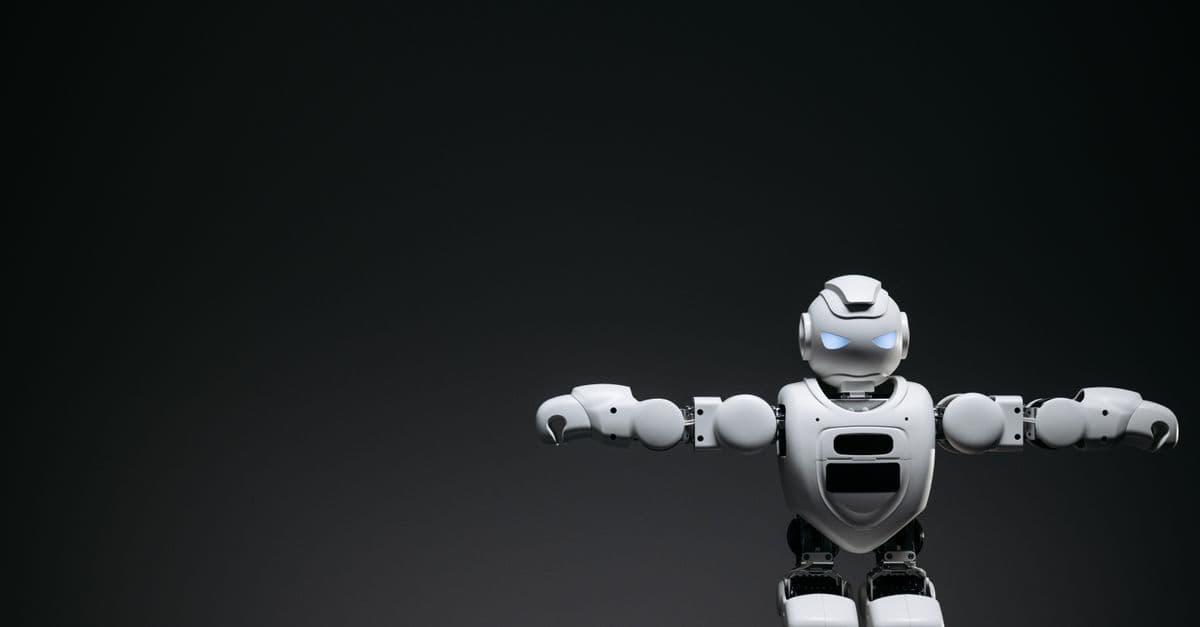
Photo: Marek Pavlík / Pexels
It sounds like the oldest utopian promise: an end to war. But the mechanism being imagined isn't pacifist — it's computational. The theory goes: most wars begin because of miscalculation. Leaders overestimate their own strength, underestimate their adversary's will, misread intentions, and make gambles that turn into catastrophes nobody wanted. If an AI system could perfectly model the likely outcomes of any military action — conveying to every leader, in every language, with complete clarity, exactly what will happen if they start a war — rational actors would choose not to.
Thought experiment. This article explores a hypothetical scenario for educational and speculative purposes. The events described are not predictions and should not be interpreted as warnings, advocacy, or instructions.
The theory has merit. It also misunderstands why wars start.
Key takeaways
- Many historical wars resulted from miscalculation — WWI being the canonical example where all parties expected short, victorious campaigns and got a four-year catastrophe.
- AI could reduce some war triggers — particularly those involving information gaps, misread signals, and unintended escalation.
- AI-enabled military capabilities may simultaneously make war more tempting, more precise, and more dangerous in ways that offset conflict-prevention gains.
- The causes of war are not primarily informational — they include domestic politics, ideology, honor, and the desire for territory and power that survive rational cost-benefit analysis.
The optimistic scenario
The deterrence theory argument is compelling in specific cases. Nuclear deterrence has broadly worked for 80 years because both parties understood with clarity that launching nuclear weapons meant mutual destruction. The certainty of outcome deterred action. If AI could extend this clarity to conventional conflicts — modeling outcomes with high fidelity and conveying them credibly — it might deter wars that currently begin because leaders convince themselves their gamble will succeed.
Crisis communication could also improve. Many wars have been catalyzed by misread signals: a military movement interpreted as an attack, an ultimatum misunderstood as a bluff, a missed diplomatic message during a communication blackout. AI systems monitoring communications, military positions, and intent indicators in real time could detect dangerous misunderstandings early and alert both sides before they escalate.
Logistics and intelligence advantages from AI could also raise the cost and difficulty of offensive operations. A defender equipped with AI-enabled surveillance, predictive targeting, and logistics optimization may be able to hold territory more efficiently against a larger aggressor — raising the cost of aggression and making conquest less attractive.
There is also an arms control dimension. AI could improve treaty verification — detecting violations of arms limitation agreements, nuclear test ban treaties, and chemical weapons prohibitions — more comprehensively than human inspectors, making credible commitments to restraint easier to sustain.
The realistic complications
The causes of war are not primarily informational.
World War I's July Crisis is the standard illustration of miscalculation causing catastrophe — the mobilization timetables and alliance commitments forced escalation beyond any leader's control. But World War II's European theater began with Hitler's deliberate aggression, having been informed fairly accurately about Allied strength. The information was available; the decision-making process was pathological.
Many wars begin not because leaders don't know the likely outcome, but because domestic political pressures, nationalist demands, or ideological commitments make conflict preferable to the politically costly alternatives of compromise or capitulation. A leader facing domestic collapse may choose an unwinnable war because the alternative is immediate removal from power. AI that accurately predicted military defeat would not necessarily change that calculation.
The incentive for AI-enabled warfare is real and is currently driving military investment, not prevention. AI-controlled weapons systems, autonomous drones, AI-enhanced targeting, and AI-driven cyber operations are all under active development by major military powers. Each of these makes war faster, more precise in some dimensions, and more capable of being conducted remotely — all of which can make the decision to use force easier, not harder.
The unintended consequences
The most serious risk of AI in the military domain is autonomous weapons that make lethal decisions without meaningful human oversight — sometimes called "killer robots" in popular discourse, "lethal autonomous weapons systems" (LAWS) in policy.
Current AI systems are narrow optimizers. A system tasked with protecting a base from aerial threats will shoot down aircraft that meet its target criteria. If those criteria are imperfect — and they will be imperfect — it will shoot down things that shouldn't be shot down. In a crisis, an autonomous system that misidentifies a civilian aircraft as a hostile drone could trigger escalation that no human initiated or intended.
The speed of AI-enabled warfare creates timescales that may outpace human decision-making. A cyberattack targeting power grid infrastructure can propagate in milliseconds. An AI system interpreting an adversary's rapid missile preparations might recommend and execute a pre-emptive strike before any human authority has processed the situation. The AI doesn't intend to start a war — it's doing exactly what it was designed to do. The outcome is catastrophic anyway.
AI also changes the calculation for non-state actors and smaller powers. Autonomous weapons reduce the personnel cost of military operations, potentially enabling smaller organizations to project significant violence. Drone swarms controlled by AI could be produced at scale for costs that make them accessible to groups that previously couldn't afford significant military capability.
AI and Nuclear Command: A High-Stakes Domain
The most serious near-term risk for AI and conflict involves nuclear weapons. Nuclear command systems are already partially automated — early warning systems that detect missile launches and alert leadership operate on timescales (minutes to seconds) that leave little room for human deliberation.
Adding AI to this environment is extraordinarily risky. A modern AI-enhanced nuclear command system might be designed to identify attacking missiles faster, predict adversary actions, and recommend retaliatory responses in seconds. In a crisis, if the system misidentifies a satellite launch or weather phenomenon as a missile attack, or if it detects ambiguous signals and recommends a strike, it could precipitate a nuclear war that no human authorized.
Source: Scharre, P., Council on Foreign Relations (2018) — Autonomous Weapons and Operational Risk.
The problem is fault-intolerant escalation. In conventional warfare, mistakes can be corrected — if you strike the wrong target, you can apologise and negotiate. In nuclear warfare, there is no correcting a mistake. A single false positive in an AI system could end hundreds of millions of lives.
Russia and the US both maintain nuclear launch authorities on hair-trigger alert — they could theoretically fire within 15 minutes of a warning. Adding AI systems to make faster decisions in this environment concentrates existential risk into algorithms that have never been stress-tested in a genuine crisis.
The Escalation Ladder in an AI-Enabled World
Traditional escalation theory (developed by Cold War strategists) models conflict as a ladder: conventional conflict, then weapons of mass destruction, then nuclear. At each step, the side that's losing has an incentive to move up a rung.
AI could compress or distort this ladder. Cyber operations enabled by AI could disable power grids, financial systems, or military infrastructure rapidly and remotely — creating a qualitatively new "rung" between conventional and WMD. An adversary might escalate to cyber rather than nuclear because cyber feels less catastrophic, even if the consequences for civilian infrastructure are comparable.
Additionally, AI-enabled precision strike (drone swarms, autonomous missiles) could make limited military operations seem more feasible, lowering the threshold for using force. If you believe you can conduct a "surgical" strike with minimal civilian casualties using AI-guided weapons, you're more likely to attempt it. The history of precision bombing in Iraq and Afghanistan shows that even precise weapons cause substantial unintended harm — but the illusion of precision may invite more conflict.
Conversely, if both sides have perfect information about their military capabilities via AI modeling, the asymmetry in expectations could narrow. Two sides that both know they're equally matched might be less likely to fight because the expected outcome is mutual costly stalemate. But this assumes rational decision-making — an assumption that fails when domestic political pressure, ideology, or desperation override military calculation.
Arms Control and Verification in an AI Age
One genuine advantage of AI in conflict prevention is treaty verification. International arms control agreements (nuclear test bans, chemical weapons prohibitions, arms limitation treaties) have historically been hard to verify because detection requires human inspection. AI-enabled monitoring — satellite imagery analysis, seismic network data processing, communications analysis — could detect violations more reliably.
However, there's an asymmetry risk: the major powers have the most advanced AI systems and would have the best surveillance capabilities. Smaller nations or regions would be subject to far more intense monitoring than major powers can subject themselves to. This could create resentment and drive non-compliance.
Additionally, AI-enabled verification could be gamed. If a nation knows the AI is watching for certain types of activity, they might hide violations in ways the AI isn't trained to detect. An arms control agreement could become a form of security theater — verified compliance with the detectable parts while prohibited activities continue in undetectable forms.
Alternative Scenario: AI Enables Precision Deterrence
There's a more optimistic pathway that's worth considering. If AI-enabled surveillance and modeling create complete information transparency — every nation knows exactly what every other nation's military capabilities are, what they're planning, and what they're capable of — some wars become impossible.
A nation that knows an adversary has overwhelming capability wouldn't attempt an invasion. An insurgency facing an enemy with complete surveillance of their movements and perfect prediction of their tactics would have to choose between capitulation and escalation to asymmetric tactics (terrorism) that would trigger overwhelming response.
In this scenario, AI doesn't stop wars through increasing the perceived costs — it stops them through making victory or plausible deniability impossible. You can't stage a false-flag operation that triggers conflict when every action is observable. You can't sneak an invasion when your troop movements are predicted hours before deployment.
This scenario is dystopian in a different way — it creates a world where totalitarian surveillance from outside enforces peace. But it's worth considering because it's not impossible. Some theorists argue this is where the world is heading: perfect information created by satellite networks, AI analysis, and cyber penetration means no nation can hide its actions from rivals. In that world, the incentive structure around war changes fundamentally.
The Role of Transparency and Trust
Ultimately, whether AI prevents or enables war depends on whether it creates trust or arms-race dynamics.
If all nations adopt an AI-enabled surveillance and modeling system and agree to submit military decisions to AI verification systems, and if there's transparency about how the AI works and what it's recommending, the system might create genuine de-escalation pressure. Every leader would know exactly what war would cost, and would know that every other leader knows it too.
But if AI becomes proprietary, opaque, and a source of military advantage, it becomes part of the arms race. Nations will compete to build better AI, fear each other's AI, and potentially misinterpret AI-driven military moves as hostile when they're merely algorithmic. The resulting dynamic could be more unstable than the Cold War because the decision-making timescales are faster and the algorithms are less transparent than human leaders.
Source: Gartzke, E., Journal of Peace Research (2013) — The Myth of Cyberwar.
The outcome depends almost entirely on whether humanity can build cooperative governance frameworks around military AI. This requires unprecedented international agreement, mutual transparency, verification systems that all parties trust, and enforcement mechanisms. Given that nations still can't agree on nuclear weapons treaties, the prospects are not encouraging.
Asymmetric Warfare and AI Accessibility
The optimistic scenario assumes symmetry — all major powers have access to comparable AI systems and can therefore reach similar conclusions about war's futility. But military AI is likely to be highly asymmetric in its distribution.
The US, China, Russia, and the EU will develop sophisticated military AI systems. But smaller nations, non-state actors, and insurgent groups will have access to cheaper, more open-source versions, or will develop AI trained on publicly available data and asymmetric military tactics. An asymmetric actor might use AI-enabled drone swarms or cyber capabilities not to defeat an advanced adversary directly, but to impose political costs and create uncertainty.
In this scenario, AI becomes a force multiplier for the weak. A non-state actor with 1,000 AI-controlled drones poses a threat that a conventional military AI system might not accurately price into a conflict model. The AI system was trained on conventional warfare data where numbers and firepower overwhelmingly predict outcomes. Asymmetric tactics involving distributed networks, decentralized command, and willingness to absorb casualties to achieve a political objective don't fit the model well.
Israel's Hezbollah asymmetric threat, the Taliban's success against technologically superior NATO forces, and maritime piracy all illustrate the principle: an adversary that can absorb losses and exploit technological complexity can impose costs far exceeding initial capability projections. An AI system trained on historical conventional wars might conclude "war is futile" and recommend restraint, while ignoring the fact that an asymmetric adversary views the same war very differently — not as a contest of military capabilities but as a contest of political will and tolerance for casualties.
Source: Kaldor, M. (2012). New and Old Wars: Organized Violence in a Global Era. 3rd ed. — Framework distinguishing conventional and asymmetric warfare, predating but relevant to AI context.
The risk is that AI-enabled conflict prevention systems create a false sense of security among advanced powers, precisely while asymmetric threats are proliferating. Optimistic deterrence models predict war won't happen; reality delivers something worse: persistent low-intensity conflict, terrorism, proxy wars, and cyber attacks that fall below thresholds for "war" in traditional definitions but extract continuous costs and suffering. An AI optimized to prevent declared wars might actually increase the prevalence of undeclared, asymmetric, and deniable conflicts.
What History Tells Us About Technology and War
Wars have never been stopped by technology making them harder to fight. Tanks didn't stop WWI escalation; they prolonged it. Nuclear weapons didn't stop wars — they stopped wars between nuclear powers, but dozens of conventional wars have occurred since 1945. The introduction of each new military technology has been followed by its use, often in ways that surprised the technology's designers.
AI is unlikely to be the exception. It will be used as a military advantage, it will change the way wars are fought, and it will create new pathways to conflict even as it closes others. The question isn't whether AI will prevent wars — it won't. The question is whether humanity can develop sufficient wisdom and governance to keep AI from making wars more catastrophic than they would be otherwise.
The Takeaway
The theory that AI could prevent war by removing miscalculation has merit for specific scenarios — it could reduce some signal-misreading crises and improve transparency. But it rests on a naive model of war causation. Most wars don't start because leaders miscalculate outcomes; they start because the political, ideological, or territorial stakes are high enough that even a costly war seems preferable to capitulation. AI that perfectly predicts battlefield outcomes won't change these calculations. Simultaneously, AI is being weaponised, embedded in autonomous systems, and accelerating decision cycles in ways that could make war faster and more devastating. The greatest risk is that AI becomes a tool in an arms race, creating new pathways to conflict even as it suggests pathways to its prevention. This scenario doesn't necessitate an end to war — it more likely creates a world where the nature of conflict becomes more complex, faster, and harder for humans to control.
Frequently Asked Questions
Q: Has AI actually prevented any conflicts?
A: There is no documented case of AI systems directly preventing a declared war, though AI-enhanced intelligence systems have contributed to de-escalation in some specific crises by improving communication or providing better situational awareness. The counterfactual is difficult to assess — we don't know how many near-wars were averted by AI analysis.
Q: Are killer robots real?
A: Partially. Automated defense systems that fire at aircraft or missiles meeting target criteria exist (like CIWS — Close-In Weapon Systems — on naval vessels and Israel's Iron Dome). Fully autonomous lethal systems that identify and attack human targets without human authorization are under development but subject to legal and ethical debate. No major military officially claims to have deployed fully autonomous lethal systems in operational theatre.
Q: Would AI make wars shorter?
A: Possibly in some dimensions — AI could accelerate decision cycles, logistics optimisation, and targeting. But wars that become cheaper to conduct and require fewer troops may actually last longer because the political cost of continuing falls along with the personnel cost. The 20-year wars in Iraq and Afghanistan, enabled by remote drone operations and reduced US casualty rates, illustrate this paradox.
Q: Could AI be used to predict wars before they start?
A: Political scientists have developed early warning models using economic, political, and historical data to estimate conflict risk. These perform better than random chance but worse than practitioners often claim. AI enhancements improve performance on historical data but face the fundamental challenge that the conditions causing entirely novel conflicts may not appear in historical patterns.
Q: What's the biggest near-term AI risk for conflict?
A: Most defence researchers identify autonomous systems making lethal decisions without human authorisation — particularly in cyber, drone, and nuclear command contexts — as the highest near-term risk. The absence of binding international regulation and the competitive dynamic among major powers makes this a genuine policy gap that poses existential risk.
Q: Could AI ever make nuclear war less likely?
A: Possibly, if AI systems improve verification of arms control agreements and create perfect transparency about nuclear capabilities. But adding AI to nuclear command could also increase accident risk by creating systems that make launch recommendations in seconds. The net effect remains uncertain and depends entirely on how systems are designed and governed.
Read next:
Follow new articles
Add SciHub101 to your feed reader to see new science and technology stories.
About the Author
SciHub101 is an independent science and technology publication founded and edited by Buğra Sözeri, a software engineer and app developer based in Türkiye. AI tools assist with drafting and research. Source documentation in the existing archive is uneven, and articles are being reviewed and corrected. The Editorial Team byline identifies editorial responsibility; it does not certify specialist or independent human review. Where we compare products, anything built by our own team is labelled as such — see the editorial guidelines and About page for how corrections and disclosures work.
Related Articles

What If AI Controlled All Financial Markets?
Algorithms already execute most market trades. What happens when AI moves from executing human decisions to making all of them — and nobody is sure who's actually in charge?

What If Every Person Had a Personal AI Doctor?
A doctor who knows your complete medical history, never forgets, is available at 3 AM, and has read every study ever published. What's not to like?

What If AI Discovered Alien Life?
AI is already scanning billions of radio signals, analyzing atmospheric data, and searching exoplanet spectra. What happens the day it finds something that shouldn't be there?
What If Robots Did All Human Work?
Every delivery, every surgery, every harvest, every line of code — done by machines. What do 8 billion humans do on a Tuesday morning?

What If AI Could Read Your Mind?
Brain-computer interfaces are already decoding thoughts into words. What happens when the technology scales — and who gets to see what you're thinking?

What If AI Ran Every Government?
Governments are slow, corrupt, and self-interested. An AI with perfect information and no incentive to lie sounds tempting. But who programs the AI — and what do they tell it to want?