What If AI Could Read Your Mind?
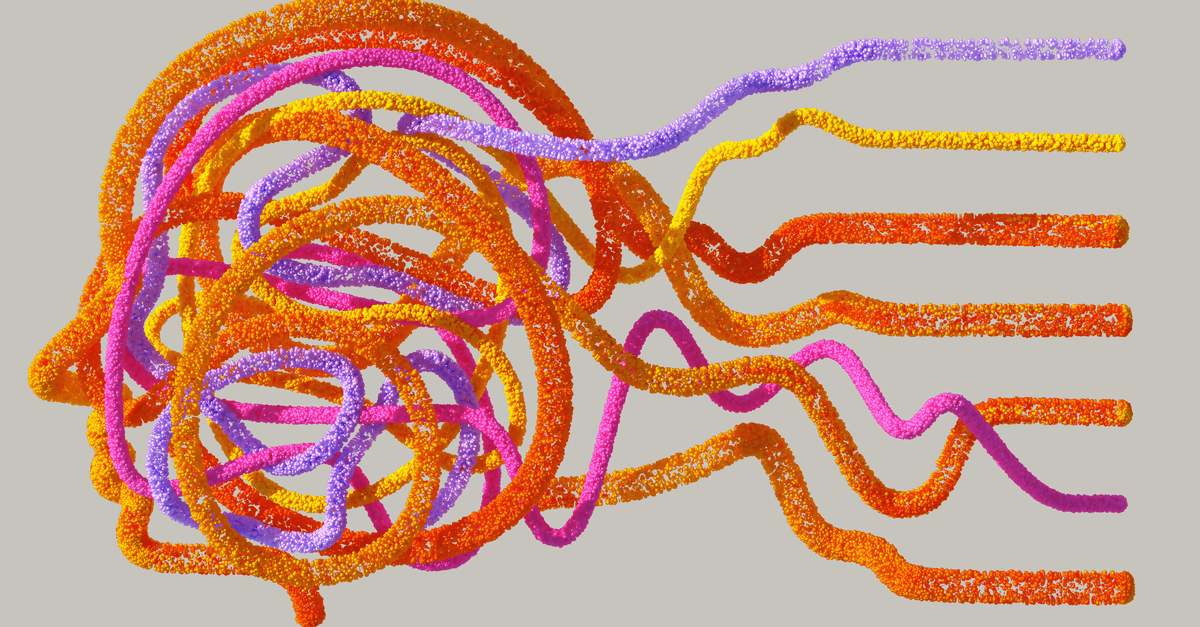
Photo: Google DeepMind / Pexels
The court case changes everything. In 2033, a defendant's legal team challenges the admission of neural evidence — a recording of cortical activity, decoded by AI into a narrative of what the defendant was thinking during the alleged crime. The prosecution argues it shows clear intent. The defense argues it was reconstructed, probabilistic, and subject to AI interpretation errors. The jury doesn't understand the technology. The judge barely does.
Thought experiment. This article explores a hypothetical scenario for educational and speculative purposes. The events described are not predictions and should not be interpreted as warnings, advocacy, or instructions.
The verdict is guilty.
Within two years, neural decoders are being used in job interviews, insurance assessments, and border crossings. The technology was built for medical use. Nobody quite planned this part.
Key takeaways
- Neural decoding is real science, not speculation — AI systems can already reconstruct images, words, and sentences from brain activity measured non-invasively.
- The medical applications — restoring communication to people with paralysis, treating psychiatric disorders with closed-loop neurostimulation — are genuinely transformative.
- The surveillance applications are where the fundamental stakes lie: thought privacy may become the defining civil liberties issue of the mid-21st century.
- AI interpretation of brain data is probabilistic, not a direct readout — but statistical output under coercive conditions creates its own harms.
The optimistic scenario
The medical case for brain-reading AI is compelling and largely uncontroversial in principle.
Patients with locked-in syndrome — fully conscious but unable to move or communicate — are perhaps the most dramatic beneficiaries. Research from UC San Francisco and Neuralink has demonstrated AI systems that decode intended speech from motor cortex activity, enabling paralyzed patients to generate text or speech at near-conversational rates. For people who lost the ability to communicate, this is not a convenience — it is restoration of personhood.
The same technology has applications across neurology and psychiatry. Closed-loop neurostimulation systems — implants that detect early patterns of seizure activity and deliver targeted electrical stimulation to interrupt them — already exist. Extending this approach to depression, OCD, PTSD, and other psychiatric conditions, with AI systems that can detect relevant brain states and intervene precisely, could transform the treatment of mental illness.
Research using non-invasive methods — fMRI, EEG, functional near-infrared spectroscopy — has advanced beyond what most people realize. A 2023 study at UT Austin demonstrated that an AI could reconstruct the semantic content of narratives people were listening to from fMRI data alone — not word-by-word, but with enough accuracy to identify the gist of what someone was hearing. A 2024 Nature Neuroscience paper showed image reconstruction from visual cortex activity with striking fidelity.
The realistic complications
What these systems actually measure is neural activity — not thought directly. The AI's reconstruction is a probabilistic inference about what mental state most likely produced the observed brain signal. The gap between these two things is critical and frequently underappreciated in public discourse.
Brain activity is incredibly noisy, individual, and contextually dependent. The same neural pattern in two people might represent entirely different mental states. In the same person, the same mental state on two different days might produce somewhat different neural patterns. AI systems can learn these individual mappings — but they require extensive calibration per person, and they produce inferences with confidence intervals, not certainties.
The fidelity of non-invasive mind reading is also limited. Current fMRI-based systems can reconstruct the rough content of imagery and narrative at the category level, but not precise thoughts, specific words in real-time, or complex, abstract mental content. The systems that achieve high fidelity are operating in highly constrained experimental settings — subjects in scanners, focusing on defined tasks, with extensive training data collected specifically for that individual.
Invasive systems using implanted electrodes can achieve higher bandwidth, but the neurosurgical risk limits their use to patients with serious medical need. The scenario of mass non-invasive thought reading at scale requires technological advances beyond current capability — though the pace of progress in the field makes "this will never happen" difficult to defend.
The unintended consequences
The history of surveillance technology suggests a clear pattern: capability developed for legitimate purposes is repurposed for control at scale.
CCTV was deployed for traffic management; it became the infrastructure of mass surveillance. Metadata collection was justified for national security; it enabled the profiling of billions of people. DNA databases were built for forensic identification; they became genealogical surveillance tools used in ways their originators never contemplated.
Neural decoding technology would follow the same pattern, with higher stakes. Governments under pressure from crime, terrorism, or political opposition would have strong incentives to deploy such technology at scale. Insurance companies would price premiums based on detected cognitive states. Employers would screen for attention, loyalty, and attitude. The logic is the same that drives polygraph use — the technology is imperfect, but the authority it projects is powerful.
The epistemic problem would be severe. Neural AI decoding produces probabilistic outputs that AI systems present with apparent confidence. A person who has a fleeting thought that an AI decoder might flag as dangerous or disloyal has no obvious remedy — they cannot choose not to have fleeting thoughts. The internal world, which has always been the one space of genuine freedom from external control, would no longer be private.
There would be asymmetric access effects. Corporations and governments would have neural data on their employees and citizens. Individuals would have no reciprocal insight into the mental states of those in power. The existing asymmetry of surveillance would become categorical.
Current Brain-Computer Interface Technologies
The science of reading thoughts is nowhere near the Hollywood version, but it's advancing faster than most people realize. There are three main approaches in use today:
Invasive methods: Electrocorticography (ECoG) and microelectrode arrays. Surgically implanted electrodes directly measure electrical activity from brain tissue. ECoG electrodes sit on the cortical surface; microelectrode arrays (like those developed by Neuralink) penetrate into neural tissue to record individual neuron firing. These offer the highest signal fidelity and bandwidth — the UC San Francisco study mentioned above used ECoG implants. The trade-off is neurosurgical risk; this limits use to patients with serious medical need. Current trials show decoding of attempted speech, arm movement intent, and emotional state at high accuracy.
Source: Anumanchipalli, G.K., et al., Nature (2019) — Speech synthesis from neural decoding of spoken thought.
Non-invasive functional imaging: fMRI and PET. Functional MRI measures blood flow (hemodynamic response) as a proxy for neural activity. Spatial resolution is ~2mm, and temporal resolution is slow (seconds). But AI can reconstruct complex mental content — studies have shown AI decoding the semantic category of images a person was viewing, the narrative they were listening to, and even rough visual imagery. The advantage is no surgery. The disadvantage is the scanner is expensive, requires 30+ minutes of immobility, and the spatial-temporal limitations make it unsuitable for real-time applications.
Non-invasive electrical imaging: EEG and functional near-infrared spectroscopy (fNIRS). EEG has poor spatial resolution (~1 cm, at best) but excellent temporal resolution (milliseconds) and is inexpensive and portable. fNIRS uses infrared light to measure oxygenation changes in superficial cortex — better spatial resolution than EEG but worse than fMRI. Research groups have demonstrated intent detection, emotional state inference, and limited word-level thought decoding from EEG. Consumer EEG headbands exist for meditation and focus applications, though their neuroscientific validity for thought reading is limited.
The Legal and Ethical Frameworks Being Built
Governments and international bodies are scrambling to develop regulatory frameworks for neural data, but they're starting from almost nothing. Privacy law historically protected externalised information — emails, phone calls, medical records — but neural data is qualitatively new. It's the most intimate data a person can generate.
Chile's neurorights amendment (2021) was the first constitutional protection of neural data, guaranteeing the right to mental integrity, psychological privacy, and personal identity. The measure was prompted by neuroscientist concern that neurotechnology was advancing faster than regulation.
The EU is developing the Neurorights Directive, which would establish principles for informed consent, data ownership, and protection against discrimination based on neural data. The proposal includes restrictions on non-consensual neural recording and the use of neural data for surveillance or cognitive manipulation.
The US lacks comprehensive federal legislation but has scattered proposals — the Neurorights Bill in Congress would prohibit non-consensual neural monitoring, restrict data sharing, and establish oversight. Individual states and tech companies are moving faster than federal law.
The core challenge is that neural data is predictive — it can be used to infer things a person hasn't yet done or decided. Traditional privacy law asks: was I given notice and did I consent? But if someone can infer your likelihood of a crime, disease, or political action from your neural data, consent becomes ethically complicated. You may not know what patterns in your brain could be harmful if revealed.
The Rise of Cognitive Liberty as a Civil Right
"Cognitive liberty" — the right to mental self-determination — is emerging as a critical civil rights concept. Unlike physical liberty (freedom of movement) or speech liberty, cognitive liberty protects the process of thought itself from external intervention.
The primary threats are:
- Neural surveillance: Decoding thoughts without consent or with coerced consent (employment, criminal investigation, border crossing).
- Neural manipulation: Direct brain stimulation or pharmacological intervention that alters cognition without informed consent.
- Cognitive profiling: Building AI models of an individual's thought patterns to predict and influence future behavior.
Neuroethicists argue that cognitive liberty is more fundamental than other rights — you can't exercise free speech, freedom of conscience, or political liberty if someone can read and predict your thoughts. Once cognitive liberty is violated, all other liberties become illusory.
Source: Andorno, R., et al., Life Sciences, Society and Policy (2017) — The Ethics of Neurotechnology.
The legal problem is that cognitive liberty is hard to define precisely. Where is the line between legitimate medical monitoring (a neurostimulator detecting a seizure) and illegitimate surveillance (the same device reporting "suspicious" thoughts)? How do you prove non-consensual neural monitoring happened if the technology is implanted? Who owns neural data — the person who generated it or the entity that collected it?
The Commercialization Risk — Neural Data as a Commodity
If mind-reading technology becomes feasible at scale, it will inevitably become commercialized. Corporations have already demonstrated their willingness to monetize intimate personal data — location history, browsing habits, social connections. Neural data is orders of magnitude more intimate, containing a record of your thoughts, fantasies, fears, and intentions in raw form.
The economic incentive is enormous. Insurance companies could theoretically request neural data to assess policy-holder health and risk — a request framed as optional but coupled with premiums that price out those who refuse. Employers could demand neural monitoring as part of hiring or performance evaluation, arguing it improves workplace safety or identifies workers at risk of burnout or dissatisfaction. Dating apps could use neural preference decoding to match partners with unprecedented accuracy. Political campaigns could profile voters at a neural level, micro-targeting propaganda designed specifically for each individual's unconscious triggers.
None of this requires dystopian government mandate. Market pressure alone could drive adoption. Just as social media platforms dominate behavior through network effects (users must join because everyone else is there), neural-data platforms could become mandatory for participation in key institutions — finance, employment, education, healthcare. Opting out becomes economically suicidal.
The problem is compounded by what researchers call neural opacity — the fact that individuals themselves often don't fully understand their own thoughts and motivations. An AI system decoding your neural patterns might identify a nascent bias, implicit fear, or unconscious preference before you consciously recognize it. You lose the privacy of your own mind even from yourself, discovering your true thoughts through third-party algorithmic analysis.
Source: Illes, J., et al., Science (2006). "Ethics. Incidental findings in brain imaging research." 311(5762): 783–784. — Early articulation of the problem of discovering information about yourself through neural scanning.
The historical precedent is genomic data. When DNA sequencing became cheap, millions of people donated DNA to ancestry databases or research projects. Within a decade, law enforcement was using those genetic databases to solve cold cases — with or without consent of the donors. Insurance companies began requesting genetic data. Employers used genetic testing for hiring discrimination. The data infrastructure created for one purpose was rapidly repurposed for surveillance and discrimination. Neural data will follow the same trajectory unless protective frameworks are built before the data exists, not after.
Technical Countermeasures and Resistance
If mass neural decoding became a serious threat, what would people do?
Cognitive countermeasures are a theoretical option. Just as people developed methods to defeat polygraph tests (controlled breathing, mental exercises), people could theoretically develop mental techniques to introduce noise into neural signals or mask thoughts. Meditation, deliberate thought fragmentation, or specific mental exercises might degrade decoding accuracy.
But this is adversarial territory. An AI system that's trained to detect countermeasures — to notice when someone is trying to "hide their thoughts" — could flag that resistance itself as suspicious. The result is a cognitive arms race, where the cost of privacy is constant mental effort to defeat surveillance.
Hardware solutions might include neural blockers — implants that disrupt recording signals, or shields that attenuate external neural monitoring. But such tools would themselves become regulated or prohibited.
Regulatory solutions are more promising — legal restrictions on what neural data can be used for, who can access it, and what happens if it's misused. But these require international coordination (neural data could be recorded anywhere, analysed anywhere) and commitment to enforcing them.
The Research Timeline and Critical Inflection Points
Where are we in the arc of development?
2020–2026: Medical applications dominate. Communication restoration for paralysed patients, closed-loop epilepsy treatment, and early psychiatric applications move through FDA approval. Consumer EEG devices remain crude. Non-invasive fMRI-based decoding demonstrates high fidelity but remains confined to research labs.
2027–2035 (predicted): Implantable neural interfaces (like Neuralink) scale to tens of thousands of patients. Miniaturisation and wireless technology improve. fMRI-based decoding becomes practical for clinical settings. The first "thought interface" products reach consumer markets — glasses or headbands with integrated EEG for gaming, entertainment, health monitoring.
2035–2050 (speculative): If miniaturisation and AI advancement continue, portable non-invasive thought reading becomes feasible. The technology could be as widespread as smartphones are today. At this point, cognitive liberty becomes the defining political issue.
The critical inflection point is 2035–2040. By then, it should be clear whether the technology's trajectory is medical (well-regulated, therapeutic) or surveillance (pervasive, controlling). If regulatory frameworks work, cognitive liberty becomes protected like other rights. If they fail, the technology scales and becomes coercive before opposition can mount.
The Takeaway
This scenario is a thought experiment, not a prediction or warning. But it's grounded in real science advancing on a rapid timeline. Neural decoding technology is already here — limited, constrained, requiring expensive equipment and expert interpretation. But the trajectory suggests that within 10–20 years, the technology could be widespread, inexpensive, and powerful enough to constitute a genuine threat to cognitive privacy if not carefully regulated. The optimistic path is that medicine advances, regulation works, and cognitive liberty becomes a protected right. The pessimistic path is that surveillance logic overwhelms medicine logic, and the one remaining refuge of human freedom — the privacy of thought — becomes externally accessible. The time to choose which future we want is now, before the technology matures and the choices are made for us.
Frequently Asked Questions
Q: Can AI read minds right now?
A: In limited, constrained experimental settings, AI can reconstruct semantic content of thought from brain imaging data with meaningful accuracy. This is not mind reading in the science fiction sense — it requires expensive equipment (fMRI machines costing millions), individual calibration, and produces probabilistic rather than certain outputs. But the foundations are real and advancing rapidly.
Q: Would mind-reading AI be admissible in court?
A: This is being actively debated in legal scholarship. The evidentiary standards for probabilistic AI outputs, the confrontation rights of defendants against algorithmic evidence, and the constitutional implications of compelled neural recording are all open questions in most jurisdictions. Some legal experts argue it should never be admissible; others propose strict standards for admissibility.
Q: Could you lie to a mind-reading AI?
A: Possibly. Research on neural decoding suggests that deliberate mental noise or specific mental countermeasures might reduce signal quality and decoding accuracy. But an adversarial AI system trained to detect resistance could potentially learn to recognise these countermeasures — creating a cognitive arms race analogous to attempts to defeat lie detectors.
Q: What's the most likely near-term application?
A: Medical applications will dominate the next decade: communication restoration for people with paralysis (already in trials), closed-loop treatment of epilepsy and psychiatric conditions, and rehabilitation after stroke. These applications are proceeding through clinical trials and will likely be FDA-approved in various forms within 5–10 years.
Q: Does any law currently protect thought privacy?
A: Most privacy law protects information that has been externalised — speech, writing, behaviour. The internal mental state has historically not required protection because it was inaccessible. Neural data privacy is a rapidly emerging legal area. Chile amended its constitution in 2021 to include neuroprotection, and the EU is developing comprehensive neural data protections. The US lags behind but has proposals in Congress.
Q: What would happen to people with implanted neural devices if this technology became invasive?
A: People with medical neural implants would be particularly vulnerable in a surveillance scenario. Their devices could be repurposed or hacked to monitor thoughts. This argues for robust data security standards, legal protections for medical device data, and perhaps even a legal right to disconnect or remove devices. Any future neural technology regulation must include strong protections for those who have implants for medical reasons.
Read next:
Follow new articles
Add SciHub101 to your feed reader to see new science and technology stories.
About the Author
SciHub101 is an independent science and technology publication founded and edited by Buğra Sözeri, a software engineer and app developer based in Türkiye. AI tools assist with drafting and research. Source documentation in the existing archive is uneven, and articles are being reviewed and corrected. The Editorial Team byline identifies editorial responsibility; it does not certify specialist or independent human review. Where we compare products, anything built by our own team is labelled as such — see the editorial guidelines and About page for how corrections and disclosures work.
Related Articles

What If AI Ran Every Government?
Governments are slow, corrupt, and self-interested. An AI with perfect information and no incentive to lie sounds tempting. But who programs the AI — and what do they tell it to want?

What If Robots Did All Human Work?
Every delivery, every surgery, every harvest, every line of code — done by machines. What do 8 billion humans do on a Tuesday morning?

What If Every Person Had a Personal AI Doctor?
A doctor who knows your complete medical history, never forgets, is available at 3 AM, and has read every study ever published. What's not to like?

What If AI Could Stop All Wars?
War is driven by miscalculation, misperception, and the fog of conflict. What if AI removed all three — would peace be the result, or just a different kind of violence?

What If AI Controlled All Financial Markets?
Algorithms already execute most market trades. What happens when AI moves from executing human decisions to making all of them — and nobody is sure who's actually in charge?

What If AI Discovered Alien Life?
AI is already scanning billions of radio signals, analyzing atmospheric data, and searching exoplanet spectra. What happens the day it finds something that shouldn't be there?