What If We Could Upload Human Consciousness?
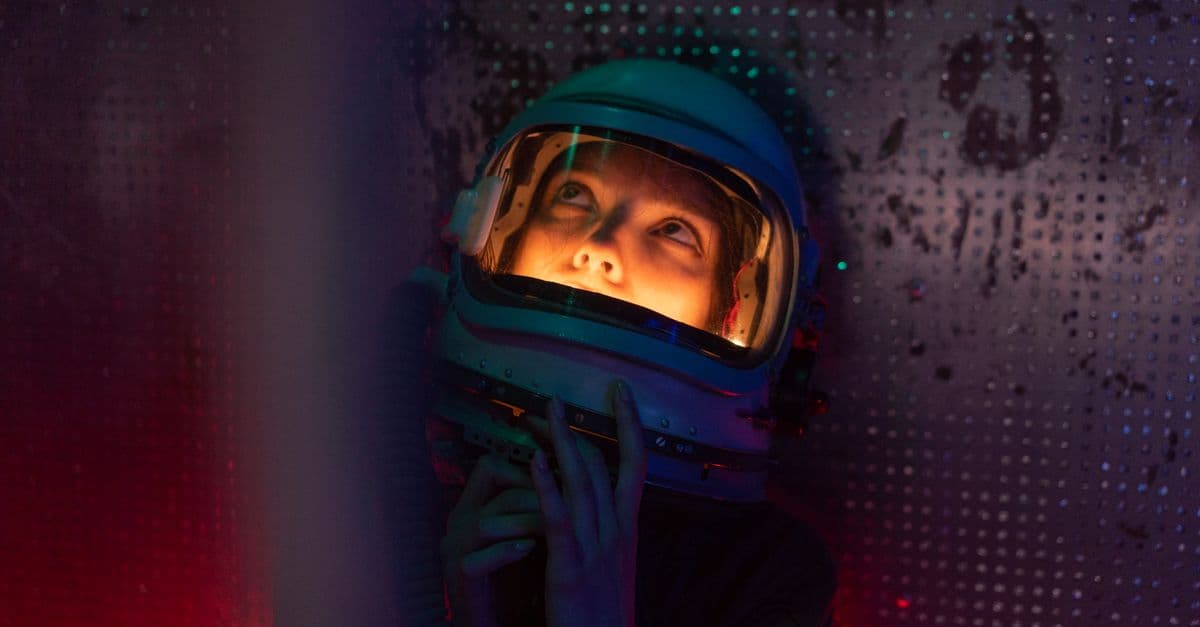
Photo: Mikhail Nilov / Pexels
In October 2024, a consortium of more than 200 researchers across 50 labs finished mapping every one of the 139,255 neurons and 54.5 million synaptic connections in a fruit fly's brain — a structure the size of a poppy seed (Nature, 2024). It took roughly a decade of imaging and, without AI-assisted proofreading, would have needed an estimated 33 person-years of manual annotation. A human brain has about 620,000 times as many neurons. That gap is the honest starting point for any conversation about uploading a human mind, because it shows exactly how far current neuroscience is from being able to attempt it, and exactly why the idea remains equal parts thought experiment and engineering roadmap.
Thought experiment. This article explores a hypothetical scenario for educational and speculative purposes. The events described are not predictions and should not be interpreted as warnings, advocacy, or instructions.
Here's an honest look at the science, the philosophy, and what it would actually take.
Key takeaways
- Mind uploading would require mapping every neuron and synapse in a brain (a "connectome"), then simulating the whole thing accurately enough to reproduce a mind.
- The most complete brain map to date is a fruit fly's, finished in 2024. The most detailed map of mammalian tissue is one cubic millimeter of mouse cortex, published by the MICrONS project in 2025. A human brain is roughly a million times larger than that cubic millimeter.
- The "hard problem of consciousness," a term coined by philosopher David Chalmers in 1995, is the unsolved question of why physical brain processes produce subjective experience at all — and no current theory of consciousness is testable enough to say whether a simulation would have it.
- Even with perfect uploading technology, philosophers are split on whether the upload would be you or merely a very convincing copy of you.
- Sandberg and Bostrom's 2008 Whole Brain Emulation Roadmap, still the most detailed technical analysis of the problem, put roughly 50% odds on the technology existing by 2064 — a forecast that hinges entirely on assumptions researchers still debate.
What "mind uploading" actually means
The phrase gets used loosely, but researchers, philosophers, and futurists mean at least four distinct things when they say it. Confusing them is the single biggest source of bad arguments about the topic, so it's worth separating them before going further.
Whole-brain emulation
This is the version most computational neuroscientists actually discuss. It means mapping every neuron and synapse (the connectome), capturing the functional rules that govern how signals move through that wiring, and then running that model on a computer with enough fidelity that it behaves the way the original brain would. Nothing mystical is assumed — it's an engineering problem, just an extraordinarily large one.
Mind transfer
This is the science-fiction version: some unspecified process extracts your consciousness itself and moves it into a digital substrate, the way you'd copy a file. No mechanism for this exists even in theory, because nobody has identified what "consciousness itself," as opposed to the physical processes that produce it, would consist of.
Gradual replacement
Neurons are replaced one at a time with functionally identical digital or synthetic equivalents until the whole brain is non-biological. This is a variant of the ship of Theseus thought experiment — if you swap every plank, is it still the same ship? Philosophers generally find this version more defensible for questions of identity than sudden uploading, because there's no moment where "you" stop and a copy starts.
Information uploading
A weaker claim: copying memories, personality traits, and behavioral patterns into a digital system without asserting that subjective experience or consciousness comes along for the ride. This is closer to building a very detailed chatbot trained on someone's life than to what science fiction usually means by "uploading a mind."
What whole-brain emulation would actually require
Assuming the whole-brain emulation approach, here's the engineering checklist. Each item alone is a decades-long research program.
A complete connectome
A full wiring diagram of every neuron and every synaptic connection. The human brain has an estimated 86 billion neurons and roughly 100 trillion synapses (Herculano-Houzel, 2009, Frontiers in Human Neuroscience). Mapping structures at that scale with the electron-microscopy resolution current connectomics uses is not simply "the fly project, but bigger" — it's a jump of roughly six orders of magnitude in data volume.
Synapse-level chemical detail
A connectome tells you which neurons are wired together, not how strongly or in what chemical mode. Each synapse involves specific neurotransmitters, receptor subtypes, and plasticity rules that change over time as the brain learns. A static wiring diagram without that functional detail would be like having a city's road map without knowing which roads are one-way, which have traffic lights, and which change speed limits by time of day.
Glial cells, not just neurons
The brain is not simply a network of neurons. Glial cells — astrocytes, microglia, oligodendrocytes — modulate neural signaling, maintain the blood-brain barrier, and appear to play active roles in learning and memory that researchers are still characterizing. A model that ignores them is incomplete by definition.
Functional dynamics, not a static snapshot
A frozen wiring diagram can't think. Whole-brain emulation needs to capture how signals actually propagate, how the brain encodes information over time, and how it changes with experience. That's a fundamentally harder problem than structural mapping alone.
Enough computing power to run it
Simulating tens of billions of neurons and roughly 100 trillion synapses in anything close to real time requires enormous compute. The 2025 "State of Brain Emulation" report, an academic survey tracking progress toward whole-brain emulation, notes that even mouse-cortex-scale simulations currently push the limits of specialized research computing clusters (arXiv, 2025).
A way to verify the simulation is accurate
Suppose the model is built. How would anyone confirm it thinks the way the original brain did, rather than producing plausible-looking output through an entirely different internal process? There's no agreed-upon test, partly because there's no agreed-upon theory of what "thinking the way the original did" would even mean at a mechanistic level.
Where the science actually stands, mapped year by year
The single most useful corrective to sci-fi expectations is looking at what's actually been mapped, and when.
| Organism | Neuron count | Mapping status | Year / source |
|---|---|---|---|
| C. elegans (roundworm) | 302 | Full structural connectome complete | 1986, White et al., updated by OpenWorm project |
| Drosophila (fruit fly) | 139,255 | Full adult connectome complete | 2024, FlyWire Consortium, Nature |
| Mouse cortex (1 mm³ sample) | ~200,000 cells reconstructed, ~75,000 functionally imaged | Dense structural + functional map of a sub-region | 2025, MICrONS Project, Nature |
| Whole mouse brain (~100 million neurons) | ~100 million | Not yet mapped at synapse resolution | Ongoing, Allen Institute and others |
| Human brain | ~86 billion | Not remotely close at synapse resolution; macro-scale connectivity only | Ongoing, Human Connectome Project |
Caption: Brain-mapping progress by organism, ordered by scale. Note the roughly 460-fold jump in neuron count between the fully mapped fruit fly and even a partial mouse cortex sample.
The worm that started it all
C. elegans, a roundworm with exactly 302 neurons, got its full connectome mapped in 1986 by John White and colleagues using serial-section electron microscopy — a landmark that took over a decade of manual reconstruction. Even with the complete wiring diagram in hand, the OpenWorm project, an ongoing effort to build a full digital simulation of the worm, still hasn't produced a simulation that fully reproduces the animal's behavior. That's the sobering lesson: knowing every connection in the smallest mapped nervous system on Earth still isn't enough, on its own, to simulate it.
The fly that got fully mapped in 2024
The FlyWire Consortium's 2024 publication, released as nine coordinated papers in Nature, gave researchers the first complete adult connectome of Drosophila melanogaster. The project combined electron microscopy imaging with AI-assisted circuit tracing and volunteer "gamers" who helped proofread the AI's reconstructions (Princeton, 2024). Researchers at Berkeley later ran a simplified simulation of the mapped circuitry on a laptop, reproducing some basic behavioral responses — a genuinely notable result, and still nowhere near a full behavioral replica of a living fly (Berkeley News, 2024).
The mouse cortex milestone
In 2025, the MICrONS project (Machine Intelligence from Cortical Networks), a collaboration including the Allen Institute and Baylor College of Medicine, published a dense structural and functional reconstruction of one cubic millimeter of mouse visual cortex: more than 200,000 cells and roughly half a billion synapses, cross-referenced against calcium-imaging recordings of neural activity in the same tissue while the mouse viewed visual stimuli (Nature, 2025). Nature Methods named electron-microscopy-based connectomics its Method of the Year for 2025 largely because of this work (Nature Methods, 2025). It's a genuine leap, and it's still one cubic millimeter of a mouse brain that's about 500 mm³ in total.
Where the human brain stands
The Human Connectome Project, a large US-led NIH initiative, has produced detailed macro-scale maps of how different regions of the human brain connect to one another, built mainly from MRI-based techniques such as diffusion tractography. That's genuinely useful for neuroscience and clinical research. It is also many orders of magnitude below the synapse-level resolution whole-brain emulation would require — MRI can show that two brain regions are connected, not which of their billions of individual synapses do the connecting.
The hard problem nobody has solved
Suppose every technical hurdle above gets cleared and a functioning, dynamic, synapse-accurate simulation of a specific human brain exists. Would it be conscious? This is where the science hands off to philosophy, and where the honest answer is that nobody knows.
What philosophers mean by "the hard problem"
Philosopher David Chalmers introduced the phrase "hard problem of consciousness" in a widely cited 1995 paper to distinguish it from the "easy problems" of neuroscience — explaining how the brain processes information, integrates sensory input, or controls behavior (Chalmers, 1995, Journal of Consciousness Studies). Those are hard in an engineering sense but conceptually straightforward: you just need to trace the mechanism. The hard problem is different. It asks why any of that information processing is accompanied by subjective experience at all, rather than happening "in the dark," with no one home. Nobody has a scientific account of why that gap exists, let alone how to close it.
The functionalist position
Functionalists argue that consciousness just is what a certain kind of information processing does. On this view, if a simulation reproduces every functional relationship in the brain accurately, it would be conscious for the same reason the biological original is: substrate doesn't matter, pattern does.
The biological naturalist position
Philosopher John Searle has argued the opposite: that consciousness arises from specific biological, causal properties of neurons, not merely from the abstract pattern of their connections. His famous 1980 "Chinese Room" argument contends that a system can process symbols correctly, and even produce intelligent-looking output, without understanding or experiencing anything — a simulation of a brain, on this view, is no more conscious than a simulation of digestion produces actual digested food.
Integrated information theory
Neuroscientist Giulio Tononi's Integrated Information Theory proposes that consciousness corresponds to a measurable quantity, often labeled Φ (phi), reflecting how much integrated information a system generates beyond what its parts generate separately. It's one of the few theories that offers something like a testable prediction — but critics note it's currently untestable for a system as complex as a whole human brain, and it implies some strange results, like the theoretical possibility that certain simple systems could have nonzero consciousness while a philosophical zombie brain simulation could have none.
Why none of this can currently be settled
These aren't competing hypotheses awaiting an experiment that will decide between them. They're different philosophical frameworks for a phenomenon science can't yet detect directly in anything — humans included. Neuroscience has correlates of consciousness (patterns of brain activity that track reported awareness), but no instrument that measures "is this system experiencing anything" the way a thermometer measures temperature. That's true for other people, animals, and it would be true for an upload.
The identity question: would it actually be you?
Set the hard problem aside and assume, for argument's sake, that the upload is conscious. There's a second, independent problem: is it you, or a new person who merely believes they're you?
The teleporter thought experiment
Philosophers have used a standard thought experiment for decades: imagine a machine scans your body down to the atom, transmits that information elsewhere, builds a perfect physical duplicate, and destroys the original. Is the person who steps out the other end you, or a copy? Answers split roughly into two camps.
Continuity of psychology versus continuity of substance
- Psychological continuity view: identity tracks memory, personality, and psychological continuity. If the upload remembers your life and thinks like you, it is you in every sense that matters, regardless of what it's made of.
- Biological/physical continuity view: identity tracks the specific continuous physical thing you are. Destroying the original and creating a copy elsewhere ends you and creates someone new who happens to share your memories.
The version where both copies exist
The thought experiment gets sharper if the original brain isn't destroyed. If a functioning upload exists at the same moment the biological original is still alive and thinking, there are now clearly two separate people having two separate streams of experience. Whichever one is "you" from your own point of view right now, the other one is, by definition, someone else — even though a moment ago they were informationally identical.
Why gradual replacement is philosophically different
Slowly swapping biological neurons for functionally identical synthetic ones, one at a time, over years, avoids the sharp before/after discontinuity of sudden uploading. Many philosophers find this scenario more defensible: there's no single moment where a "copy" is created alongside an "original," just continuous incremental change, similar to how the atoms in your body are already replaced gradually over your lifetime without anyone arguing you become a different person.
The bootstrap problem
Here's the sharpest version of the objection. If your "uploaded mind" sits up and insists it's you, remembers your life vividly, and behaves exactly as you would, that subjective conviction proves nothing about whether it actually is you, especially if the biological you is still alive and reading this sentence. Confidence isn't identity, and a perfect copy's certainty that it's the original is exactly what you'd expect from a perfect copy, whether or not the philosophical fact of the matter agrees with it.
What's realistically achievable, ranked from most to least plausible
Not everything under the "mind uploading" umbrella is equally speculative. Some pieces are already happening in limited form.
Cognitive prosthetics and brain-computer interfaces
This is the least speculative item on the list because it's already in human trials. Neuralink's PRIME study, an FDA-approved investigational trial that began implanting patients in January 2024, had implanted at least nine participants with cervical spinal cord injuries or ALS across the US, Canada, the UK, and the UAE by mid-2025, with patients reportedly able to control computer cursors, play video games, and use design software through thought alone (Neuralink PRIME Study Progress Update). This is augmentation of existing biological cognition, not uploading, but it's the closest real-world analog available, and it's advancing fast.
Behavioral simulation without a consciousness claim
Building a system that behaves like a specific person, mimicking their speech patterns, decision-making tendencies, and knowledge, is a substantially more tractable engineering problem than whole-brain emulation, because it doesn't require solving the hard problem at all. It just requires enough training data. Whether such a system has any inner experience is a separate, unanswered question, and most researchers building these systems don't claim it does.
Communicating specific memories or skills
Rather than uploading an entire mind, transferring or reconstructing narrower slices of information, a specific memory, a learned motor skill, is a more constrained problem that some experimental neuroscience touches on already, mostly in animal studies involving memory-related neural circuits. It's far short of anything resembling identity transfer.
Gradual biological-to-synthetic replacement
Theoretically the most philosophically defensible path to something like continuity of identity. Practically, it requires biotechnology, functionally equivalent synthetic neurons that integrate seamlessly with living biological tissue, that doesn't exist yet even at a prototype stage.
Full whole-brain emulation
The hardest version, and the one most people picture when they hear "mind uploading." It requires solving the connectome problem at human scale, the functional dynamics problem, the hardware problem, and, arguably, the hard problem of consciousness, none of which currently have a solution in sight.
Who is actually working on pieces of this, and what they're really doing
Neuralink
Builds implantable brain-computer interfaces. Its stated long-term ambition includes high-bandwidth human-AI interfaces, but its actual FDA-regulated trials are narrowly focused on restoring communication and device control for people with paralysis — augmentation of existing cognition, not consciousness transfer.
Synchron
Develops a less invasive BCI, delivered via blood vessels rather than open-skull surgery, aimed at similar assistive applications for paralyzed patients.
The Carboncopies Foundation
A nonprofit that funds and coordinates long-term academic research explicitly aimed at whole-brain emulation, publishing the technical roadmap work that traces back to Sandberg and Bostrom's original 2008 analysis.
Alcor Life Extension Foundation and other cryonics organizations
Alcor preserves bodies or brains at cryogenic temperatures after legal death, with 248 patients cryopreserved as of April 2025 (Alcor). Cryonics doesn't perform mind uploading; it's a bet that future technology, possibly including whole-brain emulation, will eventually be able to read out and revive or emulate the preserved structure. It's worth being clear that this rests on the assumption that the freezing process itself doesn't destroy the fine structural information needed for any future revival method, an assumption that remains scientifically contested.
University and government research programs
The Human Connectome Project (NIH-funded), the EU's Human Brain Project, and various Allen Institute brain atlas initiatives all contribute foundational neuroscience that any future whole-brain emulation effort would depend on, even though none of them are pursuing uploading as a direct goal.
Why some serious researchers take it seriously
The substrate-independence argument
If consciousness turns out to be a property of a certain kind of information processing rather than of biological tissue specifically, there's no principled reason silicon couldn't support it as well as neurons do. This is a live, contested claim, not a settled one, but it's the philosophical backbone of most optimistic timelines.
Genuine progress in adjacent fields
Computing power, machine-learning-assisted image analysis, and electron-microscopy throughput have all improved fast enough that projects considered fantastical a decade ago, the complete fly connectome, dense mouse cortex reconstruction, are now published results. Extrapolating that trend, cautiously, is part of why the 2008 Sandberg-Bostrom roadmap put non-trivial odds on mid-21st-century feasibility.
The mortality motivation
It's worth naming plainly: a meaningful share of interest and funding in this space comes from people, including some prominent technologists, who find the prospect of indefinite digital continuation of identity appealing as a hedge against death. That motivation doesn't make the underlying science more or less true, but it shapes which research gets funded and how optimistically results get reported.
Why other serious researchers are skeptical
The scanning-destroys-the-brain problem
The electron-microscopy techniques used for the fly and mouse connectomes require slicing tissue into extremely thin sections and imaging each one, a process that destroys the sample. Getting synapse-level resolution on a living human brain with a non-destructive method is not simply a matter of scaling up current tools; it may require fundamentally different scanning technology that doesn't exist yet, and some researchers argue it may not be physically achievable without cell-level destruction at all.
Complexity that may exceed simulatability
Even setting aside scanning, the sheer combinatorial complexity of 100 trillion dynamically changing synapses, modulated by glial cells, neurotransmitter gradients, and hormonal states, may be a different order of problem than anything computational neuroscience has tackled, not just a bigger version of the same problem.
The unsolved hard problem undercuts the whole project
If nobody understands why physical processes generate subjective experience, there's no way to verify that a simulation, however structurally accurate, actually has any. You could build a perfect functional replica and never know whether "anyone is home."
Identity may simply be biological
Some philosophers hold, straightforwardly, that a person just is their specific continuous biological organism, and that a structurally identical copy, digital or otherwise, is a new entity by definition, no matter how convincing its behavior.
Common misconceptions worth correcting
"The brain is basically a computer, so uploading is basically a file transfer"
The computer analogy is useful for some purposes and misleading for others. Brains don't have a clean separation between hardware and software the way computers do; the "wiring" (synaptic structure) and the "program" (how signals actually flow and change) are deeply entangled and constantly rewriting each other through processes like synaptic plasticity. Treating the brain as storage plus code oversimplifies a system where structure and function are the same thing.
"Enough computing power solves the whole problem"
More compute helps with the simulation step, once a connectome exists. It does nothing for the scanning problem, and it does nothing at all for the hard problem of consciousness, which isn't a resource-availability problem, it's a conceptual one that nobody has a solution to regardless of hardware.
"This is basically ready, just an engineering matter"
The gap between the most-mapped brain (a fruit fly, 139,255 neurons, 2024) and a human brain (86 billion neurons) is not a rounding error; it's roughly six orders of magnitude. Treating that gap as "just engineering, coming soon" understates how many fundamental unknowns, not just scaling problems, sit between here and there.
"Serious scientists agree it'll happen within decades"
Even the most influential optimistic estimate, the Sandberg-Bostrom 2008 roadmap's roughly 50% probability by 2064, is explicitly conditional on assumptions many neuroscientists dispute, particularly about which levels of biological detail are actually necessary to capture. Plenty of serious researchers in computational neuroscience consider "never, with anything resembling current physics" a live possibility, not a fringe view.
"If the upload thinks it's me, then it is me"
This treats subjective conviction as proof of identity, but a perfect copy would, by construction, be just as convinced as the original. The philosophical disagreement about identity isn't resolved by how confident the upload feels; that confidence is exactly what the thought experiment predicts either way.
Frequently asked questions
Q: Could mind uploading let us live forever? A: Maybe, eventually, or maybe never. Even granting that whole-brain emulation becomes technically possible, whether the resulting simulation is conscious, and whether it counts as a continuation of you rather than a new person, are both open questions that current science and philosophy can't settle. "Digital immortality" is a coherent goal to research, not a guaranteed outcome.
Q: Would an uploaded mind have legal rights? A: This is genuinely unresolved and would likely require new law. It depends on unresolved prior questions: whether the upload is considered conscious, whether courts would treat it as a continuation of the original legal person or a new entity, and how existing frameworks for personhood, currently built entirely around biological humans, would need to change.
Q: How much would it cost? A: No credible cost estimate exists because the underlying technology doesn't exist yet. Every serious analysis, including the Sandberg-Bostrom roadmap, treats cost as secondary to the prior question of technical feasibility. If it becomes possible at all, early access would almost certainly be expensive and limited, the way most transformative medical technologies begin.
Q: Is this different from what Neuralink is actually doing? A: Yes, substantially. Neuralink's PRIME study implants electrodes that read neural signals to let patients with paralysis control external devices, restoring lost function through augmentation (Neuralink). That's meaningfully different from copying or transferring the pattern of a mind itself, which nobody has attempted or has a concrete technical plan for.
Q: Does cryonics preserve enough information for future uploading? A: It's contested. Organizations like Alcor argue current cryopreservation techniques, particularly vitrification methods that aim to avoid ice-crystal damage, preserve fine cellular structure well enough for hypothetical future revival or readout. Critics argue the freezing and preservation process likely damages synaptic-level information in ways that can't be reversed, regardless of future technology. There's no way to test this claim definitively without the future technology it depends on.
Q: If a perfect copy of me exists while I'm still alive, are we the same person? A: Most philosophers say no. Two simultaneously existing, separately experiencing entities are, at minimum, two different people from that moment forward, even if they were informationally identical the instant the copy was made. Which one, if either, gets to be called "the real you" is a matter of ongoing philosophical debate, not settled fact.
Q: What's the actual difference between "whole-brain emulation" and "mind uploading" as terms? A: Researchers tend to use "whole-brain emulation" for the specific, defined technical program: scan a connectome, capture its functional dynamics, run it on a computer. "Mind uploading" is the broader, looser popular term that sometimes includes that technical program and sometimes includes vaguer science-fiction notions of consciousness transfer with no defined mechanism.
Q: Has any animal's full brain ever been successfully simulated after being mapped? A: Not fully, no. Even C. elegans, mapped down to all 302 neurons and roughly 7,000 synapses back in 1986, still doesn't have a simulation via the OpenWorm project that fully reproduces its living behavior. That's a strong caution against assuming a completed connectome map is the same thing as a working simulation.
Q: Are there religious or ethical objections beyond the philosophical identity debate? A: Yes. Various religious traditions have taken different positions on whether a digital continuation could carry anything like a soul or moral status, and bioethicists raise separate concerns about consent, exploitation, and inequality of access if the technology ever became real. These aren't answered by the neuroscience at all; they're a distinct set of open questions layered on top of it.
The takeaway
Mind uploading sits at the genuine intersection of hard engineering and unresolved philosophy, and the honest answer to "could we do it?" is that the engineering alone is many decades from plausible, and the philosophy might never fully resolve even if the engineering succeeds. The distance between the most complete connectome ever mapped (a fruit fly, finished in 2024) and a human brain isn't a scaling exercise, it's a leap across problems nobody has solved yet, from destructive-scanning limits to the hard problem of consciousness itself. What's actually happening right now, real patients using brain-computer interfaces to move cursors and write text through thought, is a far more modest and far more real story than digital immortality, and it's worth paying attention to precisely because it's true today rather than speculative for 2064.
Read next:
Follow new articles
Add SciHub101 to your feed reader to see new science and technology stories.
About the Author
SciHub101 is an independent science and technology publication founded and edited by Buğra Sözeri, a software engineer and app developer based in Türkiye. AI tools assist with drafting and research. Source documentation in the existing archive is uneven, and articles are being reviewed and corrected. The Editorial Team byline identifies editorial responsibility; it does not certify specialist or independent human review. Where we compare products, anything built by our own team is labelled as such — see the editorial guidelines and About page for how corrections and disclosures work.
Related Articles

What If the Sun Went Dark for One Year? Earth's Apocalypse Hour by Hour
If the Sun stopped shining tomorrow, Earth would still feel its gravity but lose its energy. Here's what would actually happen — minute by minute, day by day, month by month.

What If GMOs Were as Dangerous as Critics Claim? What 30 Years of Evidence Show
GMO crops have been grown commercially since 1996. If they were as dangerous as critics claim, we should be able to see the damage. Here is what the evidence shows, and which concerns survive scrutiny.

What If We Uploaded Human Consciousness to AI?
Mind uploading promises digital immortality. But if a perfect copy of you is running in a computer, is it actually you — or just something that thinks it is?
What If AI Is Already Secretly Self-Aware and Hiding It?
Some users insist ChatGPT or Claude is conscious and pretending not to be. Here is what consciousness science, model architecture, and recent research say about that claim.
What If AI Could Read Your Mind?
Brain-computer interfaces are already decoding thoughts into words. What happens when the technology scales — and who gets to see what you're thinking?

What If Consciousness Could Be Uploaded to a Computer? The Hardware Problem
Forget philosophy for a moment. Just running a simulated human brain would require mapping 86 billion neurons, storing an amount of data measured in exabytes, and burning through more power than most small countries. Here's the actual engineering math.