What If Humans Could Photosynthesize Like Plants?
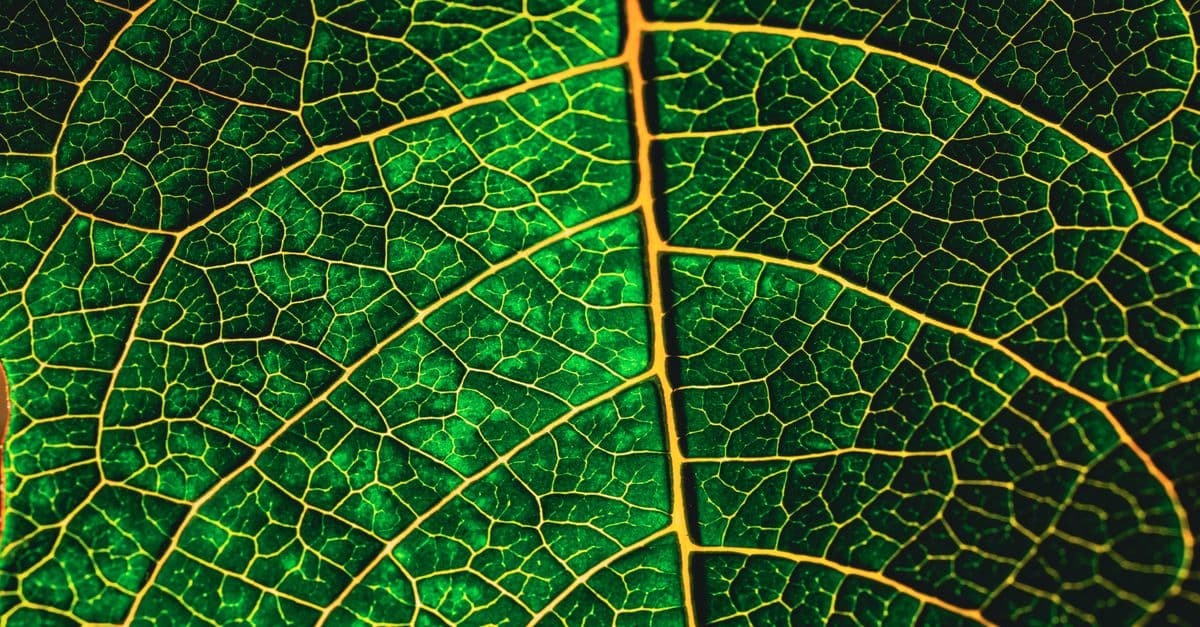
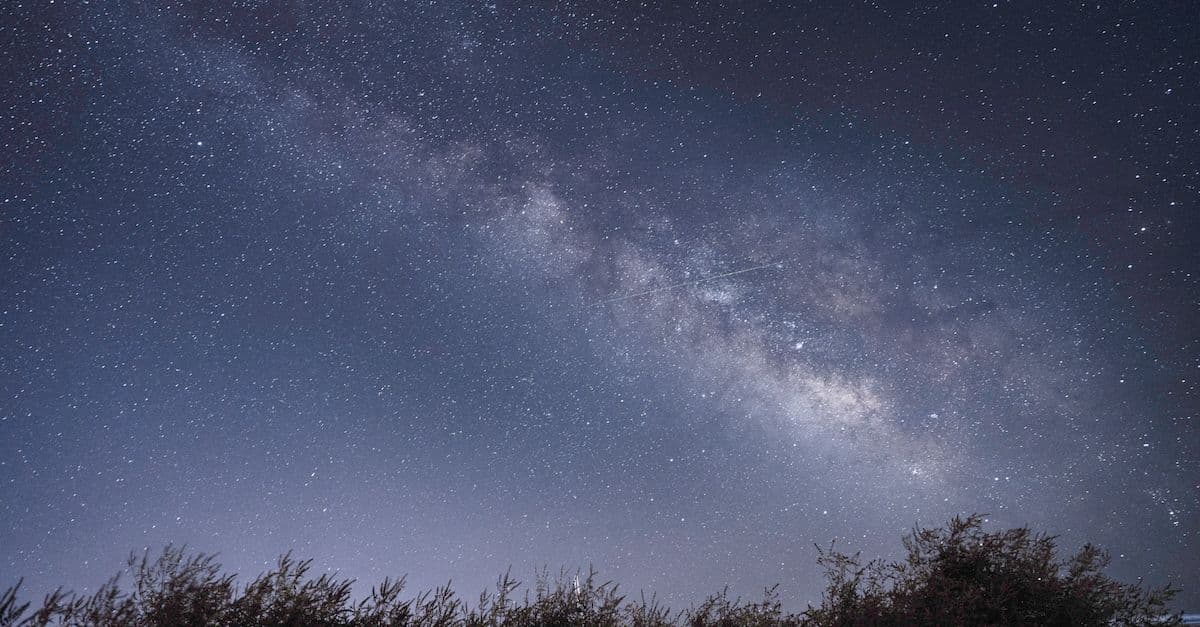
Photo: Damir K . / Pexels
Imagine never needing to eat again — just sunlight, water, and carbon dioxide, the way a tree lives. It's a thought experiment worth taking seriously, because the answer isn't simply "no." It's a specific, measurable "no," and the numbers behind it explain something deeper about why plants are flat, slow, and green while animals are compact, fast, and hungry.
Thought experiment. This article explores a hypothetical scenario for educational and speculative purposes. The events described are not predictions and should not be interpreted as warnings, advocacy, or instructions.
This is not a new idea. Biologists have chased pieces of it for decades, from sea slugs that steal chloroplasts to synthetic biologists building artificial leaves in the lab. None of it adds up to a solar-powered human, and once you work through the physics, biology, and evolutionary history, you'll see exactly why.
Key takeaways
- A human's daily energy needs (roughly 1,600–2,900 kilocalories) far exceed what photosynthesis across our skin area could ever provide, even at 100% efficiency.
- Real plants only convert about 1–3% of usable sunlight into stored chemical energy; the C3 photosynthetic pathway that most plants use tops out around a 4.6% theoretical ceiling under ideal lab conditions, according to a widely cited efficiency analysis published in Current Opinion in Biotechnology.
- The shortfall is roughly 15- to 20-fold: a photosynthetic human in bright sun, doing nothing else all day, would collect a small fraction of one meal's worth of calories.
- Even with engineered chloroplasts, mammals lack the vascular architecture (phloem-like tissue) to move sugars from skin to organs, and isolated plant chloroplasts degrade within days inside animal cells because they depend on nuclear-encoded plant proteins we don't produce.
- Some animals genuinely photosynthesize by stealing chloroplasts from the algae they eat — a process called kleptoplasty — but only species with very low metabolic demands, like certain sea slugs, can make it nutritionally meaningful.
- The realistic future of "human photosynthesis" isn't feeding whole bodies. It's supplying oxygen to specific damaged tissues, accelerating wound healing, and running closed-loop life support in space.
The basic energy problem
Start with what a human body actually burns. Basal metabolic rate — the energy your body uses just to keep your heart beating, brain firing, and organs running at rest — averages around 1,600 kilocalories per day for young men and roughly 1,280 kilocalories per day for young women, according to metabolic-rate research summarized in the peer-reviewed literature on organ-specific energy expenditure. Add in walking, talking, digesting food, and everyday activity, and total daily energy expenditure for most adults lands between roughly 1,800 and 2,900 kilocalories.
Converted to a continuous power draw, a resting adult burns energy at a rate of about 80 to 100 watts — comparable to an incandescent light bulb running around the clock, never switching off, seven days a week. That is the number any photosynthetic replacement for food would have to match, continuously, indefinitely.
So the real question isn't "could human skin do photosynthesis at all?" Small amounts of light-driven chemistry are plausible in engineered cells. The real question is whether skin-based photosynthesis could supply anywhere near 80–100 watts of usable metabolic power. That's where the math turns against us fast.
How much energy could human skin actually collect?
Photosynthesis converts light energy into chemical energy through a fairly specific chain: photons hit chlorophyll, that energy splits water molecules and fixes carbon dioxide into sugar, and the whole process loses energy at every step. To estimate what a photosynthetic human could realistically gather, you need three numbers: available skin area, usable sunlight, and conversion efficiency.
Skin area and what's actually facing the sun
An adult human has roughly 1.7 square meters (about 18 square feet) of total skin surface area. At any given moment, only part of that faces the sun directly — the rest is in shadow, folded against itself, or angled away. A reasonable working estimate used in solar-biology thought experiments is that about half of total skin area, roughly 0.85 square meters, receives meaningful direct or diffuse sunlight during daylight hours.
Compare that to an actual plant. A single mature oak tree can carry 200,000 or more leaves, adding up to hundreds of square meters of light-catching surface, layered in three dimensions to catch light other leaves miss. A human trying to match that surface-area-to-mass ratio would need to unfold into something that looks nothing like a person.
How much sunlight is actually available
Above Earth's atmosphere, the sun delivers about 1,361 watts per square meter, a figure NASA's Solar Radiation and Climate Experiment (SORCE) refined from earlier estimates near 1,366 watts per square meter. By the time that light reaches sea level on a clear day at solar noon, atmospheric scattering and absorption bring peak surface irradiance down to roughly 1,000 watts per square meter, per NASA Earth Science Division data.
That peak number is misleading if you use it for a full-day estimate. The sun isn't at noon-strength for 24 hours — it rises, sets, gets blocked by clouds, and disappears entirely at night. Averaged honestly across a full day in a sunny climate, usable irradiance on an exposed surface works out closer to 200–250 watts per square meter. In cloudier, higher-latitude regions, that average drops substantially further.
Photosynthetic efficiency: the real bottleneck
Even the sunlight that does land on a leaf, or hypothetically on skin, is not converted efficiently. The maximum theoretical efficiency for C3 photosynthesis — the pathway used by roughly 85% of plant species, including rice, wheat, and most trees — is about 4.6% of total incoming solar radiation under ideal conditions at 30°C, according to the efficiency analysis published by Zhu, Long, and Ort in Current Opinion in Biotechnology. C4 plants, a more specialized pathway used by crops like corn and sugarcane, push that theoretical ceiling to around 6%.
Those are lab-ideal numbers. Real-world field performance is much lower: the same research found C3 crops top out around 2.4% seasonal efficiency and C4 crops around 3.7%, once you account for respiration losses, non-ideal light angles, temperatures, and photorespiration (a wasteful side reaction in C3 plants that burns off some of the sugar the plant just made). Most plants, most of the time, average closer to 1%.
Running the numbers
Putting it together for a photosynthetic human resting in a sunny climate all day:
0.85 m² of exposed skin
× 250 W/m² average daily irradiance
× 24 hours
× 0.03 realistic photosynthetic efficiency
= 153 watt-hours per day
≈ 132 kilocalories per day
That's roughly the calorie content of half a banana, or a single slice of toast. Against a real energy requirement of 1,600 to 2,900 kilocalories, the shortfall is somewhere between 12-fold and 22-fold. Even in the most generous scenario — full-body coverage in green tissue, cloudless equatorial sun, and top theoretical C4 efficiency all day — the number climbs into the low hundreds of kilocalories, still nowhere close to survival.
Why the numbers can't be fixed with better engineering
Several structural mismatches between plant and animal biology stack against a photosynthetic human, and none of them are solvable with a clever tweak.
Surface area to volume ratio
Plants evolved to maximize surface area relative to mass, because that surface is their entire energy-collection system. Leaves are thin and flat for exactly this reason: a flat sheet exposes far more area per unit of tissue than a compact, rounded body does. Humans evolved the opposite shape. A compact, roughly spherical or cylindrical body minimizes heat loss and surface vulnerability, which is useful for a fast-moving, warm-blooded animal but terrible for light collection.
A human-mass plant would need to be almost entirely leaf — square meters of thin green tissue rather than the roughly 1.7 square meters of skin a compact human body has. There's no way to reshape a person into that geometry without giving up nearly everything that makes a body work mechanically: muscles, bones, a circulatory system built for pumping blood, not sap.
Metabolic rate is the wrong order of magnitude
Plants are, energetically speaking, almost inert. They don't maintain constant internal body temperature, don't power a nervous system, and don't move muscles against gravity. Mammalian resting metabolism runs on the order of 100 times higher per kilogram of tissue than typical plant metabolism. Even a perfectly photosynthetic human would burn through captured solar energy far faster than it could be replenished, because the body's baseline running costs are simply in a different category from a tree's.
Skin isn't built to absorb light for chemistry
Human skin reflects a substantial share of incoming visible light rather than absorbing it for chemical use, and pigmentation differences change how much is reflected versus absorbed as heat. Even heavily pigmented skin loses most absorbed light energy to heat, not to any chemical reaction, because skin has no chlorophyll-based light-harvesting machinery. Retrofitting that machinery into living skin is a separate, much harder problem from just calculating how many watts theoretically land on the body. Light and human biology also meet in what if we could see in all wavelengths of light.
No infrastructure to move the sugar
Plants distribute the sugars photosynthesis produces through phloem, a specialized tissue built for exactly that job — moving dissolved sugar from leaves to roots, stems, and fruit. Mammals have blood vessels, but they're not organized to shuttle sugar from skin cells to every organ that needs it in a metabolically useful way. Building that distribution network from scratch, inside an already-complete circulatory system, isn't a minor upgrade. It's a redesign of the entire body plan.
What if we tried anyway? The engineering paths people have actually explored
Photosynthetic humans aren't purely science fiction speculation. Real labs have poked at pieces of this problem, mostly not with the goal of feeding whole bodies, but to understand what's biologically possible at the cellular level.
Direct chloroplast transplantation
Researchers have inserted isolated plant chloroplasts into cultured animal cells in laboratory settings, with limited and short-lived success. Chloroplasts are not self-sufficient organelles: while they retain their own small genome, the majority of proteins a chloroplast needs to function are encoded in the plant's nuclear DNA and imported after being made in the plant cell's cytoplasm. Strip a chloroplast out of that supportive environment and drop it into an animal cell, and it has no source for those proteins. Transplanted chloroplasts in these experiments typically degrade and stop functioning within days.
Symbiotic and stolen chloroplasts (kleptoplasty)
Some animals have found a genuine workaround: instead of building or inheriting the machinery for photosynthesis, they steal it. Sacoglossan sea slugs, including species like Elysia chlorotica and the more recently studied Elysia viridis, feed on algae and, rather than fully digesting the chloroplasts inside algal cells, sequester functional chloroplasts into cells lining their own digestive tract. This process is called kleptoplasty, and research published in Scientific Reports found that kleptoplast photosynthesis is nutritionally relevant for Elysia viridis, helping the slugs survive periods when food is scarce.
These stolen chloroplasts don't divide and eventually stop functioning, but depending on the species, they can remain photosynthetically active for days to several months, according to research on sacoglossan biology. Some spotted salamander embryos host symbiotic algae directly inside their egg capsules, where the algae's photosynthetic oxygen output helps the developing embryo. Corals run a related but distinct symbiosis, hosting algae (zooxanthellae) inside their own cells for a large share of their nutritional needs.
None of this scales to a warm-blooded, fast-metabolizing human. It works for sea slugs and coral polyps precisely because their energy needs are a small fraction of a mammal's, and because their host cells are already structured to receive and maintain foreign organelles in ways human cells are not.
Synthetic and artificial photosynthesis
A different branch of research skips biological chloroplasts entirely and builds artificial light-harvesting systems from scratch. Chemist Daniel Nocera's "artificial leaf," developed at MIT and later Harvard, sandwiches a photovoltaic cell between two catalysts submerged in water; sunlight drives the cell to split water into hydrogen and oxygen, mimicking the light-splitting step of natural photosynthesis. Time magazine named it Innovation of the Year in 2011.
A follow-up "bionic leaf" system, developed with Harvard Medical School's Pamela Silver, pairs that hydrogen-generating leaf with engineered bacteria that consume the hydrogen and atmospheric carbon dioxide to produce liquid fuels like isopropanol and isobutanol. The second-generation version reportedly reached about 10% efficiency at converting sunlight into stored fuel, according to Harvard's own reporting on the project — several times higher than the 1–3% typical of natural photosynthesis. That's a meaningful engineering result, but it's a standalone chemical reactor, not something that could be grafted onto living human tissue and wired into a bloodstream.
Larger engineered surface area
The most literal fix — giving a person leaf-like or webbed structures to boost surface area — runs into the same wall as every other proposal: you'd need to replace so much of the body's structure and physiology that the result stops resembling a human in any functional sense. It's less a modification and more a full redesign, and even then, the metabolic rate mismatch described above would still apply.
Where photosynthetic biology is already useful in medicine and industry
None of this means solar-powered biology is a dead end. It's just aimed at more targeted problems than replacing meals.
Tissue oxygenation for wound healing
Poor blood supply is a major obstacle in healing chronic wounds and diabetic ulcers, because damaged or narrow blood vessels can't deliver enough oxygen to the tissue trying to repair itself. Researchers have experimented with injecting or applying photosynthetic microorganisms directly into wound sites, where light exposure triggers local oxygen production independent of blood flow. Early animal studies have shown this approach can supply meaningful oxygen to oxygen-starved tissue.
Photosynthetic and light-activated wound dressings
Building on the same idea, some experimental wound dressings incorporate light-activated, oxygen-producing bacteria or algae directly into the dressing material, generating oxygen on demand when the wound is exposed to light. This targets the specific, localized problem of oxygen-starved tissue rather than trying to power the whole body.
Industrial carbon capture
Engineered algae and cyanobacteria are being developed and deployed at pilot scale to capture carbon dioxide from industrial exhaust streams, essentially outsourcing carbon capture to organisms that are already extremely good at it. This lets photosynthetic organisms do at scale what's mechanically difficult and energy-intensive to replicate with synthetic carbon-capture equipment.
Closed-loop life support for space missions
For long-duration space missions, particularly proposed crewed Mars missions, closed-loop life support systems rely on photosynthetic organisms — plants and algae — to regenerate breathable oxygen and, in some designs, contribute to food production. NASA's bioregenerative life support research treats plants and algae as the most efficient known route for recycling air and nutrients in a sealed environment, since no artificial system yet matches their combined efficiency at gas exchange and biomass production.
Could evolution eventually get us there?
It's worth asking whether, given enough time, natural selection could push humans (or some descendant species) toward genuine photosynthesis. The honest answer is almost certainly not, and the reasons are as instructive as the physics.
Evolution only favors traits that provide an immediate, incremental survival or reproductive advantage. A mutation that gave early-stage photosynthetic ability to human skin would need to provide some benefit at every intermediate step, not just at some hypothetical finished state. But the calculations above show that even a small amount of skin-based photosynthesis would supply a trivial fraction of daily energy needs, while the cellular machinery required (light-harvesting pigments, protective structures against UV damage, sugar-transport pathways) is metabolically expensive to build and maintain.
In evolutionary terms, that's a strategy with high upfront cost and vanishingly small payoff. Compare that to the strategy animals actually took: build a body that can move, hunt, forage, or otherwise obtain concentrated, pre-processed energy (in the form of other organisms' tissue) rather than trying to manufacture it from scratch, slowly, from diffuse sunlight. Mobility is, in effect, animals cashing in body complexity for a shortcut around the photosynthesis problem entirely. It's the same reason no vertebrate species — after roughly 500 million years of vertebrate evolution — has ever independently evolved skin-based photosynthesis, while photosynthesis itself has evolved independently multiple times in much simpler, slower-living organisms.
Common misconceptions about human photosynthesis
"Chlorophyll supplements or 'chlorophyll water' let your body photosynthesize." This is a persistent piece of wellness marketing, and it doesn't hold up. Ingesting chlorophyll gives your digestive system a plant pigment to break down like any other plant compound; it doesn't install functioning chloroplasts in your skin or give your cells the ability to convert light into usable energy. There's no metabolic pathway in human cells for chlorophyll to plug into and start performing photosynthesis.
"If we just had more surface area, the math would work out." As the calculations above show, surface area alone doesn't close a 12- to 22-fold energy gap. Even generous, best-case assumptions (full-body green tissue, peak efficiency, equatorial sun) only bring the estimate into the low hundreds of kilocalories — still a small fraction of what an active adult body needs.
"Sea slugs prove human photosynthesis is basically solved, just not scaled up yet." Kleptoplasty in sea slugs works because those animals have unusually low, slow metabolisms to begin with, not because the underlying biological problem of powering a body on stolen chloroplasts has been solved in a way that scales. A warm-blooded mammal with a resting metabolic rate roughly 100 times higher per kilogram than a plant's simply needs a different order of magnitude of energy input.
Frequently asked questions
Q: Why can plants survive on sunlight if photosynthesis is so inefficient? Plants have very low metabolic demands compared to animals and can grow enormous surface areas of light-catching tissue relative to their mass — a single tree can carry hundreds of square meters of leaves. They're built for a slow, low-energy lifestyle, not the high, continuous power draw of a mammalian body.
Q: Have any animals actually evolved photosynthesis? Yes, but indirectly. Sacoglossan sea slugs such as Elysia chlorotica and Elysia viridis steal functional chloroplasts from the algae they eat, a process called kleptoplasty, and use them for weeks to months. Corals host symbiotic algae inside their own cells, and some salamander embryos host algae in their egg capsules for oxygen supply. None of these animals run their entire metabolism on photosynthesis; it supplements what they already get from feeding.
Q: How much of a person's daily calorie needs could sunbathing realistically provide? Using average irradiance, human skin area, and real-world photosynthetic efficiency, the estimate comes out to roughly 130–150 kilocalories per day — about the energy in half a banana — against a full daily requirement of 1,600 to 2,900 kilocalories. It doesn't come close to covering even a small daily meal.
Q: Could genetic engineering create a photosynthetic human in the future? Not with current or foreseeable biology. Beyond the raw energy shortfall, transplanted chloroplasts degrade within days in animal cells because they depend on plant-specific nuclear-encoded proteins, and mammals lack the phloem-like tissue needed to move sugar from skin to internal organs. Any workaround would require restructuring so much of human physiology that the result wouldn't function as a human body.
Q: Is eating plants basically the same as "doing" photosynthesis? Functionally, yes, that's the workaround humans and most animals already use. Plants have already done the difficult work of capturing diffuse solar energy and converting it into concentrated chemical energy (starches, sugars, fats); eating a plant lets an animal claim that energy in a far more efficient, pre-processed form than trying to collect sunlight directly ever could.
Q: What's the theoretical maximum efficiency of photosynthesis, and why don't plants hit it? The theoretical ceiling for C3 photosynthesis, the pathway most plants use, is about 4.6% of incoming solar radiation under ideal lab conditions, according to research published in Current Opinion in Biotechnology. Real crops fall well short of that in the field, closer to 1–2.4% seasonally, because of photorespiration losses, non-ideal light angles and temperatures, and energy spent on respiration and growth.
Q: Do darker-skinned or lighter-skinned humans absorb more usable light energy? Skin pigmentation affects how much visible and ultraviolet light is absorbed versus reflected, but human skin has no chlorophyll-based light-harvesting apparatus, so none of that absorbed light is converted into stored chemical energy regardless of pigmentation. Absorbed light in human skin is dissipated primarily as heat, and pigmentation's main biological role is protecting deeper skin layers from UV damage, not energy capture.
Q: Could artificial or synthetic photosynthesis technology eventually be implanted in the body? Devices like Harvard's "bionic leaf," which pairs a water-splitting artificial leaf with engineered bacteria to produce liquid fuel at roughly 10% sunlight-to-fuel efficiency, show that synthetic systems can outperform natural photosynthesis. But these are external chemical reactors, not implantable, blood-integrated systems, and no published research has demonstrated a version safely wired into living human tissue.
Q: What's the most realistic near-term use of "human photosynthesis" research? Localized, targeted applications rather than full-body energy replacement: photosynthetic cells or light-activated bacteria injected into wounds or embedded in dressings to supply oxygen to tissue with poor blood flow, and engineered algae used in closed-loop life support systems for long-duration space missions.
The takeaway
The math against a photosynthetic human isn't close, and it isn't a matter of needing slightly better technology. A resting body needs roughly 80 to 100 watts continuously; realistic skin-based photosynthesis, even under generous best-case assumptions, could supply perhaps a few watts. That gap comes from three compounding mismatches: humans have far too little light-catching surface area relative to their mass, real-world photosynthetic efficiency tops out in the low single digits, and mammalian metabolism runs roughly a hundred times hotter per kilogram than a plant's. Every animal on Earth solved the energy problem the same way, by eating organisms that already did the hard work of capturing sunlight, rather than trying to capture it directly. The genuinely useful frontier isn't a solar-powered human body; it's borrowing pieces of photosynthetic biology for narrow jobs, like oxygenating a healing wound or recycling air on a Mars mission, where the energy demands are small enough for sunlight to actually meet them.
Read next:
Follow new articles
Add SciHub101 to your feed reader to see new science and technology stories.
About the Author
SciHub101 is an independent science and technology publication founded and edited by Buğra Sözeri, a software engineer and app developer based in Türkiye. AI tools assist with drafting and research. Source documentation in the existing archive is uneven, and articles are being reviewed and corrected. The Editorial Team byline identifies editorial responsibility; it does not certify specialist or independent human review. Where we compare products, anything built by our own team is labelled as such — see the editorial guidelines and About page for how corrections and disclosures work.
Related Articles

What If the Internet Disappeared Tomorrow?
Not a week-long outage — gone for good. If the internet vanished permanently, humanity wouldn't just lose convenience. It would need to rebuild the physical and institutional scaffolding of a networked civilization from scratch.
What If Governments Were Hiding Evidence of Alien Contact? Examining the Claim
UAP reports, leaked documents, whistleblower testimony — claims about government cover-ups of alien evidence are persistent. Here's what's actually been disclosed and what the evidence supports.
What If Humans Could Photosynthesize? — Science Explained
What would actually happen if humans could photosynthesize like plants? The math is brutal: you'd need skin the area of a small room, you'd still need food, and you'd have to spend most of your life lying flat in direct sunlight.
What If Gravity Was Twice as Strong? — Science Explained
What would actually happen if gravity suddenly doubled? Your skeleton would fracture under your own weight, the atmosphere would compress into a dense killing fog, and tall buildings would collapse. But life could still evolve — just very differently.
What If Humans Stopped Sleeping? — Science Explained
What would actually happen if humans stopped sleeping? Within days: hallucinations. Within weeks: organ failure. A rare disease called fatal familial insomnia makes this experiment real — and terrifying.

What If Humans Could Hibernate Like Bears?
Bears enter hibernation — a state of profound metabolic depression where heart rate drops 90%, body temperature falls 10°C, and they survive months without eating. If humans evolved this ability, it would revolutionize medicine, space exploration, and civilization by allowing suspension of biological aging and safe exploration of extreme environments.