What If the Sun Went Dark for One Year? Earth's Apocalypse Hour by Hour
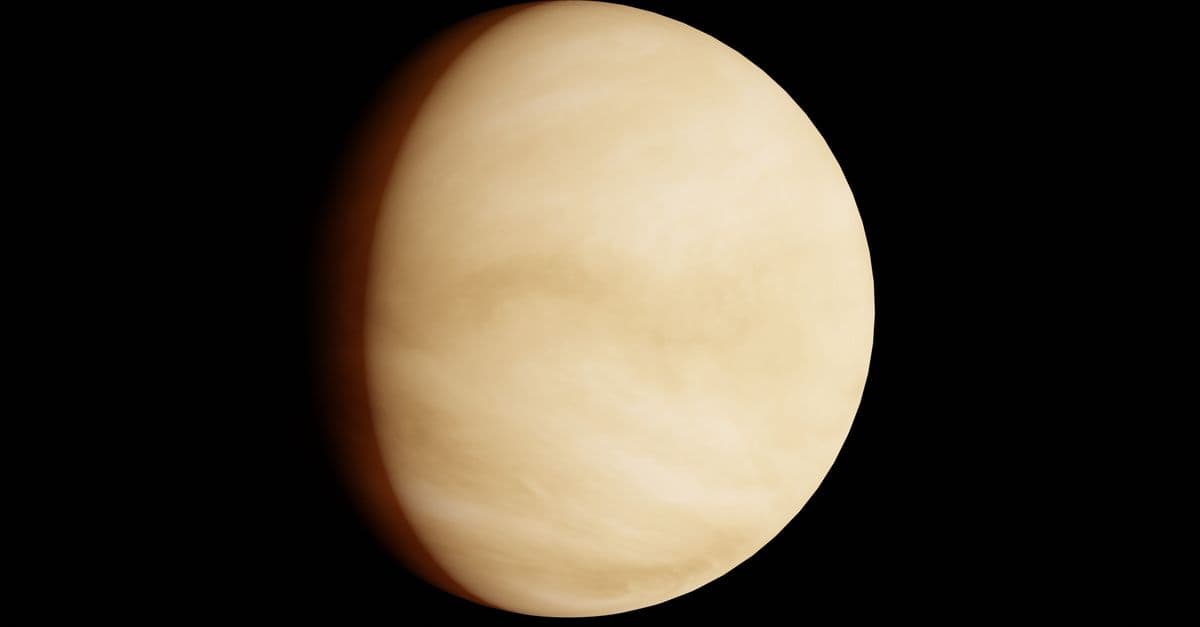
Photo: Zelch Csaba / Pexels
The Sun radiates about 3.828 × 10²⁶ watts of power every second, a figure fixed by the International Astronomical Union as the nominal solar luminosity (IAU 2015 resolution). Earth intercepts a tiny sliver of that output, yet it is enough to drive every weather system, every ocean current, and nearly every food chain on the planet. If that output simply switched off, Earth would keep orbiting normally — gravity depends on mass, not light — but the light and heat that make the surface habitable would vanish. This is a thought experiment, not a prediction: nothing in solar physics allows the Sun to switch off. But working through the physics, hour by hour and month by month, shows exactly how dependent life on Earth is on a 150-million-kilometer (93-million-mile) stream of photons.
What actually happens when a star "goes dark"
Nothing about a star's light is instantaneous once it leaves the surface, but nothing about it lingers either. Photons produced at the Sun's core take a surprisingly long time — tens of thousands to a few hundred thousand years, by most stellar-physics estimates — to random-walk out through the dense plasma of the radiative zone before finally escaping into space. Once they escape, though, they cross the 150-million-kilometer (93-million-mile) gap to Earth in exactly 8 minutes and 20 seconds, a figure derived directly from the speed of light and the Earth-Sun distance defined as one astronomical unit.
That delay matters for this scenario in one very specific way: if the Sun's fusion reactions stopped at this instant, the light already in transit would keep arriving for another 8 minutes and 20 seconds. Earth would experience a completely normal afternoon, and then, all at once, the daylit hemisphere would go black. Not a sunset. Not a gradual dimming. A hard cut.
Gravity is a separate story entirely. General relativity predicts that gravitational effects also propagate at the speed of light, a claim experimentally confirmed by the 2017 LIGO/Virgo detection of gravitational waves from a supernova. About 20 km wide but containing more mass than the Sun.">neutron star merger arriving within about 1.7 seconds of the associated light burst (LIGO Scientific Collaboration, 2017). But gravity's strength depends on mass, and a star that stops shining does not lose its mass. Earth would continue its 29.8-kilometer-per-second (18.5-mile-per-second) orbit exactly as before. The planet would not go flying off into interstellar space, and it would not spiral into the Sun. It would just orbit a dead, black, 1.989 × 10³⁰-kilogram sphere instead of a shining one.
Would Earth's orbit change if the Sun went dark?
No. Orbital mechanics is governed entirely by mass, not luminosity. Earth's velocity and the Sun's gravitational pull would be unchanged, so Earth would keep circling a dark Sun in the same 365.25-day orbit it circles a bright one.
Hour zero to hour 24 — instant darkness, slow-motion panic
At the moment of the cutoff, half the planet loses daylight instantly and the other half notices nothing at first, because it's already night there. The first visible sign for the day side would be the absence of any sunset color — the sky would simply go from blue to black in the time it takes to read this sentence.
Within the first hour, the practical effects would be electrical, not thermal. Solar power installations — which supplied close to 5.5% of global electricity generation in 2023 and rising fast, according to the International Energy Agency's Renewables 2024 report (IEA, 2024) — would go instantly and permanently offline. Grid operators would need to compensate with nuclear, hydro, gas, and coal generation, and many grids would experience rolling blackouts simply from the unplanned loss of solar capacity during peak generating hours.
Air temperature would begin falling the moment solar heating stopped, but Earth's atmosphere and surface hold enough stored heat that the drop would be gradual at first, not catastrophic. NOAA's climate data shows the average difference between a sunny day's high and the following pre-dawn low is typically only 5–15 °C (9–27 °F) even without any sunlight at all the next day — because the atmosphere and ground release stored heat slowly. Multiply that nightly cooling rate across weeks without a reprieve, and the trajectory becomes obvious even in the first 24 hours.
Photosynthesis, meanwhile, would stop within seconds across the entire planet. Plants don't store more than a few hours to a few days of sugar reserves for maintenance respiration, so within the first day most crops and wild vegetation would already be drawing down emergency starch reserves rather than producing new ones.
The first week — a preview of winter, everywhere
By the end of week one, land surface temperatures in most regions would have fallen by roughly 10 °C (18 °F), a rate consistent with the atmospheric and land cooling curves used in nuclear-winter climate modeling, where the loss of solar input (rather than an actual missing Sun) produces comparable early cooling rates (Robock, Oman & Stenchikov, 2007, Journal of Geophysical Research). That study modeled a regional nuclear war blocking sunlight with smoke, not a Sun switched off, but the underlying physics of what happens when solar input to the land surface disappears is the same, and it is the best peer-reviewed analog available for the first stage of this scenario.
Oceans behave completely differently from land, and this difference defines almost everything about how this scenario unfolds. Water has a specific heat capacity of about 4.18 joules per gram per degree Celsius, roughly four times higher than typical rock or soil, and the ocean's average depth of 3.7 kilometers (2.3 miles) gives it an enormous thermal reservoir. NOAA's ocean heat content data shows the upper 2,000 meters of ocean alone stores more heat energy than the entire atmosphere by a factor of over 1,000. That reservoir is why coastal cities would stay milder for far longer than continental interiors, and why the oceans — not the land — would end up being the last major refuge of surface photosynthesis.
Phytoplankton, the microscopic marine organisms responsible for producing roughly half of the world's oxygen through photosynthesis according to NOAA's ocean-atmosphere research, would begin dying within days near the surface, but populations in already-dim deeper water layers, adapted to low light, would survive somewhat longer as the available light dimmed further.
Table: Where each part of the planet stands after one week without sunlight
| Region | Approximate temperature change | Photosynthesis status | Human impact |
|---|---|---|---|
| Continental interiors | −10 °C to −15 °C (−18 to −27 °F) | Halted | Heating demand spikes; grid strain |
| Coastal zones | −3 °C to −6 °C (−5 to −11 °F) | Halted on land, reduced at sea | Milder but food supply disrupted |
| Open ocean surface | −1 °C to −2 °C (−2 to −4 °F) | Sharply reduced | Fisheries beginning to collapse |
| Tropics | −8 °C to −12 °C (−14 to −22 °F) | Halted | Sudden, unfamiliar cold stress |
| Polar regions | Marginal change (already extreme) | Already near zero | Minimal immediate change |
Table: Regional divergence during the first week of a sunless Earth, based on ocean heat-capacity data and nuclear-winter cooling-rate analogs.
One month in — the food web starts to break
By 30 days, models analogous to volcanic and impact winters put global average surface cooling in the range of 20–25 °C (36–45 °F) below normal, enough to push most of the tropics toward or below freezing. The best real-world precedent remains the 1815 eruption of Mount Tambora in Indonesia, the largest volcanic eruption in recorded history, which injected roughly 60 megatons of sulfur dioxide into the stratosphere and cooled the Northern Hemisphere by only about 0.4–0.7 °C (0.7–1 °F) on average — yet still caused the 1816 "Year Without a Summer," with snow in New England in June, crop failures across Europe and North America, and more than 100,000 deaths from famine, disease, and the resulting social unrest (NASA Earth Observatory; Smith College Climate in Arts and History project). Tambora's global cooling was less than 1 °C. This scenario, at one month, is already 20 to 30 times more severe than the worst documented climate shock of the industrial era.
Crop agriculture, already suspended in week one, would be fully collapsed by this point outside of artificially lit greenhouses. The 1816 famine is instructive here too: grain prices in parts of Europe tripled, and the crisis is credited by agricultural historians as a direct trigger for large-scale emigration from New England to the American Midwest. Apply that shock at 20 to 30 times the severity, globally and simultaneously, and the result is not regional famine but a synchronized global collapse of the agricultural system that feeds roughly eight billion people.
Three months — Snowball Earth conditions return
Around the three-month mark, surface temperatures in most regions would be pushing toward −40 °C (−40 °F), roughly the cooling trajectory extrapolated from the same land-and-ocean thermal models used in volcanic winter and impact winter research. This is close to the surface conditions geologists infer for the Cryogenian period roughly 720 to 635 million years ago, when Earth is believed to have undergone one or more "Snowball Earth" episodes — global or near-global glaciation events during which ice may have reached or nearly reached the equator (Hoffman et al., 1998, Science; reviewed in Hoffman et al., 2017, Science Advances). Crucially, those Snowball Earth episodes were not caused by the Sun switching off — the Sun kept shining throughout — but by runaway ice-albedo feedback where growing ice sheets reflected away enough sunlight to trigger further cooling. That distinction matters because it tells us something important: Earth's climate system has a documented, geologically real pathway into a near-total ice state, and life survived it. Microbial life persisted through the Cryogenian glaciations in refugia — areas of open water, geothermally warmed pockets, and beneath the ice itself — and complex life rebounded afterward, culminating in the Ediacaran and Cambrian explosions of multicellular life.
That is the closest thing to a hopeful data point in this whole scenario: Earth's biosphere has already run this experiment, in a milder form, and produced survivors.
Six months — the deep ocean becomes the story
By six months, average surface temperatures would likely be approaching −70 °C (−94 °F) across most of the globe, colder than the coldest temperature ever recorded on Earth's surface, −89.2 °C (−128.6 °F) at Vostok Station, Antarctica, in July 1983 (NOAA National Centers for Environmental Information). Sea ice would be extending far beyond the poles, and continental interiors would be locked under permanent snow and ice cover.
This is where the ocean's thermal inertia becomes the single most important fact in the entire scenario. The deep ocean, below the reach of surface freezing and insulated by hundreds of meters of increasingly ice-capped water above it, would remain liquid for a very long time — plausibly years, not months, given its heat content. And at the sea floor, an entirely separate biosphere would barely notice anything had changed at all.
Why hydrothermal vents don't care if the Sun goes out
Almost every food web on Earth's surface, in freshwater, and in the sunlit upper ocean ultimately traces back to photosynthesis: plants, algae, and cyanobacteria capturing sunlight and turning carbon dioxide and water into sugars. But at deep-sea hydrothermal vents — cracks in the ocean floor where mineral-rich, superheated water erupts from below — an entirely different energy economy operates. Chemosynthetic bacteria there oxidize inorganic chemicals like hydrogen sulfide and methane to build organic matter, with no sunlight involved at any step, according to NOAA's Ocean Exploration program (NOAA Ocean Exploration, Chemosynthesis fact sheet). Tube worms, vent mussels, vent crabs, and blind shrimp build entire ecosystems on top of these bacteria, some of them living directly inside the worms' bodies in a symbiotic relationship.
Think of it as two separate power grids running Earth's biosphere: a solar grid that powers almost everything we can see, and a geothermal grid, fed by heat and chemistry from Earth's interior, that has been running independently since before there was a Sun-driven biosphere at all. Cut the solar grid entirely, and the geothermal grid keeps humming along exactly as before, because it was never plugged into the Sun in the first place.
This matters for the scenario's ending. Whatever survives a year of darkness on the surface, deep-sea vent ecosystems, subsurface microbial life, and cave ecosystems that already run partly or fully on chemosynthesis or detritus would very likely make it through untouched. Life would not go fully extinct. It would retreat to where it has always had a backup power source.
One year — a frozen, near-lifeless surface
By the one-year mark, extrapolated surface temperatures in most regions would likely sit somewhere around −100 °C (−148 °F), colder than anywhere ever measured on Earth's surface and approaching temperatures seen on the Martian poles in winter, based on NASA planetary temperature data. At those temperatures, carbon dioxide itself starts to matter physically rather than just chemically: CO₂ freezes into dry ice at around −78 °C (−109 °F) at standard atmospheric pressure, meaning parts of the atmosphere's carbon dioxide could begin condensing out at the poles, thinning the atmosphere in exactly the way seasonal CO₂ ice caps form and vanish on Mars today.
Virtually all surface multicellular life outside of engineered habitats would be dead well before this point. Nearly all surface fresh water would be frozen solid. Ocean surface ice would extend across most of the globe, though the deep ocean, powered by geothermal heat from below and insulated by the ice above, would very plausibly still hold liquid water at depth.
Could humans actually survive a year without the Sun?
Yes, in principle, but only with infrastructure most of humanity does not currently have access to. The core insight is that humans don't need sunlight directly. We need four things sunlight normally provides indirectly: heat, food, breathable air, and light for plants and psychological function. All four can, in principle, be produced without the Sun.
Nuclear-powered submarines are the closest real-world proof of concept for at least three of the four. Modern naval submarines can remain submerged for up to roughly six months at a time, limited by food supply rather than power or air, because their reactors generate enough electricity to run electrolysis units that split desalinated seawater into breathable oxygen and vented hydrogen, according to naval engineering explainers reviewed by outlets like BGR and Marine Insight covering U.S. Navy propulsion systems. A submarine's reactor never needs refueling for the life of the vessel in many designs, giving it a power source that has nothing to do with sunlight.
Iceland offers a real-world example of what a geothermal-powered, largely sunlight-independent settlement already looks like: roughly 85% of Iceland's total primary energy supply comes from renewable geothermal and hydropower sources, and the country heats greenhouses year-round with geothermal energy to grow tomatoes, cucumbers, and other produce under supplemental lighting through the Arctic winter, according to Iceland's National Energy Authority. That existing infrastructure is essentially a small-scale prototype for indoor, sunlight-independent agriculture at civilizational scale.
Vertical farming under LED grow lights, already commercially operating in facilities in Japan, the UAE, and the United States, demonstrates that full crop cycles — lettuce, herbs, and increasingly staple crops — can be grown with zero natural sunlight, using electricity as the only energy input. The bottleneck for feeding eight billion people this way isn't the biology; it's that the required electrical generating capacity dwarfs anything currently built, and the buildout timeline for that capacity is measured in years, not months.
How long could the ISS or a submarine crew survive without the Sun?
The International Space Station is not a good analog here, since it depends on solar panels for essentially all its power and would go dark almost immediately without them. A nuclear submarine is the better analog: its reactor is independent of sunlight entirely, and its main survival limits are food stockpiles (typically a few months per patrol) and crew psychological endurance, not power or oxygen.
Would the atmosphere run out of breathable oxygen?
Not for years. Earth's atmosphere holds an enormous oxygen reserve relative to biological consumption, and photosynthesis is only one term in a much larger, slow-moving atmospheric budget. Cold and starvation would kill far more people, far faster, than any drop in atmospheric oxygen concentration.
What people get wrong about this scenario
The most common misconception is that Earth would go hurtling into deep space the moment the Sun's light disappeared, as though sunlight itself were somehow holding the planet in orbit. It isn't. Gravity and light are both governed by general relativity and both propagate at light-speed, but gravity's strength comes from mass, and a Sun that stops fusing hydrogen does not instantly lose mass. Earth's orbit would be completely unaffected mechanically.
A second common error is assuming total darkness would be immediate everywhere. It would only be immediate on the side of Earth already facing the Sun; the night side would notice nothing until its next expected sunrise failed to arrive, a detail that matters for any fiction or thought experiment trying to get the physics right.
A third misconception, often imported from nuclear-winter and asteroid-impact fiction, is that the entire ocean would freeze solid within weeks. It wouldn't. The ocean's heat capacity is roughly four times that of an equivalent mass of rock, and its total volume is staggering — about 1.3 billion cubic kilometers, according to NOAA's National Ocean Service. Surface freezing would spread over months, but the deep ocean's thermal inertia, combined with continuous geothermal heat input from hydrothermal vents and Earth's internal heat flow, means full-depth freezing was not something even our extrapolated one-year timeline reaches.
Finally, people often assume this scenario would end all life on Earth. The geological record argues otherwise. Snowball Earth episodes in the Cryogenian period, roughly 720 to 635 million years ago, likely froze the oceans to near the equator for millions of years at a stretch, and life not only survived but rebounded afterward into the more complex forms that eventually gave rise to the Cambrian explosion. A year without the Sun is a catastrophe on a civilizational timescale, not a planetary-extinction event on a geological one.
If the Sun came back after a year, what would recovery look like?
Recovery would be slow and partial, not instant. Frozen soils, once thawed, would need years to restore the microbial and fungal communities that make agricultural land productive; complex terrestrial ecosystems typically take decades to centuries to fully re-establish species diversity after a mass die-off, based on ecological recovery timelines observed after major volcanic and impact winter events in the geological record. Sea ice would take years to fully retreat given its accumulated volume. Most large land animal populations, having crashed from starvation and cold, would need generations to recover even where the species itself survived.
Human civilization's recovery would depend almost entirely on how well pre-event infrastructure — seed banks like Svalbard's Global Seed Vault, nuclear power capacity, and stored agricultural knowledge — survived the year intact. The Svalbard Global Seed Vault, built into permafrost on a Norwegian Arctic island specifically to survive global catastrophes, currently holds more than 1.3 million seed samples from around the world according to the Crop Trust, which manages the facility, making it a genuinely relevant real-world hedge against exactly this kind of scenario.
Frequently asked questions
Q: Would Earth fly off into space if the Sun went dark? No. Earth's orbit depends on the Sun's mass, not its light output. Since the Sun's mass would not change, Earth would continue orbiting it normally, just around a dark star instead of a shining one.
Q: How long would it take for darkness to reach Earth after the Sun stopped shining? Exactly 8 minutes and 20 seconds, the time light already in transit takes to cross the roughly 150-million-kilometer (93-million-mile) gap between the Sun and Earth at the speed of light.
Q: Would the oceans completely freeze solid? No, not within a year. The top few meters to tens of meters would freeze in most regions, but the deep ocean, insulated by surface ice and warmed by geothermal heat from hydrothermal vents, would very plausibly remain liquid for years.
Q: Could plants survive without the Sun at all? Yes, under artificial grow lights. Commercial vertical farms already grow full crops of lettuce, herbs, and some staple vegetables entirely under LED lighting with zero natural sunlight. The limiting factor for feeding a global population this way is available electrical generating capacity, not plant biology.
Q: Has anything like this happened in Earth's geological history? Something related but not identical happened during the Cryogenian period's Snowball Earth episodes roughly 720 to 635 million years ago, when the Sun kept shining but runaway ice-albedo feedback froze most of the ocean surface for millions of years. Life survived in refugia and later diversified dramatically once the ice retreated.
Q: Would humans run out of breathable oxygen? Not within the one-year timeframe of this scenario. The atmosphere's oxygen reserve is enormous relative to annual biological consumption, and cold and starvation would threaten human survival far sooner than any measurable drop in atmospheric oxygen.
Q: What is the closest real historical event to this scenario? The 1815 eruption of Mount Tambora, which cooled the Northern Hemisphere by less than 1 °C and still caused the 1816 "Year Without a Summer," including June snow in New England and famine that killed over 100,000 people. This scenario would be tens of times more severe and global rather than hemispheric.
Q: Could a nuclear submarine survive a year without the Sun? For power and breathable air, yes, in principle indefinitely, since its reactor generates electricity to run electrolysis units producing oxygen from seawater. The real constraint is food, since submarines typically carry only a few months of provisions per patrol and would need resupply.
Q: Would any ecosystems be completely unaffected? Deep-sea hydrothermal vent ecosystems, which run on chemosynthesis rather than photosynthesis, would very likely continue functioning almost exactly as before, since they were never dependent on sunlight in the first place.
Q: Is there any real astrophysical mechanism that could make the Sun go dark? No known mechanism could switch the Sun off instantly. It is roughly halfway through a stable, roughly ten-billion-year hydrogen-fusing lifespan, and even its eventual transition into a red giant billions of years from now will unfold over millions of years, not moments.
The takeaway
A year without sunlight would not end life on Earth, but it would end civilization as it currently exists across most of the planet, and it would kill most of the surface biosphere. The gap between those two outcomes — total extinction versus catastrophic but survivable collapse — comes down to two things this scenario reveals clearly: the ocean's enormous thermal inertia buys the deep sea years it doesn't have on land, and a second, older biosphere running on chemosynthesis at hydrothermal vents was never dependent on the Sun to begin with. Humanity's best odds would rest on the same infrastructure that already exists in miniature today — nuclear reactors, geothermal grids, vertical farms, and seed vaults — just scaled up faster than any civilization has ever had to build anything.
Read next:
Follow new articles
Add SciHub101 to your feed reader to see new science and technology stories.
About the Author
SciHub101 is an independent science and technology publication founded and edited by Buğra Sözeri, a software engineer and app developer based in Türkiye. AI tools assist with drafting and research. Source documentation in the existing archive is uneven, and articles are being reviewed and corrected. The Editorial Team byline identifies editorial responsibility; it does not certify specialist or independent human review. Where we compare products, anything built by our own team is labelled as such — see the editorial guidelines and About page for how corrections and disclosures work.
Related Articles
What If AI Became Smarter Than All Humans Combined? The Real Scenarios
Some researchers think AI that outperforms humans at every task is decades away; others say years. A reasoned thought experiment on what the published evidence and expert views actually suggest.
What If We Could Upload Human Consciousness?
Mind uploading — copying your conscious self into a computer — is a staple of science fiction. The science is fascinating, the obstacles enormous, and the philosophy genuinely confusing.
What If the Sun Disappeared for One Week?
Eight minutes after the Sun vanishes, Earth goes dark. What happens to life, physics, and civilization in the days that follow?
What If All Water on Earth Disappeared?
What would happen if every drop of water on Earth vanished? Explore the catastrophic consequences for life, atmosphere, and planet.
What If Earth Lost Its Axial Tilt?
Earth's 23.5° tilt creates seasons and stabilizes climate. What would happen if it vanished — or flipped to 90°?. Learn the science, key examples, and...
What If Humans Could Photosynthesize? — Science Explained
What would actually happen if humans could photosynthesize like plants? The math is brutal: you'd need skin the area of a small room, you'd still need food, and you'd have to spend most of your life lying flat in direct sunlight.