What If the Moon Disappeared Tomorrow?
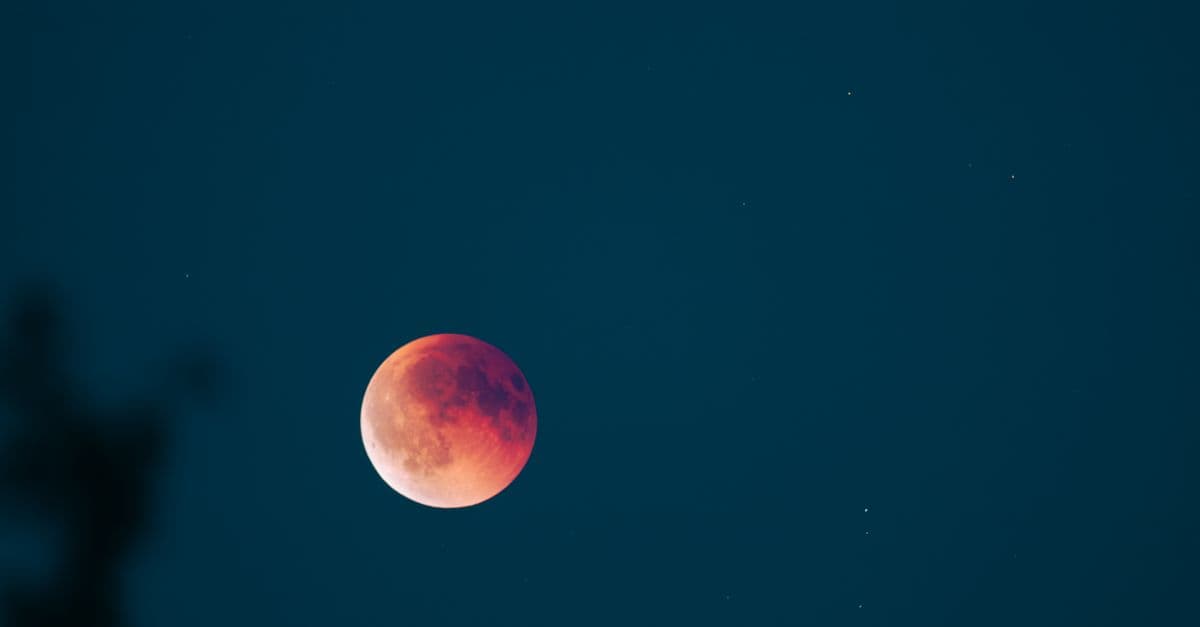
Photo: Jan Reichelt / Pexels
Imagine waking up one morning to a sky stripped of its brightest nighttime object. No pale disc, no tidal rhythms, no gentle light for nocturnal hunters. The Moon — Earth's constant companion for roughly 4.5 billion years — is simply gone. What happens next?
Thought experiment. This article explores a hypothetical scenario for educational and speculative purposes. The events described are not predictions and should not be interpreted as warnings, advocacy, or instructions. The physical removal of the Moon is not a realistic near-term event; this is a tool for understanding what the Moon actually does, by imagining its absence.
The answer unfolds across wildly different timescales. Some effects would hit within hours. Others take decades to become obvious. The most consequential change of all — a slow unraveling of Earth's climate stability — would not fully show itself for millions of years. Together, they reveal just how deeply one battered, cratered rock is woven into the mechanics of a living planet.
The Moon's Origins: Why It Exists at All
Before exploring a moonless world, it helps to understand why Earth has such an unusually large satellite in the first place. Most rocky planets in the solar system have no moon, or tiny captured ones. Earth's Moon, by contrast, is about a quarter of Earth's diameter — a ratio almost unmatched among planet-moon pairs anywhere we've observed.
The leading explanation is the giant-impact hypothesis. Around 4.5 billion years ago, a Mars-sized protoplanet often called Theia is thought to have struck the early Earth at an oblique angle. The collision was not a head-on hit — it was closer to a glancing blow, violent enough to vaporize part of both bodies and throw an enormous debris disk into orbit. That debris coalesced under gravity into the Moon within tens of millions of years.
Several lines of evidence support this picture. The Moon's interior is iron-poor relative to Earth, consistent with forming mostly from ejected mantle material rather than core material. Oxygen isotope ratios in lunar rocks are nearly identical to Earth's, pointing to a shared origin for at least part of the material. And the sheer size of the Moon relative to its host planet is the kind of outcome an oblique giant impact would naturally produce, rather than a captured passing asteroid.
This origin story matters because it also explains how Earth ended up with its current axial tilt of 23.5 degrees, and why the Moon has been quietly maintaining that tilt ever since. Understanding that relationship is the key to grasping what we would lose if the Moon vanished. It also connects to a bigger question addressed in the evolution and natural selection story of life on Earth: how much of what made complex life possible here was a matter of specific, possibly rare, planetary luck.
Day One: The Tides Collapse
The most immediate effect of losing the Moon would show up in Earth's oceans within hours.
According to NASA's tidal science overview, the Sun's tide-generating force is a little less than half the Moon's, which works out to the Moon supplying roughly two-thirds of Earth's total tidal force and the Sun the remaining third (NASA Science, Tides). Without the Moon, only the weaker solar component would remain. Current tidal ranges, which reach roughly 15 meters (49 feet) at extreme sites like the Bay of Fundy, would shrink to something closer to a third of their present magnitude in most places, and to well under a meter along many coastlines.
The tidal bulge the Moon currently drags across Earth's oceans — the mechanism behind the twice-daily rhythm of high and low tide — would flatten almost immediately. Coastal communities built around predictable tidal cycles, from fishing schedules to harbor operations, would notice the change within the first day. Tidal-range power generation, already a small but growing renewable energy source in a handful of countries, would become largely unviable as the available tidal head shrank.
The ecological cost to intertidal zones would be severe and fast. These coastal strips — exposed during low tide, submerged during high tide — host some of the most biodiverse ecosystems on the planet. Barnacles, mussels, sea anemones, crabs, and shorebirds have evolved around the rhythmic exposure cycle the Moon currently drives. With tidal ranges cut to a fraction of normal, the usable intertidal habitat would shrink correspondingly, and species narrowly adapted to wide tidal swings would face mounting extinction pressure within a few years, not centuries.
Ocean mixing would change too, though more gradually. Tidal currents currently drive measurable vertical mixing in parts of the ocean, pushing nutrient-rich deep water up toward sunlit surface layers where phytoplankton can use it. Weaker tides mean weaker mixing in some of those zones, which in turn means somewhat reduced primary productivity — the base of the marine food web — in the areas most dependent on tidally driven upwelling.
The Night Gets Roughly 900 Times Darker
On a practical level, the disappearance of moonlight would immediately and permanently change the experience of nighttime on Earth.
A full moon illuminates Earth's surface at roughly 0.1 to 0.3 lux depending on atmospheric conditions and lunar phase, while a moonless, starlit night provides only a few thousandths of a lux. The exact ratio varies with measurement conditions, but the practical takeaway astronomers and ecologists agree on is straightforward: nights without any moon at all would be dramatically darker, especially far from artificial lighting, than any night humans have ever experienced under a full or even crescent moon.
For human civilization this matters less than it once did, since electric lighting has largely decoupled modern life from natural night illumination. For ecosystems, the change would be far more consequential. A wide range of species navigate, hunt, and reproduce using moonlight as a cue, as documented in research on lunar-linked animal behavior summarized by the Smithsonian (Smithsonian Magazine, "How Moonlight Sets Nature's Rhythms").
Sea turtle hatchlings use the brightness of the horizon over open water to orient toward the sea after emerging from their nests. With no moon at all, artificial coastal lighting — already a major source of fatal disorientation for hatchlings — would dominate the visual field even more completely, likely worsening an existing conservation problem. Nocturnal predators like owls that rely on moonlight to spot prey against open ground would need to hunt in conditions closer to true darkness on most nights, and many insect species that use the Moon as a directional reference for long-distance flight would lose that cue entirely.
Most strikingly, mass coral spawning — one of the most tightly synchronized reproductive events in the natural world — depends heavily on lunar cues. On Australia's Great Barrier Reef, more than 130 coral species spawn together on a single night, typically following the October, November, or December full moon, and researchers with the Great Barrier Reef Marine Park Authority note that if cloud cover obscures the Moon on the expected night, spawning is often delayed until the following month (Great Barrier Reef Marine Park Authority, "Coral spawning 101"). A 2016 mass spawning event tracked by researchers illustrates just how tightly the timing clusters around the full moon (ScienceAlert, "The Full Moon Just Triggered One of The Largest Mass Spawning Events of 2016"). A 2021 PNAS study on the coral species Dipsastraea speciosa found that the precise timing cue is the dark interval between sunset and moonrise following the full moon, not moonlight intensity itself (PNAS, "Moonrise timing is key for synchronized spawning in coral Dipsastraea speciosa"). Remove the Moon and that timing signal disappears completely — and with it, one of the coordination mechanisms that lets coral populations reproduce in large enough synchronized bursts to overwhelm predators and maximize fertilization success. Water temperature and day length also factor into spawning timing, so corals would not go extinct overnight, but the precision of the synchrony that currently defines mass spawning events would almost certainly degrade.
Biology Synchronized to the Lunar Cycle
Beyond corals, a surprising range of species runs on lunar time, not just the 24-hour solar clock most people think of as biology's default rhythm.
Oysters maintain circalunar rhythms even when held in laboratory tanks far from any tidal influence, opening and closing their shells on a schedule that matches what would be high tide back at their home location. This internal clock is robust enough to persist for weeks without any external tidal cue reinforcing it, which tells researchers the rhythm is generated internally, not simply a reaction to water movement. Without the Moon driving the tides that originally entrained this rhythm, it would eventually drift and decohere across generations, though existing individuals might retain a "memory" of the old cycle for some time.
Fiddler crabs time their reproductive and foraging activity to the tidal and lunar cycle with real precision, emerging to feed on exposed mudflats during low tide windows that shift predictably with the lunar month. Populations living along tropical coasts, where tidal cues currently structure daily life closely, would face fairly immediate behavioral disruption once the tidal signal disappeared.
Researchers have also examined whether the human menstrual cycle correlates with the lunar cycle, since both average around 29 days. The consensus among reproductive biologists is that this is most likely coincidental — the two cycles run on independent biological clocks that happen to land in a similar range, not a causal relationship mediated by moonlight exposure. What is not coincidental is the cultural weight the Moon carries in human timekeeping: twelve of the world's major calendar systems, from the Islamic Hijri calendar to the Hebrew calendar, are lunar or lunisolar, built directly around the Moon's visible phases.
Night-blooming flowers pollinated by moths and bats under moonlit conditions could also see reduced pollination success, since many of their pollinators use moonlight both to navigate and to locate pale, reflective flowers against dark foliage.
Earth's Rotation: A Subtle, Slow-Building Shift
The Moon has been gradually slowing Earth's rotation through tidal friction for essentially all of Earth's history. When Earth first formed, a day is thought to have been only about 6 hours long. Lunar tidal drag has stretched that out to the current 24 hours over billions of years, and the process continues today — measured directly through lunar laser ranging, which uses reflectors the Apollo astronauts left on the lunar surface to track the Moon's distance to millimeter precision. That data shows the Moon is currently receding from Earth at about 3.8 centimeters (1.5 inches) per year as it carries away angular momentum from Earth's spin (NASA Eclipse Website, "Accuracy of Eclipse Predictions"; measurement corroborated across multiple lunar laser ranging analyses spanning 1970–2015).
Without the Moon, this braking force would vanish immediately. Earth would not suddenly spin faster — angular momentum is conserved, and the rotation rate at the moment of the Moon's disappearance would simply persist going forward. But the multi-billion-year trend of days slowly lengthening would stop. Over millions of years, without lunar tidal drag as the dominant brake, Earth's rotation period would drift based only on much weaker influences, chiefly solar tidal friction and internal core-mantle interactions.
The practical, immediate effect on day length is negligible — nobody would notice a shorter or longer day the next morning. The harder-to-predict effect is on atmospheric circulation. Rotation rate governs the strength of the Coriolis effect, the force that steers hurricanes, trade winds, and jet streams. A rotation rate that stops decelerating, compounded over millions of years, would eventually produce a subtly different climate system than the one Earth has today, though the magnitude of that difference is genuinely hard to quantify with current models.
Axial Tilt: The Slow-Motion Catastrophe
This is the most scientifically dramatic consequence of losing the Moon, and it operates on a timescale of millions of years rather than days or decades.
Earth currently spins at an axial tilt of 23.5 degrees relative to its orbital plane. This tilt is what gives us seasons — the Northern Hemisphere tips toward the Sun in June and away from it in December. Over the past several hundred thousand years, the tilt has varied only between about 22.1 and 24.5 degrees, cycling slowly due to gravitational tugging from Jupiter and Saturn. This modest wobble, known as an obliquity cycle, is one of the drivers behind the timing of past ice ages.
The key finding comes from a pair of landmark 1993 studies published in Nature by French astronomer Jacques Laskar and colleagues. Using long-term numerical simulations of the solar system, Laskar, Joutel, and Robutel showed that the Moon's gravitational pull on Earth's equatorial bulge causes Earth's spin axis to precess relatively rapidly — fast enough to keep Earth's obliquity out of the "chaotic zones" where gravitational resonances with other planets would otherwise make the tilt behave unpredictably (Nature, "Stabilization of the Earth's obliquity by the Moon"; companion paper Nature, "The chaotic obliquity of the planets"). In their own words, Earth's obliquity today shows only small variations of about plus or minus 1.3 degrees around a mean of 23.3 degrees, precisely because the Moon is there.
Remove the Moon, and Laskar's models show Earth's obliquity would no longer sit in that narrow, stable range. Instead it would become chaotic, wandering across two large unstable zones spanning roughly 0 to 45 degrees and 65 to 85 degrees, over timescales of tens of millions of years. Follow-up modeling published in Icarus in 2011 refined these numbers further, examining in more detail how a moonless Earth's obliquity would evolve given uncertainty in the exact starting conditions (ScienceDirect, "Obliquity variations of a moonless Earth"), and later work published in The Astrophysical Journal extended the analysis to the coupled spin-axis dynamics of a moonless Earth in even more detail (IOPscience, "On the Spin-Axis Dynamics of a Moonless Earth"). The core conclusion across this body of work has held up for three decades: an Earth without a large stabilizing moon would experience obliquity swings dramatically larger than anything in the geological record of the past several hundred million years.
At 0 degrees tilt, Earth would have essentially no seasons. Equatorial regions would sit in permanent heat, and the poles would remain permanently cold, with weather patterns organized almost entirely by latitude rather than by time of year. At the other extreme, an 85-degree tilt would put Earth in a configuration similar to Uranus today, with polar regions facing the Sun continuously for months at a time before swinging into total darkness for an equally long stretch. Mid-latitude regions in that scenario would experience seasonal temperature swings far more extreme than anything in recorded human history.
Neither extreme would necessarily sterilize the planet. Life is remarkably persistent, as the long arc of evolution and natural selection has repeatedly demonstrated through past mass extinctions. But large, complex, metabolically demanding organisms adapted to relatively stable and predictable climates would face intense, sustained extinction pressure under chaotic tilt. The steady, seasonally predictable environment that allowed complex terrestrial ecosystems to develop and diversify over roughly the past 500 million years would become geologically unreliable. Life would very likely survive in some form, but the evolutionary trajectory that produced the specific biosphere we know, including large land animals with narrow seasonal breeding windows, would look nothing like it does today.
The Moon, in other words, has functioned as Earth's climate stabilizer for the entire history of complex multicellular life.
Effects Timeline
| Timeframe | What Happens |
|---|---|
| Hours | Tidal ranges shrink to roughly one-third of current values; the lunar tidal bulge flattens almost immediately |
| Days | Intertidal ecosystems begin showing measurable stress from reduced exposure cycles |
| Weeks | Coral spawning synchrony starts to break down; nocturnal species navigation is disrupted |
| Months | Tidal-range power generation becomes largely unviable; coastal ecosystem restructuring accelerates |
| Years | Intertidal species face rising extinction pressure; weaker tidal mixing begins affecting phytoplankton productivity in some regions |
| Decades | Sea turtle nesting populations decline further; circalunar biological rhythms in species like oysters begin to decohere |
| Thousands of years | Regional ocean circulation patterns shift measurably as tidal mixing's contribution declines |
| Millions of years | Earth's axial tilt begins chaotic wandering, per the Laskar models |
| Tens of millions of years | Extreme tilt excursions make some latitudes seasonally hostile to complex life |
| Hundreds of millions of years | The evolutionary trajectory of complex life is dramatically altered from its current path |
Caption: The consequences of a vanished Moon unfold on radically different clocks — the fastest changes hit the coastline within hours, while the most consequential one, chaotic axial tilt, would not fully manifest for tens of millions of years.
Ocean Circulation and the Water Cycle
The connection between lunar tides and deep ocean circulation is real, though indirect and only one contributor among several. Tidal mixing helps drive thermohaline circulation, the global ocean conveyor system that redistributes heat around the planet and shapes regional climate from Western Europe to the coasts of South America. Without tidal energy continuing to stir some of that mixing, thermohaline circulation could weaken in the regions where tidal contributions matter most.
The water cycle and Earth's broader systems would feel the downstream effects of any shift in ocean heat distribution. Evaporation rates, precipitation patterns, and the moisture content carried by major wind systems all depend heavily on sea surface temperatures, which are partly regulated by the ocean circulation that tidal mixing helps sustain.
The precise scale of this effect is genuinely uncertain in the scientific literature. Thermohaline circulation is driven by a combination of forces — wind stress, density differences from temperature and salinity, and tidal mixing among them — and isolating the tidal contribution cleanly is difficult. But even a modest weakening of that contribution would likely produce regional climate consequences measurable well within human timescales, long before the more dramatic axial-tilt effects arrive.
Would Life Survive?
Almost certainly, yes — but it would be a different biosphere than the one we know.
Microbial life would be essentially unaffected. Single-celled organisms have survived every mass extinction event in Earth's history, and the changes triggered by a vanished Moon, dramatic as they are for complex ecosystems, would pose no meaningful threat to microbial diversity. Even most complex life would survive in the short and medium term, since many species have no direct dependence on lunar cycles at all — most land mammals and the majority of bird species, for instance, are not obviously synchronized to the Moon in any documented way.
The real long-term threat comes from the axial chaos predicted in Laskar's models. The kind of stable, temperate, biodiversity-rich ecosystems that have defined Earth for roughly the past 500 million years depend heavily on climate predictability, and the long arc of evolution and diversification has been shaped substantially by relatively consistent environmental cycles that let complex adaptations accumulate over millions of generations. Chaotic tilt would replace that predictability with geological-scale uncertainty, forcing a very different set of evolutionary pressures on anything more complex than a microbe.
There's a broader cosmic angle worth sitting with here. The sequence of events that produced our Moon — a Theia-sized impactor arriving at close to the right angle and speed, ejecta settling into orbit rather than escaping or falling back — was not an inevitable outcome of planet formation. It required a fairly specific set of circumstances. Many rocky planets orbiting other stars may simply lack a large stabilizing moon of the kind Earth has, which is one reason some researchers studying planetary habitability treat a large moon as a meaningful, if not strictly required, ingredient for long-term climate stability on an otherwise Earth-like world.
Common Misconceptions About a Moonless Earth
"The tides would disappear completely." They would not. The Sun still generates its own, weaker tidal pull on Earth's oceans. Losing the Moon would shrink tidal ranges to roughly a third of their current size, not eliminate tides entirely — the solar tide would still produce a measurable, if far less dramatic, twice-daily rhythm.
"Days would suddenly get shorter." They would not change overnight. Angular momentum is conserved, so Earth's rotation rate at the instant the Moon vanished would simply continue unchanged in the short term. What disappears is the ongoing braking effect that has been slowly lengthening Earth's day for billions of years — the trend toward longer days would stop, not reverse.
"Axial tilt chaos would happen fast enough to matter to us." It would not, on any timescale relevant to human civilization. Laskar's models put the onset of significant chaotic wandering at tens of millions of years after the Moon's disappearance. Within any span of time that includes recorded human history, or even the entire history of the genus Homo, the tilt would remain essentially unchanged from today's 23.5 degrees.
"Every animal on Earth is synchronized to the Moon." Many marine and some nocturnal species clearly are, including corals, oysters, fiddler crabs, and sea turtles. But a large share of terrestrial animals, especially most mammals and birds, show no strong, well-documented dependence on lunar cycles specifically, as opposed to the daily solar cycle or seasonal daylight length.
FAQs
Q: Would we feel the Moon disappearing immediately? A: The most immediate effects would appear within hours at coastlines, where tidal ranges would shrink dramatically as the Moon's contribution to Earth's tides disappears. Away from coasts, the first obvious change most people would notice is how much darker the following night looks.
Q: How much would tides change without the Moon? A: Tides would shrink to roughly a third of their current range. NASA's tidal science overview notes the Moon supplies about two-thirds of Earth's total tidal force, so only the Sun's weaker contribution would remain once the Moon was gone.
Q: Would Earth's days get shorter or longer without the Moon? A: Neither, immediately. The Moon's tidal braking has been gradually slowing Earth's rotation for billions of years, stretching an original roughly 6-hour day out to today's 24 hours. Without the Moon, Earth's rotation rate would simply stop decelerating going forward; days would not shrink right away, and they would also stop lengthening over geological time.
Q: How long before axial tilt becomes a problem? A: According to Laskar, Joutel, and Robutel's 1993 modeling published in Nature, significant chaotic wandering of Earth's axial tilt would develop over tens of millions of years. Within a human lifetime, or even the entire span of recorded civilization, the tilt effect would be imperceptible.
Q: Do all animals really depend on the Moon? A: Many do, especially marine species. Corals, oysters, sea turtles, and fiddler crabs all rely on lunar or tidal cues for reproduction and behavior, and mass coral spawning events on reefs like Australia's Great Barrier Reef are directly timed to the full moon. However, most mammals and birds show no strong, well-documented direct lunar dependence.
Q: What causes the Moon to stay in a stable orbit around Earth? A: The Moon orbits Earth through the balance of gravitational attraction and orbital velocity, the same principle that governs all satellites. Lunar laser ranging data show the Moon is actually spiraling slowly outward, at about 3.8 centimeters (1.5 inches) per year, as tidal friction transfers angular momentum from Earth's spin to the Moon's orbit. Without the Moon, this energy exchange would simply cease.
Q: Could humans survive on a moonless Earth long-term? A: In the short to medium term, yes, with meaningful adaptation needed for coastal communities, fisheries, and any industries tied to tidal cycles or nighttime darkness. Over tens of millions of years, if Laskar's axial-chaos models play out as predicted, agricultural systems would eventually need to cope with increasingly unpredictable seasonal patterns, a serious long-run challenge for any civilization regardless of its technology level.
The takeaway
The Moon is not a romantic backdrop or a navigational convenience. It is an active geological and biological force: stabilizing Earth's axial tilt against chaotic wandering, driving the tidal mixing that helps sustain ocean circulation, synchronizing the reproductive cycles of species from corals to oysters to sea turtles, and lighting the night for whatever fraction of animal evolution has depended on it. Losing it would not end life on Earth, but it would set off a cascade of oceanographic, ecological, and eventually geological changes unfolding across timescales from hours to tens of millions of years. The complex, climatically stable biosphere that eventually produced human civilization owes a real debt to a violent collision 4.5 billion years ago, and to the battered, receding satellite that is still, quietly, holding Earth's axis steady overhead.
Read next:
Follow new articles
Add SciHub101 to your feed reader to see new science and technology stories.
About the Author
SciHub101 is an independent science and technology publication founded and edited by Buğra Sözeri, a software engineer and app developer based in Türkiye. AI tools assist with drafting and research. Source documentation in the existing archive is uneven, and articles are being reviewed and corrected. The Editorial Team byline identifies editorial responsibility; it does not certify specialist or independent human review. Where we compare products, anything built by our own team is labelled as such — see the editorial guidelines and About page for how corrections and disclosures work.
Related Articles
What If All Humans Disappeared Tomorrow?
If humanity vanished overnight, Earth would begin a dramatic recovery — from nuclear meltdowns in hours to rainforest regrowth over centuries.
What If the Internet Went Down for a Week?
A scientific scenario analysis of a 7-day global internet outage — payments, hospitals, supply chains, and the $10B+/day economic cost.
What If Earth Had No Moon?
The Moon is more than a nightlight. It holds Earth's tilt steady, drives our tides, and may have made complex life possible.
What If the Moon Didn't Exist? Life Without Moonlight
Beyond tides and axial tilt, a moonless sky would have rewritten human calendars, coastal navigation, and the reproductive clocks of thousands of species. Here's the cultural and biological story the physics leaves out.
What If Earth Had Two Moons? The Science of a Twin-Moon World
A second moon would change tides, eclipses, calendars, and possibly life itself. Here's exactly what would happen — based on real orbital physics — if we suddenly had two moons.
What If Earth Lost Its Axial Tilt?
Earth's 23.5° tilt creates seasons and stabilizes climate. What would happen if it vanished — or flipped to 90°?. Learn the science, key examples, and...