What Is the Water Cycle? A Journey Through Earth's Most Vital Process
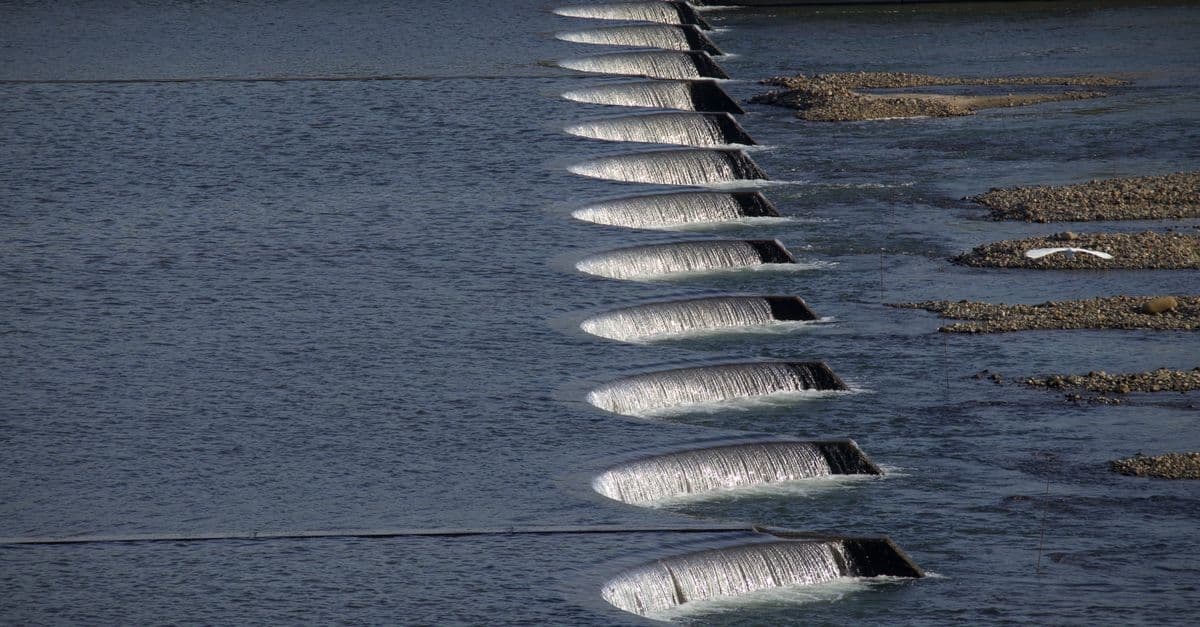
Photo: Dr. Mohammad Hoque / Pexels
Earth has had roughly the same amount of water for the last four billion years. The molecule in your glass right now was, at some point, part of a glacier, an ocean current, a raincloud over the Amazon, and quite possibly the body of a dinosaur. The water cycle — the continuous movement of water between ocean, atmosphere, and land, formally called the hydrologic cycle by the U.S. Geological Survey — is the engine that keeps all of it moving. This article walks through every stage of that engine, the physics behind each step, and how a warming planet is changing the rules.
What the water cycle actually is
Of the roughly 1.386 billion cubic kilometers (332.5 million cubic miles) of water on Earth, about 96.5% sits in the ocean at any given moment, according to USGS estimates. The rest is distributed across glaciers, groundwater, lakes, rivers, soil moisture, the atmosphere, and living organisms. None of that water is created or destroyed in the process — it just moves from one reservoir to another, changing phase between liquid, vapor, and ice along the way.
That's the core idea worth holding onto before anything else: the water cycle is not a manufacturing process. It's a redistribution system. Think of it like a museum where the same paintings get rotated between galleries — nothing new gets painted, but the exhibit looks completely different depending on which room you walk into.
The cycle runs on two forces. Solar energy lifts water into the atmosphere by evaporation, and gravity pulls it back down as precipitation and runoff. Between those two forces, water moves through six identifiable stages, though it can skip stages, loop back, or pause in a reservoir for a day or for ten thousand years.
How each stage of the cycle works
Evaporation and transpiration: water becomes vapor
Sunlight heats the surface of oceans, lakes, rivers, and moist soil. Individual water molecules absorb enough kinetic energy to break free of the liquid's surface tension and escape into the atmosphere as invisible water vapor. Because oceans cover about 71% of Earth's surface and receive the most direct solar energy, the vast majority of evaporation happens there — the USGS Water Science School notes that about 90% of atmospheric moisture originates from evaporation over oceans, seas, lakes, and rivers combined.
Plants contribute too, through a process called transpiration: roots pull water from soil, and it exits through microscopic pores on leaf surfaces called stomata, essentially the plant's exhale. A single large oak tree can transpire hundreds of liters of water on a hot day. Because evaporation and transpiration are difficult to measure separately in the field, hydrologists usually lump them together as evapotranspiration, a term you'll see on every USGS water-cycle diagram.
Condensation: vapor becomes cloud
As water vapor rises, it moves into cooler air at higher altitudes. Cooler air holds less moisture than warm air, so the vapor eventually reaches a point — the dew point — where it can no longer stay gaseous. It condenses onto microscopic particles of dust, sea salt, or pollen suspended in the atmosphere, called condensation nuclei. Billions of these droplets clustered together are what you see as a cloud.
This is the same physics as a cold glass of lemonade sweating on a summer table: the glass cools the air right next to it below the dew point, and vapor condenses on the surface. A cloud is just that process happening at altitude, on a planetary scale, without a glass.
Precipitation: gravity takes over
Cloud droplets are tiny — often just a few micrometers across — and they stay suspended by air currents until they collide, merge, and grow heavy enough for gravity to win. Depending on the temperature of the air the droplets fall through, they arrive as rain, snow, sleet, freezing rain, or hail. Roughly 78% of global precipitation falls back into the ocean it came from; the remaining fraction reaches land, which is where the interesting part of the story — the part that matters to farms, cities, and rivers — begins.
Runoff: water finds its way downhill
Water that lands on a slope, a paved street, or saturated soil doesn't just sit there. Gravity pulls it downhill, first as thin sheets across the surface, then gathering into rivulets, streams, and rivers. Rivers worldwide carry an estimated 36,000 cubic kilometers of water back to the ocean every year, along with sediment that builds deltas, feeds estuaries, and shapes coastlines over centuries.
Infiltration and groundwater: the hidden reservoir
Not all surface water becomes runoff. Some percolates down through soil and porous rock, a process called infiltration, eventually reaching the water table and becoming groundwater. Large underground formations that store and transmit this water are called aquifers — think of them less like underground lakes and more like a soaked sponge made of rock and sediment, with water filling the spaces between grains.
Groundwater feeds wells, natural springs, and — critically — the base flow that keeps rivers running between rainstorms. Some of it re-emerges within days. Some, in deep confined aquifers, has been isolated underground for thousands of years, effectively fossil water that isn't being meaningfully replenished on human timescales.
Storage: where the water pauses
At any given moment, Earth's water sits distributed across five broad categories of storage, and the differences in volume are staggering.
| Reservoir | Approximate share of Earth's total water | Typical residence time |
|---|---|---|
| Oceans | ~96.5% | Centuries to millennia |
| Glaciers, ice caps, and permanent snow | ~1.7% | Decades to tens of thousands of years |
| Groundwater | ~1.7% | Days to over 10,000 years |
| Lakes, rivers, soil moisture, and biosphere | ~0.1% combined | Days to years |
| Atmosphere | ~0.001% | About 9 days on average |
Table: Approximate distribution of Earth's water across major reservoirs, based on USGS Water Science School estimates.
The wide range in residence times is one of the more counterintuitive parts of hydrology. A raindrop over the Pacific might return to the ocean within hours. A snowflake that becomes part of the Antarctic ice sheet might not see liquid form again for 100,000 years.
Why the cycle matters far beyond rain
The water cycle isn't just a supply chain for drinking water. It performs several jobs that keep the planet livable, and most of them are invisible in daily life.
It redistributes heat around the planet. Evaporation is an energy-absorbing process — it takes roughly 2,260 kilojoules to evaporate a single kilogram of water at 100°C, and even more at lower temperatures, because breaking the hydrogen bonds holding liquid water together takes real energy. That heat gets carried into the atmosphere as latent heat and released again during condensation, often thousands of kilometers from where the water evaporated. This is a major mechanism by which the tropics offload excess solar heat toward the poles, and it's a core driver of large-scale weather systems, from monsoons to hurricanes.
It shapes the physical landscape. Rivers carve canyons over geological time. Glaciers grind U-shaped valleys as they advance and retreat. Rainfall weathers exposed rock into soil. Almost every landform you can name that isn't volcanic or tectonic in origin was sculpted, at least in part, by water moving through the cycle.
It acts as a natural distillation system. When water evaporates, dissolved salts, most sediments, and many pollutants are left behind. That's part of why ocean water is salty and rain is not — a process explored in more depth in why the ocean is salty. It also explains why desalinating seawater artificially is so energy-intensive: engineers are essentially trying to replicate, quickly and mechanically, a process nature performs constantly using solar energy, as detailed in why desalination uses so much energy.
It sustains every land ecosystem. Terrestrial life depends entirely on rainfall delivered through the cycle. Forests generate a meaningful share of their own regional rainfall through transpiration — a feedback loop that collapses when large-scale deforestation removes the trees doing the work.
How climate change is intensifying the cycle
Warmer air holds more water vapor. Specifically, for every 1°C of warming, the atmosphere's capacity to hold moisture increases by roughly 7%, a relationship rooted in basic thermodynamics known as the Clausius-Clapeyron relation. The IPCC's Sixth Assessment Report describes the resulting shift as an "intensification of the global water cycle" — not a breakdown of the cycle, but a system running with more energy and bigger swings between extremes.
What does water cycle intensification actually look like?
It shows up as heavier rainfall when storms do occur, because a warmer atmosphere can load up with more moisture before releasing it, and as longer, more severe droughts between storms, because hotter air also pulls moisture out of soil and vegetation faster. The IPCC AR6 projects extreme daily precipitation events intensifying by about 7% for each additional 1°C of global warming.
The regional picture is uneven. The IPCC projects the Mediterranean basin, southwestern South America, and western North America among the regions facing the sharpest increases in dryness, while many tropical and monsoon regions are expected to see heavier, more erratic rainfall. Rainfall belts overall are shifting poleward as the tropical circulation pattern known as the Hadley cell expands — a slow-motion redrawing of where the planet's wet and dry zones sit.
Glaciers are melting into the ocean, not staying in storage
Glaciers are one of the most visible casualties of a warming water cycle. A major 2024 study published in Nature, coordinated through the Glacier Mass Balance Intercomparison Exercise (GlaMBIE) and led by teams at the University of Zurich and the University of Edinburgh, found that the world's glaciers outside the ice sheets lost roughly 6.54 trillion tonnes of ice between 2000 and 2023 — an average of about 273 billion tonnes per year. That loss alone contributed about 18 millimeters to global sea-level rise over the study period. Loss rates accelerated sharply in the second half of that window: ice loss from 2012–2023 was about 36% higher than from 2000–2011, and 2023 itself set a single-year record at roughly 600 billion tonnes lost.
That water isn't gone from the planet — it's simply moved from a reservoir with a residence time of centuries or millennia (a glacier) into one with a residence time measured in months (the ocean, and eventually the atmosphere again). But for the roughly two billion people who rely on glacier- and snowmelt-fed rivers for irrigation and drinking water, that transfer is not neutral. It front-loads water availability now and threatens shortages once the ice reserve runs low.
Where humans are reshaping the cycle directly
Climate change alters the water cycle at a planetary scale, but humans also intervene directly, at the scale of a single well, field, or city block.
Groundwater is being pumped faster than it's recharging. NASA's twin GRACE satellites, which detect subtle changes in Earth's gravity field caused by shifting mass — including underground water — have tracked severe groundwater depletion in northern India, where researchers estimated more than 109 cubic kilometers of groundwater vanished from aquifers between 2002 and 2008 alone, almost entirely due to irrigation pumping, per NASA's GRACE mission findings. Groundwater supports more than 60% of India's irrigated cropland, which means the country is drawing down a reserve it cannot quickly refill. GRACE-based studies have documented comparable depletion trends in the U.S. High Plains Aquifer and the North China Plain, two of the world's other major agricultural aquifer systems.
Cities interrupt infiltration. Concrete and asphalt are essentially impermeable. Rain that would once soak into soil and recharge groundwater instead runs off pavement into storm drains, which both starves aquifers of recharge and increases the risk of flash flooding downstream. Urban surfaces also trap and re-radiate solar heat, a related phenomenon covered in why cities create heat islands, which in turn increases local evaporation demand and can worsen urban drought stress even in regions with adequate regional rainfall.
Deforestation weakens regional rainfall. Forests, particularly large tropical systems like the Amazon, generate a meaningful share of their own rainfall through transpiration, recycling moisture inland rather than letting it all run off to the ocean. Removing large blocks of forest reduces that recycling, and research on Amazon deforestation has linked large-scale forest loss to measurable declines in regional precipitation.
Dams reshape where and when freshwater reaches the sea. Large dams alter river flow timing, trap sediment that would otherwise rebuild deltas, and change the seasonal pulse of freshwater discharge that many coastal and river ecosystems depend on.
What people get wrong about the water cycle
A few misconceptions are common enough to be worth correcting directly.
"We're running out of water." In the aggregate sense, no — the total volume of water on Earth is essentially fixed and has been for billions of years, with only negligible losses to space or mineral lock-in. What's actually running low in many places is accessible fresh water in the right place at the right time. Only about 1% of Earth's water is liquid fresh water available in lakes, rivers, and shallow, easily reached groundwater; the rest is locked in ice, buried too deep to reach economically, or too saline to use without treatment.
"Rainwater is pure water." It's cleaner than most surface water, but not pure. As droplets fall through the atmosphere they pick up dissolved gases like carbon dioxide, along with dust and pollen. In industrial regions, rain also absorbs sulfur dioxide and nitrogen oxides from combustion emissions, which is the chemistry behind acid rain.
"The water cycle is a fixed loop that always runs the same speed." It isn't. Residence times vary from hours to tens of thousands of years depending on the reservoir, and the total energy moving through the system changes with global temperature. A warmer planet doesn't have a different water cycle — it has a faster, more energetic version of the same one, with sharper extremes on both the wet and dry ends.
"Desalination solves water scarcity easily." Desalination adds fresh water to the cycle at a point where it wouldn't naturally reappear so quickly, but it takes substantial energy to force nature's distillation process (evaporation) to run in reverse — separating salt from water mechanically rather than waiting for solar-driven evaporation to do it for free, which is why desalination remains one of the more energy-intensive ways to produce fresh water at scale.
Frequently asked questions
Q: Does the water cycle ever run out of water? No. Water is essentially conserved on Earth's surface system, with only trace amounts lost to space or locked permanently into rock minerals over geological time. The total volume has stayed close to constant for roughly the last four billion years.
Q: How long does a water molecule stay in the atmosphere? About nine days on average, according to USGS hydrology estimates, though the actual time varies widely — water can pass through in hours inside a fast-moving storm system or linger for weeks in a slow, stable subtropical air mass.
Q: Is rainwater really pure? No. It's generally cleaner than surface water, but as it falls it picks up dissolved atmospheric gases, dust, and pollen, and in polluted regions it can absorb sulfur and nitrogen compounds that create acid rain.
Q: How much of Earth's fresh water is actually usable by people? Only about 1% of all water on Earth is liquid fresh water in lakes, rivers, and easily accessible groundwater. Most of the remaining fresh water is locked in glaciers and ice sheets or sits in deep aquifers that are hard or slow to access.
Q: What is virtual water, and why does it matter? Virtual water is the hidden volume of water used to produce a good, from crop irrigation to industrial processing. Producing one kilogram of beef requires an estimated 15,000 to 15,500 liters of water on average, according to Water Footprint Network methodology, meaning international food and commodity trade is, indirectly, a large-scale trade in water.
Q: Why do glaciers matter to the water cycle if they're mostly frozen and immobile? Glaciers function as long-term freshwater storage, releasing meltwater gradually through spring and summer to rivers that roughly two billion people depend on. When glaciers lose mass faster than snowfall replenishes them, as GlaMBIE-coordinated research found happening at an accelerating rate through 2023, that stored buffer shrinks, threatening future water security even as short-term meltwater temporarily increases.
Q: What's the difference between evaporation and transpiration? Evaporation is water turning to vapor directly from an open surface, such as an ocean, lake, or wet soil. Transpiration is water vapor released specifically through plant leaves after being drawn up from the soil by roots. Hydrologists usually combine both into a single measurement called evapotranspiration because they're difficult to separate in real-world data.
Q: Can the water cycle be affected by cutting down forests? Yes. Large forests, particularly tropical rainforests, recycle a substantial portion of the rain that falls on them back into the atmosphere through transpiration, which then falls again downwind. Large-scale deforestation removes that recycling step, and research on tropical deforestation has linked significant forest loss to measurable reductions in regional rainfall.
Q: Why does groundwater depletion matter if the water table can refill? Some aquifers refill relatively quickly from rainfall, but many of the world's largest agricultural aquifers, including systems in northern India, the U.S. High Plains, and the North China Plain, are being pumped for irrigation faster than natural recharge can replace the water, according to NASA GRACE satellite monitoring. Depleting them functions more like mining a finite resource than borrowing a renewable one.
Q: How is climate change specifically changing the water cycle rather than just the climate in general? Climate change intensifies the water cycle through basic thermodynamics: warmer air holds roughly 7% more water vapor for every 1°C of warming, per the Clausius-Clapeyron relation cited throughout IPCC AR6. That extra atmospheric moisture capacity translates into heavier rainfall when storms occur and, in the gaps between storms, drier soils and more severe droughts as evaporation demand rises.
The takeaway
The water cycle is not a static diagram from a school textbook — it's an active, four-billion-year-old redistribution system that moves roughly the same fixed volume of water between ocean, sky, ice, soil, and living things, over and over, at wildly different speeds depending on the reservoir. What's changing is not the water itself but the amount of energy moving through the system, and a warmer atmosphere means bigger swings between flood and drought rather than a uniformly wetter or drier planet. Understanding the mechanics, evaporation, condensation, precipitation, runoff, infiltration, and storage, is the foundation for understanding water security, agriculture, and climate adaptation for the rest of this century.
Read next:
Follow new articles
Add SciHub101 to your feed reader to see new science and technology stories.
About the Author
SciHub101 is an independent science and technology publication founded and edited by Buğra Sözeri, a software engineer and app developer based in Türkiye. AI tools assist with drafting and research. Source documentation in the existing archive is uneven, and articles are being reviewed and corrected. The Editorial Team byline identifies editorial responsibility; it does not certify specialist or independent human review. Where we compare products, anything built by our own team is labelled as such — see the editorial guidelines and About page for how corrections and disclosures work.
Related Articles
How the Large Hadron Collider Works — And What It's Searching For
The LHC is a 26,659-meter ring of superconducting magnets that smashes protons together to test the Standard Model. Here is how it works, what it found, and what it is still hunting.
Why Exponential Growth Is So Hard to Understand — And So Important
The human brain evolved to grasp linear change. Exponential growth — doubling, tripling, compounding — reliably fools us. This one cognitive blind spot shapes pandemics, wealth, technology, and climate change.
Why Is the Ocean Salty? The Science of Sea Salt
Ocean water is salty primarily because rain and rivers slowly weather rocks on land, dissolving ions like sodium and chloride and carrying them to the sea. When seawater evaporates, water leaves but salts remain and accumulate over geological time. Hydrothermal vents and volcanic activity add dissolved minerals. The ocean sits near steady state, with salt being removed about as fast as it arrives.
What If Earth's Magnetic Field Collapsed Tomorrow?
Earth's magnetic field has weakened by about 15 percent in 150 years, according to ESA. What would actually happen if it failed outright, and what is exaggerated?
The Driest and Wettest Places on Earth: Extreme Precipitation Records
Some corners of the Atacama Desert have received no measurable rainfall since weather records began. Others, 400 meters above sea level in northeast India, average nearly 12,000 mm of rain every year — enough to submerge a four-story building. The gap between Earth's driest and wettest places is not just meteorological curiosity. It is a product of ocean currents, mountain geometry, and atmospheric circulation that shapes everything from agriculture to geology to the evolution of life itself.
What If All Water on Earth Disappeared?
What would happen if every drop of water on Earth vanished? Explore the catastrophic consequences for life, atmosphere, and planet.