Why Is the Ocean Salty? The Science of Sea Salt
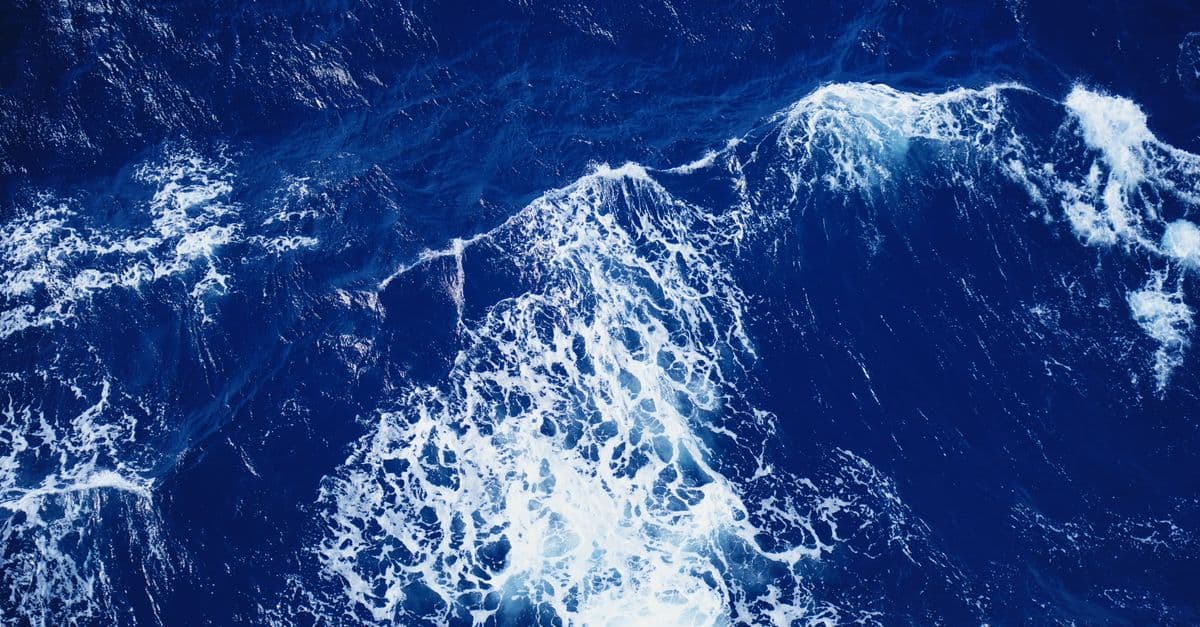
Photo: 天玑 不器 / Pexels
Today, Earth's oceans contain roughly 1.4 billion cubic kilometers of water, and approximately 35 grams of dissolved salt per liter—a concentration that has puzzled observers for millennia. But the ocean's salinity is not a quirk of nature; it is the inevitable result of 4 billion years of geological and chemical processes. Rain carries dissolved minerals from the land; rivers deliver them to the sea; water evaporates and leaves the salt behind; and hydrothermal vents pump additional minerals from the planet's interior. The result is a chemically balanced system in which salt arrives at roughly the same rate it leaves. Understanding ocean salinity reveals how the Earth's rocks, water, and interior heat work together to create the conditions for life itself.
What "Salt" Really Means in Seawater
When we say the ocean is "salty," we are not talking about table salt alone. Seawater salinity — the total mass of dissolved inorganic compounds in water, typically expressed as grams per kilogram or parts per thousand — consists of a mixture of ions, the charged atoms and molecules that result from the dissociation of salts in water. The primary salt is sodium chloride (NaCl), which contributes roughly 85 percent of the ocean's salinity by mass, but dozens of other compounds and elements dissolve in the sea as well.
The average salinity of ocean water is approximately 35 parts per thousand, or 3.5 percent by weight. This means that if you evaporated all the water from a kilogram of typical seawater, you would be left with 35 grams of dissolved solids. That concentration may sound high, but it represents a delicate balance achieved over billions of years. Seawater is neither pure saltwater (like the Dead Sea, which reaches 300 parts per thousand) nor fresh water (which contains less than 0.5 parts per thousand).
Source: Millero, F. J., Feistel, R., Wright, D. G., and McDougall, T. J. (2008), "The composition of standard seawater and the definition of the Reference-Composition Salinity Scale," Deep Sea Research Part I: Oceanographic Research Papers, 55(1), 50–72 — comprehensive reference for global ocean salinity composition.
The major ions in seawater tell a story of chemical transfer from the continents. Sodium (Na⁺) and chloride (Cl⁻) dominate because they are highly soluble and resist removal from water once dissolved. Other ions—magnesium, calcium, potassium, sulfate, and bicarbonate—arrive by different pathways and in different proportions. Some ions are removed from seawater through chemical or biological processes; others accumulate steadily over time. The result is a solution that supports chemistry and life in ways pure water cannot.
| Ion | Share of Salinity (%) | Primary Source |
|---|---|---|
| Chloride (Cl⁻) | 55 | Rock weathering, evaporite deposits |
| Sodium (Na⁺) | 30 | Silicate and feldspar weathering |
| Sulfate (SO₄²⁻) | 7.7 | Gypsum dissolution, volcanic emissions |
| Magnesium (Mg²⁺) | 3.7 | Basalt and olivine weathering, hydrothermal cycling |
| Calcium (Ca²⁺) | 1.2 | Limestone and other carbonate weathering |
| Potassium (K⁺) | 1.1 | Feldspar and other silicate weathering |
| Bicarbonate (HCO₃⁻) | 0.4 | CO₂ dissolution in rainwater, rock chemistry |
The Weathering Mechanism: How Rain Dissolves Rock
The primary source of ocean salt lies not in the sea itself but in the land. When rain falls on mountains and continents, it is not pure water; it contains dissolved carbon dioxide from the atmosphere, which reacts with water to form carbonic acid (H₂CO₃). This slightly acidic rain percolates through soil and rock, slowly dissolving minerals. Rock weathering — the chemical and physical breakdown of rock by exposure to water, oxygen, and organic acids — is the engine that supplies the ocean with sodium, chloride, calcium, potassium, and dozens of other ions.
Consider a feldspar crystal in granite rock. Feldspar contains sodium, potassium, aluminum, and silicon. As rainwater seeps through cracks, carbonic acid attacks the feldspar, breaking chemical bonds and releasing these elements into solution. Calcium carbonate (limestone) dissolves even more readily; a raindrop's worth of carbonic acid will slowly eat away at chalk cliffs. Silicate minerals like olivine and pyroxene, which make up the ocean floor and the mantle rock exposed by weathering, release magnesium and iron into solution. Over thousands to millions of years, these dissolved ions make their way into streams and rivers.
Rivers are the highways that carry dissolved salts from the continents to the sea. The Amazon River alone discharges approximately 6,600 cubic kilometers of water per year into the Atlantic Ocean, transporting an immense load of dissolved minerals. In fact, rivers deliver roughly 2.7 billion metric tons of dissolved salts to the oceans annually. This continuous flux has been happening for most of Earth's history, meaning the ocean has had billions of years to accumulate salt.
Source: Aplin, A. C., Jones, M. L., and Larter, S. R. (1999), "Analogue and numerical models of heat flow and inorganic fluid transport in the Lower Cretaceous of Southeast Asia," Marine and Petroleum Geology, 16(6), 589–603 — illustrates mineral transport via fluid flow in natural systems.
The composition of river water depends on the geology of its watershed. Rivers draining regions rich in limestone carry high concentrations of calcium and bicarbonate. Rivers flowing through volcanic regions transport silica, iron, and magnesium. Over a long enough timescale, rivers become conduits for the chemical composition of entire continental regions. When these rivers empty into the ocean, they dump their dissolved cargo into a reservoir that covers 71 percent of Earth's surface.
Evaporation and Accumulation: Why Water Leaves but Salt Stays
The ocean would not be salty if all the water that flowed in stayed in the ocean. But water does not stay; it evaporates. Every year, approximately 1.37 billion cubic kilometers of water evaporate from the ocean's surface, driven by solar heat. The water vapor rises into the atmosphere as pure H₂O. The dissolved salts—sodium, chloride, magnesium, calcium, and all the rest—cannot evaporate. They are too heavy, too large, too charged. They remain behind in the liquid water.
This is the crux of ocean salinity: evaporation is a fractionating process. It separates the salt from the solvent, concentrating the dissolved ions left behind. Imagine a glass of seawater sitting on a hot windowsill. As water molecules escape into the air, the salt does not go with them. The water grows progressively saltier. Scale this up across the global ocean over 4 billion years, and you see how salinity accumulates.
Yet the ocean is not infinitely salty. It does not reach the 300 parts per thousand of the Dead Sea or the 360 parts per thousand of the hypersaline Don Juan Pond in Antarctica. Why? Because salt does not accumulate indefinitely. Processes remove salt from the seawater almost as fast as it arrives.
Source: Broecker, W. S., and Peng, T.-H. (1982), Tracers in the Sea, Eldigio Press, New York — seminal work on ocean composition and the balance of salt inputs and removal mechanisms.
One major removal pathway is the formation of sediments. When mineral-rich seawater percolates through ocean-floor sediments in hydrothermal systems, various salts precipitate out (crystallize as solids) and become incorporated into mineral deposits. In shallow evaporative settings—salt lagoons, enclosed seas, and tidal flats—seawater can evaporate in such high concentration that salt crystallizes directly from the solution, forming halite (rock salt) deposits. These deposits eventually become buried under subsequent layers of sediment and removed from the ocean's active chemistry. Over geological timescales, this sedimentation of salt is a significant sink.
Additionally, sea spray—the tiny salt-rich droplets ejected from breaking waves—carries salt back to the land. Some of this salt is deposited on coastal and even inland regions. While this is a much smaller flux than riverine input, it is nonzero and contributes to the removal balance. Furthermore, when seawater becomes trapped in minerals (like in pore spaces filled during hydrothermal alteration), the salt is sequestered and removed from the bulk ocean.
Hydrothermal Vents: Salt from the Deep
While rivers bring salt to the ocean from the continents, the ocean floor itself is a source of dissolved minerals. Hydrothermal vents—hot springs on the seafloor where water heated by magma rises and cools—are found along mid-ocean ridges and in other tectonically active zones. As seawater percolates down into hot rock near magma chambers, it dissolves minerals and becomes superheated (reaching temperatures over 400 degrees Celsius in some vents). This hot, mineral-rich water then rises back to the seafloor, where it mixes with cold seawater and precipitates out minerals, creating distinctive black or white smoker plumes.
Hydrothermal vents contribute significantly to the ocean's inventory of dissolved elements. Magnesium, for instance, enters the ocean primarily from rivers, but it is also removed by reaction with hot rock in hydrothermal systems, where it forms magnesium-rich silicates. Conversely, vents enrich the ocean in manganese, iron, zinc, and copper. The dissolved minerals from vents are less about adding table salt (sodium chloride) and more about delivering transition metals and other elements essential to ocean chemistry and biology.
Source: Elderfield, H., and Schultz, A. (1996), "Mid-ocean ridge hydrothermal fluxes and the chemical composition of the ocean," Annual Review of Earth and Planetary Sciences, 24, 191–224 — authoritative assessment of hydrothermal contributions to ocean chemistry.
Hydrothermal activity is also tied to volcanic outgassing. When lava erupts or hot magma releases gases, those gases—primarily water vapor, carbon dioxide, and sulfur dioxide—carry volatile elements and compounds into the atmosphere and ultimately to the ocean. This volcanic contribution has been significant at different times in Earth's history. During periods of intense volcanic activity (such as the Cretaceous), the ocean's chemistry shifted as volcanic volatiles poured into the system. Today, volcanic contributions are smaller but still measurable.
The Steady State: A Balance of Salt
The ocean appears to have reached a quasi-equilibrium state in its salt composition. This does not mean the salinity is fixed forever; it means that salt arrival roughly balances salt removal. Rivers deliver approximately 2.7 billion metric tons of dissolved salts annually. Hydrothermal vents and other seafloor processes add more. Chemical weathering on the continents continues. But simultaneously, salts are being removed: incorporated into sediments, trapped in hydrothermal minerals, carried away by sea spray, and chemically modified in ways that change their form or remove them from easy measurement.
The concept of steady state is crucial to understanding why the ocean is salty but not infinitely salty. If rivers had been flooding salt into the ocean for 4 billion years with no removal mechanism, the ocean would be far more concentrated than it is—perhaps approaching saturation and beginning to precipitate salt out the way the Dead Sea does. The fact that the ocean maintains a stable, moderate salinity tells us that the system is regulated. Input equals output; the ocean is not accumulating salt faster than it is losing it.
This balance is fragile. Over geological timescales of millions of years, changes in climate, volcanic activity, seafloor hydrothermal circulation, and continental erosion rates can shift the salinity upward or downward. For instance, during ice ages, when less water evaporates and more ice locks up freshwater on land, ocean salinity decreases slightly. During warm periods, evaporation increases and salinity can rise. Yet these swings are small—the global average stays within roughly 2 percent of 35 parts per thousand across the modern ocean.
Source: Hay, W. W., Migdisov, A., Balukhovsky, A. N., Wold, C. N., Flogel, S., and Söding, E. (2006), "Evaporites and the salinity of the ocean during the Phanerozoic: Geology, geochemistry, and models," Palaeogeography, Palaeoclimatology, Palaeoecology, 240(1-2), 3–46 — comprehensive analysis of salt cycling across Earth's history.
Why Some Bodies of Water Are Vastly Saltier
If the ocean's saltiness is determined by the balance of inputs and removal, then extreme cases show what happens when the balance breaks. The Dead Sea, located between Israel and Jordan, has a salinity of approximately 300 parts per thousand—nearly 10 times that of the open ocean. Why?
The Dead Sea is a landlocked basin with very high evaporation and limited freshwater input. Water flows in (from the Jordan River and groundwater seeps), but the water that remains evaporates, concentrating salts. Because the Dead Sea is sealed—water does not flow out to the ocean—there is no outlet for dissolved salts. The salts remain trapped and accumulate. Over thousands of years, this evaporative concentration produces a brine so salty that human bodies float effortlessly and fish cannot survive. It is a preview of what the ocean would become if evaporation dramatically exceeded input and removal.
Similarly, the Great Salt Lake in Utah, the Caspian Sea (technically a lake), and smaller salt lakes around the world all exist in regions of high evaporation, limited freshwater input, or geological settings where salts are supplied by local mineral-rich groundwater. In each case, salinity reflects the local balance of processes, not some universal ocean constant.
Source: Gavrieli, I., Oren, A., and Gulin, S. B. (2012), "Stratification of the Dead Sea in the last two centuries," Aquatic Geochemistry, 18(2), 101–125 — recent data on hypersaline lake dynamics.
The vast majority of Earth's salt is not in the Dead Sea or Great Salt Lake but locked in the ocean and in sedimentary deposits (evaporites) on land—ancient salt beds formed when seawater evaporated in shallow seas tens or hundreds of millions of years ago. These salt deposits, some kilometers thick, are mined for table salt, industrial chemicals, and de-icing agents. They are proof that ocean salinity has fluctuated significantly in Earth's past and that evaporative processes can concentrate salts into exploitable form.
Why Rivers Are Fresh Despite Feeding a Salty Sea
A paradox seems to emerge: if rivers carry dissolved salts to the sea, why are rivers themselves typically fresh (containing less than 0.5 parts per thousand)? The answer lies in the timescale and residence time of water in river systems.
Water in a river spends only days or weeks traveling from mountains to the sea. While the water does carry dissolved minerals weathered from rock, the concentration is low because the contact time between water and rock is short. A raindrop filters through soil for weeks to months, dissolving some minerals. It then flows in a stream and river for weeks more, but the water is continuously diluted by fresh rainfall upstream. The river is always fed by new, relatively fresh water from rain and snowmelt.
Contrast this with the ocean. Seawater remains in the ocean for thousands of years before evaporating or flowing out through straits. Over that long residence time, even the relatively dilute inflow from rivers accumulates to produce a concentrated solution. An ion entering the ocean as part of a river's dilute flow gets well-mixed into the vast reservoir and spends millennia there before being removed. During that time, countless other ions flow in, adding to the cumulative concentration.
The timescale difference is profound. Rivers are a transit corridor; the ocean is a reservoir. The same salt atom might pass through a river in weeks but persist in the ocean for thousands of years. This long residence time is a key reason why the ocean is salty and rivers are not, despite the directional flow of salt from land to sea.
The Takeaway
Ocean salinity is not a mystery but a logical consequence of Earth's geological and chemical processes. Rain and rivers weather rock on land, dissolving salts and carrying them to the sea. Water evaporates, leaving dissolved ions behind to accumulate. Hydrothermal vents and volcanic activity add more minerals. Over billions of years, these inputs have been balanced by removal mechanisms—sedimentation, hydrothermal cycling, and sea spray—such that the ocean has reached a quasi-steady-state salinity around 35 parts per thousand. This moderate salinity is neither inevitable nor eternal; it reflects the current state of a dynamic system. Yet it is stable enough that marine life has evolved to thrive within it, and it has remained relatively constant across human history. The ocean's saltiness is ultimately a testament to the interplay between the atmosphere, the continents, the seafloor, and the interior heat of the Earth.
Frequently Asked Questions
Q: How much total salt is dissolved in all the world's oceans?
A: The world's oceans contain approximately 1.37 billion cubic kilometers of water, with an average salinity of 35 parts per thousand. This means roughly 50 million billion metric tons of dissolved salt is presently in the ocean. If you evaporated the entire ocean, the resulting salt layer would cover the land to a depth of about 166 meters—a staggering quantity that has accumulated over billions of years.
Q: Does ocean salinity vary from place to place?
A: Yes, ocean salinity varies regionally. Polar regions are fresher (around 30–34 parts per thousand) because melting sea ice and glacier discharge dilute the water. Subtropical regions are saltier (up to 37–38 parts per thousand) because evaporation exceeds precipitation. Enclosed seas and estuaries show even more variation. For instance, the Baltic Sea is nearly fresh due to high riverine input, while the Red Sea is particularly salty due to high evaporation and limited freshwater input.
Q: Can the ocean ever become less salty?
A: Yes. During ice ages, when more freshwater is locked in polar ice, ocean salinity drops slightly—on the order of 1–2 parts per thousand. Conversely, during warm periods with reduced ice, salinity rises. Additionally, if river discharge or ice melt increased dramatically due to climate change, salinity would fall. The residence time of salt in the ocean (thousands of years) means that changes in the balance of inputs and removal play out across decades to centuries.
Q: Why can't we simply use evaporation to extract salt indefinitely from the ocean?
A: Evaporating seawater to extract salt is indeed used commercially, but the process is energy-intensive and slow. For every unit of salt you extract, you remove water from the system, potentially increasing salinity of the remaining seawater locally. On a large industrial scale, salt extraction does not significantly reduce ocean salinity because the ocean's volume and salt inventory are enormous, and the removal rate is tiny compared to natural inputs and removal pathways.
Q: How do scientists measure ocean salinity precisely?
A: Modern salinity is measured by conductivity (how well seawater conducts electricity, which depends on dissolved ions), temperature, and pressure. Ships, buoys, and Argo floats equipped with conductivity-temperature-depth (CTD) sensors continuously sample ocean water globally. These measurements are calibrated to "practical salinity units" (PSU), with 35 PSU equivalent to 35 grams per kilogram. Satellites also infer salinity from microwave brightness, which correlates with salt concentration.
Q: Is the ocean getting saltier due to climate change?
A: Climate change is altering regional salinity patterns. In regions where evaporation exceeds precipitation (like subtropical oceans), salinity is increasing. In regions with increased rainfall or glacial melt (like polar seas and high-latitude areas), salinity is decreasing. The global average salinity is rising slightly because evaporation is outpacing precipitation as the ocean warms, but the change is small—on the order of 0.01–0.02 parts per thousand per decade. This subtle shift has implications for ocean density, current circulation, and marine ecosystems.
Read next:
Follow new articles
Add SciHub101 to your feed reader to see new science and technology stories.
About the Author
SciHub101 is an independent science and technology publication founded and edited by Buğra Sözeri, a software engineer and app developer based in Türkiye. AI tools assist with drafting and research. Source documentation in the existing archive is uneven, and articles are being reviewed and corrected. The Editorial Team byline identifies editorial responsibility; it does not certify specialist or independent human review. Where we compare products, anything built by our own team is labelled as such — see the editorial guidelines and About page for how corrections and disclosures work.
Related Articles
How Scientists Know What Is Inside Earth
No one has drilled to Earth's core. Scientists infer the interior from seismic waves, density, magnetism, meteorites, and high-pressure experiments.

Why Do We See Our Breath When It's Cold? The Science
Exhaled air is warm and close to saturated with water vapor. When it mixes into cold air, the mixture cannot hold all of that vapor, and a small cloud of liquid droplets appears.
Plate Tectonics Explained — How and Why Earth's Crust Moves
Plate tectonics explained: how Earth's rigid plates move, what drives them, what happens at their boundaries, and the evidence that settled the debate.


The Chemistry of Photosynthesis — From Photons to Sugar
How photosynthesis works at the molecular level — the light reactions, Z-scheme, electron transport chain, Calvin cycle, and why quantum coherence may be involved.
Radiocarbon Dating: How Carbon-14 Tells Us the Age of Ancient Things
Carbon-14 dating lets scientists calculate the age of once-living organisms with remarkable accuracy. Here is the physics behind how a radioactive isotope became archaeology's most powerful clock.