The Chemistry of Photosynthesis — From Photons to Sugar
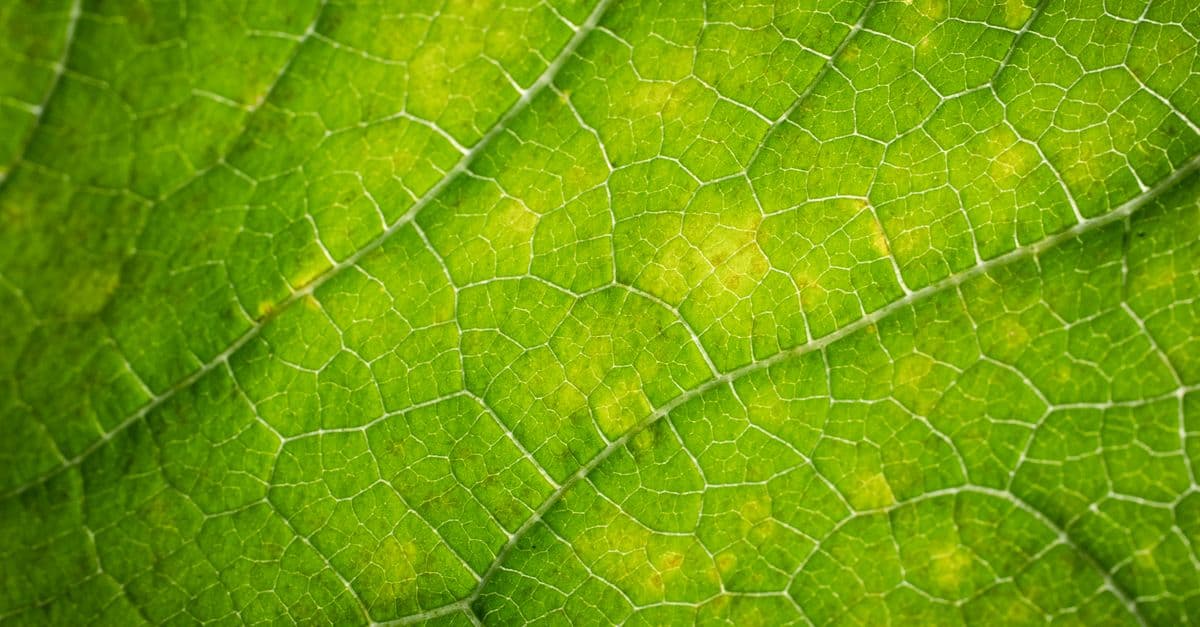
Photo: Patrick / Pexels
Every food calorie on Earth traces back, almost without exception, to a single chemical reaction: the capture of light energy by a chlorophyll molecule in a plant, algae, or cyanobacterium. Photosynthesis is the engine of the biosphere — and at its core, it is a remarkable piece of chemistry that converts electromagnetic radiation into stable chemical bonds.
This article focuses on the molecular mechanisms: how light is captured, how electrons are transferred, how ATP and NADPH are made, and how CO₂ is assembled into sugar. For an accessible overview of photosynthesis in plants (C3/C4/CAM strategies and ecology), see our biology photosynthesis article.
The Big Picture: Two Stages
Photosynthesis occurs in two chemically distinct stages:
- The Light Reactions (thylakoid membranes of the chloroplast) — use light energy to split water and produce ATP and NADPH.
- The Calvin Cycle (stroma of the chloroplast) — use ATP and NADPH to fix CO₂ into three-carbon sugar precursors.
The light reactions produce energy carriers; the Calvin cycle spends them to build organic molecules. No light is required for the Calvin cycle directly — it's not "the dark reactions" in the sense of occurring in darkness; it just doesn't use light directly.
Chlorophyll: The Light-Harvesting Molecule
Chlorophyll is a porphyrin ring molecule with a magnesium ion at its center and a long hydrophobic tail that anchors it into the thylakoid membrane. Its most important property is selective light absorption: chlorophyll a absorbs strongly in the blue (~430 nm) and red (~680 nm) wavelengths but poorly in green — which is why plants are green (green is reflected, not absorbed).
Chlorophyll b and carotenoid pigments absorb complementary wavelengths, widening the absorption spectrum. All these accessory pigments funnel absorbed photon energy toward specialized reaction centers — the sites where photochemistry actually occurs.
This antenna system works by resonance energy transfer (Förster transfer): an excited pigment molecule passes its excitation energy to a neighboring molecule, stepping it down through the antenna array toward the reaction center. Hundreds of pigment molecules can feed energy into a single reaction center.
Photosystem II — Splitting Water
The light reactions begin at Photosystem II (PSII) — named second because it was discovered second, though it acts first in the reaction sequence.
At the PSII reaction center sits a special chlorophyll a dimer called P680 ("P" for pigment, "680" for its peak absorption wavelength). When P680 absorbs a photon (or receives energy from the antenna system), an electron in P680 is excited to a higher energy state.
This excited electron is transferred to an acceptor molecule (pheophytin) and then to a series of electron carriers in the thylakoid membrane — beginning the electron transport chain.
P680 is now oxidized (lost an electron) and is an extremely strong oxidizing agent — one of the strongest in biology, with a reduction potential of about +1.1 V. It has the thermodynamic power to do something remarkable: oxidize water.
The oxygen-evolving complex (OEC) — a cluster of four manganese ions, a calcium ion, and a chloride ion embedded in PSII — catalyzes the splitting of water molecules:
2H₂O → 4H⁺ + 4e⁻ + O₂
Four sequential photon-driven oxidations of P680 extract four electrons from two water molecules, releasing molecular oxygen as a byproduct. Every molecule of O₂ in Earth's atmosphere was produced this way. The oxygen you breathe right now is a byproduct of water splitting.
The protons (H⁺) released accumulate in the thylakoid lumen, building a proton gradient that will drive ATP synthesis.
The Electron Transport Chain — The Z-Scheme
The excited electron from P680 passes through a chain of electron carriers embedded in the thylakoid membrane:
- Pheophytin (initial acceptor)
- Plastoquinone (PQ) — mobile carrier, ferries electrons and H⁺ across the membrane
- Cytochrome b6f complex — pumps additional protons into the lumen; a key site of energy conservation
- Plastocyanin (PC) — small copper-containing protein, mobile in the thylakoid lumen
At each transfer, the electron loses a bit of energy — this energy is used to pump protons across the thylakoid membrane, building the gradient for ATP synthesis.
After passing through the cytochrome b6f complex, the electron arrives at Photosystem I (PSI) reaction center — the chlorophyll dimer P700 (absorption peak 700 nm). P700 absorbs a second photon (or receives energy from its own antenna), re-energizing the electron to a very high energy level.
From P700, the electron passes through:
- Iron-sulfur protein (FeS)
- Ferredoxin (Fd)
- Ferredoxin-NADP⁺ reductase (FNR)
At the final step, FNR transfers electrons to NADP⁺, reducing it to NADPH — the electron carrier that powers the Calvin cycle.
This entire pathway — starting from P680, rising to high energy with the first photon, falling through the electron transport chain, rising again with the second photon at PSI, and finally reducing NADP⁺ — has an energy diagram that looks like a Z when drawn from left to right. Hence: the Z-scheme.
ATP Synthesis — Chemiosmosis
The proton gradient built by the light reactions drives ATP synthesis through a process discovered by Peter Mitchell (Nobel Prize 1978): chemiosmosis.
Protons accumulated in the thylakoid lumen flow down their electrochemical gradient through ATP synthase (also called the CF₀CF₁ complex) — a molecular turbine embedded in the thylakoid membrane. As protons flow through, they drive rotation of the enzyme's central subunit, which catalyzes the phosphorylation of ADP to ATP.
This is the same mechanism used in mitochondria — both chloroplasts and mitochondria use ATP synthase driven by proton gradients, a conserved evolutionary solution to making ATP.
For every 3 ATP molecules made, approximately 12 protons pass through ATP synthase.
The Calvin Cycle — Fixing Carbon
The Calvin cycle (also called the Calvin-Benson-Bassham cycle) takes place in the stroma of the chloroplast. It uses ATP and NADPH from the light reactions to reduce CO₂ into glyceraldehyde-3-phosphate (G3P), the precursor to glucose and all other organic molecules in the plant.
The cycle has three phases:
Phase 1 — Carbon fixation. The enzyme RuBisCO (ribulose-1,5-bisphosphate carboxylase/oxygenase) catalyzes the attachment of CO₂ to the 5-carbon acceptor ribulose-1,5-bisphosphate (RuBP). The unstable 6-carbon product immediately splits into two molecules of 3-phosphoglycerate (3-PGA).
RuBisCO is arguably the most abundant enzyme on Earth — roughly 700 million tonnes are produced annually by the biosphere — in part because it is slow (~3 reactions/second, vs. thousands for many enzymes) and makes mistakes, sometimes reacting with O₂ instead of CO₂ (photorespiration). Enormous evolutionary pressure has produced the C4 and CAM photosynthetic pathways in part to concentrate CO₂ and outcompete oxygen at the RuBisCO active site.
Phase 2 — Reduction. ATP and NADPH are used to reduce 3-PGA to glyceraldehyde-3-phosphate (G3P) — the primary output molecule. Six CO₂ molecules require 18 ATP and 12 NADPH to produce two G3P.
Phase 3 — Regeneration. Most G3P (5 out of every 6 produced) is used to regenerate RuBP, so the cycle can continue. This phase uses 3 ATP per turn. One G3P exits the cycle to build glucose, fats, amino acids, and other organic molecules.
The overall equation:
6CO₂ + 18ATP + 12NADPH → G3P (and regenerated RuBP)
Two G3P (6 carbons total) are the building blocks for one molecule of glucose.
Quantum Biology: Coherence in Photosynthesis
One of the most surprising discoveries of the last two decades came from ultrafast spectroscopy experiments on photosynthetic complexes. In 2007, Fleming et al. reported evidence that quantum coherence — the simultaneous occupation of multiple quantum states — plays a role in energy transfer within the antenna complexes of algae and plants.
The finding suggested that the antenna pigments don't simply transfer energy step by step, but might explore multiple pathways simultaneously (quantum superposition) to find the most efficient route to the reaction center. This would explain why photosynthetic light-harvesting approaches near-perfect quantum efficiency (~90% or higher under dim-light conditions).
The interpretation remains contested. More recent work suggests that while quantum coherence is real and present, it may not be the primary reason for efficiency — the protein scaffold constrains the geometry such that even classical energy transfer would be highly directional. The true role of quantum coherence in biological function — quantum biology — remains one of the most active areas at the intersection of physics and biology.
Why Photosynthesis Is Not Perfectly Efficient
Despite its remarkable chemistry, photosynthesis converts only about 3–6% of incoming solar energy into chemical energy under optimal conditions, and typically 0.5–1% over a growing season. Losses occur because:
- Only ~45% of solar radiation falls in wavelengths chlorophyll can absorb
- Some absorbed light is lost as heat and fluorescence
- RuBisCO is slow and error-prone (photorespiration)
- There are thermodynamic losses at each energy transfer step
- Saturation: photosynthesis saturates at high light intensities; excess energy must be dissipated
Engineering more efficient photosynthesis — faster RuBisCO, better photorespiration bypass, broader light absorption — is an active area of research and a potential route to improved crop yields.
Comparison: Light Reactions vs Calvin Cycle
| Feature | Light Reactions | Calvin Cycle |
|---|---|---|
| Location | Thylakoid membranes | Chloroplast stroma |
| Light required | Yes (directly) | No (indirectly, uses products) |
| Inputs | H₂O, ADP, NADP⁺, light | CO₂, ATP, NADPH |
| Outputs | ATP, NADPH, O₂ | G3P (3-carbon sugar) |
| Key enzyme | PSII / PSI / ATP synthase | RuBisCO |
| Key process | Water splitting, electron transport, chemiosmosis | Carbon fixation, reduction, regeneration |
FAQ
Q: What is the overall equation for photosynthesis? A: 6CO₂ + 6H₂O + light energy → C₆H₁₂O₆ + 6O₂. This is a summary; the actual process involves dozens of coupled reactions in two separate compartments.
Q: Why is chlorophyll green? A: Chlorophyll absorbs strongly in blue (~430 nm) and red (~680 nm) but reflects and transmits green light (~500–560 nm). Green is what's left over — the color you see is the part of the spectrum not absorbed.
Q: Where does the oxygen we breathe come from in photosynthesis? A: The oxygen produced by photosynthesis comes from water, not CO₂. This was confirmed in the 1930s by Cornelius van Niel (working with sulfur bacteria) and confirmed for plants using isotopically labeled water (H₂¹⁸O) by Samuel Ruben and Martin Kamen in 1941.
Q: What is photorespiration and why is it a problem? A: RuBisCO sometimes reacts with O₂ instead of CO₂ in a wasteful process called photorespiration, which consumes ATP and NADPH without fixing carbon. In hot, dry conditions where plants close their stomata (reducing CO₂ and increasing O₂ concentration inside leaves), photorespiration can consume 25–50% of fixed carbon. C4 plants use a CO₂ concentration mechanism to minimize this.
Q: Is photosynthesis the only source of organic carbon? A: Almost, for the surface biosphere. Some ecosystems are supported by chemosynthesis — bacteria near hydrothermal vents use chemical energy (from hydrogen sulfide oxidation) rather than light to fix carbon. These support the deep-sea vent communities. But the vast majority of Earth's biomass ultimately traces to photosynthesis.
Sources
- Blankenship, R. E. (2014). Molecular Mechanisms of Photosynthesis, 2nd ed. Wiley-Blackwell.
- Engel, G. S., et al. (2007). Evidence for wavelike energy transfer through quantum coherence in photosynthetic systems. Nature, 446, 782–786.
- Nelson, N., & Ben-Shem, A. (2004). The complex architecture of oxygenic photosynthesis. Nature Reviews Molecular Cell Biology, 5, 971–982.
- Mitchell, P. (1961). Coupling of phosphorylation to electron and hydrogen transfer by a chemo-osmotic type of mechanism. Nature, 191, 144–148.
- Spreitzer, R. J., & Salvucci, M. E. (2002). Rubisco: structure, regulatory interactions, and possibilities for a better enzyme. Annual Review of Plant Biology, 53, 449–475.
Follow new articles
Add SciHub101 to your feed reader to see new science and technology stories.
About the Author
SciHub101 is an independent science and technology publication founded and edited by Buğra Sözeri, a software engineer and app developer based in Türkiye. AI tools assist with drafting and research. Source documentation in the existing archive is uneven, and articles are being reviewed and corrected. The Editorial Team byline identifies editorial responsibility; it does not certify specialist or independent human review. Where we compare products, anything built by our own team is labelled as such — see the editorial guidelines and About page for how corrections and disclosures work.
Related Articles
Plate Tectonics Explained — How and Why Earth's Crust Moves
Plate tectonics explained: how Earth's rigid plates move, what drives them, what happens at their boundaries, and the evidence that settled the debate.
Quantum Entanglement: What It Is and What It Isn't
Quantum entanglement explained: what Bell's theorem proved, why entanglement can't send faster-than-light signals, and how it enables quantum cryptography and teleportation.

What If Humans Could Photosynthesize? — Science Explained
What would actually happen if humans could photosynthesize like plants? The math is brutal: you'd need skin the area of a small room, you'd still need food, and you'd have to spend most of your life lying flat in direct sunlight.
How Photosynthesis Works — The Process That Feeds the Planet
Photosynthesis takes sunlight, water, and CO₂ and produces sugar and oxygen. It powers nearly every food chain on Earth — and it produced the air you're breathing right now.

Why Is the Ocean Salty? The Science of Sea Salt
Ocean water is salty primarily because rain and rivers slowly weather rocks on land, dissolving ions like sodium and chloride and carrying them to the sea. When seawater evaporates, water leaves but salts remain and accumulate over geological time. Hydrothermal vents and volcanic activity add dissolved minerals. The ocean sits near steady state, with salt being removed about as fast as it arrives.

Radiocarbon Dating: How Carbon-14 Tells Us the Age of Ancient Things
Carbon-14 dating lets scientists calculate the age of once-living organisms with remarkable accuracy. Here is the physics behind how a radioactive isotope became archaeology's most powerful clock.