Quantum Entanglement: What It Is and What It Isn't

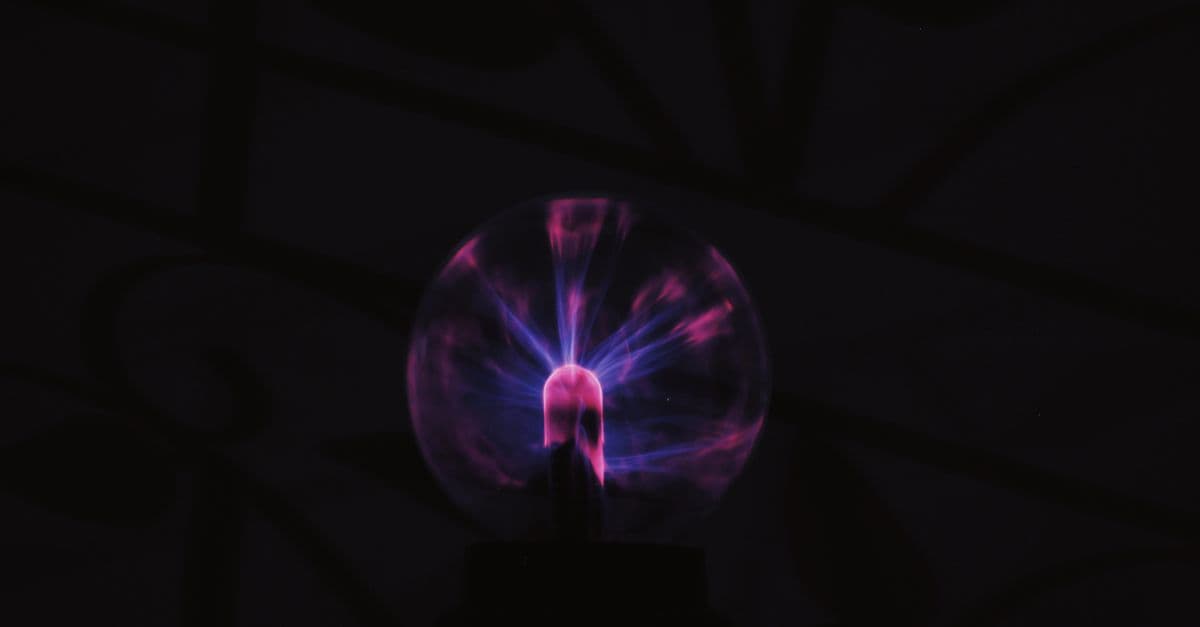
Photo: Google DeepMind / Pexels
Quantum entanglement is a correlation between two particles so tight that measuring one instantly determines a property of the other, regardless of distance. It is real, experimentally confirmed, and won the 2022 Nobel Prize in Physics. It does not allow faster-than-light communication. It does enable a new class of provably secure encryption and a form of "teleportation" of quantum states that is already operating across satellite links over 1,200 km. This article explains the actual mechanism, what Bell's theorem proved, and what entanglement does and doesn't let us do.
The EPR Paradox: Einstein's Challenge to Quantum Mechanics
To understand entanglement, it helps to know what Einstein found so objectionable about it. In 1935, Albert Einstein, Boris Podolsky, and Nathan Rosen published a paper — now called the EPR paper — arguing that quantum mechanics must be incomplete.
Their argument: suppose you create two particles in a correlated state and let them fly apart. Quantum mechanics describes each particle with a wavefunction that exists in superposition until measured. When you measure one particle and get a definite result, the other particle's state is instantly fixed — no matter how far away it is. Einstein called this "spooky action at a distance" (spukhafte Fernwirkung) and found it unacceptable.
EPR paradox — the argument by Einstein, Podolsky, and Rosen (1935) that if quantum mechanics is correct and measuring one entangled particle instantaneously determines another's state regardless of distance, then either quantum mechanics is incomplete (hiding "hidden variables") or information travels faster than light — both of which Einstein rejected.
Einstein's preferred explanation: the particles must already carry predetermined "hidden variables" — definite values for every property — and measuring one merely reveals what was already there. The particles are like two gloves separated into different suitcases: opening one and finding a left glove instantly tells you the other is right, but no action-at-a-distance occurred.
This hidden variable interpretation is local (no faster-than-light influence), realistic (properties exist before measurement), and intuitively satisfying. For three decades after 1935, no one could distinguish it experimentally from standard quantum mechanics. Both predicted the same outcomes in every test conducted.
Source: Einstein, A., Podolsky, B., & Rosen, N. (1935), "Can Quantum-Mechanical Description of Physical Reality Be Considered Complete?" Physical Review 47(10): 777–780.
Bell's Theorem: The Experiment That Settled the Debate
In 1964, Northern Irish physicist John Stewart Bell published one of the most important papers in physics history. Bell proved that hidden variable theories — specifically, any theory that is both local and realistic — make quantitatively different predictions from quantum mechanics in a specific experimental setup.
Bell inequality — a mathematical constraint that any local realistic theory must satisfy, expressed as a bound on the statistical correlations between measurements on two separated entangled particles; quantum mechanics predicts violations of this bound for certain measurement angle combinations.
The setup involves creating many pairs of entangled particles and measuring a property (say, photon polarization) at two separated detectors, with the measurement direction chosen randomly and independently at each detector. Bell showed that if hidden variables predetermine the outcomes, the correlations between detectors are mathematically limited. Quantum mechanics, however, predicts correlations strong enough to exceed this limit.
In the CHSH formulation of Bell's inequality: for any local realistic theory, the correlation parameter S cannot exceed 2. Quantum mechanics predicts S can reach 2√2 ≈ 2.828. The numbers differ by nearly 30% — a gap large enough to test unambiguously.
Think of it like this: two players leave a room and go to opposite ends of a building. A referee asks each one a yes-or-no question from a short fixed list, independently chosen. If their answers were pre-coordinated before they left (hidden variables), there is a strict mathematical limit on how often they can give matching answers across all question combinations. Quantum entanglement allows particles to "match" more often than any pre-arrangement strategy can achieve — and experiments confirm the quantum prediction every time.
Source: Bell, J.S. (1964), "On the Einstein Podolsky Rosen Paradox," Physics 1(3): 195–200.
The Experiments: From Clauser to Loophole-Free
Between 1964 and 2015, increasingly refined experiments tested Bell's theorem. Each generation closed loopholes that could have allowed local realistic explanations to survive.
John Clauser and Stuart Freedman (1972) ran the first experimental Bell test using polarization-correlated photon pairs from calcium atoms. Their results violated the Bell inequality and favored quantum mechanics — but a "detection loophole" remained: only a small fraction of photon pairs were detected, and in principle a hidden variable theory could exploit this.
Alain Aspect (1981–1982) closed the "locality loophole" by switching polarizer orientations while the photons were in flight between the detectors. Any signal coordinating the two measurement outcomes would have to travel faster than light. His results, S = 2.697 ± 0.015, exceeded the classical bound of 2 by 45 standard deviations.
Three loophole-free Bell tests (2015) were conducted nearly simultaneously by groups in Delft, NIST (Gaithersburg), and Vienna. Each used different physical systems and simultaneously closed both the locality and detection loopholes. All three violated Bell's inequality. Local realism was comprehensively ruled out.
| Experiment | Year | System | Loophole Closed |
|---|---|---|---|
| Clauser & Freedman | 1972 | Photons (Ca) | First test |
| Aspect et al. | 1982 | Photons | Locality |
| Hensen et al. (Delft) | 2015 | Electron spins (diamond) | Both |
| Shalm et al. (NIST) | 2015 | Photons | Both |
| Giustina et al. (Vienna) | 2015 | Photons | Both |
The 2022 Nobel Prize in Physics went to John Clauser, Alain Aspect, and Anton Zeilinger "for experiments with entangled photons, establishing the violation of Bell inequalities and pioneering quantum information science."
Source: Nobel Prize Committee (2022), "The Nobel Prize in Physics 2022," NobelPrize.org.
What Entanglement Actually Is
Bell's theorem rules out what entanglement is not (pre-determined properties). The positive description requires engaging with what quantum mechanics says about the state of a two-particle system.
Quantum entanglement — a property of a joint quantum state that cannot be written as the product of independent states for each particle; the particles do not have independent, definite quantum states, and measurement of one instantaneously determines the correlated property of the other because they are components of a single, non-separable system.
In ordinary probability, two independent dice have outcomes that are uncorrelated. Knowing one result tells you nothing about the other. In quantum entanglement, two particles share a joint wavefunction — for example, the singlet state |Ψ⁻⟩ = (1/√2)(|↑⟩|↓⟩ − |↓⟩|↑⟩) for spin-1/2 particles. In this state, neither particle has a definite spin. When particle A is measured along any axis and found spin-up, particle B measured along the same axis will always be found spin-down — and vice versa.
The key feature distinguishing this from the two-gloves scenario: the correlations hold for every measurement direction, and the pattern of correlations across multiple directions violates the Bell inequality. Pre-existing definite values cannot reproduce this pattern. The correlation is fundamentally non-classical.
What produces entangled particles in practice? Common methods include spontaneous parametric down-conversion (in which a single photon splits into two correlated photons in a nonlinear crystal), atomic cascade decays, direct interaction between qubits in a quantum processor, and entanglement-swapping protocols.
Source: Nielsen, M.A. & Chuang, I.L. (2000), Quantum Computation and Quantum Information, Cambridge University Press.
Why Entanglement Cannot Send Information Faster Than Light
This is the most important misconception about entanglement and must be addressed directly.
When you measure an entangled particle and get spin-up, the partner particle's state is instantly determined to be spin-down. But your partner, measuring their particle without knowing your result, gets spin-down with 50% probability — exactly as they would if your particle had never been measured. They cannot tell, from their own data alone, whether you measured yours or not.
No-communication theorem — a theorem in quantum information theory proving that the non-local correlations of entanglement cannot transmit information faster than light; the statistical distribution of local measurements is independent of anything done to the entangled partner particle.
To communicate, your partner would need to compare their results with yours. That comparison requires a classical channel — a phone call, a laser pulse, any electromagnetic or physical signal — which is limited by the speed of light. Before that comparison, each party sees only a random sequence of outcomes. The correlations only emerge in retrospect, after classical comparison.
Think of it this way: both partners get sequences of random-looking results. Only when they compare notes does the extraordinary non-classical correlation emerge. Nothing in the local data alone reveals that entanglement was involved. This is not an engineering limitation; it is a fundamental feature of quantum mechanics, proven rigorously in the no-communication theorem. Special relativity is safe.
Source: Peres, A. & Terno, D.R. (2004), "Quantum information and relativity theory," Reviews of Modern Physics 76(1): 93–123.
Quantum Teleportation: Moving a State, Not Matter
In 1993, a team led by Charles Bennett at IBM published a protocol describing how to transmit an unknown quantum state from one location to another using an entangled pair and two classical bits. This is quantum teleportation.
Quantum teleportation — a protocol that transfers an unknown quantum state from a sender to a receiver using a pre-shared entangled pair and two bits of classical communication; the original state is destroyed in the process, and no matter or faster-than-light signal is involved.
The steps:
- Alice and Bob share a pre-prepared entangled pair (one particle each).
- Alice has a third particle whose quantum state she wants to transfer to Bob. She doesn't know what that state is and can't measure it without disturbing it.
- Alice performs a joint measurement on her entangled particle and the mystery particle together. This yields two classical bits and destroys both particles' independent quantum states.
- Alice sends Bob the two classical bits via any communication channel (limited to light speed).
- Bob applies one of four specific operations to his half of the entangled pair, depending on the two bits received. His particle is now in exactly the state Alice's mystery particle was in.
The original quantum state no longer exists at Alice's location. It has been transferred to Bob's particle. No matter moved faster than light; the two classical bits ensure the process respects relativistic causality.
Anton Zeilinger's group in Vienna experimentally demonstrated quantum teleportation for the first time in 1997, transferring the polarization state of photons. Since then, teleportation has been demonstrated over 143 km between the Canary Islands (2012) and via the Chinese Micius satellite over 1,200 km (2017).
Quantum teleportation is central to quantum networking: it allows quantum states (and therefore quantum information) to be relayed between nodes of a quantum network without intermediate measurement, preserving the information that would otherwise be destroyed by classical copying.
Source: Zeilinger, A. et al. (1997), "Experimental quantum teleportation," Nature 390: 575–579.
Quantum Cryptography: Security from Physics, Not Math
Classical cryptography's security relies on mathematical difficulty — the assumed computational hardness of factoring large numbers or computing discrete logarithms. A sufficiently powerful quantum computer could break RSA and most current public-key infrastructure using Shor's algorithm.
Quantum key distribution (QKD) provides a fundamentally different security model.
Quantum key distribution (QKD) — a cryptographic protocol allowing two parties to establish a shared secret key whose security is guaranteed by physical law; any eavesdropper disturbs the quantum states in a detectable way, revealing their presence before any usable key is established.
The most widely used QKD protocol is BB84 (Bennett and Brassard, 1984), which uses photon polarization without requiring entanglement. However, the entanglement-based E91 protocol (Ekert, 1991) provides an additional security layer: the security of the key can be verified by testing Bell inequality violations. If the measured correlations violate the Bell bound, it proves that no third party with complete classical knowledge of the system can explain the data — meaning the key is secure against any eavesdropper, regardless of their computational power.
The practical constraints on QKD are real. Quantum states cannot be amplified — copying quantum information is forbidden by the no-cloning theorem — so fiber-based QKD has a current practical range of roughly 100–200 km without quantum repeaters. Satellite-based QKD bridges this limitation. China's Micius satellite network is the largest deployed QKD system, used for government and financial communications. Commercial QKD networks also operate in Japan, Switzerland, and the UK.
Quantum repeaters — devices using entanglement swapping and quantum memory to extend QKD range without measuring (and thus destroying) the quantum states — remain an active research area. Several prototype quantum memory systems capable of storing entangled photon states for milliseconds to seconds have been demonstrated, but operational quantum repeater networks have not yet been deployed.
Source: Gisin, N. et al. (2002), "Quantum cryptography," Reviews of Modern Physics 74(1): 145–195.
Entanglement in Quantum Computing
Every major quantum computing architecture relies on entanglement as its primary computational resource. The potential power of quantum algorithms for certain problems comes from creating and manipulating superpositions of many states, with entanglement allowing those states to interfere constructively at correct answers and destructively at wrong ones.
Qubit — the quantum analog of a classical bit: a two-state quantum system that can exist in superposition (simultaneously 0 and 1) and can be entangled with other qubits to create correlated multi-qubit states.
In a register of n entangled qubits, the quantum state can encode 2ⁿ values simultaneously. A 300-qubit fully entangled register represents more simultaneous states than there are atoms in the observable universe — though extracting useful information requires quantum algorithms that guide the system to produce the correct answer with high probability upon measurement.
Shor's algorithm for factoring integers uses entanglement across the entire register to perform a quantum Fourier transform, achieving exponential speedup over the best known classical algorithms. Grover's search algorithm achieves a quadratic speedup for unstructured search. Quantum simulation — using a quantum system to model another quantum system, such as a complex molecule — may offer the most practically important near-term applications.
As of 2026, leading quantum processors include IBM's Heron-family processors and Google's Willow chip (105 qubits, demonstrated beyond-classical performance in a specific sampling task in late 2024) and IonQ's trapped-ion systems. All operate in the "noisy intermediate-scale quantum" (NISQ) era: too many errors for fault-tolerant computation, but useful for research and some early applications.
Quantum sensing represents a near-term application where entanglement already delivers practical advantages. Entanglement-enhanced atomic clocks at NIST beat the standard quantum limit on precision by exploiting correlations between atoms. LIGO, the gravitational wave detector, uses squeezed light (a relative of entanglement) to improve sensitivity beyond what classical laser interferometry allows.
Source: Preskill, J. (2018), "Quantum Computing in the NISQ Era and Beyond," Quantum 2: 79.
Monogamy of Entanglement: Why Eavesdropping Always Leaves a Trace
A key constraint governs how entanglement can be distributed: if two particles A and B are maximally entangled, neither can be entangled with any third particle C. This property — called the monogamy of entanglement — is what makes quantum cryptography's security guarantees possible.
Monogamy of entanglement — the quantum mechanical principle that entanglement cannot be freely shared: if particles A and B are maximally entangled, neither A nor B can be entangled with any other particle; any partial entanglement with a third party necessarily weakens the A-B correlations.
An eavesdropper trying to intercept a QKD transmission must interact with the quantum channel — photons in fiber or free space. Any such interaction, no matter how carefully designed, creates entanglement between the eavesdropper's detector and the photons. By the monogamy principle, this reduces the entanglement between Alice and Bob. The reduction shows up as reduced correlations in their Bell measurements — a detectable anomaly that signals the presence of an eavesdropper.
This is why the security of entanglement-based QKD doesn't depend on assumptions about the eavesdropper's technology. It is enforced by quantum mechanics itself.
Source: Terhal, B.M. (2004), "Is entanglement monogamous?" IBM Journal of Research and Development 48(1): 71–78.
What People Get Wrong About Entanglement
"Entanglement means the particles communicate." No signal passes between entangled particles at the moment of measurement. The correlation is a property of the joint state created when the particles interacted. The no-communication theorem proves rigorously that no information transfer occurs through the entanglement channel.
"Entanglement gives quantum computers universal speedups." Quantum computers offer provable advantages only for specific problem classes — factoring, unstructured search, quantum simulation, quantum linear algebra. For most general computing tasks, quantum computers offer no advantage and are currently much slower than classical computers due to error rates and overhead.
"Quantum teleportation moves matter or information instantly." Quantum teleportation transfers a quantum state, requires two classical bits of communication (limited to light speed), and destroys the original. No matter moves. No faster-than-light communication occurs.
"Entanglement could explain consciousness or psychic phenomena." The no-communication theorem rules out any mechanism by which entanglement could carry subjective information between brains. The brain is a warm, wet, noisy environment in which quantum coherence decoheres in femtoseconds to picoseconds — far too fast to play a functional role in neural computation at relevant scales.
"Measuring an entangled particle destroys it." Measurement determines the quantum state but does not destroy the particle. What is lost is the superposition — after measurement, the particle has a definite state and can participate in further interactions. The partner particle also transitions from a superposition to a definite (correlated) state.
Source: Aspect, A. (1999), "Bell's inequality test: more ideal than ever," Nature 398: 189–190.
The Takeaway
Quantum entanglement is a confirmed, experimentally verified feature of nature that cannot be explained by any theory in which particles carry hidden information from their creation and influences travel no faster than light. Bell's theorem provided the decisive theoretical test; Clauser, Aspect, and Zeilinger spent decades constructing progressively tighter experiments that confirmed the quantum mechanical prediction, earning the 2022 Nobel. The no-communication theorem is as fundamental as special relativity, and together they define exactly what entanglement can and cannot do: it provides correlations stronger than anything classical physics allows, enabling provably secure cryptography, quantum state transfer, and entangled-qubit computation — but it offers no shortcut past the speed of light, and understanding that boundary is the foundation for understanding what quantum mechanics actually says about the world.
Frequently Asked Questions
Q: What is quantum entanglement in simple terms?
A: Two particles are entangled when they share a single quantum description that cannot be split into independent descriptions of each particle. Measuring one instantly determines a correlated property of the other, no matter how far apart they are — not because they communicate, but because they were never independently defined to begin with.
Q: Does quantum entanglement allow faster-than-light communication?
A: No. The no-communication theorem proves this rigorously. When you measure an entangled particle, the correlation with the distant partner only becomes apparent when you compare results using a classical channel, which travels at or below light speed. Each party's local measurements look completely random before comparison.
Q: What did the 2022 Nobel Prize in Physics recognize?
A: The prize went to John Clauser, Alain Aspect, and Anton Zeilinger for experiments demonstrating that Bell inequalities are violated by entangled photon systems, definitively ruling out local realistic hidden variable theories, and for pioneering quantum information science — the field that includes quantum computing, quantum cryptography, and quantum teleportation.
Q: What is Bell's theorem?
A: Bell's theorem (1964) proves that any local realistic theory — one where particles have definite pre-existing properties and influences travel no faster than light — predicts statistical correlations between measurements that are strictly weaker than what quantum mechanics predicts. Experiments consistently confirm the stronger quantum correlations, ruling out local realism.
Q: What is quantum teleportation and can it teleport people?
A: Quantum teleportation transfers the complete quantum description (state) of a particle from one location to another using a shared entangled pair and two classical bits. The original state is destroyed in the process. It cannot teleport matter or consciousness, and it requires classical communication limited to light speed. It is useful for quantum networking, not physical transport.
Q: How is quantum entanglement used in cryptography?
A: Entanglement-based quantum key distribution allows two parties to verify their key is secure by testing Bell inequality violations. Any eavesdropper who intercepts the quantum channel must interact with the photons, which (by the monogamy of entanglement) reduces the correlations between sender and receiver in a detectable way — revealing the eavesdropper before any key material is compromised.
Q: Is entanglement used in real quantum computers today?
A: Yes. Entanglement between qubits is the central computational resource in quantum computing. Two-qubit gate operations create entanglement; algorithms like Shor's factoring exploit entanglement across many qubits to achieve exponential speedups. As of 2026, quantum processors with hundreds of physical qubits routinely create and manipulate entangled states.
Read next:
Follow new articles
Add SciHub101 to your feed reader to see new science and technology stories.
About the Author
SciHub101 is an independent science and technology publication founded and edited by Buğra Sözeri, a software engineer and app developer based in Türkiye. AI tools assist with drafting and research. Source documentation in the existing archive is uneven, and articles are being reviewed and corrected. The Editorial Team byline identifies editorial responsibility; it does not certify specialist or independent human review. Where we compare products, anything built by our own team is labelled as such — see the editorial guidelines and About page for how corrections and disclosures work.
Related Articles

The Chemistry of Photosynthesis — From Photons to Sugar
How photosynthesis works at the molecular level — the light reactions, Z-scheme, electron transport chain, Calvin cycle, and why quantum coherence may be involved.

Nuclear Fusion in 2026: Is It Finally Working?
A comprehensive look at the state of nuclear fusion in 2026 — the NIF ignition breakthrough, ITER tokamak, stellarators, inertial confinement, and the private companies racing to deliver fusion power to the grid.

Quantum Mechanics Foundations Explained — Wave, Uncertainty, and Entanglement
Quantum mechanics rests on five foundational principles that explain all atomic and subatomic behavior. This primer covers each principle, its experimental basis, and what it means.
Quantum Entanglement: Bell's Theorem Experiments
How quantum entanglement experiments revealed nature defies classical intuition

The Aspect Bell Test: The Experiment That Ended the Einstein Debate
Alain Aspect's 1982 Bell test used entangled photons to close the locality loophole, violating Bell inequalities and ending Einstein's hidden-variable debate.

John Bell: The Physicist Who Proved Einstein Wrong About Quantum Reality — SciHub101
John Bell's 1964 theorem showed quantum entanglement is real, not a gap in our knowledge. His life at CERN, Belfast roots, and death before his Nobel make his story uniquely poignant.