Nuclear Fusion in 2026: Is It Finally Working?
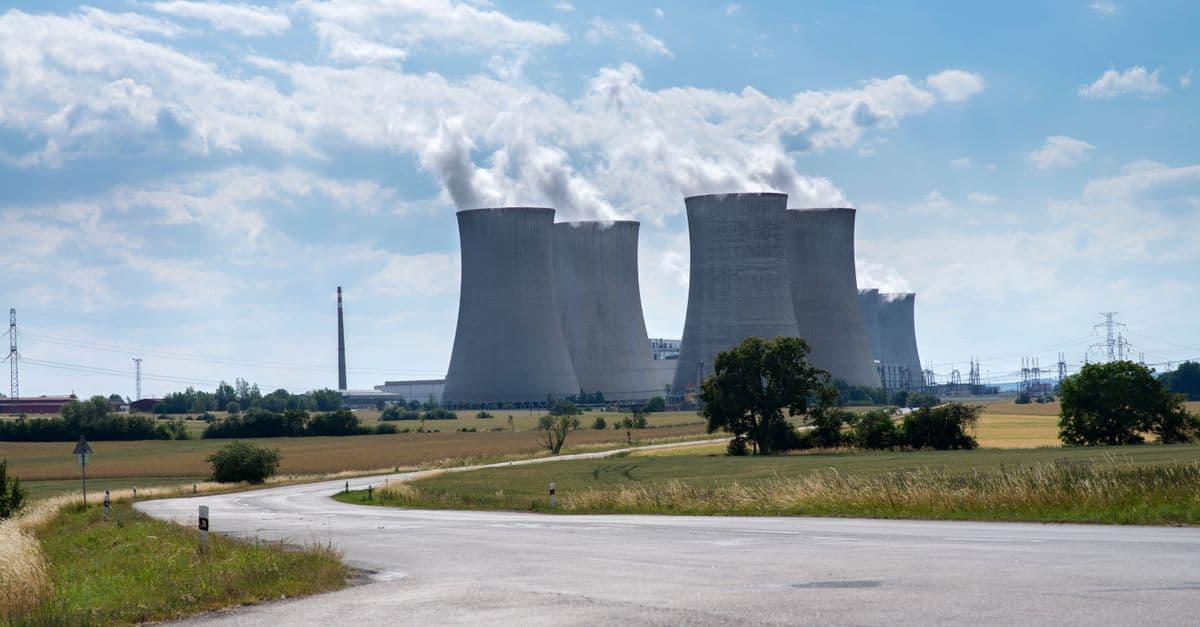
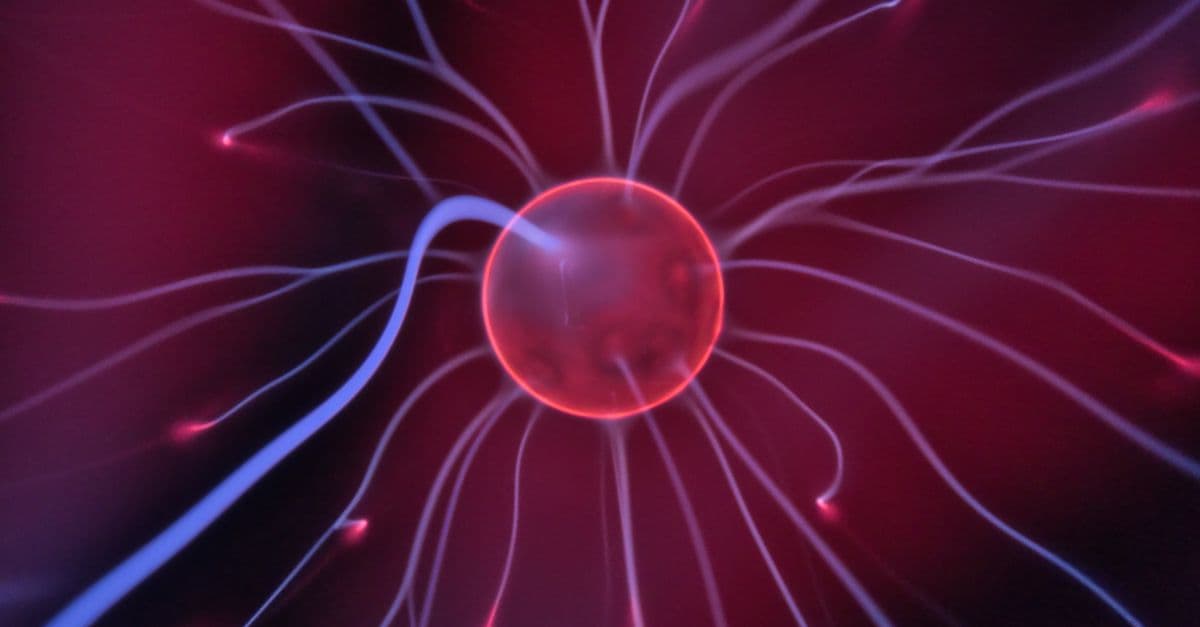
Photo: Vladimír Sládek / Pexels
For most of the past seventy years, nuclear fusion has been the perennial energy technology of the future — always thirty years away. Then, on December 5, 2022, the National Ignition Facility at Lawrence Livermore National Laboratory broke a barrier that physicists had chased for half a century: it produced more fusion energy from a target than the laser energy delivered to that target. Ignition — a Q greater than 1 — was real.
That experiment did not solve the engineering challenges of fusion power. But it proved that the underlying physics works at the scales required. Combined with dramatic advances in superconducting magnets, machine learning-driven plasma control, and billions in private investment, fusion in 2026 looks fundamentally different from fusion in 2020.
This article explains what fusion actually requires, where each major approach stands today, and when grid power is realistically achievable.
What Fusion Actually Is — and Why It Is Hard
Nuclear fusion is the process by which light atomic nuclei combine to form heavier nuclei, releasing energy. The most accessible reaction for energy purposes combines deuterium (D) and tritium (T), isotopes of hydrogen:
D + T → ⁴He (3.5 MeV) + neutron (14.1 MeV)
The total energy release (17.6 MeV per reaction) is enormous relative to chemical reactions: fusion of 1 gram of deuterium-tritium releases the energy equivalent of about 11 tons of TNT, or roughly 100,000 times more energy per unit mass than burning gasoline.
The difficulty is that hydrogen nuclei carry positive charges and repel each other with tremendous force (the Coulomb barrier). To fuse, nuclei must approach within ~1 femtometer of each other. At that distance, the strong nuclear force overcomes electromagnetic repulsion. Achieving this requires either extreme temperature (100–150 million degrees Celsius, roughly ten times hotter than the sun's core) or extreme density combined with confinement time — described by the Lawson criterion:
nτT ≥ 3 × 10²¹ m⁻³·s·keV
Where n is plasma density, τ is energy confinement time, and T is temperature. This triple product must reach a threshold for more energy to come out than is required to maintain the plasma. No material container can hold plasma at these temperatures — which is why fusion approaches use either magnetic fields or inertial compression to confine it.
Approach 1: Tokamaks (Magnetic Confinement)
A tokamak confines plasma in a toroidal (donut) shape using a combination of toroidal and poloidal magnetic fields. The combined helical field lines keep the hot plasma from touching the reactor walls. Tokamaks are the dominant approach to fusion and host the world's two largest fusion projects.
ITER
The International Thermonuclear Experimental Reactor under construction in Cadarache, France is the world's largest scientific project by budget (approximately $22 billion and rising). With 35 partner nations contributing, ITER is designed to produce 500 MW of fusion power from 50 MW of heating input — a Q of 10 — for periods of 400–600 seconds.
ITER will not generate electricity. It is a physics and engineering demonstration that will validate plasma physics at power-plant scale, qualify materials for the neutron bombardment environment, and demonstrate tritium breeding.
First plasma is currently scheduled for 2025–2026, with full D-T operations in the early 2030s. Construction delays (the original first-plasma date was 2020) have pushed timelines repeatedly, and costs have escalated significantly.
Commonwealth Fusion Systems — SPARC
Commonwealth Fusion Systems (CFS), spun out of MIT's PSFC, has taken a different approach: use high-temperature superconducting (HTS) magnets to build a much smaller, more powerful tokamak. HTS magnets made from REBCO (rare-earth barium copper oxide) tape can achieve magnetic fields of 20 Tesla or more — roughly double the field strength of ITER — allowing plasma confinement in a device 40 times smaller by volume.
CFS's SPARC tokamak (planned first plasma ~2025) is a net-energy-gain device roughly the size of a tennis court. Their commercial follow-on, ARC, is designed as a pilot power plant. CFS has raised over $1.8 billion in funding (as of 2024) and is the best-capitalized private fusion company.
The key enabling milestone came in September 2021 when CFS demonstrated a 20 Tesla HTS magnet — confirming the physics that makes compact tokamaks viable.
Approach 2: Stellarators (Twisted Magnetic Confinement)
Stellarators use a more complex, twisted magnetic coil geometry to confine plasma without requiring a large transformer current. While tokamaks need this plasma current (which can become unstable), stellarators achieve inherently steady-state, disruption-free operation — a significant engineering advantage for a commercial power plant.
The challenge is that stellarator coil geometry is extraordinarily complex to design and manufacture. Modern computational tools and precision manufacturing have made it feasible.
Wendelstein 7-X (W7-X) at Greifswald, Germany is the world's largest and most advanced stellarator. In experiments completed in 2023, W7-X achieved plasma pulses of up to 8 minutes duration with record energy densities for a stellarator. W7-X is not designed to produce net energy but to validate that stellarators can reach conditions required for a power plant.
Approach 3: Inertial Confinement — The NIF Breakthrough
The National Ignition Facility uses 192 laser beams to simultaneously compress a peppercorn-sized capsule of frozen deuterium-tritium fuel. The implosion achieves the extreme density and temperature needed for fusion in a microsecond, without magnetic confinement.
The December 2022 experiment delivered 2.05 MJ of laser energy to the hohlraum (the gold cylinder surrounding the fuel capsule) and produced 3.15 MJ of fusion energy — a gain of 1.54, or Q > 1. This was the first time in history that a fusion experiment produced more energy than was delivered to the target.
Critical caveat: the 192 lasers require approximately 300 MJ of electricity to produce 2.05 MJ of laser light (a "wall-plug efficiency" of less than 1%). The 3.15 MJ of fusion output is far less than the 300 MJ input to the facility. This is often called the Q > 1 at target vs. Q << 1 at wall distinction.
Subsequent experiments in 2023 produced yields up to 3.88 MJ. The NIF is now focused on understanding target physics and implosion symmetry rather than producing more energy.
For commercial inertial fusion power, the challenges are enormous: laser efficiency would need to increase by roughly 100x, targets would need to be manufactured and injected at ~10 per second (compared to the NIF's roughly 1 per month), and target costs would need to fall from millions of dollars each to a few cents.
Approach 4: Private Fusion Companies
The private fusion sector has undergone explosive growth since 2020. Major funders include Microsoft, Chevron, Google, Breakthrough Energy Ventures, and numerous sovereign wealth funds.
| Company | Approach | Key Technology | Funding (approx.) | Target First Power |
|---|---|---|---|---|
| Commonwealth Fusion Systems | Tokamak (SPARC/ARC) | 20T HTS magnets | $1.8B+ | ~2030 (ARC) |
| Helion Energy | Field-reversed configuration | Pulsed FRC, direct energy conversion | $500M+ (incl. $500M Microsoft offtake) | ~2028 (target) |
| TAE Technologies | Field-reversed configuration (p-B11) | Beam-driven FRC | $1.2B+ | 2030s |
| Tri Alpha Energy / TAE | p-B11 aneutronic | Advanced beam fusion | (same as TAE) | 2030s |
| Zap Energy | Sheared-flow Z-pinch | Simple geometry, no magnets needed | $160M+ | 2030s |
| General Fusion | Magnetized target fusion | Liquid metal compression | $300M+ | Demonstration ~2025 |
| Realta Fusion | Magnetic mirror | Dipole mirrors | $25M | Exploratory |
Helion Energy deserves special mention. In 2021 Helion signed a power purchase agreement with Microsoft — the world's first commercial fusion energy offtake deal — targeting delivery of at least 50 MW by 2028, with a penalty clause if the date is missed. Helion's approach uses a field-reversed configuration (FRC) — a compact plasma shape — with pulsed magnetic compression. They also claim a path to direct electricity conversion (converting neutron kinetic energy to electricity without a steam cycle) which would dramatically improve efficiency. As of 2026, Helion's 7th prototype (Polaris) is in operations and they have not yet achieved net energy.
Major Fusion Approaches: Comparison
| Approach | Confinement Method | Steady State? | Status | Key Challenge |
|---|---|---|---|---|
| Tokamak (ITER scale) | Toroidal magnetic field | Pulsed/quasi-steady | ITER under construction | Cost, complexity, tritium breeding |
| Compact tokamak (HTS) | High-field toroidal magnets | Pulsed | SPARC first plasma ~2025-2026 | First wall materials, tritium |
| Stellarator | Twisted 3D magnets | Steady state | W7-X science phase | Manufacturing complexity |
| Inertial confinement (laser) | Laser compression | Pulsed (short) | NIF achieved ignition | Laser efficiency, rep rate, target cost |
| Field-reversed configuration | Self-organized compact plasma | Pulsed | Private companies (Helion, TAE) | Stability, net energy, direct conversion |
| Z-pinch | Z-direction current | Pulsed | Zap Energy exploring | Repetition rate, electrode erosion |
| Magnetized target fusion | Compressed magnetized plasma | Pulsed | General Fusion pilot | Compression uniformity |
The Engineering Challenges No One Talks About
Physics is only part of the challenge. Commercial fusion power requires solving several engineering problems that are as difficult as the plasma physics:
Tritium breeding: Tritium does not exist naturally in usable quantities. Fusion reactors will breed their own tritium by bombarding lithium with the 14.1 MeV neutrons produced by D-T fusion. The reactor's blanket contains lithium, and the neutron interaction produces tritium. No fusion power plant has ever operated this system at scale. ITER will test it; DEMO (the follow-on European demonstration plant, planned for the 2040s) will rely on it.
First wall and divertor materials: The inner wall of a tokamak faces neutron bombardment, heat loads exceeding 10–20 MW/m², and plasma erosion. Tungsten is the leading candidate material. After years of operation, first wall components will be radioactive and require remote handling for replacement.
Tritium inventory and safety: Tritium is radioactive (a beta emitter) and diffuses readily through metals, posing containment challenges. Commercial plants will need to process tritium continuously and maintain tight inventory accounting.
Heat-to-electricity conversion: Most D-T fusion energy is carried by neutrons, which heat the blanket. A thermal cycle (likely a helium or steam turbine) then converts that heat to electricity — the same physics as a fission plant or coal plant. Helion's direct conversion approach aims to avoid this thermal bottleneck.
Superconducting magnet operations: HTS magnets at 20 Tesla must be cooled to ~20K (-253°C) and maintained in extremely precise alignment around a vessel experiencing neutron flux, vibration, and thermal cycles over decades of operation.
The Tritium Problem: Fusion's Silent Showstopper
Almost every discussion of fusion energy focuses on plasma physics and magnet technology. The supply chain problem that sits quietly underneath all of it is tritium — and it is arguably as hard as any engineering challenge in the field.
Tritium does not exist in meaningful quantities on Earth. It is radioactive, with a half-life of 12.3 years, so any tritium that formed early in the planet's history has long since decayed. The world's entire civilian supply is approximately 25 kg, most of it held by Canada and produced as a byproduct of Canadian CANDU-type fission reactors. Canadian CANDU plants generate roughly 2 kg of tritium per year combined. The United States produces a similar quantity at the Watts Bar reactors in Tennessee, but that inventory is reserved for nuclear weapons programs. A single 1 GW commercial fusion power plant running on D-T fuel is estimated to require roughly 55 kg of tritium per year of operation — more than twice the entire current world civilian stockpile, consumed annually, by one reactor. [SOURCE: Kleiman Energy Policy Digest, University of Pennsylvania; AAAS Science 2021]
The solution built into every serious fusion reactor design is tritium breeding: bombard a lithium-containing blanket with the 14.1 MeV neutrons that D-T fusion produces, and the neutron interaction with lithium-6 generates tritium. The reaction is:
n + ⁶Li → ⁴He + T + 4.8 MeV
Natural lithium is about 7.5% lithium-6 (the rest is lithium-7). To achieve a useful breeding ratio, blanket designs either enrich the lithium in the Li-6 isotope or add a neutron multiplier — typically beryllium or lead — to produce more than one neutron per fusion event, ensuring each fusion reaction breeds more than one tritium atom and the reactor remains tritium self-sufficient. A breeding ratio above 1.0 is the target; in practice, designs aim for 1.05–1.10 to allow for losses and to stockpile surplus for starting future reactors.
ITER will be the first fusion device to actually test breeding blanket modules at fusion-relevant neutron fluxes. Critically, ITER will not breed tritium for its own fuel supply — it will run on externally supplied tritium — but it will test the blanket concepts and material performance that the follow-on DEMO reactor must rely on. The European DEMO design requires validated breeding blanket performance before it can commit to construction. If breeding does not work reliably, D-T fusion loses its fuel source and the entire commercial pathway built around it stalls. This is why ITER's blanket testing program is, in some respects, as important as its plasma physics results.
When Will Fusion Power the Grid?
Realistic timelines as of 2026:
- First private net-energy fusion: 2027–2030 (Helion or CFS most likely candidates)
- First electricity from fusion to the grid: early 2030s (if Helion or CFS pilot plants proceed on schedule)
- Commercial fusion power plants: late 2030s to 2040s (optimistic); 2040s to 2050s (consensus)
- Fusion contributing meaningfully to global electricity mix: 2050s
These timelines are substantially more optimistic than the consensus view of five years ago. The combination of HTS magnet physics, NIF ignition proof, and private capital has genuinely accelerated the field. But commercial fusion still requires solving first-of-kind engineering challenges in tritium breeding, materials, and plant operations — and these take time regardless of capital availability.
The physics now works. The question is whether the engineering can be solved and the economics made competitive — particularly given that wind and solar costs have fallen so far that fusion will need to be extremely cheap per kWh to compete for baseload generation.
Nuclear fusion is the same process that powers the sun and every star — the process at the heart of Stephen Hawking's discussions of stellar physics and Richard Feynman's lectures on quantum electrodynamics and nuclear forces. The fact that humanity may be on the edge of harnessing it is one of the most consequential scientific developments of the century.
Frequently Asked Questions
Q: Did the NIF achieve fusion ignition in 2022 and what does that actually mean? A: Yes. On December 5, 2022, the NIF delivered 2.05 MJ of laser energy to a target and produced 3.15 MJ of fusion energy — a gain (Q) greater than 1 at the target. This is "ignition" by the scientific definition: more fusion energy out than laser energy in. However, the lasers required ~300 MJ of wall-plug electricity to produce that 2.05 MJ of laser light, so the overall system is still far from energy-positive.
Q: What is the difference between ITER and a commercial fusion power plant? A: ITER is a science and engineering demonstration — it will not generate electricity. Its goal is to produce 500 MW of fusion power from 50 MW of heating input (Q=10), validate plasma physics at scale, and test tritium breeding. A commercial plant (like the proposed DEMO) would add a power conversion system, operate continuously, and deliver electricity to the grid.
Q: Why does fusion use deuterium and tritium rather than just hydrogen? A: D-T fusion has the highest reaction cross-section (probability of fusion occurring) at achievable temperatures — about 100× higher than D-D or p-p reactions at the same temperature. This makes it far easier to achieve net energy. The downside is that tritium is radioactive and rare; it must be bred in the reactor blanket from lithium.
Q: How close is Helion Energy to achieving its 2028 goal for Microsoft? A: As of 2026, Helion is operating its 7th prototype (Polaris) and has not yet announced net energy. The 2028 commitment to Microsoft is aggressive; most independent experts consider it optimistic. However, Helion's direct conversion approach and the penalty structure of the Microsoft deal provide strong incentives to push hard.
Q: Is fusion energy safe compared to fission (conventional nuclear)? A: Fusion has significant safety advantages over fission. A fusion plasma is inherently self-limiting — any disruption stops the reaction immediately. There is no chain reaction that can run away. The radioactive inventory is far smaller: fusion produces tritium (12-year half-life) and activated structural materials, not long-lived fission products. A Chernobyl or Fukushima-style accident is physically impossible with fusion.
Q: What is the stellarator and why don't we hear about it as much? A: A stellarator confines plasma using complex 3D coil geometry rather than a plasma current, giving it inherent steady-state and disruption-free operation advantages. The W7-X experiment in Germany has made major advances. Stellarators are less well-funded than tokamaks historically because their coil geometry was too complex to design before modern computational tools. Interest is growing in 2026.
Q: Will fusion compete with solar and wind by the time it arrives? A: This is the key economic question. Solar and wind costs have fallen 90%+ since 2010 and continue falling. Fusion must compete as a firm, dispatchable, 24/7 power source — a role batteries and hydrogen are also pursuing. Fusion's advantage would be energy density, small land footprint, and no weather dependence. Whether it can be built cheaply enough to compete in a world with cheap storage is the defining commercial question.
Q: Is fusion safer than fission? A: In most meaningful respects, yes. A fusion plasma is inherently self-extinguishing — any disturbance (loss of heating power, loss of confinement, fuel supply interruption) immediately stops the reaction. There is no critical mass, no runaway chain reaction, and no scenario analogous to Chernobyl or Fukushima. The radioactive inventory is far smaller: fusion produces tritium (half-life 12.3 years) and neutron-activated structural materials, not the long-lived fission products (cesium-137, strontium-90, iodine-131) that make fission accidents consequential over decades. The activated structural materials in a fusion plant become low-level waste recyclable within roughly 100 years, compared to fission's high-level waste requiring geological timescale isolation. The primary safety challenge is tritium containment — tritium diffuses readily through metals and must be carefully inventoried — but this is a manageable engineering problem rather than a catastrophic risk.
Q: When will my electricity come from fusion? A: The honest answer depends on what "come from" means. Pilot demonstrations producing fusion electricity to the grid could happen in the early 2030s if companies like Commonwealth Fusion Systems or Helion hit their stated targets. Commercial fusion plants — built, licensed, and connected at scale — are a 2040s proposition under optimistic assumptions and a 2050s proposition under the more cautious consensus view. Electricity systems turn over slowly; even if fusion plants are operating in the 2040s, they would displace fossil fuel in new-build capacity before penetrating the existing fleet. Realistically, fusion contributing more than a few percent of global electricity generation means the 2050s at the earliest. The good news is that the timeline has genuinely compressed compared to five years ago; the bad news is that "early" and "commercial fusion" are still separated by roughly two decades of first-of-kind engineering.
Q: What is the Lawson criterion? A: The Lawson criterion is the minimum condition for fusion energy gain: the product of plasma density (n), energy confinement time (τ), and temperature (T) must exceed approximately 3 × 10²¹ m⁻³·s·keV. Equivalently, if you increase density, you can afford shorter confinement time, and vice versa. Different fusion approaches occupy different points in this trade-off space.
Sources
- Abu-Shawareb, H. et al. (Indirect Drive ICF Collaboration). "Lawson Criterion for Ignition Exceeded in an Inertial Fusion Experiment." Physical Review Letters, 129, 075001, 2022.
- Creely, A.J. et al. "Overview of the SPARC tokamak." Journal of Plasma Physics, 86(5), 2020.
- Donné, A.J.H. et al. "European Research Roadmap to the Realisation of Fusion Energy." EUROfusion, 2018.
- Nuckolls, J. et al. "Laser Compression of Matter to Super-High Densities: Thermonuclear Applications." Nature, 239, 1972.
- Pedersen, T.S. et al. "First results from divertor operation in Wendelstein 7-X." Plasma Physics and Controlled Fusion, 61(1), 2019.
- ITER Organization. ITER Technical Basis. ITER, updated 2025. https://www.iter.org
- Fusion Industry Association. The Global Fusion Industry in 2024. FIA, 2024.
Related Articles
- Nuclear Fusion: How It Works (2026)
- Nuclear Fusion Energy Explained — The Power of the Stars
- Is Nuclear Power Safe? The Real Risks and Benefits
- The Four Fundamental Forces of Nature Explained
- Richard Feynman — Scientist Biography
- Stephen Hawking — Scientist Biography
- Werner Heisenberg — Scientist Biography
Follow new articles
Add SciHub101 to your feed reader to see new science and technology stories.
About the Author
SciHub101 is an independent science and technology publication founded and edited by Buğra Sözeri, a software engineer and app developer based in Türkiye. AI tools assist with drafting and research. Source documentation in the existing archive is uneven, and articles are being reviewed and corrected. The Editorial Team byline identifies editorial responsibility; it does not certify specialist or independent human review. Where we compare products, anything built by our own team is labelled as such — see the editorial guidelines and About page for how corrections and disclosures work.
Related Articles

Quantum Entanglement: What It Is and What It Isn't
Quantum entanglement explained: what Bell's theorem proved, why entanglement can't send faster-than-light signals, and how it enables quantum cryptography and teleportation.
How Quantum Computers Actually Work — From Qubits to Real Algorithms (2026)
Quantum computers use qubits, superposition, and entanglement to solve problems classical machines cannot. Learn how they work, what algorithms run on them, and where the field stands in 2026.
Nuclear Fusion Breakthrough: Net Energy Gain (2022)
How the National Ignition Facility achieved fusion net energy gain for the first time, igniting hope for unlimited clean energy
Nuclear Fusion Energy Explained — The Power of the Stars
Fusion is the energy source that powers the Sun. Replicating it on Earth could provide nearly limitless clean energy. After 70 years of effort, we're closer than ever — but harder than expected.
Fusion Energy Startups Explained: Why Private Fusion Is Accelerating
Fusion startups are betting on magnets, lasers, and pulsed systems. See how each design works, what milestones are verified, and what is still unproven.