Nuclear Fusion Energy Explained — The Power of the Stars
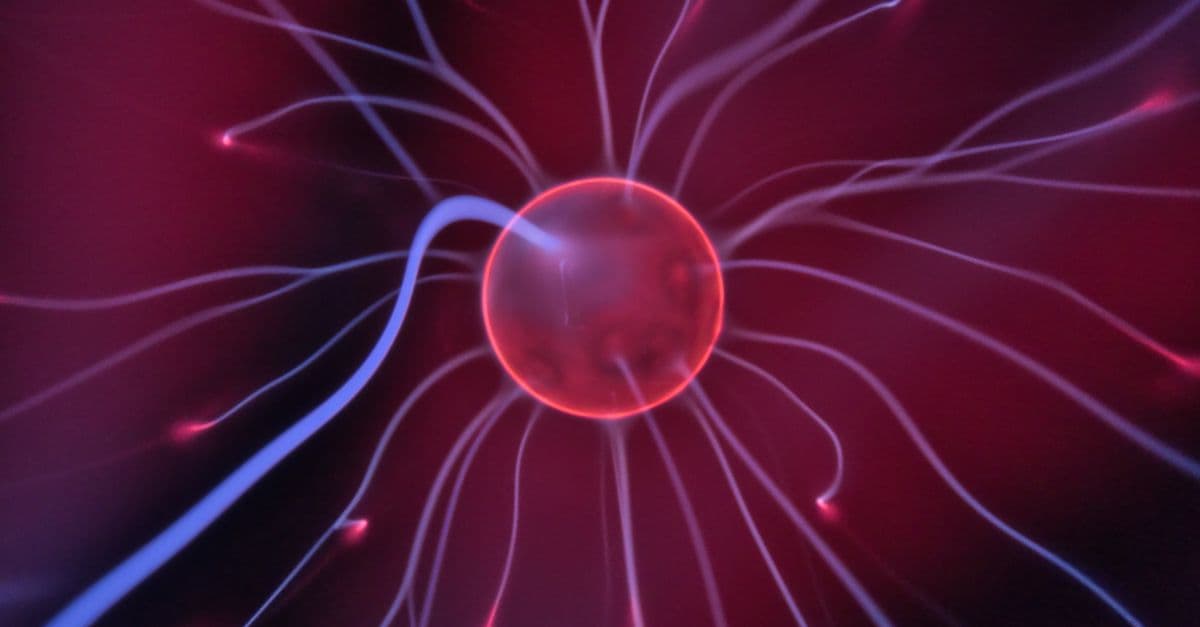
Photo: R Bude / Pexels
Nuclear fusion is the energy source of stars. Two light atomic nuclei combine into a heavier one, releasing massive amounts of energy. If we could harness it on Earth, fusion would offer nearly limitless clean power — no greenhouse gases, no long-lived radioactive waste, fuel from seawater. After 70 years of research, we've finally crossed key thresholds. Whether commercial fusion is coming in 2030, 2050, or never is one of the most important questions in energy.
Key takeaways
- Fusion combines small atomic nuclei (usually hydrogen isotopes) into a larger one, releasing energy.
- Doing it on Earth requires temperatures of 100 million °C — hotter than the Sun's core.
- In 2022, the National Ignition Facility achieved ignition — first time fusion released more energy than the laser energy that triggered it.
- ITER, the world's largest fusion experiment, plans first plasma in 2033.
- Commercial fusion power is widely estimated 15-30+ years away — but progress has accelerated.
What fusion actually is
Inside the Sun, hydrogen nuclei collide so hard they fuse, forming helium. The mass of the helium is slightly less than the original hydrogen. The "missing" mass becomes energy via Einstein's E=mc².
Fusion is essentially the opposite of fission. Fission splits heavy atoms (uranium, plutonium); fusion combines light atoms (hydrogen, helium).
The energy released by fusion per kilogram of fuel is about 4 million times that of burning coal, and 3-4 times that of fission. A glass of seawater contains the fusion-fuel energy equivalent of a barrel of oil.
Why fusion is so hard
Atomic nuclei are positively charged and repel each other. To make them fuse, you must overcome this repulsion — bringing them close enough that the strong nuclear force takes over.
This requires:
Extreme temperature — particles moving fast enough to overcome repulsion. ~100 million °C for deuterium-tritium fusion (vs. the Sun's core at ~15 million °C).
Sufficient density — particles close enough to actually collide.
Confinement time — particles staying together long enough for collisions to happen.
The Sun gets away with much lower temperatures because gravity provides confinement at extraordinary density. We don't have the Sun's gravity, so we need higher temperatures.
The two main approaches
Magnetic confinement (tokamaks)
Use powerful magnetic fields to hold superheated plasma in a doughnut shape. The plasma is confined by magnetic field lines so it doesn't touch the walls. Most large fusion experiments (ITER, JT-60SA, EAST, JET) are tokamaks.
Inertial confinement (laser fusion)
Compress and heat a tiny pellet of fuel using lasers, momentarily creating fusion conditions before the plasma flies apart. The National Ignition Facility (NIF) at Lawrence Livermore is the leading example.
Hybrid approaches
Magnetic-target fusion, magnetised liner inertial fusion, stellarators, field-reversed configurations — startups are exploring various creative geometries.
What "ignition" means
Ignition is when a fusion reaction produces more energy than was put in to trigger it. There are several different definitions:
Scientific ignition
Energy from fusion exceeds energy delivered to the fuel. NIF achieved this in December 2022 — historic milestone, 70 years after fusion research began.
Commercial breakeven
Energy from fusion exceeds energy delivered to the entire facility (including inefficiencies of lasers, magnets, cooling). Far harder. Not yet achieved.
Net electricity
Energy from fusion minus all losses translates into more electricity than the plant consumed. Even harder. Required for commercial viability.
NIF's 2022 result was scientific ignition. Commercial-scale net electricity remains years to decades away.
The major projects
ITER (international, France)
The world's largest fusion experiment. Tokamak with 23,000-tonne magnet system. Construction has cost ~$25 billion, vastly over original budget. First plasma: 2033 (revised; original 2025). Goal: produce 500 MW of fusion power for 5+ minutes.
National Ignition Facility (US)
Laser fusion. Achieved scientific ignition. Originally a weapons-research facility; commercial fusion was secondary. The 2022 result has been replicated and exceeded.
JT-60SA (Japan)
The largest currently-operational tokamak. Provides data ahead of ITER.
EAST (China)
Set the record for longest plasma duration (~17 minutes at 70 million °C in 2025).
Wendelstein 7-X (Germany)
The world's largest stellarator. Demonstrating that more complex magnetic geometries can achieve stable confinement.
Private companies
Over 40 fusion startups now exist, including:
- Commonwealth Fusion Systems — using high-temperature superconducting magnets to build smaller, cheaper tokamaks. Aiming for net energy in 2025-26.
- TAE Technologies — alternative geometry with fuel that produces less neutron radiation.
- Helion — pulsed system aiming for direct electricity conversion.
- Tokamak Energy — compact spherical tokamaks.
- Zap Energy — sheared-flow Z-pinch.
Private fusion has attracted over $7 billion in investment as of 2025.
What fuel is used?
Most current research uses deuterium-tritium (D-T) fusion:
- Deuterium — abundant in seawater (1 in 6,420 hydrogen atoms).
- Tritium — radioactive, half-life 12 years. Produced in reactors from lithium.
D-T fusion is easiest because it requires the lowest temperatures, but it produces high-energy neutrons that activate reactor materials.
Future fusion may use:
- Deuterium-deuterium (D-D) — harder but no tritium needed.
- Deuterium-helium-3 — even higher temperatures, fewer neutrons. Helium-3 is rare on Earth (proposed lunar mining).
- Proton-boron-11 — no neutron production at all. Very high temperatures required.
Why fusion is attractive
If realised commercially:
- No greenhouse gas emissions.
- Abundant fuel — deuterium from oceans, lithium from minerals, both essentially limitless.
- No long-lived radioactive waste — fusion does activate reactor structures, but not for thousands of years like fission waste.
- No meltdown risk — plasma cools immediately if anything goes wrong.
- High power density — small footprint per MW.
If achieved at reasonable cost, fusion could provide baseload power complementing intermittent renewables, dramatically reducing emissions.
Why scepticism is warranted
The famous joke: "Fusion is 30 years away — and always will be."
Reasons for caution:
- Decades of missed deadlines. Original predictions from the 1950s estimated commercial fusion by 1990.
- ITER overruns. Costs and timelines repeatedly slipping.
- Neutron embrittlement. D-T fusion's neutrons damage reactor walls; durable materials are an open problem.
- Tritium supply. Currently produced as a byproduct of fission reactors. Scaling tritium for fusion is unsolved.
- Engineering vs physics. Achieving plasma conditions in a physics experiment is different from running a power plant for decades.
Optimistic views point to recent breakthroughs (NIF ignition, high-temperature superconductors, AI-aided plasma control). Pessimistic views note that we've been "close" for 70 years.
The Physics of the Fusion Reaction
To truly understand fusion, you need to see how the reaction actually works at a fundamental level.
When two hydrogen isotopes collide at extreme speeds, their nuclei approach within about 10^-15 meters. At this distance, the electromagnetic repulsion (Coulomb force) is overcome by the strong nuclear force — the most powerful force in nature, but only effective at extremely short ranges.
Once the nuclei fuse, binding energy is released. The nucleus of the resulting heavier element is more tightly bound (more stable) than the two separate nuclei. That difference in binding energy converts to kinetic energy of the products — neutrons, alpha particles, and other fragments fly apart at high speed. Their kinetic energy heats the surrounding plasma.
The D-T reaction (most common in experiments):
Deuterium + Tritium → Helium-4 + Neutron + 17.6 MeV
Each reaction releases 17.6 megaelectronvolts of energy. For comparison, burning one methane molecule releases about 10 eV. Fusion is roughly a million times more energetic per atom.
The challenge: achieving this reaction rate at a sustained level. A single collision releasing 17.6 MeV is spectacular; doing it billions of times per second in a controlled manner is the engineering feat.
Source: Lawrence Livermore National Laboratory (2022) — Physics of thermonuclear ignition; National Ignition Facility breakthrough documentation.
Comparison of Fusion Approaches: Tokamaks vs. Inertial Confinement
Different approaches trade off complexity, capital cost, and timeline:
| Aspect | Tokamak (Magnetic) | Inertial Confinement (Laser) | Stellarator |
|---|---|---|---|
| Confinement Method | Magnetic field holds plasma in torus | Laser compresses pellet in microseconds | Complex magnetic geometry |
| Temperature | 100+ million °C | 100+ million °C | 100+ million °C |
| Pulse Duration | Seconds to minutes (goal: continuous) | Nanoseconds | Seconds to minutes |
| Commercial Maturity | High (ITER, JT-60SA, EAST) | Medium (NIF proven, but laser cost high) | Low (experimental stage) |
| Capital Cost Estimate | $5-15 billion (ITER example) | $10+ billion (NIF example) | $3-5 billion |
| Neutron Output | Continuous during pulse | Pulsed bursts | Continuous during pulse |
| Engineering Challenge | Plasma instability; material lifetime | Pellet target precision; laser efficiency | Magnetic coil complexity |
| Likelihood of First Commercial Plant | High (2035-2040 best case) | Medium (2040-2050) | Low (2050+) |
Tokamaks have more engineering and design data because they've operated since the 1960s. Laser fusion (inertial) just proved scientific ignition in 2022, so its path to commercialization is less certain but potentially faster given the breakthrough.
Source: ITER Organization (2025) — Technical comparison of fusion confinement approaches; Department of Energy Fusion Energy Sciences Division.
Engineering Challenges Beyond Physics
Achieving plasma ignition in a laboratory is one thing. Running a power plant for 40 years is another.
Neutron embrittlement
D-T fusion produces high-energy neutrons. These neutrons bombard reactor walls, causing atomic displacement. Over time, the walls become brittle and weak — like metal fatigue. After a few years, the reactor vessel must be replaced.
Current materials research explores:
- Liquid metal walls (molten lithium or other alloys) that self-heal by flowing
- Ceramic composites that resist embrittlement better
- Lower-neutron fuel (like D-He-3), but requires even higher temperatures
No material tested so far can run for 30+ years without replacement. This is solvable but expensive.
Tritium breeding
Tritium is radioactive (half-life 12 years) and doesn't exist naturally in useful quantities. It's produced in fission reactors by irradiating lithium. For fusion to be self-sustaining, the reactor must breed its own tritium from lithium blankets surrounding the core.
This has never been done at scale. ITER will test tritium breeding for the first time. If it fails, fusion reactors would depend on limited tritium supplies from fission plants — not ideal for a "replacement" for fission.
Plasma control and instability
Plasma is inherently unstable. Temperature, density, and magnetic field fluctuations can destroy confinement in milliseconds. Current tokamaks use active feedback control — thousands of sensors monitoring conditions, computers adjusting magnetic coils in real time to keep the plasma stable.
AI and machine learning are revolutionizing this. DeepMind's models have shown they can predict and prevent plasma disruptions with better accuracy than traditional control systems. This may be the breakthrough that enables longer plasma pulses and eventually continuous operation.
Source: DeepMind / Nature Physics collaboration (2022) — AI-based plasma control in tokamak experiments; Materials Science and Engineering database on neutron activation.
The Private Fusion Landscape (2026 Update)
Over 40 private fusion companies are attempting faster timelines than ITER:
Commonwealth Fusion Systems (MIT spinout)
- Compact tokamak (SPARC) using high-temperature superconducting magnets
- Smaller, cheaper, faster to build than ITER
- Timeline: Demonstration of net energy in the mid-to-late 2020s
- Strategy: Leverage MIT's decades of tokamak research; focus on engineering simplification
TAE Technologies
- Non-traditional fuel (deuterium-helium-3) producing fewer neutrons
- Aneutronic fusion would eliminate neutron embrittlement problem
- Challenge: Requires temperatures above 200 million °C, not yet achieved
- May take longer to commercialize but potentially cleaner endpoint
Helion Energy
- Pulsed Z-pinch approach with direct electricity conversion
- Skips the traditional heat → steam → turbine cycle
- Claims could reach net electricity in early 2030s
- High capital raises ($500M+) but unproven technology
TAO Energy, Zap Energy, Type One Energy
- Various alternative geometries (Z-pinch, FRC, sheared-flow Z-pinch)
- All pursuing lower capital costs vs. traditional tokamaks
- Timeline risk higher; potential payoff is asymmetric
Key difference from ITER: Private companies prioritize speed and cost over guaranteed scientific success. Several will fail. But if even one or two succeed at commercializable net electricity, it changes everything.
Source: Fusion Industry Association (2025) — Private fusion company survey; venture capital tracking in energy sector.
Energy Density and Grid Integration
Fusion's power density is extraordinary. A 1-gigawatt fusion plant would fit in a building smaller than a coal plant, and with no coal mines, transportation, or ash disposal.
But integrating intermittent fusion (if reactors operate in pulses rather than continuously) into the grid is complex. Pulsed inertial fusion generates surges of power on nanosecond timescales. Bridging that to the grid requires energy storage and power conditioning systems.
Tokamaks operating in long pulses (seconds to minutes) are more grid-compatible. Continuous operation (the long-term goal) would make fusion a true baseload source, like modern nuclear fission plants.
Grid scenarios for fusion (post-2050):
- Fusion + batteries — Pulsed fusion feeds fast battery storage, which smooths output to the grid
- Fusion + heat storage — Melt salt tanks store thermal energy, releasing steady electricity
- Fusion + hydrogen — Excess fusion energy produces hydrogen for transport and industrial heat
- Baseload only — Continuous-operation tokamaks serving as steady dispatchable power
All are feasible. Which wins depends on the fusion reactor design and regional grid needs.
Source: National Renewable Energy Laboratory (2025) — Fusion integration studies for US power grid; Electric Power Research Institute.
Timeline Reality Check
Why fusion timelines are so uncertain:
Scale jump — Lab devices (EAST, NIF) are feasible. A 500 MW commercial plant is 1,000× more complex. Past breakthroughs haven't scaled smoothly.
Tritium supply — No commercial tritium breeding has been proven. This could add years to commercialization.
Materials — Reactor walls must withstand neutron damage for 30+ years. Testing takes years; past material solutions have failed.
Regulatory path — No country has licensed a fusion power plant. Safety standards, waste handling, and operator certification are being written now.
Cost competitiveness — Even if fusion works, it must compete with solar ($30-40/MWh), wind ($26-50/MWh), and batteries (dropping below $100/MWh). A $10 billion fusion plant must run economically for 40 years.
Optimistic estimates (2035 commercial demonstration) are not impossible. Pessimistic ones (2070+) account for past surprises and technical challenges. The honest answer: nobody knows.
Source: MIT Energy Initiative (2025) — The Future of Fusion report; International Energy Agency Technology Roadmap for Fusion.
When might fusion arrive?
Realistic timelines:
- 2030-2035 — first prototype power plants demonstrate net electricity (best case).
- 2040-2050 — first commercial fusion plants, expensive and small.
- 2050-2070 — fusion as a meaningful share of electricity (if scaling succeeds).
Even optimistic timelines mean fusion is unlikely to substantially help with the next two decades of climate action — solar, wind, nuclear fission, and energy efficiency must do most of that work.
Frequently Asked Questions
Q: Is fusion the same as nuclear fission?
A: No. Fission splits heavy atoms like uranium; fusion combines light atoms like hydrogen. Current nuclear power plants use fission. Fusion has achieved scientific ignition but hasn't yet produced commercial power. The two processes are opposite but both release energy from mass conversion.
Q: Can fusion really replace fossil fuels?
A: In principle, yes — fusion has enough energy density to power the world for millennia. In practice, it depends on cost per megawatt-hour and how quickly plants can be deployed. Even successful fusion would compete with increasingly cheap solar and wind. Fusion is better viewed as complementing renewables, not replacing them.
Q: Is fusion dangerous?
A: Inherently much safer than fission. There's no chain reaction to lose control of, no meltdown risk, and far less radioactive waste. Some manageable concerns remain: tritium handling (radioactive but short half-life), neutron activation of reactor walls, and facility security. Safety-wise, fusion is closer to renewable energy than fission.
Q: Will fusion power my home in 2050?
A: Possibly, but probably not as the dominant source. Renewables, batteries, and energy efficiency will likely play larger roles through 2050. Fusion plants, if they work, will first supply baseload power to grids in the 2040s, benefiting everyone indirectly. Direct residential fusion is unlikely for decades.
Q: Can fusion happen in a basement?
A: Small-scale fusion (fusors) actually works — high schoolers have built them with a YouTube guide. But they consume far more electrical energy than they produce in fusion heat. Commercial-scale net energy remains the unsolved challenge. Basement fusion is scientifically real but technically useless.
Q: Why has fusion taken so long to commercialize?
A: Fusion is fundamentally harder than we thought in the 1950s. It requires precise control of plasma at extreme conditions, exotic materials that survive neutron bombardment, and tritium breeding at scale. Every decade brought new surprises. Recent breakthroughs (NIF ignition, high-temp superconductors, AI plasma control) suggest we finally have the tools — but "finally" has been said before.
Spin-off Technologies: Why Fusion Research Matters Even Before Commercial Fusion
Even if commercial fusion takes decades or faces unexpected obstacles, fusion research has generated remarkable technological advances with immediate applications.
Superconducting magnets: Tokamak research demanded increasingly powerful magnets. High-temperature superconductors (developed initially for fusion, later finding applications everywhere) now enable:
- MRI machines and medical imaging (superconducting coils at high fields produce better resolution)
- Maglev trains (Japan's Chuo Shinkansen uses superconducting magnets)
- Quantum computing (maintaining quantum coherence requires ultra-cold, magnetically isolated environments)
- Particle accelerators (CERN's accelerator upgrades rely on HTS technology developed in fusion labs)
Plasma diagnostics: Measuring conditions inside a tokamak requires equipment that doesn't exist elsewhere — extreme-temperature, extreme-radiation-resistant sensors and optics. These have spun off into:
- Industrial cutting and coating technologies
- Plasma medicine (emerging field using non-thermal plasma to treat disease)
- Advanced manufacturing
AI and machine learning: DeepMind's collaboration on plasma control proved machine learning could predict plasma disruptions. This spun off into:
- Real-time monitoring systems for other industrial processes
- Predictive maintenance using neural networks
- Energy grid optimization algorithms
Materials science: Searching for materials that survive neutron bombardment led to:
- Improved alloys for aerospace and industrial applications
- Radiation-resistant materials for space missions
- Advanced coatings and composites
The economic case: funding fusion research has returned multiple billions of dollars' worth of technology innovation beyond fusion itself. Even if commercial fusion never arrives, fusion research has paid dividends.
Source: US Department of Energy, "Spinoff Technologies from Federal Research" (annual reports); MIT Technology Review analysis of fusion innovation spillovers.
The takeaway
Nuclear fusion is the energy source of stars and the long-promised dream of clean abundant power on Earth. After 70 years of research, we've finally crossed scientific ignition and have private companies investing billions. Whether commercial fusion arrives in 10 years, 30 years, or never is genuinely uncertain. Fusion's potential is transformative — its delivery has been infamously slow. The next decade will likely tell us whether fusion is finally moving from physics to engineering, or whether we'll still be calling it "30 years away" in 2050. Regardless, fusion research has already transformed materials science, superconductivity, AI, and medical technology — proving that the investment in understanding the universe's most powerful energy source has value even before we harness it.
Read next:
Follow new articles
Add SciHub101 to your feed reader to see new science and technology stories.
About the Author
SciHub101 is an independent science and technology publication founded and edited by Buğra Sözeri, a software engineer and app developer based in Türkiye. AI tools assist with drafting and research. Source documentation in the existing archive is uneven, and articles are being reviewed and corrected. The Editorial Team byline identifies editorial responsibility; it does not certify specialist or independent human review. Where we compare products, anything built by our own team is labelled as such — see the editorial guidelines and About page for how corrections and disclosures work.
Related Articles
How Do Batteries Actually Work?
Batteries store electrical energy as chemical energy and release it on demand. The principles are over 200 years old, but the chemistry inside your phone and your EV is still changing.
How Do Airplanes Actually Fly?
Hundreds of tonnes of metal lifting off the ground feels like it shouldn't work. The physics is simpler than people think — and the popular "Bernoulli only" explanation is mostly wrong.
Nuclear Fusion in 2026: Is It Finally Working?
A comprehensive look at the state of nuclear fusion in 2026 — the NIF ignition breakthrough, ITER tokamak, stellarators, inertial confinement, and the private companies racing to deliver fusion power to the grid.

Machine Learning and Nuclear Fusion: Teaching AI to Tame the Sun
Controlling fusion plasma is one of science's hardest control problems. DeepMind and others are using deep reinforcement learning to solve it.
How Thermodynamics Explains Everything: From Steam Engines to the Heat Death of the Universe
Four laws govern how energy moves, transforms, and degrades, from the steam engine to every living cell. Thermodynamics explains why engines have limits and why time has a direction.
How Nuclear Reactions Work: Fission and Fusion Explained
One splits atoms to release energy; the other fuses them together. Both tap the same fundamental force — and both are transforming how we power civilization.