Nuclear Fusion Breakthrough: Net Energy Gain (2022)
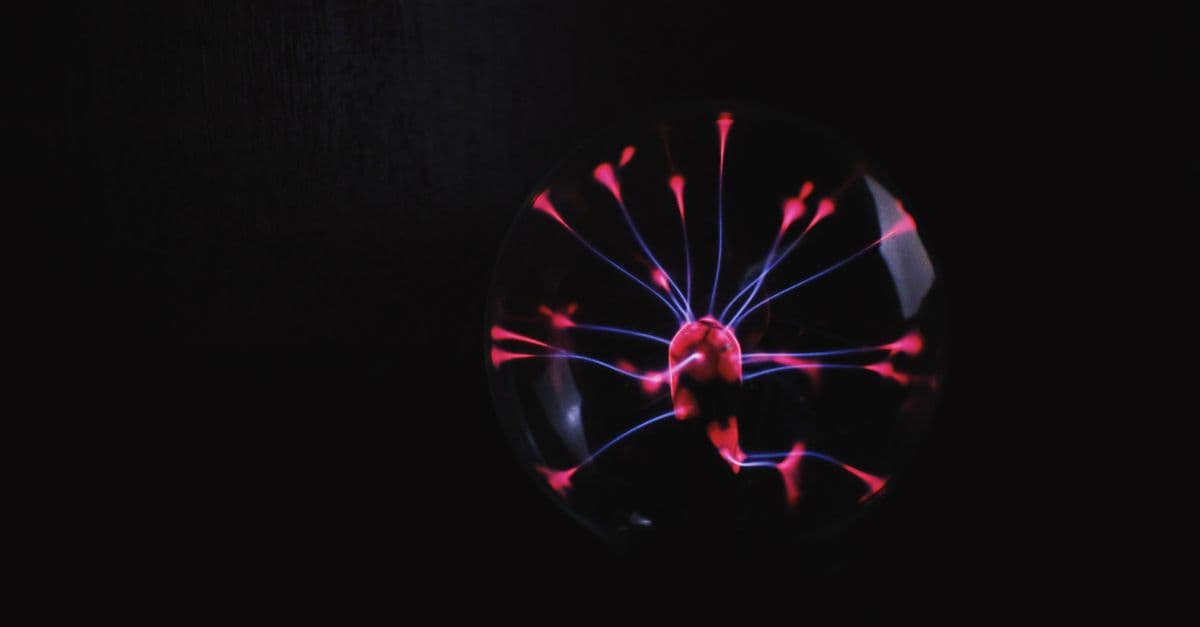
Photo: Nothing Ahead / Pexels
On December 5, 2022, the National Ignition Facility (NIF) announced a historic milestone: for the first time, a controlled fusion reaction had produced more energy than the lasers put in. A tiny pellet of fuel was compressed using 192 powerful laser beams, initiating nuclear fusion. The energy released exceeded the laser energy input, achieving ignition—the moment when a nuclear fusion reaction becomes self-sustaining.
This breakthrough captured global imagination. Fusion is often called "the future of energy"—the same process powering the Sun and stars could theoretically provide virtually unlimited clean energy. If sustained, controlled fusion could solve climate change and energy poverty. Yet fusion has been "30 years away" for the past 50 years. NIF's achievement finally proved ignition was possible, validating decades of research and inspiring massive investment in fusion startups and programs.
Key Takeaways
- The Challenge: Achieving fusion requires compressing fuel to extreme densities and temperatures, releasing more energy than required for compression
- The Breakthrough: NIF achieved 50% net energy gain (3.15 MJ output vs. 2.05 MJ laser input) through inertial confinement fusion
- Real-World Impact: Validated fusion ignition is possible; inspired government and private investment in fusion; opened pathways to commercial fusion
- Future Directions: Improving gain, increasing shot frequency, and scaling to power plants are critical for practical fusion energy
The Challenge
Fusion occurs when atomic nuclei collide and fuse, releasing energy. The Sun fuses hydrogen into helium, releasing energy that powers stellar evolution. Artificial fusion could provide carbon-free power—the fuel (hydrogen isotopes) is abundant, the products are non-radioactive, and no meltdown risk exists (unlike fission reactors).
The challenge: overcoming the Coulomb barrier. Atomic nuclei are positively charged; they repel each other. To fuse, nuclei must be pushed so close that the strong nuclear force (which attracts at short range) overcomes Coulomb repulsion. This requires extreme temperatures (tens of millions of Kelvin) and high densities.
Two approaches exist:
Magnetic Confinement: Use magnetic fields to trap hot plasma (ionized gas) for extended periods. The plasma is heated to fusion temperatures. Tokamaks (toroidal chambers) are the primary design. The ITER project (International Thermonuclear Experimental Reactor) aims to demonstrate breakeven (energy out equals energy in) in the 2020s.
Inertial Confinement: Compress fuel to extreme densities so rapidly that the fuel doesn't escape before fusing. Use lasers, or particle beams, to compress a target. If compression is fast and complete enough, fusion occurs. NIF pursued this approach.
Historically, both approaches fell short of breakeven. The energy required to heat/compress fuel exceeded the energy produced by fusion. This wasn't surprising—fusion is intrinsically difficult. Overcoming the Coulomb barrier demands significant energy. Converting that energy back to electricity with realistic efficiency (50% at best) requires tremendous fusion output.
For decades, skeptics questioned whether controlled fusion was even possible. Some argued it was fundamentally limited by physics. Others contended that achieving breakeven would remain forever just out of reach—the "fusion is 30 years away" joke arose from perpetual near-misses.
The Breakthrough
NIF, operational since 2009, consists of 192 laser beams capable of delivering 1.9 megajoules of ultraviolet energy to a target. These beams are synchronized with nanosecond precision, converging on a fusion fuel pellet (about 2 mm diameter) containing deuterium and tritium (heavy hydrogen isotopes).
The process:
Target Assembly: A fuel pellet is encased in a gold hohlraum (a tiny cylinder). The hohlraum absorbs laser energy and re-radiates it as X-rays.
Laser Drive: 192 laser beams fire in rapid succession, delivering 1.9 MJ to the hohlraum in 20 nanoseconds. The X-rays compress the fuel pellet inward.
Fuel Compression: The pellet's outer layer explodes outward (pressure from X-rays), but this explosion compresses the inner fuel to extreme densities—comparable to the Sun's core.
Ignition: Compressed fuel heats to 100 million Kelvin. Fusion reactions ignite, releasing energy. The energy released heats fuel, causing additional reactions—a self-sustaining burn.
Energy Release: The fusion reactions release 3.15 megajoules of energy. Subtracting the 2.05 MJ delivered by lasers gives net gain of 1.1 MJ—the first time fusion output exceeded input.
The achievement was stunning because:
- It validated ignition is physically possible
- It confirmed theoretical predictions from decades of modeling
- It proved laser-driven inertial confinement could work at scale
How It Works
Understanding NIF's fusion requires understanding the physics:
Laser-Target Interaction: When laser photons hit a target, they're absorbed by electrons, which accelerate. This accelerated charge radiates, heating the material. X-rays are also generated. The X-rays are the primary ablation source—they drive the pellet's outer layer, creating inward pressure.
Ablation and Rocket Effect: Outer layers of the pellet heat and expand outward (radiation pressure). By Newton's third law, this expansion pushes inward on the remaining fuel—the "rocket effect" compresses it. This is similar to rocket propulsion but in reverse.
Inertial Confinement: The pellet's inertia (resistance to acceleration) confines the fuel. High-density plasma wants to expand, but its own momentum keeps it compressed for microseconds—long enough for significant fusion burning.
Shock Waves: Laser energy creates shock waves propagating through the pellet. These shocks increase temperature and density as they compress material. Multiple shock waves can be arranged to create optimal compression profiles.
Fusion Reactions: At extreme density and temperature, nuclei overcome the Coulomb barrier and fuse:
- D + T → ^4He + n (neutron) + 17.6 MeV energy
- D + D → ^3He + n + 3.3 MeV
- D + D → T + p (proton) + 4.0 MeV
The reactions release energy as kinetic energy of products and neutrons. These fast particles slow in the fuel, heating it further, sustaining the reaction.
Gain and Alpha Heating: Net energy gain results from "alpha heating"—fusion products (especially alpha particles, helium nuclei) slow in the surrounding plasma, depositing energy. This keeps the fuel hot, sustaining the reaction. If energy released exceeds input, the reaction becomes self-sustaining (ignition).
Measurement: NIF measures output through neutron detection (neutrons escape the fuel, carrying energy away). From neutron yields, the fusion energy is calculated. Comparing fusion energy to laser input determines gain.
Real-World Impact
NIF's breakthrough had cascading effects:
Scientific Validation: The fundamental concept worked. Ignition was proven possible, validating decades of theoretical predictions and simulations. This inspired renewed confidence in fusion research.
Fusion Investment: Major investment followed. Congress increased NIF funding. Private fusion companies (Commonwealth Fusion Systems, TAE Technologies, Helion, others) accelerated development. The U.S., U.K., China, and others announced ambitious fusion programs.
Government Initiatives: The U.S. announced a fusion moonshot—a goal to demonstrate commercial viability within a decade. Similar initiatives launched internationally.
ITER Momentum: The international ITER project, initially facing criticism and delays, received renewed support. ITER aims to demonstrate sustained, large-scale fusion, following NIF's proof-of-concept.
Public Awareness: Fusion captured global imagination. Media coverage elevated fusion's profile from niche physics to mainstream news. Public understanding of fusion as a viable energy path improved.
Commercial Fusion Development: Companies pursuing various approaches (magnetic confinement tokamaks, stellarators, inertial confinement, alternative approaches) accelerated progress.
What's Next
The fusion landscape in 2024-2026 involves:
Repeated Ignition: NIF aims to achieve ignition repeatedly, improving gain with each shot. Initial ignition was exceptional; consistency and higher gain are needed for practical applications.
Higher Gain: The current gain of 50% (3.15 MJ out, 2.05 MJ in) is impressive but insufficient for commercial power. Realistic power plants need 10x gain or higher to overcome engineering losses and generate net electricity.
Shot Frequency: NIF fires sporadically (limited by cryogenic cooling, pellet preparation). Power plants require frequent shots (multiple per second). Developing rapid-fire capability is critical.
Laser Improvements: Next-generation lasers (more efficient, higher energy) could improve compression and gain. Solid-state lasers, diode-pumped lasers, and other innovations are pursued.
Magnetic Confinement Progress: ITER aims to achieve net energy gain via magnetic confinement in the mid-2020s. Private companies pursue faster timelines with smaller reactors.
Hybrid Approaches: Some propose hybrid fission-fusion reactors, using fusion neutrons to breed fission fuel. This could provide high energy density.
Commercialization: Private companies aim to sell fusion-based electricity within a decade. Timeline realism varies; some claims seem optimistic. Nonetheless, serious progress is underway.
Materials Research: Reactor walls must withstand intense neutron bombardment. Developing neutron-resistant materials is critical for fusion engineering.
FAQ
Q: Does the 50% gain mean we have "free energy"? A: No. The 50% gain refers to fusion energy produced vs. laser energy delivered. However, the lasers themselves require electrical energy—the overall electrical-to-fusion efficiency is much lower (roughly 1-2%). Additionally, extracting electrical power from fusion heat involves further losses. The gain is progress but far from practical power plant efficiency.
Q: Why did it take so long to achieve ignition? A: Fusion is intrinsically difficult. Overcoming the Coulomb barrier requires extreme conditions. Predicting optimal compression profiles required sophisticated simulations. Laser technology improved gradually. NIF itself required decades to design and build. The combination of scientific, engineering, and technology development challenges meant ignition couldn't happen before 2022.
Q: What are the advantages of fusion vs. fission? A: Fusion advantages: fuel abundance (hydrogen), inherently safe (no meltdown risk, no runaway reaction), minimal radioactive waste, high energy density. Disadvantages: harder to control, more complex engineering, higher temperature requirements. Fission is proven and operates successfully; fusion is promising but unproven commercially.
Q: Could fusion cause an uncontrolled explosion? A: No. Fusion requires precise, extreme conditions to sustain. If anything goes wrong (misaligned lasers, suboptimal fuel), the reaction stops. Unlike fission, there's no runaway chain reaction risk.
Q: Is fusion closer to commercial viability now? A: Yes, substantially. NIF's ignition proved feasibility. However, ignition is the scientific milestone. Commercial viability requires efficiency, repeatability, cost-effectiveness, and engineered systems. Most realistic timelines suggest 10-20 years until commercial fusion electricity, though optimistic estimates claim 5-10 years.
Q: What about other fusion approaches (tokamaks, stellarators)? A: Multiple approaches are pursued. Tokamaks are farthest advanced (ITER aims for breakeven mid-2020s). Stellarators offer alternative plasma confinement. Private companies pursue diverse approaches. Different approaches have complementary advantages; several might be viable commercially.
Q: Could fusion power everything? A: Potentially. Fusion can provide baseload power (always on, unlike solar/wind). If developed successfully, fusion could theoretically power global civilization. However, "theoretically" and "practically" differ. Engineering challenges and commercialization timelines remain uncertain.
Related Articles
- CERN Higgs Boson Discovery: Finding the God Particle
- Quantum Computing Advantage: Google's 2019 Breakthrough
- How Stars Die: Supernovae Types Explained
Sources:
- Abu-Shawareb, H., et al. (2022). "Achievement of Target Gain Larger than Unity in an Inertial Confinement Fusion Implosion." Nature, 601(7893), 542-548. https://doi.org/10.1038/s41586-021-04281-8
- National Ignition Facility. (2024). "Achieving the Conditions for Fusion Ignition." Physics of Plasmas. https://www.llnl.gov/news/national-ignition-facility-breaks-even-fusion-energy-gain
Read next:
Follow new articles
Add SciHub101 to your feed reader to see new science and technology stories.
About the Author
SciHub101 is an independent science and technology publication founded and edited by Buğra Sözeri, a software engineer and app developer based in Türkiye. AI tools assist with drafting and research. Source documentation in the existing archive is uneven, and articles are being reviewed and corrected. The Editorial Team byline identifies editorial responsibility; it does not certify specialist or independent human review. Where we compare products, anything built by our own team is labelled as such — see the editorial guidelines and About page for how corrections and disclosures work.
Related Articles

Organ Development in Microgravity: Growing Tissues Beyond Earth
ISS bioprinters and bioreactors are growing heart, retina, and cartilage tissue in orbit. Here's the real science behind space-based tissue engineering.
Neutrino Detection: Solving the Solar Neutrino Problem
How detecting neutrinos from the sun revealed fundamental physics mysteries
Nuclear Fusion in 2026: Is It Finally Working?
A comprehensive look at the state of nuclear fusion in 2026 — the NIF ignition breakthrough, ITER tokamak, stellarators, inertial confinement, and the private companies racing to deliver fusion power to the grid.

Machine Learning and Nuclear Fusion: Teaching AI to Tame the Sun
Controlling fusion plasma is one of science's hardest control problems. DeepMind and others are using deep reinforcement learning to solve it.
Nuclear Fusion Energy Explained — The Power of the Stars
Fusion is the energy source that powers the Sun. Replicating it on Earth could provide nearly limitless clean energy. After 70 years of effort, we're closer than ever — but harder than expected.