What Is Plasma? The Fourth State of Matter Explained
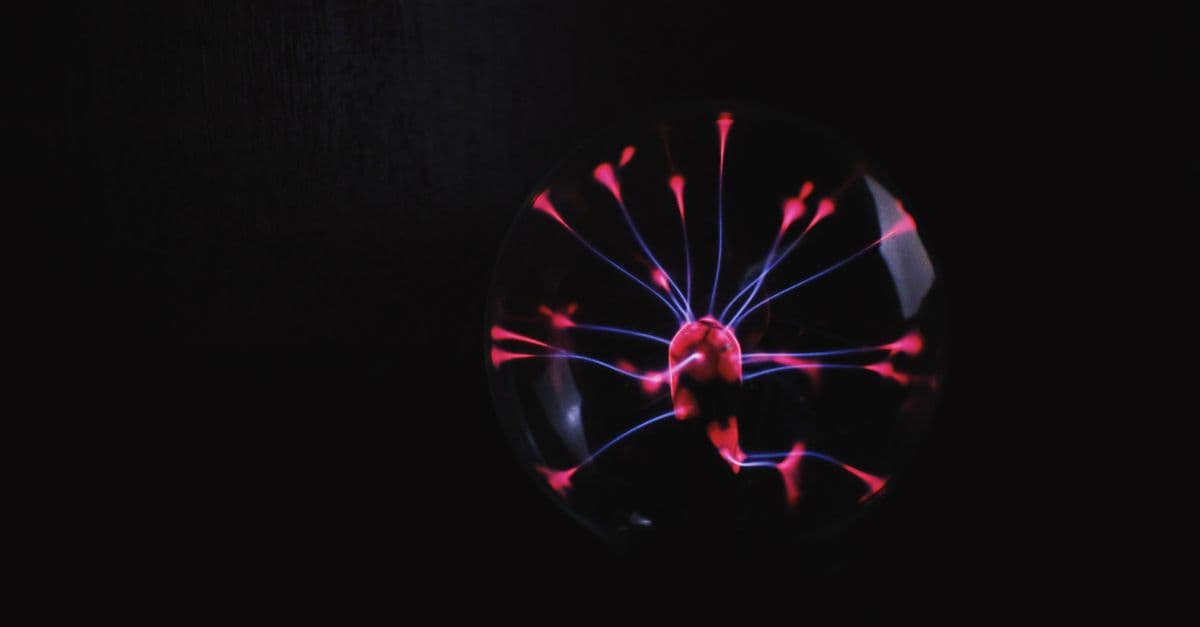
Photo: Thirdman / Pexels
Plasma is an ionized gas — a collection of atoms stripped of enough electrons that free electrons and positively charged ions coexist and move independently, giving the gas the ability to conduct electricity and respond to magnetic fields. It is often called the "fourth state of matter," alongside solid, liquid, and gas, and it makes up roughly 99% of the visible universe by mass, mostly inside stars like the Sun (NASA Goddard Space Flight Center). On Earth it is rarer, but you meet it constantly: in lightning bolts, neon signs, welding arcs, and the screen technology in some televisions.
Key takeaways
- Plasma forms when a gas is heated or exposed to a strong enough electric field that electrons separate from their atoms, creating a mix of free electrons, ions, and neutral particles.
- Unlike ordinary gas, plasma conducts electricity and is shaped by magnetic fields — which is why fusion reactors use magnets, not walls, to contain it.
- Chemist and physicist Irving Langmuir coined the term "plasma" for ionized gas around 1927–1928, borrowing the word from blood plasma because both carry smaller particles suspended in a conductive medium.
- Most of the visible universe is plasma: stars, the interstellar medium, and the solar wind are all plasma states, not solids, liquids, or gases in the everyday sense.
- Engineers use plasma deliberately in fluorescent and neon lighting, semiconductor etching, welding, plasma cutters, and — at a much larger scale — magnetic confinement fusion reactors like ITER.
Why plasma counts as a distinct state of matter
Most people learn about three states of matter in school: solid, liquid, and gas. Each one describes how tightly particles are bound together and how much energy they have. In a solid, particles vibrate in fixed positions. In a liquid, particles move around each other but stay close. In a gas, particles fly around independently, colliding occasionally but otherwise ignoring each other.
Plasma is different in a way that matters at the particle level, not just the container level. When you heat a gas enough — or expose it to a strong enough electric field — the energy becomes sufficient to knock electrons off their atoms entirely. This process is called ionization — the process by which atoms lose or gain electrons, producing charged particles called ions. Once a large enough fraction of the gas is ionized, you no longer have a collection of neutral atoms bouncing around. You have a mix of free electrons, positively charged ions, and often some remaining neutral atoms, all moving together and responding collectively to electric and magnetic fields.
That collective behavior is the real dividing line. A regular gas doesn't care about a nearby magnet. Plasma does. Because plasma is full of charged particles, it generates its own electric and magnetic fields as it moves, and it reacts to external fields imposed on it. This is why physicists treat plasma as a separate, fourth state rather than just "gas that's on fire." Fire itself is a mix of hot gas and a small amount of plasma near the flame's hottest point, but true, fully or partially ionized plasma behaves according to a different set of physical rules — magnetohydrodynamics, which combines fluid dynamics with electromagnetism.
A useful analogy: think of an ordinary gas as a crowd of strangers in an open field, each person walking in their own direction, only occasionally bumping into a neighbor. Plasma is that same crowd after they've all grabbed hold of ropes connected to a central winch. Now if you pull on one rope, the tension propagates through the whole group. Move a magnetic field near plasma, and the charged particles inside it respond as a coordinated system, not as isolated bystanders.
Is plasma a gas?
Not exactly. Plasma starts as a gas and shares some properties with it — it flows, it has no fixed shape, and it expands to fill a container. But once enough of the gas is ionized, its particles carry electric charge and respond to electromagnetic fields, giving it a completely different set of physical behaviors that ordinary gas doesn't have.
How a gas becomes plasma
Turning gas into plasma takes energy, and there are three common ways to supply it: heat, strong electric fields, and radiation.
Thermal ionization happens when a gas is heated to extreme temperatures, typically thousands to millions of degrees, depending on the element. At those temperatures, atomic collisions become violent enough to knock electrons loose. This is exactly what happens inside stars. The core of the Sun sits at roughly 15 million degrees Celsius (about 27 million degrees Fahrenheit), hot enough to fully ionize hydrogen and helium atoms into a churning soup of protons, electrons, and helium nuclei (NASA/GSFC).
Electrical ionization happens when a strong electric field accelerates free electrons in a gas until they're moving fast enough that, when they strike a neutral atom, they knock loose one of its electrons. That newly freed electron gets accelerated too, and it can ionize another atom, producing a chain reaction called an electron avalanche. This is how neon signs, fluorescent tubes, and lightning bolts create plasma at room temperature and normal atmospheric pressure — no need to heat the whole gas volume, just a strong enough voltage difference.
Radiative ionization happens when photons — particles of light, especially ultraviolet or X-ray photons carrying enough energy — strike atoms and knock electrons free directly. This process, called photoionization, is a major mechanism in the upper atmosphere, where solar UV radiation ionizes gas to create the ionosphere, and in interstellar gas clouds near hot young stars.
Once formed, plasma isn't a stable, settled thing the way a solid crystal is. It's dynamic. Free electrons and ions are constantly recombining — the reverse of ionization, where an electron rejoins an ion to form a neutral atom again, often releasing a photon of light in the process. That's literally what produces the visible glow of neon signs and the colors in an aurora: recombination events releasing energy as light at wavelengths characteristic of the specific gas involved (neon glows orange-red, oxygen produces the green and red of auroras).
What is the difference between ionization and combustion?
Combustion is a chemical reaction between a fuel and oxygen that releases heat and light through bond-breaking and bond-forming at the molecular level. Ionization is a physical process that strips electrons from atoms without necessarily involving any chemical reaction. A candle flame contains some low-level ionized plasma near its hottest point, but the flame itself is primarily a chemical, not a plasma, phenomenon.
Where plasma shows up, from lightning to the Sun's core
Plasma isn't an exotic laboratory curiosity. It's the dominant form of ordinary matter in the universe, and it's more common on Earth than most people assume once you know where to look.
Stars are almost entirely plasma. The Sun is a 1.4-million-kilometer (roughly 864,000-mile) ball of plasma held together by its own gravity, with nuclear fusion in the core supplying the energy that keeps it hot enough to stay ionized. The visible surface we see, the photosphere, is plasma at around 5,500°C (about 9,900°F); the core is millions of degrees hotter.
Lightning is one of the most familiar natural plasmas on Earth. A lightning bolt is a channel of air heated and ionized almost instantly by a massive electric discharge, reaching temperatures around 30,000 Kelvin (about 53,500°F) — roughly five times hotter than the surface of the Sun, for the fraction of a second the discharge lasts (National Weather Service).
The aurora borealis and aurora australis form when charged particles from the solar wind — itself a stream of plasma continuously blown outward from the Sun — are funneled by Earth's magnetic field toward the poles, where they collide with atmospheric gases and ionize them, producing the glowing curtains of light.
Neon and fluorescent lighting use low-pressure gas sealed in a glass tube with electrodes at each end. A voltage across the tube ionizes the gas, and the specific gas mixture determines the color: neon glows red-orange, argon and mercury vapor combinations glow blue-white and, when the tube is coated with phosphor, produce the white light of standard fluorescent bulbs.
Plasma televisions, once a mainstream display technology before OLED and LED panels displaced them, used millions of tiny sealed cells filled with neon-xenon gas. Each cell was electrically triggered to become plasma briefly, emitting ultraviolet light that struck phosphor coatings to produce red, green, or blue light.
Welding arcs and plasma cutters create a small, extremely hot, localized plasma channel between an electrode and the metal being worked, hot enough (often above 20,000°C, or 36,000°F, for plasma cutting) to melt or vaporize metal precisely along a cut line.
The ionosphere, a layer of Earth's upper atmosphere between roughly 60 and 1,000 kilometers (about 37 to 620 miles) altitude, is partially ionized by solar radiation and is what makes long-distance radio communication possible, since certain radio frequencies bounce off this ionized layer instead of passing straight through it.
The table below lines up the four common states of matter by how their particles behave and how much energy is involved, so the differences are easier to hold in your head at once.
| State | Particle arrangement | Relative energy level | Everyday example |
|---|---|---|---|
| Solid | Fixed positions, vibrate in place | Lowest | Ice, steel, rock |
| Liquid | Close together, move past each other | Low–moderate | Water, molten metal |
| Gas | Free-moving, widely spaced, neutral | Moderate–high | Air, steam, helium in a balloon |
| Plasma | Free electrons and ions, electrically charged, collective behavior | Highest | Lightning, stars, neon signs |
Each step up this table adds energy and loosens particle bonds — plasma is what's left once atoms themselves start losing electrons.
How magnetic confinement fusion uses plasma
Because plasma is electrically charged, it can be shaped, squeezed, and held in place by magnetic fields without ever touching a physical container wall. That property is the foundation of one of the most ambitious energy projects on the planet: magnetic confinement fusion, an approach to generating power by fusing light atomic nuclei together at extreme temperatures, using magnetic fields instead of solid walls to contain plasma too hot for any material to survive contact with it.
The device most associated with this approach is the tokamak — a doughnut-shaped (toroidal) vacuum chamber wrapped in powerful magnetic coils, designed so that plasma circulating inside the torus is held away from the walls by the magnetic field's shape. Inside, hydrogen isotopes (deuterium and tritium) are heated to roughly 150 million degrees Celsius, around ten times hotter than the core of the Sun, hot enough that the nuclei collide with enough force to overcome their mutual electric repulsion and fuse, releasing energy (ITER Organization).
The largest tokamak under construction today is ITER, an international collaboration involving the European Union, the United States, China, Russia, Japan, South Korea, India, and the United Kingdom, being built in Saint-Paul-lès-Durance, France. ITER is designed to demonstrate that a fusion reactor can produce significantly more thermal power from fusion reactions than the amount of power used to heat the plasma, a milestone the project calls achieving a high power multiplication factor (ITER Organization). It is a research and demonstration device, not a power plant that sells electricity to a grid — that step comes after ITER proves the physics and engineering work at this scale.
Why does confinement need magnets at all, rather than a heat-resistant container? No known solid material can survive direct contact with plasma at 150 million degrees Celsius; it would vaporize instantly. But because the plasma's particles are charged, a carefully shaped magnetic field can make them spiral along field lines instead of drifting into the walls, similar to the way a ball rolling inside a bowl stays near the bottom because the bowl's curved shape constantly redirects it back toward the center. The magnetic field plays the role of the bowl's curve — it doesn't touch the plasma, but its shape constantly steers charged particles back on course.
How hot does plasma need to be for fusion?
Deuterium-tritium fusion, the reaction pursued by ITER and most current fusion research, requires plasma temperatures around 150 million degrees Celsius (270 million degrees Fahrenheit) to reliably overcome the electrostatic repulsion between positively charged nuclei and achieve fusion at a useful rate (ITER Organization).
Why don't fusion reactors melt their own walls?
Because the plasma never touches the walls. Powerful magnetic fields, shaped by superconducting coils around the tokamak's torus, hold the charged plasma particles in a looping path that keeps them centered in the vacuum chamber, away from any solid surface, even though the plasma itself is far hotter than any material could withstand in direct contact.
Common mistakes people make about plasma
A handful of misunderstandings come up repeatedly when people first encounter the concept of plasma as a state of matter.
Mistake: assuming plasma always means extremely hot. Some plasma is extremely hot — stellar cores and fusion reactors reach millions of degrees. But other plasma is close to room temperature. Fluorescent lights and neon signs contain what's called "cold plasma" or "non-thermal plasma," where the free electrons are energetic and moving fast, but the heavier ions and neutral atoms stay relatively cool, so the overall gas doesn't feel hot to the touch even though it's technically ionized.
Mistake: confusing plasma with fire. A candle flame is mostly a chemical combustion process — burning fuel reacting with oxygen — with only a small, weakly ionized plasma component near the hottest part of the flame. True plasma, by contrast, is defined by a substantial fraction of its particles being ionized and behaving collectively under electromagnetic forces, which a household flame barely does.
Mistake: thinking plasma is rare or exotic. Given that roughly 99% of the visible universe's mass is plasma, it is arguably the default state of ordinary matter in the cosmos, not an unusual one. Solids, liquids, and everyday gases — the states most familiar to humans — are comparatively rare on a universal scale, largely confined to cooler environments like planetary surfaces.
Mistake: assuming plasma fusion reactors are close to producing commercial electricity today. ITER is a research device intended to prove that net energy gain from fusion is achievable at scale; it is not connected to a power grid and was never designed to be. Turning fusion physics into a commercial power plant involves additional engineering steps — extracting heat efficiently, converting it to electricity, and doing so reliably and affordably — that remain active areas of ongoing research beyond what ITER itself demonstrates.
Mistake: treating "ionized" as an all-or-nothing property. Plasma exists on a spectrum. Weakly ionized plasma, like the ionosphere or a fluorescent tube, has only a small fraction of its particles ionized, with most atoms remaining neutral. Fully ionized plasma, like the interior of a star or a fusion reactor's core, has essentially no neutral atoms left. Both count as plasma, but they behave differently, which matters for anyone doing precise physics or engineering work with it.
What this means
Plasma isn't a rare laboratory phenomenon confined to physics classrooms — it's the dominant, default state of ordinary matter throughout the visible universe, and it shows up on Earth in forms as different as a lightning bolt and a neon sign. The unifying feature is always the same: enough atoms have lost electrons that the gas becomes a collective, electrically responsive system rather than a crowd of independent neutral particles. Understanding that one shift, from neutral gas to charged collective, explains why stars shine, why auroras glow at the poles, why welders can cut steel with a torch, and why engineers building fusion reactors reach for magnetic fields instead of physical walls. The next milestones in plasma science, from ITER's first full-power plasma experiments to smaller private fusion startups racing toward net energy gain, will decide whether humanity's most abundant state of matter also becomes one of its main sources of electricity.
FAQ
Q: What is plasma in simple terms? A: Plasma is a gas that has been energized enough — by heat, electricity, or radiation — that a significant share of its atoms lose electrons, creating a mix of free electrons and charged ions. This mix conducts electricity and responds to magnetic fields, unlike ordinary gas.
Q: Why is plasma called the fourth state of matter? A: Because it behaves fundamentally differently from solids, liquids, and gases at the particle level. Its particles carry electric charge and move collectively under electromagnetic forces, a property none of the other three states share, which is why physicists classify it separately.
Q: Is plasma the most common state of matter in the universe? A: Yes. According to NASA's Imagine the Universe program, plasma makes up an estimated 99% of the visible universe by mass, mostly inside stars and in the thin ionized gas that fills interstellar space.
Q: Who coined the term "plasma" for ionized gas? A: American chemist and physicist Irving Langmuir introduced the term around 1927–1928 while studying ionized gases in vacuum tubes with colleague Lewi Tonks, drawing an analogy to blood plasma, which carries suspended cells the way ionized gas carries electrons and ions.
Q: Can plasma exist at room temperature? A: Yes. So-called cold or non-thermal plasma, found in fluorescent lights and neon signs, has energetic free electrons but relatively cool ions and neutral atoms, so the overall gas doesn't feel hot even though it's technically ionized.
Q: Why do fusion reactors need magnetic fields? A: Because plasma hot enough for nuclear fusion, around 150 million degrees Celsius, would instantly destroy any physical container it touched. Magnetic fields shaped around a tokamak's torus steer the charged plasma particles along a looping path that keeps them away from the walls without any material contact.
Q: Is a plasma TV the same kind of plasma as in a star? A: They're the same physical phenomenon, ionized gas, but at wildly different scales and energies. A plasma TV cell contains a tiny, low-temperature ionized gas pocket triggered electrically to emit light; a star is a self-gravitating sphere of plasma millions of degrees hot, sustained by nuclear fusion.
Read next:
Follow new articles
Add SciHub101 to your feed reader to see new science and technology stories.
About the Author
SciHub101 is an independent science and technology publication founded and edited by Buğra Sözeri, a software engineer and app developer based in Türkiye. AI tools assist with drafting and research. Source documentation in the existing archive is uneven, and articles are being reviewed and corrected. The Editorial Team byline identifies editorial responsibility; it does not certify specialist or independent human review. Where we compare products, anything built by our own team is labelled as such — see the editorial guidelines and About page for how corrections and disclosures work.
Related Articles
How the Sun Works — Nuclear Fusion Powered Star
How the Sun works: proton-proton fusion in the core, layers from radiative zone to corona, solar wind, sunspots, and the Sun's far future.

Machine Learning and Nuclear Fusion: Teaching AI to Tame the Sun
Controlling fusion plasma is one of science's hardest control problems. DeepMind and others are using deep reinforcement learning to solve it.
Nuclear Fusion Breakthrough: Net Energy Gain (2022)
How the National Ignition Facility achieved fusion net energy gain for the first time, igniting hope for unlimited clean energy
Nuclear Fusion in 2026: Is It Finally Working?
A comprehensive look at the state of nuclear fusion in 2026 — the NIF ignition breakthrough, ITER tokamak, stellarators, inertial confinement, and the private companies racing to deliver fusion power to the grid.