The Scientific Method: How Evidence Becomes Knowledge
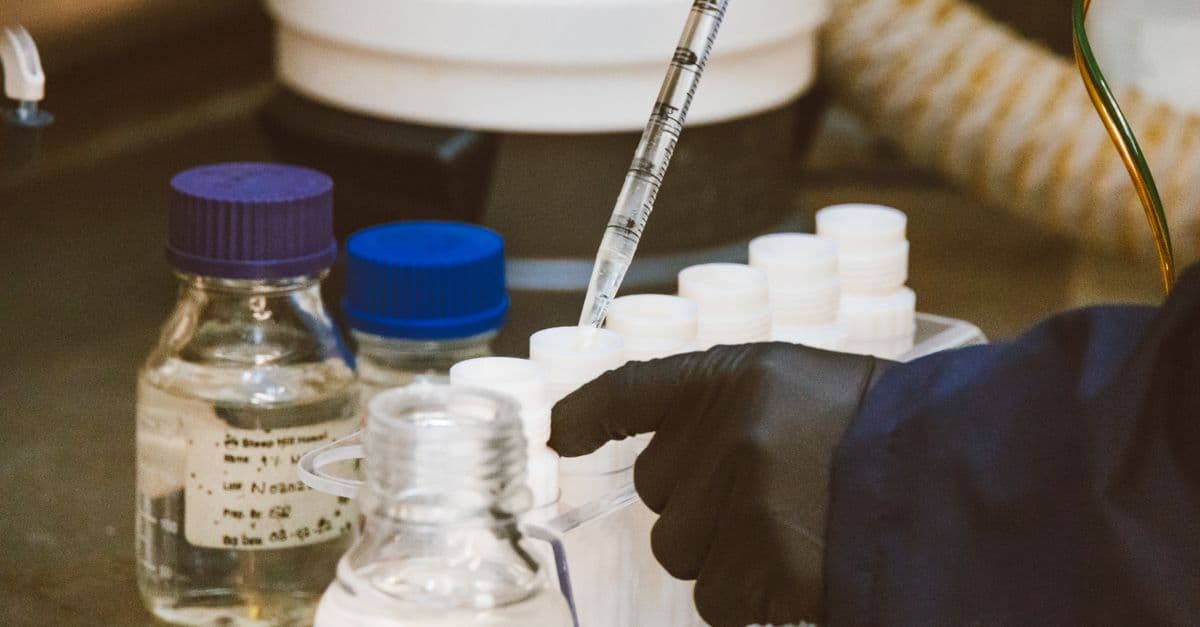
Photo: Jess Loiterton / Pexels
The scientific method is a structured way of turning a guess into a tested, checkable claim: observe something, propose an explanation, predict what should happen if that explanation is true, test the prediction, and let the result revise the explanation. No single experiment proves a theory correct. What makes a claim scientific is that it could, in principle, be shown wrong — and hasn't been yet, despite people trying.
That last sentence sounds like a small technicality, but it's the entire hinge on which modern science turns. A method that only looked for confirming evidence would let almost any idea survive forever, because confirming evidence is nearly always available if you're willing to accept weak proof. The scientific method works because it builds in the opposite instinct: actively hunt for the observation that would break your idea, and only trust the idea once it survives that hunt, repeatedly, from people who didn't invent it and have no stake in it being true.
What counts as a scientific claim in the first place
Before you can test an idea, you need to know whether it's testable at all. This sounds obvious until you try to apply it to real claims, and a surprising number of statements that sound scientific turn out not to be.
Falsifiability — the property of a claim that it could, at least in theory, be shown false by some observation — is the dividing line the philosopher Karl Popper proposed in the 1930s to separate science from non-science (Stanford Encyclopedia of Philosophy). Popper's argument was that a theory earns scientific status not by accumulating confirmations, but by surviving genuine attempts to disprove it. "All swans are white" is falsifiable — one black swan ends it. "Everything happens for a reason" is not falsifiable, because no observation could contradict it; whatever happens, someone can retrofit a reason.
This is a stricter bar than most people assume science requires. A hypothesis doesn't need to be true to be scientific — it needs to be checkable. Astrology makes predictions vague enough that almost any outcome can be read as confirmation, which is exactly why Popper used it as his go-to example of a non-falsifiable system, in contrast with Einstein's general relativity, which made a precise, falsifiable prediction (the bending of starlight during a solar eclipse) that could have failed and didn't (Stanford Encyclopedia of Philosophy).
Popper's picture has real limits, and philosophers of science have spent decades refining it. The Duhem-Quine problem points out that you never test a single hypothesis in isolation — you test it bundled with a pile of auxiliary assumptions (that your instruments work, that background theories hold, that nothing else interfered), so a failed prediction tells you something in the bundle is wrong without telling you which piece (Stanford Encyclopedia of Philosophy). In practice, working scientists don't discard a theory after one disconfirming result. They ask whether the equipment was miscalibrated, the sample was too small, or a variable went uncontrolled, before they ask whether the theory itself is wrong. That is not a loophole — it's the same caution that keeps a single fluke from overturning decades of accumulated evidence, and it's why the method leans so heavily on repetition rather than one dramatic test.
The core steps, in order
The scientific method is usually taught as a five- or six-step loop, and while real research is messier than any diagram, the underlying sequence holds up because each step exists to catch a specific kind of error the previous one could have made.
| Step | What happens | What it guards against |
|---|---|---|
| Observation | A pattern, anomaly, or gap is noticed in the world or in existing data | Starting from a guess instead of a real phenomenon |
| Hypothesis | A specific, testable explanation is proposed for the observation | Vague claims that can't be checked either way |
| Prediction | The hypothesis is used to predict a concrete, measurable outcome | Explanations that don't actually commit to anything |
| Experiment | The prediction is tested under controlled conditions, ideally with a comparison group | Mistaking coincidence or bias for a real effect |
| Analysis | Results are measured statistically against what chance alone would produce | Overinterpreting noise as a discovery |
| Peer review | Independent experts scrutinize the method and reasoning before publication | Errors and overclaims reaching the public unchecked |
| Replication | Other, independent labs try to reproduce the result | A single lucky, biased, or fraudulent result becoming accepted fact |
Each step exists to catch a specific failure mode the one before it couldn't catch on its own — which is why skipping steps, not just getting one step wrong, is how bad science gets through.
Two of those steps deserve more space, because they are the ones most people outside science underestimate: peer review and replication. Both are less about proving a result "true" and more about making sure a claim was earned before it enters the shared pool of accepted knowledge.
How peer review actually works
Peer review is the process by which a study, before publication, is read and critiqued by independent experts in the same field who were not involved in the research and have no stake in its outcome. A journal editor sends the submitted manuscript to two or three reviewers, who evaluate whether the methods are sound, the statistics are appropriate, the conclusions match the data, and prior related work was properly accounted for.
Reviewers can recommend acceptance, rejection, or — by far the most common outcome — revisions. A paper might go through two or three rounds of revision, with authors adding control experiments, redoing analyses, or softening claims that outran their evidence, before a journal will publish it. This is slow by design. The friction is the point: it forces a claim to survive contact with someone whose job is to find the hole in it before the public ever sees the paper.
Peer review is not a guarantee of correctness. Reviewers can miss errors, share the same blind spots as the authors, or simply not have the expertise to catch a subtle statistical problem. Fraud has slipped through peer review before, and high-profile retractions happen every year across serious journals. What peer review reliably does is raise the floor — it filters out the most obviously broken work and forces the rest to at least explain itself clearly enough for another expert to follow. It is a quality gate, not a truth detector, and treating it as the latter is one of the most common misreadings of how science works.
Is peer review the same thing as scientific consensus?
No. Peer review evaluates one paper before publication; scientific consensus is a much larger, slower convergence across many independent studies, replications, and reviews over years. A peer-reviewed paper can later be contradicted by better evidence — that's normal science working, not science failing.
Why replication is the real test, not the first experiment
A result that has been published but never independently replicated is, in an important sense, still provisional. Replication means an independent team, often with no connection to the original researchers, repeats the study — ideally with the same methods, sometimes with a larger sample or an improved design — to see if they get the same result.
This matters because a single study can produce a false positive for entirely mundane reasons that have nothing to do with fraud: a small sample that happened to skew one way by chance, a flexible analysis that let researchers try several statistical approaches until one reached significance, or a genuinely real but small effect that got reported with inflated confidence. None of these show up as obvious red flags in a single paper. They show up when other labs try the experiment again and the effect shrinks, disappears, or flips.
This is not a hypothetical concern. Over the past 15 years, a body of work now referred to as the replication crisis has documented exactly this pattern across several fields, most visibly psychology. In 2015, the Open Science Collaboration — a large, coordinated group of researchers — attempted to replicate 100 studies published in three leading psychology journals, using the original materials wherever possible and running the replications with high statistical power. Ninety-seven percent of the original studies had reported statistically significant effects; only 36% of the replications did, and the effect sizes that did hold up were, on average, roughly half of what the original papers had claimed (Open Science Collaboration, Science, 2015).
The replication crisis was not unique to psychology, and it was not evidence that science had failed. It was evidence that the incentive structure around publishing — where novel, surprising, statistically significant results get published and journals, and null or replication results often don't — had let weak findings accumulate faster than the field was checking them. The response has been a genuine methodological reform: pre-registration of hypotheses and analysis plans before data collection, larger required sample sizes, open data sharing so other researchers can re-run the analysis, and journals now actively soliciting replication studies they once ignored. The field that documented its own reproducibility problem in public, then built new institutions to fix it, is a better advertisement for how science self-corrects than any story where nothing ever goes wrong.
What caused so many psychology studies to fail to replicate?
A combination of small original sample sizes, flexible statistical analysis choices made after seeing the data (sometimes called "p-hacking"), and publication bias that rewarded novel, significant results over null or replicated ones. None of these require dishonesty — they emerge naturally from incentives that favor exciting findings over careful, cautious ones.
The role of prediction: why a hypothesis has to commit to something
A hypothesis earns its place in the scientific method only when it generates a prediction specific enough to fail. "Stress affects health" is too vague to test directly — almost any health outcome could be squeezed into that claim after the fact. "Participants under acute psychological stress will show elevated cortisol levels within 30 minutes, measurable via saliva sample, compared to a matched control group" is a prediction that can clearly succeed or clearly fail.
This is where the scientific method differs most sharply from casual reasoning. In everyday life, people often form a belief and then notice evidence that supports it while overlooking evidence that doesn't — a well-documented pattern called confirmation bias. A properly built scientific hypothesis blocks that shortcut by forcing the researcher to state, in advance, exactly what result would count against their own idea. If a study's design doesn't specify what a failed prediction would look like, it isn't really testing anything; it's just collecting evidence that could be spun either way.
An analogy helps here. Think of a hypothesis like a bet placed before the game starts, not a story told after it ends. A bettor who says "I'll win either way" hasn't made a bet at all — they've made an unfalsifiable statement dressed up as a prediction. Science requires researchers to place the bet publicly, in writing, before they see the outcome, which is exactly what pre-registration (one of the replication crisis reforms) formalizes.
Controls, comparison groups, and why a single result proves so little
An experiment without a comparison group can't distinguish an effect from noise, coincidence, or the placebo response. This is why controlled experiments — where one group receives the intervention being tested and a matched control group does not — sit at the center of the method rather than being an optional refinement.
Consider a simple case: a researcher gives a new supplement to 20 people and 15 report feeling more energetic. Without a control group taking a placebo, there's no way to know whether the supplement caused the improvement, whether people simply expected to feel better and did (a real, measurable phenomenon), or whether 15 out of 20 people would have reported feeling better that week regardless. Randomizing which participants get the real treatment and which get the placebo, and ideally keeping both participants and researchers unaware of who got which (a double-blind design), removes expectation and researcher bias as competing explanations for the result.
This is also where statistics enters the method, not as decoration but as the tool that separates a real signal from the noise every dataset contains. Analysis compares the observed result against what pure chance would be expected to produce, and only results unlikely to arise from chance alone (conventionally, less than a 5% probability, though this threshold itself has been debated and tightened in reform efforts following the replication crisis) are treated as evidence of a real effect. A finding that clears this bar in one study is a lead worth investigating further, not yet a fact.
What people get wrong about the scientific method
The most common misunderstanding is treating "science says" as a single, final verdict rather than the current state of an ongoing, self-correcting process. Individual studies get overturned regularly, and that is not a scandal — it's the method functioning exactly as designed. A theory that survives a century of attempted falsification (like natural selection, first proposed by Charles Darwin and refined continuously since through genetics and molecular biology) sits on far more solid ground than a single study published last month, and treating both with equal confidence is a category error.
A second common mistake is assuming the scientific method proves things true. It doesn't, and it was never designed to. It accumulates evidence that makes a claim increasingly hard to reasonably doubt, while formally always leaving the door open to future disconfirmation. This is uncomfortable for people who want certainty, but it's the honest version of how knowledge actually gets built, and it's a large part of why the complete science guide treats every explained topic as provisional and evidence-bound rather than settled forever.
A third mistake is conflating correlation with causation, which the method's control-group step exists specifically to prevent. Two things moving together statistically does not establish that one causes the other — they could share a common cause, or the relationship could run in the opposite direction from what seems intuitive. This is precisely why a controlled, randomized experiment carries more weight than an observational correlation, even when the correlation is strong and the sample is large.
A fourth mistake is expecting individual scientists to be free of bias, ego, or attachment to their own ideas. They aren't, and the method doesn't assume they are. Peer review, replication, and the requirement to publish methods in enough detail for strangers to repeat the work exist precisely because the system was built for a community of biased individual humans checking each other, not for perfectly neutral observers. Marie Curie's insistence on repeated, carefully controlled measurement of radioactivity, in an era with far less institutional scrutiny than exists today, is a reminder that rigor was always a discipline scientists had to impose on themselves, not a property that came free with the job.
What this means
The scientific method isn't a single experiment or a eureka moment — it's a loop that keeps running long after the first result comes in: predict, test, check the result against chance, hand it to skeptical strangers, and see if it survives being repeated. Any one of those steps skipped is where bad science gets in. The replication crisis showed what happens when the loop's later stages — replication and honest reporting of null results — get neglected in favor of speed and novelty, and the reforms that followed show the method doing what it's designed to do: catching its own weak points and tightening them. That self-correction, more than any single confirmed theory, is the actual proof the method works.
FAQ
Q: What is the difference between a scientific theory and a hypothesis? A hypothesis is a specific, testable proposed explanation for one observation, usually tested in a single study or a small set of them. A scientific theory is a much broader, well-substantiated explanation for a wide range of observations, built up from many independently tested and repeatedly confirmed hypotheses over years or decades, such as germ theory or the theory of evolution by natural selection.
Q: Can the scientific method prove something is true? No. The method can only fail to disprove a claim despite repeated, rigorous attempts, which raises confidence in it over time. Even long-standing theories like Newtonian mechanics were later shown to be incomplete (by relativity, at very high speeds and strong gravity), which is why science treats "proof" as a mathematical or logical concept, not a scientific one.
Q: Why do scientists replicate experiments instead of trusting the first result? Because a single study can produce a misleading result through small sample sizes, chance, unconscious bias, or flexible analysis choices, without anyone acting dishonestly. Replication by independent teams, ideally with no connection to the original researchers, is the check that catches results that don't hold up once other labs try the same test.
Q: What is falsifiability and why does it matter? Falsifiability is the requirement that a scientific claim must be specific enough that some possible observation could show it to be false. Karl Popper proposed it as the line between science and non-science, because a claim that can't fail any test also can't be genuinely supported by passing one.
Q: Why did so many psychology studies fail to replicate in the 2015 Open Science Collaboration project? Small original sample sizes, publication bias favoring novel significant results, and flexible post-hoc statistical choices combined to let weaker effects look stronger than they were. The field responded with reforms including pre-registration, larger samples, and open data sharing.
Q: Is peer review the same as proof that a study is correct? No. Peer review checks that a study's methods and reasoning are sound enough for publication, based on the judgment of a small number of independent experts. It catches many errors but not all of them, and peer-reviewed findings are still routinely revised or overturned by later, better-designed studies and replications.
Read next:
Follow new articles
Add SciHub101 to your feed reader to see new science and technology stories.
About the Author
SciHub101 is an independent science and technology publication founded and edited by Buğra Sözeri, a software engineer and app developer based in Türkiye. AI tools assist with drafting and research. Source documentation in the existing archive is uneven, and articles are being reviewed and corrected. The Editorial Team byline identifies editorial responsibility; it does not certify specialist or independent human review. Where we compare products, anything built by our own team is labelled as such — see the editorial guidelines and About page for how corrections and disclosures work.
Related Articles

How the Scientific Revolution Changed Everything
In 144 years, European thinkers traded inherited doctrine for measurement, experiment, and proof, and built the method science still runs on.

What Is Emergence — How Complex Systems Create New Realities
Individual neurons don't think. Individual water molecules aren't wet. But billions of them together produce consciousness and liquid flow. Emergence — when the whole becomes more than the sum of its parts — is one of science's most profound concepts.