Phase Changes: Why Water Boils, Freezes, and Sublimates
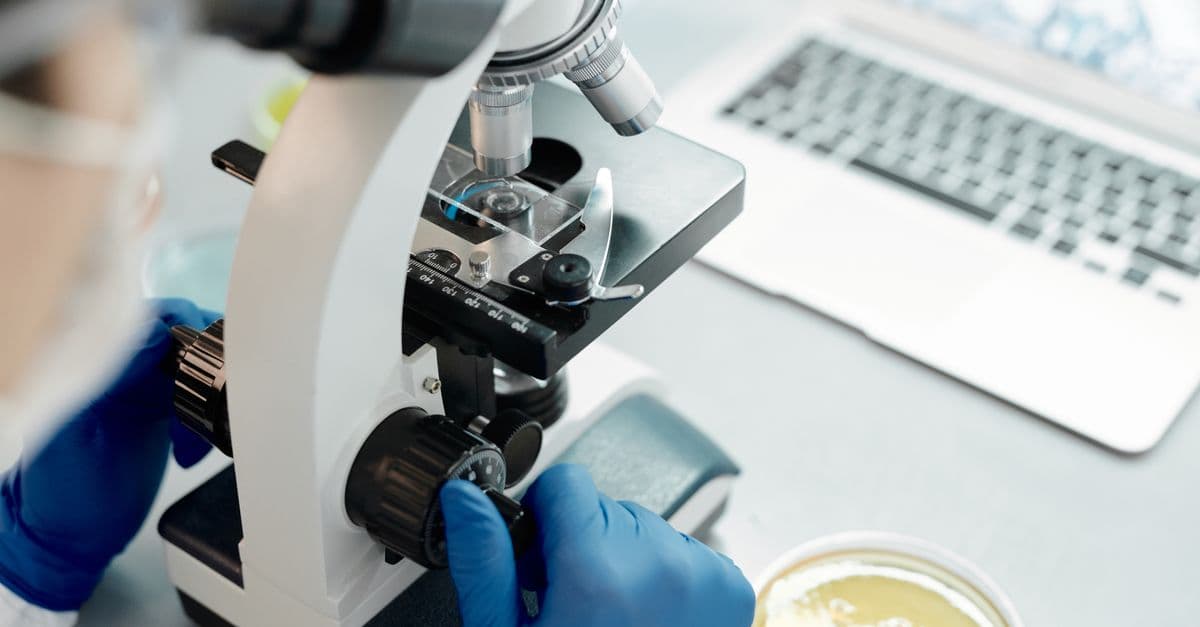
Photo: Edward Jenner / Pexels
Water boils at 100°C (212°F) at sea level, freezes at 0°C (32°F), and under the right conditions skips the liquid stage and turns straight into vapor. A phase change is the shift of a substance between solid, liquid, and gas. It happens when the substance absorbs or releases enough energy to rearrange how its molecules are bound together, without changing what the substance is. Water stays water; only the arrangement changes. Two ideas explain almost every odd case: latent heat, and the way pressure moves the boundaries between phases.
The everyday version is simple. Heat something and it melts, then boils. Cool it and it freezes. That story skips the parts that explain the odd cases: why a pot sits at 100°C for many minutes while it boils away, why a mountaintop kettle boils at a lower temperature but cooks worse, why dry ice never puddles, and why freeze-dried strawberries look nothing like dehydrated ones. This article works through those cases with real numbers.
The six ways matter changes state
Matter most commonly exists in three phases, and there are six transitions between them. Each has its own name, because the physics of solid to gas (sublimation) differs from solid to liquid (melting) even though both start from the same phase.
Phase change: a physical transformation in which a substance shifts between solid, liquid, and gas, driven by changes in temperature, pressure, or both, without altering its chemical identity. The H₂O molecule in ice, liquid water, and steam is the same molecule throughout. What differs is how close the molecules sit and how freely they move.
| Transition | Direction | What happens to molecular energy | Everyday example |
|---|---|---|---|
| Melting | Solid → liquid | Molecules gain enough energy to slide past each other but stay close | An ice cube turning to water on a countertop |
| Freezing | Liquid → solid | Molecules lose energy and lock into a fixed lattice | Water in an ice-cube tray solidifying |
| Vaporization | Liquid → gas | Molecules gain enough energy to escape their neighbors entirely | A kettle boiling, or a puddle drying |
| Condensation | Gas → liquid | Molecules lose energy and clump back together | Droplets on a cold glass of iced tea |
| Sublimation | Solid → gas | Molecules escape the solid lattice directly | Dry ice (solid CO₂) fogging away at room temperature |
| Deposition | Gas → solid | Molecules lose energy and lock directly into a solid | Frost forming on a windshield overnight |
Six transitions, one rule: add energy and molecules spread apart; remove it and they lock together. Sublimation and deposition just skip the middle step.
Vaporization splits into two related processes. Boiling happens throughout the liquid at the temperature where vapor pressure equals the pressure of the surrounding atmosphere. Evaporation happens only at the surface and at any temperature, which is why a puddle disappears on a cool day even though it never comes close to 100°C. Both are liquid-to-gas transitions; they differ in where and how fast the molecules escape.
What actually changes: a tug-of-war between motion and attraction
Think of molecules at a crowded party. In a solid, everyone is holding hands in a fixed grid and can only shuffle in place. In a liquid, people still hold on to neighbors, but the grip keeps breaking and re-forming, so the crowd flows. In a gas, nobody is holding anyone, and people dash across the room and rarely meet.
Temperature measures how energetic the average dancer is. Intermolecular attraction, in water's case mostly hydrogen bonds, is the grip. A phase change happens when motion becomes strong enough to beat the grip (melting, boiling) or weak enough that the grip wins (freezing, condensing). Pressure joins the contest from the outside: squeeze a gas and you push molecules back toward each other, so attraction gets more chances to hold them.
This picture also explains why the temperature stalls during a transition. Added energy is spent loosening grips, not speeding up dancers. That spent energy has a name.
Latent heat: the energy that doesn't raise the temperature
Latent heat is the thermal energy a substance absorbs or releases during a phase change without any change in temperature. "Latent" means hidden: the energy goes into breaking or forming intermolecular bonds rather than into faster molecular motion, so a thermometer stays flat even as heating continues.
Put a pot of water on a stove and watch the temperature. It climbs steadily to 100°C, then stops. It holds there for the entire time water is boiling away, even though the burner keeps delivering heat at the same rate. Only after the last liquid has vaporized does the temperature of the steam begin to rise again. Every joule delivered during that flat stretch is breaking hydrogen bonds so molecules can leave.
The NIST Chemistry WebBook gives the enthalpy of saturated liquid water at 100°C (373.15 K) as 419.17 kJ/kg and that of saturated vapor as 2,675.6 kJ/kg. The difference, 2,256 kJ/kg, is the latent heat of vaporization. Melting ice at 0°C takes about 334 kJ/kg (333.55 kJ/kg in standard tables, as summarized on Wikipedia's enthalpy of fusion entry).
A worked example: where the energy goes
Take 1 kilogram of ice at 0°C and add heat until every bit of it is steam at 100°C and normal pressure. The energy splits into three very uneven pieces.
| Step | What happens | Energy (kJ per kg) | Share of total |
|---|---|---|---|
| 1 | Melt ice at 0°C | 333.6 | 11% |
| 2 | Warm liquid from 0°C to 100°C | 419.2 | 14% |
| 3 | Boil liquid into steam at 100°C | 2,256.4 | 75% |
| Total | 3,009 | 100% |
Sources: NIST Chemistry WebBook saturation data for steps 2 and 3; standard tables for step 1. Percentages are rounded and calculated here.
Boiling alone costs about three times as much energy as melting and warming combined, and 75 percent of the whole trip. Turning to a kitchen: a 1.5-kilowatt kettle that transfers all its power to the water (an idealization, since real kettles lose some heat) would raise 1 kilogram of water from 20°C to 100°C in about four minutes, using roughly 335 kJ. Boiling that kilogram completely dry would then take about 25 minutes more, because 2,256 kJ at 1.5 kJ per second is about 1,500 seconds. That is why a pot left on the stove empties slowly and why the instant it goes dry the temperature shoots up.
Latent heat is not a constant
The latent heat of vaporization shrinks as the temperature rises. Subtracting NIST's saturated liquid enthalpy from its saturated vapor enthalpy at several temperatures shows the trend.
| Temperature | Saturation pressure (kPa) | Latent heat of vaporization (kJ/kg) |
|---|---|---|
| 0.01°C | 0.612 | 2,500.9 |
| 85°C | 57.9 | 2,295.3 |
| 90°C | 70.2 | 2,282.5 |
| 95°C | 84.6 | 2,269.5 |
| 100°C | 101.4 | 2,256.4 |
| 115°C | 169.2 | 2,216.0 |
| 120°C | 198.7 | 2,202.1 |
| 125°C | 232.2 | 2,188.0 |
Calculated from NIST Chemistry WebBook saturation tables (enthalpy of vapor minus enthalpy of liquid).
Near the triple point it takes about 11 percent more energy to vaporize a kilogram of water than at 100°C. As temperature climbs toward the critical point (373.95°C, 22.064 megapascals), the difference between liquid and vapor shrinks and the latent heat falls toward zero. That is the thermodynamic way of saying the two phases become indistinguishable.
Where latent heat shows up in daily life
Once you see latent heat, it turns up everywhere.
Steam burns. Steam at 100°C that condenses on skin releases about 2,256 kJ per kilogram into the tissue, on top of the heat released as the water cools. Hot liquid water at 100°C has far less energy to give. The difference is latent heat being returned all at once.
Sweat. Evaporating sweat pulls latent heat from the skin, which is why perspiration cools you. The effect fades in humid air, where evaporation slows. The article on how sweat cools the body covers the physiology.
Refrigerators and heat pumps. A refrigerant evaporates in the cold coil, absorbing latent heat from the food compartment, then condenses in the coils on the back, releasing it into the room. Whole machines are built around moving latent heat uphill. See how a refrigerator works and how heat pumps move heat efficiently.
Ice in a drink. A glass of ice water stays near 0°C while ice remains, because the incoming heat is busy melting ice at a fixed temperature rather than warming the liquid. The same principle underlies why salt melts ice on roads: dissolved salt lowers the freezing point, so ice melts at temperatures where pure ice would stay solid.
Spacecraft water recovery. The still that recycles urine on the International Space Station recovers the latent heat of condensation to evaporate more water, as described in the article on how astronauts recycle water in space.
The triple point and the phase diagram
Temperature alone does not decide a substance's phase. Pressure matters just as much, and the relationship is mapped on a phase diagram: a chart with temperature on one axis and pressure on the other, divided into regions showing which phase is stable at each combination. The lines between regions mark where two phases can coexist, such as the boiling curve that separates liquid from gas.
The most striking feature on any phase diagram is the triple point, the single combination of temperature and pressure at which solid, liquid, and gas coexist in equilibrium. For water it is 273.16 K (0.01°C) at about 611.7 pascals. NIST's saturation tables list the pressure at 273.16 K as 611.65 Pa. The triple point of water was important enough to define the kelvin: from 1954 until the 2019 revision of the SI, one kelvin was defined as 1/273.16 of the thermodynamic temperature of the triple point of water, according to NIST's introduction to the kelvin redefinition. Since then the kelvin has been defined by fixing the Boltzmann constant at exactly 1.380649 × 10⁻²³ joules per kelvin.
Along the diagram, two other landmarks deserve names. The normal boiling point is where the liquid-gas boundary crosses one atmosphere of pressure (373.17 K for water, per NIST). The critical point is where that boundary ends. Beyond it, in the case of water above 373.95°C and 22.064 MPa, there is no sharp distinction between liquid and gas, only a dense supercritical fluid that behaves a bit like both. Carbon dioxide's critical point is far gentler: about 304.18 K (31°C) and 73.8 bar, according to the NIST Chemistry WebBook entry for CO₂.
Why liquid water cannot sit on the surface of Mars
Push the pressure toward vacuum and the liquid region shrinks. Mars is the textbook case. NASA's Mars fact sheet gives the mean surface pressure as 6.36 millibars (636 pascals), varying seasonally from about 4.0 to 8.7 millibars, and lists a diurnal temperature range at the Viking 1 site of 184 K to 242 K. Water's triple-point pressure is 611.65 pascals, so the average Martian pressure sits barely above the triple point, and in the lower-pressure parts of the year it sits below it. Under those conditions, liquid water is unstable: it tends to freeze, or boil and evaporate, rather than persist. The article on the composition of Mars's atmosphere goes further into why the air is so thin.
Why does altitude change the boiling temperature?
Boiling happens when vapor pressure matches the surrounding pressure. Climb a mountain and the surrounding pressure falls, so water reaches that match at a lower temperature. The National Weather Service's pressure altitude formula links pressure and altitude in the standard atmosphere, and working it backward gives about 70 kilopascals at 3,000 meters (9,843 feet). NIST's saturation table shows that water's vapor pressure is 70.18 kPa at 90°C. So at 3,000 meters, water boils at about 90°C instead of 100°C.
The USDA-derived elevation table published by the National Center for Home Food Preservation tells the same story in Fahrenheit.
| Elevation (ft) | Water boils at (°F) | Water boils at (°C) |
|---|---|---|
| 0 (sea level) | 212 | 100 |
| 2,000 | 208 | 97.8 |
| 4,000 | 204 | 95.6 |
| 6,000 | 201 | 93.9 |
| 8,000 | 197 | 91.7 |
| 10,000 | 194 | 90.0 |
Fahrenheit values from the NCHFP table (adapted from USDA Agriculture Information Bulletin 539, revised 2015); Celsius conversions calculated here and rounded.
Water at 90°C is hot enough to bubble vigorously, but it cooks pasta, beans, and eggs more slowly than 100°C water does, which is why high-altitude recipes often call for longer times.
Boiling points under pressure, and the pressure cooker
The same logic runs in reverse inside a sealed pot. Trapped steam raises the pressure, and a higher pressure means water must be hotter before its vapor pressure can match. NIST's saturation data give the numbers.
| Water temperature at boiling | Absolute pressure needed (kPa) | Pressure in atmospheres |
|---|---|---|
| 85°C | 57.9 | 0.57 |
| 90°C | 70.2 | 0.69 |
| 100°C | 101.4 | 1.00 |
| 115°C | 169.2 | 1.67 |
| 120°C | 198.7 | 1.96 |
| 125°C | 232.2 | 2.29 |
Saturation pressures from the NIST Chemistry WebBook; atmospheres calculated at 101.325 kPa per atmosphere.
A pressure cooker running near 2 atmospheres absolute therefore cooks food in water at about 120°C, which cuts cooking time without changing the latent-heat arithmetic. The article on how pressure cookers change boiling water goes deeper into the cooker itself.
Pressure canning applies the same idea to food safety. The NCHFP's temperatures for food preservation page lists 240 to 250°F (about 116 to 121°C) as the canning temperatures for low-acid vegetables, meat, and poultry in a pressure canner, compared with 212°F for acid fruits, tomatoes, and pickles in a boiling-water canner. A boiling-water canner cannot go above the boiling point, so low-acid foods need a pressure canner. The NCHFP's guidance on pressure canners adds that canners must be operated at increased pressures as elevation rises, and that air trapped in the canner lowers the temperature reached at a given pressure, which can cause underprocessing. Both points are phase-diagram physics applied to the kitchen.
Why sublimation skips the liquid step
Sublimation looks like a magic trick, but it follows from where a substance's triple point sits relative to normal air pressure.
Sublimation is the direct conversion of a solid into a gas without passing through a liquid. At pressures below a substance's triple-point pressure, no liquid phase is stable, so a warming solid has nowhere to go but straight to gas.
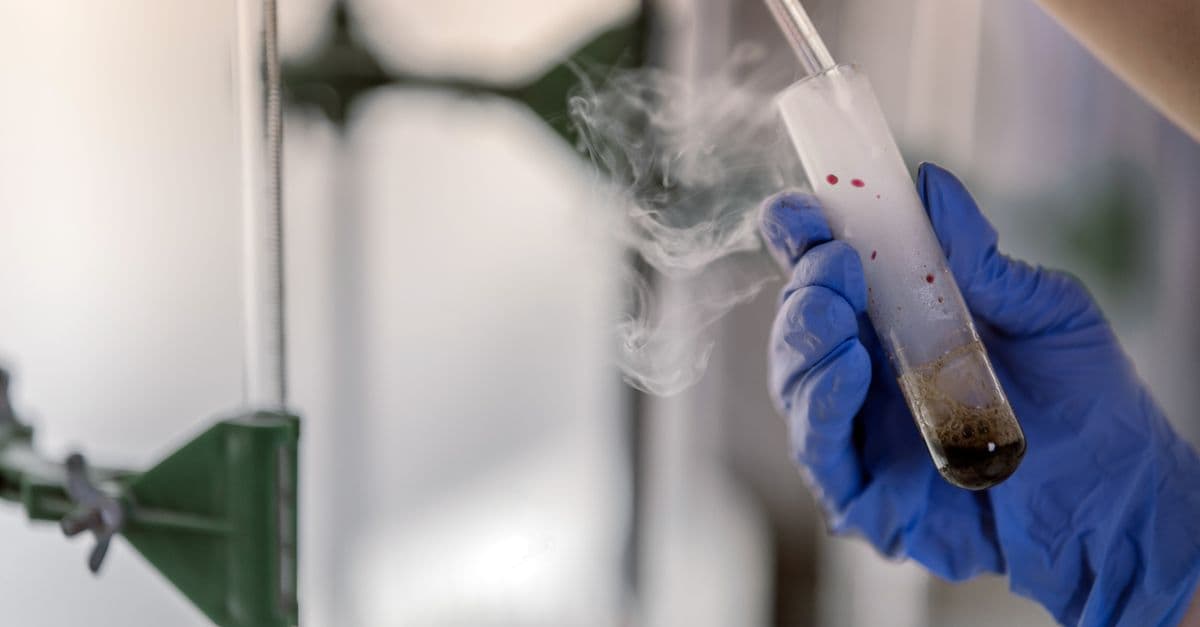
Dry ice (solid carbon dioxide) is the classic example. NIST lists CO₂'s triple point at 216.58 K (about −56.6°C) and 5.185 bar, which is roughly 5.1 atmospheres. Normal air pressure is 1 atmosphere, far below that, so liquid CO₂ cannot exist in open air. Dry ice instead sublimates at 194.7 K (−78.5°C), absorbing roughly 571 kJ per kilogram as it does, according to the summary on Wikipedia's dry ice entry. The French inventor Adrien-Jean-Pierre Thilorier is generally credited with first observing solid CO₂ in 1835. The fog you see above dry ice is not carbon dioxide; CO₂ gas is invisible. It is a cloud of tiny water droplets formed as the very cold gas chills water vapor, and in some cases the water the ice sits in.
Water ice sublimates too, only far more slowly. Its triple-point pressure is just 611.65 pascals, so at normal air pressure ice can melt, but it can also lose molecules from its surface directly to the air, and the rate depends on how cold and dry that air is. That is how snow disappears from a mountain on a cold, windy, sunny day without melting, and why ice cubes left in a freezer for months shrink and develop a dull, frosted surface.
Freeze-drying, step by step
Freeze-drying (lyophilization) turns that property into a manufacturing process. The material is frozen first. Then the surrounding pressure is lowered below water's triple-point pressure, about 611.65 pascals, and a little heat is gently applied. The ice sublimates, and the vapor is drawn away and trapped. Because the water never becomes liquid, the solid structure of the food or medicine is left largely intact, dry and porous rather than collapsed.
That is why freeze-dried strawberries are crisp and light, while heat-dehydrated ones are leathery and shrunken. It is also why freeze-dried food rehydrates relatively quickly: the empty pores left by the vanished ice act like channels for water to flow back in. NASA's space food systems overview notes that the Space Food Systems Laboratory at Johnson Space Center produces freeze-dried food, with beverages sealed as powders and rehydrated on orbit by injecting water.
Deposition and frost
Deposition is sublimation in reverse. On a clear, cold, humid night, a windshield can fall below the temperature at which water vapor condenses straight into ice crystals. The vapor never becomes liquid dew first; it goes directly onto the glass as frost. Snowflakes and the feathery patterns on a cold window form the same way.
When the textbook picture bends
Real systems are messier than a phase diagram, and the exceptions teach something.
Superheating and supercooling. Pure water in a very smooth, clean container can be heated slightly past its boiling point or cooled below its freezing point without changing phase, because bubbles and ice crystals need a place to start. These starting places are called nucleation sites. A superheated liquid is unstable, and a bump or a speck of dust can trigger sudden, violent boiling. This is why stirring rods and boiling chips are used in laboratories.
The Leidenfrost effect. A drop of water on a surface far above its boiling point can skitter around for a surprisingly long time rather than boiling away instantly, because a cushion of vapor insulates it from the hot surface. The story is told in the article on the Leidenfrost effect.
Hot water freezing faster. Under some conditions hotter water has been reported to freeze sooner than cooler water, a claim known as the Mpemba effect. Whether and when it occurs is contested, and the full story is in the article on the Mpemba effect.
Glass is not a phase change. Glass cools without a sharp freezing point and lacks the ordered lattice of a crystal. Whether it counts as a solid or a very slow liquid trips people up, and the article on why glass is not a normal solid explains the distinction.
Beyond the three. At high enough temperatures atoms lose electrons and matter becomes plasma, the fourth state. Even among solids there are multiple structures; ice itself has a lattice that holds molecules farther apart than liquid water does. According to the USGS Water Science School, freezing reduces water's density by about 9 percent, which is why ice floats, a subject covered in why ice floats and water is weird.
Where phase changes shape the planet
Phase changes govern much more than kitchens. The water cycle is a loop of evaporation, condensation, freezing, and melting that moves enormous amounts of latent heat from oceans into the atmosphere, where condensation releases it again and powers storms. Desalination plants spend most of their energy on separating salt from water, a cost tied directly to how much energy it takes to change water's phase, as discussed in why desalination uses so much energy. And the direction in which all this energy flows connects to deeper principles in the articles on thermodynamics and entropy and entropy and the arrow of time.
Common misconceptions about phase changes
A few intuitive ideas are wrong, and correcting them is a good test of whether the physics has sunk in.
"Boiling means getting as hot as possible." Boiling water cannot exceed its boiling point at the surrounding pressure, however high the burner is turned. Extra energy makes steam faster. Only a change in pressure (a pressure cooker) or running out of liquid changes the temperature.
"Ice always melts at 0°C." Pure water at standard pressure melts at 0°C, but that number shifts with dissolved solutes, which is the mechanism behind road salt, and with pressure.
"Sublimation only happens to dry ice." Dry ice does it dramatically, but ordinary ice sublimates too, only more slowly. Freezer burn on food is largely sublimation of surface ice into the freezer's dry air.
"Latent heat is wasted energy." The flat 100°C plateau looks like energy going nowhere, but none is lost. All of it is stored in the vapor's looser molecular arrangement and returned when the steam condenses, which is why steam heating works and why steam burns are so severe.
"The white cloud above a kettle is steam." Steam, meaning water vapor, is invisible. The visible cloud is condensed water droplets, formed where hot vapor meets cooler air.
"Boiling and evaporating are the same." Both turn liquid into gas, but boiling takes place throughout the liquid at a specific temperature, while evaporation occurs only at the surface and at any temperature.
What this means
Phase changes are not simply "add heat, matter changes state." Two variables, temperature and pressure, decide which phase is stable, and a third quantity, latent heat, decides how much energy a transition costs, independent of any temperature reading. Once you hold all three in mind, the odd cases line up: the 100°C plateau, the 90°C boil on a mountain, the 120°C water in a pressure cooker, the fog above dry ice, and the freeze-dried coffee that keeps for years. Each is the same molecules escaping or locking into place, governed by where the substance sits on its own phase diagram relative to the conditions around it.
Read next:
- Why Ice Floats and Water Is Weird
- How Pressure Cookers Change Boiling Water
- Entropy and the Arrow of Time Explained
- How Astronauts Recycle Water in Space
Sources
- NIST Chemistry WebBook, saturation properties of water and phase change data for CO₂.
- NIST, Kelvin: Introduction, on the triple-point definition used from 1954 and the 2019 redefinition.
- NASA Goddard Space Flight Center, Mars Fact Sheet.
- National Center for Home Food Preservation, Temperatures at which water boils at different elevations and Temperatures for food preservation.
- U.S. Geological Survey, Water density.
FAQ
Q: What is latent heat? A: Latent heat is the energy a substance absorbs or releases during a phase change, such as melting or boiling, without any change in temperature. For water at 100°C and normal pressure the latent heat of vaporization is about 2,256 kJ/kg, and melting ice at 0°C takes about 334 kJ/kg.
Q: What is the triple point of water? A: It is 273.16 K (0.01°C) at a pressure of about 611.7 pascals, the one combination at which ice, liquid water, and water vapor coexist in equilibrium. Until the 2019 SI revision it was used to define the kelvin.
Q: Why does water boil at a lower temperature at high altitude? A: Air pressure drops with elevation, and water boils when its vapor pressure equals the surrounding pressure. At about 3,000 meters the pressure is near 70 kPa, and water boils at about 90°C instead of 100°C.
Q: Why does dry ice not melt into a liquid? A: Carbon dioxide's triple point is at about 5.2 bar (roughly 5.1 atmospheres). Normal air pressure is far below that, so liquid CO₂ cannot exist in open air. Dry ice sublimates at about −78.5°C instead.
Q: How does a pressure cooker cook food faster? A: Sealing in steam raises the pressure to roughly 2 atmospheres absolute, which raises the boiling point to about 120°C. Food cooks in water that is hotter than anything an open pot can reach.
Q: What is the difference between boiling and evaporation? A: Boiling occurs throughout a liquid at the temperature where its vapor pressure equals the surrounding pressure. Evaporation happens only at the surface and at any temperature below the boiling point, which is why puddles dry on cool days.
Q: Why is the cloud above a kettle visible if steam is invisible? A: Steam, the gaseous form of water, cannot be seen. The visible cloud is made of tiny liquid droplets that formed when hot vapor cooled and condensed in the air above the spout.
Follow new articles
Add SciHub101 to your feed reader to see new science and technology stories.
About the Author
SciHub101 is an independent science and technology publication founded and edited by Buğra Sözeri, a software engineer and app developer based in Türkiye. AI tools assist with drafting and research. Source documentation in the existing archive is uneven, and articles are being reviewed and corrected. The Editorial Team byline identifies editorial responsibility; it does not certify specialist or independent human review. Where we compare products, anything built by our own team is labelled as such — see the editorial guidelines and About page for how corrections and disclosures work.
Related Articles
How Pressure Cookers Change Boiling Water
A pressure cooker traps steam to raise water's boiling point from 100°C to about 121°C, cutting cook times several-fold. Here is the physics and the math.
Mpemba Effect — Does Hot Water Freeze Faster?
Can hot water really freeze faster than cold water? The Mpemba effect is one of physics' weirdest puzzles — here's what 60 years of research reveals.