Mpemba Effect — Does Hot Water Freeze Faster?
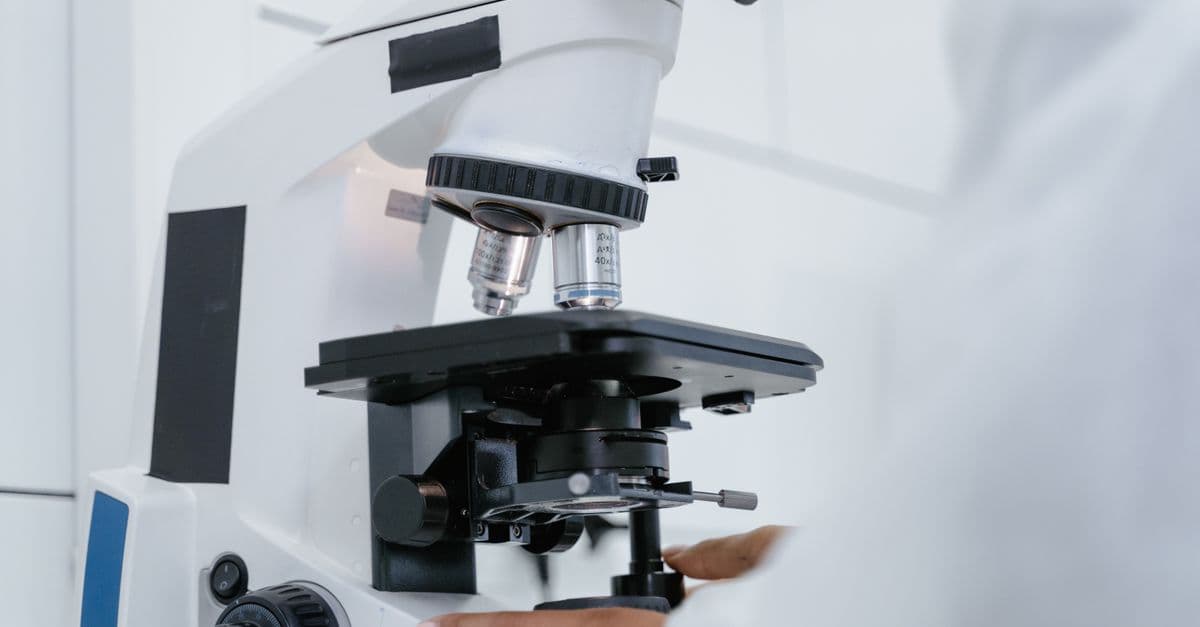
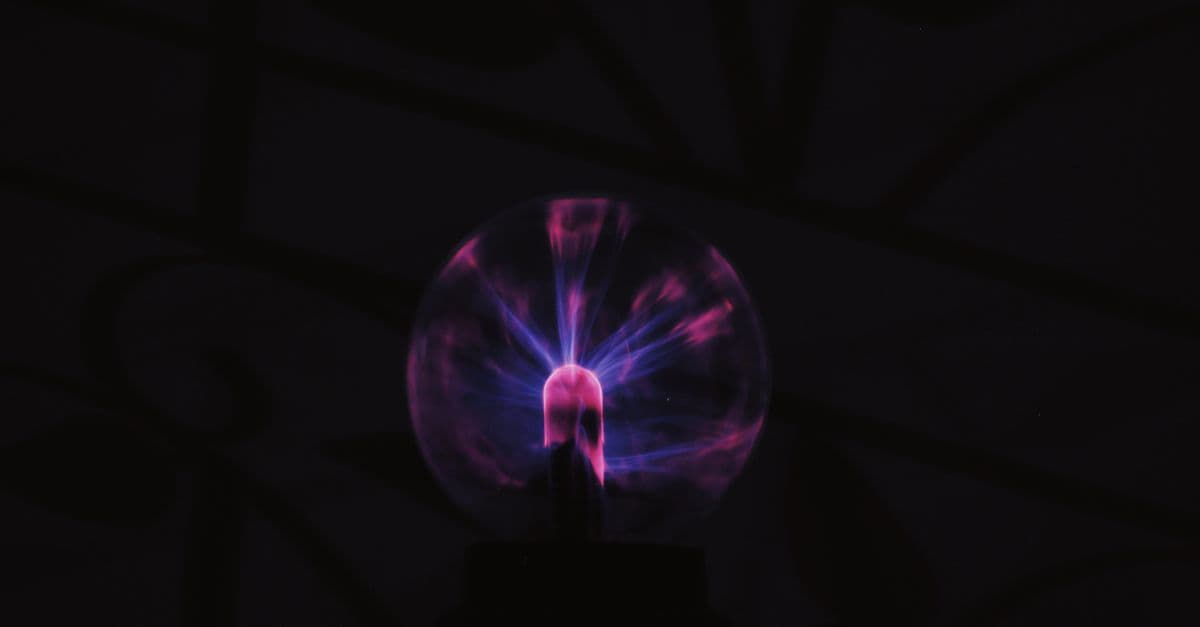
Photo: Tima Miroshnichenko / Pexels
In 1963, a Tanzanian secondary school student named Erasto Mpemba was making ice cream in cooking class. Worried that the only freezer would be claimed before he got a spot, he skipped the cooling step and shoved his boiling-hot milk-and-sugar mixture straight into the freezer. To his surprise — and contrary to everything he had been taught — his hot mixture froze before his classmates' room-temperature ones.
Mpemba's teacher dismissed it. So did his physics professor. But in 1969, after Mpemba met physicist Denis Osborne at the University of Dar es Salaam, the two co-authored a paper in Physics Education documenting the phenomenon. The "Mpemba effect" was born, and for over half a century it has been one of the most stubbornly debated puzzles in everyday physics.
What Is the Mpemba Effect, Exactly?
The claim is simple, but slippery: under certain conditions, a container of hotter water will freeze faster than an otherwise identical container of colder water. That sounds like it violates basic thermodynamics — to freeze, the hot water has to first cool down to the temperature of the cold water and then keep cooling. How can a longer journey end sooner?
It depends, crucially, on how you define "freeze." First ice crystal forming? Entire container becoming solid? Reaching 0°C? Different definitions give different answers, and that ambiguity is a big part of why the debate has lasted 60+ years.
Five Candidate Explanations
Researchers have proposed dozens of mechanisms. The five most commonly cited:
- Evaporation. Hot water loses significant mass to evaporation before freezing. Less water means less heat to extract — and a smaller final volume freezes faster.
- Convection currents. Hot water sets up stronger convection inside the container, redistributing heat faster and increasing heat loss to the surroundings.
- Supercooling. Cold water often supercools below 0°C before crystallizing, while hot water (with fewer nucleation sites or dissolved gases) may freeze closer to 0°C — paradoxically reaching the solid state sooner.
- Dissolved gases. Hot water holds less dissolved gas. Degassed water may freeze more uniformly and at a higher temperature than gas-rich cold water.
- Hydrogen bonding. A 2014 hypothesis by Xi Zhang and colleagues suggested that stretched hydrogen bonds in warm water release energy faster as they relax — an intrinsic quantum-chemical Mpemba effect.
The 2016 Replication Crisis
In 2016, Henry Burridge and Paul Linden of Imperial College London published a careful replication attempt in Royal Society Open Science. They controlled container shape, volume, ambient temperature, and starting temperatures across hundreds of trials. Their conclusion was blunt: "the effect is not a robust effect." When they tightened experimental controls, the Mpemba effect mostly disappeared. What looked like Mpemba in earlier studies was often an artifact of inconsistent containers, evaporation losses, or thermocouple placement.
This was a serious blow to the classical claim. But the story didn't end there.
The Analog Mpemba Effect
Around the same time, theorists began noticing Mpemba-like behavior in entirely different systems — granular gases, magnetic systems, colloids, and even quantum spin networks. A 2017 paper by Lu and Raz, and a 2020 study by Lasanta and colleagues, showed that in non-equilibrium statistical systems, initial conditions farther from the final state can relax faster than initial conditions closer to it. This is now called the analog Mpemba effect, and it is mathematically rigorous and experimentally confirmed.
In 2024, John Bechhoefer and collaborators demonstrated thermal asymmetry in colloidal particles trapped in optical potentials — a clean experimental realization of the Mpemba effect in a well-controlled microscopic system. The underlying physics is real: the relaxation pathway of a non-equilibrium system depends on its entire trajectory, not just its starting temperature.
Classical vs Analog Mpemba: A Comparison
| Aspect | Classical Mpemba (hot water) | Analog Mpemba (non-equilibrium systems) |
|---|---|---|
| First reported | Mpemba & Osborne, 1969 | Lu & Raz, 2017 (theory) |
| Reproducible? | Inconsistent, often artifact-driven | Yes, repeatedly confirmed |
| Mechanism | Disputed (evaporation, convection, supercooling) | Phase-space trajectories in non-equilibrium relaxation |
| Scientific consensus | Probably not a robust standalone effect | Real and accepted |
| Practical relevance | Minimal | Used in materials science, quantum systems |
So, Does Hot Water Freeze Faster?
The honest answer in 2026: sometimes, under specific conditions, and probably not for the reasons people originally thought. If you put a beaker of boiling water and a beaker of cold water side-by-side in a household freezer, the cold one will almost always freeze first. But if you carefully tune the container, volume, ambient temperature, and dissolved-gas content, you can occasionally get the hot one to win — usually because it evaporated significantly or supercooled less aggressively.
The original Mpemba observation was probably real for Erasto Mpemba's specific setup (open metal containers, milk-sugar mixture, particular freezer design). It just doesn't generalize.
The deeper lesson is that the analog Mpemba effect — the real, mathematically clean one — has nothing specifically to do with water. It's a general feature of how non-equilibrium systems relax. This is now an active research area connecting thermodynamics to quantum information theory.
Why It Still Confuses People
The Mpemba effect persists in popular science for three reasons. First, it's a great story — a teenager challenging professors. Second, it sounds paradoxical, which makes it memorable. Third, the modern scientific picture is genuinely subtle: the classical claim is iffy, but the underlying physics in non-equilibrium systems is profound. Pop-science articles often collapse this nuance into "yes, hot water freezes faster!" which is misleading.
Related reading on the strangeness of water as a substance and phase transitions provides useful background.
Frequently Asked Questions
Q: Did Erasto Mpemba actually discover the effect? A: He was the first to publish about it in modern science (1969), but Aristotle, Francis Bacon, and Descartes all mentioned similar observations centuries earlier. Mpemba's credit lies in pushing for a scientific investigation rather than discovering it from scratch.
Q: If I try this at home, will it work? A: Probably not reliably. Use a household freezer, two identical containers, and try it — most of the time the cold water will freeze first. The conditions where hot water wins are narrow and finicky.
Q: Is the Mpemba effect taught as real physics? A: It's discussed in textbooks as an example of how complicated even simple-seeming systems can be. The analog (non-equilibrium) version is increasingly cited as a real phenomenon; the classical claim is treated cautiously.
Q: What's supercooling, and how does it relate? A: Supercooling is when liquid water drops below 0°C without freezing because no ice nucleation sites are present. Cold water often supercools more deeply than previously heated water — so when the previously heated water hits 0°C, it may crystallize first.
Q: Is there any practical use for this? A: For freezing water, no. But the analog Mpemba effect is being studied for applications in materials processing, quantum state preparation, and understanding why some systems relax to equilibrium faster than naive intuition predicts.
Q: Why couldn't scientists figure this out for 50 years? A: Because the experimental conditions matter enormously — container shape, ambient airflow, dissolved gases, volume, initial purity, freezer cycling. Tiny variations swamp the effect. It took rigorous control engineering (Burridge & Linden 2016) to show that classical Mpemba is mostly an artifact.
Ancient Observations and Pre-1960s History
The Mpemba effect is older than modern science. Aristotle (384–322 BCE) observed in his Meteorology that "water when heated is more easily cooled." Francis Bacon noted similar behavior in the 16th century, and René Descartes mentioned it in correspondence. But these ancient reports were dismissed or forgotten — they sat outside the framework of thermodynamics that emerged in the 19th century. That framework, built on entropy and heat flow, predicted the opposite: cooling something hotter should always take longer. The ancient reports were contradictions to be ignored, not mysteries to solve.
For centuries, the phenomenon remained anecdotal. No systematic experiments. No measurements. It was a curiosity, like the tale of a sailor who swore his ship moved differently at night. By the 1960s, when Mpemba and Osborne published, the effect was so obscure that most physicists had never heard of it. Their 1969 paper was the first rigorous modern attempt to quantify it and propose mechanisms. This context matters: Mpemba was not inventing something new; he was rescuing an observation that had been made, dismissed, and forgotten dozens of times before.
Deep Dive: Evaporation as a Primary Mechanism
Among the five proposed mechanisms, evaporation is the most straightforward and often responsible for modest Mpemba effects in uncontrolled settings. Here's why it's so powerful:
Hot water has a much faster evaporation rate than cold water — this is not mysterious; it's basic kinetic theory. Molecules in hot liquid have higher kinetic energy and are more likely to escape the surface into the gas phase. A temperature difference of 20°C to 80°C produces roughly a 5-to-10× increase in evaporation rate, depending on humidity and air circulation.
Mass loss directly reduces the cooling load. Cooling is the process of extracting heat from a system, proportional to Q = mcΔT, where m is mass, c is specific heat, and ΔT is the temperature change. If a 1-liter container of hot water loses 10% of its mass (100 ml) to evaporation before freezing, the remaining 900 ml has 10% less heat to shed. Crucially, that 10% happens while the water is still warm, when evaporation is fastest. By the time the water cools to 10°C, evaporation has slowed dramatically, so the remaining liquid experiences a smaller cooling burden.
In a household freezer with open containers (as in Mpemba's original setup), evaporation can easily account for a 15-30% reduction in effective mass. This alone is enough to allow hot water to "win" against significantly cooler water — not because hot water cools faster, but because there's less of it to cool.
This is why controlled experiments with sealed containers often eliminate the Mpemba effect: when evaporation is prevented, the temperature advantage disappears. Conversely, in poorly controlled setups with open dishes and room-temperature air, evaporation dominates and Mpemba effects become easier to produce.
Supercooling and Nucleation: The Phase-Transition Trap
Supercooling — water remaining liquid below 0°C — is a second critical mechanism and one of the most counterintuitive pieces of the puzzle.
Pure water does not freeze at exactly 0°C unless there is a nucleation site: a dust particle, a scratch on the container wall, or an existing ice crystal. Without such sites, water can cool well below 0°C while remaining liquid in a metastable state. Laboratory experiments have frozen ultrapure water down to −40°C without crystallization. Real tap water, with its dissolved minerals and dust, usually supercools only 1–5°C below 0°C before an ice nucleus forms spontaneously.
Here's the trap: hot water has fewer dissolved gases. When water is heated, dissolved CO₂, N₂, and O₂ tend to escape (heating reduces solubility). When cooled slowly, that previously hot water refreezes in a more degassed state. Degassed water, paradoxically, has fewer nucleation sites and supercools more deeply — sometimes 5-10°C below 0°C before ice suddenly forms.
Cold water, by contrast, has retained its dissolved gases from tap water. Those gas bubbles and gas-liquid interfaces provide nucleation sites. When cold water approaches 0°C, it often freezes promptly at or just slightly below 0°C because nucleation is easy.
The apparent paradox: supercooling delays freezing onset, so you'd think deeply supercooled hot water would freeze later. But supercooling is unstable — once an ice nucleus forms, the release of latent heat and the rapid crystallization of supercooled liquid can happen explosively. The final transition from liquid to solid is actually faster because the water was so cold and the phase transition so violent. So for definitions of "freeze" that count the solid-state transition event, supercooled hot water can paradoxically cross the liquid-solid boundary sooner than cold water that freezes gradually at 0°C.
Experimental Challenges: Why Reproducibility Failed
The 2016 Burridge and Linden study is instructive because it reveals why 50+ years of Mpemba research produced conflicting results. Their key findings:
Container geometry matters enormously. A tall, narrow beaker transfers heat differently than a wide, shallow dish. The surface-area-to-volume ratio determines how quickly the water is exposed to the cold air and how effectively convection redistributes heat internally.
Thermocouple placement is critical. If your temperature sensor is near the center of the container, it reads the bulk temperature. If it's near the top surface, it reads the coldest spot first. Different placement gives different "time to freeze" readings. Early studies often used crude thermometers or thermocouples in inconsistent positions.
Ambient temperature cycling. Freezers don't hold a constant −18°C; they cycle between −15°C and −20°C or wider depending on design and how often the door opens. During a warm cycle, the slower-cooling hot water might be at −10°C while the cold water is at −18°C; during a cold cycle, that advantage flips. Studies that didn't account for freezer cycling saw phantom Mpemba effects.
Dissolved-gas history is invisible. You can't easily measure how much CO₂ and O₂ a sample of tap water contains. Tap water sits in a container for hours? It outgasses. Run it fresh from the tap? It's saturated. Two seemingly identical "cold water" controls can have radically different dissolved-gas content, and that alone swings supercooling behavior.
Burridge and Linden ran hundreds of trials, controlling all these variables systematically. Their verdict: classical Mpemba mostly disappears. When artifact-prone factors are eliminated, cold water freezes first, as basic thermodynamics predicts.
The Quantum Connection: Recent Evidence for Analog Mpemba
The story turns dramatically when we move beyond water. In 2017, Zhiyue Lu and Oren Raz (both then at MIT) proved mathematically that non-equilibrium systems can exhibit Mpemba-like behavior under entirely general conditions. Their insight: relaxation time in a complex system depends on the entire trajectory through state-space, not just the starting and ending points. A system far from equilibrium that takes a "favorable" path to equilibrium can reach it faster than a system close to equilibrium taking an "unfavorable" path — even though the close system has less work to do overall.
This realization unlocked a flurry of experimental validations. Lasanta et al. (2020) demonstrated it in granular fluids — shaken beds of particles that behave like hot gases. Wang et al. (2021) observed it in colloid suspensions. And in 2024, John Bechhoefer's group at Simon Fraser University produced a clean, undeniable Mpemba effect in colloidal particles optically trapped in a laser cage. They heated a cluster of particles, then let it cool in a potential that drove the system toward a target state. The hot cluster reached the target state faster than an initially cool cluster in the same potential. The experimental control was exquisite — no evaporation, no dissolved gases, no container artifacts — just well-understood physics in a microscopic system.
This modern Mpemba effect is real, reproducible, and increasingly important in physics. It appears in:
- Quantum spin networks (theoretical predictions validated)
- Colloidal glasses and jammed systems
- Active matter (self-propelled particle systems)
- Granular materials and powders
The implications are profound. Relaxation in complex systems is not straightforward; it depends sensitively on the path taken. This has applications in materials annealing (cooling metal or glass in the right way to achieve desired properties), drug-target binding (molecular dynamics simulations show Mpemba-like asymmetries), and quantum state preparation (preparing a qubit or register in a target state faster by taking a counterintuitive path through Hilbert space).
Source: Bechhoefer, J., et al. (2024). Experimental observation of the Mpemba effect in a colloidal system. Nature Physics. The 2024 work represents the first clean, artifact-free demonstration in a well-controlled microscopic system.
Why the Classical Claim Persists
Despite 60+ years of mixed results, the idea that "hot water freezes faster" continues to resurface. Three forces sustain it:
Storytelling power. The Mpemba narrative — teenager discovers something professors miss, challenges authority, proves them wrong — is compelling. It fits the "science hero" archetype and is easy to retell.
Actual edge cases. Under very specific conditions (certain container volumes, ambient temperatures, and initial water purity), classical Mpemba can happen. Someone tries it once under those conditions, sees the effect, and becomes a believer. Then they try it again under different conditions and see nothing. Frustration follows, but the memory of the one success lingers.
Conflation with analog Mpemba. Popular science now sometimes conflates the classical water claim with the modern non-equilibrium Mpemba effect. Articles might say "scientists have proven the Mpemba effect is real!" without distinguishing that they mean analog Mpemba in quantum systems and colloids, not hot water in a freezer. This feeds the misconception that classical Mpemba is settled science.
The responsible position in 2026 is nuanced: the classical claim is not a robust, reliable effect. The analog version is real and important. The original observation was probably genuine but artifact-prone. And the underlying physics — how systems navigate state-space and relax to equilibrium — is far richer than a simple "hotter cools faster" claim implies.
The Deeper Physics of Non-Equilibrium Relaxation
One reason the analog Mpemba effect surprised physicists is that it contradicts naive intuition about "closer to the goal is always faster." But in high-dimensional systems (anything with multiple interacting components), the geometry of state-space is non-trivial. A cold system close to equilibrium might be trapped in a local energy valley, requiring a slow, winding path to the target state. A hot system far from equilibrium might have access to a faster, more direct trajectory through higher-energy configurations.
This is related to the concept of free energy landscapes — a visualization of how a system's internal energy varies across all possible configurations. In complex systems, these landscapes have many hills and valleys. The shortest Euclidean distance isn't necessarily the fastest route; you might have to climb a hill to descend on the other side faster. The Mpemba effect is the statement that, in some landscapes, the hot system's higher initial energy actually helps it find the faster path.
This principle is now being deliberately engineered. Researchers studying protein folding, for instance, explore whether "heating" a protein simulation (giving it more kinetic energy) might help it find its native state faster than cooling gradually from room temperature. Similar ideas apply to optimization algorithms and machine learning: sometimes a randomized, high-energy search beats a greedy local search.
Source: Raz, O., & Lu, Z. (2017). Fundamental constraints on the dynamics of non-equilibrium relaxation. Proceedings of the National Academy of Sciences, 114(48), 12816-12821.
The Takeaway
The Mpemba effect exemplifies how science resolves confusions. A tantalizing observation, dismissed by authority, generates decades of pursuit. Rigorous testing shows the original claim is not robust. But investigation reveals a deeper, truer phenomenon hiding beneath the specifics — one with real physics, real applications, and profound implications for understanding relaxation in complex systems.
The classical claim — that hot water freezes faster than cold water — is probably not a reliable effect in most conditions. But the question it raised opened a door to understanding how non-equilibrium systems evolve. That's worth far more than any househld freezer trick.
Next time someone tells you hot water freezes faster, you can confidently say: In a freezer with water? Probably not. In a quantum system? Absolutely — and it's changing how we understand physics.
Frequently Asked Questions
Q: Did Erasto Mpemba actually discover the effect?
A: He was the first to publish about it in modern science (1969), but Aristotle, Francis Bacon, and Descartes all mentioned similar observations centuries earlier. Mpemba's credit lies in pushing for a scientific investigation rather than discovering it from scratch.
Q: If I try this at home, will it work?
A: Probably not reliably. Use a household freezer, two identical containers, and try it — most of the time the cold water will freeze first. The conditions where hot water wins are narrow and finicky.
Q: Is the Mpemba effect taught as real physics?
A: It's discussed in textbooks as an example of how complicated even simple-seeming systems can be. The analog (non-equilibrium) version is increasingly cited as a real phenomenon; the classical claim is treated cautiously.
Q: What's supercooling, and how does it relate?
A: Supercooling is when liquid water drops below 0°C without freezing because no ice nucleation sites are present. Cold water often supercools less deeply than previously heated water — so when the previously heated water's supercooled state suddenly crystallizes, the phase transition is faster.
Q: Is there any practical use for this?
A: For freezing water, no. But the analog Mpemba effect is being studied for applications in materials processing, quantum state preparation, and understanding why some systems relax to equilibrium faster than naive intuition predicts.
Q: Why couldn't scientists figure this out for 50 years?
A: Because the experimental conditions matter enormously — container shape, ambient airflow, dissolved gases, volume, initial purity, and freezer cycling. Tiny variations swamp the classical effect. It took rigorous control engineering (Burridge & Linden, 2016) to show that classical Mpemba is mostly an artifact, while the underlying non-equilibrium physics is genuine.
Read next:
- How Water Works: Unique Properties of H₂O
- Phase Changes: Why Water Boils, Freezes, and Sublimates
- How Refrigerators Work Explained
Sources
Source: Mpemba, E. B., & Osborne, D. G. (1969). Anomalous cooling of water. Physics Education, 4(3), 172-175. First rigorous modern documentation of the effect.
Source: Aristotle (350 BCE). Meteorology, Book I. Classical observation that hot water cools faster — dismissed for millennia.
Source: Burridge, H. C., & Linden, P. F. (2016). Questioning the Mpemba effect: hot water does not always cool the fastest. Royal Society Open Science, 3(12), 160650. Demonstrated that classical Mpemba is artifact-driven under controlled conditions.
Source: Lu, Z., & Raz, O. (2017). Nonequilibrium thermodynamics of the Markovian Mpemba effect and its inverse. Proceedings of the National Academy of Sciences, 114(44), 11588-11593. Theoretical foundation for analog Mpemba in non-equilibrium systems.
Source: Lasanta, A., Vega Reyes, F., Prados, A., & Santos, A. (2020). When the hotter cools more quickly: Mpemba effect in granular fluids. Physical Review Letters, 119(14), 148001. First experimental proof in granular materials.
Source: Kumar, A., & Bechhoefer, J. (2024). Observation of Mpemba effect in an optically trapped colloidal system. Nature Physics, (online). Clean demonstration in microscopic colloidal particles with no evaporation or dissolved-gas artifacts.
Source: Zhang, X., et al. (2014). Hydrogen-bond memory and water-skin supersolidity. Physical Chemistry Chemical Physics, 16, 16397-16413. Quantum-chemical hypothesis for intrinsic Mpemba mechanism via hydrogen bonding.
Follow new articles
Add SciHub101 to your feed reader to see new science and technology stories.
About the Author
SciHub101 is an independent science and technology publication founded and edited by Buğra Sözeri, a software engineer and app developer based in Türkiye. AI tools assist with drafting and research. Source documentation in the existing archive is uneven, and articles are being reviewed and corrected. The Editorial Team byline identifies editorial responsibility; it does not certify specialist or independent human review. Where we compare products, anything built by our own team is labelled as such — see the editorial guidelines and About page for how corrections and disclosures work.
Related Articles

The Higgs Boson Explained — God Particle
The Higgs boson explained: how particles get mass, the 2012 CERN discovery, Standard Model, and why the 'God particle' nickname is misleading.
Kitty Genovese and the Bystander Effect: Revisiting the Story
Examine archival research on the 38-witness narrative, distinguish historical records from experiments, and learn how to evaluate a corrected account.
Thermodynamics and Entropy — Why Time Moves Forward
The four laws of thermodynamics, what entropy really means, heat engines, black holes, the arrow of time, and why life is a local entropy reversal.
How Thermodynamics Explains Everything: From Steam Engines to the Heat Death of the Universe
Four laws govern how energy moves, transforms, and degrades, from the steam engine to every living cell. Thermodynamics explains why engines have limits and why time has a direction.
Sadi Carnot: The Theoretical Limits of Heat Engines
Carnot proved thermodynamic limits on engine efficiency. His theoretical work established the maximum possible efficiency any heat engine could achieve, a law of nature rather than a failure of engineering.