Entropy and the Arrow of Time Explained

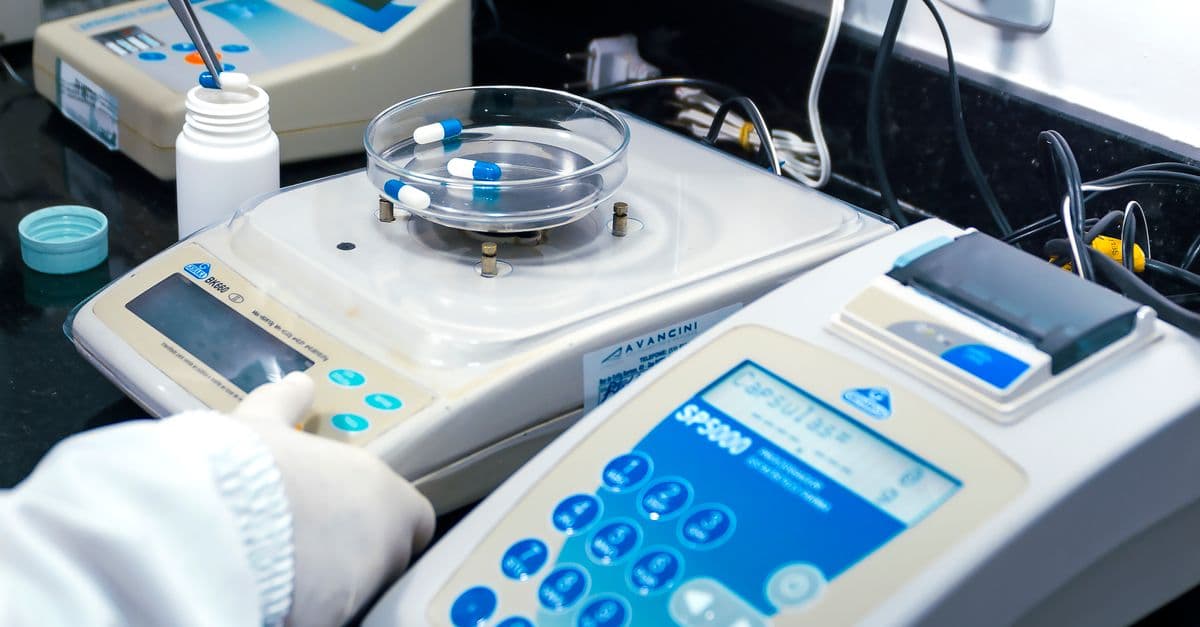
Photo: Mikhail Nilov / Pexels
Entropy — a measure of the number of microscopic arrangements consistent with a system's observable state — never decreases in an isolated system, according to the second law of thermodynamics first formalized by Rudolf Clausius in 1865. That one-way statistical drift, not any law of mechanics, is why a dropped glass shatters but never reassembles, and why physicists call it the "arrow of time." This article explains the mechanism in plain terms: what entropy actually counts, why increase is overwhelmingly likely rather than absolutely mandatory, and how that probability gap became the best physical explanation we have for why the past feels fixed and the future feels open.
What entropy actually measures
Most people first meet entropy as a vague synonym for "mess." That's not wrong, but it skips the part that makes it useful: entropy is a number, and physicists know exactly how to calculate it. The clearest version comes from Ludwig Boltzmann's 1877 statistical formulation, engraved on his tombstone in Vienna as S = k_B ln W.
In that equation, S is entropy, k_B is Boltzmann's constant (a fixed conversion factor between temperature and energy), and W is the number of distinct microscopic arrangements, or microstates, that all produce the same observable, macroscopic outcome. A microstate is the exact position and velocity of every particle in a system; a macrostate is the coarse description we actually observe, like "the gas fills the box evenly" or "the ice cube is still solid." Many different microstates can produce the same macrostate, and Boltzmann's insight was that entropy simply counts how many.
Here's the key move: a macrostate with a huge number of matching microstates is a macrostate you'll see constantly, because almost any random arrangement of particles happens to fall into it. A macrostate with very few matching microstates is one you'll see almost never, because the odds of randomly landing there are vanishingly small. Order isn't rare because nature "prefers" disorder in some moral sense. It's rare because there are astronomically fewer ways to be ordered than to be disordered, and systems drift toward whatever state has the most ways to exist.
Second law of thermodynamics — the total entropy of an isolated system never decreases over time; it stays constant for idealized reversible processes and increases for every real, irreversible one. This was Clausius's original 1865 formulation, derived from the impossibility of building a perfect heat engine, decades before Boltzmann gave it a microscopic footing (Clausius, 1865).
A useful comparison: imagine shuffling a brand-new deck of cards that starts perfectly ordered by suit and rank. There is exactly one arrangement that counts as "in order," but there are roughly 8 × 10^67 possible orderings of 52 cards total. After one honest shuffle, the odds of landing back on the ordered arrangement are effectively zero, not because shuffling has a rule against order, but because order is one outcome among an incomprehensibly large field of disordered ones. Entropy increase works the same way, just with far more "cards" — every particle in a room, every molecule in a cup of coffee.
Why disorder wins without being forced to
This is the part people most often get wrong, so it's worth being precise. The second law is a statistical law, not a mechanical one. Every individual collision between gas molecules obeys the ordinary, fully reversible laws of motion — run the tape backward on any single collision and it still looks like valid physics. Nothing in Newton's laws, or in quantum mechanics, forbids all the air molecules in a room spontaneously rushing into one corner.
What makes that not happen is overwhelming improbability, not physical prohibition. For any macroscopic system, the number of microstates corresponding to "evenly spread out" dwarfs the number corresponding to "clumped in a corner" by a margin so large it isn't meaningfully expressible in ordinary language. Boltzmann himself worked this out through his H-theorem, which used probability arguments over molecular collisions in a dilute gas to show that a measure of disorder tends to increase, even though the underlying dynamics are time-symmetric (Boltzmann, 1872).
That distinction, between "forbidden" and "absurdly unlikely," is why physicists are careful with their language. Entropy decreases are not against the rules. They are just so rare that no one has ever observed one in a macroscopic system, and none is expected across the entire remaining history of the observable universe. The reversibility of the underlying laws combined with the near-certainty of the aggregate outcome is exactly what makes the arrow of time a genuinely deep puzzle rather than a trivial one.
Why don't we see entropy spontaneously reverse?
Because the number of high-entropy microstates outnumbers the low-entropy ones by a factor that grows exponentially with the number of particles involved. For a system as small as a liter of gas, that factor already exceeds anything encountered in ordinary experience, making reversal astronomically improbable rather than physically impossible.
Everyday entropy: what increases, and can any of it run backward
Abstract counting arguments become intuitive fast once you look at ordinary processes. Every irreversible change you've ever watched happen — spilled milk spreading, a hot drink cooling, a plant decomposing — is entropy increase in action, because each of those end states corresponds to vastly more microscopic arrangements than the state it started from.
| Process | Entropy Change | Reversible Without Outside Work? |
|---|---|---|
| Ice melting into water at room temperature | Increases | No |
| Gas diffusing to fill an empty container | Increases | No |
| An egg breaking on the floor | Increases | No |
| A hot cup of coffee cooling to room temperature | Increases | No |
| Perfume evaporating and spreading through a room | Increases | No |
| A sandcastle eroding in the tide | Increases | No |
| Ice forming in a freezer (heat pumped out) | Decreases locally, increases overall | Only with a compressor doing work |
Every "unmixing" process on this list is technically possible under the laws of motion, but each one requires an external system to do organized work and export waste heat elsewhere, which raises the entropy of that outside system by more than the local decrease. The freezer row shows the trick precisely: your kitchen gets more ordered inside the ice tray, but the compressor dumps more disordered heat into the room than it removed, so the universe's total entropy still goes up.
That freezer example is the whole resolution to a common objection: "living things and refrigerators create order, so doesn't that violate the second law?" It doesn't, because the second law only forbids entropy decreases in isolated systems, meaning systems that exchange neither matter nor energy with anything outside themselves. Refrigerators, cells, and Earth's biosphere are all open systems that import low-entropy energy (electricity, sunlight) and export high-entropy waste (heat), and the total entropy of refrigerator-plus-room, or organism-plus-environment, still rises. Erwin Schrödinger made this precise argument in his 1944 lectures "What Is Life?", describing living organisms as feeding on "negative entropy" borrowed from their surroundings (Schrödinger, 1944).
The arrow of time: why the past is fixed and the future is open
Physics has a strange asymmetry hiding in plain sight. The fundamental equations describing gravity, electromagnetism, and quantum mechanics are all time-symmetric, meaning they work identically whether time runs forward or backward. Run a video of two billiard balls colliding in reverse, and it still obeys Newton's laws perfectly. Yet the world we actually experience is deeply asymmetric: eggs break but never unbreak, people age but never grow younger, and memory only ever points at the past.
This is what physicists call the arrow of time, and entropy is the best explanation anyone has found for it. Because entropy increase is a near-certainty for any macroscopic system moving forward in time, and a near-impossibility moving backward from a low-entropy starting point, the direction in which entropy grows effectively defines what "forward" means at the human scale. British astrophysicist Arthur Eddington coined the term "time's arrow" in his 1927 Gifford Lectures, explicitly tying it to the one-way behavior of thermodynamic entropy rather than to any asymmetry in the fundamental laws themselves (Eddington, 1928).
The deeper puzzle, one still actively debated among physicists, is why the universe's entropy was so low to begin with. If entropy simply increases whenever it can, then for entropy to have been low near the Big Bang, the universe must have started in an extraordinarily special, low-probability configuration. Boltzmann's own resolution, refined over the following century, treats that low-entropy start as essentially a boundary condition of the cosmos: the microscopic laws are symmetric, but the arrow we experience emerges because we are living in the long uphill climb away from an improbable beginning (Scholarpedia, "Time's Arrow and Boltzmann's Entropy"). This is closely related to why chaotic systems amplify tiny differences over time rather than damping them out, a dynamic explored further in Chaos Theory and the Butterfly Effect Explained.
Why do we remember the past but not the future?
Memory formation is itself a physical, entropy-increasing process: writing a memory into a brain (or a photograph, or a footprint) requires correlating the present state of a system with a past event, which only works in the direction of increasing entropy. Because no equivalent low-entropy correlation exists with future events, no physical process can record them, which is why recollection only ever points backward.
Maxwell's demon and the cost of sorting
The clearest historical challenge to the second law came from a thought experiment James Clerk Maxwell proposed in 1867, in a letter to fellow physicist Peter Guthrie Tait, later popularized in his 1871 textbook Theory of Heat. Maxwell imagined a sealed box divided into two chambers of gas at equal temperature, connected by a tiny trapdoor. A hypothetical "demon," a microscopic gatekeeper capable of observing individual molecules, watches the door and opens it selectively: fast-moving molecules are let through to one side, slow-moving ones are let through to the other, but only when a molecule happens to be approaching the door in the correct direction.
Over time, this selective sorting would separate the gas into a hot side and a cold side without any external work being done to accomplish it, apparently creating a temperature difference, and therefore usable energy, out of a system that started in thermal equilibrium. That outcome would violate the second law of thermodynamics directly, because it would represent a spontaneous decrease in entropy inside an isolated system. Maxwell wasn't proposing the demon as a real device; he designed it specifically to probe whether the second law was a fundamental law of physics or merely a statistical regularity that a sufficiently well-informed observer could beat.
For over a century, physicists debated where exactly the demon's scheme broke down, since nothing in the thought experiment appeared to forbid a molecule-sized gatekeeper from existing in principle. Early attempts to resolve the paradox focused on the energy cost of the demon observing each molecule, reasoning that measurement itself must dissipate heat. That explanation turned out to be incomplete: it is possible, at least in principle, to measure a molecule's speed without an unavoidable energy cost.
The resolution that has held up came from a different direction entirely: information theory. In 1961, IBM physicist Rolf Landauer showed that the thermodynamically unavoidable cost isn't in observing a molecule, it's in erasing the record of that observation afterward. Landauer's principle states that erasing one bit of information from a physical memory always dissipates a minimum, calculable amount of heat into the surroundings, because erasure is a logically irreversible operation that must be compensated by an increase in entropy somewhere else in the universe (Landauer, IBM Journal of Research and Development, 1961). Physicist Charles Bennett extended this insight in 1982, showing specifically that Maxwell's demon must eventually run out of blank memory to record new molecular observations, and the act of clearing that memory to make room for the next measurement is exactly what restores the balance the second law requires (Bennett, 1982).
Put simply: the demon isn't cheating physics, it's just deferring the entropy cost rather than avoiding it. Every bit of information the demon writes down about a molecule's speed and direction has to be erased eventually to keep the demon's memory finite and reusable, and Landauer's principle guarantees that erasure dumps at least as much entropy into the environment as the demon removed by sorting molecules. Sum the demon's bookkeeping and the gas's sorting together, and the total entropy of demon-plus-gas-plus-memory still goes up, exactly as the second law demands.
Landauer's principle is not just a historical footnote. It sets a real physical floor, known as the Landauer limit, on how energy-efficient any computer can ever become at operations that destroy information, such as overwriting a memory cell, and it remains an active reference point in the design of low-power computing and in theoretical work on the thermodynamics of computation.
Did Maxwell's demon prove the second law of thermodynamics could be broken?
No. The demon's sorting scheme initially appeared to violate the second law by decreasing entropy without doing work, but the modern resolution shows that erasing the memory records the demon needs to operate necessarily generates at least as much entropy as the sorting removes, so the second law holds once the demon's information processing is included in the total accounting.
Where entropy shows up beyond the coffee cup
Entropy isn't confined to gases in boxes. It's a load-bearing concept across chemistry, biology, information theory, and cosmology, and in each field it keeps the same statistical core: more accessible arrangements means higher entropy.
- Chemistry: reactions that increase the number of independent molecules (like a solid dissolving into many free-moving ions) tend to be entropically favored, which is part of why spontaneous mixing happens without added energy.
- Biology: Schrödinger's "negative entropy" framing still underlies how textbooks describe metabolism — organisms stay organized by continuously exporting entropy to their surroundings, not by defying the second law (Schrödinger, 1944).
- Information theory: Claude Shannon borrowed the term "entropy" in 1948 for a measure of uncertainty in a signal, a mathematical cousin of thermodynamic entropy that counts possible messages the way Boltzmann counted possible microstates (Shannon, 1948).
- Cosmology: the long-term fate often called "heat death" describes a universe where matter and energy have spread out so completely that no further useful work is possible, the theoretical maximum-entropy endpoint of the process described throughout this article.
That last point connects directly to time dilation and the broader physics of how time behaves under extreme conditions, a topic covered from a different angle in The Mysteries of Time: Why Aging Slows Down in Space. Entropy explains why time has a direction; relativity explains why its rate isn't fixed either. Together they are the two biggest revisions physics has made to the naive, everyday idea of time as a simple, universal ticking clock.
What people get wrong about entropy
The most common mistake is treating entropy as synonymous with literal mess or chaos in the colloquial sense, as if a teenager's bedroom is a rigorous demonstration of the second law. Entropy is a precise, countable quantity tied to microstates and macrostates, not a metaphor for untidiness, and using it loosely tends to obscure the actual physics rather than illuminate it.
A second frequent error is assuming the second law forbids local order entirely, which conflicts with the obvious existence of crystals, snowflakes, and living organisms. The law only applies to isolated systems; any system that can exchange energy with its surroundings can become locally more ordered, provided the surroundings become sufficiently more disordered in exchange, exactly as the refrigerator example above shows.
A third confusion is conflating entropy with energy loss. Energy is always conserved, per the first law of thermodynamics; it's never destroyed. What entropy tracks is the usefulness of that energy, how much of it is still concentrated enough to do organized work versus how much has spread into uniform, unusable heat. A fully "dead" universe at heat death would still contain exactly as much energy as it does today. None of it would be capable of doing anything.
Finally, people sometimes treat entropy increase as a moral or philosophical inevitability rather than a probabilistic one, describing it as though nature has a preference. It's cleaner, and more accurate, to say that low-entropy states are simply rare among all possible states, and any system left alone will statistically drift toward whatever configuration has the most ways of being realized. No preference required, just counting.
The takeaway
Entropy is a count of possible microscopic arrangements, and the second law of thermodynamics says systems drift toward whichever macrostate has the most of them. That drift is a matter of overwhelming statistical odds rather than an absolute mechanical rule, which is exactly what makes it a satisfying explanation for something as fundamental as the arrow of time: the past had fewer available arrangements than the future does, so the past is what we remember and the future is what we're still moving toward. Local order isn't a violation of any of this. It's a loan against the surrounding environment's entropy, always repaid with interest.
FAQ
Q: What is entropy in simple terms? Entropy is a measure of how many different microscopic arrangements of particles produce the same observable, large-scale state of a system. States with more possible arrangements have higher entropy and are statistically far more likely to occur.
Q: Does the second law of thermodynamics mean entropy can never decrease anywhere? No. It means entropy cannot decrease in an isolated system that exchanges nothing with its surroundings. Local entropy can decrease, as in a freezer or a living cell, as long as the total entropy of that system plus its surroundings still increases.
Q: Why does entropy give time a direction? Because entropy increase is statistically almost certain moving forward and almost impossible moving backward from a low-entropy starting point, the direction of entropy growth matches the direction we experience as "forward in time," even though the underlying physical laws work equally well in either direction.
Q: Is entropy the same thing as disorder? Loosely, yes, but the precise definition is the number of microstates consistent with a macrostate, not a subjective judgment of messiness. Physicists prefer "number of accessible arrangements" because it can be calculated exactly, unlike "disorder."
Q: Could entropy ever decrease on its own in the whole universe? Physically, no law forbids it outright, but the probability is so close to zero across cosmological timescales that it isn't considered a realistic outcome. It remains one of the clearest examples in physics of "not impossible, but functionally never."
Sources: Clausius, R. (1865), formalization of the second law of thermodynamics; Boltzmann, L. (1872, 1877), H-theorem and S = k_B ln W; Eddington, A. (1928), The Nature of the Physical World, coining "time's arrow"; Schrödinger, E. (1944), What Is Life?; Shannon, C. (1948), A Mathematical Theory of Communication.
Read next:
Follow new articles
Add SciHub101 to your feed reader to see new science and technology stories.
About the Author
SciHub101 is an independent science and technology publication founded and edited by Buğra Sözeri, a software engineer and app developer based in Türkiye. AI tools assist with drafting and research. Source documentation in the existing archive is uneven, and articles are being reviewed and corrected. The Editorial Team byline identifies editorial responsibility; it does not certify specialist or independent human review. Where we compare products, anything built by our own team is labelled as such — see the editorial guidelines and About page for how corrections and disclosures work.
Related Articles

Thermodynamics and Entropy — Why Time Moves Forward
The four laws of thermodynamics, what entropy really means, heat engines, black holes, the arrow of time, and why life is a local entropy reversal.

Ludwig Boltzmann: The Physicist Who Died Defending Atoms — SciHub101
Ludwig Boltzmann built statistical mechanics, derived S=k log W, and defended atomic theory for decades against fierce opposition. His biography, science, and tragic end.
How Thermodynamics Explains Everything: From Steam Engines to the Heat Death of the Universe
Four laws govern how energy moves, transforms, and degrades, from the steam engine to every living cell. Thermodynamics explains why engines have limits and why time has a direction.

What Is Entropy — and Why the Universe Keeps Running Down
Entropy is the reason ice melts, eggs don't unscramble, and the universe is heading toward a quiet, cold end. Here's what entropy actually is — and why it's the most powerful idea in physics.