How Pressure Cookers Change Boiling Water
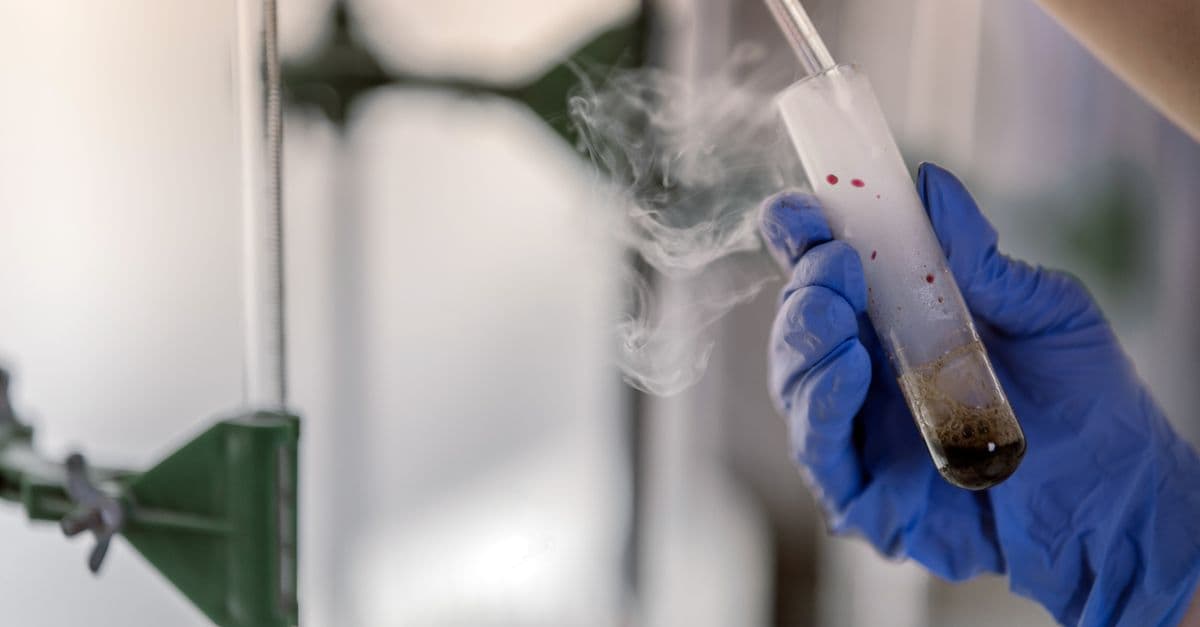
Photo: www.kaboompics.com / Pexels
Water boils at 100 degrees Celsius (212 degrees Fahrenheit) only at sea-level pressure. Raise the pressure and the boiling point climbs; climb a mountain and it falls. A pressure cooker seals steam inside a pot until the pressure reaches roughly twice normal atmospheric pressure, which lets liquid water reach about 121 degrees Celsius (250 degrees Fahrenheit). That hotter bath is why a pot roast that needs hours in an open pot can finish in well under an hour.
The short version
A pressure cooker does not add heat in any special way. It changes the rule that caps how hot water can get. In an open pot, extra burner power only makes the water boil faster, because the temperature stays pinned at the boiling point. In a sealed pot, the boiling point itself moves up, and food sits in a hotter bath.
| Condition | Absolute pressure | Water boils at |
|---|---|---|
| Summit of Mount Everest (about 8,850 m) | about 34 kPa | about 71°C (160°F) |
| Mountain town (about 2,000 m) | about 80 kPa | about 93°C (199°F) |
| Sea level, open pot | 101.3 kPa | 100°C (212°F) |
| 10 psi gauge (cooker setting) | about 170 kPa | about 115°C (239°F) |
| 15 psi gauge (stovetop cooker) | about 205 kPa | about 121°C (250°F) |
Values are calculated from the Clausius-Clapeyron relation described below and agree with standard steam-table data to within about a degree. The Everest figure depends on the exact pressure used, which varies with the weather.
Think of the pressure on the water's surface as a lid held down by a hand. For a bubble of vapor to form inside the water, it has to push that hand away. Hotter water pushes harder, so the harder the hand presses down, the hotter the water has to get before bubbles can win.
Why pressure controls the boiling point
Two definitions do most of the work. Vapor pressure is the pressure exerted by the molecules that have escaped from a liquid into the gas above it. It rises with temperature because hotter molecules move faster and escape more easily. Boiling is what happens when the liquid's vapor pressure equals the pressure of its surroundings, so that bubbles of vapor can form throughout the liquid rather than only at the surface.
At standard sea-level pressure of 101.3 kilopascals (14.7 pounds per square inch), water's vapor pressure reaches that threshold at 100 degrees Celsius. The figure most people memorize in school is conditional on that pressure. Raise the surrounding pressure and water molecules need more thermal energy, and so a higher temperature, before their vapor pressure can match it. Lower the surrounding pressure and boiling starts at a lower temperature. For the broader family of gas pressure rules, see our explainer on the gas laws of Boyle, Charles, and Avogadro and the story of Boyle's air pump experiments.
The relation that links the two
The mathematical link between temperature and vapor pressure during a phase change is called the Clausius-Clapeyron relation. Émile Clapeyron proposed a form of it in 1834, and Rudolf Clausius put it on a firm thermodynamic basis in 1850, according to historical summaries of the equation. In its simplified form, the natural logarithm of the ratio of two vapor pressures equals the enthalpy of vaporization (the energy needed to turn liquid into gas) divided by the gas constant, multiplied by the difference between the reciprocals of the two absolute temperatures.
That sounds abstract, but it produces a smooth, predictable curve rather than a rough correlation. This is why engineers can state a cooker's operating pressure and know the temperature it will reach without testing. Because the relation links pressure to temperature through the logarithm, small pressure changes at low pressure make larger temperature changes than the same changes at high pressure. That is why the first few psi of pressure matter most.
Working the numbers yourself
The relation can be checked with a few lines of arithmetic. Take water's enthalpy of vaporization as about 40.65 kilojoules per mole (a standard value near the boiling point) and the gas constant as 8.314 joules per mole per kelvin, so the ratio is about 4,890 kelvin. Start from 100°C (373.15 K) and 101.3 kPa, and treat the enthalpy as constant, which is a good approximation over this range.
For a pressure of 205 kilopascals, the formula gives a boiling temperature of about 121°C. Check it the other way: at 121°C (394.15 K), it gives a vapor pressure of about 204 kilopascals. Published saturation data lists 198.7 kilopascals at 120°C, according to the Engineering Toolbox tables, and the simple formula gives about 197 at that temperature, close to a 1% error.
The same math works downward. At 2,000 meters, where atmospheric pressure is about 79.5 kilopascals, the formula gives a boiling point of about 93°C. Near the summit of Everest, at about 33.7 kilopascals, it gives about 71°C. A cook there simmering a pot of lentils is working with water that is barely hotter than a very hot bath.
Gauge pressure versus absolute pressure
Labels on cookers quote gauge pressure, which counts only the pressure above the surrounding air. A cooker rated at 15 psi gauge is at about 29.7 psi absolute at sea level, since the 14.7 psi of the atmosphere adds to it. That is 205 kilopascals, which is where the 121°C comes from. This distinction matters at altitude, as discussed below, because the atmospheric part gets smaller while the gauge part stays fixed.
Why 21 extra degrees cuts cooking time so much
A 21-degree gain sounds modest. Cooking time, though, does not scale with temperature in a straight line, because chemical reactions speed up exponentially as things warm up. The Arrhenius equation describes how a reaction's rate constant depends on temperature and on its activation energy, the energy barrier the molecules must climb. A common rule of thumb says reaction rates roughly double for each 10°C rise, which is only approximate.
Instead of relying on the rule of thumb, we can compute the speedup for different activation energies between 100°C and 121°C. These activation energies are illustrative values, chosen to cover a plausible range for cooking reactions, not measured values for a specific food.
| Illustrative activation energy | Rate at 121°C relative to 100°C |
|---|---|
| 60 kJ/mol | about 2.8 times faster |
| 80 kJ/mol | about 4.0 times faster |
| 100 kJ/mol | about 5.6 times faster |
| Rule of thumb (doubling per 10°C) | about 4.3 times faster |
The pattern holds for the chemistry that matters in the pot. Collagen, the connective tissue protein that makes cheap cuts of meat chewy, has to be heated in the presence of water until it unwinds and turns into soft gelatin. Starch granules in beans and grains must absorb water and swell, and pectin that holds plant cell walls together must loosen. Each of these has its own activation energy, and each speeds up by several times at 121°C. That is why braising a tough cut can take hours at a simmer and tens of minutes under pressure. Exact times depend on the cut, size, and the cooker, so treat any single number as a rough guide.
Our article on how catalysts speed up reactions explains the activation-energy idea in more depth, and the thermodynamics and entropy overview covers the energy accounting behind it.
What actually happens inside the pot
A sealed pressure cooker traps the steam that would normally escape from boiling water. As steam accumulates in a fixed volume, pressure builds. A weighted or spring-loaded valve holds pressure at its set level by venting excess steam once the limit is reached. That is why a cooker hisses or rocks rhythmically during use: the valve is doing continuous, self-regulating work and is not simply a passive safety feature.
Why air has to go first
There is a subtle point that cooks rarely hear. The total pressure inside the pot is the sum of the steam's pressure and the pressure of any air trapped with it. Only the steam part determines the water's boiling temperature. If a large pocket of air stays in the pot, the gauge can read 15 psi while the steam is at a lower pressure, and the water is cooler than the label implies.
This is why university extension guidance for pressure canners tells users to vent steam steadily for about ten minutes before closing the vent, so that steam replaces the air. The extension sources state that trapped air lowers the temperature reached for a given pressure. Most modern cookers handle this automatically, but it explains why some recipes call for a pre-steam step.
Why steam heats food so quickly
Steam carries a large amount of hidden energy. The latent heat of vaporization of water, the energy needed to turn liquid into steam without changing its temperature, is about 2,257 kilojoules per kilogram at normal pressure. When that steam condenses on cooler food or on the pot walls, it hands that energy back. To put it in kitchen terms, condensing one gram of steam releases enough heat to warm more than five grams of water from freezing to boiling.
In an open pot, much of the burner's output goes into making steam that drifts out of the kitchen. In a sealed cooker, the steam stays and condenses back, so less energy is lost, and less water is lost as well. That is the practical reason pressure-cooker recipes call for surprisingly small amounts of liquid. For a related use of latent heat in the body, see how sweat cools the body, and for the reverse process, how refrigerators work.
How the valve regulates pressure
Once internal pressure exceeds the set threshold, typically 15 psi above atmospheric on US stovetop models, the valve lifts slightly and releases a small burst of steam, dropping the pressure just below the limit. The cycle repeats throughout cooking, holding pressure, and therefore boiling temperature, inside a narrow band.
Why releasing the pressure makes the pot boil again
Open a cooker straight after cooking and the contents seem to erupt. This is the same physics in reverse. Inside, the liquid is at about 121°C and in balance with the pressure. When the pressure suddenly falls to atmospheric, that water is 21°C above its new boiling point. It is superheated, and it boils violently until it cools to 100°C.
A back-of-envelope estimate shows how much steam this produces. Cooling water by 21°C releases about 88 kilojoules per kilogram (using a specific heat near 4.2 kilojoules per kilogram per kelvin). Dividing by 2,257 kilojoules per kilogram of latent heat suggests that roughly 4 percent of the liquid's mass could flash to steam in an idealized case. That is why starchy or foamy liquids can spit out of the vent on a quick release, and why many manufacturers advise a natural release, letting the pressure fall gradually as the pot cools, for foods that foam, such as beans or grains.
From bone digester to kitchen staple
The pressure cooker's direct ancestor is the steam digester built by the French physicist Denis Papin. He developed it during his London years in the late 1670s, working with Robert Boyle, and presented it to the Royal Society in 1679, according to the biographical record. The digester was a closed vessel with a tight lid, designed to raise the boiling point of water and extract gelatin from bones, and his 1681 book promoted it as an engine for softening bones.
Early digesters sometimes exploded, so Papin added a weighted safety valve that lifted and released steam when the pressure became too high. That valve is a conceptual ancestor of the regulators on modern cookers. The same idea of using steam pressure had another consequence. In 1690, after studying how pressure could move a lid, Papin built a small model with a piston in a cylinder, an early step toward the steam engine. Our article on the steam engine follows what came next.
The digester stayed mostly a scientific and industrial curiosity for roughly two centuries. Home pressure cookers and canners spread through American households in the early 20th century. The National Presto company says it created the first saucepan-style pressure cooker, with a rotating lid and simple gasket seal, and introduced it at the 1939 New York World's Fair, as the company's own history records. The gasket replaced the lug nuts and clamps of earlier designs, and the same basic approach is still used. The physics did not change between 1679 and today. The materials, safety engineering, and scale did.
Altitude: when the pot starts at a disadvantage
At 2,000 meters (about 6,560 feet), atmospheric pressure is roughly 80 kilopascals, and water boils at about 93°C. Near the summit of Everest it boils at about 71°C. An open pot there can boil all day and the food will still be cooking in water that is much cooler than at sea level, which is why older cookbooks carried altitude adjustment tables and why dried beans are famously slow in mountain kitchens.
A pressure cooker largely fixes this, since it adds its own pressure on top of whatever the local air provides. But it does not erase the altitude penalty completely. A cooker at 15 psi gauge adds about 103 kilopascals to the local pressure. At sea level that totals roughly 205 kilopascals and 121°C. At 2,000 meters it totals about 183 kilopascals, which corresponds to roughly 118°C, so the cooker still reaches a high temperature but a few degrees lower.
Using the Arrhenius arithmetic from above, an 80 kilojoule-per-mole reaction would run about 3.2 times faster than at 100°C in that mountain cooker, against about 4.0 times at sea level. So at 2,000 meters a cooker still gives most of the benefit, with times a little longer than the sea-level recipe says. Pressure canning, where food safety depends on temperature, is stricter about this, as the next section explains.
Why pressure canning depends on this physics
The clearest real-world use of the boiling-point shift is home canning of low-acid foods such as vegetables, meat, and soups. The reason is a bacterium. Spores of Clostridium botulinum survive boiling water, and low-acid foods (pH 4.6 or above) do not stop them from growing and making toxin once the jar is sealed. Penn State Extension states that 240°F (116°C) is the temperature needed to destroy these spores, and notes that boiling water at 212°F (100°C) falls 28°F short, no matter how long it boils. High-acid foods like most fruits and pickles can be safely processed in boiling water, because their acidity prevents spore growth. The details are in the Penn State Extension guide on time, temperature, and pressure in canning.
Look at how well the calculation matches. A canner at 10 psi gauge reaches about 115°C by the formula above, which is the same as 240°F (115.6°C). That is the standard setting for a weighted-gauge canner at low elevation. Extension guidance recommends 15 psi with a weighted gauge above 1,000 feet, because the thinner air lowers the absolute pressure and with it the temperature. Notice that for pressure canners the processing time stays the same at altitude. Only the pressure is raised, which is exactly the logic of keeping the temperature constant.
The same idea sits behind steam sterilizers called autoclaves, which operate at about 121°C. For the history of that device, see why the autoclave transformed medicine. Home canning is a food-safety matter, so anyone doing it should follow current tested guidance from a university extension service, not a general explainer like this one.
What a pressure cooker cannot do
The higher temperature is the whole story, and it has limits.
- It does not brown food. Browning, the Maillard reaction among others, needs dry surfaces and temperatures well above boiling. A pot full of steam stays wet, so searing has to happen before sealing or after opening.
- It does not work without water. The boiling point shift applies to liquid water. The cooker needs some liquid to make steam, and recipes specify a minimum for that reason.
- It can overcook quickly. Because everything speeds up, the window between done and mushy is short, especially for vegetables and fish.
- It does not suit every food. Dairy can curdle at high temperatures, and foods that foam, such as some grains, can clog the vent.
- Different pressures mean different times. A recipe written for a 15 psi stovetop cooker will not translate directly to an appliance that runs lower.
Electric multicookers run lower
Many electric multicookers do not reach 15 psi. Published manufacturer specifications for a popular line give a high-pressure range of roughly 10.2 to 11.6 psi (70 to 80 kilopascals gauge) with cooking temperatures of about 115 to 118°C, lower than a classic stovetop cooker. Using the formula above, 11.6 psi gauge corresponds to roughly 117°C, consistent with that range. The speedup is smaller, around three times for an 80 kilojoule-per-mole reaction, so a stovetop recipe may need slightly more time in an electric unit.
Common misconceptions
"A pressure cooker cooks with more heat." The burner under a pressure cooker is not necessarily putting out more energy than under an open pot. The pot just reaches, and holds, a higher equilibrium temperature because the trapped steam raised the pressure. The mechanism is the physics of phase transitions, not brute-force heat.
"Pressure cooking destroys nutrients." The evidence is mixed and depends on the food and nutrient. Because pressure cooking is faster and uses less water, food spends less time in hot water, which can reduce leaching of water-soluble vitamins, though the higher temperature can degrade some heat-sensitive compounds. Retention figures vary by study method, so no single number applies to all foods.
"It uses more energy because it gets hotter." Total energy used is what counts, not peak temperature. A sealed pot loses little heat as steam and finishes quickly, so pressure cookers generally use less energy than long open-pot simmering for the same dish.
"Modern pressure cookers are dangerous." Older designs sometimes failed, which left a lasting reputation. Modern cookers have multiple redundant protections, including a primary pressure-regulating valve, backup vents, and lid-locking mechanisms that physically prevent opening while the pot is pressurized. As with any appliance, safe use means following the manufacturer's fill limits and cleaning the vent.
"It can make water hotter than 121°C, so it can cook anything faster." The temperature ceiling is set by the pressure rating, not by how long you cook. Once the water reaches its pressure-set boiling point, more time at the same pressure only holds the temperature steady. If you want hotter, you need a different pressure, and that is an engineering and safety matter.
The takeaway
The pressure cooker is a small demonstration of a large idea: a substance's boiling point is not a fixed property of the substance but a property of the substance and its surroundings. Seal the pot and the surroundings change, so water can stay liquid at 121°C. Because chemical rates climb exponentially with temperature, that shift speeds cooking by several times, not by a few percent. The same logic explains why mountain cooking is slow, why canning low-acid food needs a pressure canner to reach 116°C, and why opening a hot cooker too quickly makes the contents boil over. Papin's 1679 digester and a modern countertop cooker run on the same physics, wrapped in different engineering.
Related reading: why salt melts ice on roads, what is a photon, explained, and how sonar maps the seafloor.
FAQ
Q: What temperature does water boil at in a pressure cooker? A: A stovetop cooker at 15 psi above atmospheric pressure, about 205 kilopascals absolute, boils water at roughly 121°C (250°F). A cooker at 10 psi reaches about 115°C (239°F). Many electric multicookers operate at lower pressures, around 115 to 118°C, according to published manufacturer specifications.
Q: Why does higher pressure raise the boiling point? A: Boiling occurs when a liquid's vapor pressure equals the surrounding pressure. When the surrounding pressure rises, water needs a higher temperature before its vapor pressure can match it. The Clausius-Clapeyron relation describes this link between temperature and pressure.
Q: Why does pressure cooking save so much time? A: Reaction rates rise exponentially with temperature. A 21°C increase over normal boiling speeds typical cooking reactions by roughly three to six times, depending on the reaction's activation energy. That turns hours of braising into tens of minutes for tough, collagen-rich foods.
Q: Why do pressure cookers help at high altitude? A: At altitude, lower air pressure lowers water's boiling point, to about 93°C at 2,000 meters. A pressure cooker adds its own pressure on top of the local air pressure, restoring a high temperature. At 2,000 meters a 15 psi cooker reaches roughly 118°C, a few degrees below its sea-level figure.
Q: Who invented the pressure cooker? A: Denis Papin, a French physicist working with Robert Boyle in London, built the steam digester and presented it to the Royal Society in 1679. It included a safety valve, and later designs, including the saucepan-style cooker introduced by National Presto in 1939, made the idea a household appliance.
Q: Why do I need to vent a pressure canner before sealing it? A: Trapped air lowers the temperature the canner reaches for a given pressure reading, which can leave food underprocessed. University extension guidance tells canner users to exhaust steam for about ten minutes before closing the vent, so steam replaces the air.
Q: Is a pressure cooker safe? A: Modern cookers have several protections, including a pressure-regulating valve, backup vents, and locking lids that stay shut under pressure. Safe use still depends on following the manufacturer's instructions on fill level, venting, and cleaning.
Sources
- Engineering Toolbox: Water vapor saturation pressure
- Penn State Extension: Time, temperature, and pressure in canning foods
- Denis Papin, biographical record
- National Presto Industries: company history
- University extension pressure-canning guidance (venting and weighted-gauge pressure by altitude), as summarized in the Penn State page above
Follow new articles
Add SciHub101 to your feed reader to see new science and technology stories.
About the Author
SciHub101 is an independent science and technology publication founded and edited by Buğra Sözeri, a software engineer and app developer based in Türkiye. AI tools assist with drafting and research. Source documentation in the existing archive is uneven, and articles are being reviewed and corrected. The Editorial Team byline identifies editorial responsibility; it does not certify specialist or independent human review. Where we compare products, anything built by our own team is labelled as such — see the editorial guidelines and About page for how corrections and disclosures work.
Related Articles
Mpemba Effect — Does Hot Water Freeze Faster?
Can hot water really freeze faster than cold water? The Mpemba effect is one of physics' weirdest puzzles — here's what 60 years of research reveals.