Marie Curie: Radioactive Notebooks and a Life Beyond Convention
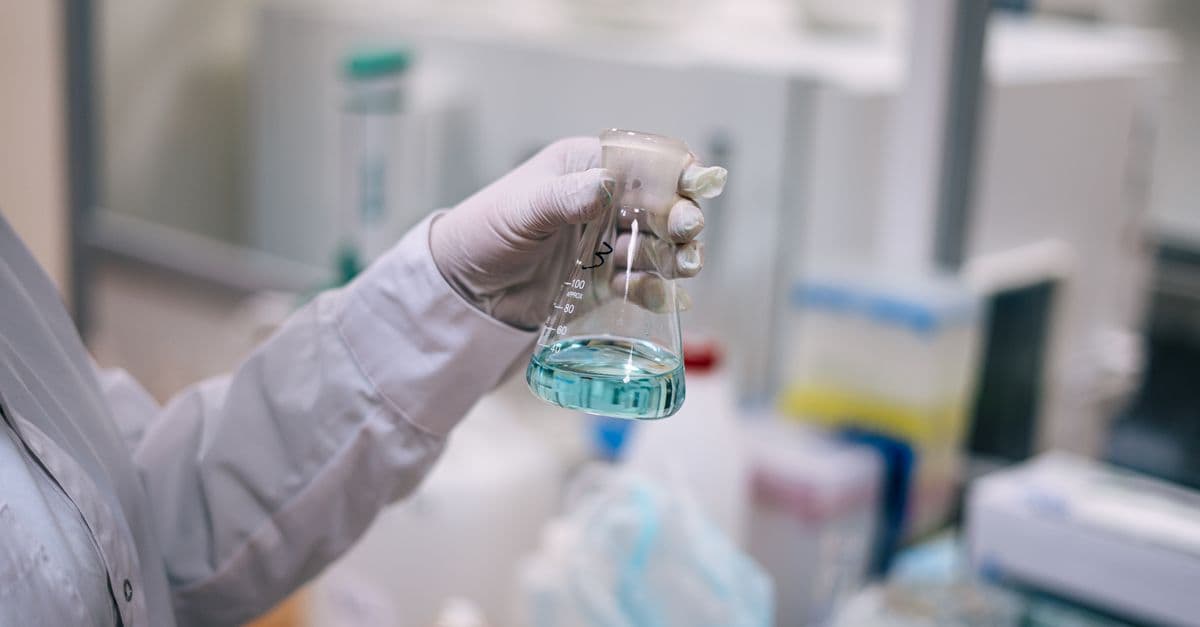
Photo: cottonbro studio / Pexels
Marie Curie (1867–1934) was a Polish-born physicist and chemist who conducted pioneering research on radioactivity — a term she herself coined — and became the first person to win Nobel Prizes in two separate scientific disciplines. She remains the only person to have done so. Her work transformed nuclear physics, medicine, and the role of women in science, and it ultimately cost her her life.
Quick Biography
Maria Sklodowska was born on November 7, 1867, in Warsaw, then part of the Russian Empire. Her father was a mathematics and physics teacher; her mother ran a boarding school. Both parents emphasized education fiercely, but women in Russian-controlled Poland were barred from the country's universities. Maria and her sister Bronya made a compact: Maria would work as a governess to fund Bronya's medical education in Paris; Bronya would then return the favor.
Maria arrived in Paris in 1891 and enrolled at the Sorbonne — one of very few women to do so. She lived in a sixth-floor garret, wore all her clothing to bed on cold nights, and survived on bread, chocolate, and occasional spoonfuls of cooking chocolate. She graduated first in her physics degree in 1893 and second in her mathematics degree in 1894. In 1895 she married physicist Pierre Curie, who had recognized her abilities and proposed with a book of his scientific papers — a distinctly scientific courtship token.
Marie and Pierre collaborated intensely on the study of uranium rays discovered by Henri Becquerel in 1896. By 1898 they had identified two new radioactive elements: polonium (named for Marie's homeland) and radium. Extracting one gram of radium required processing several tons of pitchblende ore. Marie did much of this work in a leaky shed that was simultaneously too hot in summer and too cold in winter — a facility that a visiting German chemist described as "a cross between a stable and a potato cellar."
Pierre died in a street accident in 1906, struck by a horse-drawn wagon. Marie, devastated, threw herself into work and was appointed to his professorship at the Sorbonne — the first woman to hold a faculty chair there. She received the Nobel Prize in Physics in 1903 (shared with Pierre and Becquerel) and the Nobel Prize in Chemistry in 1911, the second becoming entangled in a personal scandal that nearly derailed it. She died on July 4, 1934, of aplastic anemia — almost certainly caused by decades of radiation exposure.
Major Scientific Contributions
Discovery and Naming of Radioactivity
Before Curie, physicists knew that uranium emitted some form of penetrating ray. Curie coined the term "radioactivity" to describe this property and demonstrated that it was an intrinsic property of the atom itself — not a product of molecular interaction or external energy. This was a conceptual revolution: the atom, assumed to be stable and indivisible, could apparently emit energy spontaneously.
She measured radioactivity using an electrometer built by Pierre to detect the ionization of air near radioactive samples. The precision of this method — far more quantitative than photographic plate detection used by others — gave her data reliable enough to deduce that radioactivity was atomic in origin. The instrument is now in the Musée Curie in Paris.
Discovery of Polonium and Radium (1898)
Working with pitchblende ore, Marie noticed that the level of radioactivity was higher than uranium alone could account for. She deduced — correctly — that the ore must contain one or more unknown radioactive elements. She and Pierre isolated two: polonium (July 1898) and radium (December 1898). Radium was over a million times more radioactive than uranium by mass.
To isolate a single decigram of radium chloride sufficient to confirm its atomic weight, Curie processed approximately one ton of pitchblende residue over four years. The atomic weight she determined — 225 — was close to the accepted value of 226. The scale and precision of this work, done almost entirely by hand in an inadequate facility, is without parallel in 19th-century chemistry.
Development of Mobile X-Ray Units in World War I
Curie recognized that X-ray imaging could save soldiers' lives on the front by locating bullets and shrapnel without surgery. She developed mobile radiography units — nicknamed petites Curies — and trained 150 women to operate them. An estimated one million soldiers were examined using these units during the war. This was applied physics saving lives in real time.
Curie drove one of the units herself, often under fire. She had obtained a driver's license specifically for this purpose and learned basic automotive mechanics to keep the units operational in the field. The personal courage this required — driving toward the front lines, often without military escort — is rarely foregrounded in accounts that focus on her laboratory work.
Isolation of Pure Radium (1910)
In 1910, working alone after Pierre's death, Marie isolated pure metallic radium for the first time — an extraordinarily difficult task given radium's extreme radioactivity and rarity. This definitively established radium as a new element and secured its position on the periodic table. See also the periodic table and how elements are organized.
Medical Applications of Radioactivity
Curie's research laid the groundwork for radiation therapy in cancer treatment. The biological effects of radium on tissue — which she observed in her own body and in controlled experiments — were the first hint that radiation could destroy abnormal cells. Radiotherapy used in hospitals today descends directly from her work. For context on how radioactive decay works, see how radioactive decay works and half-life.
Personal Life and Relationships
Marie Curie's personal life was defined by a series of losses and by her refusal to organize her existence around social convention. Pierre was not merely a husband but the one person who regarded her as a full intellectual equal during a period when that was genuinely unusual. Their surviving letters describe a partnership of unusual intensity: they wrote to each other about experiments, results, and physical theories as naturally as about domestic arrangements. When Pierre died in April 1906 — hit by a horse-drawn wagon on the Rue Dauphine while distracted by thoughts that may have been scientific — Marie's grief was total and sustained.
After Pierre's death she maintained his laboratory notebooks, wore black for years, and took over his lectures at the Sorbonne in a ceremony that drew hundreds of spectators expecting a historical moment. She began her first lecture with precisely the sentence where Pierre had left off at his last lecture — a gesture that was at once practical and devastatingly symbolic.
Her relationship with physicist Paul Langevin from around 1910 to 1911 was the subject of the scandal that coincided with her second Nobel Prize. Langevin was separated from his wife and had four children; the affair was made public through letters stolen from Langevin's apartment and published by the nationalist press. The reaction was partly misogynist and partly xenophobic — editorials referred to her as a foreign Jewish woman seducing French scientists (she was neither Jewish nor German, but the hostility was clear in its targets). She and Langevin ended the romantic relationship but remained close professional collaborators for the rest of their lives. Langevin's grandson later married Curie's granddaughter.
Her two daughters were central to her later life. Irène, born 1897, followed her mother into physics and chemistry, won the Nobel Prize in Chemistry in 1935 (jointly with her husband Frédéric Joliot) for the discovery of artificial radioactivity, and died in 1956 — also of leukemia, almost certainly from radiation exposure. Ève, born 1904, became a journalist and writer; her 1937 biography of her mother, Madame Curie, sold millions of copies and shaped the public image of Marie Curie for generations. Ève lived to 102, outlasting virtually everyone in her family's scientific circle, and was the only one unaffected by radiation.
Lesser-Known Scientific Work
Establishing the International Radium Standard
In 1910 Curie organized an international conference to establish a standard measure for radioactivity. The curie (Ci) — a unit equal to 37 billion radioactive disintegrations per second, corresponding to the activity of one gram of radium-226 — was named in her honor. This act of metrology is often overlooked but was essential: without a common unit, researchers in different countries could not compare results. Curie prepared the first international radium standard herself, depositing a certified sample with the International Bureau of Weights and Measures in Sèvres.
Investigating Radioactive Isotopes
In collaboration with André Debierne after World War I, Curie investigated the chemistry of radioactive isotopes and helped establish that chemically identical elements could have different atomic masses and radioactivity levels — a concept foundational to modern nuclear chemistry. Her Radium Institute became the leading center in Europe for radiochemistry research throughout the 1920s, producing work that fed directly into the discoveries of artificial radioactivity and nuclear fission in the following decade.
Refusing to Sit on France's Committee for Atomic Weights
In 1911, the French Academy of Sciences voted on admitting Curie as a member. She lost by two votes — the first and only time a two-time Nobel laureate was rejected by a national academy in the country where they worked. She never applied again and never attended French Academy meetings as a guest. She was elected to the French Academy of Medicine in 1922, which was a separate body. She responded to the Academy's rejection by founding her own research institution: the Radium Institute (now the Curie Institute), which opened in 1914 and is still one of Europe's foremost cancer research centers.
Lesser-Known Habits and Quirks
Her Notebooks Are Still Radioactive
Marie Curie's personal research notebooks, correspondence, and even her cookbook are still so contaminated with radium-226 (half-life: 1,600 years) that they are stored in lead-lined boxes at the Bibliothèque nationale de France in Paris. Researchers wishing to consult them must sign a liability waiver and wear protective clothing. This is not hyperbole — it is standard laboratory procedure at the BnF, documented by the library itself and confirmed by multiple journalists and historians who have accessed the materials. The contamination is a direct consequence of how Curie worked: carrying radium samples in her coat pocket, keeping a sample in her desk drawer as a nightlight, and working without protective gear throughout her career.
She Carried Radium in Her Pocket as a Parlor Demonstration
Curie kept a small tube of radium solution and was known to produce it at gatherings to show the pale-blue glow it emitted in darkness. This was not recklessness by contemporary standards — the dangers of radiation exposure were poorly understood in the 1890s and early 1900s. Curie herself dismissed concerns about her health until very late in her life, even as she developed chronic fatigue, lesions on her fingers from handling radioactive materials, and progressively failing vision from cataracts (likely radiation-induced). The practice is documented in Barbara Goldsmith's biography Obsessive Genius: The Inner World of Marie Curie (2005) and in contemporary accounts from colleagues.
She Refused to Patent Radium
Despite her extraordinary financial hardships — including raising two daughters largely alone after Pierre's death while running a research laboratory on a professor's salary — Curie refused to patent the process for isolating radium. She and Pierre had made a principled decision early on: their work was science, not commerce, and discoveries should be freely available to researchers everywhere. When asked by an American journalist to comment on the value of her discovery, she said: "Radium is not to enrich anyone. It belongs to all people." This decision left her chronically underfunded; she later relied on donations, including a fundraising campaign in the United States that provided a gram of radium for her research in 1921.
The 1911 Nobel Scandal
In 1911, weeks before Curie was to receive her second Nobel Prize, the French press published letters suggesting she was having an affair with physicist Paul Langevin, who was separated but not divorced from his wife. The scandal was orchestrated in part by nationalist newspapers who found it unacceptable that a Polish-born woman might be awarded France's highest scientific honors. The Nobel Committee quietly suggested she not come to Stockholm to accept the prize. She went anyway. Her acceptance speech — delivered without reference to the scandal — was one of the most composed performances of scientific dignity on record. Langevin remained a friend and colleague for life.
She Named an Element After Her Occupied Homeland
The decision to name polonium after Poland was not merely sentimental. In 1898, Poland did not exist as a political entity — it had been partitioned and absorbed by Russia, Prussia, and Austria-Hungary since 1795. Naming a newly discovered element "polonium" was a political act embedded in a scientific paper: an assertion of the existence of a country that was officially absent from maps. The name choice was deliberate and has been interpreted by biographers as a statement of national identity at a moment when making such a statement carried real risk for a Parisian academic dependent on French institutional support.
She Kept Working Through Physical Deterioration
Curie continued active laboratory work into the early 1930s, by which time she was experiencing symptoms consistent with radiation sickness: chronic fatigue, tinnitus, near-blindness from cataracts, and persistent bone pain. She had multiple operations on her cataracts, which partially restored her vision each time. She refused to acknowledge publicly that her health was connected to radiation exposure, and she resisted any suggestion of slowing down. Colleagues from the Radium Institute in Paris described her continuing to direct experiments from a chair when she could no longer stand comfortably.
She Kept Pierre's Private Journal for Over a Year After His Death
After Pierre's death in 1906, Curie kept a private journal addressed to Pierre that she wrote in for over a year. In it she describes going to the laboratory and touching his equipment, sitting in his chair, continuing experiments he had started. She never remarried. The journal was published posthumously in 1990 and has since been translated into several languages. It reveals a sustained private grief entirely at odds with her composed public demeanor.
She Turned Down a French State Pension
After Pierre's death, the French government offered Marie a state widow's pension. She refused it, stating that she was capable of supporting herself and her children. This was not merely pride — it was a statement about professional independence. She continued as a salaried professor, the first woman in that role at the Sorbonne, and later as director of the Radium Institute. She wanted to be paid for work, not for widowhood.
Famous Quotes
"Nothing in life is to be feared, only to be understood. Now is the time to understand more, so that we may fear less." Widely attributed to Curie; versions appear in several secondary sources and are consistent with her documented philosophy of confronting the unknown empirically.
"Be less curious about people and more curious about ideas." Documented in accounts from colleagues and students. Consistent with her preference for solitary laboratory work over social engagement.
"I am one of those who think like Nobel, that humanity will draw more good than evil from new discoveries." From her 1921 address at Vassar College during her American tour — said in the context of atomic energy and its potential.
"In science, we must be interested in things, not in persons." Attributed in multiple sources. A characteristically direct statement of her working philosophy.
Legacy
Marie Curie's scientific legacy operates on several levels simultaneously. The discovery of polonium and radium opened the field of nuclear physics. Her demonstration that radioactivity is an atomic rather than molecular property helped dismantle the classical model of matter and paved the way for quantum mechanics.
Her medical legacy is just as substantial. Radiation therapy for cancer — which today treats millions of patients annually — descends directly from her work on the biological effects of radium. The Curie Institutes in Paris and Warsaw that she founded remain leading cancer research centers.
Culturally, Curie's life became one of the most powerful arguments for women's access to scientific education and careers. She mentored several women scientists, and her daughter Irène Joliot-Curie won the Nobel Prize in Chemistry in 1935 — the only mother-daughter Nobel laureate pair in history. For a broader look at how women shaped the history of molecular biology, see the story of Rosalind Franklin.
FAQ
Q: Did Marie Curie know that radiation was harming her? She was aware of the biological effects of radiation on tissue from fairly early in her research, having observed burns and lesions on her own hands. However, she was deeply resistant to the idea that it was seriously harming her health and largely dismissed concerns. Whether this was denial, a calculated acceptance of occupational risk, or a genuine underestimation of cumulative exposure is debated by biographers.
Q: Why did she receive the Nobel Prize in Chemistry rather than Physics for radium? The 1903 Nobel in Physics (shared with Pierre and Becquerel) recognized the discovery of radioactivity broadly. The 1911 Nobel in Chemistry recognized specifically the discovery and isolation of radium and polonium as chemical elements, and the isolation of pure metallic radium — work that was primarily chemical in nature.
Q: Are her notebooks really still radioactive today? Yes. Radium-226 has a half-life of approximately 1,600 years. The materials contaminated during Curie's lifetime will remain significantly radioactive for thousands of years. The Bibliothèque nationale de France stores them in lead-lined boxes and requires protective equipment for access.
Q: Did Pierre Curie contribute equally to their shared work? Pierre and Marie collaborated closely, and both contributed to the work that led to the Nobel discoveries. Pierre's expertise in instrumentation was critical. However, Marie initiated the project (she chose radioactivity as her thesis topic) and continued the most intensive experimental work — the processing of pitchblende — largely herself. After Pierre's death, her continued contributions were entirely her own.
Q: Why was her second Nobel Prize controversial at the time? The personal scandal involving Paul Langevin was used by some in the French establishment to argue that she was morally unfit for the honor. There was also underlying resistance to a foreign-born woman receiving such recognition from a French institution. The Nobel Committee's suggestion that she not attend was unusual and widely viewed as improper pressure, which she refused to accept.
Q: What is the Curie unit and why does it matter? The curie (Ci) is a unit of radioactivity equal to 37 billion disintegrations per second — corresponding to the activity of one gram of radium-226. Curie organized the international effort to define and standardize this unit in 1910, enabling scientists in different countries to compare radiological data using the same scale. The SI system later replaced it with the becquerel (1 disintegration per second), but the curie is still used in medical and industrial contexts.
Q: Did the glowing-hands myth have any basis in reality? The image of Curie with luminously glowing hands is mythological — radium's blue-green glow in darkness is faint and requires total darkness to see. The real consequences were worse and slower: chronic skin lesions on her fingers, anemia, cataracts, and ultimately the aplastic anemia that killed her. Radium's radiation destroys bone marrow and red blood cell production over years of exposure, not in any visually dramatic way.
Q: What happened to her daughter Irène? Irène Joliot-Curie followed her mother into nuclear research and in 1935 won the Nobel Prize in Chemistry jointly with her husband Frédéric Joliot for the discovery of artificial radioactivity — producing new radioactive elements in the laboratory for the first time. Like her mother, Irène was exposed to heavy radiation throughout her career. She died in 1956 of leukemia, aged 58, in what her physicians and biographers considered almost certainly a radiation-related illness.
Sources
- Goldsmith, Barbara. Obsessive Genius: The Inner World of Marie Curie. Norton, 2005.
- Quinn, Susan. Marie Curie: A Life. Simon & Schuster, 1995.
- Curie, Eve. Madame Curie: A Biography. Doubleday, 1937.
- Curie, Marie. Journal de Marie Curie (1906–1907). Published posthumously, 1990.
- Bibliothèque nationale de France. https://www.bnf.fr/ — collection access procedures.
- The Nobel Prize — Marie Curie biographical notes. https://www.nobelprize.org/prizes/physics/1903/marie-curie/biographical/
- Pasachoff, Naomi. Marie Curie and the Science of Radioactivity. Oxford University Press, 1996.
- Curie Museum, Paris. https://musee.curie.fr/
- Dry, Sarah. Curie. Haus Publishing, 2003.
Follow new articles
Add SciHub101 to your feed reader to see new science and technology stories.
About the Author
SciHub101 is an independent science and technology publication founded and edited by Buğra Sözeri, a software engineer and app developer based in Türkiye. AI tools assist with drafting and research. Source documentation in the existing archive is uneven, and articles are being reviewed and corrected. The Editorial Team byline identifies editorial responsibility; it does not certify specialist or independent human review. Where we compare products, anything built by our own team is labelled as such — see the editorial guidelines and About page for how corrections and disclosures work.
Related Articles

Niels Bohr: The Atomic Model, the Horseshoe, and the Gold Hidden From Nazis
Niels Bohr built the first quantum atomic model, founded the Copenhagen interpretation, and smuggled Nobel gold past the Nazis dissolved in acid. His verified biography.
Louis Pasteur: Germ Theory, Vaccines, and the Falsified Notebooks
Louis Pasteur founded germ theory, developed the rabies vaccine, and invented pasteurization. His biography, verified quirks, and the 1995 discovery about his lab notebooks.
Ernest Rutherford: The New Zealander Who Split the Atom
Ernest Rutherford discovered the atomic nucleus, named alpha and beta radiation, and mentored 11 future Nobel laureates. His biography, gold foil experiment, and legacy.
Albert Einstein: The Eccentric Genius Who Hated Socks
Albert Einstein's life, discoveries, and verified quirks: no socks, a stolen brain, violin obsessions, and the Nobel Prize money divorce deal.

Richard Feynman: The Bongo-Playing Physicist Who Cracked Safes at Los Alamos
Richard Feynman's biography, quantum electrodynamics, and verified quirks: safecracking at the bomb lab, bongo drums in strip clubs, learning Portuguese on a whim.
Marie Curie: Discovering Radioactivity and Redefining Science
Marie Curie's discovery of radioactivity and isolation of radium revolutionized physics and chemistry. The first woman to win a Nobel Prize, she sacrificed health for science.