Louis Pasteur: Germ Theory, Vaccines, and the Falsified Notebooks
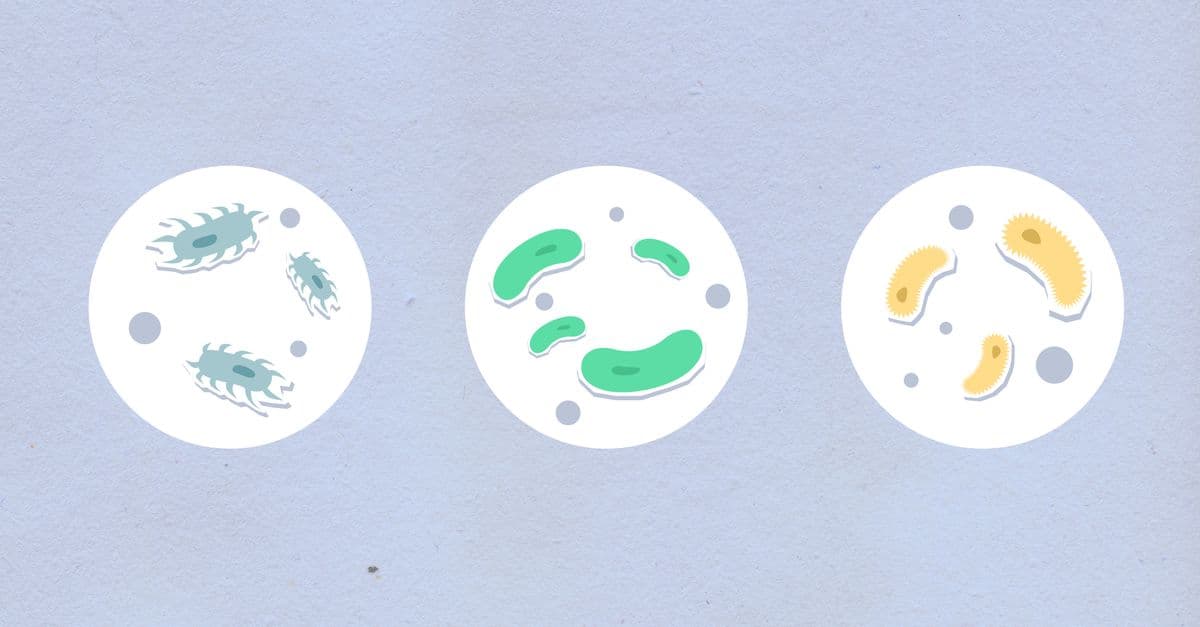
Photo: Monstera Production / Pexels
Louis Pasteur (1822–1895) is one of the founders of modern medicine. His germ theory of disease — the demonstration that microorganisms cause fermentation, putrefaction, and infectious illness — overturned the prevailing miasma theory and made possible the entire field of microbiology. His development of vaccines against chicken cholera, anthrax, and rabies extended the principle that Edward Jenner had applied to smallpox and turned immunization into a general scientific method. His work on pasteurization saved, and continues to save, millions of lives annually. He was also, by the testimony of his own private laboratory notebooks, willing to misrepresent experimental procedures when he believed he was right.
Quick Biography
Louis Pasteur was born on December 27, 1822, in Dole, in the Jura region of France, to Jean-Joseph Pasteur, a tanner and Napoleonic veteran, and Jeanne-Etiennette Roqui. The family moved to Arbois when Pasteur was five, and he grew up there, showing early talent in drawing and pastel portraiture — a skill he retained throughout his life — alongside facility in chemistry.
He entered the Ecole Normale Supérieure in Paris in 1843 and earned his doctorate in chemistry and physics in 1847, submitting two theses: one in chemistry, one in physics. His early research on tartaric acid and its optical activity — the discovery that certain molecules exist in mirror-image forms (chirality) — was a significant original contribution to chemistry that could have occupied a lesser scientist's entire career.
He was appointed professor of chemistry at the University of Strasbourg in 1849, where he met and married Marie Laurent, the daughter of the university's rector. Their partnership was more than matrimonial. Marie became an indispensable presence in his laboratory, copying notebooks, managing correspondence, helping record experimental observations, and serving as a trusted sounding board for his thinking. The authorized biography by their son-in-law René Vallery-Radot draws on Marie's own recollections, and she appears throughout as someone who understood the science well enough to discuss it with him and to contribute to it in ways that went unacknowledged by the public record. Pasteur himself, in private letters, referred to her as his most important collaborator.
They had five children; three died of typhoid fever in childhood — daughters Jeanne at age nine in 1859, Camille at age two in 1865, and Cécile at age twelve in 1866. The deaths were catastrophic for both parents. Pasteur's biographers, including Debré and Vallery-Radot, identify these losses as a direct and acknowledged spur to his turn toward infectious disease. A man who had spent a decade on fermentation and chirality became, in the years following his children's deaths, the century's most relentless investigator of disease causation. The grief was not sublimated; it was aimed.
In the 1850s and 1860s, Pasteur investigated fermentation, definitively showing that it was caused by living microorganisms rather than by spontaneous chemical processes. His elegant swan-neck flask experiments of 1859–1861 disproved the doctrine of spontaneous generation — the belief that life could arise from non-living matter — and established that airborne microorganisms were responsible for contamination. He then applied these principles to the silkworm diseases that were devastating French sericulture, to the souring of beer and wine, and to human infectious disease.
By the 1870s he had moved from identifying causes of disease to developing methods of preventing them. His work on vaccines culminated in a dramatic public demonstration at Pouilly-le-Fort in 1881, where animals vaccinated with his attenuated anthrax vaccine survived while unvaccinated controls died. The 1885 treatment of nine-year-old Joseph Meister, who had been severely bitten by a rabid dog, with an experimental rabies vaccine was a landmark in the history of medicine — and also, as the notebooks revealed, more complicated than Pasteur let on.
Pasteur suffered a debilitating stroke in 1868, at age forty-five, which partially paralyzed his left side. He continued working, with significant assistance, for another twenty-seven years. He died on September 28, 1895, at Marnes-la-Coquette, near Paris. His last words, reportedly, were: "One must work."
Major Scientific Contributions
Germ Theory of Disease
Pasteur's demonstration that fermentation was caused by specific microorganisms — and his subsequent extension of this principle to infectious disease — constitutes one of the most consequential shifts in the history of medicine. Before germ theory, disease was typically attributed to miasmas (bad air), imbalances of bodily humors, or divine judgment. Pasteur's work, alongside that of Robert Koch in Germany, established that specific diseases are caused by specific microorganisms. This made possible surgical antisepsis, water treatment, food safety, and the entire practice of microbiology.
The transformation was not instantaneous — it required decades of accumulating evidence and fierce professional battles — but Pasteur was its central architect in France. For an explanation of how the immune system's response to infection works, see how the immune system works.
Refutation of Spontaneous Generation
The doctrine of spontaneous generation — that microorganisms (and occasionally larger creatures) could arise from non-living matter — had been controversial since Redi's experiments in the seventeenth century but was still defended by prominent scientists in the 1850s. Pasteur designed a series of experiments using flasks with long, S-curved "swan neck" spouts that allowed air to enter but caused airborne particles to settle in the curve before reaching the broth inside. The broth in these flasks remained clear indefinitely. When the necks were broken, allowing particles direct access to the broth, it became turbid within days. The experiment was publicly demonstrated at the Sorbonne in 1864 to an audience that included major scientific and cultural figures.
Pasteurization
Working on the problem of wine and beer souring for the French wine and brewing industries in the 1860s, Pasteur developed the technique that bears his name: heating a liquid to a specific temperature for a specific time to kill the spoilage organisms without destroying the liquid's desirable properties. Pasteurization is now applied globally to milk, juice, and other perishables. It is among the most directly life-saving applications of basic scientific research in history.
Saving the French Silk Industry: The Silkworm Work
Between 1865 and 1870, French sericulture — the silk industry — was being devastated by two diseases of the silkworm: pébrine and flacherie. The losses were economically catastrophic; entire regions of southern France dependent on silk production faced ruin. The French government asked Pasteur to investigate.
Pasteur spent five years on the problem, working in the silk-producing regions of the Midi, learning silkworm biology from the ground up, and applying his microbiological methods to an industry rather than a laboratory. He identified pébrine as caused by a microsporidian parasite (Nosema bombycis) and developed a practical selection method — examining the reproductive moths under a microscope and discarding eggs from infected individuals — that allowed uninfected silkworm stocks to be maintained. For flacherie, a bacterial infection, he prescribed sanitary practices drawn directly from his general germ theory. The interventions worked. French silk production recovered.
The silkworm work is less celebrated than the anthrax or rabies vaccines because it did not produce a dramatic public demonstration, but it was equally rigorous and it saved a major French industry. It also demonstrates that Pasteur's germ theory was not merely laboratory science — it was immediately applicable to practical animal husbandry, an argument he pressed explicitly in his reports to the government.
Attenuation and Vaccine Development
Pasteur's crucial conceptual contribution to immunology was the principle of attenuation — that a pathogen weakened by repeated laboratory passage could be used to stimulate immunity without causing the disease. He applied this to chicken cholera (1880), anthrax (1881), and rabies (1885), demonstrating each time that animals or humans receiving the attenuated agent were subsequently protected against the virulent form. This transformed Jenner's empirical observation about cowpox into a general scientific method. The word "vaccine" — from vacca, Latin for cow — was coined by Pasteur in honor of Jenner's original work.
Contributions to Chirality in Chemistry
Pasteur's earliest significant work — his 1848 discovery that tartaric acid crystals exist in two mirror-image forms with opposite optical rotations — established the concept of molecular chirality. This is foundational to modern stereochemistry and pharmaceutical chemistry, where the two mirror-image forms (enantiomers) of a drug molecule often have entirely different biological effects. The thalidomide tragedy of the 1950s–60s involved the different biological activities of two enantiomers. Pasteur's foundational work identified the category that made this problem visible. The heating process that carries his name is explained in pasteurization.
Lesser-Known Habits and Quirks
He Would Not Shake Hands and Inspected Every Plate Before Eating
Pasteur's understanding of germ transmission made him acutely — by the standards of his contemporaries, comically — cautious about contamination in everyday life. Multiple eyewitness accounts, including those from colleagues, family members, and guests at his dinners, describe Pasteur routinely refusing to shake hands with visitors, or shaking hands briefly and then discreetly wiping his own. His son-in-law René Vallery-Radot, who wrote the authorized biography published in 1900, records this habit with evident affection. It was not an affectation — Pasteur genuinely believed, correctly by the standards we now apply, that hands were a vector for pathogen transmission.
More striking, Pasteur was said to inspect bread and fruit before eating with a magnifying glass, examining each piece for visible contamination. At formal dinners he was reportedly observed turning his bread over and inspecting its underside before consuming it. Guests who had not been warned sometimes found this alarming. Those who knew him found it characteristic. He applied the same systematic attention to his own food that he applied to his laboratory cultures.
The Falsified Notebooks: What Geison Actually Found
In 1995, historian of science Gerald L. Geison published The Private Science of Louis Pasteur, based on two decades of analysis of Pasteur's laboratory notebooks, which had been given to the Bibliothèque nationale de France by his family with access restricted until 1970. Geison's findings were significant and controversial.
On two key occasions, Geison found that Pasteur's published accounts of his experimental procedures differed materially from what his notebooks showed he had actually done. The more significant case concerns the 1881 anthrax vaccine demonstration at Pouilly-le-Fort. Pasteur publicly claimed his vaccine was prepared by oxygen-attenuation — the method he had developed and published. His notebooks show that he actually used a different method: attenuation by potassium bichromate, a technique developed by his colleague and rival Charles Chamberland. The public demonstration succeeded, but not via the method Pasteur publicly credited.
In the rabies case, Pasteur's 1885 treatment of Joseph Meister was described in published accounts as following an established animal testing protocol. The notebooks show he had not completed the animal protocol before treating Meister — the boy received an experimental treatment with less prior testing than Pasteur's published account implied.
Geison is careful to note that in both cases Pasteur appears to have believed his treatments were effective and that he was protecting intellectual priority rather than knowingly endangering patients. But the gap between the public account and the notebook record constitutes what Geison calls "misconduct by modern standards." This is not a fringe claim or a debunked accusation — Geison's book was published by Princeton University Press, reviewed extensively in scientific and historical journals, and is the standard scholarly reference on Pasteur's laboratory practice. It does not diminish his achievements; it complicates the portrait.
He Was Paralyzed on One Side for the Last Third of His Career
Pasteur's stroke in October 1868, when he was forty-five years old, left the left side of his body permanently weakened. He walked with a drag. He required assistance in laboratory work that required both hands. He delivered public addresses from a partially immobile body with visible effort. His speech was affected initially but recovered significantly.
That he continued to produce the most consequential work of his career — the anthrax and rabies vaccines, the entire Pasteur Institute enterprise — after this stroke, and that this fact is rarely emphasized in popular accounts, is worth noting. His biographers describe the post-stroke Pasteur as if anything more determined and focused than the pre-stroke Pasteur: a man with a physical reminder, daily, of mortality, who responded by working harder.
He Maintained Precise Control of His Public Image
Pasteur was a skilled and careful manager of his scientific reputation in ways that go beyond ordinary priority disputes. He engaged in sharp polemical battles with rivals, including Robert Koch, with a ferocity that contemporaries found excessive. He was aggressive in claiming priority for discoveries that had earlier roots in others' work. He controlled access to his notebooks and correspondence carefully during his lifetime, and the family restriction on notebook access after his death — maintained for three-quarters of a century — was not accidental.
The authorized biography by his son-in-law Vallery-Radot, published in 1900, was written with Pasteur family oversight and has been criticized by historians as hagiography: accurate in facts but selective in emphasis. Pasteur's public persona — the heroic, incorruptible man of science fighting for truth against dogma — was at least partly a construction he actively managed. This does not distinguish him from most prominent nineteenth-century scientists; it is simply visible more clearly in his case because the notebooks eventually became public.
He Painted Portraits Well Enough to Be Recognized for Them
Before he became a scientist, Pasteur was a notably skilled portrait painter in pastels. Portraits he made of family members and townspeople in Arbois as a teenager and young man survive and have been exhibited. They are not amateurish; they show observational precision and a sensitivity to expression that biographers have linked to the same qualities that made him a good experimentalist. He gave up painting entirely when he committed to chemistry, apparently concluding that he could not do both at a high level. The portraits survived in family collections and have been reproduced in several biographies.
He Was Profoundly Affected by the Franco-Prussian War
The Franco-Prussian War of 1870–71 hit Pasteur in a way that went beyond patriotism. He had been working in Germany, had colleagues there, and had developed genuinely respectful scientific relationships with German chemists. The war ended all of that. He returned his honorary degree from the University of Bonn in a letter that expressed his views with unusual directness: he considered the Prussian invasion a crime and wanted no further association with German scientific institutions. His subsequent rivalry with Robert Koch carried more than scientific disagreement — it carried the weight of national enmity that the war had made personal.
The episode also reinforced Pasteur's drive to make French science the best in the world. The Pasteur Institute, founded in 1887 with international public subscriptions following the rabies vaccine's success, was partly a monument to the proposition that France could lead biology as Germany led chemistry. Patriotism and science were not separate motivations for Pasteur; they were fused.
Famous Quotes
"Science knows no country, because knowledge belongs to humanity, and is the torch which illuminates the world." From a speech at the founding of the Geographical Society in Lyon, 1882. A statement of the internationalist ideal of science that Pasteur professed even while engaging in sharp national rivalries with German scientists.
"One must work. I have done what I could." Attributed as among his last words, November 1895. Consistent with the work ethic documented throughout his career.
"Where observation is concerned, chance favors only the prepared mind." From his inaugural lecture at the University of Lille, 1854. The most famous of his aphorisms and among the most accurate descriptions of the relationship between systematic preparation and serendipitous discovery in the history of science.
"The greatest derangement of the mind is to believe in something because one wishes it to be so." From Pasteur's correspondence; a statement of his empirical philosophy that reads differently in light of the Geison findings — a reminder that stated values and practiced behavior do not always coincide.
Legacy
Pasteur's legacy operates on a global scale that is difficult to overstate. Germ theory is the foundation of every antibiotic, antiviral, antiseptic, and vaccine developed since 1870. The Pasteur Institute, founded in Paris in 1887 with international subscriptions following the rabies vaccine's success, became a worldwide network of research centers whose scientists have made fundamental contributions to HIV, tuberculosis, malaria, and emerging infectious diseases. Pasteur Institute scientists have been awarded the Nobel Prize in Physiology or Medicine seven times.
Pasteurization of milk alone is estimated to have prevented millions of deaths from bovine tuberculosis, typhoid fever, and other milk-borne diseases over the past century and a half. The principle of vaccination that Pasteur systematized now underpins one of the most effective tools in public health — the immunization programs that have eliminated smallpox, nearly eliminated polio, and dramatically reduced mortality from dozens of other diseases.
The Geison revelations of 1995 did not overturn any of this. What they did was introduce a mature complexity to the portrait of a man who had previously been treated with the uncritical reverence usually reserved for saints. The science was real. The man was human. Both things are true. For context on how vaccination built on earlier work, see Edward Jenner and the invention of vaccination.
FAQ
Q: Did Pasteur really falsify his laboratory notebooks? A: Historian Gerald Geison's 1995 book, based on analysis of Pasteur's private laboratory notebooks, found that on at least two significant occasions — the anthrax vaccine and the rabies treatment — Pasteur's published descriptions of his methods differed from what his notebooks showed he had actually done. Geison characterized this as misconduct by modern scientific standards. The book is the standard scholarly reference and has not been effectively rebutted.
Q: What is pasteurization and how does it work? A: Pasteurization involves heating a liquid to a specific temperature — for milk, typically 72°C for 15 seconds in high-temperature short-time pasteurization — to kill pathogenic microorganisms without destroying the liquid's nutritional and sensory properties. It does not sterilize; it reduces the microbial load to safe levels and extends shelf life.
Q: Was Pasteur a doctor? A: No. Pasteur was a chemist and microbiologist, not a physician. He had no medical degree. His application of microbiology to medicine was made in collaboration with, and sometimes over the objections of, the medical establishment. This made his conflicts with physicians over antisepsis and germ theory partly a professional territorial dispute as well as a scientific one.
Q: How did Pasteur develop the rabies vaccine without knowing what a virus was? A: Pasteur developed the rabies vaccine empirically — by growing the pathogen in rabbit spinal cords, drying the tissue to attenuate it, and testing it in animals — without knowing the nature of the causative agent. Viruses were not identified as a distinct category from bacteria until the 1890s, after Pasteur's vaccine work. He knew something was causing rabies and that his attenuation method worked; the molecular explanation came later.
Q: What was Pasteur's rivalry with Robert Koch about? A: Koch and Pasteur were contemporaries and competitors who made overlapping contributions to germ theory and bacteriology. Their rivalry was partly scientific (genuine disagreements over methods and priority), partly national (Franco-German tensions following the 1870–71 war were intense), and partly personal. They disagreed publicly and sharply at conferences. Both were right about important things; both were wrong about some things; neither gave the other much credit.
Q: What did Pasteur's wife Marie contribute to his work? A: Marie Laurent Pasteur was an active participant in Pasteur's laboratory work, not merely a supportive spouse. She copied notebooks, managed correspondence, recorded experimental observations, and engaged with the science at a level that Pasteur himself acknowledged in private letters. He referred to her in correspondence as his most important collaborator. Like most women in nineteenth-century science, she received no formal credit in publications.
Q: How did Pasteur save the French silk industry? A: Between 1865 and 1870, Pasteur investigated pébrine and flacherie, two diseases devastating silkworm populations across France. He identified pébrine as a microsporidian infection and developed a microscope-based selection method to maintain disease-free breeding stocks. For flacherie, a bacterial infection, he prescribed germ-theory-based sanitary practices. The interventions restored French silk production and represent one of the earliest successful applications of microbiology to agricultural industry.
Q: Did Pasteur's personal losses influence his scientific direction? A: His biographers, and Pasteur himself, confirm that the deaths of three of his five children from typhoid fever — in 1859, 1865, and 1866 — directly influenced his turn toward infectious disease. He had spent his early career on chirality and fermentation; the years following the deaths saw him move with increasing urgency toward understanding and preventing the diseases that had killed his children. Grief was a documented motivating force in the work that saved millions of other people's children.
Sources
- Geison, Gerald L. The Private Science of Louis Pasteur. Princeton University Press, 1995.
- Vallery-Radot, René. The Life of Pasteur. Trans. R.L. Devonshire. Doubleday, 1923.
- Debré, Patrice. Louis Pasteur. Trans. Elborg Forster. Johns Hopkins University Press, 1998.
- Cadeddu, Antonio. "Pasteur et le choléra des poules: révision critique d'un récit historique." History and Philosophy of the Life Sciences 9 (1987): 87–104.
- Latour, Bruno. The Pasteurization of France. Harvard University Press, 1988.
- Institut Pasteur official history. https://www.pasteur.fr/en/research-journal/history
- Weiss, Robin A., and Sandra Esté. "Louis Pasteur: A Life in Brief." Journal of the Royal Society of Medicine 95.7 (2002): 359–361.
Follow new articles
Add SciHub101 to your feed reader to see new science and technology stories.
About the Author
SciHub101 is an independent science and technology publication founded and edited by Buğra Sözeri, a software engineer and app developer based in Türkiye. AI tools assist with drafting and research. Source documentation in the existing archive is uneven, and articles are being reviewed and corrected. The Editorial Team byline identifies editorial responsibility; it does not certify specialist or independent human review. Where we compare products, anything built by our own team is labelled as such — see the editorial guidelines and About page for how corrections and disclosures work.
Related Articles
Marie Curie: Radioactive Notebooks and a Life Beyond Convention
Marie Curie's biography, discoveries, and verified quirks: radioactive notebooks, radium in her pockets, two Nobel Prizes, and the scandal that nearly ended her.
Lise Meitner: The Physicist Who Explained Fission and Refused the Bomb
Lise Meitner co-explained nuclear fission while her collaborator got the Nobel. She fled Nazi Germany with 10 marks and refused to work on the Manhattan Project. Her biography.
Pasteurization: How Heating Milk Changed the History of Childhood Death
Louis Pasteur invented pasteurization in 1864 to save wine. It took another 50 years to reach milk—and the delay cost hundreds of thousands of children their lives.
Robert Koch: The Country Doctor Who Founded Modern Bacteriology
Robert Koch proved specific bacteria cause specific diseases, discovered TB and cholera pathogens, and won the 1905 Nobel Prize. His postulates still govern microbiology today.
Alexander Fleming: The Messy Lab That Changed Medicine Forever
Alexander Fleming's life, discoveries, and verified quirks: the contaminated petri dish that became penicillin, painting with bacteria, and what Florey and Chain actually did.