The Pasteur Swan-Neck Flask Experiment Explained
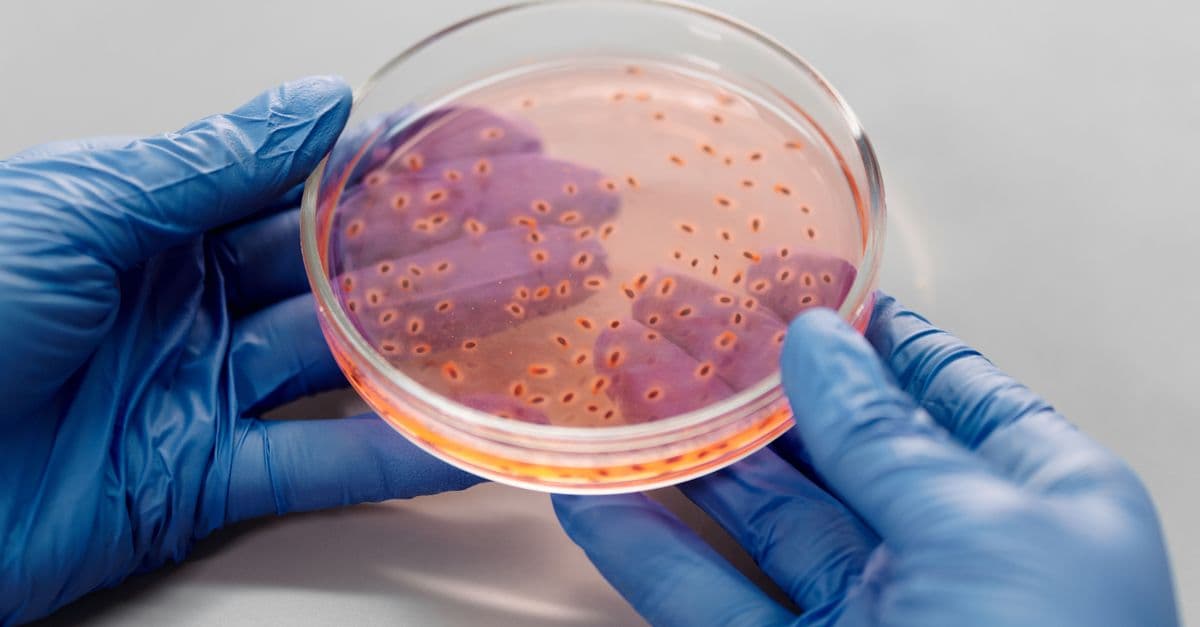
Photo: Vladimir Srajber / Pexels
Spontaneous generation — the idea that living organisms could arise directly from non-living matter — was a mainstream scientific belief until 1864, when Louis Pasteur boiled broth in a curved-neck flask and left it sitting on a shelf in Paris for years without it spoiling. The flask's S-shaped neck let air flow freely in and out while trapping dust and airborne microbes in its curve before they could reach the liquid. That one piece of glassware settled a debate that had run, in various forms, for over two thousand years, and it did more than end an argument: it gave germ theory its first unimpeachable experimental proof.
The centuries-old question the flask was built to answer
For most of recorded history, people believed that life could spring from lifeless material under the right conditions. Maggots seemed to appear from rotting meat. Mice seemed to emerge from piles of grain and rags. Microscopic organisms bloomed in broth left standing in the open air. Since nobody could see the mechanism by which these things happened, spontaneous generation — sometimes called abiogenesis in its older sense, though modern biologists reserve that term for the origin of the first life on Earth billions of years ago — was the simplest available explanation.
The first serious dent in that belief came from the Italian physician Francesco Redi in 1668. Redi covered jars of meat with fine gauze and showed that maggots never appeared unless flies could physically land on the meat and lay eggs. It was an elegant, controlled result, and it convinced many naturalists that visible organisms like flies and maggots did not spontaneously arise. But Redi's experiment left an obvious escape hatch for defenders of spontaneous generation: microorganisms. The microscope, invented in the late 1600s by Antonie van Leeuwenhoek, had revealed an entire invisible world of single-celled life, and it was easy to argue that whatever rule applied to flies did not apply to organisms too small to see.
By the mid-1700s, the debate had moved to broths and infusions. The English clergyman John Needham boiled mutton broth, sealed it, and reported that microorganisms appeared anyway — evidence, he argued, for spontaneous generation even at the microbial level. The Italian priest and physiologist Lazzaro Spallanzani repeated similar experiments with more rigorous sealing and longer boiling times and got the opposite result: properly sealed and sufficiently heated broth stayed sterile. Needham's defenders had a ready objection to Spallanzani's results, though. They argued that boiling for a long time in a sealed container destroyed a hypothetical "vital force" in the air itself, a force they claimed was necessary for spontaneous generation to occur. Sealing the flask, in other words, was cheating — it deprived the broth of something it needed.
That objection is what made the problem so stubborn. Any experiment that sealed a flask airtight could be dismissed as having also sealed out the "vital force." Any experiment that left a flask open to normal air always grew contaminated, which looked like evidence for spontaneous generation even when the real cause was airborne microbes landing in the broth from outside. The debate needed an experimental design that let ordinary air reach the liquid — satisfying the vitalist objection — while still physically preventing external organisms from getting in. That is precisely the problem the swan-neck flask was built to solve, and it is why the design itself, not just the result, is the part worth understanding in detail below.
Pasteur's experimental design: the flask that let air in but kept life out
By 1859, Louis Pasteur — then a chemist at the University of Strasbourg and later at the École Normale Supérieure in Paris, best known at the time for his earlier work on the chirality of tartaric acid crystals — had already spent several years studying fermentation. He had shown that the souring of milk, the fermentation of wine, and other processes long attributed to spontaneous chemical reactions were in fact caused by living microorganisms. Spontaneous generation was, to Pasteur, a related and equally testable question, and he set out to resolve it definitively.
His apparatus was, in engineering terms, almost absurdly simple: a glass flask with a long neck drawn out and bent into an S-curve, resembling the neck of a swan — hence the name. Pasteur filled these flasks with a nutrient broth (commonly a sugared yeast solution, similar to the media he used in his fermentation work), then boiled the liquid. Boiling served two purposes at once: it sterilized the broth by killing any microorganisms already present, and the steam it generated drove air out through the neck, so that as the flask cooled, only fresh outside air was drawn back in.
The genius of the design was in what happened to that incoming air. Because the neck curved sharply downward and then back up before reaching the flask body, any dust particles or microbial spores carried in the air settled by gravity in the low point of the curve. They never reached the broth. Air itself — gas molecules — passed through the curve freely in both directions, so the broth was in continuous contact with ordinary atmospheric air, satisfying even the vitalist objection that had undermined Spallanzani's sealed-flask experiments a century earlier. What the curve blocked was not air. It was everything riding on the air: dust, spores, bacteria, and mold particles too heavy to follow the tortuous path of the bent glass.
Pasteur set up multiple flasks side by side, boiled them, and left them undisturbed and open to the atmosphere. The broth in intact swan-neck flasks stayed clear and sterile indefinitely — some of his original flasks, still sealed in this way, remain on display at the Pasteur Institute in Paris and reportedly show no microbial growth well over a century later. Then, as the decisive control, Pasteur tilted some of the flasks so the sterile broth briefly touched the collected dust trapped in the neck's curve, or he snapped the neck off entirely, exposing the broth directly to unfiltered air. In both cases, the previously clear broth turned cloudy with microbial growth within a day or two.
The logic of the control is what made the experiment airtight, in the scientific rather than physical sense. Two flasks, identical broth, identical boiling, identical exposure to the same room air — the only variable between them was whether dust particles could physically reach the liquid. When they could, contamination followed. When they could not, it never did. That is as close to a clean, single-variable comparison as nineteenth-century laboratory science could produce, and it left the vitalist position with no remaining escape route. Pasteur presented these results to the French Academy of Sciences and, in a now-famous public lecture at the Sorbonne on April 7, 1864, laid out the experiment before an audience that reportedly included literary and cultural figures of the day, not just scientists.
What a swan-neck flask actually tested, side by side with the older theory
It helps to see the two competing predictions laid out directly against the design features that decided between them. Spontaneous generation theory and Pasteur's germ theory made different, testable predictions about what should happen to sterilized broth exposed to unfiltered air versus broth exposed only to filtered air — and the flask design isolated exactly that variable.
| Experimental Condition | Spontaneous Generation Predicted | Germ Theory Predicted | Actual Result |
|---|---|---|---|
| Broth boiled, flask sealed shut, no air contact | No growth (both theories agreed, since no air enters) | No growth | No growth — broth stayed sterile |
| Broth boiled, straight-necked flask open to air | Growth, driven by a "vital force" transmitted through the air itself | Growth, driven by airborne microbes landing in the broth | Growth appeared within days |
| Broth boiled, swan-neck flask, air flows freely, neck intact | Growth (air reaches broth, so the vital force should act) | No growth (air reaches broth, but dust and microbes are trapped in the curve) | No growth — broth stayed sterile for years |
| Broth boiled, swan-neck flask, then neck deliberately broken or tilted to touch trapped dust | Irrelevant to the theory (breaking the neck changes nothing meaningful) | Growth (microbes in the trapped dust now reach the broth) | Growth appeared within a day or two |
The swan-neck design isolated a single variable — physical access of dust and microbes to the broth, independent of air exposure — and the results tracked germ theory's prediction in every condition, not spontaneous generation's.
The third row of that table is the whole experiment in miniature. Spontaneous generation theory had no coherent account of why a flask fully open to air, via a curved path, should behave differently from a flask open to air via a straight path. If a vital force in the air were responsible for generating life, geometry should not matter. Germ theory, by contrast, predicted exactly the result Pasteur observed, because it located the cause of contamination in physical particles that obey gravity and can be trapped by a bend in a tube. The experiment did not just fail to support spontaneous generation. It actively contradicted a specific, previously unfalsified prediction the theory had made.
How does the curved neck actually block microbes without blocking air?
Air molecules are small enough and light enough to diffuse through the bends of the neck against gravity, driven by ordinary air currents and pressure equalization. Dust particles, mold spores, and bacterial cells are orders of magnitude larger and heavier relative to the air around them, so they settle out of the airstream at the low point of the curve rather than being carried the full distance to the broth, in the same way heavier debris settles at the bottom of a bend in a drainpipe while water and air continue past.
Why this settled a two-thousand-year argument instead of just adding one more data point
Earlier experiments on both sides of the spontaneous generation debate had all shared the same weakness: whichever result you got, you could argue the setup itself explained the outcome rather than the underlying biology. Sealed flasks that stayed sterile could be dismissed as starved of vital air. Open flasks that grew contaminated could be dismissed as proof that life needed only air and nutrients, no external "seed." Pasteur's swan-neck design closed off both objections simultaneously, because it delivered ordinary, unmodified air to the broth continuously while still physically preventing the one thing germ theory said actually mattered: solid particles carrying living organisms.
That is also why the experiment held up so well against a formidable opponent. The French naturalist Félix Archimède Pouchet, a respected scientist and director of the natural history museum in Rouen, published his own broth experiments in the early 1860s claiming to have produced microbial life in sterilized hay infusions under conditions he insisted excluded outside contamination. The French Academy of Sciences convened a formal commission to adjudicate the dispute between Pasteur and Pouchet. Pasteur's swan-neck flasks, along with a parallel series of experiments he ran using sterile air collected from different altitudes and locations (he famously carried sealed flasks up to the Mer de Glace glacier in the Alps, reasoning that mountain air would carry far fewer dust particles than city air, and found that flasks opened there stayed sterile far more often than flasks opened on the streets of Paris), gave the commission a reproducible, mechanistically explained result. Pouchet's experiments, by contrast, turned out to have plausible sources of contamination in his own technique that he had not adequately controlled for. The commission ruled in Pasteur's favor.
The Alpine air experiments are worth pausing on, because they show Pasteur reasoning like a modern epidemiologist decades before that vocabulary existed. If germ theory was correct, the rate of contamination in identical open flasks should track the concentration of airborne particles in the environment where they were opened, not some uniform property of "air" as an abstract substance. Dense, dusty city air should contaminate more flasks than thin, clean mountain air. That is exactly the gradient Pasteur found, and it is a prediction spontaneous generation theory had no mechanism to explain at all. A theory that only explains results after the fact is much weaker than one that predicts a specific, quantitative pattern in advance and gets it right.
Did Pasteur invent the swan-neck flask himself?
The specific curved-neck design used in the 1859–1864 experiments is credited to Pasteur, though he built on decades of prior sterilization and sealed-flask experiments by Spallanzani and others. Pasteur's innovation was not sterilization itself, which earlier researchers had already achieved with sealed flasks — it was figuring out how to keep a flask open to ordinary air while still mechanically excluding particles, which neutralized the vitalist objection that had protected spontaneous generation for a century.
From a broth flask to modern medicine: the direct line to pasteurization and germ theory
The swan-neck flask experiments did not stay confined to a philosophical debate about the origin of microscopic life. They were the experimental proof underlying the broader claim Pasteur had already been building toward in his fermentation research: that microorganisms are everywhere in the environment, that they are responsible for spoilage and decay, and that controlling their access to a substance controls whether that substance spoils. That claim translated almost immediately into practical technology.
Working through the 1860s on complaints from French wine and beer producers about unpredictable spoilage, Pasteur applied the same logic that explained his flasks to the problem of preserving beverages: heat a liquid enough to kill the spoilage organisms already inside it, then limit its exposure to new contamination, and it will keep far longer. The technique that resulted, now called pasteurization, is applied globally to milk, juice, and countless other perishable foods, and it remains one of the most direct translations of a laboratory result into a technology that touches nearly everyone's daily life. The full arc of that career, from the tartaric acid crystals of his twenties to the vaccine work of his final decades, is covered in more depth in the Louis Pasteur biography.
The same underlying insight — that specific, identifiable microorganisms, not vague environmental forces, cause specific outcomes — is what makes germ theory of disease possible at all. If life could spontaneously generate from non-living matter, there would be no reliable, traceable chain of transmission for scientists to interrupt with sanitation, sterilization, or antisepsis. Once Pasteur (and, working in parallel in Germany, Robert Koch) established that specific microbes cause specific effects and that those microbes always come from prior microbes rather than springing into existence locally, disease prevention became a tractable engineering problem rather than a matter of managing invisible, unfalsifiable "miasmas." That reframing underwrites the modern practice of vaccination described in how the immune system works, which depends entirely on the idea that a specific pathogen, once identified, can be targeted and trained against.
It is worth noting the limits of the experiment as well, in the interest of getting the history right rather than tidy. The swan-neck flask disproved spontaneous generation as an explanation for the microbial contamination of broth under laboratory conditions available in the 1860s. It did not, and was never designed to, address the separate question of how the very first living organisms arose from non-living chemistry on early Earth billions of years ago — a distinct scientific problem that modern researchers investigate through prebiotic chemistry experiments like the one described in the Miller-Urey experiment, which tested whether the simple gases believed to have made up Earth's early atmosphere could spontaneously form amino acids under conditions resembling lightning strikes over a primordial ocean. Pasteur's result rules out life springing fully formed from sterile broth on a laboratory bench today. It says nothing directly about the chemistry of a very different planet four billion years ago, and Pasteur himself did not claim otherwise.
What people still get wrong about the experiment
A common misconception is that Pasteur "proved germs exist," as if microorganisms were unknown before 1864. They were not. Van Leeuwenhoek had observed and described bacteria and other microorganisms under his handmade microscopes as early as the 1670s, nearly two centuries earlier. What Pasteur proved was not that microbes exist, but where they come from: not from spontaneous generation inside the broth itself, but from prior living microbes carried in on dust and settling out of the air. That distinction is the entire point of the experiment, and collapsing it into "Pasteur discovered germs" erases the actual scientific contribution.
A second common error is treating the swan-neck flask as a single, one-off demonstration rather than a systematic experimental campaign. Pasteur ran the boiled-broth comparison across dozens of flasks, varied the broth type, varied the location where flasks were opened (Paris streets, the Paris Observatory roof, rural locations, and the Alpine glacier expedition), and built in the broken-neck control specifically to rule out alternative explanations for why intact flasks stayed sterile. The strength of the result comes from that accumulated, cross-checked pattern, not from any single flask.
A third, more subtle misunderstanding is assuming the scientific community accepted Pasteur's conclusion immediately and universally once the results were in. Pouchet and other defenders of spontaneous generation did not simply concede after the 1864 Sorbonne lecture. The Academy of Sciences commission's ruling in Pasteur's favor was contested by Pouchet's supporters for years afterward, and pockets of resistance to germ theory persisted in some corners of European science and medicine into the 1870s and beyond, particularly among physicians slow to adopt antiseptic surgical practice even after the underlying microbiology was well established. Decisive experiments rarely end debates instantly. They shift the burden of proof, and the shift takes time to propagate through an entire scientific and medical establishment.
The takeaway
The swan-neck flask worked because it isolated exactly one variable — physical access of airborne particles to a sterile liquid — while leaving every other factor, including ordinary air exposure, unchanged between the test and control conditions. That single design choice let Pasteur close off a two-century-old escape route for defenders of spontaneous generation and replace it with a mechanistic, quantitatively verifiable explanation: microorganisms come from other microorganisms, not from lifeless broth. The experiment's real legacy is not the specific glassware but the reasoning behind it, since the same logic — trace the mechanism, control for every plausible alternative explanation, and design the apparatus so the competing theories predict genuinely different outcomes — underwrites pasteurization, antiseptic medicine, and the entire practice of tracing infectious disease to a specific, identifiable cause.
FAQ
Q: What did the swan-neck flask experiment prove? A: It proved that microbial growth in sterilized broth comes from airborne dust and microorganisms landing in the liquid, not from spontaneous generation inside the broth itself. Broth stayed sterile indefinitely as long as the curved neck physically blocked dust and microbes from reaching it, even though ordinary air still flowed through freely.
Q: Why didn't the curved neck also block air? A: Air is made of small, light gas molecules that diffuse freely through the bends of the tube in both directions. Dust particles and microbial spores are much larger and heavier relative to the airstream, so gravity pulls them out of suspension at the low point of the curve before they can travel the rest of the way to the broth.
Q: When exactly did Pasteur conduct these experiments? A: Pasteur's key swan-neck flask work took place between 1859 and 1864, building on his earlier 1850s research into fermentation. He presented the results publicly in a lecture at the Sorbonne on April 7, 1864, after the French Academy of Sciences had reviewed the evidence in his dispute with fellow scientist Félix Pouchet.
Q: Did this experiment end belief in spontaneous generation immediately? A: Not instantly. Pouchet and other defenders continued to contest the results for years, and some resistance persisted into the 1870s. The Academy of Sciences commission ruled in Pasteur's favor, but full acceptance across European science and medicine took time, as it typically does even after a decisive result.
Q: How does the swan-neck flask experiment connect to pasteurization? A: Both rest on the same underlying insight: microorganisms from the environment, not spontaneous processes, cause spoilage. Pasteur applied that principle directly to wine and beer souring in the 1860s, developing the heat treatment now called pasteurization to kill spoilage organisms already present in a liquid.
Q: Does the swan-neck flask experiment explain how the first life on Earth began? A: No. It disproved spontaneous generation as an explanation for microbial contamination under nineteenth-century laboratory conditions. It does not address how the first living cells arose from non-living chemistry billions of years ago, a separate question studied through prebiotic chemistry experiments like the Miller-Urey experiment.
Read next:
Follow new articles
Add SciHub101 to your feed reader to see new science and technology stories.
About the Author
SciHub101 is an independent science and technology publication founded and edited by Buğra Sözeri, a software engineer and app developer based in Türkiye. AI tools assist with drafting and research. Source documentation in the existing archive is uneven, and articles are being reviewed and corrected. The Editorial Team byline identifies editorial responsibility; it does not certify specialist or independent human review. Where we compare products, anything built by our own team is labelled as such — see the editorial guidelines and About page for how corrections and disclosures work.
Related Articles
Louis Pasteur: Germ Theory, Vaccines, and the Falsified Notebooks — SciHub101
Louis Pasteur founded germ theory, developed the rabies vaccine, and invented pasteurization. His biography, verified quirks, and the 1995 discovery about his lab notebooks.
Pasteur's Swan-Neck Flask: Ending Spontaneous Generation
In 1859, Louis Pasteur designed a flask whose curved neck let air in but kept microbes out. The broth stayed sterile until the neck was broken. Here is the full experiment.
Pasteurization: How Heating Milk Changed the History of Childhood Death — SciHub101
Louis Pasteur invented pasteurization in 1864 to save wine. It took another 50 years to reach milk—and the delay cost hundreds of thousands of children their lives.