The Miller-Urey Experiment: Did a Flask Crack the Origin of Life?
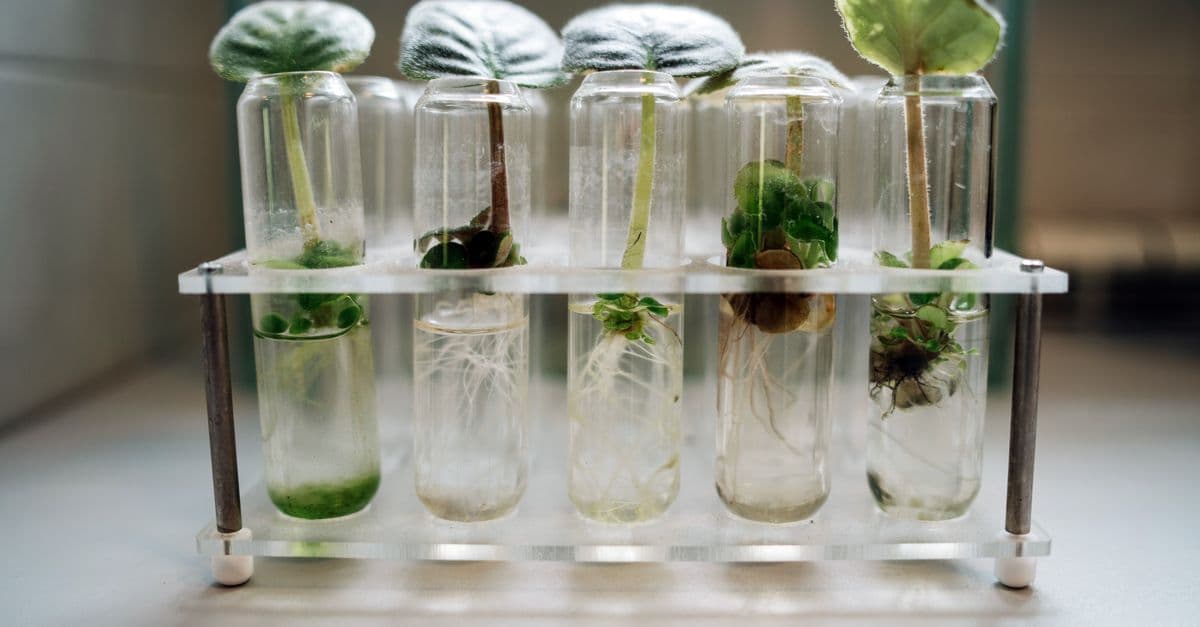
Photo: Mikhail Nilov / Pexels
In the winter of 1952–1953, a 23-year-old graduate student named Stanley Miller built a glass apparatus, filled it with four gases, fired electrical sparks through it for a week, and produced the chemical building blocks of proteins from scratch. The experiment was the first laboratory demonstration that the organic molecules required for life could form spontaneously from inorganic ingredients. It became one of the most discussed experiments of the twentieth century — and one of the most persistently misunderstood. Here is what actually happened, why scientists still argue about it, and what the 2008 reanalysis of Miller's own sealed vials revealed.
The Intellectual Background — Oparin, Haldane, and the Primordial Soup
Before Miller sat down at a laboratory bench, the theoretical groundwork had been laid by two scientists working independently on opposite sides of the Cold War divide.
Alexander Oparin, a Soviet biochemist, published The Origin of Life in 1924, arguing that the early Earth had a chemically reducing atmosphere — one rich in hydrogen, methane, and ammonia — and that complex organic molecules could form spontaneously under those conditions through a gradual process of chemical evolution.
J. B. S. Haldane, the British geneticist and polymath, reached similar conclusions in 1929, proposing that the primordial ocean might have been a "hot dilute soup" of organic chemicals from which life gradually organized.
Source: Oparin, A. I. (1924), Proiskhozhdenie Zhizni (The Origin of Life), Moscow — original Russian publication; English translation 1938 (Macmillan).
Source: Haldane, J. B. S. (1929), "The origin of life," The Rationalist Annual — the "primordial soup" hypothesis in accessible form.
Both hypotheses were entirely theoretical. Neither Oparin nor Haldane had tested whether the proposed chemistry actually worked. That gap between theory and experiment was what Stanley Miller closed.
The Setup — What Miller and Urey Actually Built
Harold Urey was already a Nobel laureate in 1952 — he had won the prize in 1934 for discovering deuterium. He gave a lecture at the University of Chicago arguing that Oparin's hypothesis deserved experimental testing, and that the early Earth's atmosphere was almost certainly reducing. Miller, then a first-year graduate student, approached him and asked to test it. Urey initially discouraged him, saying the project might fail and cost Miller a year of his doctoral work. Miller persisted. Urey relented.
The apparatus Miller built was elegant in its simplicity — a closed system of glass flasks connected by tubing, designed to cycle gases through a simulated environment indefinitely.
Source: Miller, S. L. (1953), "A production of amino acids under possible primitive earth conditions," Science, 117(3046), 528–529 — the original paper, published May 15, 1953.
The components of the system:
The large flask (at the bottom of the circuit) held 500 milliliters of liquid water, heated to produce steam. This simulated the primordial ocean.
The atmospheric gases injected into the system were methane (CH₄), ammonia (NH₃), and hydrogen (H₂) — chosen to represent Oparin's hypothesized reducing atmosphere — along with the water vapor from the boiling flask.
The spark chamber (a smaller flask at the top of the circuit) contained two tungsten electrodes through which continuous electrical discharges were fired at 60,000 volts. This simulated lightning in the primordial atmosphere.
The condenser cooled the gases and returned them to the liquid water flask, cycling the products back into the system continuously.
The entire apparatus was sealed. Miller ran it continuously for one week, 168 hours, without stopping.
| Component | Function | Real-World Analog |
|---|---|---|
| Lower flask (water) | Liquid reservoir, heated | Primordial ocean |
| Atmospheric gases (CH₄, NH₃, H₂) | Gas phase reactants | Early Earth atmosphere |
| Spark electrodes (60,000 V) | Energy source for reactions | Lightning |
| Condenser | Returns products to liquid phase | Rain |
| Closed-loop circulation | Cycles products continuously | Hydrological cycle |
Within one day, the water in the lower flask had turned pink. By the end of the week, it was dark red and turbid — visibly full of organic compounds. Miller analyzed the liquid by paper chromatography, the state-of-the-art technique of 1953.
Source: Miller, S. L. (1953), Science 117, 528–529 — results: five amino acids identified by paper chromatography.
His published paper reported five amino acids: glycine, alpha-alanine, beta-alanine, aspartic acid, and alpha-amino-n-butyric acid. He also detected urea, lactic acid, and other organic molecules. The yield was not trivial: roughly 2% of the carbon in the system had been converted to amino acids. The experiment had done in one week what had previously been thought to require geological time scales.
Why This Mattered — The Scale of the Result
To appreciate why the scientific community responded with such intensity, consider what Miller had done at a philosophical level.
Before 1953, there was a widespread intuition that the chemistry of life — the molecules that make proteins, metabolize nutrients, transmit heredity — required a living cell to produce them. Vitalism in its strict form had been scientifically dead since Friedrich Wöhler synthesized urea from inorganic compounds in 1828, but a weaker version persisted: the assumption that the complex organic chemistry of biology was so sophisticated that it could not arise without preexisting biological machinery.
Miller's experiment challenged this directly. Amino acids — the monomers of proteins, the molecular units that carry out essentially every catalytic function in living cells — had been produced from gases and electricity and water in a week. No enzymes, no DNA, no cell. Just chemistry.
Source: Bada, J. L. & Lazcano, A. (2003), "Prebiotic soup — revisiting the Miller experiment," Science, 300(5620), 745–746 — fiftieth anniversary assessment of the original experiment's significance.
Urey, who did not appear as an author on the original paper despite being Miller's supervisor — he insisted Miller deserved sole credit to help launch his career — described the result as one of the most important experiments in the history of science.
The Results — The 2008 Reanalysis Changes the Scorecard
Miller died in 2007. After his death, his former student Jeffrey Bada at the Scripps Institution of Oceanography discovered 11 sealed glass vials in Miller's stored laboratory materials. These vials contained samples from a variant experiment that Miller had never published — one in which the apparatus included a nozzle that injected steam as a jet, simulating the conditions around a volcanic eruption rather than a simple boiling ocean.
The 1950s paper chromatography technique was limited in sensitivity. By 2008, researchers had access to liquid chromatography coupled with mass spectrometry, which could detect and identify organic molecules at concentrations many orders of magnitude lower than 1953 technology could resolve.
Bada's team reanalyzed both the published experiment's archived samples and the newly discovered volcanic-apparatus vials.
Source: Johnson, A. P., Cleaves, H. J., Dworkin, J. P., Glavin, D. P., Lazcano, A. & Bada, J. L. (2008), "The Miller volcanic spark discharge experiment," Science, 322(5900), 404 — the reanalysis paper published October 17, 2008.
The results were substantially richer than the original paper had shown:
- The original published experiment's archived samples contained 14 amino acids and five amines — compared to the five amino acids reported in 1953.
- The unpublished volcanic-apparatus vials contained 22 amino acids and five amines.
The difference between 1953 and 2008 was almost entirely analytical: modern mass spectrometry could see compounds that paper chromatography missed entirely. Miller had produced far more chemical diversity than he knew.
Source: ScienceDaily (2008), "'Lost' Miller-Urey Experiment Created More Of Life's Building Blocks," October 16, 2008 — summary of the Johnson et al. 2008 findings.
The volcanic-apparatus result was also interesting because it suggested that environments with steam jets — volcanic fumaroles, hydrothermal vents on land — might be more chemically productive than simple ocean-atmosphere interfaces. This connected Miller-Urey to contemporary research on submarine hydrothermal vents as potential sites for the origin of life.
The Timeline
| Year | Event |
|---|---|
| 1924 | Oparin publishes reducing-atmosphere hypothesis for origin of life |
| 1929 | Haldane proposes "primordial soup" concept |
| 1934 | Harold Urey wins Nobel Prize in Chemistry for discovery of deuterium |
| 1952–53 | Stanley Miller runs the first experiment at University of Chicago |
| May 15, 1953 | Miller's paper published in Science — five amino acids reported |
| 1961 | Juan Oró shows HCN + NH₃ can produce adenine (a DNA/RNA base) under similar conditions |
| 1969 | Murchison meteorite falls in Australia; found to contain dozens of amino acids matching Miller's list |
| 1976 | Viking landers on Mars find no organic molecules in surface soil — raises questions about prebiotic chemistry on other worlds |
| 2007 | Stanley Miller dies |
| 2008 | Bada team reanalyzes Miller's sealed vials; finds 22 amino acids using modern mass spectrometry |
| 2010 | Studies suggest Hadean Earth's atmosphere may have been less reducing than Miller assumed |
| 2021 | Atmospheric modeling shows iron-rich impactors could transiently restore reducing conditions on early Earth |
The Controversy — The Atmosphere Problem
The most substantive scientific challenge to the Miller-Urey experiment has nothing to do with the chemistry inside the flask. It concerns what Miller put into the flask in the first place.
Miller and Urey assumed a strongly reducing atmosphere: methane, ammonia, hydrogen. This was the Oparin-Haldane picture. But atmospheric scientists studying the early Earth's composition — particularly after improved understanding of volcanic outgassing and photochemical processes — have argued that the Hadean Earth's atmosphere was probably not that reducing.
Current models suggest the early atmosphere was dominated by carbon dioxide (CO₂), nitrogen (N₂), and water vapor, with relatively little hydrogen, almost no methane, and ammonia unstable under UV radiation from the young Sun. A CO₂-N₂-H₂O atmosphere is much less chemically reactive in Miller-type experiments — it produces far fewer and less diverse organic molecules.
Source: Kasting, J. F. (1993), "Earth's early atmosphere," Science, 259(5097), 920–926 — detailed treatment of Hadean atmospheric composition based on volcanic outgassing models.
This is a genuine problem. If Miller's assumed atmosphere was unrealistic, then his experiment, however elegant, may not describe what actually happened on early Earth.
Several responses to this challenge have been developed:
Local reducing environments. Even if the bulk atmosphere was oxidizing (or neutral), certain microenvironments — volcanic fumaroles, deep-sea hydrothermal vents, impact-generated reducing plumes — could have been locally reducing, allowing Miller-type chemistry to proceed in pockets rather than globally.
Source: Cleaves, H. J. et al. (2008), "A reassessment of prebiotic organic synthesis in neutral planetary atmospheres," Origins of Life and Evolution of Biospheres, 38, 105–115.
Impact-induced transient reduction. A 2021 atmospheric modeling study showed that large iron-rich asteroid impacts could transiently convert a CO₂-dominated atmosphere into a highly reducing one (H₂, CH₄, NH₃) for periods lasting thousands to millions of years. Between four and seven such impactors are estimated to have reached the Hadean Earth.
Source: Kuwahara, H. et al. (2021), referenced in arxiv preprint 2209.09257 — modeling of impact-induced transient reducing atmospheres on Hadean Earth.
Submarine hydrothermal vents. The discovery of alkaline hydrothermal vents (such as the Lost City field in the Atlantic) has generated an alternative hypothesis: life may have originated not at the ocean-atmosphere interface but at submarine vent systems, where hydrogen-rich fluid meets carbon dioxide-rich ocean water. This chemistry is very different from Miller's, and the amino acids produced are different.
Source: Martin, W. & Russell, M. J. (2007), "On the origin of biochemistry at an alkaline hydrothermal vent," Philosophical Transactions of the Royal Society B, 362, 1887–1926.
Replication and Parallel Evidence
The Miller-Urey experiment has been replicated and extended in dozens of variations over seventy years.
Radiation as energy source. Substituting ultraviolet light for electrical sparks — more realistic for the ocean surface exposed to solar UV — also produces amino acids, though in lower quantities than spark discharge.
Different gas mixtures. Experiments with CO₂ and N₂ atmospheres (more geologically realistic) do produce amino acids, but yields are much lower and the range of products is narrower than in Miller's strongly reducing mixture.
The Murchison meteorite. When the Murchison carbonaceous chondrite meteorite fell in Australia in 1969, analysis found more than 70 amino acids, including all of the ones Miller produced, plus many others. Crucially, the amino acids were found in roughly equal proportions of left-handed and right-handed forms — a pattern characteristic of abiotic chemistry, distinct from biology's exclusive preference for left-handed amino acids. This confirmed that Miller-type chemistry happens in space, without any planetary environment at all.
Source: Cronin, J. R. & Pizzarello, S. (1997), "Enantiomeric excesses in meteoritic amino acids," Science, 275(5302), 951–955 — amino acid analysis of carbonaceous chondrites.
Comets. The European Space Agency's Rosetta mission detected glycine (the simplest amino acid) and phosphorus in the coma of Comet 67P/Churyumov-Gerasimenko in 2016, confirming that prebiotic organic chemistry is not limited to Earth.
Source: Altwegg, K. et al. (2016), "Prebiotic chemicals — amino acid and phosphorus — in the coma of comet 67P/Churyumov-Gerasimenko," Science Advances, 2(5), e1600285.
Where It Stands Today — What the Experiment Did and Did Not Solve
The Miller-Urey experiment solved one problem while revealing the depth of several others.
What it solved: It demonstrated conclusively that amino acids can form from inorganic precursors under plausible prebiotic energy conditions. The experiment removed the intuitive barrier between inorganic chemistry and the molecules of life, showing that the gap is not unbridgeable.
What it left open:
Chirality. Biological proteins use only left-handed amino acids. Miller's experiment, like all abiotic chemistry, produced equal mixtures of left-handed and right-handed forms. How biology selected exclusively for one handedness remains one of the deepest unsolved problems in origin-of-life research.
Polymerization. Amino acids are monomers. Proteins are polymers — chains of hundreds to thousands of amino acids linked by peptide bonds. Forming those bonds in water is thermodynamically unfavorable: water drives the reaction backward. How the first peptides formed in aqueous environments is unresolved.
Source: Sutherland, J. D. (2017), "Studies on the origin of life — the end of the beginning," Nature Reviews Chemistry, 1, 0012.
RNA and the information problem. Even if you have amino acids, you still need a way to copy information. The dominant current hypothesis — the RNA world, in which RNA molecules both carried genetic information and catalyzed chemical reactions before DNA and proteins existed — faces its own synthesis challenges. Ribonucleotides (the building blocks of RNA) are considerably harder to make from scratch than amino acids.
Concentration. Amino acids produced in a dilute primordial ocean would be too dilute to react with each other. Some concentrating mechanism — evaporation at tidal flats, adsorption onto mineral surfaces, freeze-thaw cycling — is required. Several are plausible; none has been proven dominant.
What People Get Wrong About Miller-Urey
"Miller-Urey created life." It created amino acids — one class of the molecules needed for life. Life requires information storage (nucleic acids), catalysis (enzymes), and membrane enclosure (lipid bilayers) operating together. Amino acids are necessary but far from sufficient.
"The experiment has been disproven." The chemistry inside the flask is solid — it has been replicated many times. What remains genuinely uncertain is whether the specific gas mixture Miller used reflects early Earth conditions. The experiment's mechanism works; the relevance of the original parameters to actual Earth history is debated.
"The atmosphere problem kills the experiment." Alternative scenarios — local reducing environments, impact-induced transient atmospheres, submarine vents — preserve chemically productive environments even if the bulk Hadean atmosphere was not reducing. The Miller-Urey result is relevant to at least some real early Earth environments.
"Miller got only five amino acids." The 2008 reanalysis of his sealed vials found 22 amino acids using modern mass spectrometry. The original paper understated the results by a large margin — not due to error, but due to the analytical limitations of 1953 technology.
FAQs
Q: What did the Miller-Urey experiment produce? A: The original 1953 paper reported five amino acids. A 2008 reanalysis of Miller's sealed vials using modern mass spectrometry found 22 amino acids and five amines, demonstrating that the original analytical technique significantly undercounted the products.
Q: What gases did Miller and Urey use to simulate the early Earth? A: Methane (CH₄), ammonia (NH₃), hydrogen (H₂), and water vapor — a strongly reducing mixture based on the Oparin-Haldane hypothesis for the early Earth's atmosphere. This choice is now debated; many scientists believe the actual Hadean atmosphere had more CO₂ and N₂ and less hydrogen.
Q: Why is the Miller-Urey experiment controversial? A: The core controversy is about the relevance of the assumed atmosphere. If the early Earth's atmosphere was not strongly reducing (as modern models suggest), then Miller's gas mixture may not accurately represent real Hadean conditions. However, local reducing environments and impact-generated transient atmospheres may have produced similar chemistry on real early Earth.
Q: Did the Miller-Urey experiment prove that life can arise spontaneously? A: No. It demonstrated that amino acids — one class of molecules needed for life — can form from inorganic precursors under plausible prebiotic conditions. Producing amino acids is far from producing life, which requires additional unsolved steps: polymerization, information storage, membrane formation, and their coordination.
Q: What did the Murchison meteorite have to do with Miller-Urey? A: The Murchison carbonaceous chondrite meteorite (fallen in Australia in 1969) contained more than 70 amino acids, including all of those Miller produced, in roughly equal left-right mixtures characteristic of abiotic chemistry. This confirmed that Miller-type chemistry occurs in space without any planetary environment.
Q: Who actually ran the experiment — Miller or Urey? A: Stanley Miller built and ran the apparatus as a graduate student under Harold Urey's supervision. Urey deliberately excluded himself from the authorship of the 1953 paper to ensure Miller received full credit and career benefit. Urey had already won his Nobel Prize; Miller had not.
The Takeaway
The Miller-Urey experiment answered a question that had seemed almost metaphysical — can life's molecules arise without life? — with a practical, reproducible yes. The 2008 reanalysis showed the result was even richer than Miller realized: 22 amino acids in his sealed vials, invisible to 1953 technology. Whether the specific atmosphere he chose reflects early Earth remains genuinely uncertain, and that uncertainty is where origin-of-life research is doing its most productive work today. The experiment did not solve the origin of life. It showed that the problem is smaller than it once appeared.
Read next:
Weekly digest
Stay ahead of the curve
Get the best science, AI, and tech stories delivered to your inbox every week. No spam — unsubscribe any time.
About the Author
SciHub101 is an independent science and technology publication founded and edited by Buğra Sözeri, a software engineer and app developer based in Türkiye. Articles are drafted against peer-reviewed literature and primary sources, fact-checked, and edited by a human before publication. Where we compare products, anything built by our own team is labelled as such — see the editorial guidelines and About page for how corrections and disclosures work.
Related Articles
The Millikan Oil Drop Experiment: Weighing the Electron
Robert Millikan suspended tiny oil drops between charged plates to measure the electron's charge. Here is exactly how he did it, what he found, and the controversy that followed.

The Milgram Experiment: Obedience, Shock, and What It Really Showed
Stanley Milgram's 1961 shock experiment found 65% of people obeyed authority to the maximum. Decades of scrutiny reveal a more complex and contested picture.
Origin of Life: How Life Began on Earth
How did chemistry become biology? Explore the science behind life's origin — Miller-Urey, RNA world, hydrothermal vents, and what we still don't know.
Miller-Urey Experiment: Creating Life's Building Blocks from Nothing
In 1952, Stanley Miller and Harold Urey simulated early Earth conditions and created amino acids from simple chemicals. This landmark experiment suggested life could emerge from non-living matter.
What Is Astrochemistry? The Molecules of Space and Life's Cosmic Origins
Astrochemistry studies the formation and distribution of molecules throughout the universe — from simple H₂ to complex organic molecules including sugars, amino acid precursors, and alcohols found in interstellar space. Over 200 molecules have been detected in molecular clouds, including glycine (the simplest amino acid, controversial) and ribose (a sugar building block of RNA). The chemistry of life may have cosmic origins.
How Did Life Actually Start on Earth?
Life appeared on Earth almost as soon as the planet cooled enough to allow it. The exact mechanism — abiogenesis — remains one of the great open questions in science. Here's what we know and what we don't.