What Is Astrochemistry? The Molecules of Space and Life's Cosmic Origins
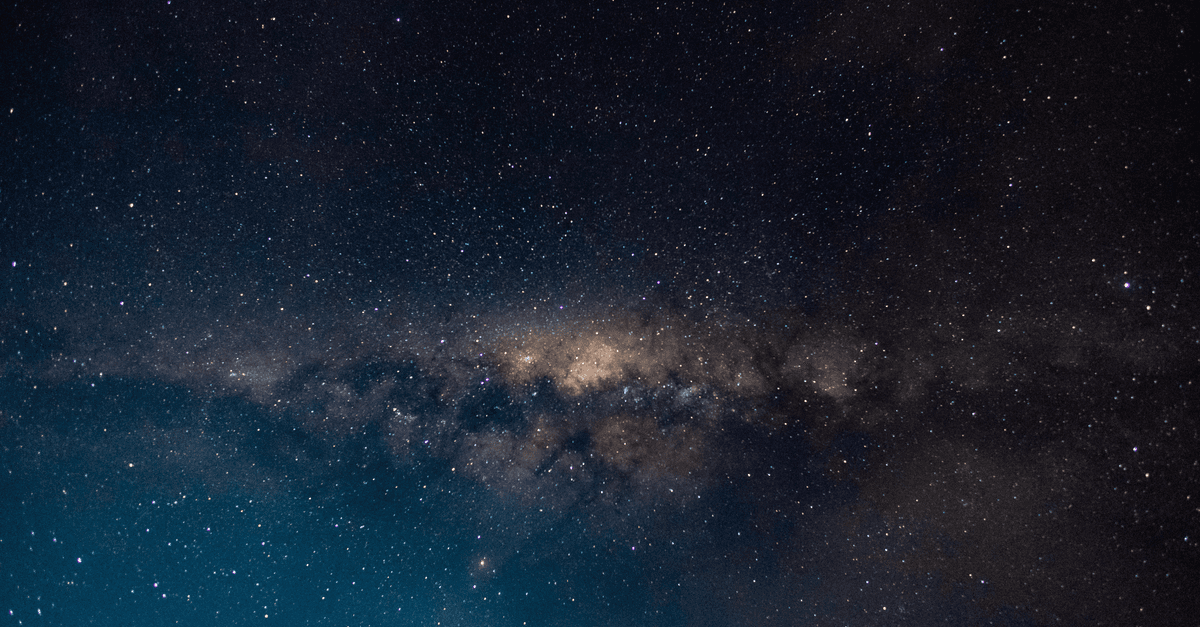
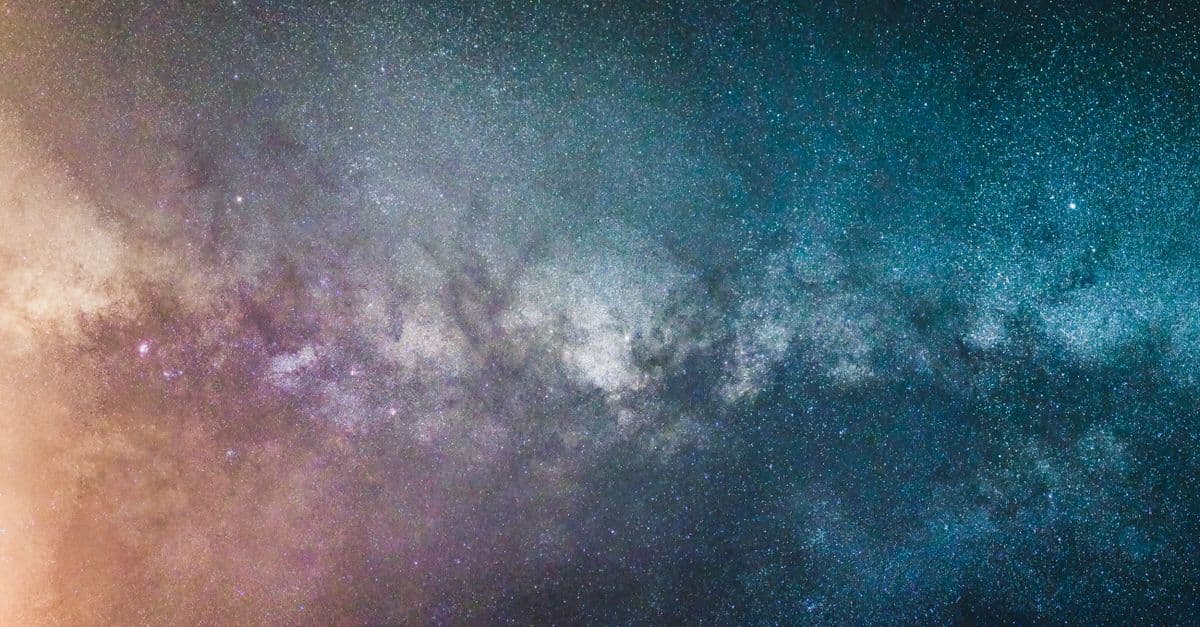
Photo: Ndumiso Mvelase / Pexels
Astrochemistry is the study of how molecules form, survive, and react in space. It sounds like a contradiction, because space is a near-perfect vacuum where atoms rarely meet. Yet radio telescopes have identified roughly 250 molecular species out there, including formaldehyde, ethanol, and a sugar-related molecule called glycolaldehyde. This article explains how those molecules form in clouds colder than liquid nitrogen, how astronomers detect them from light-years away, and what meteorites and asteroid samples reveal about the chemistry that came before life on Earth.
How did astronomers first find molecules in space?
Until the 1930s, astronomers assumed interstellar space held only atoms, because any molecule seemed too fragile to survive the harsh radiation between stars. According to the timeline in the Astrochemistry reference, Swings and Rosenfeld reported spectral features of molecules in 1937, and in 1940 McKellar and colleagues attributed unidentified lines to CH and CN. The hydroxyl radical (OH) followed in 1963.
The biggest surprise arrived in 1969, when formaldehyde (H₂CO) was detected. It was the first organic, polyatomic molecule found in interstellar space, which means a carbon-based molecule with more than two atoms. Before that, many researchers doubted that anything so complex could form in the cold, thin gas.
Since then the list has grown steadily. A community-maintained list of interstellar and circumstellar molecules currently shows 229 detected species in its main tables plus 22 deuterated forms (molecules in which hydrogen is replaced by its heavier isotope deuterium), or about 250 in all. The list counts distinct ionization states separately, and a further 16 candidates are marked unconfirmed.
How do astronomers detect molecules they cannot touch?
Every molecule rotates and vibrates, and it can only do so at certain allowed energies. When a molecule drops from one rotational energy level to a lower one, it emits a photon at a very specific frequency, in the same way that each guitar string produces its own note. Radio and millimeter-wave telescopes record these frequencies, and each molecule has a pattern that works like a fingerprint. For more on how light carries chemical information, see what is spectroscopy, and for the instruments, how radio telescopes work.
This method has a built-in bias. Rotational emission is strongest for small molecules with a lopsided distribution of electric charge, so radio surveys find those first. Molecular hydrogen (H₂), by far the most common molecule, has no such lopsidedness and is nearly invisible to radio telescopes, so astronomers track it indirectly using carbon monoxide (CO) as a stand-in. Large, symmetric molecules such as the polycyclic aromatic hydrocarbons (PAHs, flat rings of carbon and hydrogen) were first recognized by their infrared vibrations in 1984, but it took until 2021 to identify specific PAHs by their rotational lines, according to the molecule list above. Indene and two cyanonaphthalenes were among the first.
Infrared light reveals a second population: molecules frozen into ice. Dense clouds are typically 10 to 50 kelvin (about minus 263 to minus 223 degrees Celsius), cold enough that most molecules other than H₂ stick to dust grains and form icy coatings. Infrared absorption by those coatings identifies water ice, carbon monoxide ice, carbon dioxide ice, and smaller amounts of methanol and ammonia.
| Detection method | What it sees | Best for | Blind spot |
|---|---|---|---|
| Radio and millimeter rotational lines | Gas-phase molecules | Small polar molecules, carbon chains | Symmetric molecules such as H₂ |
| Infrared absorption | Ices on dust grains | Water, CO₂, CO, methanol ices | Gas-phase molecules |
| Infrared emission bands | Large aromatic molecules as a group | PAH families | Identifying individual species |
| Laboratory analysis of samples | Everything in a returned sample | Amino acids, nucleobases, sugars | Only what a spacecraft can reach |
What is the molecular inventory of space?
The census is grouped by size. The smallest are diatomic (two-atom) molecules such as H₂, CO, OH, and SiO. Next come simple polyatomic molecules such as water, ammonia, formaldehyde, methanol, and hydrogen cyanide (HCN). HCN deserves a note because on Earth it is a starting material in lab syntheses of amino acids and nucleobases, the information-carrying parts of DNA and RNA.
Longer carbon chains such as HC₃N (cyanoacetylene) show up in cold dense clouds. Then come complex organic molecules, which astronomers abbreviate COMs, defined as carbon-containing molecules with six or more atoms. They include methanol's larger relatives, such as ethanol (C₂H₅OH), dimethyl ether, methyl formate, and acetaldehyde. At the top of the size list are the fullerenes C₆₀ and C₇₀, with 60 and 70 atoms, and cyanocoronene, a PAH with 37 atoms, according to the same molecule list.
Several of these carry prebiotic significance, meaning they are building blocks or close relatives of biological molecules.
- Glycolaldehyde (HOCH₂CHO), a two-carbon sugar-related molecule, was reported toward the Sagittarius B2 cloud in 2000 and around the young binary star system IRAS 16293–2422 in 2012. It is not ribose, but it can react to form larger sugars.
- Aminoacetonitrile (NH₂CH₂CN) is a chemical cousin of glycine, the simplest amino acid.
- Glycine itself has not been confirmed in interstellar gas. A claimed radio detection in 2003 remains contested, and the molecule sits in the unconfirmed section of the species list.
- Phosphorus-bearing molecules, including PN and PO, matter because phosphorus is part of DNA, RNA, and ATP, the cell's energy currency.
Key point: Glycine, the simplest amino acid, has been found in comet material, but a claimed detection in interstellar gas in 2003 has never been independently confirmed.
How do molecules form in space?
By earthly standards, interstellar space is hostile to chemistry. Dense clouds have temperatures of roughly 10 to 50 K and densities that no laboratory vacuum matches. In the open, a molecule can wait weeks for a collision, and ultraviolet light from stars tears molecules apart. Two main mechanisms overcome these obstacles: ion-molecule reactions in the gas, and surface reactions on dust.
Ion-molecule reactions
Most gas-phase chemistry is driven by cosmic rays, fast charged particles that can penetrate even dense clouds. A cosmic ray strikes an H₂ molecule and knocks out an electron, leaving H₂⁺. That ion quickly meets another H₂ and forms H₃⁺, the most important molecular ion in dense clouds.
H₃⁺ is a powerful proton donor. It hands a proton to almost any molecule it meets, which starts chains of reactions. Ion-molecule reactions have no energy barrier, so they work even at 10 K. Think of it as a ball rolling downhill, where neutral chemistry usually has to push the ball uphill first.
Modelers track hundreds of species and thousands of reactions to predict abundances. These networks reproduce many observed molecules well, though they struggle with the largest COMs, which is a clue that another mechanism is at work.
Reactions on dust grain surfaces
Dust grains in cold clouds act as tiny reaction benches. Atoms and molecules from the gas stick to a grain and build an ice mantle. Hydrogen atoms are light and mobile, so they hop across the cold surface and attach to whatever they meet, which converts oxygen to water, and carbon monoxide through a series of steps into methanol. Quantum tunnelling (a particle passing through a barrier it classically could not cross) helps hydrogen move even at these temperatures.
Ultraviolet photons and cosmic rays then process the ice, breaking bonds and creating reactive fragments called radicals that can combine into larger molecules. When a young star warms the cloud, the ice evaporates and releases its contents into the gas, where telescopes can read them.
Laboratory work backs this up. Experiments that irradiate simple ice mixtures of water, carbon monoxide, ammonia, and methanol under cryogenic conditions produce amino acids after the ices are warmed and processed, as the reference article notes. Groups at NASA Ames and NASA Goddard have run such experiments for decades, and a European team reported ribose in irradiated ice analogues in 2016. These are laboratory simulations, not observations of real clouds, so they show what is possible rather than what happened.
What happens when a star is born inside the cloud?
A cloud collapsing to form a star warms its surroundings. In the envelope around a massive protostar, the region is called a hot core. Around a solar-type protostar it is called a hot corino. Either way, the ice mantles evaporate and the chemistry becomes visible all at once.
Hot cores produce some of the richest spectra in astronomy, with dozens of complex organic molecules visible at the same time. The Sagittarius B2 cloud near the Galactic center is the standard example, and it lies in the Milky Way's central molecular zone. Closer to the Sun, the Orion molecular cloud is a nearby target where scientists study the earliest stages of this chemistry. The broader process is described in stellar nurseries.
The Atacama Large Millimeter/submillimeter Array (ALMA), a network of radio dishes in Chile, can map where each molecule sits inside a protostellar envelope. That allows astronomers to watch chemistry change with temperature, which is how they found glycolaldehyde near IRAS 16293–2422 in 2012.
Much of this chemistry then continues into the disk of gas and dust around the new star, where planets form. How much of the original interstellar material survives intact, and how much gets reprocessed, is an active research question. What is a protoplanetary disk covers the physical setting.
What do comets reveal about early solar system chemistry?
Comets are frozen leftovers from the outer solar system, and they preserve material that has seen little heating. That makes them useful time capsules, although none is perfectly pristine. Long-period comets, which spend most of their time far from the Sun, are covered in long-period comets explained.
NASA's Stardust spacecraft flew past comet Wild 2 on January 2, 2004, and its sample capsule landed in Utah on January 15, 2006, according to NASA's mission page. It returned more than 10,000 particles larger than 1 micrometer. Analyses published in December 2006 found crystalline silicates such as olivine and pyroxene, which form at high temperatures, alongside abundant amorphous silicates and a wide range of organic compounds. The high-temperature minerals imply that some material formed near the young Sun and was carried outward. NASA announced in 2009 that glycine had been detected in the Wild 2 material.
The European Space Agency's Rosetta mission reached comet 67P/Churyumov–Gerasimenko on August 6, 2014, delivered the Philae lander on November 12, 2014, and ended on September 30, 2016, according to ESA's mission page. The results were wide-ranging.
- Rosetta detected glycine, the only amino acid found on 67P so far, along with its precursors methylamine and ethylamine.
- It found free molecular oxygen (O₂) in the coma, the first such detection in a comet. The O₂-to-water ratio did not change systematically with distance from the Sun, which suggests the oxygen was present when the comet formed.
- Philae's COSAC and Ptolemy instruments detected 16 organic compounds, four of them never before seen on a comet: acetamide, acetone, methyl isocyanate, and propionaldehyde.
- The water had about three times Earth's ratio of deuterium to hydrogen, which makes it unlikely that Earth's water came mainly from comets like 67P.
That last point is a good example of how astrochemistry produces precise, testable answers. If a comet's water has a different isotope signature from Earth's oceans, then that comet is not the main source. Other comets and asteroids may have contributed differently, and the question of Earth's water source is still being worked out.
What do meteorites and asteroid samples contain?
Carbonaceous chondrites are a class of primitive meteorites rich in carbon. The most studied is Murchison, which fell on September 28, 1969, near Murchison, Victoria, Australia. Published analyses have identified many amino acids in it, including a 2010 PNAS study by Philippe Schmitt-Kopplin and colleagues that found 70 amino acids among about 14,000 molecular compounds in one sample.
Whether such compounds came from space or from contamination was a major early question. Early reports found the amino acids in roughly equal left- and right-handed forms, which suggested a non-biological origin because terrestrial life uses almost entirely left-handed forms. In 1997, Cronin and Pizzarello reported a left-handed excess in several amino acids not used by life, which supports an extraterrestrial source for the imbalance. Carbon isotope ratios in uracil from Murchison, reported by Oba and colleagues in 2022, also indicate a non-terrestrial origin.
In 2019 Yoshihiro Furukawa and colleagues reported ribose and other five-carbon sugars in Murchison and another meteorite, Northwest Africa 801, the first evidence of such sugars in space. All the straight-chain five-carbon aldoses were found, but deoxyribose, the sugar in DNA, was not detected. That detail matters, because it fits a picture in which RNA-like chemistry had more raw material than DNA-like chemistry.
Returned asteroid samples have tested these ideas without the contamination problem of a meteorite that fell through the atmosphere and sat on the ground.
| Sample | Returned | Reported organics | Source |
|---|---|---|---|
| Comet Wild 2 (Stardust) | January 15, 2006 | Wide range of organics; glycine reported in 2009 | NASA Stardust; NASA Astrobiology on the glycine find |
| Asteroid Ryugu (Hayabusa2) | December 5, 2020 | 20 amino acids reported in 2022; uracil in 2023; all five nucleobases reported in March 2026 | Ryugu reference |
| Asteroid Bennu (OSIRIS-REx) | September 24, 2023 | 14 of 20 protein amino acids and all five nucleobases reported in January 2025, with mixed chirality | Bennu reference |
NASA notes on its Bennu page that the capsule landed on September 24, 2023, at the Utah Test and Training Range and that grains have been distributed to scientists worldwide. The Bennu amino acids came in mixed left- and right-handed forms, which argues against terrestrial contamination, since Earth life would have made only left-handed ones. The wider context for these results is covered in how asteroid samples reveal solar system history.
Did space deliver the ingredients for life?
The weak form of the panspermia idea, sometimes called molecular delivery, proposes that comets, asteroids, and meteorites brought organic molecules to the early Earth. It does not claim that living organisms traveled between worlds. The returned samples show that amino acids, nucleobases, and sugars were available in material left over from the solar system's formation, and meteorites and comets fell on the young Earth for hundreds of millions of years.
Timing gives suggestive but not conclusive support. The era of heavy bombardment, roughly 4.1 to 3.8 billion years ago, overlaps with the earliest proposed evidence of life on Earth, though the dating of both is debated. Overlap in time is not proof of a causal link.
Earth could also make its own organic molecules. In 1953, Stanley Miller, working in Harold Urey's laboratory, showed that electric sparks in a flask of water, methane, ammonia, and hydrogen produced amino acids. Whether early Earth's atmosphere actually resembled that mixture is debated, but the principle stands: simple conditions can produce biological building blocks. Hydrothermal vents and mineral surfaces are other candidate sites.
The most defensible view today is that both sources contributed to the chemical pool, in proportions nobody can measure. Delivery gives a rich supply of diverse molecules at once, and local chemistry offers continuing synthesis. The line between astrochemistry and origin-of-life chemistry is blurring, since both are chapters in one continuous chain from interstellar ice to planetary surface. For more on the biological side, see astrobiology, and for places to look elsewhere, the search for life on Europa and Enceladus.
What about Enceladus?
In 2023, hydrogen cyanide and other organics were reported in the plumes of Saturn's moon Enceladus, according to the astrochemistry reference. That matters because it shows organic chemistry is not limited to meteorites and comets, but can sit in a liquid-water environment. It does not show life, only that some of the ingredients are present.
Common misconceptions about astrochemistry
Misconception: Finding amino acids in a meteorite means life came from space. It means the ingredients came from space, not the living cell. Amino acids on their own are chemistry, and the steps from ingredients to self-copying life are unknown.
Misconception: Interstellar glycine has been found. It has not been confirmed. Glycine was found in comet Wild 2 material and on comet 67P, but the 2003 radio claim for interstellar gas remains contested.
Misconception: Space is too empty for chemistry. Density is low, but time is enormous. Clouds last millions of years, and dust grains offer surfaces that make up for scarce collisions.
Misconception: Comets brought all of Earth's water. The 67P result, with about three times Earth's deuterium ratio, argues against that specific comet as the main source. The real answer likely involves several sources.
Related reading
Atoms must exist before molecules do, and what is nucleosynthesis explains how stars forge the heavier elements. The medium in which this chemistry happens is described in what is the interstellar medium. Evolved stars also shed carbon-rich dust, as in AGB stars, and the search for life on other worlds is covered in what are exoplanets and could any of them host life.
Frequently Asked Questions
Q: What is astrochemistry in simple terms? A: It is the study of how molecules form, survive, and react in space. Astronomers use radio and infrared telescopes to identify molecules in gas clouds, and laboratories analyze meteorites, comet dust, and asteroid samples. The field links chemistry, astronomy, and the origin of life.
Q: How many molecules have been found in space? A: Roughly 250 species when deuterated forms are counted. A community list shows 229 detected species in its main tables plus 22 deuterated ones, and flags 16 more as unconfirmed. The count grows every year as telescopes improve.
Q: How can molecules form where there is almost nothing? A: Two processes dominate. In the gas, cosmic rays create ions such as H₃⁺ that react without needing any energy barrier. On cold dust grains, atoms stick to ice surfaces and react, building molecules such as methanol that gas-phase chemistry makes poorly.
Q: Has life been found in space samples? A: No. Samples from Murchison, comet Wild 2, Ryugu, and Bennu contain amino acids, nucleobases, and other organics, but these are non-biological chemistry. The mixed left- and right-handed amino acids in Bennu are evidence that they did not come from Earth life.
Q: Why does it matter that Bennu and Ryugu samples were returned directly? A: Meteorites that fall to Earth sit in soil and air before anyone collects them, so contamination is a worry. Asteroid samples were sealed in capsules in space, so molecules found there cannot have come from Earth life. That strengthens the evidence that organics were widespread.
Q: Did comets bring Earth's water? A: Comet 67P's water has about three times Earth's deuterium-to-hydrogen ratio, so that comet was not a main source. Other comets and asteroids may have contributed, and the full answer is still being researched.
The takeaway
Chemistry in space is not a rare accident. It is a steady process that runs on cosmic-ray ions in cold gas, on icy dust grains, and in the warm envelopes of young stars, and it leaves behind molecules that range from carbon monoxide to ethanol to sugar-related compounds. Some of those molecules were locked into comets and asteroids and have now been measured in samples, which turns a theoretical idea into data.
What the data show is a long supply chain of ingredients, from simple molecules to amino acids and nucleobases. What they cannot yet show is how any of that chemistry crossed the line into life. That missing step, not the availability of building blocks, is the central puzzle that astrochemistry hands over to biology.
Sources:
- NASA, Stardust mission (flyby and return dates, particle count, organics)
- ESA, Rosetta mission (arrival, Philae delivery, and end-of-mission dates)
- NASA, 101955 Bennu (sample return date and distribution)
- Wikipedia, Astrochemistry (history of interstellar molecule detections, ice chemistry)
- Wikipedia, List of interstellar and circumstellar molecules (species counts, PAH detections, glycine status)
- Wikipedia, 67P/Churyumov–Gerasimenko (Rosetta and Philae results, citing the ROSINA, COSAC, and Ptolemy teams)
- Wikipedia, Murchison meteorite (fall date, citing Schmitt-Kopplin et al., PNAS, 2010; Cronin and Pizzarello, Science, 1997; Furukawa et al., PNAS, 2019; Oba et al., Nature Communications, 2022)
- Wikipedia, 101955 Bennu and 162173 Ryugu (sample analysis summaries)
Follow new articles
Add SciHub101 to your feed reader to see new science and technology stories.
About the Author
SciHub101 is an independent science and technology publication founded and edited by Buğra Sözeri, a software engineer and app developer based in Türkiye. AI tools assist with drafting and research. Source documentation in the existing archive is uneven, and articles are being reviewed and corrected. The Editorial Team byline identifies editorial responsibility; it does not certify specialist or independent human review. Where we compare products, anything built by our own team is labelled as such — see the editorial guidelines and About page for how corrections and disclosures work.
Related Articles
What Is the Fate of Galaxies? The Milky Way's Collision with Andromeda
The Andromeda Galaxy is approaching the Milky Way at ~110 km/s and will collide in approximately 4.5 billion years. The two galaxies will merge over several billion years of passes, ultimately forming a giant elliptical galaxy — sometimes called 'Milkomeda.' Despite the collision of two galaxies each containing hundreds of billions of stars, individual stellar collisions are extremely rare. Earth will likely survive, though in a dramatically different night sky.
How Do We Search for Extraterrestrial Intelligence? SETI Explained
The search for extraterrestrial intelligence (SETI) has listened for technological signals since Project Ozma in 1960. It now spans radio telescopes, laser searches, and surveys for other technosignatures. No confirmed signal has been found, and the best-known candidates, from the 1977 Wow! signal to BLC1, remain unexplained or were traced to interference.

The Miller-Urey Experiment: Did a Flask Crack the Origin of Life?
The Miller-Urey experiment made amino acids from scratch in 1953. Learn the apparatus, the 2008 reanalysis that found 22 amino acids, and today's atmosphere debate.
'Oumuamua: The First Interstellar Visitor and the Mystery of Its Acceleration
On October 19, 2017, astronomers found the first object confirmed to have come from outside our solar system. It tumbled, looked extremely elongated or flat, showed no gas or dust, and still sped up slightly as it left the Sun. Scientists have proposed a hydrogen iceberg, a nitrogen shard, and an alien lightsail. Here is what the evidence supports.
What Is Interstellar Dust and Why Does It Matter?
Interstellar dust grains, typically far thinner than a human hair, dim starlight, build molecular hydrogen, shield star-forming clouds, carry the isotopic signatures of dead stars, and supply the solids from which planets grow.
Origin of Life: How Life Began on Earth
How did chemistry become biology? Origin of life explained: Miller-Urey, the RNA world, hydrothermal vents, LUCA, and the questions science has not settled.