What Are Cosmic Rays? High-Energy Particles Raining Down from Space
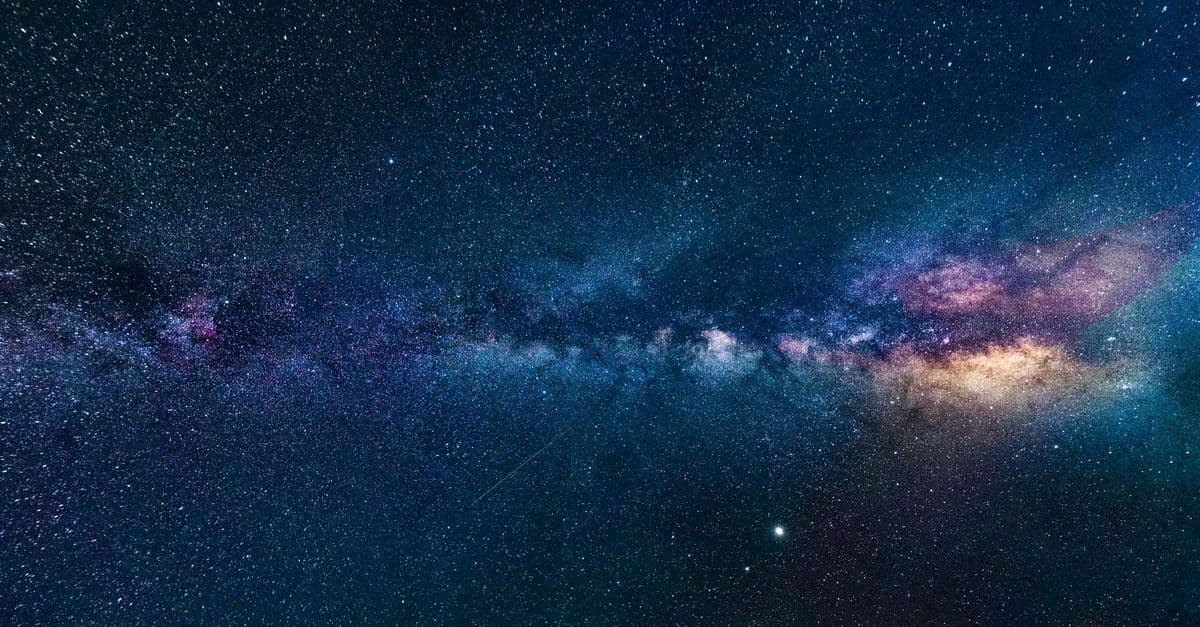
Photo: Felix Mittermeier / Pexels
Right now, as you read this, high-energy particles from across the galaxy — and beyond — are raining down on Earth at nearly the speed of light. They slam into the upper atmosphere at energies that dwarf anything produced by the world's most powerful particle accelerators. They have been traveling for millions of years from the violent remnants of dead stars, from the jets of supermassive black holes, from sources we have not yet definitively identified. They are cosmic rays, and despite being discovered over a century ago, their origins remain one of the most profound unsolved problems in astrophysics.
Cosmic rays are not actually rays at all. They are charged particles — primarily atomic nuclei and, in smaller fractions, electrons — moving at relativistic velocities. When they reach Earth, they are mostly blocked by the atmosphere, but their cascades of secondary particles (showers of pions, muons, electrons, and photons) penetrate to the surface. These secondaries were the first extraterrestrial particles ever detected, beginning with Victor Hess's balloon experiments in 1912, for which he was awarded the Nobel Prize in Physics.
What Cosmic Rays Are Made Of
The composition of cosmic rays provides crucial clues about their origin and propagation through the galaxy.
Protons (hydrogen nuclei): ~90% of all cosmic rays above 10 GeV. This is the most abundant nucleus in the universe, and its dominance in cosmic rays reflects this — though acceleration efficiency and propagation effects also play roles.
Alpha particles (helium nuclei): ~9% of cosmic rays. Helium is the second most abundant element in the universe.
Heavier nuclei (Z > 2): ~1% in terms of particle number, but highly significant by mass. Carbon, oxygen, and iron are prominent. The relative abundances reflect both the cosmic elemental abundances and important nuclear spallation effects during propagation.
Electrons and positrons: About 1% of cosmic ray primaries. Electrons lose energy extremely rapidly compared to nuclei (synchrotron radiation in the galactic magnetic field and inverse Compton scattering off photons), so high-energy electrons can only have come from relatively nearby sources (<1 kpc) within the last ~10⁴–10⁵ years.
Antiprotons: A rare but detectable component (~few × 10⁻⁴ of protons) produced as secondary particles when primary cosmic rays collide with interstellar gas. The antiproton flux carries information about both the secondary production rate and any potential dark matter annihilation signal.
Ultra-high energy cosmic ray (UHECR) composition: Above 10¹⁸ eV (1 EeV), the composition shifts toward heavier nuclei. Results from the Pierre Auger Observatory suggest an increasingly heavy composition above 10¹⁸·⁵ eV, hinting at extragalactic sources that preferentially accelerate heavy nuclei.
The Spallation Fingerprint
One of the most striking features of cosmic ray composition: elements like lithium, beryllium, and boron are present at levels far higher than their cosmic abundances. In the universe, these fragile elements are barely made by nucleosynthesis (they are bypassed by stellar burning). But in cosmic rays, they are abundant. The explanation is spallation: when carbon and oxygen cosmic rays collide with interstellar hydrogen and helium during their journey through the galaxy, they fragment into lighter nuclei including Li, Be, and B.
The ratio of secondary to primary cosmic rays (like B/C, the boron-to-carbon ratio) is a direct measure of how much material ("grathickness" in g/cm²) cosmic rays traverse during propagation. Measurements show cosmic rays traverse ~10–15 g/cm² of interstellar matter — far more than expected for straight-line propagation, confirming that they diffuse extensively, trapped by the galactic magnetic field.
The Energy Spectrum: A Power Law with Features
The cosmic ray energy spectrum spans an astonishing range — from ~10⁹ eV (1 GeV) to beyond 10²⁰ eV (100 EeV) — more than 11 decades in energy. Over most of this range, the spectrum follows a power law:
$$\frac{dN}{dE} \propto E^{-\gamma}$$
with spectral index γ ≈ 2.7 below 3 × 10¹⁵ eV and γ ≈ 3.0–3.1 above. The spectrum is remarkably smooth, but several features stand out:
The Knee (~3 × 10¹⁵ eV, 3 PeV): A spectral steepening (the index changes from ~2.7 to ~3.0–3.1). The knee is believed to mark the upper limit of energy achievable by Galactic sources — specifically supernova remnant shock acceleration. Above the knee, the increasingly steep spectrum suggests the Galactic accelerators are running out of steam, and protons begin to escape the galaxy.
The Second Knee (~3 × 10¹⁷ eV): A further spectral steepening, possibly related to the cutoff energies of heavier nuclei from Galactic sources (since the maximum energy scales with nuclear charge Z, iron nuclei with Z=26 can be accelerated 26× higher than protons before escaping Galactic containment).
The Ankle (~5 × 10¹⁸ eV, 5 EeV): A spectral flattening, interpreted as the crossover from Galactic to extragalactic cosmic rays. Below the ankle, Galactic sources dominate; above it, extragalactic sources supply the bulk of cosmic rays.
The GZK Cutoff / Auger cutoff (~5 × 10¹⁹ eV, 50 EeV): In 1966, Greisen, Zatsepin, and Kuzmin independently predicted that protons with energies above ~5 × 10¹⁹ eV would lose energy rapidly by interacting with the cosmic microwave background photons via pion photoproduction:
$$p + \gamma_{CMB} \rightarrow \Delta^+ \rightarrow p + \pi^0 \quad \text{or} \quad n + \pi^+$$
The GZK interaction limits the distance that UHECR protons can travel to ~100–200 Mpc (the "GZK sphere") — they cannot reach us from cosmological distances. The Pierre Auger Observatory has confirmed a suppression of the cosmic ray flux above this energy, consistent with the GZK prediction. Above 40 EeV, the flux drops sharply, with only a handful of events detected above 100 EeV — making each one an extraordinary rarity.
Acceleration Mechanisms: How to Reach Extraordinary Energies
The most important question about cosmic rays: where and how do they reach such enormous energies? A 10²⁰ eV proton has the kinetic energy of a well-hit baseball (~60 joules) concentrated into a single subatomic particle. What physical process can do this?
First-Order Fermi Acceleration (Diffusive Shock Acceleration)
The leading mechanism for Galactic cosmic rays is diffusive shock acceleration (DSA), proposed by Fermi (1949) and developed rigorously in the late 1970s by Bell, Blandford, Ostriker, and others.
Consider a strong shock wave expanding at velocity $v_{sh}$ into the surrounding interstellar medium — like the blast wave from a supernova explosion expanding at thousands of km/s. The shock compresses the upstream gas by a factor of 4 (for a strong shock in a monatomic gas with adiabatic index γ = 5/3).
A charged particle in the vicinity of this shock can cross the shock front and scatter off magnetic field irregularities on both sides. Each time it crosses from downstream to upstream, it gains energy (the upstream medium is moving toward it), and each time it crosses from upstream to downstream, it gains energy again. The energy gain per cycle is:
$$\frac{\Delta E}{E} \approx \frac{4}{3}\frac{v_{sh}}{c}$$
This is a first-order Fermi process (energy gain proportional to v/c, not (v/c)²), making it efficient even at non-relativistic shock speeds. Particles escape the system with some probability at each crossing; the combination of energy gain per cycle and escape probability naturally produces a power-law energy spectrum with index γ = 2 in the source.
After accounting for propagation through the galaxy (which steepens the spectrum by Δγ ≈ 0.6–0.7), the source spectrum of γ ≈ 2 gives the observed spectrum of γ ≈ 2.7 below the knee. This is one of the great successes of DSA theory.
Supernova remnants (SNRs) are the primary Galactic cosmic ray accelerators: they have the right energy budget (roughly 10% of the ~10⁵¹ erg supernova explosion must go into cosmic rays to account for the observed flux), the right shocks (velocities of 1,000–10,000 km/s), and the right density of galactic supernovae (~3 per century). The Milky Way's total cosmic ray power is ~10⁴¹ erg/s; galactic supernovae release ~3 × 10⁴² erg/s in kinetic energy, so 10% efficiency suffices.
Direct evidence for SNR acceleration: Gamma-ray observations are crucial, because when accelerated protons collide with gas near the SNR, they produce neutral pions that decay to gamma-ray photons via the "pion bump" — a characteristic spectral feature below 200 MeV. Fermi-LAT has confirmed this pion decay signature in several SNRs including IC 443 and W44, and the MAGIC and HESS TeV gamma-ray telescopes have detected multi-TeV emission from SNRs consistent with hadronic (proton) acceleration.
The PeVatron Problem
SNR acceleration via DSA has a maximum energy limit. The maximum energy a particle of charge Ze can reach is approximately:
$$E_{max} \approx Ze \cdot v_{sh} \cdot B \cdot R_{SNR}$$
where B is the magnetic field strength and R_SNR is the remnant radius. For typical parameters, this gives E_max ~10¹⁴–10¹⁵ eV for protons — just around the observed "knee." Heavier nuclei reach proportionally higher energies.
But can SNRs reach the PeV scale (10¹⁵ eV) needed to explain the knee? The detection of multi-TeV gamma-ray emission from young SNRs (particularly RX J1713.7-3946 and Cassiopeia A) suggests PeV-range acceleration may occur in the earliest, most energetic phases of the blast wave when shock velocities are highest. The LHAASO observatory in Tibet, using its wide-field TeV and PeV sensitivity, has detected sub-PeV and PeV gamma-ray emission from a dozen galactic sources since 2021, identifying the first confirmed galactic PeVatrons. Some are associated with young SNRs; others are associated with powerful pulsars.
Pulsar Wind Nebulae: Leptonic Accelerators
Pulsars inject a relativistic wind of electron-positron pairs into their surrounding nebulae (pulsar wind nebulae, or PWNe). The Crab Nebula's pulsar, for example, powers synchrotron emission from electrons with energies up to ~10¹⁵ eV. PWNe are the dominant sources of TeV gamma-ray emission in the galaxy in the HESS, MAGIC, and LHAASO catalogs, powered by inverse Compton scattering of ambient photons off the ultrarelativistic electrons.
The positron excess seen by PAMELA (2009) and AMS-02 (2013): a rising positron fraction above 10 GeV, contrary to expectations from secondary production alone. This could be explained by nearby PWNe injecting pairs — the Geminga and Monogem pulsars are often invoked as contributors — or by dark matter annihilation, though pulsar explanations are currently favored.
Extragalactic Acceleration: AGN and GRBs
Above the ankle (~5 EeV), the highest energy cosmic rays are extragalactic. Candidate accelerators must satisfy the Hillas criterion: for a source of size R and magnetic field B, the maximum energy is:
$$E_{max} \approx Ze \cdot \beta \cdot B \cdot R$$
where β is the ratio of the flow speed to c. The "Hillas plot" of B vs. R for various astrophysical objects shows that only a few source classes can reach 10²⁰ eV:
- Active galactic nuclei jets: Large-scale AGN jets with lengths of 100s of kpc and magnetic fields of ~µG can reach 10²⁰ eV for iron nuclei
- Radio galaxy hot spots: The termination shocks of AGN jets (hot spots in powerful FR II radio galaxies) are particularly promising DSA sites
- Gamma-ray bursts: The relativistic internal and external shocks of GRBs can in principle reach the highest energies, though the predicted correlation between UHECR arrival directions and GRB positions has not been confirmed
- Starburst galaxies: Galaxies with extremely high star formation rates (like M82 and NGC 253) have high supernova rates and possibly megaparsec-scale winds that could accelerate particles — Auger has found a correlation between UHECR arrival directions and starburst galaxies
The Auger anisotropy: The Pierre Auger Observatory has found a ~15–20% dipole anisotropy in UHECR arrival directions above 8 EeV, pointing away from the galactic center — confirming extragalactic origin. Above 40 EeV, there is a statistically marginal (~4σ) correlation with the positions of nearby (< 200 Mpc) starburst galaxies, particularly Centaurus A (the nearest radio galaxy, 3.8 Mpc away) and the starburst galaxies of the nearby universe. This correlation is statistically suggestive but not yet definitive.
Cosmic Ray Propagation Through the Galaxy
Cosmic rays are not neutral — they are charged particles. The Milky Way's magnetic field (~3–6 µG, with a regular spiral component plus a turbulent component) scatters cosmic rays via resonant interactions when the particle's Larmor radius equals the turbulence scale. This magnetic scattering causes cosmic rays to random-walk through the galaxy rather than travel in straight lines:
$$r_L = \frac{E}{ZeB} \approx 1,\text{pc} \times \left(\frac{E}{10^{15},\text{eV}}\right)\left(\frac{3,\mu\text{G}}{B}\right)$$
For cosmic rays below the knee, the Larmor radius is much smaller than the galaxy (~30 kpc), ensuring efficient confinement and isotropization. Above the knee, the Larmor radius grows comparable to the galactic scale height and the coherence scale of the magnetic field, allowing increasing escape — explaining why the spectrum steepens at the knee.
The galactic cosmic ray propagation is modeled as diffusion in the galactic disk and halo:
$$\frac{\partial N}{\partial t} = D(E)\nabla^2 N - \frac{\partial}{\partial E}(b(E)N) + Q(E,\vec{r})$$
where D(E) ∝ E^δ (δ ≈ 0.3–0.5) is the diffusion coefficient, b(E) is the energy loss rate, and Q is the source term. The GALPROP and DRAGON numerical codes solve these equations in 3D, using measured cosmic ray spectra to constrain the diffusion parameters.
Propagation time: The B/C ratio measurement constrains the typical confinement time of ~GeV cosmic rays to ~10–30 million years. During this time, a particle has traversed ~10 g/cm² of ISM material — hundreds of random-walk journeys back and forth through the disk.
The cosmic ray halo: Cosmic rays diffuse out of the ~300 pc scale-height disk into a much larger halo (height ~4–8 kpc) before escaping. Evidence for a 10 kpc-scale cosmic ray halo comes from radio observations of the galaxy's synchrotron halo and from the measured secondary-to-primary ratios.
Effects on Earth and Life
Cosmic rays continuously bombard Earth's atmosphere. At sea level, the cosmic ray flux is ~1 particle/cm²/minute, rising to ~10,000/cm²/minute at aircraft altitudes (~10 km) where much of the shower development occurs.
Air showers: A single cosmic ray proton at 10¹⁵ eV initiates a cascade involving billions of secondary particles. The shower maximum (depth of most particles) at this energy is ~600 g/cm² — well within the atmosphere. Giant air shower arrays like the Pierre Auger Observatory and the Telescope Array detect these showers via:
- Ground arrays of water Cherenkov detectors or scintillators sampling the shower footprint
- Fluorescence telescopes imaging the shower track via nitrogen fluorescence
Muons at sea level: The most abundant cosmic ray secondary at the surface (~1 muon/cm²/minute). Muons are created high in the atmosphere but reach the surface because of relativistic time dilation — a 10 GeV muon with a lifetime of 2.2 µs would travel only ~660 m before decaying in its rest frame, but travels 30+ km in the laboratory frame. Their detection historically helped confirm special relativity's time dilation prediction.
Carbon-14 production: Cosmic ray neutrons (from nuclear cascades) react with atmospheric nitrogen: n + ¹⁴N → ¹⁴C + p. This continuously replenishes atmospheric ¹⁴C, making radiocarbon dating possible. Variations in cosmic ray flux (from solar activity changes or nearby supernova events) are recorded in tree rings and ice cores as variations in ¹⁴C production — a cosmic ray "calendar."
Biological effects: The ionizing radiation from cosmic rays delivers ~0.3 mSv/year at sea level — a minor fraction of average natural background dose (~2.4 mSv/year from all sources). At aircraft altitudes, the dose rate rises to ~3–6 mSv/year — a concern for frequent flyers and especially for pilots. During solar energetic particle events, polar flight routes may be temporarily rerouted to avoid elevated radiation. Cosmic rays may also play a role in cloud nucleation, influencing climate on geological timescales through changes in galactic cosmic ray flux modulated by the solar wind and geomagnetic field — though this connection remains controversial.
Carrington-class events: Solar energetic particles (SEPs) from major solar flares are not technically "cosmic rays" (they are solar in origin), but can temporarily overwhelm cosmic ray detectors and deliver significant radiation doses. The 1956 February solar particle event (one of the largest in the space era) would deliver potentially lethal doses to astronauts in interplanetary space.
Multimessenger Connections
Cosmic rays, neutrinos, gamma rays, and gravitational waves are the four messengers of high-energy astrophysics. Cosmic rays are connected to all three:
Neutrinos: When cosmic ray protons interact with gas or radiation near their sources, they produce pions. Charged pions decay to muons and neutrinos (π⁺ → µ⁺ + ν_µ → e⁺ + ν_e + ν̄_µ + ν_µ), while neutral pions decay to gamma rays. The IceCube Neutrino Observatory at the South Pole has detected a diffuse astrophysical neutrino flux at TeV–PeV energies, and in 2022 identified the Seyfert galaxy NGC 1068 as the first resolved cosmic neutrino source — a galaxy with a heavily absorbed AGN where proton-proton interactions near the active nucleus produce both neutrinos and gamma rays.
Gamma rays: The Fermi-LAT space telescope and ground-based Cherenkov telescope arrays (HESS, MAGIC, VERITAS, LHAASO) map cosmic ray accelerators via their gamma-ray emission. The distinction between hadronic (pion decay) and leptonic (synchrotron/inverse Compton) origin requires spectral analysis and is a central question in gamma-ray astronomy.
Gravitational waves: Binary neutron star mergers (GW170817) produce jets and shocks that may accelerate cosmic rays; neutron star mergers have been proposed as sites of r-process nucleosynthesis, contributing heavy elements to the galactic inventory including heavy cosmic ray nuclei.
The Mystery Continues
Despite more than a century of research, fundamental questions about cosmic rays remain open:
What are the exact sources of galactic cosmic rays above the knee? Are they SNRs, PWNe, pulsars, stellar wind bubbles, the galactic center region (LHAASO has detected a PeV diffuse emission region around Sgr A*), or something else?
What produces the highest energy cosmic rays (>50 EeV)? Starburst galaxies? Radio galaxies? Something unknown?
What is the composition of UHECRs at the highest energies? Auger suggests heavy nuclei; the Telescope Array in Utah finds results more consistent with protons. This discrepancy (the "composition crisis") needs resolution.
How do cosmic rays influence galaxy evolution? Cosmic ray pressure can drive galactic winds, regulate star formation, and heat the circumgalactic medium. Modern hydrodynamic simulations are beginning to include cosmic ray feedback as a key component of galaxy physics.
Related Reading
Follow new articles
Add SciHub101 to your feed reader to see new science and technology stories.
About the Author
SciHub101 is an independent science and technology publication founded and edited by Buğra Sözeri, a software engineer and app developer based in Türkiye. AI tools assist with drafting and research. Source documentation in the existing archive is uneven, and articles are being reviewed and corrected. The Editorial Team byline identifies editorial responsibility; it does not certify specialist or independent human review. Where we compare products, anything built by our own team is labelled as such — see the editorial guidelines and About page for how corrections and disclosures work.
Related Articles

What Are Globular Clusters? Ancient Cities of Stars
Globular clusters are the oldest and densest stellar systems in the universe — spherical swarms of hundreds of thousands of stars bound together for billions of years. Here's how they form, what they reveal about galactic history, and why they remain one of astronomy's most productive laboratories.
What Are Cataclysmic Variables, Novae, and Dwarf Novae?
Cataclysmic variables are close binary stars in which a white dwarf pulls gas off a companion. The result is outbursts that range from dwarf novae flaring every few weeks to classical novae that brighten by up to a million times. This article explains the physics, the period gap, and the famous systems.

Cosmic Rays and Particle Physics — Sources, Detection, and the Oh-My-God Particle — SciHub101
What cosmic rays are, how Victor Hess discovered them in 1912, their sources from the Sun to AGN, detection methods, biological effects, and the ultra-high-energy mystery.
Cassiopeia A: The Youngest Supernova Remnant in the Milky Way
Cassiopeia A is the expanding debris field of a star that exploded around 1680 CE — yet almost no one on Earth recorded it. Today, X-ray and infrared telescopes reveal a forensic masterpiece: shock waves, newly minted heavy elements still glowing from the blast, and a neutron star cooling at the center. Cas A is not just a beautiful object. It is the best laboratory we have for understanding what supernovae actually do to the universe.
How Stars Are Born and Die: The Complete Story of Stellar Evolution
Every atom of iron in your blood was forged inside a dying star. Here's the full life cycle that made you possible.

What Is the Chandrasekhar Limit? The Number That Determines a Star's Fate
The Chandrasekhar limit, about 1.44 solar masses, is the heaviest a white dwarf can be before electron degeneracy pressure fails. It shapes Type Ia supernovae, cosmic distance measurements, and which stellar remnants become white dwarfs, neutron stars, or black holes.