How Stars Are Born and Die: The Complete Story of Stellar Evolution
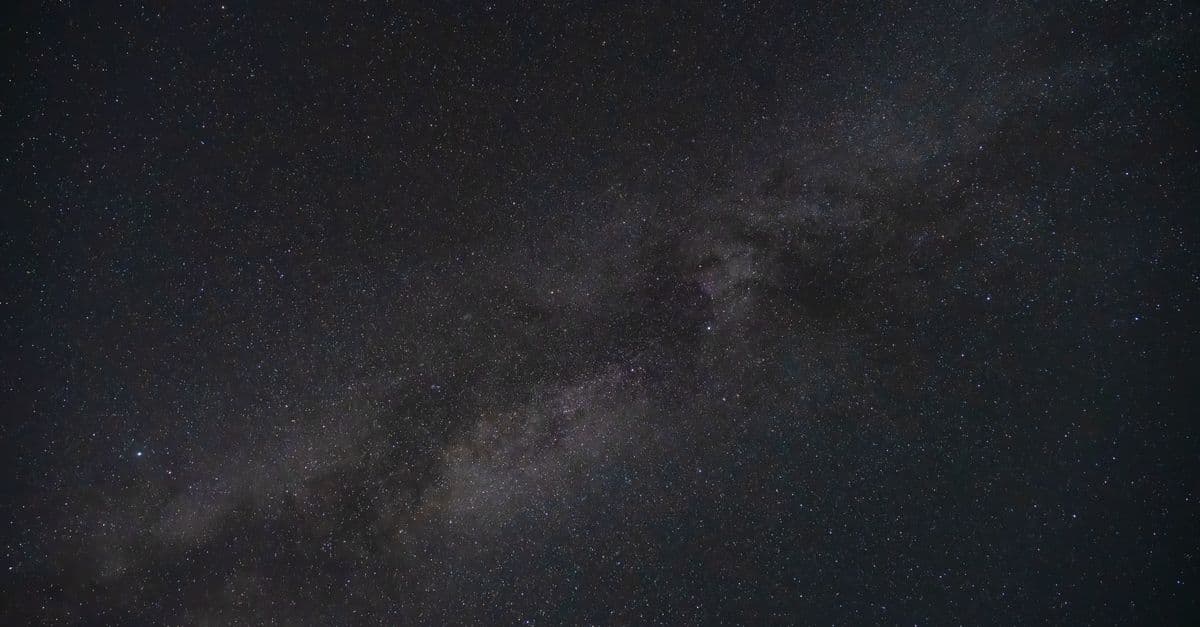
Photo: foad shariyati / Pexels
Every atom of calcium in your bones, every iron atom in your blood, most of the oxygen filling your lungs right now — all of it was manufactured inside stars that lived and died before our solar system existed. You are, in the most literal sense, made of stellar ash. Understanding how stars are born and die is not just astronomy. It is the story of your own origins.
Key takeaways
- Stars are born when gravity compresses clouds of gas and dust until nuclear fusion ignites
- A star's mass determines almost everything: its color, temperature, lifespan, and the violence of its death
- Our Sun will eventually swell into a red giant, eject its outer layers as a planetary nebula, and leave behind a white dwarf
- Massive stars die in supernova explosions that can briefly outshine entire galaxies, forging heavy elements and sometimes leaving neutron stars or black holes
- Neutron star mergers, confirmed by the 2017 gravitational-wave event GW170817, are a second major factory for the heaviest elements
How we figured out what stars are
For most of history, stars were points of light whose nature was unknowable. The French philosopher Auguste Comte wrote in 1835 that we would never learn their chemical composition. Within a few decades he was proved wrong.
| Year | Discovery | Who |
|---|---|---|
| 1859–1860s | Dark lines in stellar spectra identified as fingerprints of specific elements | Gustav Kirchhoff and Robert Bunsen |
| 1910s | Hertzsprung–Russell diagram shows stars fall into distinct groups by brightness and temperature | Ejnar Hertzsprung, Henry Norris Russell |
| 1925 | Stars shown to be made overwhelmingly of hydrogen and helium | Cecilia Payne |
| 1930s | Upper mass limit for white dwarfs (~1.4 solar masses) calculated | Subrahmanyan Chandrasekhar |
| 1939 | Nuclear fusion reactions that power stars worked out | Hans Bethe |
| 1957 | Origin of most elements in stars explained in a landmark paper ("B²FH") | Margaret and Geoffrey Burbidge, William Fowler, Fred Hoyle |
| 1967 | First pulsar — a spinning neutron star — discovered | Jocelyn Bell Burnell, Antony Hewish |
| 1987 | Neutrinos detected from Supernova 1987A | Kamiokande II, IMB and Baksan detectors |
| 2017 | Neutron star merger seen in gravitational waves and light | LIGO, Virgo and dozens of observatories |
The spectroscope was the turning point, as told in how the spectroscope revealed what stars are made of. Payne's thesis, which overturned the assumption that stars had Earth-like compositions, is covered in our profile of Cecilia Payne-Gaposchkin, and Bethe's work on the fusion reactions in Hans Bethe: the physicist who explained why stars shine.
The Nursery: Molecular Clouds and Protostars
Stars are born inside molecular clouds — vast, cold regions of gas and dust that drift through galaxies like cosmic fog banks. According to NASA, these clouds range from about 1,000 to 10 million times the Sun's mass and can span hundreds of light-years. The Orion Nebula, one of the most studied stellar nurseries, sits about 1,350 light-years away; a 2007 radio parallax measurement put its cluster at 414 ± 7 parsecs. It lies on the near side of the larger Orion molecular cloud complex, described in our guide to the Orion molecular cloud.
These clouds are mostly molecular hydrogen, mixed with helium and trace amounts of heavier elements locked partly in dust grains. They are extraordinarily cold — typically only 10 to 20 degrees above absolute zero — and so tenuous that they would count as an excellent vacuum by Earth standards. Yet gravity is patient. Over millions of years, perturbations — a nearby supernova shockwave, compression in a galaxy's spiral arm, collisions between clouds, or simple turbulence — cause dense pockets of the cloud to begin collapsing inward.
The physics of collapse
Whether a clump collapses depends on a contest between gravity and the cloud's internal pressure (from heat, turbulence and magnetic fields). A clump heavier than a critical threshold — the Jeans mass — cannot hold itself up and falls in. Because the threshold depends on temperature and density, cold, dense regions collapse most readily, and big clouds tend to fragment into many smaller clumps. That is why stars are usually born in clusters rather than alone.
As a pocket collapses, it heats up. Conservation of angular momentum causes it to spin faster and flatten into a rotating disk. The central concentration of material — the protostar — grows denser and hotter. Material falling onto it releases energy, so a young protostar glows brightly in infrared even before fusion starts. Powerful jets shoot out along the rotation axis, carrying away angular momentum; where they hit surrounding gas they create glowing knots called Herbig–Haro objects.
The surrounding disk of gas and dust will eventually form planets, as explained in what a protoplanetary disk is and how planets form. The Hubble Space Telescope captured many such disks, called proplyds, inside the Orion Nebula, and the James Webb Space Telescope now studies them in infrared detail. Our deeper look at stellar nurseries covers specific regions.
When the core reaches roughly 10 million degrees Celsius, hydrogen nuclei collide with enough energy to fuse together. A star is born.
Failed stars
Not every clump makes it. Objects below about 8% of the Sun's mass (roughly 80 times the mass of Jupiter) never get hot enough to sustain hydrogen fusion. These brown dwarfs glow faintly from leftover heat and slowly fade. They mark the lower edge of what counts as a star.
Main Sequence: The Long, Stable Burning
When hydrogen fusion ignites, the energy released creates outward pressure that balances the inward pull of gravity. This equilibrium — hydrostatic equilibrium — is the defining characteristic of a main sequence star, and it is self-regulating. If the core gets slightly too hot, it expands, cools and slows fusion; if it gets too cool, it contracts and heats. Our Sun has been in this phase for about 4.6 billion years and will remain there for roughly another 5 billion.
In Sun-like and smaller stars, hydrogen fuses mainly through the proton–proton chain. In stars more massive than about 1.3 solar masses, the CNO cycle dominates, using carbon, nitrogen and oxygen as catalysts. The CNO cycle is extremely sensitive to temperature, which is one reason massive stars burn so much faster. The details are covered in how the Sun works.
The fate of a star is written at birth, in the single number of its mass. Mass determines how hot the core burns, which determines how quickly hydrogen fuel is consumed. A star ten times the Sun's mass has ten times the fuel but shines thousands of times brighter, so it runs out far sooner.
| Initial mass (Sun = 1) | Typical type and colour | Approximate main-sequence lifetime | Final fate | Remnant |
|---|---|---|---|---|
| < 0.08 | Brown dwarf (not a true star) | Never fuses hydrogen steadily | Cools and fades | Brown dwarf |
| 0.08 – 0.5 | M-type red dwarf | Hundreds of billions to trillions of years | Slowly becomes a helium white dwarf | White dwarf (none formed yet) |
| 0.5 – 8 | K, G, F, A types (orange to white) | ~10 billion years for the Sun; ~1 billion for 2 solar masses | Red giant, planetary nebula | Carbon–oxygen white dwarf |
| 8 – ~20 | B-type blue-white | Tens of millions of years | Core-collapse supernova | Neutron star |
| > ~20 | O-type blue | A few million years | Core-collapse supernova or direct collapse | Black hole (usually) |
These boundaries are approximate; rotation, binary companions and chemical composition all shift them. Our guide to types of stars and stellar classification explains the O-B-A-F-G-K-M letters.
A red dwarf — a star with less than about half the mass of our Sun — burns so slowly and coolly that it glows a dim orange-red. These stars are extraordinarily long-lived. Since the universe is only about 13.8 billion years old, no red dwarf has yet run out of fuel. Red dwarfs make up most of the stars in the Milky Way, which is why they matter so much in the search for life around other stars.
Our Sun is a G-type yellow dwarf — a middle-of-the-road star with a main sequence lifespan of about 10 billion years. Its core is about 15 million degrees Celsius.
At the other extreme, the most massive stars — tens of times the Sun's mass — burn with such intensity that they exhaust their hydrogen in just a few million years. The current record holder for stellar mass is R136a1 in the Large Magellanic Cloud. Earlier estimates put it at 250 to 320 solar masses; 2022 observations with the Gemini South telescope that separated its light from its neighbours revised that down to about 170 to 230 solar masses. It is still the most massive star known.
Red Giant and the Death of Sun-Like Stars
When a Sun-like star exhausts the hydrogen in its core, fusion stops at the centre and continues in a shell around it. The helium core contracts and heats up while the outer layers expand and cool dramatically. The star swells into a red giant — growing to over a hundred times its original size. In about 5 billion years, our Sun will expand to roughly the size of Earth's orbit. Mercury and Venus will be swallowed; whether Earth is engulfed or escapes as the Sun loses mass is still debated, though it will be scorched either way. Our article on what happens when the Sun dies goes through the timeline.
When the core reaches about 100 million degrees, helium begins to fuse into carbon (and some oxygen). In stars up to about two solar masses, the core is so dense that this ignition is explosive — the helium flash — though the energy is absorbed inside the star and is not visible from outside. The star then settles into a calmer phase of steady helium burning.
Once the core helium runs out, the star climbs the asymptotic giant branch (AGB), burning hydrogen and helium in alternating shells around an inert carbon–oxygen core. AGB stars pulse, dredge newly made carbon to their surfaces, and lose mass in heavy winds — they are the main source of carbon in the universe, as described in AGB stars. Eventually the star sheds its outer layers entirely, and the exposed hot core lights them up as an expanding shell of glowing gas called a planetary nebula. The Ring Nebula in Lyra and the Helix Nebula in Aquarius, about 650 light-years away, are two spectacular examples.
What remains is the core: a white dwarf, roughly the size of Earth but typically holding around 0.6 times the Sun's mass. Made of carbon and oxygen, supported not by fusion but by the quantum mechanical pressure of tightly packed electrons, a white dwarf slowly cools over billions of years. That pressure has a limit: Chandrasekhar showed that above about 1.4 solar masses no white dwarf can support itself. A cooling white dwarf will eventually fade to a hypothetical black dwarf — though the universe is not yet old enough for any to have cooled that far. See white dwarfs: the fate of most stars.
Supernova: The Violent Deaths of Massive Stars
For stars more than about eight times the mass of our Sun, the ending is not a gentle exhale but a catastrophic explosion.
After exhausting hydrogen, these stars burn helium, then carbon, then neon, oxygen, and finally silicon, in a sequence of increasingly hot and short-lived fusion phases. The star develops an onion-like structure, with each shell burning a different fuel. The process accelerates dramatically:
| Burning stage | Main products | Approximate duration (for a ~25 solar-mass star) |
|---|---|---|
| Hydrogen | Helium | ~7 million years |
| Helium | Carbon, oxygen | ~500,000 years |
| Carbon | Neon, magnesium, sodium | ~600 years |
| Neon | Oxygen, magnesium | ~1 year |
| Oxygen | Silicon, sulfur | ~6 months |
| Silicon | Iron-group elements (iron, nickel) | ~1 day |
Durations are model estimates and vary with mass and rotation; NASA says that once silicon fusion begins the star runs out of fuel within days.
Iron is the end of the road. Iron-56 sits near the peak of nuclear binding energy, so fusing it absorbs energy rather than releasing it. When the core becomes an iron ball of about 1.4 solar masses, roughly the size of Earth, nothing can hold it up.
In less than a second, the core collapses from thousands of kilometres across to about 20 kilometres. Electrons are forced into protons, producing neutrons and an enormous burst of neutrinos. The infalling material hits the stiff, newly formed neutron core and rebounds, and the shockwave — re-energised by the flood of neutrinos — tears the star apart in a core-collapse supernova, one of the most energetic events in the universe. For a few weeks, a single exploding star can shine as brightly as an entire galaxy of billions of stars.
Not every supernova comes from a massive star. A Type Ia supernova occurs when a white dwarf in a binary system is pushed to the Chandrasekhar limit and is destroyed in a runaway thermonuclear explosion. The differences are explained in supernova types explained.
Supernova 1987A, which exploded in the Large Magellanic Cloud about 168,000 light-years away, was visible to the naked eye from the Southern Hemisphere. It was the closest supernova observed since Kepler's of 1604. On 23 February 1987, a few hours before the light was seen, underground detectors in Japan (Kamiokande II, 11 events), the United States (IMB, 8 events) and Russia (Baksan, 5 events) caught about two dozen neutrinos from the collapsing core — the first neutrinos ever detected from beyond the Solar System, confirming the core-collapse picture.
Supernovae are the universe's element factories. Elements from oxygen to iron are made in the star's final years and in the explosion itself, and the radioactive nickel produced in the blast decays to the iron that powers its afterglow. Some elements heavier than iron are made by neutron capture in the explosion and in AGB stars. All of this is scattered into space, seeding the next generation of stars and planets. The Tycho supernova remnant, from an explosion seen in 1572, lies several thousand light-years away (estimates range from about 7,500 to 13,000); the Cassiopeia A remnant is another well-studied example.
Neutron Stars and Black Holes: The Afterlife
What remains after a core-collapse supernova depends again on mass. For stars up to roughly 20 times the Sun's mass, the collapsed core usually becomes a neutron star — an object so dense that a teaspoon of its material would weigh about a billion tons on Earth. Neutron stars are typically about 20 kilometers across but contain more mass than our Sun. Many spin rapidly and sweep beams of radiation across space; we see those as pulsars, covered in neutron stars and pulsars explained.
For more massive stars, the core collapses past the neutron star stage into a black hole — a region where gravity is so extreme that not even light can escape. The boundary of no return is called the event horizon. Some very massive stars may collapse directly into black holes with little or no visible explosion. Our explainer on black hole formation and Hawking radiation continues the story.
Both neutron stars and black holes represent physics at its most extreme. They are laboratories for testing general relativity, quantum mechanics, and the behavior of matter under conditions that can never be recreated on Earth.
On 17 August 2017, LIGO and Virgo detected gravitational waves from two neutron stars spiralling together — event GW170817. A gamma-ray burst arrived less than two seconds later, and telescopes then found a glowing "kilonova" in the galaxy NGC 4993. Its light showed the signature of freshly made heavy elements, confirming that neutron star mergers are a major source of the rapid neutron-capture ("r-process") elements such as gold and platinum. Whether mergers or rare kinds of supernova produce most of these elements is still being worked out.
Where your atoms came from
Putting the stages together gives a rough map of cosmic origins for the elements in your body:
| Element | Main origin |
|---|---|
| Hydrogen | Big Bang |
| Helium | Mostly Big Bang, some from stars |
| Carbon, nitrogen | Low- and intermediate-mass stars (red giants and AGB stars) |
| Oxygen, neon, magnesium, silicon | Massive stars and core-collapse supernovae |
| Calcium, iron | Core-collapse and Type Ia supernovae |
| Gold, platinum, uranium | Neutron star mergers and possibly rare supernovae |
The stars that gave us everything now rest at the edges of physics itself.
Open questions
Stellar evolution is one of astronomy's best-tested theories, but several problems remain open:
- Exactly how supernovae explode. Computer simulations struggled for decades to make collapsing cores explode; modern 3D models with detailed neutrino physics now often succeed, but which stars explode and which collapse silently is not fully settled.
- The first stars. The universe's first generation, called Population III, formed from pure hydrogen and helium and may have been very massive. None has been directly observed.
- Binary stars. Most massive stars have close companions that strip or feed them, changing their evolution. Single-star models are a simplification.
- The upper mass limit. How massive a star can form, and whether stars like R136a1 are single objects or merger products, is still debated.
FAQ
Q: How long does it take for a star to form? A: Roughly 100,000 years for a massive star to several million years for a Sun-like star, from the collapse of a dense clump in a molecular cloud to the start of steady hydrogen fusion. Smaller stars take longer because they contract more slowly.
Q: Will our Sun explode as a supernova? A: No. The Sun lacks the mass required for a core-collapse supernova, and it has no companion to turn it into a Type Ia supernova. Instead, it will expand into a red giant in about 5 billion years, shed its outer layers as a planetary nebula, and leave behind a white dwarf.
Q: What is the most massive kind of star? A: The current record holder is R136a1 in the Large Magellanic Cloud. A 2022 study with the Gemini South telescope estimated about 170 to 230 solar masses, down from earlier estimates of 250 to 320. Stars this heavy are extremely rare and live only a few million years.
Q: How do we know what happens inside stars if we can't observe the core directly? A: Helioseismology — studying sound waves that ripple through the Sun — maps the solar interior, and asteroseismology does the same for other stars. Neutrino detectors catch particles that stream straight out of the Sun's core. For other stars, spectra reveal composition, temperature and evolutionary stage, and computer models are tested against thousands of stars in clusters.
Q: What happens to white dwarfs in binary star systems? A: A white dwarf in a close binary can pull material from its companion. Small amounts can ignite on its surface as a nova. If the white dwarf approaches the Chandrasekhar limit, it can explode as a Type Ia supernova — consistent enough in brightness that astronomers use them as standard candles. Two teams used them to discover the accelerating expansion of the universe in 1998.
Q: Are new stars still forming in the Milky Way? A: Yes. The Milky Way forms new stars at a modest rate today, concentrated in regions such as the Orion Nebula and the dense clouds near the galactic centre. Star formation slows over billions of years as galaxies use up their cold gas.
Sources
- NASA Science. Stars — formation, main sequence and stellar deaths.
- NOIRLab. Sharpest Image Ever of Universe's Most Massive Known Star (2022).
- Menten KM et al. The distance to the Orion Nebula. Astronomy & Astrophysics 474 (2007).
- LIGO Scientific Collaboration. A gravitational-wave standard siren measurement of the Hubble constant (GW170817). Nature 551 (2017).
Read next:
Follow new articles
Add SciHub101 to your feed reader to see new science and technology stories.
About the Author
SciHub101 is an independent science and technology publication founded and edited by Buğra Sözeri, a software engineer and app developer based in Türkiye. AI tools assist with drafting and research. Source documentation in the existing archive is uneven, and articles are being reviewed and corrected. The Editorial Team byline identifies editorial responsibility; it does not certify specialist or independent human review. Where we compare products, anything built by our own team is labelled as such — see the editorial guidelines and About page for how corrections and disclosures work.
Related Articles
Chandra X-Ray Observatory: Revealing the High-Energy Universe
Since 1999, Chandra has mapped X-rays from black holes, neutron stars, and galaxy clusters, transforming understanding of the universe's most violent phenomena.
How AI and Machine Learning Are Revolutionizing Exoplanet Detection
Machine learning is transforming the search for alien worlds, helping scientists find thousands of exoplanets hidden in Kepler's vast data.
Why Do Stars Twinkle? The Science of Atmospheric Seeing
Stars twinkle because Earth's turbulent atmosphere bends starlight in constantly shifting ways. Because stars are infinitely distant, they act as point sources, so even tiny bends in light rays cause dramatic brightness and color flickers. Planets, being much closer, show a small disk that averages out the jitter. Twinkling is worst near the horizon and is why the best observatories sit on mountaintops or in orbit.
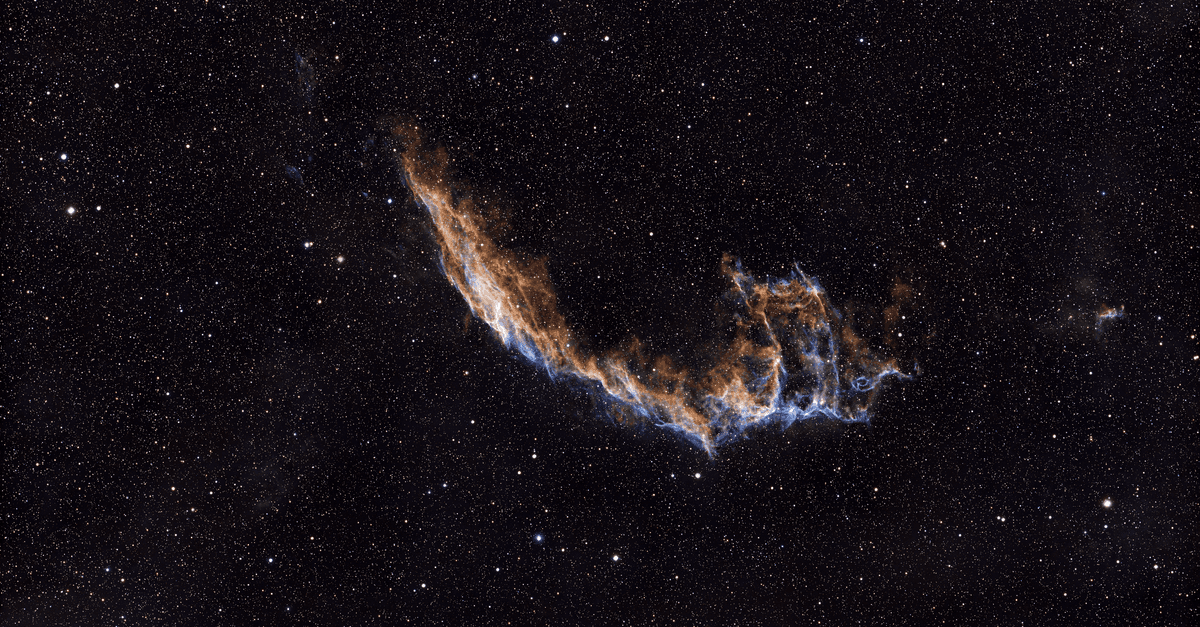
Cassiopeia A: The Youngest Supernova Remnant in the Milky Way
Cassiopeia A is the expanding debris field of a star that exploded around 1680 CE — yet almost no one on Earth recorded it. Today, X-ray and infrared telescopes reveal a forensic masterpiece: shock waves, newly minted heavy elements still glowing from the blast, and a neutron star cooling at the center. Cas A is not just a beautiful object. It is the best laboratory we have for understanding what supernovae actually do to the universe.
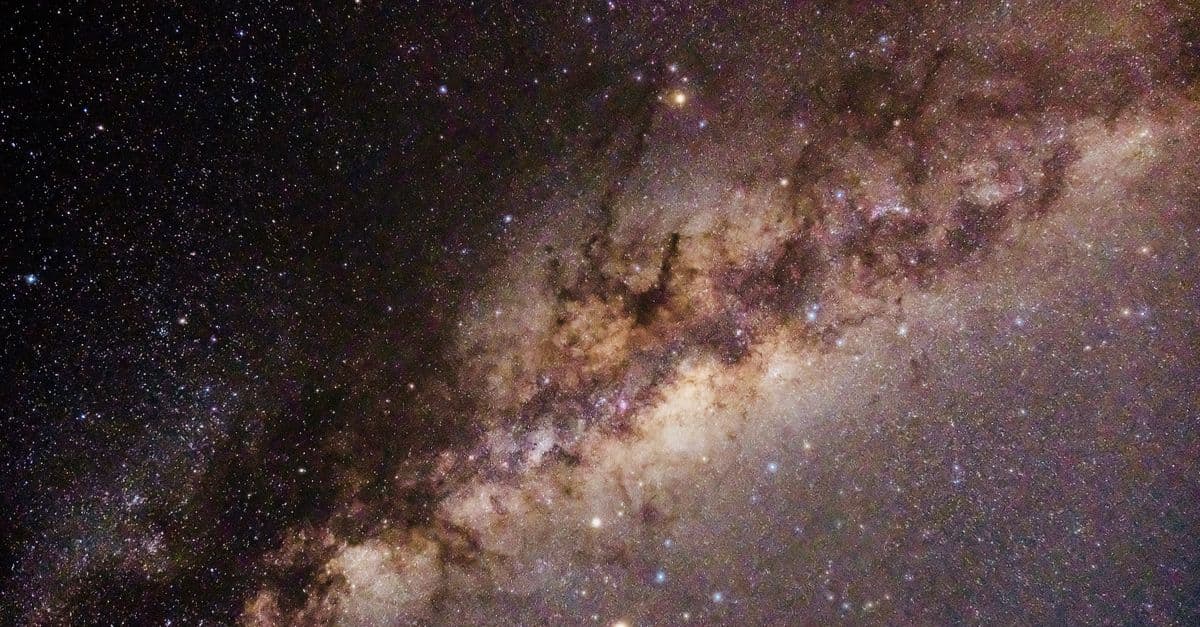
The Last Stars: What the Universe Looks Like in a Trillion Years
The Sun has about 5 billion years left. The last stars in the universe will burn for 10 trillion. After they go out, the cosmos enters an era so dark and cold that physics itself may eventually dissolve the matter we're made of.

Supernova Explained — Star Explosions
How stars explode as supernovae — Type Ia, core-collapse, kilonovae, famous examples, and why every iron atom in your body came from one.