White Dwarfs: The Fate of 97% of All Stars

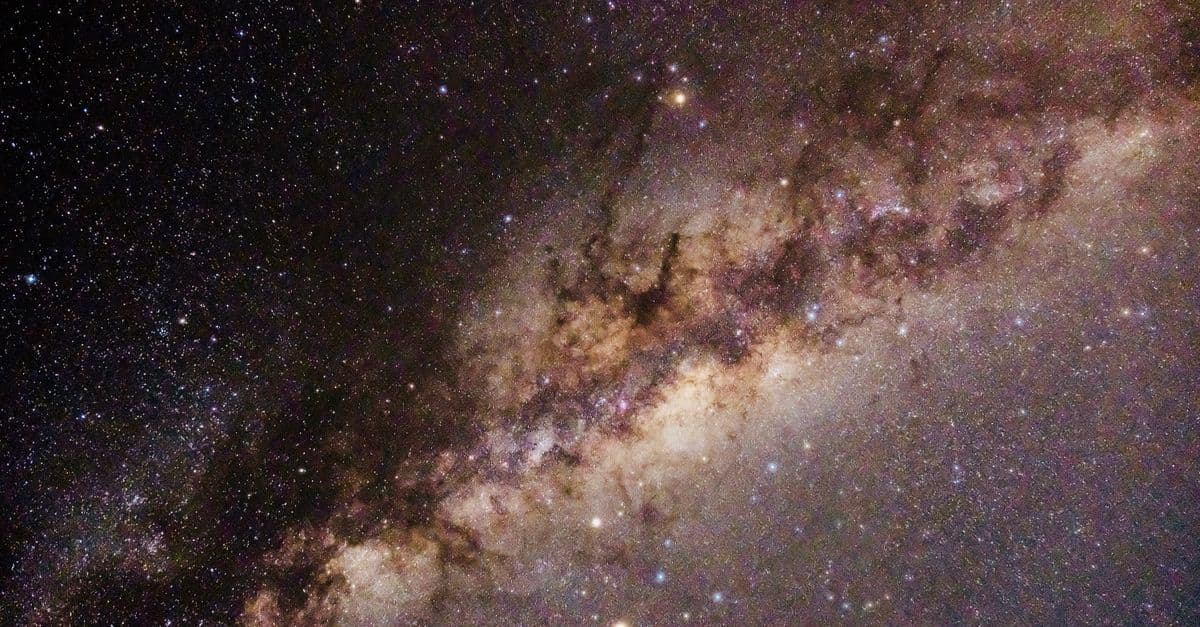
Photo: Felix Mittermeier / Pexels
BPM 37093 is a white dwarf about 50 light-years away in the constellation Centaurus. In 2004, astronomers confirmed what theory had long predicted: its interior has crystallized. Not metaphorically — the carbon and oxygen at its core have literally locked into a solid crystalline lattice, the same structure as diamond. The object is, in the most literal sense, a diamond roughly the size of Earth, floating in space. BPM 37093 is not an anomaly. It is a preview of where 97% of all stars in the Milky Way are headed — including the Sun.
What a White Dwarf Actually Is
To understand a white dwarf, you need to understand what it is not. It is not a star. It produces no nuclear energy. No hydrogen is fusing in its core, no helium, nothing. A white dwarf is the exposed core of a dead star — the hot, compressed remnant left behind after a star's outer layers have been shed.
White dwarf — a compact stellar remnant composed primarily of carbon and oxygen (with a thin hydrogen or helium surface layer), supported against further gravitational collapse not by nuclear fusion but by electron degeneracy pressure; typical mass 0.5–0.8 M☉, radius roughly equal to Earth, and surface temperature ranging from over 100,000 K (newly formed) down to a few thousand K (ancient).
The support mechanism is the crucial difference. A normal star is in equilibrium: the outward pressure from nuclear fusion in the core balances the inward pull of gravity. Remove fusion — as happens when the fuel runs out — and gravity wins unless something else provides pressure. In a white dwarf, that something is quantum mechanics.
Electrons in a dense material obey the Pauli exclusion principle: no two electrons can occupy the same quantum state simultaneously. Pack electrons tightly enough and they resist further compression simply because there is no room for them to go — all lower energy states are already filled. This resistance is called electron degeneracy pressure, and unlike thermal pressure, it does not depend on temperature. A white dwarf can cool to near absolute zero and remain supported against collapse. It is held up by quantum rules, not heat.
Source: Chandrasekhar, Monthly Notices of the Royal Astronomical Society (1931) — Original derivation of the theoretical properties of white dwarfs, including the limiting mass and the role of electron degeneracy pressure.
Think of electron degeneracy pressure like a crowded subway car at rush hour. The passengers (electrons) resist being pushed any closer together not because they are hot and energetic but simply because there is no more space — every available position is taken. The more you try to compress the car, the harder the resistance, regardless of the temperature.
How Stars Become White Dwarfs
For a star between about 0.07 and 8 solar masses — covering almost every star in the galaxy — the path to becoming a white dwarf follows the same general route, with the details varying by mass.
A star like the Sun spends about 10 billion years fusing hydrogen into helium in its core. When the hydrogen runs out, the inert helium core contracts, heating the hydrogen shell around it until the shell ignites. The star expands into a red giant, swelling to perhaps 200 times its current radius (engulfing Mercury and Venus, and possibly Earth). The core, now hot enough, begins fusing helium into carbon and oxygen.
When helium runs out, the carbon-oxygen core is left without a nuclear energy source. For stars below about 8 solar masses, the core temperature never reaches the 600 million K needed to fuse carbon. The star's outer layers, driven off by stellar winds and radiation pressure, expand into space as a planetary nebula — those beautiful glowing shells of gas seen in telescope images. What remains at the center is the naked carbon-oxygen core: a white dwarf.
Source: Iben, Annual Review of Astronomy and Astrophysics (1991) — Stellar evolution from main sequence through planetary nebula to white dwarf for low- and intermediate-mass stars, including mass loss rates and remnant properties.
For a star initially 8 solar masses, the process is slightly different: it may produce an oxygen-neon white dwarf at the massive end of the range. Stars above about 8 solar masses have enough gravity to compress the carbon core to fusion temperatures and will ultimately end as supernovae, leaving behind neutron stars or black holes rather than white dwarfs.
The initial-to-final mass relationship has been empirically measured: a star born at 1 solar mass leaves a white dwarf of about 0.5–0.55 M☉; a star born at 5 solar masses leaves a white dwarf of about 0.9–1.0 M☉; a star born at 8 solar masses leaves a white dwarf of about 1.1–1.2 M☉. Most of the initial mass is lost in stellar winds and the planetary nebula phase.
The Chandrasekhar Limit: Why White Dwarfs Have a Maximum Mass
In 1930, a 19-year-old Indian physicist named Subrahmanyan Chandrasekhar boarded a ship from India to England and, during the voyage, worked out a calculation that changed astrophysics. He showed that electron degeneracy pressure has a maximum. When a white dwarf's mass exceeds approximately 1.4 solar masses, the electrons must move at relativistic speeds to provide the required pressure — and at that point, a quantum mechanical paradox arises: the pressure support becomes insufficient. Gravity wins.
Chandrasekhar limit — the maximum mass that a white dwarf can have while remaining stable, approximately 1.4 M☉ (2.8 × 10³⁰ kg); above this mass, electron degeneracy pressure cannot support the star against gravitational collapse, leading to a Type Ia supernova or collapse to a neutron star.
Chandrasekhar derived the limit as about 0.91 M☉ using a non-relativistic treatment; a more precise relativistic calculation gives approximately 1.44 M☉. The currently accepted observational value is about 1.38–1.44 M☉. Chandrasekhar received the Nobel Prize in Physics for this work — in 1983, over 50 years after deriving it, largely because the astrophysics establishment of the 1930s, led by Arthur Eddington, resisted the implication that white dwarfs could become unstable.
The Chandrasekhar limit is not just a theoretical curiosity. It is the trigger for one of the most important phenomena in cosmology: the Type Ia supernova.
Source: Chandrasekhar, Astrophysical Journal (1935) — Revised and complete derivation of the limiting mass for white dwarfs using relativistic electron degeneracy pressure.
Type Ia Supernovae: When White Dwarfs Detonate
Most white dwarfs cool quietly for billions of years. But some white dwarfs are not alone. In binary star systems, a white dwarf can accrete material from a companion star. As mass flows onto the white dwarf, it slowly gains weight.
When the white dwarf's mass approaches the Chandrasekhar limit, the core temperature and density rise until carbon fusion ignites — not gently, but explosively. Because a degenerate object cannot expand to relieve pressure as fusion begins (thermal pressure plays almost no role in a degenerate material), the fusion is unregulated. The entire star fuses in a runaway thermonuclear explosion lasting roughly one second, releasing energy equivalent to about 1–2 × 10⁴⁴ joules and briefly shining with the luminosity of roughly 5 billion Suns.
Type Ia supernova — a thermonuclear explosion of a white dwarf that has accreted enough mass (or merged with another white dwarf) to approach the Chandrasekhar limit, producing a characteristic light curve that peaks around -19.3 absolute magnitude and then declines in a predictable pattern; used as a "standard candle" for measuring cosmological distances.
The key word is "predictable." Because Type Ia supernovae all explode at nearly the same mass (the Chandrasekhar limit), they release roughly the same amount of energy and reach roughly the same peak luminosity. Small deviations are corrected using the "Phillips relation": brighter events decline more slowly in brightness; dimmer ones decline faster. After applying this correction, Type Ia supernovae can be calibrated as standard candles — distance indicators precise enough to measure the expansion rate of the universe.
It was Type Ia supernovae that provided the evidence for dark energy in 1998. Two independent teams — Saul Perlmutter's Supernova Cosmology Project and Brian Schmidt and Adam Riess's High-Z Supernova Search Team — found that distant Type Ia supernovae were dimmer than expected if the universe's expansion was decelerating. The universe was not slowing down; it was accelerating. Dark energy was the explanation, and the three researchers shared the 2011 Nobel Prize in Physics.
Source: Perlmutter et al., Astrophysical Journal (1999) — Measurements of omega and lambda from 42 high-redshift supernovae providing the first strong evidence for accelerating cosmic expansion and dark energy.
The Crystallization Discovery: A Diamond in Space
As a white dwarf cools over billions of years, something remarkable happens to its interior. The carbon and oxygen ions, which move freely in the hot plasma of a young white dwarf, eventually cool to the point where the electrostatic repulsion between them is overcome by the lower energy state of an ordered crystal lattice. The interior solidifies.
This is not the same as freezing water. Ordinary freezing happens because the lower-energy state is the ordered crystal. In a white dwarf, the physics is similar but the context is extreme: densities of 10⁶ g/cm³ (one million times the density of water), temperatures still in the hundreds of thousands of Kelvin at the time of crystallization — hot by any human standard, but cold enough for the highly compressed carbon-oxygen ions to prefer an ordered state.
Theory predicted this crystallization decades before it was confirmed. The confirmation came in 2019, when a team led by Pier-Emmanuel Tremblay at the University of Warwick analyzed Gaia satellite data on 15,000 white dwarfs. They found a statistically significant excess of white dwarfs at specific luminosities — more objects at a given temperature than evolutionary models predicted — consistent with the latent heat released as the core crystallizes, slowing the cooling at that stage. The excess was the thermal "bump" predicted by crystallization theory.
Source: Tremblay et al., Nature (2019) — Gaia photometric data confirming the crystallization of white dwarf interiors through the detection of excess numbers of white dwarfs at the expected cooling delay temperature, studying approximately 15,000 white dwarfs within 100 parsecs.
The most crystallized white dwarfs — those that have been cooling the longest — are the ancient remnants of the first generation of stars in the Milky Way. These objects are more than 10 billion years old, composed largely of solid crystalline carbon and oxygen, roughly the size of Earth, and represent the largest diamond-like objects that exist or will ever exist in nature.
The Coldest Known White Dwarfs
A white dwarf's cooling rate depends on its mass, composition, and the opacity of its thin hydrogen or helium atmosphere to radiation. Typical cooling rates produce a drop from ~100,000 K (at formation) to ~10,000 K over about 1–2 billion years, and from 10,000 K to ~5,000 K over the next several billion years. At 5,000 K, a white dwarf would appear faintly orange-red; below about 4,000 K, it would be nearly invisible.
The coolest white dwarfs known serve as cosmic clocks. Because we know the cooling rate and the current temperature, we can estimate how long ago the white dwarf formed — and by extension, how old its parent star was. The coolest white dwarfs in the galactic disk have temperatures around 3,500–4,000 K, implying formation times of 8–10 billion years ago and setting a lower bound on the age of the oldest disk populations.
The coolest confirmed white dwarf as of the mid-2020s is WD 0346+246, with an effective temperature around 3,900 K — so cool it is barely detectable in optical wavelengths and was first identified in infrared surveys. At this temperature, the surface of the white dwarf has partially CIA (collision-induced absorption) of molecular hydrogen in its atmosphere, distorting the spectrum in complex ways that make accurate temperature measurements challenging.
Source: Hambly et al., Monthly Notices of the Royal Astronomical Society (1997) — Discovery and characterization of WD 0346+246 as an extremely cool white dwarf with temperature consistent with ages of 8–10 Gyr.
| White Dwarf Property | Typical Value | Extreme End |
|---|---|---|
| Mass | 0.5–0.8 M☉ | Up to 1.38 M☉ |
| Radius | ~0.01 R☉ (~7,000 km) | ~0.007–0.015 R☉ |
| Surface temperature (new) | 100,000–150,000 K | >200,000 K |
| Surface temperature (old) | 5,000–10,000 K | ~3,900 K (observed min) |
| Density | ~10⁶ g/cm³ | ~10⁷ g/cm³ |
| Cooling timescale (to 5,000 K) | 5–10 billion years | — |
| Crystallization threshold | ~10,000 K (core) | — |
White Dwarfs as Recorders of the Galaxy's History
Because white dwarfs cool at predictable rates, their temperature distribution in any stellar population is a record of when those stars formed. This is the basis of white dwarf cosmochronology — using white dwarfs as cosmic clocks.
The technique: measure the luminosity function of white dwarfs in a stellar cluster or galactic population (how many white dwarfs exist at each luminosity). The number of white dwarfs drops abruptly at some minimum luminosity corresponding to a maximum cooling age. That maximum age is the age of the stellar population.
Applied to globular clusters, white dwarf cosmochronology has independently verified ages of 12–13 billion years for the oldest clusters — consistent with other age indicators and with the Big Bang age of 13.8 billion years. Applied to the Milky Way disk, the technique gives a disk age of about 8–9 billion years — again consistent with stellar age dating.
Source: Hansen et al., Science (2002) — White dwarf cooling sequence in the globular cluster M4 used to determine a cluster age of 12.7 ± 0.7 billion years, independently confirming the age of the oldest stellar populations in the galaxy.
The Gaia satellite has been particularly transformative here. Gaia's all-sky catalog has identified more than 350,000 white dwarf candidates within a few hundred parsecs — an order of magnitude more than all previously catalogued white dwarfs combined — allowing statistical analysis of the white dwarf population at unprecedented precision.
Magnetic White Dwarfs and Exotic Variants
Not all white dwarfs are simple cooling spheres. Roughly 10–20% have strong surface magnetic fields, ranging from about 10⁴ to 10⁹ gauss (compared to Earth's 0.6 gauss and the Sun's average of about 1 gauss). These magnetic white dwarfs show polarized light in their spectra and can influence mass accretion from companion stars.
Some white dwarfs accrete material from companion stars in X-ray binary configurations: in AM Canum Venaticorum (AM CVn) systems, the companion has already evolved and is transferring helium-rich material; in polars and intermediate polars, the magnetic field channels accreting material along field lines. These are the systems most likely to trigger Type Ia supernovae via accretion.
White dwarfs polluted by rocky planetary material represent another active research area. Roughly 25–50% of white dwarfs show traces of calcium, iron, silicon, and other heavy elements in their atmospheres — elements that should sink below the surface rapidly (within days to millions of years, depending on temperature) and not be present unless continuously replenished. The replenishment source is almost certainly rocky bodies (asteroids, planets) from the former solar system, tidally disrupted and accreted after the star's red giant phase. White dwarf pollution has become a primary tool for measuring the composition of extrasolar rocky bodies.
Source: Zuckerman et al., Astrophysical Journal (2010) — Spectroscopic survey showing heavy element pollution in approximately 25% of cool DA white dwarfs, attributed to ongoing accretion from tidally disrupted rocky minor planets.
The Far Future: Black Dwarfs
A white dwarf's ultimate fate, if nothing perturbs it, is complete cooling. Given enough time — on the order of 10¹⁵ years (a quadrillion years, roughly 100,000 times the current age of the universe) — a white dwarf would cool to match the background temperature of the universe. At that point it would be a black dwarf: a cold, dark, inert crystal of carbon and oxygen, invisible except by its gravitational influence.
Black dwarf — the theoretical endpoint of white dwarf cooling, a cold, dark stellar remnant with a crystalline interior and surface temperature matching the cosmic background; no black dwarfs currently exist because the universe is too young for any white dwarf to have cooled this far.
No black dwarfs exist yet. The universe is approximately 13.8 billion years old; the oldest white dwarfs are about 13 billion years old but still have surface temperatures above 3,500 K. The cooling timescale to black dwarf status vastly exceeds the current age of the universe. Black dwarfs are a feature of the deep cosmological future — after all hydrogen-burning stars have died, after the galaxy has dissolved, in a universe dominated by cold stellar remnants and the occasional proton decay.
That future, traced across the far future of stellar populations, is one of the most remarkable applications of known physics to cosmic timescales.
The Takeaway
White dwarfs are not stellar failures — they are the completed lifecycle of most stars. The Sun will become one. So will every star in the night sky that is not already destined for a supernova. Each white dwarf is a quantum object: physically supported by a rule of particle physics (the Pauli exclusion principle) rather than nuclear fire. The most massive among them are bomb-triggers waiting for the right companion star; without that companion they cool over billions of years, crystallizing from the inside out. The oldest are diamond-like spheres recording the galaxy's age in their temperature. Eventually — in a cosmological future so distant that the Sun will have been dead for a trillion years — they will cool into black dwarfs, the cold dark end of stellar evolution for nearly everything in the universe.
Frequently Asked Questions
Q: What percentage of stars will become white dwarfs?
A: Approximately 97% of all stars in the Milky Way will end their lives as white dwarfs. Only stars more massive than about 8 solar masses end as supernovae leaving neutron stars or black holes. Stars below the 8 M☉ threshold — which includes the vast majority of stars — shed their outer layers and leave white dwarf remnants.
Q: What is the Chandrasekhar limit and why does it matter?
A: The Chandrasekhar limit (approximately 1.4 solar masses) is the maximum mass a white dwarf can have while being supported by electron degeneracy pressure. Above this mass, electron degeneracy pressure fails and the star collapses or explodes. This limit is critical because white dwarfs in binary systems that accrete mass approaching this limit trigger Type Ia supernovae — explosions used as standard candles to measure the universe's expansion and discover dark energy.
Q: Are white dwarfs really made of diamond?
A: The interior of a sufficiently cool white dwarf crystallizes into a solid carbon-oxygen lattice — the same crystal structure as diamond. However, the exact conditions (enormous pressure, different impurities) mean it is not gem-quality diamond, and the surface remains a thin layer of plasma. "Diamond" is a useful analogy for the crystal structure of the core, confirmed observationally via the 2019 Gaia survey. BPM 37093 is the most famous example.
Q: How long does it take a white dwarf to cool?
A: A newly formed white dwarf can have a surface temperature over 100,000 K. Cooling to 10,000 K takes roughly 1–2 billion years. Cooling to 5,000 K takes another 5–8 billion years. The coolest observed white dwarfs are around 3,900 K, consistent with ages of 8–10 billion years. Theoretical black dwarfs — fully cooled white dwarfs — would require roughly 10¹⁵ years (a quadrillion years), far longer than the current age of the universe.
Q: Why do Type Ia supernovae always explode with the same brightness?
A: Because they all explode at approximately the same mass — the Chandrasekhar limit of about 1.4 solar masses. Since the mass at detonation is nearly constant, the amount of nuclear fuel (carbon and oxygen) converted is nearly constant, producing nearly the same peak luminosity. After applying the Phillips relation (correcting for the brightness-decline relationship), Type Ia supernovae become precise distance markers, accurate to about 5–7%.
Q: Can a white dwarf become a neutron star?
A: Not directly, through cooling. A white dwarf can collapse into a neutron star if it accretes enough mass to exceed the Chandrasekhar limit — but in most cases this triggers a thermonuclear runaway (Type Ia supernova) that destroys the white dwarf rather than collapsing it. In some scenarios, if the accretion rate is very high or if two white dwarfs merge, a direct collapse to a neutron star without a supernova might occur — this is theorized but not definitively observed.
Q: What is white dwarf pollution?
A: White dwarf pollution refers to the presence of heavy elements (calcium, iron, silicon, magnesium) in white dwarf atmospheres that should have sunk below the surface within thousands to millions of years. Their ongoing presence implies continuous replenishment from infalling rocky material — probably asteroids or planetary fragments from the white dwarf's former solar system, tidally disrupted and accreted. About 25–50% of cool white dwarfs show this pollution, making them chemical analyzers for extrasolar rocky bodies.
Read next:
Follow new articles
Add SciHub101 to your feed reader to see new science and technology stories.
About the Author
SciHub101 is an independent science and technology publication founded and edited by Buğra Sözeri, a software engineer and app developer based in Türkiye. AI tools assist with drafting and research. Source documentation in the existing archive is uneven, and articles are being reviewed and corrected. The Editorial Team byline identifies editorial responsibility; it does not certify specialist or independent human review. Where we compare products, anything built by our own team is labelled as such — see the editorial guidelines and About page for how corrections and disclosures work.
Related Articles

Io Explained: Jupiter's Volcanic Moon and the Science of Tidal Heating
Io has more than 400 active volcanoes, mountains taller than Everest, lakes of molten sulfur, and a surface that repaints itself every few decades. It is the most volcanically active body in the solar system — and its power source is not radioactivity or solar heat, but the gravitational squeeze of Jupiter and its sibling moons.

Venus's Volcanoes: The Planet That Erased Its Own History
Venus has almost no impact craters. That fact alone reveals something extraordinary about its past — and a 2023 re-analysis of 30-year-old radar images just caught its volcanoes in the act.

What Is the Chandrasekhar Limit? The Number That Determines a Star's Fate
The Chandrasekhar limit — 1.4 solar masses — is the maximum mass a white dwarf can have before gravity overwhelms electron degeneracy pressure and the star collapses. Discovered by 19-year-old Subrahmanyan Chandrasekhar on a ship to England in 1930, it determines how stars die, makes Type Ia supernovae standard candles for measuring the universe, and ultimately led to Chandrasekhar's Nobel Prize 53 years later.
The Last Stars: What the Universe Looks Like in a Trillion Years
The Sun has about 5 billion years left. The last stars in the universe will burn for 10 trillion. After they go out, the cosmos enters an era so dark and cold that physics itself may eventually dissolve the matter we're made of.
AGB Stars: The Carbon Factories That Seed the Universe
Most of the carbon in your body was not made in a supernova. It was made in the bloated outer layers of a dying star on the asymptotic giant branch — a phase of stellar evolution so chemically productive that a single AGB star can enrich the surrounding interstellar medium with more carbon than a thousand supernovae. These stars pulse, dredge up nuclear-processed material from their interiors, and blow it into space in slow, dense winds that eventually become planetary nebulae.
Cassiopeia A: The Youngest Supernova Remnant in the Milky Way
Cassiopeia A is the expanding debris field of a star that exploded around 1680 CE — yet almost no one on Earth recorded it. Today, X-ray and infrared telescopes reveal a forensic masterpiece: shock waves, newly minted heavy elements still glowing from the blast, and a neutron star cooling at the center. Cas A is not just a beautiful object. It is the best laboratory we have for understanding what supernovae actually do to the universe.