Cassiopeia A: The Youngest Supernova Remnant in the Milky Way
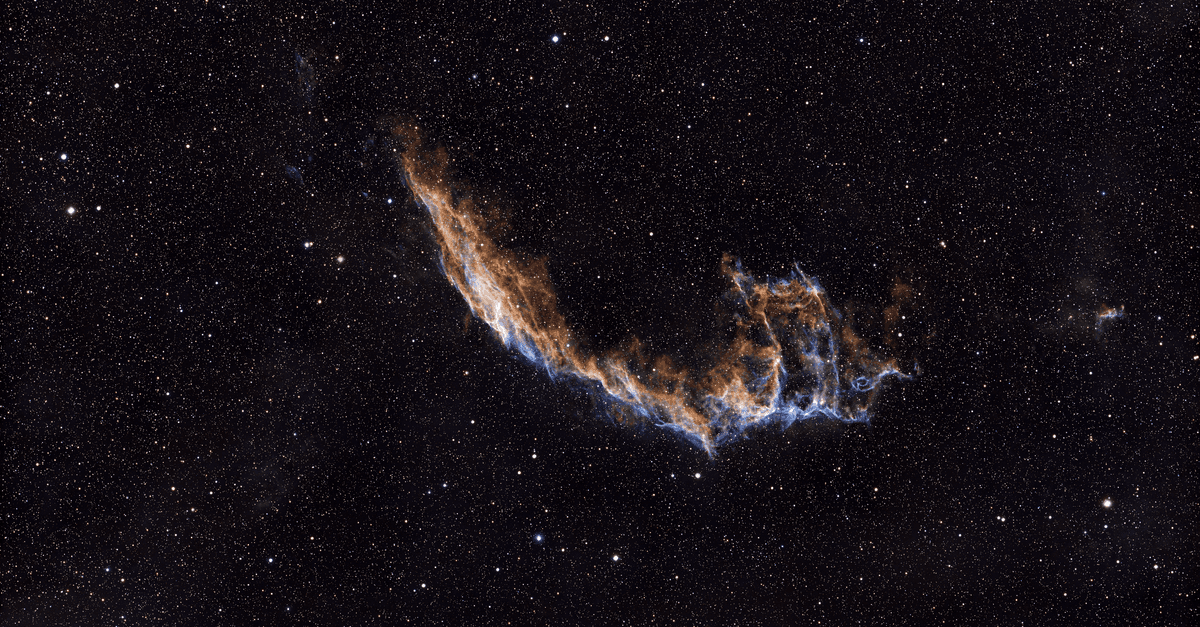
Photo: Adrian Monserrat / Pexels
About 340 years ago, a massive star roughly 11,000 light-years away in the constellation Cassiopeia ran out of fuel, collapsed, and blew itself apart with the energy of 10⁴⁴ joules released in seconds. The explosion should have blazed as one of the brightest objects in the night sky. Almost nobody wrote it down. Today, the expanding shell of that star — called Cassiopeia A, or Cas A — is the youngest known supernova remnant in the Milky Way, and every image returned by Chandra and JWST adds a new chapter to what supernovae actually do to the universe around them.
What Is a Supernova Remnant?
When a massive star explodes, it does not simply vanish. The outer layers of the star are hurled outward at velocities between 5,000 and 15,000 km/s. These ejecta plow into the surrounding interstellar medium — the diffuse gas and dust that fills the space between stars — compressing and heating it into a shell of ionized plasma that glows across the electromagnetic spectrum for thousands of years. This structure is a supernova remnant (SNR).
Supernova remnant (SNR) — the expanding shell of stellar material and swept-up interstellar gas produced by a supernova explosion; visible in radio, X-ray, optical, and infrared wavelengths, typically for tens of thousands of years after the explosion.
The evolution of an SNR passes through well-defined stages. In the early free-expansion phase, the ejecta move at nearly constant velocity, sweeping up very little material relative to their own mass. As the swept-up mass grows comparable to the ejected mass — typically over centuries to millennia — the remnant enters the Sedov-Taylor phase: the blast wave decelerates but still drives a strong shock that heats the surrounding gas to temperatures of tens of millions of kelvin. Much later, the remnant enters a radiative phase, cools, and eventually disperses into the interstellar medium.
Cas A sits at the transition between free-expansion and Sedov-Taylor phases. It is close enough and young enough that detailed imaging can resolve the spatial distribution of individual elements, track the shock wave velocity, and measure the temperature of the central compact remnant. No other SNR gives us this access.
Source: NASA Chandra X-ray Center (2005 onward) — Chandra deep imaging programs of Cas A providing high-resolution X-ray maps of ejecta composition and shock structure over multiple epochs.
The 1680 Mystery: Why Did Nobody See It?
The most obvious question about Cas A is one of human history rather than physics: why was one of the Milky Way's most energetic recent explosions so poorly recorded?
The explosion is dated to approximately 1680 CE based on the remnant's current angular size and expansion rate. In the late 17th century, European astronomy was sophisticated enough that a bright new star would certainly have been noted. Tycho Brahe had catalogued the 1572 supernova exhaustively; Johannes Kepler had done the same for the 1604 event. Both those supernovae were visible in daylight. A Milky Way supernova in 1680 should have attracted the same attention.
The most likely explanation is dust extinction. Cas A sits behind a substantial column of interstellar dust along the line of sight — dust that absorbs optical light very efficiently while being nearly transparent to radio and X-rays. Calculations suggest the explosion would have been dimmed to perhaps third or fourth magnitude at optical wavelengths when seen from Earth, bright but not spectacular, and potentially easily missed by observers not specifically watching that region of sky.
There is one documented candidate observation. The British astronomer John Flamsteed recorded a sixth-magnitude "star" designated 3 Cassiopeiae in August 1680, in a position broadly consistent with Cas A. The observation was made during a survey and not followed up. If Flamsteed did observe the supernova, it was already fading and heavily extincted. No other confirmed observation is known.
Source: Stephenson & Green, Historical Supernovae and Their Remnants (2002) — Systematic review of historical records for Galactic supernovae, including the Flamsteed 3 Cas candidate observation and the extinction argument for the apparent faintness of Cas A.
The contrast with the 1054 CE supernova (now the Crab Nebula) illustrates the effect: the Crab's explosion occurred in a region of lower interstellar extinction and was recorded by astronomers across Asia and possibly the Americas. Cas A was obscured by the same dust lanes that define the inner spiral arm of the Milky Way.
Source: Reed et al., Astronomical Journal (1995) — Distance estimate of ~3.4 kpc (approximately 11,000 light-years) for Cas A and optical extinction analysis confirming AV ≈ 6–7 magnitudes of dust attenuation.
Anatomy of the Remnant: What Chandra Revealed
The Chandra X-ray Observatory, launched in 1999, transformed the study of supernova remnants. X-rays are produced by plasma at temperatures of millions of kelvin — exactly the temperatures in SNR shock fronts — and Chandra's angular resolution of 0.5 arcseconds allows it to map structural details at the parsec scale within Cas A.
The most striking feature of Chandra imaging is the asymmetry of the ejecta. If supernovae were perfectly spherical explosions, the remnant would be a uniform ring. Cas A is not uniform. It shows jets of material extending to the northeast and southwest, enriched in silicon and sulfur, that protrude beyond the main blast wave. These jets likely trace the direction of the explosion's asymmetry — either a rotation axis or the preferred direction of the convective engine driving the explosion.
The dominant X-ray emission from Cas A comes from two distinct components. The forward shock is the outermost boundary, where the blast wave collides with unprocessed interstellar material, heating it to ~20 million kelvin. The reverse shock is the inward-propagating shock that is heating the freshly ejected stellar material as the decelerating blast wave compresses it from behind. Between them lies the contact discontinuity — the boundary between material that was once inside the star and material that was always in the interstellar medium.
Reverse shock — in a supernova remnant, the inward-propagating pressure wave that forms when the forward shock decelerates; it heats the stellar ejecta, causing them to glow in X-rays and allowing their chemical composition to be measured spectroscopically.
Chandra's spectroscopic capability allows element-by-element mapping. Different elements emit X-rays at characteristic energies: silicon at 1.85 keV, sulfur at 2.45 keV, argon at 3.13 keV, calcium at 3.90 keV, and iron at 6.7 keV. By imaging Cas A in each of these energy bands separately, researchers have produced maps of where each element is distributed within the remnant.
The result overturns a simple picture of stellar explosions. The iron-rich ejecta (produced in the deepest layers of the star, closest to the collapsing core) are not primarily found at the center of the remnant. In Cas A, iron clumps appear near the outer edge of the ejecta — apparently having been ejected preferentially in certain directions, overtaking the lighter silicon and sulfur that should, in a spherically symmetric explosion, have been on the outside. This overturning of the stratified stellar layers is direct evidence for the turbulent, asymmetric, convection-driven nature of core-collapse supernova explosions.
Source: Grefenstette et al., Nature (2014) — NuSTAR hard X-ray imaging of Cas A revealing the distribution of radioactive ⁴⁴Ti, showing asymmetric deep-ejecta iron clumps inconsistent with spherically symmetric explosion models.
JWST and the Infrared Revolution
The James Webb Space Telescope's first dedicated imaging of Cas A, released in October 2023, revealed the remnant in a way no previous instrument could match. JWST's Near-Infrared Camera (NIRCam) and Mid-Infrared Instrument (MIRI) detect emission from warm dust and molecular gas at wavelengths between 1 and 25 micrometers — complementary to Chandra's X-rays and revealing different physics.
In the JWST images, Cas A resembles a fractured orange and red shell studded with small bright knots and wispy filaments. The colors in published composites are not arbitrary: orange-red regions correspond to warm dust and emission from sulfur and other heavier elements in the ejecta; green filaments along the outer edge trace synchrotron radiation and emission from swept-up interstellar material; the interior cavity glows with light from ejecta heated by the reverse shock.
One of the most scientifically valuable aspects of the JWST imaging is the resolution of the circumstellar material — gas and dust expelled by the progenitor star before it exploded. Massive stars lose mass continuously through stellar winds, and in the final centuries and millennia before explosion, some undergo episodic mass-loss events that deposit shells of material around them. When the supernova blast wave collides with this circumstellar material, the collision produces optical and infrared emission that traces the pre-explosion mass-loss history of the star. JWST can resolve this material in Cas A at a level of detail not previously possible.
Source: Milisavljevic et al., Astrophysical Journal Letters (2024) — First analysis of JWST NIRCam and MIRI imaging of Cas A, characterizing the ejecta morphology, circumstellar material distribution, and synchrotron emission features.
The JWST images also revealed a puzzling green feature that cuts across the interior of the remnant, dubbed the "Green Monster" by the science team. Its origin is debated: the leading interpretation is that it represents emission from material photoionized by X-rays from the remnant itself, possibly circumstellar material that was engulfed by the initial explosion and has remained inside the outer shock. Understanding this feature may require modeling of the early interaction between the blast wave and material that was close to the star when it exploded.
Nucleosynthesis in Action: The Cas A Element Factory
One of the most significant contributions Cas A makes to astrophysics is direct observation of the products of nucleosynthesis — the creation of chemical elements inside stars and in the violence of their deaths.
Nucleosynthesis — the process by which atomic nuclei are created from lighter elements; stellar nucleosynthesis occurs during normal fusion burning (hydrogen to helium to carbon and beyond), while explosive nucleosynthesis occurs in supernova shock waves, creating additional elements heavier than those produced in hydrostatic burning.
In a massive star, the interior is layered like an onion. The core burns through successive nuclear fuels — hydrogen, helium, carbon, neon, oxygen, silicon — each producing a shell of new elements. Silicon burning in the innermost shell produces iron-peak elements (chromium, iron, nickel). The silicon shell above it is rich in silicon and sulfur. Higher shells contain oxygen, neon, carbon. The hydrogen envelope is on the outside.
In Cas A, Chandra spectroscopy has mapped these layers in the ejecta and measured their masses. The total mass of silicon in the remnant is estimated at approximately 0.1 solar masses. Sulfur is roughly 0.04 solar masses. The total iron mass is harder to measure because some of it is in the form of radioactive ⁴⁴Ti (titanium-44, which decays to calcium-44) whose distribution was mapped by NASA's NuSTAR telescope.
Titanium-44 (⁴⁴Ti) — a radioactive isotope with a half-life of approximately 60 years, produced primarily in the innermost layers of core-collapse supernovae during explosive silicon and oxygen burning; its decay chain (⁴⁴Ti → ⁴⁴Sc → ⁴⁴Ca) powers infrared emission in young remnants and its distribution maps the explosion asymmetry.
The detection of ⁴⁴Ti in Cas A by COMPTEL (in 1994) and its mapping by NuSTAR (2014) is particularly valuable because ⁴⁴Ti is only produced in significant amounts within the innermost layers of the explosion — the region closest to the forming neutron star where conditions are most extreme and least understood. The fact that ⁴⁴Ti is distributed asymmetrically in Cas A, concentrated in two opposing clumps, tells us directly that the explosion engine itself was asymmetric.
The heavier elements in Cas A — silicon, sulfur, argon, calcium — are not just academically interesting. These elements are the building blocks of rocky planets and biological chemistry. The silicon in Earth's mantle, the sulfur in proteins, the calcium in bones: elements like these were distributed into the interstellar medium by supernovae across cosmic history. Cas A is a snapshot of that distribution process, occurring right now, 340 years into a 10,000-year process that will eventually disperse Cas A's contents into the next generation of molecular clouds and planetary systems.
Source: Hwang & Laming, Astrophysical Journal (2012) — Comprehensive Chandra spectral analysis of Cas A ejecta masses and composition, providing element-by-element mapping of the remnant.
The Neutron Star at the Center
At the geometric center of the X-ray emission lies a compact point source — the central compact object (CCO) of Cas A, designated CXOU J232327.9+584842. This is the neutron star left behind when the progenitor star's iron core collapsed.
Neutron stars cool over time after formation, radiating away their internal heat as X-rays. The CCO in Cas A was detected by Chandra shortly after the telescope's launch, and its temperature and luminosity have been monitored ever since. In 2010, a study by Heinke and Ho reported that the neutron star had cooled by approximately 4% over a decade of Chandra observations — from about 2.12 million kelvin to about 2.04 million kelvin. A 4% cooling in 10 years is rapid by neutron star standards.
The explanation invoked for this rapid cooling is neutron superfluidity. Standard neutron star cooling models predict a gradual decline in temperature driven by neutrino emission from the core. But if the neutrons in the core form Cooper pairs and become superfluid — a quantum mechanical phenomenon analogous to superconductivity — there is a brief period of enhanced cooling when the superfluid first forms, driven by a specific neutrino emission process called the Cooper pair breaking and formation (PBF) mechanism. The rapid cooling observed in Cas A's neutron star is consistent with this PBF mechanism activating now, meaning the Cas A neutron star's interior crossed the threshold for neutron superfluidity in the past few decades — a remarkable coincidence that we happened to have X-ray telescopes in operation to observe it.
| Property | Value | Source |
|---|---|---|
| Distance | ~3.4 kpc (~11,000 light-years) | Reed et al. (1995) |
| Age | ~340 years (explosion ~1680 CE) | Expansion rate measurements |
| Angular diameter | ~5 arcminutes | Chandra imaging |
| Physical diameter | ~10 pc (expanding) | Derived from distance + angle |
| Expansion velocity | ~6,000 km/s (blast wave) | Optical/X-ray proper motions |
| CCO surface temperature | ~2 × 10⁶ K (declining) | Chandra monitoring |
| Total ejecta mass | ~2–4 solar masses | Chandra spectral analysis |
| X-ray luminosity | ~10³⁴ erg/s (CCO) | Chandra flux measurements |
Source: Heinke & Ho, Astrophysical Journal Letters (2010) — Discovery of rapid cooling in the Cas A neutron star over a decade of Chandra monitoring, interpreted as evidence for neutron superfluidity.
The CCO in Cas A shows no pulsations, unlike the Crab or Vela pulsars. It is classified as a "central compact object" rather than a rotation-powered pulsar, meaning it does not appear to be generating a pulsar wind nebula. The absence of pulsations may reflect the viewing geometry (the beam, if any, misses Earth) or may indicate that the neutron star's magnetic field is unusually weak or buried beneath accreted fallback material.
Source: Pavlov et al., Astrophysical Journal Letters (2000) — Chandra discovery and initial characterization of the Cas A CCO, establishing its thermal X-ray spectrum and soft spectral shape consistent with a cooling neutron star surface.
The Progenitor Star: What Exploded?
Reconstructing what kind of star exploded in 1680 is possible because the composition and morphology of the ejecta encode the progenitor's properties. Cas A is classified as a Type IIb supernova — a core-collapse event from a star that had retained only a thin hydrogen envelope at the time of explosion, quickly transitioning from hydrogen-rich to hydrogen-poor spectroscopic appearance as the ejecta expanded.
The progenitor was almost certainly a massive star in a binary system. In a binary, a companion star can strip mass from the primary through Roche lobe overflow, removing most of the hydrogen envelope and leaving a star that explodes with a thin or absent hydrogen layer. Alternatively, the star may have been a solitary Wolf-Rayet star that shed its own hydrogen envelope through extremely strong stellar winds.
The mass of the progenitor can be constrained from the ejecta mass. If roughly 2–4 solar masses of material was ejected, and the neutron star remnant has approximately 1.4 solar masses, the pre-explosion carbon-oxygen core had at most 5–6 solar masses. Working backwards through stellar evolution models, this implies a progenitor with an initial mass of roughly 15–25 solar masses on the main sequence. Such stars have main-sequence lifetimes of roughly 7–15 million years.
The binary interpretation gains support from the apparent absence of any surviving companion at the location of Cas A. If a companion star were present, it would likely have been rejuvenated — made hotter and brighter — by mass accretion during the mass-transfer phase. No such rejuvenated star has been identified at Cas A's location to the detection limits of current optical and infrared observations.
Source: Young et al., Astrophysical Journal (2006) — Constraints on the Cas A progenitor from nucleosynthesis yields and ejecta composition, finding consistency with a 15–25 solar mass progenitor that had lost most of its hydrogen envelope.
Cas A in Context: What It Teaches About Supernovae Generally
The value of studying Cas A does not end with Cas A itself. It is a proxy for understanding the class of events responsible for distributing heavy elements through the universe. Because it is the closest young core-collapse SNR and because it is observable across essentially the full electromagnetic spectrum, Cas A has constrained physical models in ways that more distant or older remnants cannot.
The asymmetric explosion geometry revealed by the ⁴⁴Ti distribution informs simulations of core-collapse supernovae, which must explain not just "does the star explode?" but "in what direction does it explode preferentially, and what kicks the neutron star?" The neutron star in Cas A has a measurable proper motion — it is moving across the sky at roughly 350 km/s — which is the recoil kick imparted by the asymmetric explosion. The direction of the kick and the direction of the ⁴⁴Ti excess are approximately anti-correlated, as expected if both trace the explosion asymmetry: the neutron star was kicked away from the direction in which the most material was ejected.
Comparing Cas A with other well-studied remnants — the Crab (Type II, 1054 CE), Tycho's SNR (Type Ia, 1572 CE), and SN 1987A in the Large Magellanic Cloud — illuminates the diversity of supernova outcomes. The Crab produced a pulsar that now spins 30 times per second and energizes the nebula with its spin-down luminosity; Cas A's CCO shows no such energetic pulsar behavior. Tycho's remnant, from a thermonuclear Type Ia explosion, shows a symmetric structure and iron-rich ejecta with no central compact object.
SN 1987A, while located in the Large Magellanic Cloud at 168,000 light-years rather than within the Milky Way, offers a complementary case: a young remnant (now 38 years old) for which we have pre-explosion progenitor identification and neutrino detection, but which is just now beginning to interact strongly with its circumstellar ring. Where SN 1987A gives us temporal evolution from the moment of explosion, Cas A gives us spatial resolution unmatched by any other remnant. Together they triangulate the physics of core-collapse supernovae from different angles.
Source: Fesen et al., Astrophysical Journal Supplement (2006) — Optical spectroscopic survey of Cas A ejecta knots, identifying fast-moving knots (FMK) and quasi-stationary flocculi (QSF) and characterizing their chemical abundances to constrain explosive nucleosynthesis models.
For context on what Cas A eventually produces — the compact remnant at its center is closely related to neutron stars and their extreme properties. The process that created it belongs to the broader family of events described in stellar evolution from birth to death. And the gravitational wave sources detected by LIGO, described in gravitational waves explained, are partly the legacy of core-collapse events like the one that produced Cas A.
The Takeaway
Cassiopeia A is the Milky Way's freshest wound — an explosion so recent that its ejecta are still warm, its neutron star surface temperature still measurable by orbiting telescopes, and its shock front expanding visibly over human timescales. The 1680 explosion went nearly unrecorded because dust dimmed it to obscurity; the 21st century has revealed it in X-ray, gamma-ray, and infrared detail that no optical observer of 340 years ago could have imagined. What Cas A shows us is not merely a beautiful remnant but a running experiment in nucleosynthesis, shock physics, and neutron star interior structure — the universe's way of demonstrating, in real time, how the atoms in rocky planets and living organisms are distributed through the galaxy.
Frequently Asked Questions
Q: Why is Cassiopeia A called the youngest supernova remnant in the Milky Way?
A: Cas A is estimated to be the product of an explosion around 1680 CE, making it approximately 340 years old — younger than any other confirmed supernova remnant currently identified within our galaxy. The Crab Nebula (1054 CE) and the remnants of Tycho's (1572) and Kepler's (1604) supernovae are all older. No other Milky Way supernova has been recorded more recently.
Q: Why was the Cassiopeia A supernova not widely observed in 1680?
A: The explosion was heavily obscured by interstellar dust along the line of sight, which absorbs optical light while transmitting radio and X-ray wavelengths. Estimates suggest the extinction reduced the apparent brightness by six to seven magnitudes, making it appear as a dim star rather than a spectacular daylight event. The only plausible historical observation is a single entry in John Flamsteed's star catalogue, designating it "3 Cassiopeiae" in August 1680.
Q: What does the Cas A neutron star cooling tell us?
A: Chandra monitoring detected a roughly 4% drop in the neutron star's surface temperature over about a decade, which is faster than standard neutrino cooling models predict. The leading explanation is that neutron superfluidity formed inside the neutron star in the past few decades, triggering a brief burst of enhanced neutrino emission via the Cooper pair breaking and formation mechanism. This would make the Cas A neutron star the first object for which neutron superfluidity has been observed to switch on.
Q: What elements has Cas A produced?
A: Chandra spectroscopic mapping has identified large quantities of silicon (~0.1 solar masses), sulfur (~0.04 solar masses), argon, calcium, and iron-group elements distributed through the ejecta. NuSTAR detected radioactive titanium-44, produced in the deepest explosive burning layers. Together these elements represent the output of stellar and explosive nucleosynthesis in a 15–25 solar mass star.
Q: What type of supernova produced Cassiopeia A?
A: Cas A is classified as a Type IIb core-collapse supernova — a massive star that had lost most but not all of its hydrogen envelope before exploding, likely through mass transfer to a binary companion or through strong stellar winds. The ejecta show evidence for rapid hydrogen stripping and a bare helium-carbon-oxygen core at the time of explosion.
Q: What did JWST reveal about Cas A that Chandra could not?
A: JWST's infrared sensitivity, particularly with MIRI and NIRCam, revealed warm dust emission, fine-scale filamentary structure, and the distribution of circumstellar material expelled by the progenitor before it exploded. One puzzling feature — a bright green emission region dubbed the "Green Monster" — has no clear X-ray counterpart and may trace photoionized circumstellar material engulfed by the initial blast wave.
Q: How fast is the Cas A shock wave expanding?
A: The forward shock is currently expanding at roughly 6,000 km/s, measurable by comparing Chandra images taken years apart (the remnant's angular size increases at a detectable rate). The neutron star itself is moving at approximately 350 km/s relative to the explosion site — the recoil kick from the asymmetric explosion.
Read next:
Follow new articles
Add SciHub101 to your feed reader to see new science and technology stories.
About the Author
SciHub101 is an independent science and technology publication founded and edited by Buğra Sözeri, a software engineer and app developer based in Türkiye. AI tools assist with drafting and research. Source documentation in the existing archive is uneven, and articles are being reviewed and corrected. The Editorial Team byline identifies editorial responsibility; it does not certify specialist or independent human review. Where we compare products, anything built by our own team is labelled as such — see the editorial guidelines and About page for how corrections and disclosures work.
Related Articles
The Exoplanet Atmosphere Revolution: What JWST Has Found So Far
For most of the history of exoplanet science, astronomers could detect planets but not smell them. They could measure orbital periods, estimate masses, and infer temperatures — but the chemical composition of another world's atmosphere was almost entirely out of reach. JWST changed that. In its first two years, it detected carbon dioxide on a gas giant 700 light-years away, found evidence of methane and CO₂ on a possible ocean world 120 light-years out, and ruled out thick atmospheres on the rocky TRAPPIST-1 planets — all using a technique called transmission spectroscopy that is as elegant as it is precise.
The Cassini Grand Finale: What 22 Death Dives Taught Us About Saturn
In 2017, NASA deliberately destroyed the Cassini spacecraft by plunging it into Saturn. Before it died, it made 22 passes through a region no spacecraft had ever entered — the 2,000-kilometer gap between Saturn and its innermost rings. The data it collected upended what scientists thought they knew about the rings' age, mass, and origin, and revealed a magnetic field so perfectly symmetrical it has no right to exist.

What Is Nucleosynthesis? How Atoms Are Forged in Stars and Stellar Explosions
Nucleosynthesis is the process by which atomic nuclei are built from simpler components. Hydrogen and helium were made in the first three minutes after the Big Bang. Every heavier element was forged inside stars or in their violent deaths. Gold and platinum are made almost entirely in neutron star mergers — cosmic events detected as gravitational waves.
AGB Stars: The Carbon Factories That Seed the Universe
Most of the carbon in your body was not made in a supernova. It was made in the bloated outer layers of a dying star on the asymptotic giant branch — a phase of stellar evolution so chemically productive that a single AGB star can enrich the surrounding interstellar medium with more carbon than a thousand supernovae. These stars pulse, dredge up nuclear-processed material from their interiors, and blow it into space in slow, dense winds that eventually become planetary nebulae.
Neutron Stars Explained: Dense Matter and Cosmic Mergers
Neutron-star interiors remain uncertain. X-ray observations and mergers let researchers test dense-matter models and investigate heavy-element production.
How Stars Are Born and Die: The Complete Story of Stellar Evolution
Every atom of iron in your blood was forged inside a dying star. Here's the full life cycle that made you possible.