AGB Stars: The Carbon Factories That Seed the Universe
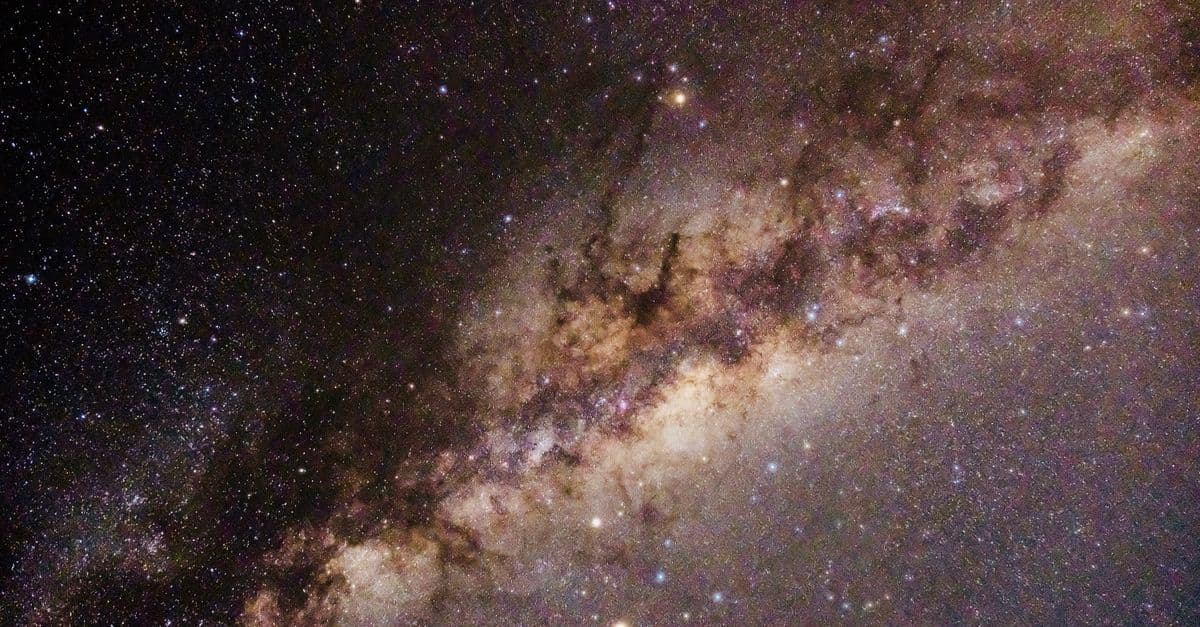
Photo: Marek Pavlík / Pexels
Every carbon atom in every organic molecule on Earth passed through the interior of a dying star. Not a supernova — the popular image of heavy-element production — but a slower, quieter, more chemically complex process occurring in stars between about one and eight times the mass of the Sun, in a late evolutionary phase called the asymptotic giant branch. These AGB stars are among the most chemically productive objects in the galaxy, and understanding them means understanding where most of the building blocks of life actually came from.
What Is the Asymptotic Giant Branch?
To understand AGB stars, you need a brief orientation in the lifecycle of a low-to-intermediate mass star.
A star like the Sun spends most of its life fusing hydrogen in its core — the main sequence. When hydrogen runs out in the core, the star expands into a red giant, fusing hydrogen in a shell around an inert helium core. The helium core eventually becomes dense and hot enough to ignite helium burning, and the star settles onto the horizontal branch or helium-burning main sequence (depending on its mass and composition). When the helium in the core is exhausted, the star has a carbon-oxygen core surrounded by two burning shells: a helium shell above the core and a hydrogen shell above that. This configuration is the asymptotic giant branch.
Asymptotic giant branch (AGB) — a late phase of stellar evolution for stars of roughly 0.8–8 solar masses, characterized by a degenerate carbon-oxygen core, a helium-burning shell, and a hydrogen-burning shell, surrounded by a greatly expanded convective envelope; named for its position on the Hertzsprung-Russell diagram, where it runs approximately parallel to and above the red giant branch.
The "asymptotic" in the name refers to the star's track on the Hertzsprung-Russell diagram, where the AGB runs parallel to and just slightly above the first red giant branch that the star traversed earlier. In terms of physical properties, AGB stars are enormous: typical radii of 100–500 solar radii, luminosities of 1,000–20,000 solar luminosities, and surface temperatures cool enough (2,500–4,000 K) to allow molecular chemistry in the outer atmosphere.
Like a vast, dim, cool furnace, an AGB star is not dramatic from the outside. From the inside, it is extraordinarily active.
Source: Habing & Olofsson (eds.), Asymptotic Giant Branch Stars, Springer (2003) — The primary reference text for AGB stellar physics, covering structure, evolution, mass loss, and circumstellar chemistry.
Thermal Pulses: The Star That Breathes
The defining feature of AGB stellar evolution is the thermal pulse — a periodic, explosive event in the helium-burning shell that dramatically reshapes the star's interior structure.
Here is the mechanism. The AGB star burns hydrogen in a thin shell above the carbon-oxygen core. This shell deposits helium ash below it, growing the helium shell. For a time, the helium shell is not hot or dense enough to burn. But the helium accumulates until — after an interval of hundreds to hundreds of thousands of years depending on the stellar mass — the bottom of the helium layer becomes hot and dense enough for helium fusion to ignite. Because the helium shell is thermally thin and degenerate (partially supported by degeneracy pressure rather than thermal pressure), the ignition is explosive rather than gradual. The helium shell suddenly releases a burst of energy — a thermal pulse.
Thermal pulse (TP) — a brief explosive episode of helium shell burning in an AGB star, releasing ~10²⁵–10²⁶ joules of energy in a matter of years; the pulse drives a convective zone through the helium-burning region and can potentially extend upward into the hydrogen-rich envelope.
The thermal pulse drives a strong convective zone through the helium-burning shell. This convective region dredges up material from the nucleosynthesis region into the overlying layers. Immediately after the pulse, when the luminosity spike from the helium shell has subsided, the hydrogen-burning shell may temporarily be extinguished. At this point, the large convective envelope of the star can reach down into the region that was recently processed by helium burning and the thermal pulse — mixing carbon-rich material from deep inside the star into the outer layers. This is the third dredge-up.
Third dredge-up — the convective mixing event following a thermal pulse in which the stellar envelope penetrates the region enriched by helium burning, bringing carbon (primarily ¹²C from the triple-alpha reaction) and s-process elements up to the stellar surface.
The third dredge-up is the mechanism by which AGB stars become carbon-rich. Before sufficient dredge-up episodes, the star's surface is oxygen-dominated (the C/O ratio is less than 1.0), as in ordinary M-type giant stars. After enough dredge-up episodes have raised the surface carbon abundance, the C/O ratio exceeds 1.0. The chemistry of the stellar atmosphere changes dramatically: instead of oxygen-dominated molecules (TiO, VO, H₂O) dominating the spectrum, carbon-dominated molecules (C₂, CN, C₃, HCN) take over. The star has become a carbon star.
Source: Straniero et al., Astrophysical Journal (1995) — Theoretical models of thermal pulses and third dredge-up in AGB stars, establishing the quantitative relationship between stellar mass, metallicity, and the onset of carbon star formation.
The s-Process: Slow Neutron Capture in the AGB Interior
Carbon is not the only element that AGB stars manufacture and distribute. They are also the primary site of the s-process — the slow neutron capture process that builds roughly half of the elements heavier than iron in the periodic table.
s-process (slow neutron capture process) — a nucleosynthesis pathway in which atomic nuclei capture neutrons one at a time, with each capture allowing time for the newly produced nucleus to undergo beta decay if it is unstable before capturing another neutron; produces elements from strontium (Z=38) through lead (Z=82) and bismuth (Z=83).
The s-process requires both free neutrons and seed nuclei (iron and lighter elements). In AGB stars, neutrons are produced by two reactions. The primary neutron source is the reaction ¹³C + α → ¹⁶O + n, which operates in a thin layer called the ¹³C pocket just above the carbon-oxygen core between thermal pulses. During the thermal pulse itself, a secondary neutron source, ²²Ne + α → ²⁵Mg + n, operates at higher temperatures in the convective pulse-driven zone.
The ¹³C pocket itself requires explanation: it forms when a small amount of hydrogen from the envelope is mixed into the helium-rich layer during the third dredge-up. Proton captures on ¹²C produce ¹³N, which decays to ¹³C. This thin ¹³C layer then burns quietly between pulses, releasing neutrons that are captured by iron-seed nuclei, building up heavier elements step by step.
The products of AGB s-process nucleosynthesis include barium, strontium, lanthanum, cerium, yttrium, zirconium — elements collectively called the heavy s-process elements (hs, with mass number A > 90) and light s-process elements (ls, 38 ≤ Z ≤ 40, the first peak around strontium and zirconium). The ratio of hs to ls elements in the atmosphere of a carbon star encodes the neutron exposure that the star's interior has experienced, and this ratio can be measured spectroscopically in both AGB stars themselves and in the metal-poor stars that were chemically enriched by ancient AGB winds.
| Element Group | Representative Elements | AGB Origin | Period Table Range |
|---|---|---|---|
| Light s-process (ls) | Sr, Y, Zr | ¹³C pocket, lower exposure | Z = 38–40 |
| Heavy s-process (hs) | Ba, La, Ce, Nd, Sm | ¹³C pocket, higher exposure | Z = 56–62 |
| Lead peak | Pb, Bi | High-metallicity AGB, metal-poor AGB | Z = 82–83 |
| Carbon | ¹²C | Triple-alpha reaction, 3rd dredge-up | Z = 6 |
| Nitrogen | ¹⁴N | CNO burning in H shell, 2nd dredge-up | Z = 7 |
Source: Gallino et al., Astrophysical Journal (1998) — Quantitative models of s-process nucleosynthesis in low-mass AGB stars, establishing the ¹³C pocket as the primary neutron source and deriving s-process abundance predictions that match observations of carbon stars and post-AGB stars.
Mass Loss: How AGB Stars Seed the Galaxy
An AGB star's chemical products would be worthless to the galaxy if they stayed inside the star. They reach the interstellar medium through mass loss — the continuous ejection of the star's outer layers in a stellar wind.
AGB mass loss is among the most efficient in stellar astrophysics. The luminosity of an AGB star is so high, and the stellar radius so large, that radiation pressure on dust grains forming in the cool outer atmosphere can drive outflows at velocities of 5–30 km/s with mass-loss rates ranging from 10⁻⁷ to 10⁻⁴ solar masses per year. At the high end — in the superwind phase near the end of AGB evolution — the star can lose the majority of its remaining envelope in just a few thousand years, ejecting it into a dense circumstellar shell that eventually becomes a planetary nebula.
AGB superwind — the dramatically enhanced mass-loss phase at the end of AGB evolution, with mass-loss rates exceeding 10⁻⁵ solar masses per year, driven by radiation pressure on dust; this phase strips the stellar envelope and exposes the hot carbon-oxygen core, which will become a white dwarf.
The chemistry of the outflow depends on whether the star is an oxygen-rich M-type giant or a carbon star. Oxygen-rich outflows form silicate dust grains (olivine, pyroxene), while carbon-rich outflows form carbonaceous dust grains and molecules such as C₂H₂ (acetylene) and PAHs (polycyclic aromatic hydrocarbons). Both types of grains have been identified in meteorites as presolar grains — microscopic particles preserved inside primitive meteorites that predate the solar system and carry isotopic signatures of their AGB origin.
Isotopic measurements of presolar silicon carbide (SiC) grains — found in carbonite meteorites — directly confirm the s-process predictions from AGB models. The ratios of s-process isotopes in these grains match the theoretical output of thermally pulsing AGB stars with remarkable precision. The grains are time capsules: AGB stellar material that survived the formation of the solar system and is now measurable in the laboratory.
Source: Zinner, Treatise on Geochemistry: Meteorites and Cosmochemical Processes (2014) — Review of presolar grain discoveries and their isotopic signatures, confirming AGB nucleosynthesis models through direct laboratory measurements of s-process element ratios in SiC grains.
Mira Variables: AGB Stars That Pulsate
The most visually dramatic characteristic of many AGB stars is their variability. Late AGB stars pulsate with periods ranging from a few hundred days to more than 1,000 days and can vary in brightness by factors of 10 to 100 in the visible band — making them among the most variable stars in the sky.
Mira variables — long-period variable AGB stars with pulsation periods greater than 100 days and optical amplitude variations greater than 2.5 magnitudes; named for Mira (o Ceti), the prototype, which varies from naked-eye visibility to telescopic faintness on a period of approximately 332 days.
The pulsations are driven by the same mechanism as all stellar pulsations: the kappa mechanism, in which a layer in the star that periodically becomes more opaque traps radiation, heats up, expands, and then cools as it expands, becoming less opaque and allowing radiation to escape — causing the layer to contract again. In cool AGB stars, the relevant opacity source is hydrogen ionization. The large amplitude of Mira pulsations reflects the fact that these stars sit close to a pulsational instability strip in the HR diagram, and the pulsations couple strongly to the mass loss.
Mira variables are not just scientifically important — they are astrophysically significant. The pulsation-enhanced mass-loss drives the AGB superwind, and the pulsation period is correlated with luminosity (a period-luminosity relation analogous to that of Cepheid variables). This period-luminosity relation makes Mira variables useful distance indicators in the infrared, where their pulsation amplitudes are more modest and their luminosities less variable than in the optical.
The prototype, Mira (omicron Ceti), varies between magnitude 2.0 and 10.1 on a 332-day period and is located about 300 light-years away — close enough that its large angular diameter (approximately 50 milliarcseconds) has been resolved directly by interferometric observations, revealing surface features and a dramatically asymmetric extended atmosphere.
Source: Whitelock et al., Monthly Notices of the Royal Astronomical Society (2008) — Period-luminosity relations for Mira variables in the Large Magellanic Cloud using IRAC infrared photometry, calibrating the Mira distance scale.
The Connection to Planetary Nebulae
The AGB phase ends when the superwind strips away the hydrogen envelope, exposing the hot carbon-oxygen core. As the last layers of envelope are expelled, the ejected circumstellar shell expands and becomes optically thin, while the newly exposed stellar core heats up rapidly — rising in surface temperature from a few thousand kelvin to over 100,000 kelvin as it contracts toward its final state as a white dwarf. The ultraviolet radiation from the hot core ionizes the expanding shell: the result is a planetary nebula.
Planetary nebula — a shell of ionized gas expelled by an AGB star during its superwind phase, illuminated by the ultraviolet radiation from the hot stellar core that will become a white dwarf; the name is purely historical (they resemble planetary disks in small telescopes) and bears no relation to planets.
Planetary nebulae are among the most morphologically diverse objects in astronomy. While classical models predict spherical or mildly elliptical shells (from spherically symmetric AGB winds), the observed shapes of real planetary nebulae include rings, bipolar lobes, hourglasses, spirals, and multiply nested shells. The origin of this morphological diversity is not fully understood but likely involves binary companions, magnetic fields, and the interaction of successive wind episodes with different geometries.
The chemical composition of the gas in a planetary nebula records the nucleosynthesis history of the AGB star that produced it. Nitrogen is enhanced in the nebulae of more massive AGB stars (where hot bottom burning — a process in which the base of the convective envelope is hot enough for active hydrogen burning — converts dredged-up carbon to nitrogen). Carbon is enhanced in the nebulae of lower-mass AGB stars that became carbon stars. Measuring these abundances in planetary nebulae throughout the Milky Way and in nearby galaxies gives a census of AGB nucleosynthesis over cosmic history.
Source: Kwok, The Origin and Evolution of Planetary Nebulae, Cambridge University Press (2000) — Comprehensive review of the AGB-to-planetary nebula transition, covering mass-loss mechanisms, morphology formation, and the ionization of expelled shells.
AGB Stars Across the Universe
The cumulative contribution of AGB stars to the interstellar medium is enormous. Estimates suggest that AGB winds are responsible for approximately 85% of the carbonaceous dust injected into the interstellar medium of the Milky Way. They are the dominant source of ¹²C, ¹³C, ¹⁴N, and the s-process elements between strontium and bismuth. In terms of mass returned to the interstellar medium, AGB stars rival supernovae — not through explosive violence, but through the patient, steady output of stellar winds accumulated over timescales of hundreds of thousands of years.
In the early universe, AGB stars were less chemically productive because low-metallicity stellar interiors behave differently: the ¹³C pocket is less efficient, s-process neutron exposure is lower, and the third dredge-up onset requires lower stellar mass in more metal-poor stars. But as galaxies evolved and stellar generations cycled, AGB output became increasingly important in shaping the chemical milieu from which later planetary systems formed.
The connection between AGB nucleosynthesis and the composition of the solar system is direct and measurable. Presolar SiC grains in meteorites carry the isotopic signatures of individual AGB stars — including specific isotope ratios of carbon, nitrogen, silicon, and s-process elements — that can be modeled to constrain the mass, metallicity, and evolutionary state of the parent stars. The solar system's chemical inventory is a superposition of contributions from dozens of AGB stars (and supernovae, and neutron star mergers) that enriched the molecular cloud from which the Sun formed 4.6 billion years ago.
Source: Busso, Gallino & Wasserburg, Annual Review of Astronomy and Astrophysics (1999) — Landmark review connecting AGB nucleosynthesis models, s-process theory, and presolar grain observations to establish AGB stars as the primary s-process site.
Understanding AGB stellar evolution connects directly to the fate of stars like the Sun, which will eventually pass through the AGB phase before shedding its envelope as a planetary nebula and leaving behind a white dwarf. The broader context of stellar life cycles, from birth in stellar nurseries through the red giant and AGB phases to their remnants, is laid out in stellar evolution from birth to death.
The Takeaway
AGB stars are not the most spectacular objects in astrophysics — they do not produce gravitational waves, emit gamma-ray bursts, or power quasars. What they do is more fundamental: they manufacture the carbon that forms the backbone of organic chemistry, distribute it across the interstellar medium in slow, patient winds over millions of years, and leave behind both the glowing shells we call planetary nebulae and white dwarfs that serve as the end state for 97% of all stars that will ever form in the Milky Way. The carbon in every amino acid, every DNA base, every cell membrane in every living thing on Earth passed through the interior of a thermally pulsing, dredge-up-driven, superwind-ejecting AGB star. That process is not a footnote in stellar physics. It is why life exists with the chemical toolkit that it has.
Frequently Asked Questions
Q: What makes an AGB star different from a regular red giant?
A: A regular red giant (first giant branch) has an inert helium core surrounded by a hydrogen-burning shell. An AGB star has gone further: the helium core has already ignited and burned, leaving a carbon-oxygen core. The AGB star has two active burning shells — hydrogen and helium — which interact periodically in the thermal pulse cycle. The AGB phase is more chemically productive and involves far more mass loss than the first giant branch.
Q: How do AGB stars make carbon?
A: Carbon is produced in the helium-burning shell through the triple-alpha reaction: three helium-4 nuclei fuse to form carbon-12. Thermal pulses drive this carbon upward through convective mixing, and the subsequent third dredge-up carries it into the stellar envelope and eventually to the surface. Repeated dredge-up episodes raise the surface carbon abundance until the star becomes a carbon star with a C/O ratio greater than 1.
Q: What is the s-process and why does it happen in AGB stars?
A: The s-process is nucleosynthesis via slow neutron capture, building elements from strontium to bismuth. AGB stars provide the necessary conditions: a neutron source (the ¹³C + alpha reaction in a thin layer called the ¹³C pocket), iron-group seed nuclei, and the thermal pulses that repeatedly process the material. Roughly half of all elements heavier than iron in the universe were made by the s-process in AGB stars.
Q: What is a Mira variable?
A: A Mira variable is a pulsating AGB star with an optical variability amplitude greater than 2.5 magnitudes and a pulsation period exceeding 100 days. The pulsations are driven by periodic opacity changes in the hydrogen ionization zone of the stellar envelope. Mira variables are important distance indicators because their pulsation period correlates with intrinsic luminosity, particularly in the infrared. Mira itself (omicron Ceti) varies from second magnitude to barely naked-eye visibility on a 332-day cycle.
Q: How do planetary nebulae form from AGB stars?
A: At the end of the AGB phase, the superwind strips the remaining hydrogen envelope at rates of up to 10⁻⁴ solar masses per year. The expelled gas forms a circumstellar shell that expands outward. As the shell becomes optically thin and the stellar core contracts and heats above 30,000 K, ultraviolet radiation ionizes the expanding shell, producing the emission-line glow of a planetary nebula. The process takes roughly 10,000–50,000 years from the end of the AGB phase to the fading of the nebula.
Q: What fraction of the galaxy's carbon came from AGB stars?
A: AGB winds are estimated to produce approximately 85% of the carbonaceous dust and a large fraction of the gaseous carbon injected into the Milky Way's interstellar medium. Core-collapse supernovae produce carbon too, but the AGB contribution dominates over cosmic history for stars in the 1–8 solar mass range, which are far more numerous than the massive stars that end in supernovae.
Q: Can we see AGB stars in other galaxies?
A: Yes. AGB stars are luminous enough — reaching 20,000 solar luminosities at their brightest — to be individually resolved in nearby galaxies including the Magellanic Clouds, Andromeda (M31), and several dwarf spheroidal galaxies. Infrared surveys (particularly with Spitzer and now JWST) have catalogued thousands of AGB stars in the Magellanic Clouds, allowing comparison of AGB populations at different metallicities and providing tests of nucleosynthesis models.
Read next:
Follow new articles
Add SciHub101 to your feed reader to see new science and technology stories.
About the Author
SciHub101 is an independent science and technology publication founded and edited by Buğra Sözeri, a software engineer and app developer based in Türkiye. AI tools assist with drafting and research. Source documentation in the existing archive is uneven, and articles are being reviewed and corrected. The Editorial Team byline identifies editorial responsibility; it does not certify specialist or independent human review. Where we compare products, anything built by our own team is labelled as such — see the editorial guidelines and About page for how corrections and disclosures work.
Related Articles
2I/Borisov: The First Confirmed Interstellar Comet
In August 2019, an amateur astronomer in Crimea spotted a faint smudge moving at impossible speed. It turned out to be a comet from another star system — only the second interstellar object ever confirmed in our solar system, and the first one to look genuinely familiar.
The Search for Extraterrestrial Life: Where Do We Stand?
The search for life beyond Earth focuses on two main questions: (1) Has intelligent life evolved elsewhere in the cosmos? (2) Has life in any form (microbial) emerged on exoplanets or moons? The Drake Equation (1961) estimated the number of communicative civilizations in the Milky Way at N = R × f_p × n_e × f_l × f_i × f_c × L, yielding estimates from 1 to 1 million civilizations depending on parameter assumptions. Yet 70 years of SETI (Search for Extraterrestrial Intelligence) has found no confirmed signals. Meanwhile, exoplanet discoveries (5,500+ as of 2026) reveal that habitable-zone Earth-like planets are common. Mars, Europa, and Enceladus show signs of liquid water and reduced carbon compounds. JWST observations have detected biosignature candidates in exoplanet atmospheres. The paradox is stark: habitable worlds appear common, yet no confirmed biosignatures have been found. This article reviews the evidence for habitable zones, biosignature detection, and the Fermi Paradox.
Cassiopeia A: The Youngest Supernova Remnant in the Milky Way
Cassiopeia A is the expanding debris field of a star that exploded around 1680 CE — yet almost no one on Earth recorded it. Today, X-ray and infrared telescopes reveal a forensic masterpiece: shock waves, newly minted heavy elements still glowing from the blast, and a neutron star cooling at the center. Cas A is not just a beautiful object. It is the best laboratory we have for understanding what supernovae actually do to the universe.
The Last Stars: What the Universe Looks Like in a Trillion Years
The Sun has about 5 billion years left. The last stars in the universe will burn for 10 trillion. After they go out, the cosmos enters an era so dark and cold that physics itself may eventually dissolve the matter we're made of.
White Dwarfs: The Fate of 97% of All Stars
When the Sun dies, it will leave behind a white dwarf — a city-sized object containing half the Sun's mass, supported not by nuclear fusion but by quantum mechanics. White dwarfs are already the most common stellar remnants in the galaxy, and every star you see in the night sky under 8 solar masses will eventually become one. Some will detonate as the universe's most reliable distance markers. Others will crystallize into diamond-like spheres and cool for trillions of years.
The Big Bang: How the Universe Began
What was the Big Bang? Explore the evidence, timeline, and science behind the origin of the universe — from CMB to cosmic inflation.