The Search for Extraterrestrial Life: Where Do We Stand?
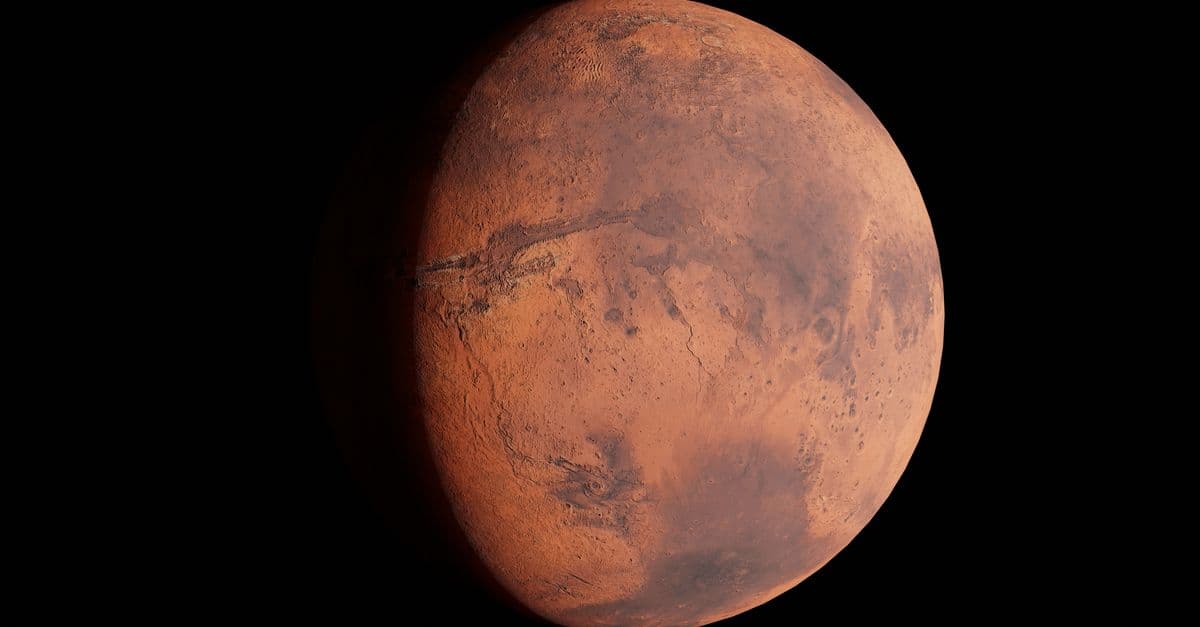
Photo: Zelch Csaba / Pexels
On August 15, 1977, a radio telescope at Ohio State University's Big Ear Observatory detected a narrow-band radio signal at 1420 megahertz coming from the direction of the Chi Aurigae star group. The signal was so remarkable that Jerry Ehman, the astronomer analyzing the data, circled it and wrote "Wow!" in the margin. The "Wow! signal" lasted 72 seconds, was never detected again, and remains unexplained. Decades later, the most likely explanation is that it was a false positive (radio interference, signal reflection from a satellite), but the incident encapsulates the search for extraterrestrial intelligence: we are listening intently for a signal that may never come, in an era when exoplanet discoveries reveal that habitable worlds are likely abundant. The central question remains unanswered: Is Earth the only world where life has emerged? If habitable planets are common, why have we found no confirmed evidence of life beyond Earth? And what would we recognize as extraterrestrial life if we encountered it?
The Habitable Zone: Where Life Can Emerge
Life on Earth requires liquid water. This is not speculative: every known organism requires it. The search for extraterrestrial life therefore focuses on finding worlds with liquid water.
A planet's ability to maintain liquid water depends on its distance from its star and the star's luminosity. If a planet is too close, stellar heat evaporates water and creates a runaway greenhouse effect. If too far, water freezes. The habitable zone (also called the "Goldilocks zone") is the range of orbital distances where a planet receives enough stellar energy to maintain liquid water on its surface.
Habitable zone — the orbital distance range around a star where stellar energy is sufficient to maintain liquid water on a planet's surface, assuming the planet has a substantial atmosphere. For the Sun, this is approximately 0.95–1.37 astronomical units (AU), corresponding roughly to Earth and Venus's orbits.
The habitable zone depends on the star's luminosity and spectral type. For a hot star like Sirius (40 times the Sun's luminosity), the habitable zone is farther from the star. For a cool red dwarf like Proxima Centauri (0.12 percent the Sun's luminosity), it is very close, only 0.05 AU away.
As of 2026, approximately 5,600 exoplanets have been confirmed in orbits around other stars. Of these, approximately 2,400 are in the habitable zone of their star. Additionally, many of these habitable-zone planets appear to be Earth-sized (1–2 Earth radii). Using planetary occurrence rates and the Milky Way's star count (~200 billion stars), astronomers estimate approximately 40 billion potentially habitable (Earth-sized, habitable-zone) planets in the Milky Way alone.
This is a staggering number. If even one in a billion is inhabited, that suggests millions of biospheres in our galaxy. Yet we have found no confirmed biosignature.
| Star Type | Luminosity | Habitable Zone (AU) | Example System |
|---|---|---|---|
| Sun-like (G) | 1 | 0.95–1.37 | Solar System |
| Hot star (A) | 10 | 3–4 | Vega |
| Red dwarf (M) | 0.01 | 0.05–0.1 | TRAPPIST-1 |
| Blue giant (O) | 10,000 | 30–50 | Rigel |
Source: NASA Exoplanet Archive (2026), "Habitable Zone Exoplanet Catalog" — the authoritative database of habitable-zone planets. 2,400+ confirmed as of 2026.
Biosignatures: How We Would Recognize Extraterrestrial Life
Detecting life on distant exoplanets requires recognizing biosignatures — atmospheric or surface chemical signatures indicating biological activity.
Biosignature — a detectable chemical, biological, or physical feature indicating the presence of life. In exoplanet atmospheres, this might be an unusual chemical combination that is hard to produce abiotically (without life).
Atmospheric Biosignatures
Earth's atmosphere contains oxygen (21 percent), primarily produced by photosynthetic organisms. Oxygen is chemically reactive: it combines with methane, hydrogen, and other reducing gases in the atmosphere. In the absence of life, oxygen would be depleted in approximately 2 million years. The presence of oxygen in an exoplanet atmosphere suggests photosynthetic life.
However, oxygen alone is not diagnostic. Ultraviolet radiation can split water vapor (H₂O) into hydrogen and oxygen through photolysis. Some early Earth atmospheres may have contained oxygen from photolysis without life. Therefore, oxygen is a potential biosignature but requires supporting evidence.
Methane (CH₄) is produced by anaerobic microbes (methanogens) on Earth. It is also produced abiotically through geological reactions (serpentinization, the reaction between water and olivine rock). Methane is chemically unstable: it oxidizes to CO₂ in approximately 10 years in the presence of oxygen. The combination of oxygen + methane in an atmosphere is harder to explain without life: if oxygen is present, it should oxidize methane abiotically. The simultaneous presence suggests they are being continuously replenished, possibly by life.
Ozone (O₃) is produced when oxygen is exposed to ultraviolet radiation. The combination of oxygen + ozone + methane is considered a strong biosignature: all three together suggest photosynthetic oxygen production and methane from microbial life.
Other potential biosignatures include:
- Phosphine (PH₃): on Earth, phosphine is produced by anaerobic microbes and various industrial processes. It is extremely unstable in oxygen atmospheres. In 2020, researchers claimed detection of phosphine in Venus's atmosphere, suggesting possible microbial life, but subsequent analyses suggested instrumental artifacts.
- Dimethyl sulfide (DMS): produced by phytoplankton and algae on Earth. Its presence in exoplanet atmospheres could suggest ocean-based life.
Surface Biosignatures
For planets and moons without atmospheres or with thin atmospheres, surface biosignatures are relevant:
- Pigments: photosynthetic organisms contain pigments (chlorophyll, carotenoids, etc.) that absorb specific wavelengths of light. The reflection spectrum of a planetary surface could reveal pigments.
- Seasonal color changes: vegetation on Earth shows seasonal color changes. An exoplanet surface with regions that change color seasonally could indicate plant-like life.
Current Detection Methods: JWST and Future Missions
The James Webb Space Telescope (JWST), launched in 2021, can analyze the atmospheric composition of exoplanet transits using transmission spectroscopy.
Source: Seager, S. (2010), Exoplanet Atmospheres, Princeton University Press — comprehensive reference on atmospheric characterization of exoplanets and biosignature detection methods.
Transmission spectroscopy — a method where a planet passes in front of its star (from our perspective). Stellar light passing through the planet's atmosphere is absorbed by atmospheric gases. By measuring the wavelength-dependent absorption, scientists determine atmospheric composition.
JWST has observed approximately 30 exoplanet atmospheres in detail. In 2024–2025, several teams reported detection of potential biosignature candidates in a few systems:
K2-18b (2023 observation by JWST): a sub-Neptune exoplanet in the habitable zone of a red dwarf. JWST detected possible dimethyl sulfide (DMS) and excess methane, interpreted by some as potential biosignatures. However, other teams argued that the data could be fit with non-biological atmospheric models, so the biosignature interpretation is uncertain.
LHS 475b (2023 observation by JWST): a rocky Earth-sized planet in the habitable zone. JWST did not find obvious biosignatures in its atmosphere.
TRAPPIST-1e (ongoing observations): an Earth-sized exoplanet in the habitable zone of a red dwarf star. JWST is gathering data on its atmosphere but has not yet detected biosignatures.
None of these detections are confirmed as biosignatures. The consensus is that current data are consistent with both biological and non-biological atmospheric chemistry. Confirmation would require either:
- Stronger spectral features (higher signal-to-noise ratio) that are unambiguously difficult to explain without life.
- Direct imaging of the surface or detection of multiple independent biosignatures simultaneously.
Future missions (JWST successor, the Habitable Worlds Observatory planned for the 2040s) will have greater sensitivity and can survey larger populations of habitable-zone exoplanets.
Source: ESA Science Archives (2024), "JWST Exoplanet Spectroscopy Results: Atmosphere and Biosignature Detections" — compilation of JWST observations and biosignature analysis for 30+ exoplanet atmospheres.
Solar System Candidates: Mars, Europa, and Enceladus
Beyond exoplanet detection, the solar system contains several worlds with conditions potentially suitable for microbial life.
Mars: Water, Organics, Methane
Mars has a thin atmosphere (primarily CO₂) and a surface temperature averaging −65 degrees Celsius. It is a harsh environment now, but evidence suggests that Mars had liquid water on its surface 3–4 billion years ago.
Current evidence for habitability:
- Subsurface water ice: radar observations from Mars Express and other orbiters confirm the presence of substantial water ice at high latitudes and near the south polar cap.
- Methane in atmosphere: seasonal variations in atmospheric methane (detected by Curiosity rover and space-based instruments) suggest either geological sources (serpentinization) or biological production. However, methane abundance (approximately 10 parts per billion) is very low and could have either origin.
- Organic compounds: the Curiosity rover has detected thiophenes (sulfur-containing organic compounds) in Martian rocks. These could be produced by geological reactions or degraded biological material from ancient Mars.
- Radiation: without a magnetic field, Mars's surface receives high radiation (approximately 233 millisieverts per year, comparable to astronaut exposure in space). This sterilizes the surface but would not penetrate deep underground (bedrock at 1 meter depth reduces radiation by a factor of 100).
The consensus is that Mars had habitable conditions billions of years ago and may still have microbial life in subsurface aquifers shielded from radiation. However, no direct evidence of life has been found. The Perseverance rover and planned future missions (Rosalind Franklin ExoMars, 2028) will drill deeper to search for microbial fossils or biosignatures.
Europa: Subsurface Ocean
Europa, Jupiter's moon, is covered in water ice. Beneath the ice is an ocean of liquid water, maintained by tidal heating from Jupiter. The ocean is estimated to contain more water than all Earth's oceans combined.
Evidence for habitability:
- Subsurface ocean: gravitational measurements from Galileo and Juno spacecraft confirm a global ocean 60–100 kilometers beneath the surface.
- Chemical energy sources: tidal heating creates hydrothermal vents on the seafloor (analogous to Earth's black smokers). Hydrothermal vents on Earth host chemosynthetic life (bacteria that derive energy from chemical reactions, not sunlight).
- Radiation protection: the ice layer and ocean provide protection from Jupiter's intense radiation.
- Organic compounds: spectroscopy shows organic compounds on Europa's surface, suggesting they are being delivered by exogenous sources (comets, asteroids) or produced at the subsurface vents.
The primary challenge is accessing the subsurface ocean. Proposed missions (Jupiter Icy Moon Explorer by ESA, and NASA's Europa Clipper, which reaches Jupiter in 2024) will measure gravity, magnetism, and water plume composition to infer conditions beneath the ice. A future subsurface probe could drill through the ice and explore the ocean directly.
Enceladus: Geysers and Plumes
Enceladus, a moon of Saturn, is similar to Europa. It has a subsurface ocean and active hydrothermal vents, detected through water-ice geysers erupting from the south pole (observed by Cassini, 2005–2017).
Evidence for habitability:
- Water plumes: Cassini detected water-ice geysers containing water vapor, organic compounds, and salts, indicating a subsurface ocean and active chemistry.
- Organic chemistry: compounds detected in the plumes include ethane, methane, and complex organic molecules, consistent with hydrothermal vent chemistry on Earth.
- Accessible samples: Cassini passed through the plumes and directly sampled the water, avoiding the need to drill through ice. Future missions can analyze plumes more thoroughly.
Enceladus is considered the most promising location in the solar system for discovering microbial life, based on the combination of accessible water samples, chemical energy sources, and evidence of organic chemistry.
Source: Lunine, J.I. et al. (2009), "Assessment of Extraterrestrial Habitability in Our Solar System and Beyond," Astrobiology, Vol. 9(2) — comparative analysis of habitability conditions on solar system bodies and exoplanets.
| Solar System Body | Habitability Indicators | Challenges | Mission Status |
|---|---|---|---|
| Mars | Subsurface water, methane, organics | Low temperature, high radiation, thin atmosphere | Rovers operating; Perseverance drilling deeper |
| Europa | Subsurface ocean, hydrothermal vents, organics | Thick ice layer (tens of km), cold | Clipper arrives 2024; drilling mission in development |
| Enceladus | Accessible water plumes, organics, geysers | Unknown ice thickness, limited mission opportunities | Cassini ended 2017; future mission proposed |
Source: NASA Planetary Science Division (2023), "Habitability and Biosignature Detection in the Solar System," NASA/JPL-Caltech publication — comprehensive assessment of solar system bodies and their potential for life.
The Drake Equation: Estimating Galactic Civilizations
The Drake Equation, proposed by astronomer Frank Drake in 1961, is an attempt to estimate the number of communicative civilizations in the Milky Way:
N = R × f_p × n_e × f_l × f_i × f_c × L
Where:
- N = number of civilizations in the Milky Way
- R = rate of star formation in the Milky Way (approximately 1–3 stars per year)
- f_p = fraction of stars with planets (approximately 0.8; most stars have planets)
- n_e = number of habitable-zone planets per star (approximately 0.1–0.5)
- f_l = fraction of habitable planets where life emerges (unknown; 0.01–100%)
- f_i = fraction of life-bearing planets where intelligent life emerges (unknown; 0.01–100%)
- f_c = fraction of intelligent species that develop technology/communications (unknown; 0.01–100%)
- L = lifetime of a technological civilization (unknown; 100–1 million years)
Using conservative estimates (f_l = 1%, f_i = 0.1%, f_c = 0.1%, L = 1,000 years): N ≈ 2 × 0.8 × 0.2 × 0.01 × 0.001 × 0.001 × 1,000 ≈ 0.0000032
This yields fewer than 1 civilization in the Milky Way.
Using optimistic estimates (f_l = 100%, f_i = 100%, f_c = 100%, L = 1 million years): N ≈ 2 × 0.8 × 0.2 × 1 × 1 × 1 × 1,000,000 ≈ 320,000
This yields 320,000 communicative civilizations.
The range—from near-zero to millions—reflects uncertainty in the unknown parameters. The equation is useful not for predicting an exact number, but for highlighting which factors most influence the result. A small change in L (civilization lifetime) or f_l (likelihood of life) dominates the estimate.
Source: Drake, F.D. (1961), "The Radio Search for Intelligent Extraterrestrial Life," Philosophical Transactions of the Royal Society of London, Vol. 358 — the original Drake Equation paper.
The Fermi Paradox: Where Are They?
The Fermi Paradox, named after physicist Enrico Fermi, asks: If intelligent civilizations are common (as Drake's optimistic estimates suggest), why have we detected none? Where are they?
Fermi Paradox — the apparent contradiction between the high probability of extraterrestrial civilizations (based on the Drake Equation and exoplanet surveys) and the complete absence of confirmed contact or signals.
Proposed explanations include:
1. Life Is Rare (Rare Earth Hypothesis)
Perhaps the emergence of life is extraordinarily rare, requiring a precise combination of factors (planetary composition, stellar stability, absence of sterilizing events). Earth's history includes several mass extinction events and a fortuitous formation of the Moon (believed to result from a Mars-sized collision). The Drake factors f_l, f_i, or f_c might be much lower than assumed.
Support for this explanation: no confirmed biosignatures have been found despite exoplanet surveys. If life were common, we might have detected it by now.
2. Civilizations Are Short-Lived (Great Filter)
Perhaps intelligent civilizations tend to destroy themselves (nuclear war, environmental collapse, pandemic) or transition into forms we would not recognize as "civilizations" within 100–1,000 years. If the average technological civilization lasts only 200 years before collapse or transformation, then L is small, and N becomes small.
The "Great Filter" is the hypothetical barrier that has prevented most intelligent life from becoming observable. It could be in the past (making life rare) or in the future (technological civilizations self-destruct).
3. The Galaxy Is Older Than We Thought
Perhaps civilizations have emerged and vanished long before humans appeared. The Milky Way is 13.6 billion years old; Earth is 4.5 billion years old. Intelligent life could have arisen and fallen thousands of times before Earth formed. This does not explain the absence of current civilizations, but it explains why we have found no recent signals.
4. Communication Is Difficult
Perhaps the medium for communication we assume (radio waves) is not used by advanced civilizations, or the time windows for signal transmission are short. A civilization might broadcast for only a few decades (from our perspective, an instant) and go silent. The probability of two civilizations transmitting simultaneously in a manner detectable by the other is extremely low.
Source: Baum, S.D. et al. (2011), "Rare Earth/Panspermia: How Often Does the Misuse of Occam's Razor Occur?," International Journal of Astrobiology, Vol. 10(1) — theoretical analysis of SETI probability, communication windows, and the Fermi Paradox.
5. The Zoo Hypothesis
Perhaps advanced civilizations exist but deliberately avoid contact with younger species, analogous to a "zoo" where visitors are barred from interfering with the exhibit. This is speculative and untestable.
SETI: The Search Continues
The Search for Extraterrestrial Intelligence (SETI) has been ongoing since 1961, with many observatories contributing. SETI surveys listen for narrow-band radio signals that would indicate technological transmission.
Major SETI projects:
- Allen Telescope Array (ATA): operated by the SETI Institute and designed to search for radio signals. It went offline in 2018 due to funding and is being refurbished.
- Green Bank Telescope: the world's largest steerable radio telescope (110-meter dish), used for SETI observations.
- Breakthrough Listen: the most comprehensive SETI survey to date, funded by Yuri Milner, scans the microwave spectrum for signals from 1,000 nearby stars.
Results: No confirmed detections of extraterrestrial signals. The Wow! signal (1977) and occasional anomalies remain unexplained, but none have been confirmed as artificial.
The sensitivity of SETI surveys increases with time as technology improves. A civilization transmitting at the power level of current Earth transmitters would be detectable by SETI out to approximately 220 light-years (70 parsecs). Approximately 4 million stars lie within this range. If a civilization is transmitting and within range, the probability of detection depends on the fraction of the sky and frequency spectrum being surveyed—which is small. This means current SETI has a low probability of success unless civilizations are transmitting intentionally with very high power or are common.
Source: Breakthrough Initiative (2023), "Breakthrough Listen Survey Results and Analysis," Berkeley SETI Research Center — comprehensive analysis of SETI observations and non-detection rates.
Frequently Asked Questions
Q: Are habitable-zone exoplanets common?
A: Yes, extremely. Approximately 40 billion potentially habitable (Earth-sized, habitable-zone) planets are estimated to exist in the Milky Way. Several hundred have been directly observed.
Q: Has life been detected on any exoplanet?
A: No biosignature has been confirmed. JWST has observed potential biosignature candidates (K2-18b, for example), but these remain inconclusive. Both biological and non-biological atmospheric chemistry fit the data.
Q: Is there life on Mars?
A: No direct evidence. Mars had liquid water and potentially habitable conditions billions of years ago. It may still harbor microbial life in subsurface aquifers. Current rovers (Curiosity, Perseverance) have not found life, but they have not explored subsurface environments where life would most likely persist.
Q: Could there be life on Venus?
A: Venus's surface is too hot (464°C) for any known biochemistry. However, Venus's upper atmosphere (approximately 60 kilometers altitude) has temperatures and pressures similar to Earth's surface. In 2020, researchers detected phosphine in Venus's atmosphere and speculated about aerial microbial life in the clouds. This remains speculative and unconfirmed.
Q: What would happen if we detected an alien signal?
A: International protocols (the United Nations Principles Governing the Activities of States in the Exploration and Use of Outer Space, and the SETI Post-Detection Protocol) require that any confirmed signal be verified by multiple observatories and announced publicly. There would be no "cover-up." The discovery would be the most significant in human history.
Q: Why should we spend money searching for aliens when there are problems on Earth?
A: SETI spending is tiny (approximately $1–2 million annually by the SETI Institute, compared to hundreds of billions on other science). Additionally, the technological spinoffs from SETI (radio astronomy, data analysis) have applications in communications and medicine. The question is more philosophical: is understanding our place in the cosmos worth a small investment?
Q: How would we recognize alien life if it's based on different chemistry?
A: This is an open question. We assume life requires liquid solvents (water or possibly liquid methane), energy gradients, and chemistry complex enough to store information and replicate. Alternative biochemistries (silicon-based, ammonia-solvent) are theoretically possible but seem less efficient than carbon-water biochemistry. Most astrobiologists focus on carbon-water life because it seems most probable.
Conclusion
The search for extraterrestrial life rests on a stark asymmetry: habitable-zone exoplanets appear to be common (40 billion estimated in the Milky Way), yet no confirmed biosignature has been detected. The solar system contains several worlds—Mars, Europa, Enceladus—with conditions potentially suitable for microbial life, though no life has been directly observed. JWST has begun analyzing exoplanet atmospheres for biosignatures, with potential candidates in K2-18b and other systems, but no confirmed detections yet. The Drake Equation suggests that if life is common and civilizations long-lived, thousands to millions of intelligent civilizations might exist in the Milky Way. Yet 70 years of SETI has found no radio signals. The Fermi Paradox asks: if civilizations are common, where are they? Possible answers—that life is rare, that civilizations are short-lived, that communication is difficult, or that intelligent life avoids contact—remain speculative. The next decade will be crucial: JWST and future telescopes will survey hundreds of habitable-zone exoplanet atmospheres. If biosignatures are found, it will suggest life is common. If not, it will suggest either that life is rare or that biosignatures are harder to detect than we expected. Either way, the search continues, and the absence of confirmed extraterrestrial life remains one of the deepest mysteries in science.
Read next:
Follow new articles
Add SciHub101 to your feed reader to see new science and technology stories.
About the Author
SciHub101 is an independent science and technology publication founded and edited by Buğra Sözeri, a software engineer and app developer based in Türkiye. AI tools assist with drafting and research. Source documentation in the existing archive is uneven, and articles are being reviewed and corrected. The Editorial Team byline identifies editorial responsibility; it does not certify specialist or independent human review. Where we compare products, anything built by our own team is labelled as such — see the editorial guidelines and About page for how corrections and disclosures work.
Related Articles
AGB Stars: The Carbon Factories That Seed the Universe
Most of the carbon in your body was not made in a supernova. It was made in the bloated outer layers of a dying star on the asymptotic giant branch — a phase of stellar evolution so chemically productive that a single AGB star can enrich the surrounding interstellar medium with more carbon than a thousand supernovae. These stars pulse, dredge up nuclear-processed material from their interiors, and blow it into space in slow, dense winds that eventually become planetary nebulae.

How Astronauts Survive in Space: Life Support Systems Explained
An astronaut in a spacesuit orbiting Earth faces four immediate threats: the vacuum of space (zero pressure, instant death in seconds without suit), extreme temperature swings (−150°C in shadow, 150°C in sunlight), intense radiation (solar wind, cosmic rays), and hypoxia (lack of oxygen). The Environmental Control and Life Support System (ECLSS) on spacecraft manages all four through oxygen generation, carbon dioxide removal, water recycling, temperature regulation, and pressure maintenance. The International Space Station recycles 90 percent of water and generates oxygen through electrolysis. Deep-space missions to Mars will require even more sophisticated recycling: current ECLSS efficiency is insufficient for 2-year Mars transit. This article examines how astronauts survive in space, the engineering of life support, and the challenges of keeping humans alive in the harshest environment.
What If We Discovered an Earth-Twin Planet?
Astronomers have found thousands of exoplanets. An Earth-sized planet in a habitable zone isn't exotic anymore. But a true Earth twin — similar size, similar temperature, liquid water, an oxygen atmosphere — would be something else entirely. Here's what would happen if we found one.
The Drake Equation — How Many Aliens Exist?
The Drake Equation estimates how many alien civilizations exist in the Milky Way. Learn each factor, the modern numbers, and what it actually tells us.

The Search for Life on Other Planets: How We're Looking and What We've Found
Are we alone? Humanity's most profound question is now a scientific program. Here's how we're searching — and what we've found so far.

What If We Made First Contact With Alien Life? The Real Plan and What Would Change
Astronomers are listening, telescopes are sniffing exoplanet atmospheres, and SETI has protocols ready. Here's what would actually happen the day a confirmed alien signal arrives — and what it would mean for humanity.