Skip to content
ISSUE 11.17.26/24 CATEGORIES

biosignatures

7 articles tagged with #biosignatures

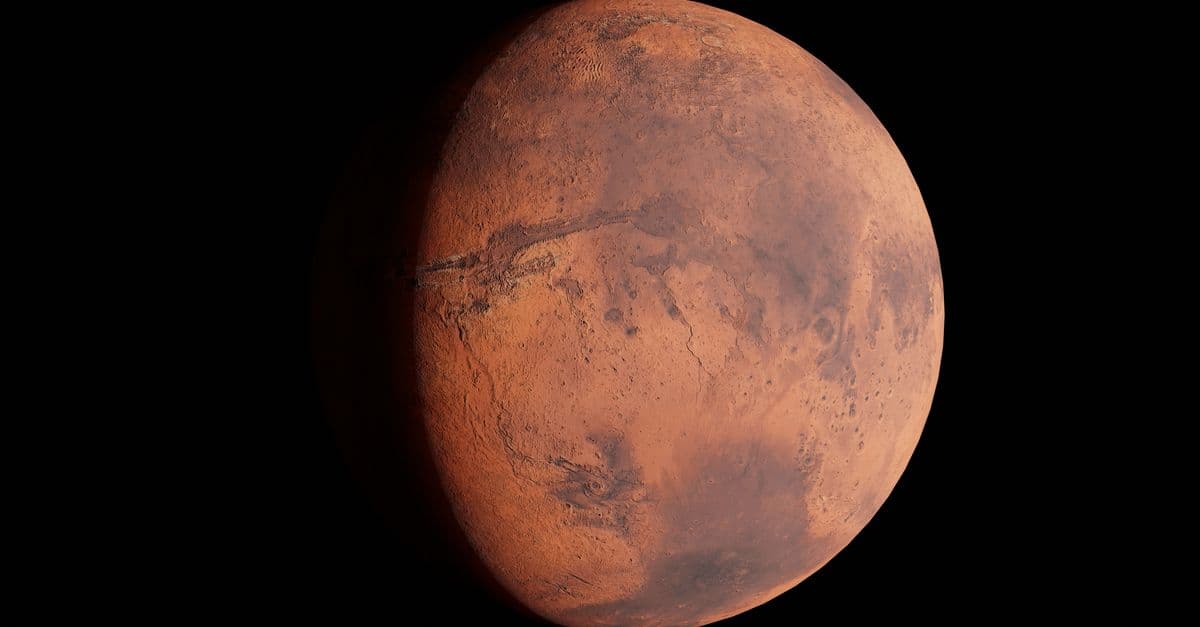
A high-resolution image capturing Mars with its surface details visible in space.
Space

The Search for Extraterrestrial Life: Where Do We Stand?

The search for life beyond Earth focuses on two main questions: (1) Has intelligent life evolved elsewhere in the cosmos? (2) Has life in any form (microbial) emerged on exoplanets or moons? The Drake Equation (1961) estimated the number of communicative civilizations in the Milky Way at N = R × f_p × n_e × f_l × f_i × f_c × L, yielding estimates from 1 to 1 million civilizations depending on parameter assumptions. Yet 70 years of SETI (Search for Extraterrestrial Intelligence) has found no confirmed signals. Meanwhile, exoplanet discoveries (5,500+ as of 2026) reveal that habitable-zone Earth-like planets are common. Mars, Europa, and Enceladus show signs of liquid water and reduced carbon compounds. JWST observations have detected biosignature candidates in exoplanet atmospheres. The paradox is stark: habitable worlds appear common, yet no confirmed biosignatures have been found. This article reviews the evidence for habitable zones, biosignature detection, and the Fermi Paradox.
Editorial Team·June 4, 2026·18 min
Two astronauts in space suits holding hands in a desert, Mars-like terrain.
What If

What If We Found Microbial Life on Mars?

Discovering even one living microbe on Mars — or convincing fossil evidence of past Martian life — would be the most consequential scientific finding in history. It would tell us life arises easily where conditions allow, and reshape our entire view of the universe.

Editorial Team·May 6, 2026·22 min
A breathtaking view of the night sky, showcasing an array of distant stars and galaxies.
Space

How Do We Detect Exoplanet Atmospheres — and What Are Biosignatures?

Telescopes can read the chemical fingerprints of atmospheres on planets hundreds of light-years away using transmission spectroscopy — splitting light into a spectrum that reveals which molecules are present. Finding oxygen, ozone, or methane in the right combination could indicate life, but interpreting these signals without false positives is enormously complex.

Editorial Team·May 6, 2026·22 min
A breathtaking view of the night sky, showcasing an array of distant stars and galaxies.
What If

What If We Discovered an Earth-Twin Planet?

Astronomers have found thousands of exoplanets. An Earth-sized planet in a habitable zone isn't exotic anymore. But a true Earth twin — similar size, similar temperature, liquid water, an oxygen atmosphere — would be something else entirely. Here's what would happen if we found one.

Editorial Team·May 2, 2026·19 min