What If We Found Microbial Life on Mars?
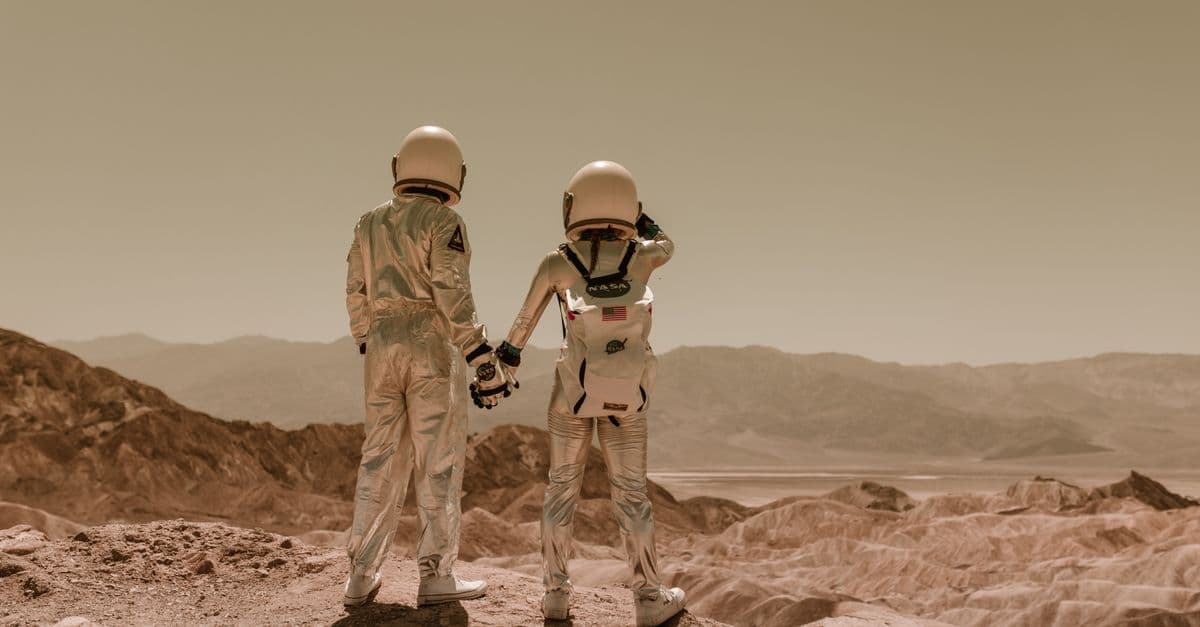
Photo: RDNE Stock project / Pexels
For four centuries, humanity has wondered if we are alone. The discovery of even a single living microbe on Mars — or unambiguous fossil evidence of past Martian life — would settle that question for the first time. It would also raise far more questions than it answered, transform several scientific fields, and force humanity to reckon with its place in a universe that is, after all, alive in more than one place.
Thought experiment. This article explores a hypothetical scenario for educational and speculative purposes. The events described are not predictions and should not be interpreted as warnings, advocacy, or instructions.
This thought experiment is closer to reality than most people realize, and it is getting closer by the month. NASA's Perseverance rover has spent four years collecting rock cores from Jezero Crater specifically chosen for their biosignature potential, and in September 2025 the mission team announced what they called a "potential biosignature" in a core nicknamed Sapphire Canyon. As of mid-2026, no one — not the scientists who found it, not independent reviewers — can say whether it is evidence of ancient microbial life or an unusually elaborate chemical coincidence. That uncertainty is itself the story: we are no longer asking "could Mars have had life?" in the abstract. We are staring at a specific rock and arguing about it.
Key takeaways
- Finding life on Mars would prove abiogenesis (life from non-life) happens easily where conditions permit.
- It would imply the Drake equation's f_l (fraction of habitable planets that develop life) is high, dramatically increasing estimates of life elsewhere.
- Determining whether Martian life is independent of Earth life or related (via panspermia/contamination) would be critical.
- Planetary protection rules would become enormously more important and contentious.
- Perseverance's 2025 "potential biosignature" find at Jezero Crater shows this is no longer a purely hypothetical scenario — it is an active, unresolved scientific debate.
- The discovery would profoundly affect philosophy, religion, and humanity's self-image — though perhaps less dramatically than science fiction suggests.
Where Martian life could exist
Mars is a hostile world today: dry, cold, irradiated, low pressure, with no global magnetic field to deflect solar wind. Average surface temperature hovers around minus 63°C (minus 81°F), and the atmosphere is less than 1% the pressure of Earth's at sea level. But conditions were once far friendlier, and that history is the entire reason astrobiologists still look.
Roughly 3.5 to 4 billion years ago, Mars had liquid water on its surface in lakes, rivers, and possibly a northern ocean. It had a thicker atmosphere, a working magnetic field for at least part of that period, and was warm enough to sustain standing water for extended stretches. Jezero Crater, where Perseverance has spent four years working, was once a lake fed by a river delta — the kind of environment on Earth that concentrates and preserves organic material extraordinarily well. That is precisely why NASA chose it as a landing site in 2020: it is one of the best-preserved ancient lakebeds anywhere on the planet.
If life arose on Mars during that warmer, wetter era, it could have persisted — or left evidence — in a handful of specific places:
- Fossil evidence in ancient lake bed sediments and river delta deposits, the focus of Perseverance's Jezero Crater mission.
- Subsurface microbes in deep aquifers, where liquid water might still exist beneath the cold, dry surface, insulated from radiation and temperature extremes.
- Ice-trapped microbial communities in glacial or polar deposits, similar to microbes recovered from ancient Antarctic and Greenland ice cores on Earth.
- Brine pools of liquid perchlorate solutions, salts common in Martian soil that lower water's freezing point enough to stay liquid at sub-freezing temperatures.
The most likely outcome, if anything is found at all, is fossil evidence rather than living Martians. But living subsurface microbes are not impossible. Earth has subsurface microbial communities thriving kilometers deep in rock, in conditions of extreme heat, pressure, and total darkness that were once assumed to be sterile. If Earth's biosphere extends that far down into hostile rock, there is no obvious physical reason a Martian one, if it ever existed, could not do the same.
How would we know it's real life?
This is where the discovery would be hardest, and where most speculative Mars-life scenarios in popular culture get it wrong. There would be no single "eureka" moment. Biosignatures — physical, chemical, or structural evidence for biology — have to rule out every plausible non-biological explanation before scientists will call something proof of life, and that process typically takes years, not headlines.
What counts as convincing evidence of past or present life?
Convincing evidence usually requires multiple independent biosignature lines pointing the same direction: cellular morphology, biologically diagnostic chemistry, isotopic fractionation, and ideally genetic or metabolic activity in a returned sample, cross-checked by independent labs. A single anomalous rock, however striking, is treated as "potential" until it survives that gauntlet.
Several distinct approaches are used, each with its own pitfalls.
Morphology. Cellular structures resembling Earth microbes look compelling in a photograph, but they are the weakest evidence on their own, since some minerals form cell-like shapes through pure chemistry. The famous ALH 84001 Martian meteorite, found in Antarctica and analyzed in 1996, was claimed to contain fossilized nanobacteria. Nearly thirty years later, the scientific consensus is that the structures are more likely non-biological in origin, though NASA itself notes the question has never been fully closed, and the meteorite remains one of the most studied rocks in planetary science. Source: NASA, ALH 84001 meteorite overview.
Chemistry. Organic molecules with biologically diagnostic signatures carry more weight than shape alone. Scientists look for amino acid chirality (life on Earth uses only "left-handed" amino acids, while non-biological processes produce a roughly even mix of both mirror-image forms), lipid biomarkers that resemble fragments of cell membranes, and isotopic ratios characteristic of biological processing, such as carbon depleted in the heavier carbon-13 isotope relative to carbon-12. In July 2026, reporting on Perseverance's data described a record-breaking trove of complex "macromolecular carbon" — built from the same four elements found in all known life — discovered near the Sapphire Canyon site, adding weight to (but not confirming) the biological interpretation. Source: Live Science, "NASA's Perseverance rover finds record-breaking trove of carbon molecules".
Metabolic activity. In a returned living sample, or one analyzed in a Mars-orbiting lab, scientists could watch for growth, respiration, or chemical processing of substrates that resembles known biology. This is the gold standard and currently impossible to test remotely with full confidence.
Genetic material. DNA, RNA, or some functionally similar information-carrying molecule would be close to definitive, but it requires either a living sample or exceptionally well-preserved organic residue, neither of which Mars is known to offer yet.
Has anyone already found evidence of Martian life?
Not conclusively. The closest historical case is NASA's 1976 Viking landers, whose Labelled Release experiment produced results consistent with biological metabolism when Martian soil was fed a nutrient solution. Skeptics have argued for decades that Martian perchlorate salts destroyed the organic nutrients through pure chemistry, producing a false positive. The debate remains unresolved 50 years later, and it is a cautionary tale for how hard the biology-versus-chemistry distinction actually is on Mars.
Independent origin or shared ancestor?
This question is at least as important as the discovery itself, and it is the one that would actually reshape science.
Scenario A: Independent origin. Mars life uses a different biochemistry entirely — a different genetic alphabet, different chirality, different amino acids, perhaps not even nucleic acids at all. This would suggest life arises through multiple, independent chemical pathways whenever conditions allow, and the universe is far more crowded with biology than most estimates assume. In the language of the Drake equation, the term f_l — the fraction of habitable planets on which life actually develops — would jump toward 1.
Scenario B: Shared ancestor, via panspermia or contamination. Mars life uses the same DNA-protein-lipid biology as Earth life. This could mean life originated on Mars, which was habitable earlier than Earth in some models, and was transferred to Earth via meteorite impacts ejecting Martian rock into space; or that life originated on Earth and traveled to Mars the same way; or that both planets received life from a shared third source. Meteorite exchange between Earth and Mars is not speculative — more than 300 confirmed Martian meteorites have been found on Earth, proof that material genuinely moves between the two planets.
If life on both worlds turns out to share an ancestor, the discovery tells us less than it first appears to. Mars and Earth could simply have shared a single, lucky origin event billions of years ago, and the universe as a whole could still be sparse with life. Distinguishing these two scenarios requires biochemical detail beyond what any rover or orbiting instrument can currently determine on-site. It almost certainly needs samples physically returned to Earth's most sensitive laboratories for chemical, isotopic, and genetic analysis.
Why is sample return necessary instead of testing on Mars directly?
Rovers carry compact, power-limited instruments that can flag chemical anomalies but cannot run the full battery of isotopic, genetic, and structural tests that terrestrial mass spectrometers, electron microscopes, and gene sequencers can. Only Earth-based labs, working with unlimited power and instruments too large and delicate to send to Mars, can distinguish "interesting chemistry" from "conclusive biology."
That is the entire rationale behind the Mars Sample Return program, a joint NASA-ESA effort that has spent more than a decade in planning. Perseverance has already sealed dozens of rock cores — 43 titanium sample tubes in total — for eventual retrieval. But the mission's future is genuinely uncertain. The White House's 2026 budget proposal called the program "financially unsustainable" and proposed sharply cutting it, and in January 2026 a congressional spending bill effectively ended the original Mars Sample Return architecture in favor of prioritizing human Mars exploration instead. Congress redirected roughly $110 million into a smaller "Mars Future Missions" program intended to preserve some of the underlying entry, descent, and landing technology. As of mid-2026, whether — and how — those sealed sample tubes ever make it back to Earth remains an open political and budgetary question, not just a technical one. Source: Astronomy.com, "NASA decision on Mars Sample Return reboot slides to 2026"; New Space Economy, "What is the Current Status of the Mars Sample Return Program?".
That is a strange and important detail: the single mission most likely to answer whether Mars ever had life is currently at risk not from technical failure but from a budget decision made on Earth.
Planetary protection and contamination concerns
If Martian life exists or once existed, contamination becomes a critical concern in both directions, and it is already a formally regulated part of every Mars mission NASA and ESA fly.
Forward contamination (Earth to Mars). Spacecraft must be sterilized so mission teams don't introduce Earth microbes that could contaminate or even outcompete native Martian biology, corrupting the very evidence scientists are trying to study. Current planetary protection rules, overseen internationally through the Committee on Space Research (COSPAR), require strict sterilization protocols, but no spacecraft is perfectly sterile. NASA's Mars rovers are estimated to carry hundreds of thousands of viable microbial spores despite extensive cleaning, most concentrated in hard-to-sterilize regions like wheel assemblies, cable bundles, and internal electronics.
Backward contamination (Mars to Earth). Samples brought back to Earth must be handled inside specialized biocontainment facilities to ensure no Martian microbe, if one exists, is ever released into Earth's biosphere. Even if the probability of a Martian organism being pathogenic to Earth life is judged extremely low by most astrobiologists — Martian biology, if it exists, evolved in total isolation from Earth's immune systems and ecosystems for billions of years — the consequences of being catastrophically wrong would be severe enough that sample-return missions are designed around a "guilty until proven innocent" containment standard.
A confirmed discovery of Martian life, living or fossil, would tighten these planetary protection rules substantially. It would complicate every future human Mars mission, since astronauts are, definitionally, walking colonies of Earth microbes that cannot be fully sterilized the way a robotic probe can. It would also create real tension between two goals that have coexisted uneasily for decades: exploring and potentially settling Mars, versus preserving it in as close to a pristine state as possible for scientific study.
What it means for the Fermi paradox
The Fermi paradox asks a deceptively simple question: if life and intelligence are common in the universe, where is everybody? Physicist Enrico Fermi is said to have posed a version of this question informally in 1950, and it has shaped astrobiology and SETI research ever since.
Discovering Martian microbial life would shift the answer to that paradox in an important and somewhat unsettling way. It would strongly suggest the "Great Filter" — the hypothetical barrier that prevents most life from becoming a galaxy-spanning, detectable civilization — is not located at the very first step, the emergence of life from non-life. If life can start twice in one solar system, on two different planets, using whatever chemistry was locally available, then abiogenesis itself is probably not rare.
That would push the filter to a later stage: the jump from simple to complex, multicellular life; the jump from complex life to intelligence; the jump from intelligence to technology; or the jump from a technological civilization to one that survives its own technology long enough to become detectable across interstellar distances. And that reframing makes the apparent absence of alien civilizations more striking, not less. If simple life is common but nobody out there is broadcasting, something is filtering out advanced life at a later stage — and depending on where exactly that filter sits, humanity could be near it, or in the middle of passing through it right now.
This is a genuinely sobering interpretation, and it is one that several astrobiologists and philosophers, including Oxford's Nick Bostrom in his influential writing on the Great Filter, have made explicitly: finding even simple microbial life on Mars would be modestly bad news for humanity's long-term prospects, because it would shift probability mass onto filters that lie ahead of us in evolutionary and civilizational time, rather than ones we have already safely passed.
Cultural and societal effects
History suggests the practical, day-to-day impact of a confirmed Mars-life discovery might be smaller than science fiction assumes. Past scientific paradigm shifts of comparable philosophical weight — heliocentrism displacing Earth as the center of the universe, Darwinian evolution displacing special creation, the Big Bang displacing an eternal static cosmos — caused genuine, sometimes decades-long intellectual upheaval. But daily life for most people largely continued unchanged. The discovery of microbial Martian life would likely follow a broadly similar pattern.
In the immediate aftermath, expect a wave of sensational headlines worldwide, wall-to-wall cable news coverage, and rapid-fire debate about implications for religion, philosophy, and public policy. Within a matter of months, the story would begin fading from front pages as it does with essentially every major science story, even ones as consequential as the first confirmed exoplanet or the first gravitational wave detection. Most people would return to their ordinary concerns: work, family, the news cycle's next crisis.
The longer-term shifts would be quieter but real: greater public interest in space exploration and planetary science, more astrobiology content finding its way into school science curricula, likely increased government funding for the search for life elsewhere, and a slow, generational philosophical reorientation about humanity's place in the cosmos, similar in scale to how the Copernican revolution eventually reshaped Western self-understanding over centuries rather than years.
A useful way to think about it: discovering microbial life on Mars would be less like a single earthquake and more like discovering that the ground has always been slightly less solid than everyone assumed. The shock fades, but the underlying picture of the world never quite goes back to where it was.
What people get wrong about a Mars-life discovery
A handful of misconceptions recur constantly in popular discussion of this topic, and they are worth addressing directly.
Myth: a Mars-life announcement would arrive as a single dramatic press conference. In reality, as the 2025 Sapphire Canyon case shows, these findings tend to emerge as gradual, hedged, peer-reviewed claims — "potential biosignature," not "we found aliens" — followed by years of independent verification, replication attempts, and argument. NASA has been explicit that Sapphire Canyon's features could still turn out to be non-biological chemistry.
Myth: finding any organic molecules on Mars is basically finding life. Organic molecules, meaning carbon-based compounds, are common throughout the solar system and can form through purely non-biological chemistry, including in interstellar dust clouds and on comets. Perseverance and earlier missions like Curiosity have detected organics on Mars for years; the hard part is proving those organics were made by biology rather than geology or chemistry.
Myth: if Mars life is found, it would obviously be dangerous to humans, or obviously safe. Neither assumption is well-supported. Planetary protection protocols exist precisely because scientists genuinely do not know, and treating an unknown biosphere as risk-free before testing it would be scientifically reckless in either direction.
Myth: a positive result would immediately answer "are we alone in the universe." It would answer a narrower, still enormous question — whether life can start more than once in a single solar system. Whether intelligent, technological life is common remains a separate and much harder question that a microbe on Mars cannot resolve on its own.
Myth: the Viking Labelled Release results already proved Mars has life, and NASA is covering it up. This is a persistent conspiracy claim without real evidentiary support. The scientific consensus — including from some of the original Viking scientists — is that the results are ambiguous and most plausibly explained by non-biological soil chemistry, though the debate over interpretation continues in the peer-reviewed literature rather than being suppressed.
What it means for the search elsewhere in the solar system
A confirmed Mars discovery would re-energize astrobiology across the entire solar system, not just on Mars, because it would validate the basic premise that liquid water plus energy plus time is enough to get biology started somewhere.
Europa Clipper, NASA's mission to Jupiter's ice-covered moon Europa, launched in October 2024 and is designed specifically to assess whether Europa's subsurface ocean could support life, using an ultraviolet spectrograph to search for water vapor plumes venting from cracks in the ice, alongside mass spectrometers built to detect biosignature chemistry in any material reaching the surface. A confirmed Mars result would almost certainly increase funding pressure and political support for a dedicated Europa lander mission as a logical next step. Source: NASA JPL, "Can Life Exist On An Icy Moon? The Europa Clipper Astrobiology Mission".
Enceladus, Saturn's small icy moon, is another priority. NASA's Cassini spacecraft directly observed plumes of water vapor and ice grains erupting from cracks near Enceladus's south pole, offering a natural, cost-effective way to sample its subsurface ocean without ever landing or drilling. Mission concepts for a dedicated Enceladus orbiter-lander, designed explicitly to search for biosignatures in fresh plume material, have been actively studied in recent years and would likely see accelerated funding and political interest after any confirmed Mars biosignature. Source: Universe Today, "The Search for Biosignatures in Enceladus' Plumes"; Phys.org, "A new concept for an astrobiology mission to Enceladus".
Beyond the solar system, searches for biosignatures in exoplanet atmospheres, already underway with the James Webb Space Telescope and planned for a future Habitable Worlds Observatory, would become an even higher scientific and funding priority. And traditional SETI, the search for intelligent radio or optical signals, would likely receive renewed public and institutional attention, even though a microbial discovery on Mars says nothing directly about the likelihood of intelligent, technological life existing elsewhere.
The economics and politics of the search
It is worth being honest about something science-fiction treatments of this scenario usually skip: whether we ever actually confirm Mars life may hinge as much on budget committees as on biology. The Mars Sample Return saga through 2025 and 2026 illustrates this starkly. A mission widely regarded by planetary scientists as the single best chance to definitively answer the Mars-life question was, at the same time it was returning its most tantalizing evidence yet, facing potential cancellation over cost overruns and competing political priorities around human Mars exploration.
That tension is not unique to Mars. Space science has always competed for funding against crewed spaceflight, defense priorities, and other government spending, and the choice between "send robots to definitively answer whether Mars has life" and "send humans to Mars regardless" reflects different values about what the space program is fundamentally for: answering scientific questions, or extending human presence. Both are legitimate goals, but they are not the same goal, and the current uncertainty over Mars Sample Return's fate is a live example of that trade-off playing out in real time, not a hypothetical one.
FAQ
Q: Has NASA already found life on Mars? A: No. NASA reported a "potential biosignature," a chemical and mineral pattern that could be explained by biology but has not been confirmed as such, in a 2025 Perseverance sample called Sapphire Canyon. Scientists have been explicit that non-biological chemistry remains a plausible explanation, and confirming or ruling out biology will likely require returning the sample to Earth for laboratory analysis.
Q: What is the Sapphire Canyon sample and why does it matter? A: Sapphire Canyon is a rock core Perseverance collected in July 2024 from the Cheyava Falls outcrop in Jezero Crater. It contains organic-carbon-bearing mudstone with distinctive "leopard spot" and "poppy seed" mineral textures enriched in iron phosphate and sulfide minerals, features that on Earth can sometimes be produced by microbial activity, though they can also form abiotically.
Q: When will we know for sure if Mars had life? A: There is no fixed date. Confirmation most likely requires the Mars Sample Return mission to bring sealed sample tubes back to Earth for detailed lab analysis, and that program's timeline and even its continued existence became politically uncertain in 2026 after budget cuts were proposed and Congress redirected funding toward a scaled-down replacement effort.
Q: Could Martian microbes be dangerous to humans? A: It is unknown, which is exactly why planetary protection protocols and sample-return biocontainment facilities exist. Most astrobiologists consider the risk of a pathogenic Martian organism low, given billions of years of separate evolution from Earth's biosphere, but "low probability" is not the same as "zero," and sample-return missions are designed with strict containment as a precaution.
Q: What is the difference between finding organic molecules and finding life? A: Organic molecules are carbon-based compounds that can form through non-biological chemistry throughout the solar system, including on comets and in interstellar dust. Life requires organized, self-sustaining, replicating chemistry. Finding organics on Mars, which multiple missions already have, is a necessary but far from sufficient condition for finding life.
Q: Would finding life on Mars mean the universe is full of aliens? A: It would strongly suggest simple life is common wherever conditions permit it, which raises estimates for how often life starts elsewhere. It says much less about intelligent, technological life, which involves separate, much harder evolutionary steps that a microbial discovery cannot address directly.
Q: What is the Fermi paradox and how does Mars life relate to it? A: The Fermi paradox asks why, if life and intelligence are likely common, we see no evidence of other civilizations. Finding microbial life on Mars would suggest life itself is not the rare step, which some scientists argue is actually unsettling: it implies whatever filter is preventing civilizations from becoming detectable lies at a later, harder-to-pass stage that humanity may still be approaching.
Q: Is the Mars Sample Return mission still happening? A: Its status is unresolved as of mid-2026. The White House's 2026 budget proposal called it financially unsustainable, and a January 2026 congressional spending decision effectively ended the original architecture, redirecting a smaller amount of funding toward preserving some of the underlying technology under a new program rather than continuing the full sample-return mission as originally designed.
Q: How is a Mars biosignature discovery different from the Viking 1976 results? A: The Viking landers' Labelled Release experiment produced results consistent with biological metabolism in 1976, but the scientific consensus attributes this most plausibly to non-biological soil chemistry involving Martian perchlorate salts, and the debate remains unresolved. Perseverance's Sapphire Canyon finding is a different type of evidence, mineral and organic chemistry in a solid rock sample, evaluated with far more advanced instruments, but it faces the same fundamental challenge: distinguishing biology from convincing non-biological chemistry.
The takeaway
The scenario in this article's title is no longer purely speculative. NASA already has a candidate biosignature in hand, sealed in a titanium tube on the surface of Mars, and the only thing standing between "potential" and "confirmed" is a sample-return mission whose funding is currently uncertain. What the Sapphire Canyon episode makes clear is that the discovery of Martian life, if it happens, will not look like a movie moment. It will look like exactly what has already started: careful, hedged, argued-over science that takes years to resolve, competing for funding against other national priorities the whole time. The biology may turn out to be extraordinary. The process of confirming it will look almost mundane, and that is precisely why it is worth understanding now, before the headline lands.
Read next:
Follow new articles
Add SciHub101 to your feed reader to see new science and technology stories.
About the Author
SciHub101 is an independent science and technology publication founded and edited by Buğra Sözeri, a software engineer and app developer based in Türkiye. AI tools assist with drafting and research. Source documentation in the existing archive is uneven, and articles are being reviewed and corrected. The Editorial Team byline identifies editorial responsibility; it does not certify specialist or independent human review. Where we compare products, anything built by our own team is labelled as such — see the editorial guidelines and About page for how corrections and disclosures work.
Related Articles

What If the Speed of Light Were Slower?
If the speed of light were dramatically lower — say, 100 km/h — relativistic effects would dominate everyday life. Cars would gain mass as they accelerated, time would dilate for joggers, and the universe would look profoundly different.

What If Quantum Computers Broke All Modern Encryption?
A sufficiently powerful quantum computer could break the encryption that secures banking, communications, and national security in seconds. The threat is real but limited to specific algorithms — and the cryptographic world is racing to deploy quantum-resistant alternatives before the day arrives.

AI and Astrobiology: Machine Learning in the Search for Life Beyond Earth
From Mars rock targeting to exoplanet spectra, AI is helping astrobiologists sort possible signs of life from chemistry that looks alive but is not. Here is what it does, what it has not done, and why the hardest step is still human.
What If You Lived on Mars?
Daily life on Mars: 38% gravity, radiation, blue sunsets, regolith homes, hydroponic food, and the psychology of 22-minute light-lag from Earth.
What If AI Discovered Alien Life?
AI is already scanning billions of radio signals, analyzing atmospheric data, and searching exoplanet spectra. What happens the day it finds something that shouldn't be there?
What If We Discovered an Earth-Twin Planet?
Astronomers have found thousands of exoplanets. An Earth-sized planet in a habitable zone isn't exotic anymore. But a true Earth twin — similar size, similar temperature, liquid water, an oxygen atmosphere — would be something else entirely. Here's what would happen if we found one.