What If AI Discovered Alien Life?
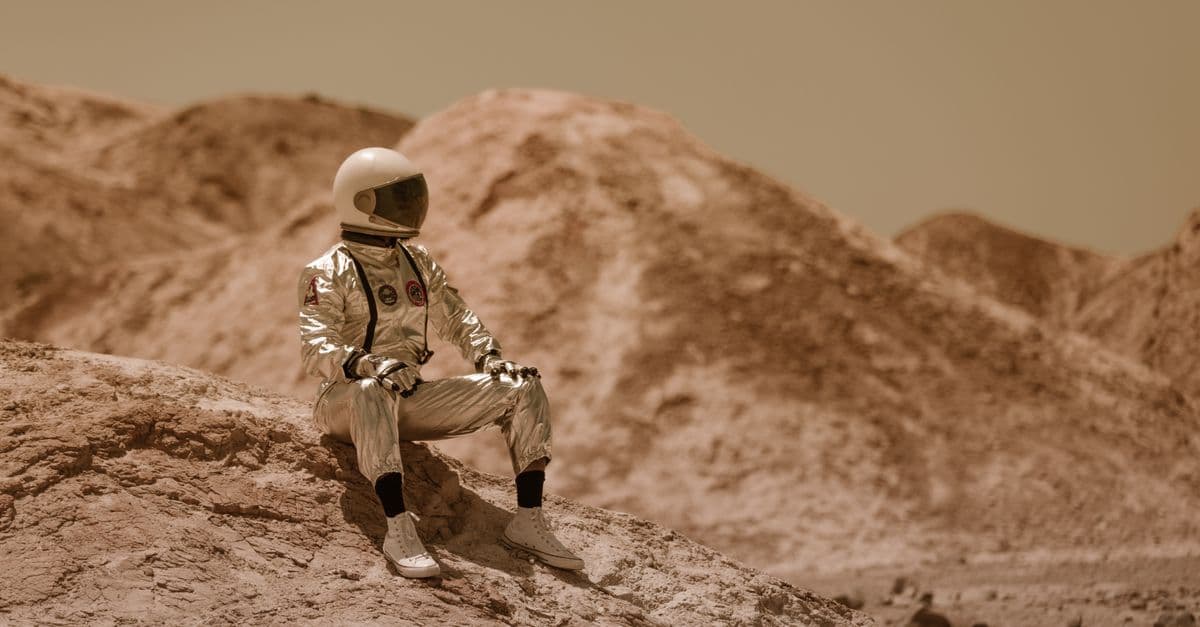
Photo: RDNE Stock project / Pexels
The signal is found not by a human astronomer, but by an AI system running pattern analysis on two years of archived radio telescope data. It's 11:43 PM in Johannesburg. The AI flags an anomaly: a signal from the direction of Proxima Centauri b that is inconsistent with any known natural source, repeating with a mathematical structure at a frequency no stellar, planetary, or interstellar process should produce.
Thought experiment. This article explores a hypothetical scenario for educational and speculative purposes. The events described are not predictions and should not be interpreted as warnings, advocacy, or instructions.
The system logs it automatically. The on-call researcher sees the alert when she checks in at 7 AM.
By noon, three independent teams have confirmed the signal. By 3 PM, the confirmation is solid enough that someone has sent an encrypted message to the Secretary-General of the United Nations.
The world finds out two days later, when a journalist at a major science outlet receives a tip. The news drops on a Thursday. By Saturday, nobody is talking about anything else.
Key takeaways
- AI is actively used in the search for extraterrestrial intelligence (SETI) and in biosignature detection — the scenario of AI discovering alien life is scientifically grounded.
- The nature of the discovery matters enormously — microbial life on an exoplanet's atmosphere, a radio signal, or an artifact in our solar system each have different implications.
- No international protocol exists for how to confirm, announce, or respond to confirmed extraterrestrial contact — what happens next would be improvised.
- The psychological and cultural impact on human civilization would be profound and would play out differently across different religious and cultural frameworks.
The optimistic scenario
The discovery of extraterrestrial life — at any level of complexity — would be one of the most transformative events in human intellectual history. The Copernican revolution removed Earth from the center of the cosmos. The Darwinian revolution removed humans from a unique position in biology. Confirmation of extraterrestrial life would remove humanity from its assumed position as the only form of intelligence in the universe.
For science, the implications are electric. A confirmed example of life originating independently of Earth — even microbial life detected in the spectral signature of an exoplanet's atmosphere — would provide the first data point that allows us to estimate how common life is in the universe. It would constrain theories of the origin of life, focusing research on the mechanisms that actually work rather than all possible mechanisms. It would validate decades of astrobiology research and open new fields we haven't imagined.
For human civilization, there is an argument that the discovery would be unifying. The "overview effect" — the perspective shift that astronauts report when they see Earth from space — might scale. Confronted with evidence of another civilization, humanity's internal divisions might suddenly seem less important. Political conflicts that seem existential in isolation might lose urgency against a background of cosmic company.
A discovered signal from an intelligent civilization — even one we couldn't decode — would demonstrate that technological civilizations can survive their dangerous periods. The Fermi Paradox is partly troubling because the silence of the universe could suggest that intelligent civilizations routinely destroy themselves. A signal would be, in one sense, evidence that survival is possible.
The realistic complications
The verification problem would be immediate and immense.
The history of astronomical anomalies includes many episodes where signals or observations initially suggested non-natural origins and turned out to have mundane explanations. The "Wow! signal" in 1977 has never been explained — but has also never been confirmed as alien in origin. Fast radio bursts were briefly speculated to be artificial before being attributed to magnetars. Every extraordinary claim requires extraordinary evidence, and the bar for "confirmed alien life" would need to be extraordinarily high.
The process of achieving that bar would take time — months or years of independent confirmation, alternative hypothesis testing, and instrument verification. During that period, the signal's existence would almost certainly become public before confirmation was solid. Public discourse operating on unconfirmed information, amplified by social media, would generate enormous noise. Misinterpretation, religious panic, political exploitation, and misinformation would all occur before any authoritative scientific body could speak definitively.
There is also no protocol. The International Academy of Astronautics has a Declaration of Principles for detection of extraterrestrial intelligence, but it is voluntary, not legally binding, and not universally adopted. No international body has legal authority over who announces a discovery, who decides whether to respond, and what happens to the information.
The unintended consequences
The world's major religions would need to respond. And they would respond differently.
Some theological frameworks accommodate extraterrestrial life easily — Catholicism, for example, has a long history of theological engagement with the question, and several prominent Catholic astronomers have stated publicly that alien life would pose no theological problem. Some Hindu and Buddhist frameworks have cosmologies that already include inhabited worlds.
Other religious interpretations are more Earth-centric and would face genuine theological crisis. The pastoral challenge of helping millions of people integrate a paradigm-shifting discovery into their worldview would fall on religious institutions that had limited time to prepare.
The geopolitical consequences would depend entirely on whether the life discovered could respond or reach us. Microbial biosignatures in an exoplanet's atmosphere would have large scientific impact but limited immediate strategic consequences. A detected signal that might be beamed at Earth would change everything: nations would immediately begin debating whether to respond, and who has the authority to speak for humanity. This is not a hypothetical — it is a real governance gap that international bodies have not resolved.
There would also be psychological effects that are difficult to anticipate. Humans have a documented tendency to project their own characteristics onto outgroups. The discovery of alien intelligence would trigger both the anxiety response (are they a threat?) and the hope response (can they solve our problems?) in different populations simultaneously. Managing these reactions in a global information environment without coordination mechanisms would be extraordinarily difficult.
What science actually says today
AI is actively involved in the search for extraterrestrial life across multiple approaches.
In SETI (Search for Extraterrestrial Intelligence), machine learning systems analyze radio telescope data from the Breakthrough Listen initiative, which has scanned hundreds of billions of frequency channels. These systems can identify anomalies in terabytes of data that would take human analysts years to review.
In astrobiology, AI systems are analyzing the atmospheric spectra of exoplanets, looking for biosignature gases — oxygen, methane, nitrous oxide — in combinations that would indicate biological activity. The James Webb Space Telescope has already detected carbon dioxide and tentative methane/sulfur dioxide signals in the atmosphere of K2-18b, an exoplanet in the habitable zone. These signals are not confirmed biosignatures, but AI atmospheric modeling is a key analytical tool.
In our own solar system, AI-assisted analysis of Mars rover data looks for organic compounds and potentially biogenic minerals. The Cassini mission found organic molecules in the plumes of Enceladus; future missions to the icy moons are designed to search more systematically.
The scientific community's consensus is that the discovery of extraterrestrial life, while not inevitable, is not implausible within the next 20–50 years — particularly for microbial biosignatures on exoplanets. Discovery of radio-communicating intelligence is much less predictable.
FAQ
Is AI actually being used in the alien search today? Yes. Breakthrough Listen, the largest modern SETI effort, uses machine learning to scan radio data. The Allen Telescope Array uses AI for signal classification. Atmospheric analysis of exoplanet spectra uses AI modeling. AI is an active tool, not a future prospect.
What would "alien life" most likely mean in practice? Statistically, the most likely first discovery would be biosignature gases in an exoplanet atmosphere, indicating simple life. Not a signal from a civilization, not anything that could communicate back — just chemical evidence that biological processes are happening on another world.
Would governments hide an alien discovery? This is a popular conspiracy belief with limited evidence behind it. In practice, the confirmation of alien life would require large numbers of independent researchers at many institutions globally — the number of people who would need to be suppressed simultaneously makes permanent concealment extremely impractical.
Could the discovery be dangerous? For microbial or primitive life discovered at interstellar distances, no direct danger. For a signal from an intelligent civilization, the danger is uncertain — we have no way to evaluate the intentions of an entity we've never encountered. Some scientists, including Stephen Hawking before his death, cautioned against advertising our presence to unknown intelligences.
What would happen to religious belief? Research by sociologists on this question — using hypothetical surveys — suggests that most religious people would integrate the discovery within their existing belief framework rather than abandoning religion. However, the diversity of religious responses would be significant, and some theological traditions would face genuine challenges.
Read next:
Follow new articles
Add SciHub101 to your feed reader to see new science and technology stories.
About the Author
SciHub101 is an independent science and technology publication founded and edited by Buğra Sözeri, a software engineer and app developer based in Türkiye. AI tools assist with drafting and research. Source documentation in the existing archive is uneven, and articles are being reviewed and corrected. The Editorial Team byline identifies editorial responsibility; it does not certify specialist or independent human review. Where we compare products, anything built by our own team is labelled as such — see the editorial guidelines and About page for how corrections and disclosures work.
Related Articles
What If Robots Did All Human Work?
Every delivery, every surgery, every harvest, every line of code — done by machines. What do 8 billion humans do on a Tuesday morning?
What If We Uploaded Human Consciousness to AI?
Mind uploading promises digital immortality. But if a perfect copy of you is running in a computer, is it actually you — or just something that thinks it is?
What If We Found Microbial Life on Mars?
Discovering even one living microbe on Mars — or convincing fossil evidence of past Martian life — would be the most consequential scientific finding in history. It would tell us life arises easily where conditions allow, and reshape our entire view of the universe.
What If We Discovered an Earth-Twin Planet?
Astronomers have found thousands of exoplanets. An Earth-sized planet in a habitable zone isn't exotic anymore. But a true Earth twin — similar size, similar temperature, liquid water, an oxygen atmosphere — would be something else entirely. Here's what would happen if we found one.
What If You Lived on Mars?
Daily life on Mars: 38% gravity, radiation, blue sunsets, regolith homes, hydroponic food, and the psychology of 22-minute light-lag from Earth.
What If Every Person Had a Personal AI Doctor?
A doctor who knows your complete medical history, never forgets, is available at 3 AM, and has read every study ever published. What's not to like?