What If You Lived on Mars?
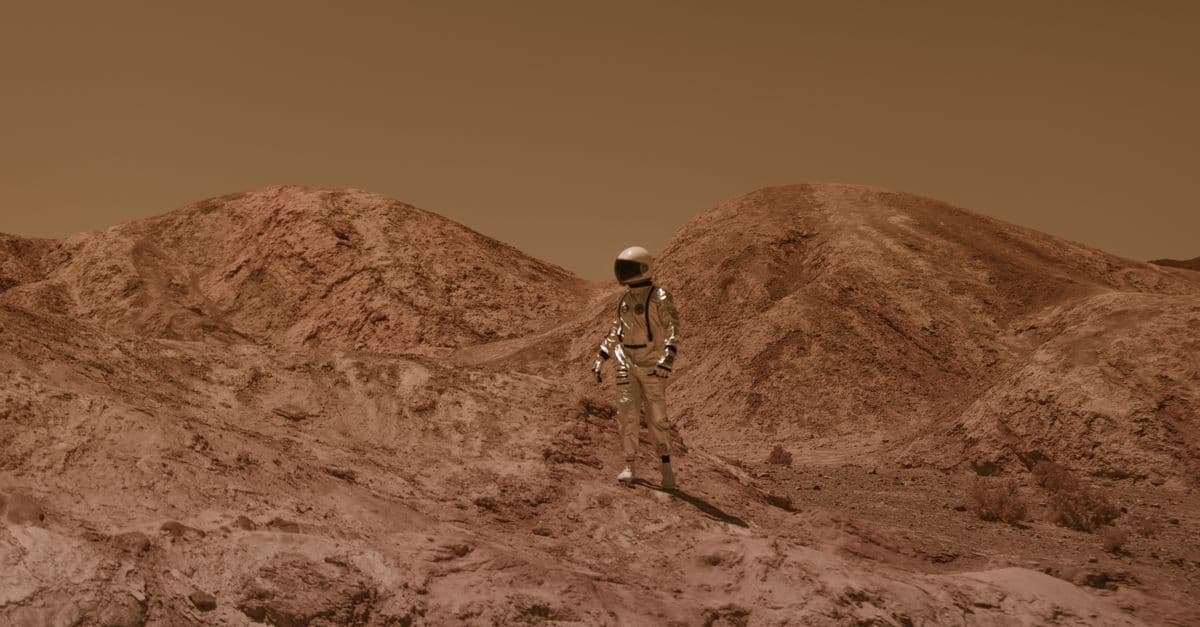
Photo: RDNE Stock project / Pexels
Imagine waking up to a butterscotch sky, stepping into a pressure suit just to fetch a tool from outside, and watching the sun set in a pale, ghostly blue. This is not science fiction anymore — NASA, SpaceX, and the China National Space Administration are all developing hardware for crewed Mars missions within the next two decades. But what would daily life on the Red Planet actually look like, hour by hour, meal by meal, year by year? The answer has less to do with rockets and more to do with bone density, dust chemistry, and how your brain handles a 22-minute delay on every phone call home.
Thought experiment. This article explores a hypothetical scenario for educational and speculative purposes. The events described are not predictions and should not be interpreted as warnings, advocacy, or instructions.
A Day That's Almost Familiar — But Not Quite
A Martian day, called a "sol," lasts 24 hours and 39 minutes. That extra 39 minutes sounds trivial, but stacked over weeks it slowly shifts your circadian rhythm out of sync with any Earth-based schedule. NASA's Phoenix lander team and the Mars Science Laboratory (Curiosity) operations team both worked on "Mars time" for months at a stretch during landing operations, and mission reports describe accumulated sleep debt and fatigue among staff who tried to stay synced to the rover's local sol.
Living permanently on Mars means eventually abandoning the 24-hour clock altogether and adopting the sol as your actual day, the way a shift worker adapts to a schedule that never matches the people around them. Every 40 sols or so, a colonist on Earth time would find themselves a full hour out of phase with the planet outside their airlock.
The Martian year is 687 Earth days, nearly twice as long as ours. A child born on Mars would celebrate a birthday roughly every 1.88 Earth years, and would be considered a legal adult, if using an Earth-year threshold, at what feels to their body like age 9 or 10 in Martian years. Seasons last about six Earth months each, and winters at the poles drop below −125 °C (−193 °F), while a calm summer afternoon near the equator can reach a comparatively mild 20 °C (68 °F) — with a catch explained below.
Gravity: The Silent Saboteur
Mars has only 38% of Earth's gravity. At first, this sounds like a novelty: you could jump nearly three times higher and shoulder heavy equipment that would strain your back on Earth. Long-term, though, reduced gravity behaves like a slow-motion medical condition rather than a superpower.
The clearest data comes from the International Space Station, where astronauts in true weightlessness lose bone mineral density at a rate of roughly 1 to 2% per month in weight-bearing bones such as the hip and spine, according to NASA-funded research. A PLOS ONE modeling study projecting bone loss across a full Mars mission, which involves roughly 30 months of combined transit and surface time, estimated that without effective countermeasures astronauts could return with bone density reduced by 30 to 60% relative to preflight baselines in the worst-affected regions. Mars' 0.38g surface gravity is not zero gravity, and it likely slows the loss compared to the transit phases in free fall, but no mission has yet tested how much protection partial gravity actually provides over years, not months.
Recovery is the more sobering part. A study following ISS astronauts found that bone mineral density had not fully recovered even one year after return to Earth, with researchers describing the incomplete recovery as equivalent to roughly a decade of accelerated skeletal aging. For a Mars colonist who never plans to leave, that trajectory does not reverse. It simply continues.
- Bone density loss: Ongoing skeletal weakening from a permanently reduced load, with no Earth-gravity phase to help rebuild lost mineral density.
- Muscle atrophy: Without Earth-level resistance built into every movement, muscle fibers shrink and weaken. NASA mandates roughly two hours of daily resistance and cardiovascular exercise for ISS crews specifically to blunt this effect, and Mars colonists would likely need a comparable regimen indefinitely.
- Fluid shifts and vision changes: Spaceflight-Associated Neuro-ocular Syndrome (SANS) — a condition where bodily fluid shifts toward the head, raising pressure inside the skull and flattening the back of the eyeball — affects a majority of astronauts on missions longer than six months, per NASA's own long-duration flight data.
- Cardiovascular deconditioning: A heart that no longer works against a full 1g load weakens over time, the same way any muscle atrophies when its usual resistance disappears.
Children born and raised on Mars present a problem nobody has solved even theoretically: a skeleton and cardiovascular system built entirely around 0.38g might not be structurally or physiologically prepared for Earth's 2.6-times-stronger pull. No pediatric data exists because no child has ever lived in partial gravity, but the extrapolation from adult bone-loss studies is not reassuring.
The Sky Is Wrong
On Mars, sunsets are blue. Fine iron-oxide dust suspended in the thin atmosphere scatters red and orange wavelengths efficiently across the sky during the day, which is why Martian daytime looks like a dusty, pinkish-orange haze rather than Earth's blue. But near the horizon at sunset, that same dust lets blue light travel straight through while scattering away the red, producing the inverse of an Earth sunset. NASA's own Mars Exploration Program describes this color inversion as one of the most visually disorienting facts about standing on the surface.
You would also see two small, irregularly shaped moons instead of one large round one. Phobos, the inner and larger moon, orbits so close and so fast that it rises in the west and sets in the east, crossing the sky twice in a single sol. Deimos, smaller and more distant, takes about 30 hours to cross the sky and looks more like a bright, slow-moving star than a moon. Neither is large enough to look like more than a dim, oblong smudge, nothing like Earth's Moon.
What does the Martian atmosphere actually feel like?
It does not feel like anything, because you would never experience it directly. Surface pressure is about 0.6% of Earth's sea-level pressure, thin enough that unprotected exposure causes fatal decompression symptoms within seconds. Every "outdoor" experience on Mars happens through a faceplate.
Would Mars even sound the same?
No, and the difference is measurable. Researchers analyzing recordings from the SuperCam microphone on NASA's Perseverance rover found that sound on Mars travels at roughly 240 meters per second for low-pitched noises, compared with 343 meters per second on Earth, a direct consequence of the thin, cold, carbon-dioxide-dominated atmosphere. Stranger still, the study found Mars has two distinct speeds of sound depending on pitch, with high-frequency tones traveling about 10 meters per second faster than low-frequency ones, a phenomenon never observed in Earth's atmosphere. Outside a habitat, a shout or a dropped tool would sound thinner, quieter, and slightly delayed compared to the same sound on Earth, assuming a suit microphone picked it up at all.
Where Would You Live?
Mars has no global magnetic field, having lost it roughly four billion years ago, and an atmosphere only about 0.6% as thick as Earth's. Together, those two facts mean galactic cosmic rays and solar energetic particles reach the surface with far less shielding than they encounter on Earth. Data from the Radiation Assessment Detector aboard Curiosity, published by Hassler et al. in Science, measured surface radiation dose rates that would expose an unshielded colonist to roughly 230 millisieverts per year, compared with about 3 mSv per year of natural background radiation for the average person on Earth. That is a meaningfully elevated long-term cancer risk, not an immediate lethal one, and it is the single biggest reason nobody plans to build glass-domed cities on the open surface.
The leading habitat concepts all share one goal: put mass between you and the sky.
- Buried regolith structures: Cover a habitat shell with two to three meters of loose Martian soil, which is enough to absorb most incoming radiation the way Earth's atmosphere does for us. This is the cheapest option in terms of technology but the most labor-intensive to build.
- Lava tubes: Orbital imaging has identified Martian volcanic caves, some documented at over 100 meters wide, that formed when the surface crust of ancient lava flows cooled while lava kept draining out underneath. These tubes offer natural rock shielding, dramatically more stable temperatures than the open surface, and protection from micrometeorite impacts, all without construction.
- 3D-printed regolith bricks: Both ESA and NASA have run prototype programs using Mars soil simulant bound with polymers or sulfur to print rigid, radiation-resistant walls on-site, avoiding the need to ship building material 225 million kilometers.
NASA's own analog testing offers a preview of what living inside one of these structures for real would feel like. The Crew Health and Performance Exploration Analog, or CHAPEA, sealed four volunteers inside a 1,700-square-foot 3D-printed habitat called Mars Dune Alpha at Johnson Space Center for 378 consecutive days, simulating "Marswalks," crop growing, equipment maintenance, and communication delays. The first CHAPEA crew — Kelly Haston, Anca Selariu, Ross Brockwell, and Nathan Jones — completed their full 378-day stay in 2024, and a second CHAPEA crew began an equally long simulation in October 2025. These are the closest real-world rehearsals of Martian daily life that currently exist, and none of the volunteers left the building for over a year.
Open windows, in any of these habitat designs, would be a rare luxury reserved for thick, small, radiation-shielded viewports, not the wide glass walls of science-fiction concept art.
What would a habitat actually sound like inside?
Noisier than most people expect, and quieter than a factory floor. Every crewed spacecraft since the earliest days of human spaceflight has struggled with ventilation-fan noise, and NASA engineers list acoustics as one of the top habitability complaints raised by astronauts aboard the International Space Station, according to NASA's own acoustics and noise-control program. The air-revitalization fans that scrub carbon dioxide, the thermal-control fans that move heat away from equipment, and the ventilation fans that keep air circulating so carbon dioxide does not pool around a sleeping crew member's face all run continuously, and NASA researchers note that prolonged exposure to that low-grade mechanical hum can contribute to stress and fatigue on long missions. A Mars habitat would inherit the same problem at a larger scale: unlike the ISS, which can eventually be resupplied or repaired with parts from Earth within days, a Martian habitat's fans would need to run for years without failing, because a broken ventilation fan is not a comfort issue, it is a life-support issue.
A Week in the Habitat, Roughly
There is no completed Mars mission to draw an actual daily schedule from, but CHAPEA and earlier analog missions give a reasonable sketch of how a colonist's week would likely be structured, built around the two things every real space schedule protects first: exercise and maintenance.
| Activity | Approximate time per sol | Why it's non-negotiable |
|---|---|---|
| Resistance and cardio exercise | ~2 hours | Slows bone and muscle loss under 0.38g, mirroring NASA's ISS exercise mandate |
| Life-support and habitat maintenance | 1–3 hours | Fans, filters, and seals fail slowly; unmonitored failure is fatal |
| Crop tending and food systems | 1–2 hours | Hydroponic and aeroponic bays need consistent light, nutrient, and pest checks |
| Scientific or engineering work | 4–6 hours | The stated justification for the mission in almost every current mission architecture |
| Asynchronous communication with Earth | 30–60 minutes | Messages sent in batches due to multi-minute one-way delay |
| Personal time, meals, sleep | Remainder of sol | Extended by the 39 extra minutes in every Martian day |
Table: A rough sol-by-sol activity breakdown inferred from CHAPEA and Mars-500 analog mission structures, not an official mission schedule.
Laundry, notably, mostly disappears as a chore in the Earth sense. Water is too precious to spend on washing machines, so analog missions and current ISS practice both favor wearing garments for extended stretches, sometimes weeks, before disposal or minimal spot-cleaning, a habit that would likely carry over directly to a Mars colony where every liter of water is either mined from subsurface ice or painstakingly recycled.
Hygiene and the Water You Don't Waste
Nothing captures the gap between Earth logic and Mars logic better than what happens to a glass of water after you use it. Aboard the ISS, NASA's Environmental Control and Life Support System routes sweat, cabin humidity, and yes, urine, through a Water Processor Assembly and a Urine Processor Assembly that together now recover about 98% of all wastewater as clean, drinkable water, a milestone NASA reached after decades of engineering refinement. The urine-specific stage alone recovers roughly 75% of the water it processes through heating and vacuum compression, with a newer brine-processor stage squeezing most of the remainder out of the leftover concentrate.
A Mars colony would need to run the same closed loop, just for years instead of months, with no resupply flight arriving to top off a shortfall. Combined with locally mined subsurface water ice, identified across the Martian mid-latitudes by NASA's SWIM mapping project described above, a well-run habitat's water budget is technically survivable. It is just permanently unforgiving: a long shower, in the Earth sense of standing under running water for ten minutes, would be an extravagance no serious colony budget could sustain, and colonists would almost certainly rely on the same wet-wipe and low-flow rinse routines that ISS crews have used for decades.
Food, Water, and Air
Food is arguably the hardest logistical problem on the list. A resupply shipment from Earth takes six to nine months one-way and only becomes possible during specific orbital alignment windows roughly every 26 months, so any serious colony needs to grow, brew, or synthesize the overwhelming majority of its own calories. Research groups including MIT's Media Lab and the University of Arizona's Controlled Environment Agriculture Center have both run experiments showing that hydroponic and aeroponic systems, growing plants in nutrient-rich water or mist rather than soil and lit entirely by tuned LED spectra, can reliably produce leafy greens, tomatoes, potatoes, and herbs in enclosed environments with no natural sunlight at all. The CHAPEA crews grew and harvested vegetables inside Mars Dune Alpha specifically to test how much fresh food a Martian-style crop system could realistically supplement into a shelf-stable diet.
Likely long-term protein sources include:
- Insects such as crickets and mealworms, which convert feed into protein far more efficiently than cattle or pigs
- Lab-grown cultured meat, still an emerging technology on Earth and even less mature for space deployment
- Algae and spirulina, which double as a partial oxygen source
- Fish raised in closed aquaponic loops, once a colony's water and nutrient cycling is stable enough to support them
Water turns out to be less scarce than mission planners once feared. In October 2023, NASA released its Subsurface Water Ice Mapping project, or SWIM, which combined radar and neutron-spectrometer data from the Mars Reconnaissance Orbiter, the 2001 Mars Odyssey orbiter, and the retired Mars Global Surveyor to chart where water ice sits within the top meter of soil across the mid-latitudes, the zone considered most landable for a crewed mission. That ice would be a genuine, minable local resource for drinking water, hygiene, and rocket propellant production rather than something shipped from Earth.
Oxygen is no longer purely theoretical. Between 2021 and 2023, NASA's toaster-sized MOXIE experiment aboard the Perseverance rover ran 16 separate production cycles, converting Mars' carbon-dioxide-dominated atmosphere (95% CO2 by volume) into breathable oxygen. Over its full run, MOXIE produced a cumulative 122 grams of oxygen and, at its peak, generated it at 12 grams per hour and 98% purity, twice the rate its MIT-led design team originally targeted. A scaled-up version of the same electrochemical process could eventually supply both breathing air for a crew and the liquid oxygen needed as rocket oxidizer for the trip home.
The Dust Problem Nobody Escapes
Martian dust is not simply dirt tracked into a room. It is electrostatically charged, fine enough to work into seals and mechanical joints, and laced with perchlorate salts that occur at concentrations of roughly 0.5 to 1% across much of the surface, according to NASA Technical Reports Server analysis. In the human body, perchlorate interferes with the thyroid gland's ability to absorb iodine, which regulates metabolism, and prolonged exposure at high enough doses can suppress thyroid function. Laboratory studies exposing mice to Martian soil simulant found mild lung scarring within a week of exposure, a warning sign that inhaled dust could pose a genuine pulmonary risk to colonists over years of habitat maintenance and EVA cleanup.
The mitigation is manageable but not optional: airlocks need dedicated dust-removal stages, suits need sealed and filtered joints, and habitat air handling needs continuous filtration, the same category of engineering problem that Apollo astronauts first ran into with far less reactive lunar dust half a century earlier.
Mars Life vs Earth Life
Table: Daily-life conditions on Mars compared with Earth
| Factor | Mars | Earth |
|---|---|---|
| Day length | 24h 39min | 24h |
| Year | 687 Earth days | 365.25 days |
| Gravity | 0.38g | 1g |
| Atmospheric pressure | ~0.6% of Earth's | 1 atm |
| Surface temperature avg | −63 °C (−81 °F) | 15 °C (59 °F) |
| Radiation dose (unshielded) | ~230 mSv/year | ~3 mSv/year |
| Comm delay to Earth | 3–22 min one-way | Instant |
| Liquid surface water | Seasonal brine only | Abundant |
| Outdoor air | Unbreathable, lethal | Breathable |
| Visible moons | 2 (Phobos, Deimos) | 1 |
| Resupply cadence | ~26-month launch windows | Same-day |
Going Outside
Stepping outside requires a fully pressurized extravehicular activity (EVA) suit every single time, with no exceptions for a "quick errand." Mars' atmospheric pressure sits so far below what physiologists call the Armstrong limit — the altitude-equivalent pressure at which water boils at body temperature — that unprotected exposure would cause exposed saliva and other moisture to boil off within seconds, alongside rapid tissue damage from the pressure differential.
Temperature swings compound the danger. A summer midday near the equator can reach a comparatively pleasant 20 °C (68 °F) at ground level, but that same location can plunge to around −90 °C (−130 °F) after dark, because Mars' thin atmosphere holds almost no heat overnight the way Earth's does. Suits and habitats need to handle both extremes within the same 24-hour cycle.
There are no rivers, lakes, or surface oceans anywhere on Mars today. The closest thing to visible liquid water are Recurring Slope Lineae (RSL), dark seasonal streaks that appear on sun-facing slopes and were once suspected to be briny seeps; more recent orbital analysis suggests they may instead be dry granular flows, and their exact nature is still debated among planetary scientists. Either way, they are not a usable water source for a colony.
How cold does it actually get on Mars?
Polar winter nights can fall below −125 °C (−193 °F), colder than any naturally occurring temperature ever recorded on Earth. Even at the equator, nighttime lows regularly drop past −70 °C (−94 °F), which is why every habitat and rover on Mars runs continuous heating systems simply to keep electronics and, eventually, people alive through the night.
The Psychology of Permanence
Perhaps the hardest part of living on Mars is not physical at all. Communication delay with Earth ranges from about 3 minutes one-way when the planets are closest in their orbits to roughly 22 minutes one-way when they are on opposite sides of the Sun. Real-time conversation is structurally impossible; every exchange functions more like a pair of voicemails than a phone call, and a simple back-and-forth question can take 40 minutes or longer to resolve.
Ground-based analog missions give the clearest window into what sustained isolation does to a crew. The Mars-500 project, a 520-day simulated mission conducted in a sealed facility in Moscow and analyzed in Basner et al., published in PNAS, tracked crew sleep, mood, and cognitive performance throughout confinement and found altered sleep-wake timing, reduced physical activity, and behavioral changes consistent with the kind of chronic, low-grade stress that builds gradually rather than in a single crisis. More recently, NASA's own 45-day HERA analog missions at Johnson Space Center, which ran four separate crews through simulated Mars scenarios in 2024, and the yearlong CHAPEA missions described above, both study behavioral health and team dynamics as core research objectives precisely because isolation-driven friction, not equipment failure, is treated by NASA psychologists as one of the most likely points of mission failure.
Across these analog studies, several patterns show up consistently:
- Sleep disruption and low mood tend to increase after roughly three to four months of confinement.
- Interpersonal friction and crew conflict often peak in the middle third of long missions, once the novelty of the environment has worn off but the end is not yet in sight.
- Communication-delay simulations specifically degrade coordination on tasks that would normally rely on quick back-and-forth clarification with mission control.
For real Mars colonists, the isolation would not end after 378 or 520 days the way it does for analog volunteers. Return-trip windows open only once every 26 months when Earth and Mars align favorably for an efficient transfer orbit, meaning an early colonist who decided Mars was not for them could still be stuck waiting up to two years just for the next launch opportunity, then months more in transit.
The mechanics of staying in touch would change too, not just the delay. Because true back-and-forth conversation is impossible once the one-way lag climbs past a couple of minutes, researchers studying Mars mission communication delays describe the likely fallback as something closer to email or recorded voice memos than a phone call: colonists would send a batched, detailed update, then wait anywhere from six minutes to nearly three-quarters of an hour for a reply to a single question. Proposed coping strategies from that research include pre-empting follow-up questions inside the same message and treating each exchange more like a letter than a conversation, because by the time a clarifying question arrives back on Mars, the context that prompted it may already feel like old news.
When Something Goes Medically Wrong
Earth-based emergency medicine assumes a hospital is minutes or hours away. On Mars, the nearest fully equipped hospital is, at minimum, a six-to-nine-month flight away, and often much further out of reach given launch-window constraints. A colony's medical capability has to be closer to a well-stocked rural clinic crossed with a submarine's sick bay: a physician or physician-trained crew member, a limited surgical suite, telemedicine consultation with Earth specialists running on the same multi-minute delay as every other message, and a strict philosophy of prevention over treatment, because there is no medevac flight to call.
That reality shapes daily behavior more than people expect. Every EVA gets a pre-check, every piece of machinery gets scheduled maintenance rather than run-to-failure repair, and even minor injuries, a sprained ankle, a dental problem, a bout of appendicitis, become significant events precisely because "wait for help" is not an option the way it is almost everywhere on Earth. Analog missions like CHAPEA specifically test how crews handle simulated medical emergencies using only onboard resources and delayed guidance from mission control, because building that muscle before anyone actually leaves Earth is the only realistic way to prepare for it.
What You'd Miss
- Open sky and wind on your face. Virtually all outdoor time happens inside a suit, with no direct skin contact with the environment.
- Rain, oceans, forests. Mars is dry, cratered, and silent, with no weather in the sense Earth has it.
- Fresh produce variety. Hydroponic bays can supply lettuce and herbs reliably, but there are no citrus orchards or berry fields, and any fruit tree would need to live entirely under artificial light in a sealed greenhouse.
- Animals. No pets, no wildlife, no ambient birdsong; every organism on Mars would be one that colonists deliberately brought and are actively keeping alive.
- Easy phone calls home. Every conversation carries a minimum multi-minute lag in each direction, turning a quick check-in into a scheduled, asynchronous exchange.
- Earth gravity. Your body would gradually adapt to 0.38g as its new baseline, and that adaptation is part of why a return to Earth, if it ever happened, would be its own physically demanding transition.
What People Get Wrong About Living on Mars
The most common misconception is that a thicker suit or supplemental oxygen tank could let you walk around Martian air with just a mask, the way high-altitude climbers use bottled oxygen on Everest. It cannot. The problem on Mars is not a lack of oxygen in the air; it is that the total atmospheric pressure is so low that your body's own fluids would begin to boil at normal body temperature, a mechanical problem no amount of extra oxygen fixes. A full pressurized suit or habitat is not a precaution, it is the only thing standing between a colonist and the vacuum-adjacent conditions outside.
A second common myth is that greenhouses would let colonists eat something close to an Earth-normal diet within a few years. In practice, calorie-dense staple crops such as potatoes and hardy leafy greens are realistic near-term wins, demonstrated in both University of Arizona controlled-environment trials and the CHAPEA crop experiments, but the varied fruit, dairy, and meat categories that make up a large share of a typical Earth diet remain years or decades away from being grown efficiently inside a sealed Martian habitat.
A third misconception, understandable given decades of science fiction, is that Mars could be quickly terraformed into something Earth-like if colonization gets serious enough. A 2018 study by Jakosky and Edwards published in Nature Astronomy inventoried the CO2 available in Mars' polar caps, regolith, and dust, and concluded there simply is not enough accessible carbon dioxide on the planet to thicken the atmosphere to Earth-like pressure using any currently foreseeable technology. Terraforming, if it is possible at all, is a centuries-to-millennia proposition, not a colony-lifetime one. That means every Martian colonist for the foreseeable future, including anyone's grandchildren, would be living the suited, sealed-habitat existence described in this article, not a domed-but-otherwise-outdoor one.
The Case for Going Anyway
Despite the bone loss, the radiation, the toxic dust, and the 22-minute voicemails, hundreds of thousands of people have applied to past one-way Mars colonization proposals over the years. Part of the appeal is straightforward: Mars represents the first genuinely plausible step toward making humanity a multi-planet species, a hedge against the kind of Earth-bound catastrophe that could otherwise end human civilization in a single event, similar in spirit to the extinction-level risk explored in what would happen if an asteroid hit Earth today. Part of it is simpler than that: it would be one of the most extraordinary undertakings a human being could sign up for, on a par with the first transoceanic voyages or the first ascents of Everest, except permanent and 225 million kilometers from home.
Living on Mars would be hard, medically costly, and psychologically demanding in ways Earth-bound life rarely tests. It would also mean waking up every sol to a planet no human being had permanently called home before, watching a blue sunset that exists nowhere else in the solar system, and doing something that, as of today, has never once been done.
The takeaway
Living on Mars is less a single dramatic hazard than a long list of chronic, manageable-but-never-solved problems stacking on top of each other: gravity that never lets your bones fully recover, radiation that arrives because the planet lost its magnetic field billions of years ago, dust that is both mechanically abrasive and mildly toxic, and a communication delay that makes "calling home" functionally obsolete. None of these problems is fictional or exaggerated for effect; they show up in real radiation-detector data from Curiosity, real bone-density models built from ISS astronauts, and real behavioral data from NASA's own HERA and CHAPEA analog missions. What the research does not show is a single fatal dealbreaker. It shows a planet that is survivable with enough engineering, expensive in ways that compound over years, and permanently unlike Earth in the small daily textures, sunset color, day length, gravity underfoot, that most people never think to ask about until they picture actually living there.
FAQ
Q: Could you breathe Martian air with extra oxygen? A: No. Even with supplemental oxygen, Mars' atmospheric pressure sits below the Armstrong limit, the threshold at which bodily fluids boil at normal body temperature. You need a fully pressurized suit or habitat, not just a breathing mask.
Q: How long does it take to travel to Mars? A: Roughly six to nine months with current chemical rockets, depending on the launch window and trajectory chosen. Return trips are only efficient during alignment windows that open about every 26 months.
Q: Has anyone been to Mars yet? A: No humans, but robots have. Curiosity (landed 2012), Perseverance (landed 2021), and China's Zhurong (landed 2021) are among the rovers that have explored the surface directly.
Q: Could you grow trees on Mars? A: Not outdoors. UV radiation, near-vacuum pressure, and extreme cold would kill any exposed plant quickly. Inside pressurized, artificially lit greenhouses with nutrient-amended regolith, researchers believe dwarf fruit trees could eventually be viable, though this has not been demonstrated at scale.
Q: Is Mars terraforming realistic? A: Not with current or near-future technology. A 2018 NASA-funded study published in Nature Astronomy concluded Mars lacks enough accessible carbon dioxide to meaningfully thicken its atmosphere. Any full terraforming would take centuries to millennia even with speculative advanced technology.
Q: How dangerous is Martian dust? A: Genuinely hazardous. The fine, electrostatically charged dust contains perchlorate salts that can interfere with thyroid function, damages mechanical seals and electronics, and has caused mild lung scarring in animal studies using Martian soil simulant. Filtration and sealed suit joints substantially reduce, but do not eliminate, the risk.
Q: How does low gravity affect children born on Mars? A: Nobody knows for certain, because no child has ever been born or raised outside Earth gravity. Extrapolating from adult bone-density research, a body that develops entirely under 0.38g may not be structurally prepared for Earth's gravity, meaning Mars-born children could face serious health risks if they ever tried to visit Earth.
Q: What has NASA's CHAPEA mission taught us about Mars daily life? A: CHAPEA sealed volunteer crews inside a 1,700-square-foot 3D-printed habitat for 378 straight days, simulating Marswalks, crop growing, equipment repair, and communication delays. The first crew completed the full simulation in 2024, and their data on behavioral health, resource use, and crop yields is directly informing how real Martian habitats will be designed.
Q: Would you have internet access on Mars? A: Only asynchronous access. The one-way communication delay, ranging from about 3 to 22 minutes depending on orbital position, makes real-time browsing or video calls with Earth impossible. Colonists would likely rely on a local Mars network for anything requiring instant response, with Earth data arriving in scheduled batches.
Q: Could Mars ever have a breathable outdoor atmosphere? A: Not through any currently known process. Even the most optimistic terraforming proposals rely on releasing CO2 trapped in the polar caps and regolith, and the 2018 Jakosky and Edwards inventory found there simply is not enough of it accessible to raise atmospheric pressure to breathable levels.
Q: Would you ever get to take a real shower on Mars? A: Rarely, if ever, in the Earth sense. Water is either mined from subsurface ice or recovered through a closed-loop recycling system similar to the one NASA uses on the ISS, which now recovers about 98% of astronaut sweat and urine as clean water. That efficiency comes from strict conservation, not abundance, so long running showers would be an extravagance most colonies could not sustain.
Q: Does sound work the same way on Mars as on Earth? A: No. Recordings from NASA's Perseverance rover show that sound travels slower on Mars, about 240 meters per second for low-pitched noises versus 343 meters per second on Earth, because the atmosphere is thin, cold, and mostly carbon dioxide. Perseverance's microphone data also revealed that Mars has two distinct speeds of sound depending on pitch, a phenomenon not observed on Earth.
Q: What happens if a colonist has a medical emergency? A: Colonists would rely on onboard medical staff, a limited surgical suite, and telemedicine consultation with Earth specialists delayed by several minutes to nearly half an hour each way. There is no medevac flight to Earth, so colony medical philosophy leans heavily on prevention, scheduled equipment maintenance, and pre-EVA safety checks rather than emergency response.
Related Articles
- What If We Terraformed Mars — Could Humans Really Live There?
- What If an Asteroid Hit Earth Today?
- Space Weather Explained — Solar Storms and Earth
Sources
- NASA Mars Exploration Program — mars.nasa.gov
- Hassler, D.M. et al. (2014). "Mars' Surface Radiation Environment Measured with the Mars Science Laboratory's Curiosity Rover." Science. https://www.science.org/doi/10.1126/science.1244797
- NASA (2023). "NASA's Oxygen-Generating Experiment MOXIE Completes Mars Mission." nasa.gov
- Jakosky, B.M. & Edwards, C.S. (2018). "Inventory of CO2 available for terraforming Mars." Nature Astronomy. https://www.nature.com/articles/s41550-018-0529-6
- Basner, M. et al. (2014). "Mars-500 mission: sleep and alertness of European and Russian crew members." PNAS. https://www.pnas.org/doi/10.1073/pnas.1319425110
- NASA (2023–2024). "About CHAPEA" and CHAPEA Mission 1 completion reports. nasa.gov
- NASA JSC (2024). "HERA Human Exploration Research Analog" mission summaries. nasa.gov
- NASA JPL (2023). "SWIM Map Shows Subsurface Water Ice on Mars." jpl.nasa.gov
- Study on Mars bone-mineral-density loss modeling. PLOS ONE (2020). https://journals.plos.org/plosone/article?id=10.1371%2Fjournal.pone.0226434
- Bone Health in Space Flight: Incomplete BMD Convalescence at 1 Year Postmission. PMC. https://pmc.ncbi.nlm.nih.gov/articles/PMC12626757/
- NASA Technical Reports Server. "Perchlorate on Mars: Overview and Implications."
- ESA Mars Express mission data.
- NASA JPL (2022). "What Sounds Captured by NASA's Perseverance Rover Reveal About Mars." jpl.nasa.gov. https://www.jpl.nasa.gov/news/what-sounds-captured-by-nasas-perseverance-rover-reveal-about-mars/
- NASA (2023). "NASA Quiet Space Fan Research to Benefit Commercial Space Stations" and NASA acoustics/noise-control program summaries, including ISS water recycling (98% recovery) milestone reporting. nasa.gov. https://www.nasa.gov/general/nasa-quiet-space-fan-research-to-benefit-commercial-space-stations/
- "Mars Mission Communication Delays and Impact on Crew Coordination." PubMed. https://pubmed.ncbi.nlm.nih.gov/39853287/
Follow new articles
Add SciHub101 to your feed reader to see new science and technology stories.
About the Author
SciHub101 is an independent science and technology publication founded and edited by Buğra Sözeri, a software engineer and app developer based in Türkiye. AI tools assist with drafting and research. Source documentation in the existing archive is uneven, and articles are being reviewed and corrected. The Editorial Team byline identifies editorial responsibility; it does not certify specialist or independent human review. Where we compare products, anything built by our own team is labelled as such — see the editorial guidelines and About page for how corrections and disclosures work.
Related Articles

What If Time Travel Was Possible?
Forward time travel already happens. This is what it would actually cost a person who chose to use it — a one-way ticket, physically real.

What If All Bees Disappeared?
Bees pollinate $235B in crops yearly. If they vanished, almonds, apples, and coffee would collapse — but humanity wouldn't starve. Here's why.
What If We Found Microbial Life on Mars?
Discovering even one living microbe on Mars — or convincing fossil evidence of past Martian life — would be the most consequential scientific finding in history. It would tell us life arises easily where conditions allow, and reshape our entire view of the universe.
What If AI Discovered Alien Life?
AI is already scanning billions of radio signals, analyzing atmospheric data, and searching exoplanet spectra. What happens the day it finds something that shouldn't be there?
What If Earth Had No Atmosphere? — Science Explained
What would actually happen if Earth's atmosphere disappeared? Temperature swings from +120°C to –170°C, water boiling into space, instant deafness, UV sterilisation, and a very bad day for everything alive.
What If Humans Evolved on a Low-Gravity Planet?
Gravity shapes everything about an animal — its skeleton, muscles, circulatory system, even brain. Humans evolved on a 1g planet. On a Mars-like 0.38g world, we'd be taller, lankier, weaker, and likely shorter-lived from chronic bone and circulatory problems.