What If All Bees Disappeared?
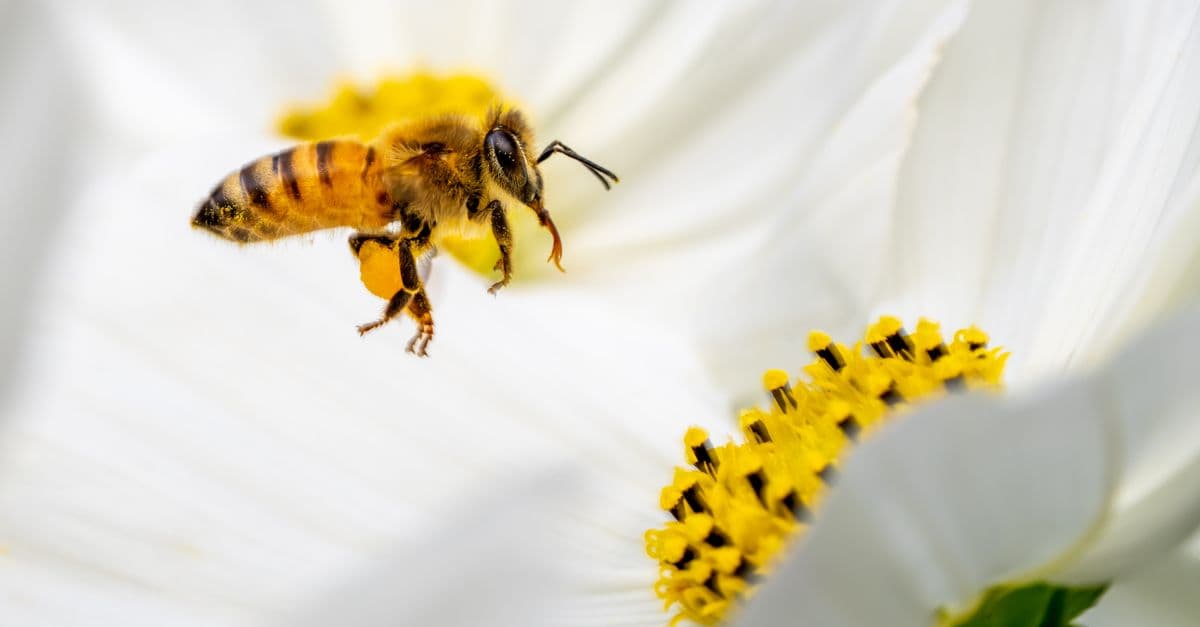
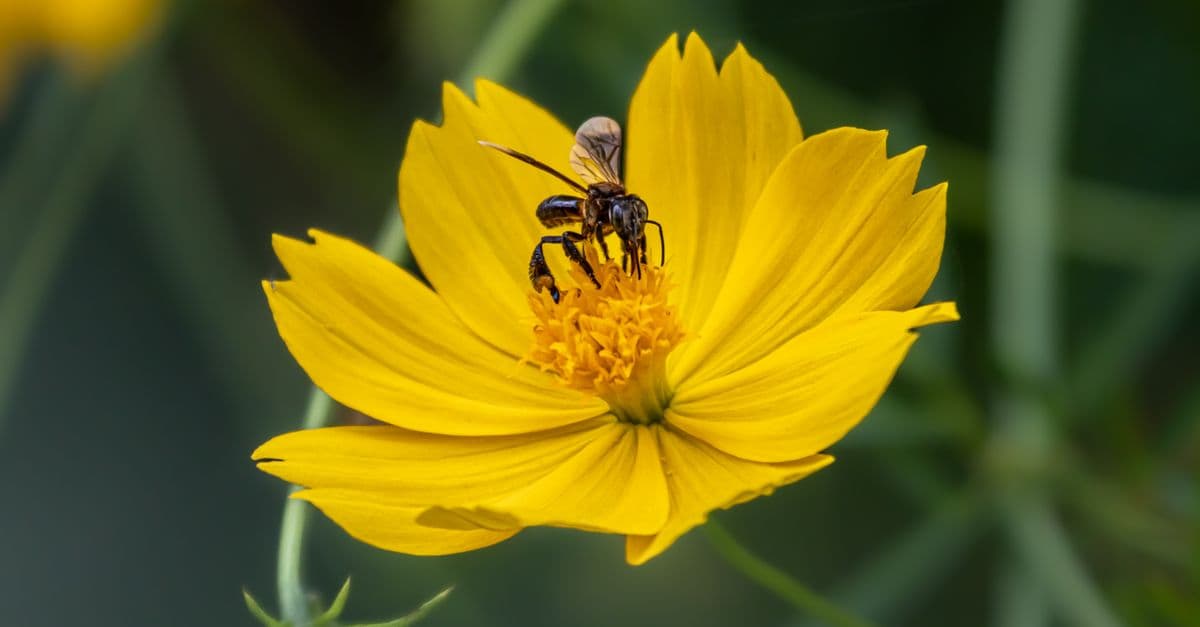
Photo: Skyler Ewing / Pexels
"If the bee disappears from the surface of the Earth, man would have no more than four years to live." This quote is often attributed to Albert Einstein. He never said it, and the dramatic version is wrong. But the real story is still worth taking seriously. If every bee species vanished tomorrow, humanity would survive. Our diets, ecosystems, and economy, however, would be reshaped in ways most people underestimate — starting with the produce aisle and ending, decades later, with entire plant communities.
Thought experiment. This article explores a hypothetical scenario for educational and speculative purposes. The events described are not predictions and should not be interpreted as warnings, advocacy, or instructions.
How Important Are Bees, Really?
Bees are the world's most important pollinators, but "important" undersells how the system actually works. A pollinator's job is to move pollen — the plant equivalent of sperm — from the male part of one flower (the anther) to the female part of another (the stigma), fertilizing the plant so it can produce seeds and fruit. Wind and self-pollination handle this for grains. Insects, overwhelmingly bees, handle it for the rest.
According to the Food and Agriculture Organization (FAO), animal pollination contributes to roughly 35% of global crop production by volume. The Intergovernmental Science-Policy Platform on Biodiversity and Ecosystem Services (IPBES) estimated the global annual market value of pollinator-dependent crops at $235–577 billion in its 2016 assessment. Of all animal pollinators, bees are the heavyweights.
The Western honeybee (Apis mellifera) is the most managed and the most famous, trucked around the world in wooden boxes like seasonal farm labor. But there are more than 20,000 known bee species worldwide, including bumblebees, mason bees, leafcutter bees, sweat bees, and stingless bees. Many of these wild species are actually more efficient pollinators per visit than honeybees — a mason bee can pollinate an apple orchard with roughly 1% of the individual visits a honeybee needs, because it carries pollen loosely on its hairy body rather than packing it into leg baskets for hive storage.
Why bees specifically, and not just "insects"
Bees are unusually good pollinators because they are the only major pollinator group that deliberately collects pollen as food, not just nectar. A bee visiting a flower for nectar picks up pollen by accident; a bee visiting for pollen is actively raking it off the anthers to carry home to feed larvae. That means bees visit more flowers per hour, revisit the same plant species repeatedly (a trait called flower constancy), and carry far more pollen per trip than butterflies, flies, or beetles, which forage more opportunistically. This is the mechanical reason a hive of honeybees can service tens of thousands of almond trees while a comparable population of flies barely dents the job.
What Would Vanish From Our Plates
Wind-pollinated staples — wheat, rice, corn, oats, barley — would be completely unaffected. Grasses evolved to broadcast pollen on the breeze long before bees existed, and they still provide the majority of humanity's calories. Starvation from a total bee extinction is not a realistic outcome, and any article claiming otherwise is repeating the fake Einstein quote, not the science.
But variety, nutrition, and pleasure would collapse hard. The table below shows crop-by-crop bee dependence, drawn from FAO's pollination dependence classifications and USDA Economic Research Service crop data.
Crop dependence on bee pollination
| Crop | Bee Dependence | What Happens Without Bees |
|---|---|---|
| Almonds | ~100% | Industry effectively ends |
| Blueberries | 90% | Yields collapse |
| Cherries | 90% | Become rare luxury |
| Apples | 90% | Massive yield drop |
| Avocados | 90% | Production crashes |
| Watermelon | 90% | Severe shortage |
| Cucumbers | 90% | Heavy losses |
| Coffee (Arabica) | 25%* | Yields and quality drop |
| Cocoa | Partial (midges + bees) | Quality declines |
| Tomatoes | 25–30% (mostly bumblebees) | Lower yields, smaller fruit |
| Strawberries | Quality-dependent | Misshapen, smaller fruit |
*Coffee can self-pollinate, but bee-pollinated coffee yields roughly 25–50% more and produces higher-quality beans, according to field studies in Costa Rica and Ethiopia cited by FAO's pollination program.
Almonds are the clearest case study because the entire crop is grown in one place at one time: California's Central Valley, in a bloom window that lasts about three weeks each February. There is no other major food crop this concentrated or this dependent on a single pollinator species. If bees disappeared, this is where the collapse would be instant and total, not gradual.
Inside the Largest Managed Pollination Event on Earth
California's almond industry is worth billions of dollars annually and requires the largest managed pollination event on the planet. For the 2024 bloom, roughly 1.4 million acres of almond orchards needed an estimated 2.7 million honeybee colonies, according to USDA Economic Research Service data. That is the majority of all commercial honeybee colonies in the United States, trucked in from as far away as Florida and the Dakotas and parked in California for a few weeks before dispersing back across the country for the rest of the growing season.
The economics are striking on their own. Almond pollination alone generated $325.8 million in pollination-service revenue in 2024 — about 81% of total U.S. pollination service receipts across every crop combined. The average almond pollination fee was about $181 per colony in 2024, nearly triple the roughly $66 average fee beekeepers charge for pollinating everything else. Growers pay that premium because there is no substitute: without bees, an almond orchard produces close to nothing.
Surprising fact. Nearly all of America's commercial honeybee colonies converge on a single valley in California every February for a three-week bloom window — the largest managed pollination event on Earth, and the single point of failure in the entire almond industry.
This concentration is also why beekeepers worry about a single bad winter more than almond growers do about a single bad frost. If colony losses before almond season spike, as they did heading into 2025, there simply are not enough healthy hives to go around, and growers start bidding against each other for the colonies that survived.
Beyond Honeybees: The Other Pollinators
When people say "save the bees," they usually mean honeybees. But honeybees are a managed, domesticated species with a global population in the tens of millions of colonies — they are not the pollinators most at risk. Many wild bee species are in far steeper decline, and they are harder to track because nobody is counting them in hives.
Pollinators that could partially compensate if honeybees specifically vanished:
- Bumblebees. Excellent buzz-pollinators — they vibrate flowers at a frequency that shakes pollen loose, a trick honeybees cannot do, which makes bumblebees essential for tomatoes, peppers, and blueberries.
- Solitary bees (mason, leafcutter). Often more efficient per visit than honeybees, but they nest alone in soil or reeds rather than in large colonies, so they cannot be trucked around at industrial scale.
- Hoverflies and other flies. Pollinate many crops, especially in cool or wet climates where bees are less active.
- Butterflies and moths. Important for some wildflowers, far less so for food crops.
- Bats. Pollinate agave (the source of tequila), bananas, and mangoes in tropical regions.
- Birds. Hummingbirds pollinate some tropical and subtropical plants.
- Beetles, wasps, and ants. Minor but non-zero contributions in specific ecosystems.
A 2013 study in Science by Lucas Garibaldi and colleagues, surveying 41 crop systems across six continents, found that wild insect pollination improves fruit set even when honeybees are abundant — meaning wild pollinator diversity is not redundant backup, it is doing work honeybees cannot replicate. Fields visited by more wild bee species set more fruit than fields visited by fewer species, regardless of how many honeybees were also present.
So if only managed honeybees disappeared, wild pollinators could partly compensate, but only in places where wild habitat still exists to support them — hedgerows, meadows, unsprayed field margins. In heavily farmed monoculture landscapes with no wild habitat left, there is nothing to compensate with. And if all bees, wild and managed, vanished together, the gap would be catastrophic for most of the crops in the table above, because flies, beetles, and butterflies together cannot match bees' combined efficiency and volume.
Why can't we just switch entirely to wild pollinators?
Wild pollinators cannot be concentrated on demand the way honeybee colonies can. A grower needing 2.7 million pollination units for a three-week almond bloom has no way to summon wild bees to one location; they exist wherever habitat already supports them, in whatever numbers that habitat allows, and cannot be trucked in like a honeybee hive.
Cascading Ecosystem Effects
Crops are only part of the story. Roughly 87% of all flowering plant species depend on animal pollinators, according to a widely cited 2011 study in Oikos by Ollerton and colleagues. Lose the bees, and the effects move through an ecosystem in a predictable sequence:
- Wildflowers decline sharply or vanish locally. Meadows, hedgerows, and prairies lose color, structure, and the plant diversity that supports everything above them in the food web.
- Seed and fruit production crashes for plants that feed birds and mammals through autumn and winter.
- Herbivores that depend on those plants decline — rodents, deer, and songbirds that eat seeds, berries, and fruit.
- Predators above them follow — foxes, hawks, and owls lose prey density.
- Habitat structure changes over time. Many of the shrubs and understory trees that anchor forest and hedgerow ecosystems are insect-pollinated, and their loss changes what nests, shelters, and forages where.
This is the part of the thought experiment that separates "expensive groceries" from "ecological unraveling." Agricultural impacts would hit within a single growing season. Wild plant community effects would unfold over years to decades, as long-lived perennials and trees that only reproduce sexually every few years slowly fail to set seed, aging populations with nothing behind them.
Why Bees Are Already in Trouble
This is not a purely hypothetical exercise. Bee populations have been declining for decades, and the mechanisms driving that decline are well documented in peer-reviewed research and international assessments.
- Colony Collapse Disorder (CCD). First documented in 2006, CCD is characterized by the sudden disappearance of a colony's worker bees, leaving behind a queen, food stores, and a handful of nurse bees but no explanation for where the workforce went. Its causes are multifactorial, not a single pathogen or chemical.
- Neonicotinoid pesticides. A landmark 2017 Science study by Woodcock and colleagues linked field-realistic neonicotinoid exposure to reduced bee survival across multiple European countries, using large-scale field trials rather than lab-only doses. The European Union restricted three key neonicotinoids for outdoor use in 2018 partly on the strength of this evidence.
- Varroa destructor mites. A parasitic mite that feeds on developing bees and vectors deformed wing virus and other pathogens. It is widely considered the single largest threat to managed honeybee colonies globally, and U.S. beekeeper surveys consistently cite it as the top reported cause of colony loss.
- Habitat loss. Industrial monocultures eliminate the wildflower foraging that bees need outside a crop's narrow bloom window, leaving colonies with nothing to eat for the rest of the season.
- Climate change. Shifting bloom times create mismatches with bee emergence, and range contraction is already squeezing cold-adapted bumblebee species out of their historic territory.
- Pathogens. Nosema fungi, deformed wing virus, and other diseases compound the stress from mites, pesticides, and poor nutrition.
Recent survey data illustrates how severe this has become. The Bee Informed Partnership, working with the University of Maryland, Auburn University, and the Apiary Inspectors of America, found that U.S. beekeepers lost about 50% of their managed colonies between April 2022 and April 2023 — with Varroa mites cited most frequently as the driver, affecting an estimated 1.7 million colonies that season. Then, heading into the 2024–2025 almond bloom, commercial beekeepers reported unusually high losses again, severe enough that two industry groups launched emergency nationwide surveys to document what was happening. For the first time in these surveys, large commercial operations were hit harder than small backyard beekeepers, a reversal of the usual pattern that suggests something specific to industrial-scale migratory beekeeping — the stress of constant trucking, crowded winter storage, or synchronized mite exposure — is compounding the general decline.
Wild bees are arguably worse off, and harder to track precisely because there is no annual "hive count" for them the way there is for managed colonies. The Xerces Society, working with the IUCN North American Bumble Bee Specialist Group, found that more than a quarter of North American bumblebee species face some degree of extinction risk. The rusty patched bumblebee (Bombus affinis) has been lost from roughly 90% of its historic range across 26 U.S. states and two Canadian provinces, and in 2017 became the first bumblebee species in the continental United States to be listed under the Endangered Species Act. Researchers believe its decline began with pathogens spread by commercially reared bumblebees shipped between states to pollinate greenhouse tomatoes — a case where the pollination industry itself, not pesticides or habitat loss, triggered the collapse of a wild population.
Could We Replace Bees Technologically?
Several efforts have tried to build a bee substitute, with limited success so far.
- Hand pollination. Already practiced in parts of China's Sichuan province, where decades of heavy pesticide use eliminated local wild bees from pear and apple orchards. Farmers now pollinate blossoms by hand with brushes or cigarette filters dipped in pollen, tree by tree, flower by flower. It works, but it is extraordinarily labor-intensive and expensive, and it only became necessary because the bees were wiped out first.
- Pollinator drones. Harvard's RoboBee project and similar robotics efforts have demonstrated small flying devices that can carry and deposit pollen in short flights. They remain lab demonstrations, not field-deployable technology, and are nowhere close to the coverage, autonomy, or cost-efficiency of a living colony that reproduces itself for free.
- Self-pollinating cultivars. Plant breeders are developing crop varieties that need less insect pollination, including self-fertile almond varieties already grown on a meaningful share of California acreage specifically to reduce dependence on trucked-in colonies.
None of these approaches come close to replacing the pollination service bees provide at industrial scale, largely because a honeybee colony is a self-replicating, self-organizing workforce that costs a beekeeper a rental fee, not a factory. A 2016 economic review estimated that replacing bee pollination with hand labor across current agricultural acreage would cost hundreds of billions of dollars annually — money that would ultimately show up as higher grocery prices, not absorbed margin.
Could genetic engineering breed pesticide-resistant super bees?
Researchers are actively studying Varroa-resistant honeybee populations, including a hybrid line in Southern California documented in a 2026 Scientific Reports study showing measurable mite resistance. This is promising but slow: breeding resistance into a commercially viable, temperament-stable bee line takes years of selective breeding, and resistant genetics still have to be distributed across a fragmented, geographically scattered beekeeping industry.
What You Can Do
- Plant native flowers that bloom across seasons — clover, lavender, and regional wildflowers — so bees have food outside a single crop's bloom window.
- Avoid neonicotinoid pesticides in home gardens; residues persist in soil and pollen long after application.
- Support organic and pollinator-friendly farming, which tends to preserve more field-margin habitat.
- Leave part of your yard "messy." Bare soil patches and dead wood host the roughly 70% of solitary bee species that nest in the ground or in cavities, not in hives.
- Buy local honey to support small beekeepers, but don't assume "save the bees" means "eat more honey" — wild pollinators need habitat, not honey demand, and honeybees can actually compete with wild bees for scarce forage.
- Advocate for habitat protection and pesticide regulation at the local and national level, since individual gardening choices alone cannot offset large-scale agricultural land-use patterns.
Bee Crisis Comparison
Pollinator group status at a glance
| Pollinator Group | Status | Main Threat |
|---|---|---|
| Honeybees (managed) | Declining but recoverable | Varroa mites, pesticides, monoculture |
| Wild bumblebees | Many species threatened | Climate change, habitat loss |
| Solitary bees | Poorly monitored, declining | Habitat loss, pesticides |
| Butterflies | Sharp declines globally | Habitat loss, climate change |
| Hoverflies | Declining in Europe | Habitat loss |
| Bats (pollinator species) | Threatened | Habitat loss, disease |
Common Misconceptions About the Bee Crisis
The Einstein quote is the most famous myth, but it is not the only one. A few others are worth correcting because they distort how people think about the actual risk.
"Honeybees are going extinct." They are not. Apis mellifera is a domesticated, globally managed species with millions of colonies maintained by beekeepers on every inhabited continent. Individual colonies die at alarming rates, but beekeepers replace them by splitting surviving hives and rearing new queens — the species itself is in no danger of disappearing, even though the industry supporting it is under real financial stress.
"If we just stop using pesticides, the crisis ends." Pesticides, especially neonicotinoids, are a real and well-documented contributor, but researchers consistently describe colony decline as multifactorial: Varroa mites, habitat loss, poor nutrition, pathogens, and pesticide exposure interact and compound each other rather than acting as isolated single causes. Removing one stressor helps, but it does not fix a colony that is also mite-infested and starving for forage.
"Wild bees and honeybees are basically the same problem." They are not the same population, are not tracked the same way, and do not face identical threats. Honeybee losses get counted annually because beekeepers report them; most of the 20,000 wild bee species have no equivalent monitoring system, so declines can go unnoticed for years before anyone documents them formally.
"More beekeeping automatically helps wild bees." In areas with limited flowers, adding more honeybee hives can increase competition for the same scarce nectar and pollen, putting additional pressure on wild bee populations rather than relieving it. Conservation biologists increasingly treat "keep more honeybees" and "protect wild pollinators" as different, sometimes conflicting, goals.
The Bottom Line
If all bees disappeared, humanity would not go extinct in four years. Einstein never said it, and the underlying claim is not supported by the agricultural science. But our food would become blander, more expensive, and less nutritious. Almonds, apples, coffee, chocolate, and dozens of fruits and vegetables would become rare luxuries rather than grocery-store staples. Ecosystems would unravel slowly but profoundly, as the roughly 87% of flowering plants that depend on animal pollination lost their primary partner. The world would still turn, just smaller, hungrier, and considerably less colorful.
The real lesson here is not really the hypothetical scenario. It is that a milder version of this experiment is already running, in slow motion, across almond orchards, apple farms, and prairie remnants right now — and the data on colony losses, wild bee range contractions, and pollinator-dependent crop yields is the evidence, not speculation.
FAQ
Q: Are honeybees endangered? A: Not as a species. Apis mellifera is widespread and actively managed by beekeepers on every inhabited continent, with millions of colonies maintained globally. But many wild bee species, including several bumblebees like the rusty patched bumblebee, are formally endangered or critically declining, and they are a separate population from managed honeybees.
Q: Will we starve without bees? A: No. The crops providing most of humanity's calories — rice, wheat, and corn — are wind-pollinated and completely unaffected by bee loss. But diets would lose enormous nutritional and culinary diversity, since most fruits, nuts, and many vegetables depend heavily on bee pollination.
Q: Are neonicotinoids really killing bees? A: Evidence from large-scale field trials, including a 2017 Science study across multiple European countries, strongly supports that neonicotinoids harm bee health, particularly at field-realistic doses combined with other stressors like Varroa mites and poor nutrition. The EU restricted three key neonicotinoids for outdoor use in 2018 based partly on this evidence.
Q: Can other insects replace bees? A: Partially. Hoverflies, butterflies, and beetles pollinate some plants, but bees' visitation frequency, flower constancy, and specialized adaptations like buzz pollination are difficult to replace at agricultural scale, especially for high-dependence crops like almonds and blueberries.
Q: What's the single best thing an individual can do for bees? A: Plant a diversity of native flowering plants that bloom from early spring through late fall, and avoid pesticides in home gardens. Habitat and forage availability are the limiting factors for most wild bee populations, more than any single chemical or predator.
Q: How long would full ecosystem collapse take after bees disappeared? A: Decades, not years. Agricultural impacts on bee-dependent crops would hit within a single growing season, but wild plant community effects would unravel over roughly 10 to 50 years, as long-lived trees and perennials that reproduce sexually only occasionally slowly failed to set seed and aging plant populations went unreplaced.
Q: Why does almond farming depend so heavily on bees specifically? A: Almond trees are almost entirely self-incompatible, meaning a tree's own pollen usually cannot fertilize its own flowers, so cross-pollination between different almond varieties is required. Bees are the only pollinator that can be concentrated in the volume needed — around 2.7 million colonies for California's 2024 bloom — to service that job across 1.4 million acres in a three-week window.
Q: What is Colony Collapse Disorder, exactly? A: CCD is a specific phenomenon first documented in 2006 in which a colony's adult worker bees abruptly disappear, leaving behind the queen, brood, and food stores with few or no dead bodies found nearby. Its causes are considered multifactorial rather than a single pathogen, involving combinations of Varroa mites, pesticide exposure, poor nutrition, and pathogens.
Q: Could genetically bred Varroa-resistant bees solve the crisis? A: They could help significantly. A 2026 study in Scientific Reports documented measurable Varroa resistance in a hybrid honeybee population in Southern California, but breeding that resistance into commercially viable bee lines and distributing it across a fragmented beekeeping industry takes years, so it is a long-term mitigation, not an immediate fix.
Q: Is bee decline the same everywhere in the world? A: No. Managed honeybee colony numbers are actually stable or growing globally because beekeepers can split surviving hives to replace losses, even as annual loss rates worsen. Wild bee declines are geographically uneven and much harder to quantify, since most of the roughly 20,000 wild bee species lack the kind of annual monitoring beekeepers provide for honeybees.
Related Articles
- What If All Insects Disappeared?
- How Photosynthesis Powers the Planet
- What If a Supervolcano Erupted?
Sources
- IPBES (2016). "Assessment Report on Pollinators, Pollination and Food Production."
- Garibaldi, L.A. et al. (2013). "Wild pollinators enhance fruit set of crops regardless of honey bee abundance." Science 339(6127).
- Ollerton, J. et al. (2011). "How many flowering plants are pollinated by animals?" Oikos 120(3).
- Woodcock, B.A. et al. (2017). "Country-specific effects of neonicotinoid pesticides on honey bees and wild bees." Science 356(6345).
- FAO (2018). "Why Bees Matter: The Importance of Bees and Other Pollinators for Food and Agriculture."
- Goulson, D. et al. (2015). "Bee declines driven by combined stress from parasites, pesticides, and lack of flowers." Science 347(6229).
- USDA Economic Research Service (2024). "Thousands of commercial honey bee colonies are transported long distances to pollinate California almonds."
- USDA Economic Research Service (2024). "Pollination services valued at $400 million on 1.7 million acres."
- Bee Informed Partnership / University of Maryland (2023). "A national survey of managed honey bee colony losses in the USA: Results for 2020–21 and 2021–22." Journal of Apicultural Research.
- Apiary Inspectors of America (2025). "2024–2025 Survey Results" on U.S. honey bee colony losses.
- Xerces Society (2021). "New report finds that bumble bees have undergone dramatic declines."
- Xerces Society. "Rusty Patched Bumble Bee: The First Bee in the Continental U.S. to be Protected Under the Endangered Species Act."
- Nature Scientific Reports (2026). "Varroa mite resistance in a hybrid honey bee (Apis mellifera) population in Southern California."
Follow new articles
Add SciHub101 to your feed reader to see new science and technology stories.
About the Author
SciHub101 is an independent science and technology publication founded and edited by Buğra Sözeri, a software engineer and app developer based in Türkiye. AI tools assist with drafting and research. Source documentation in the existing archive is uneven, and articles are being reviewed and corrected. The Editorial Team byline identifies editorial responsibility; it does not certify specialist or independent human review. Where we compare products, anything built by our own team is labelled as such — see the editorial guidelines and About page for how corrections and disclosures work.
Related Articles
What If You Lived on Mars?
Daily life on Mars: 38% gravity, radiation, blue sunsets, regolith homes, hydroponic food, and the psychology of 22-minute light-lag from Earth.
What If All Humans Disappeared Tomorrow?
If humanity vanished overnight, Earth would begin a dramatic recovery — from nuclear meltdowns in hours to rainforest regrowth over centuries.
What If All Bees Went Extinct?
Bees pollinate roughly one-third of the food we eat. If they vanished, our diets would collapse to staple grains, the prices of fruits, nuts, and vegetables would soar, and entire ecosystems built on flowering plants would unravel within a generation.
What If All Insects Disappeared?
Insects pollinate roughly three-quarters of food crop types, recycle dead plants and animals, aerate soil, and feed countless animals. If they vanished overnight, terrestrial ecosystems would unravel within a few years and most of agriculture would fail.
What If the Amazon Rainforest Disappeared?
The Amazon holds tens of billions of tonnes of carbon, makes about half of its own rainfall, and shelters roughly one in ten known species. Here is what a total loss would set in motion, and why the forest may not need to be fully cleared to fail.
What If Earth's Oxygen Levels Doubled?
If atmospheric oxygen rose from 21% to 42%, paper would catch fire from a single spark, lightning storms would ignite vast wildfires, and giant insects might become possible — but the world would be a tinderbox.