What If All Bees Went Extinct?
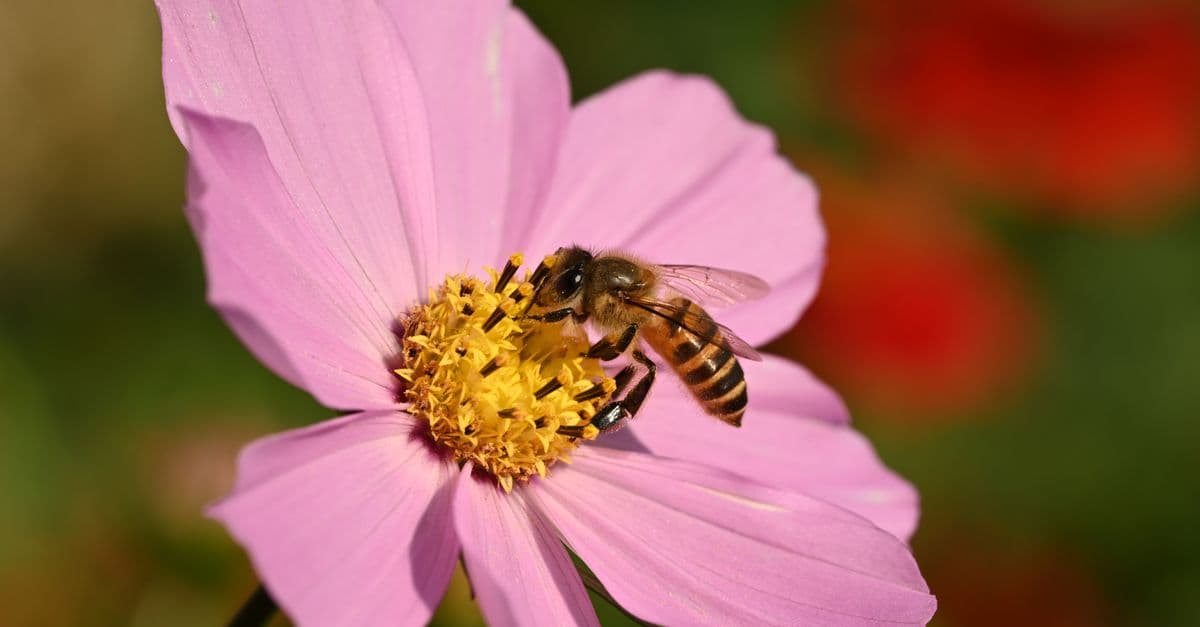
Photo: Qing Luo / Pexels
Bees pollinate roughly one-third of the food humans eat by volume and boost yields in 87 of the world's 115 leading food crops, according to a landmark global assessment coordinated by the Food and Agriculture Organization of the United Nations (FAO, 2016). Complete extinction of all ~20,000 bee species is not a realistic near-term outcome, but the thought experiment is useful precisely because it exposes a service so invisible that most people never think about it until it fails. This is a thought experiment, not a prediction: it asks what would happen if a hypothetical, total loss of bees occurred, using real agricultural and ecological data to trace the consequences.
Thought experiment. This article explores a hypothetical scenario for educational and speculative purposes. The events described are not predictions and should not be interpreted as warnings, advocacy, or instructions.
Key takeaways
- Bees pollinate crops that make up roughly 35% of global food production by volume, and enhance yield in 87 of 115 leading global food crop types (FAO).
- Total bee loss would not cause mass starvation — wheat, rice, and corn are wind-pollinated — but it would cause severe nutritional impoverishment.
- The Intergovernmental Science-Policy Platform on Biodiversity and Ecosystem Services (IPBES) puts the annual value of crops directly dependent on animal pollinators at US$235-577 billion (IPBES, 2016).
- A 2015 modeling study in The Lancet estimated that total loss of pollinator services could raise global mortality from diet-related disease by roughly 1.4 million deaths per year (Smith et al., 2015, PubMed).
- Wild plant ecosystems built on flowering species — meadows, hedgerows, temperate forests — would visibly thin out within a few decades, not overnight.
- Other pollinators (flies, moths, beetles, hummingbirds, bats) would partly compensate, but cannot fully replace the efficiency and specialization bees provide.
What bees actually do, and why "just honeybees" is a myth
The word "bee" conjures a single image: a striped honeybee (Apis mellifera) working a hive box in someone's backyard. That image covers a tiny fraction of the story. There are roughly 20,000 known bee species worldwide, and the honeybee — the one species humans manage at industrial scale — is a relative latecomer to most ecosystems it now dominates commercially.
Wild bees do the majority of pollination work in most natural and many agricultural settings. Bumblebees (around 250 species) work efficiently in cool, temperate climates where honeybees struggle. Solitary bees — mason bees, leaf-cutter bees, sweat bees, mining bees, carpenter bees — often outperform honeybees per individual visit because they carry pollen loosely on hairy abdomens rather than packing it into leg baskets for hive storage. Stingless bees fill the same ecological role across the tropics of Latin America, Africa, and Asia.
Specialization matters enormously here. Squash bees (genus Peponapis) pollinate almost nothing but cucurbits — squash, pumpkins, zucchini. Alkali bees are essential to commercial alfalfa seed production in the Pacific Northwest. Many crops, including tomatoes, blueberries, cranberries, and eggplants, require buzz pollination: a bee grips the flower and vibrates its flight muscles at a specific frequency (typically 200-400 hertz) to shake pollen loose from anthers that don't release it any other way. Honeybees cannot buzz pollinate at all — they lack the anatomy for it. Only bumblebees and some solitary bees can do this trick, which is why commercial greenhouse tomato growers rent bumblebee colonies rather than honeybee hives.
This is the detail that undermines the common assumption that humans could simply "keep more honeybees" if wild bees vanished. Honeybees are generalists, not specialists, and generalists cannot substitute for the thousands of tightly evolved plant-pollinator relationships that took millions of years to form. A companion scenario is what if all bees disappeared.
What disappears from the plate
Bee-dependent crops fall into two categories: those that fail outright without bees, and those that survive but at drastically reduced yield and quality.
Crops that are essentially non-negotiable bee jobs include almonds (California's almond bloom is described by agricultural economists as the largest managed pollination event on Earth, requiring more than 2 million honeybee colonies trucked in from across the United States every February, according to a 2025 analysis from the University of Illinois farmdoc project — source), most tree fruit (apples, pears, cherries, plums, peaches, apricots), berries (blueberries, strawberries, raspberries, cranberries), and cucurbits (cucumbers, squash, melons, pumpkins).
Coffee is a subtler case: it can self-pollinate, but research summarized by the FAO shows insect pollination, primarily by bees, increases coffee yield by roughly a quarter and improves bean size and uniformity. Cocoa, the source of chocolate, depends on tiny midges rather than bees, so it would largely survive — a detail worth flagging because cocoa often gets lumped incorrectly into "bee-dependent" lists.
What survives a total bee loss reasonably intact:
| Category | Examples | Why it survives |
|---|---|---|
| Cereal grains | Wheat, rice, corn, oats, barley | Wind-pollinated, no animal pollinator needed |
| Most legumes | Beans, peas, lentils | Primarily self-pollinating |
| Root and tuber crops | Potatoes, sweet potatoes, cassava | Propagated vegetatively, not by seed-set pollination |
| Self-pollinating fruit | Tomatoes, peppers, citrus (partial) | Can set fruit without a pollinator, though yield and quality drop without buzz pollination |
| Bananas | Cavendish and most cultivated varieties | Grown from vegetative clones, not seed |
Table: What survives vs. what fails without bees, by crop mechanism.
The net effect on human diets is not famine. Calorie production, dominated by wind-pollinated grains, holds up. What collapses is dietary diversity: the fruits, vegetables, nuts, and seeds that supply vitamin C, vitamin A precursors, folate, and dozens of micronutrients. A world without bees is a world stuck eating bread, rice, and potatoes, with fruit and vegetables becoming luxury goods.
How does bee loss affect human health specifically?
A 2015 modeling study published in The Lancet projected that complete loss of animal pollination services would increase global deaths from non-communicable and malnutrition-related disease by about 1.4 million per year, driven by reduced intake of fruits, vegetables, and nuts linked to heart disease, stroke, and certain cancers (Smith et al., 2015). A more targeted 2022 analysis in Environmental Health Perspectives estimated that even the partial pollination shortfalls happening today already cause roughly 427,000 excess deaths annually, concentrated in populous middle-income countries including China, India, Indonesia, and Russia (Yale E360 summary of the study).
The economics: who pays, and how much
Putting a dollar figure on pollination is tricky because bees don't send an invoice — their value shows up as the difference between yield with pollinators and yield without them. The most cited attempt is the 2016 IPBES pollinator assessment, a two-year effort involving hundreds of scientists, which found that between US$235 billion and US$577 billion of global annual food production value depends directly on animal pollination (IPBES press release). A separate academic review found a comparably wide range, roughly US$195-657 billion depending on methodology and inflation adjustment.
That range is wide, but the trend inside it is not disputed: the volume of agricultural production that depends on animal pollination has grown roughly 300% over the past fifty years, as farmers have shifted toward high-value fruit, nut, and vegetable crops for export markets. In other words, the global food system has been getting more bee-dependent over time, not less, even as bee populations face mounting pressure. That is the uncomfortable trend line sitting underneath this whole thought experiment.
Almonds illustrate the exposure well. Nearly 100% of California's almond crop — which supplies roughly 80% of the world's almonds — requires insect pollination, and the crop is worth several billion dollars a year to California's economy alone. Remove bees, and that entire industry does not shrink; it disappears, because there is no viable substitute pollination method at that scale.
Why "we'll just use honeybees" doesn't work
It's worth returning to the honeybee-substitution question in more depth, because it's the single most common misconception about this scenario. Even setting aside the buzz-pollination gap, three additional problems undermine the idea that managed honeybees alone could absorb the loss of wild bees.
First, honeybees are, per flower visit, measurably less efficient pollinators than many wild bee species for a range of crops, including apples and blueberries — research summarized in a 2013 review in Proceedings of the National Academy of Sciences found that wild bee visits increased fruit set roughly twice as effectively per visit as honeybee visits across dozens of crop systems studied globally. Second, many crops rely on regionally adapted specialist pollinators that simply have no honeybee equivalent, the squash bee and alkali bee examples above being just two of thousands. Third, and perhaps most ironic, honeybees themselves are not a stable backstop: they are already under severe stress from Varroa mites, viral pathogens, and pesticide exposure. The most recent U.S. national survey, run by Auburn University's Bee Informed Partnership and the Apiary Inspectors of America, recorded a 55.6% loss of managed honeybee colonies between April 2024 and April 2025 — the highest loss rate recorded since the survey began in 2010 (Auburn University, 2025). Beekeepers currently absorb these losses by aggressively splitting surviving colonies and rebuilding numbers each spring, at rising cost. That treadmill has limits.
Wild ecosystems: a slower, quieter unraveling
Agriculture gets the headlines, but bees do more pollination work outside farms than inside them. Roughly 90% of wild flowering plant species rely on animal pollinators, and bees are the dominant pollinator group across most temperate and many tropical ecosystems, according to pollination ecology research reviewed by the FAO. Remove bees, and the effect on wild plant communities would not be an instant die-off. It would look more like a slow subsidence.
Flowering plants that depend heavily on bee pollination would set less seed each year. Over successive seasons, their populations would shrink relative to wind-pollinated grasses, sedges, and self-pollinating species, which would face no such penalty and would gradually take over the available ground. Wildflower meadows, an ecosystem defined by exactly the plants most at risk, would become visibly sparser and less diverse within a few decades. Bee-pollinated trees, including linden and basswood species widely planted as street trees and present in temperate forests, would produce fewer viable seeds, thinning natural regeneration over multiple tree generations, which for long-lived species can mean a century-scale shift rather than an overnight one.
That plant decline cascades upward. Birds and mammals that depend on the fruits and seeds of bee-pollinated plants lose food sources. Insects that specialize on those same plants as larval hosts lose habitat. Ecologists call this kind of chain reaction a trophic cascade — think of it like pulling a load-bearing wall out of a house. The house doesn't collapse the instant the wall is removed, but the structure above it sags, cracks spread, and eventually parts of the building that had nothing directly to do with that wall start failing too.
What percentage of wild plants would be affected without bees?
Ecological surveys reviewed in the FAO's global pollinator assessment suggest that a substantial share of wild flowering plant species — commonly cited around 30% in temperate ecosystem studies — would experience measurable reproductive decline without bee pollination specifically, though exact figures vary by biome and are difficult to isolate from other pollinator groups' contributions.
Could other pollinators fill the gap?
Bees are not the only animals that move pollen between flowers. Flies, particularly hoverflies, are already significant pollinators in cooler climates and could plausibly expand into some of the niche bees would leave behind — flies tend to be more resilient to pesticide exposure than bees, since they don't nest in soil or plant stems the way many bees do. Butterflies and moths visit flowers too, though they are generally considered less effective pollinators per visit because their long legs and smooth bodies pick up and deposit far less pollen than a bee's hairy body.
Hummingbirds are important pollinators for tubular, red, nectar-rich flowers, but they are confined to the Americas and have co-evolved with a relatively narrow slice of the plant world. Bats pollinate several economically and ecologically important tropical plants, including agave (the source of tequila) and some banana relatives, but play essentially no role in temperate ecosystems.
Put together, these alternative pollinators could provide partial compensation for a subset of plant species, particularly generalist flowers that aren't fussy about who visits them. But the honest assessment from pollination ecologists is that this compensation would be uneven and incomplete. Specialist plant-pollinator relationships, the buzz-pollinated crops, the squash-bee-dependent cucurbits, the alfalfa-alkali-bee system, have no ready substitute waiting in the wings. Ecosystems would shift in composition toward the generalist, wind-pollinated, and self-pollinating end of the spectrum rather than simply recovering with a different cast of pollinators.
Hand pollination: what happens where bees have already vanished
This is not purely hypothetical. In Maoxian County, in China's Sichuan province, wild bee populations collapsed by the 1980s due to a combination of habitat loss from expanding orchards and heavy pesticide use aimed at controlling pear pests. Farmers responded by pollinating apple and pear blossoms by hand, using brushes, cigarette filters mounted on sticks, or chicken feathers dipped in pollen, moving flower to flower much the way a bee would. A 2001 study found that 100% of apples in the county were being hand-pollinated by that point (documented in Mountain Research and Development).
The Maoxian case is often cited as a preview of a post-bee agricultural world, and it is instructive precisely because it shows the practice is possible but not scalable. Hand pollination is extraordinarily labor-intensive: estimates from the region put the work at multiple person-days per acre during the narrow bloom window, compared with a fraction of that cost when bees do the job for free. It also depends on cheap rural labor, a resource that is disappearing in Maoxian itself as younger residents move to cities for higher-paying work, which is part of why the practice has scaled back in some areas even as pollinator scarcity persists.
Robotic pollination technology exists in early, narrow forms: small drones fitted with static-charged surfaces designed to pick up and deposit pollen, and micro-robotic platforms inspired by Harvard's "RoboBee" research program, which has focused primarily on flight mechanics rather than functional crop pollination at scale. None of these approaches are remotely close to operating at the scale required to replace billions of individual pollinator visits across the roughly 1.4 billion hectares of global cropland. They remain useful for research and for niche, high-value applications, not as a wholesale substitute for a lost pollinator workforce.
Is hand pollination actually happening anywhere today?
Yes. Farmers in parts of Sichuan, China, have hand-pollinated fruit trees since the 1980s after local wild bee populations collapsed from habitat loss and pesticide use. The practice demonstrates that hand pollination is technically feasible for high-value orchard crops but far too labor-intensive to replace bees across global agriculture.
Why bee decline is already underway, not a distant hypothetical
The premise of total bee extinction is deliberately extreme, but the pressures driving toward it are documented and active today. Habitat loss from agricultural expansion and urban development removes the wildflower meadows and nesting sites bees depend on. Neonicotinoid pesticides, among the most widely used insecticide classes globally, impair bee navigation, memory, and immune function even at sublethal doses, according to research summarized by the U.S. Fish and Wildlife Service and multiple peer-reviewed toxicology studies. Climate change shifts flowering times out of sync with bee emergence schedules and pushes species ranges toward the poles faster than some bees can track. Varroa mites and the viruses they spread devastate honeybee colonies specifically, while monoculture farming, vast fields of a single wind-pollinated crop, offers bees weeks of blooming resources followed by months of nothing to eat.
The 55.6% U.S. managed colony loss recorded for 2024-2025 is the clearest current data point: beekeepers are replacing colonies fast enough to keep commercial pollination running, but the cost and effort of doing so keeps climbing, and the underlying wild bee populations that don't get replaced by a beekeeper's truck are declining with less visibility and less recovery capacity. Multiple regional surveys have found long-term declines in a substantial share of bumblebee species specifically, a pattern consistent across North America and Europe. This is, in effect, a slow-motion, partial version of the thought experiment already running in real time.
What people get wrong about this scenario
The most common error is assuming bee loss means starvation. It does not, at least not directly: the crops that supply the bulk of human calories worldwide are wind-pollinated or self-pollinating, so total bee extinction would not trigger a global famine on its own. The correct framing is nutritional impoverishment and economic disruption, not caloric collapse.
A second common error, addressed above, is assuming honeybees could absorb the loss of wild bees. The two groups do overlapping but distinct jobs, and honeybees are themselves vulnerable to many of the same pressures killing wild bees.
A third error is picturing bee loss as a sudden event with a visible before-and-after. In practice, and consistent with what's already observed in regions with severe pollinator decline, the process would unfold as a gradual thinning: slightly lower yields each year, orchards that need more hives per acre to hit the same output, wildflower meadows that look a little sparser each summer. The absence of a dramatic collapse moment is precisely why the risk is easy to underestimate and easy for cost-conscious decision-makers to defer addressing.
The takeaway
Total bee extinction would not end human civilization, but it would make the world measurably poorer in ways that compound quietly: fewer nutrients on the plate, hundreds of billions of dollars in lost agricultural value each year, and wild landscapes that slowly lose the flowering plants many other species depend on. The scenario is a stress test for how much invisible ecological labor modern food systems quietly rely on. Given that honeybee colony losses are already hitting record highs and wild bee species are already in documented long-term decline in many regions, the more useful question is not "what if bees went extinct," but how much erosion of that invisible labor force is already priced into the food system, and how much cheaper it is to protect pollinator habitat now than to replace their work later.
FAQ
Q: Would humans starve if all bees went extinct? A: No. The crops that provide most of the world's calories, including wheat, rice, and corn, are wind-pollinated and don't need bees. Diets would shift toward grains, legumes, and root vegetables, causing severe nutritional impoverishment rather than famine.
Q: What percentage of food crops depend on bees? A: Animal pollinators, mostly bees, enhance yield in 87 of 115 leading global food crop types and are directly responsible for roughly 35% of global crop production by volume, according to the FAO's global pollinator assessment.
Q: Could honeybees replace wild bees if wild bees went extinct? A: Not fully. Honeybees cannot perform buzz pollination, which crops like tomatoes and blueberries require, are less efficient per visit than many wild bee species for various crops, and are themselves under severe stress from mites, viruses, and pesticides.
Q: How much money would be lost if bees disappeared? A: The IPBES global pollinator assessment estimated that between US$235 billion and US$577 billion of annual global food production value depends directly on animal pollination, most of it attributable to bees.
Q: Are bees actually going extinct right now? A: Total extinction is not documented or imminent, but U.S. managed honeybee colonies suffered a record 55.6% loss between April 2024 and April 2025, and multiple wild bee species, particularly bumblebees, show long-term population declines across North America and Europe.
Q: What crops would completely disappear without bees? A: Almonds are essentially 100% bee-dependent. Many berries, tree fruits, and cucurbits (squash, melon, cucumber) would either fail to set fruit or see yields collapse without bee pollination.
Q: Can hand pollination replace bees for agriculture? A: It's technically possible, as demonstrated in Sichuan, China, where farmers have hand-pollinated fruit trees since the 1980s after local bees collapsed, but it is far too labor-intensive to scale to global agriculture.
Q: Would wild ecosystems collapse without bees? A: Not overnight. Bee-pollinated wild plants would gradually produce less seed and decline over decades, shifting plant communities toward wind-pollinated and self-pollinating species, with cascading effects on animals that depend on those plants.
Q: Why are bee populations declining today? A: The main drivers are habitat loss from agricultural and urban expansion, neonicotinoid pesticide exposure, climate-driven mismatches between flowering times and bee activity, and pathogens like Varroa mites in honeybees.
Q: Do other animals pollinate plants besides bees? A: Yes. Flies, butterflies, moths, hummingbirds, and bats all pollinate plants, but most are less efficient or more narrowly specialized than bees, so they could only partially compensate for a total bee loss.
Related thought experiments
Follow new articles
Add SciHub101 to your feed reader to see new science and technology stories.
About the Author
SciHub101 is an independent science and technology publication founded and edited by Buğra Sözeri, a software engineer and app developer based in Türkiye. AI tools assist with drafting and research. Source documentation in the existing archive is uneven, and articles are being reviewed and corrected. The Editorial Team byline identifies editorial responsibility; it does not certify specialist or independent human review. Where we compare products, anything built by our own team is labelled as such — see the editorial guidelines and About page for how corrections and disclosures work.
Related Articles
What If We Built a Dyson Sphere Around the Sun?
A Dyson sphere — a structure capturing all of the Sun's energy — would harness 3.86 × 10²⁶ watts, more than a trillion times humanity's current power use. Building it requires more material than exists in any individual planet, but could in principle be done by dismantling Mercury or several asteroids.

What If Antibiotics Stopped Working?
Antimicrobial resistance is rising fast. If antibiotics universally failed, common infections would kill again, surgery and chemotherapy would become extraordinarily risky, and life expectancy would drop by years. The world would resemble the medical landscape of 1925.
What If All Bees Disappeared?
Bees pollinate $235B in crops yearly. If they vanished, almonds, apples, and coffee would collapse — but humanity wouldn't starve. Here's why.
What If All Insects Disappeared?
Insects pollinate roughly three-quarters of food crop types, recycle dead plants and animals, aerate soil, and feed countless animals. If they vanished overnight, terrestrial ecosystems would unravel within a few years and most of agriculture would fail.
What If Humans Could Regrow Limbs Like Axolotls?
Axolotls do it effortlessly. What would it mean for medicine, warfare, disability, and human identity if we could too? The science is closer than you think — and the implications are stranger than you'd expect.
What If Humans Could Photosynthesize? — Science Explained
What would actually happen if humans could photosynthesize like plants? The math is brutal: you'd need skin the area of a small room, you'd still need food, and you'd have to spend most of your life lying flat in direct sunlight.