What If GMOs Were as Dangerous as Critics Claim? What 30 Years of Evidence Show
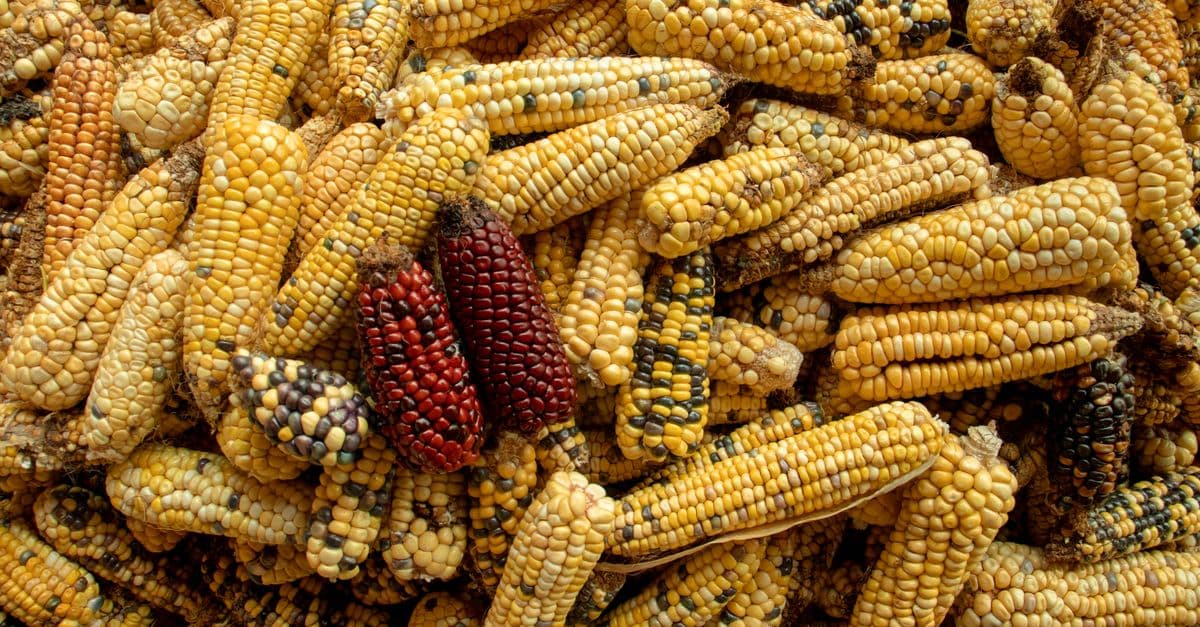
Photo: Xiomara Espinola Baca / Pexels
Genetically modified organisms (GMOs) have been grown commercially since 1996, and in the United States the large majority of corn, soybeans, and cotton now carries engineered traits. If these foods were as dangerous as critics claim, three decades of mass consumption should have left a visible mark in hospitals, farms, and toxicology labs. This article asks what that mark would look like, checks whether it exists, and separates the food-safety question from the agricultural and political concerns that hold up far better.
Thought experiment. This article explores a hypothetical scenario for educational purposes. It is not a prediction, and it does not tell anyone what to eat. It describes what published research has and has not found.
Key takeaways
- A 2016 National Academies report found "no substantiated evidence" that foods from genetically engineered crops are less safe than foods from non-engineered crops.
- The World Health Organization says approved GM foods are not likely to present risks to human health, but that each product should be assessed case by case.
- Genuine problems exist: herbicide-resistant weeds, insect resistance, market concentration, and patents on seeds.
- The two famous near-misses, a Brazil nut soybean and StarLink corn, show that safety screening can catch problems, and that it can also leak.
- Glyphosate, the herbicide used on many GM crops, is a separate scientific and legal dispute from whether GM food is safe to eat.
- Gene editing is blurring the line between "GMO" and conventional breeding, and regulators are rewriting the rules.
What counts as a GMO, and what is actually grown
The World Health Organization defines GMOs as organisms whose genetic material has been altered in a way that does not occur naturally by mating or natural recombination. In practice, most commercial GM crops carry one or two added traits. A trait is simply a characteristic written into the plant's DNA (deoxyribonucleic acid, the molecule that stores genetic instructions); how DNA works is worth understanding before going further, because every argument below is ultimately about what changes in that molecule and what the cell does with the change.
The traits fall into a few families.
| Trait family | What it does | Example |
|---|---|---|
| Insect resistance (Bt) | Plant makes a protein from the soil bacterium Bacillus thuringiensis that kills certain insect pests | Bt corn and Bt cotton |
| Herbicide tolerance | Plant survives a herbicide that kills surrounding weeds | Glyphosate-tolerant soybeans and corn |
| Virus resistance | Plant carries a gene that blocks a plant virus | Rainbow papaya in Hawaii |
| Nutritional enhancement | Plant makes a nutrient it normally would not | Golden Rice, engineered to make beta-carotene |
The WHO notes that the Bt toxin gene gives insect resistance and that the resulting protein is safe for human consumption. Each family raises different questions. Insect resistance is mainly an environmental and farming issue, herbicide tolerance is tied to a specific chemical, and nutrition traits raise regulatory and ethical questions of their own.
How widely these crops are grown
The US Department of Agriculture's Economic Research Service tracks adoption each year. Its 2025 figures show how thoroughly engineered varieties dominate the three largest GM crops.
| Crop (US, 2025) | Herbicide-tolerant share of acres | Insect-resistant (Bt) share of acres |
|---|---|---|
| Corn | About 92% | 87% |
| Soybeans | 96% | Not reported |
| Upland cotton | 93% | 91% |
Source: USDA Economic Research Service. Percentages reflect the share of planted acreage. Adoption varies widely by country, and the EU grows very little GM crop.
This scale matters for the thought experiment. A technology used on this many acres for this many years is one of the largest uncontrolled-by-design exposure experiments in modern food history, for better or worse. Any common, serious effect would be hard to hide.
If GMOs were dangerous, what would we expect to see?
Scientists think about a risk claim as a prediction. If a food is harmful, certain observations should follow. The useful exercise is to list them in advance, then check.
- Acute toxicity or allergic reactions concentrated in people who eat the products.
- Chronic disease patterns that track consumption, such as cancer incidence rising where GM food is common and not rising where it is rare.
- Harm in animal feeding studies, which are cheaper, faster, and more controlled than human studies.
- Environmental collapse near GM fields that differs from conventional fields.
- A scientific literature that leans toward harm, with independent labs reproducing the problem.
An important caution is that absence of evidence is not proof of safety, and that distinguishing a real signal from noise is difficult. This is where the difference between correlation and causation becomes practical: if disease rates rose in the same decades that GM crops spread, that would not prove the crops were responsible, because dozens of other things changed too. The cleaner tool is a controlled comparison, the logic behind randomized trials, which is why feeding studies matter.
Two cases where the system did catch something
The record is not a story of nothing ever going wrong. Two episodes show both the strength and the limits of safety screening.
The Brazil nut soybean. In the 1990s, the seed company Pioneer Hi-Bred developed soybeans carrying a gene from Brazil nuts, intended to boost the amino acid methionine in animal feed. Researchers at the University of Nebraska tested serum from people allergic to Brazil nuts and found that 8 of 9 subjects reacted to the transgenic soybeans, while none reacted to conventional soybeans. The paper, published in the New England Journal of Medicine in 1996, concluded that an allergen can be transferred from one food to another by genetic engineering. The soybeans never reached the market. This is the reason allergen screening exists, and it worked as designed.
StarLink corn. In 1998, the US Environmental Protection Agency approved a Bt corn variety called StarLink for animal feed and industrial use only, because its Cry9C protein resisted breakdown in digestion and heat and could prove allergenic. In September 2000, tests found StarLink genetic material in taco shells. According to a Congressional Research Service summary, Kraft recalled its taco shells within days, and the FDA recalled more than 300 corn products in November. The same summary notes that Cry9C did not resemble any known allergen, but other tests could not fully rule out allergenicity.
StarLink is a failure of the supply chain, not a documented food-poisoning event. Reports of the episode describe no confirmed illnesses from the taco shells, though researchers noted that available tests could not give a definitive answer on reported reactions. Both stories point to the same conclusion: the risk is trait-specific, which is why regulators evaluate products one at a time.
What the major reviews concluded
When critics and defenders disagree, the best resource is a systematic review: a study that collects all the relevant research and weighs it, rather than quoting one favorable paper.
| Review | Year | What it concluded |
|---|---|---|
| US National Academies of Sciences, Engineering, and Medicine | 2016 | Found "no substantiated evidence that foods from GE crops were less safe than foods from non-GE crops" |
| Nicolia and colleagues, Critical Reviews in Biotechnology | 2013-2014 | A review of the research from roughly a decade found no significant hazards directly connected with GE crop use |
| World Health Organization | 2014 (Q&A) | GM foods on the international market are not likely to present risks to human health; assessments should be case by case |
| AAAS Board of Directors | 2012 | Eating foods with GM ingredients is no riskier than eating the same foods made with conventionally modified crops |
Sources: National Academies 2016 summary, Nicolia et al. record at AGRIS, WHO Q&A. The AAAS Board statement was issued on October 20, 2012, in connection with debates over mandatory labeling.
The National Academies report, released in 2016, is the most thorough of these. Its committee examined epidemiological data on cancer incidence and other health problems and, in its summary, found animal feeding studies gave reasonable evidence that animals were not harmed. It also noted that long-term livestock data showed no adverse effects. The committee did not stop at food safety, as the next section shows.
What the evidence does not say
Good summaries also state their limits. The WHO is careful to say that individual GM foods should be assessed case by case, so it makes no blanket statement about every possible GM product. That wording matters. "GMOs are safe" is shorthand for "the engineered foods that have passed assessment and reached the market have not shown harm," and it does not extend to every hypothetical trait someone might engineer in the future.
Science also cannot prove a negative with certainty, only shrink the room in which a hidden harm could live. The longer a large population eats something without a signal, the smaller that room becomes. That is a reasoned confidence, not a guarantee.
Why a few studies seem to say otherwise
Critics usually point to specific studies. The most famous was published in 2012 by the French researcher Gilles Séralini and colleagues in the journal Food and Chemical Toxicology. According to Retraction Watch's account, it tested rats over two years on a glyphosate-tolerant GM maize, with or without the herbicide, and on the herbicide alone. The authors reported that treated females died more often and sooner than controls and that treated males had more liver and kidney problems and larger tumors.
The journal's editor retracted the paper in late 2013, describing it as inconclusive. The reported reasons were its small sample size and the high background tumor rate in the rat strain used, which meant normal variability could not be excluded. Retraction Watch and others disagreed with retracting on inconclusiveness alone. The study was republished in June 2014 in the journal Environmental Sciences Europe, and the republished version states that it "was not designed as a carcinogenicity study."
Two lessons come out of the episode. First, a single study with a small group of animals cannot establish a cancer risk, and the strain of rat matters. Second, a retraction does not by itself prove the opposite claim. Readers who want a primer on handling disputes like this can see why scientists disagree so much and why headlines overstate breakthrough science.
The broader pattern is that large reviews pool many studies so that no single noisy result dominates. That is the same reason the National Academies and the WHO carry more weight than any one experiment, whichever way it points.
Glyphosate is a separate question
Many people merge two issues: whether GM crops are safe to eat and whether the herbicide used on them is safe. They have different evidence and different regulators.
In March 2015, the International Agency for Research on Cancer (IARC), part of the WHO, classified glyphosate as Group 2A, "probably carcinogenic to humans." IARC's classification describes a hazard, meaning whether something can cause cancer under some conditions. It does not measure risk, which depends on how much exposure people actually receive. Regulators including the European Food Safety Authority (in November 2015) and the US EPA have concluded that glyphosate is unlikely to pose a carcinogenic hazard to humans, and the gap between agencies is partly explained by what each reviewed and how.
The US picture is unsettled. In June 2022, a federal appeals court found the Environmental Protection Agency's cancer conclusion in its 2020 glyphosate review was not supported by substantial evidence and sent the human health portion back to the agency, and EPA later withdrew its interim decision. That ruling concerned the agency's reasoning, and it did not establish that glyphosate causes cancer. Any figure someone quotes about "settled" glyphosate science should be treated with caution in either direction.
For this article's purposes, the key point is the separation. Glyphosate is used on non-GM crops and on lawns as well. Glyphosate-tolerant crops did change how it is used, but a concern about the chemical is not evidence that the engineered gene in the plant is harmful.
Real problems with GM agriculture
None of this means the technology is free of problems. The National Academies committee itself flagged two that matter a great deal, and they are mostly about farming, not eating.
Resistant weeds and insects
The committee found that where glyphosate was used heavily, "some weeds evolved resistance and present a major agronomic problem." It also found that where resistance-management strategies were not followed, "damaging levels of resistance evolved in some target insects." Its conclusion was that sustainable use of Bt and herbicide-resistant crops requires integrated pest management, a mix of rotation, varied herbicides, and non-chemical controls.
This is evolution at work, and it is worth thinking of the way antibiotic resistance spreads. Spray the same chemical year after year, and the few weeds that survive pass on their resistance, until the survivors are the majority. A Bt crop that expresses the toxin in every plant, all season, puts steady selection pressure on pest insects. The standard countermeasure is planting refuges of non-Bt crops so that susceptible insects keep breeding and dilute resistance. The mechanism is the same as in natural selection, speeded up by human farming.
Monoculture and concentration
Engineered traits made it easier to plant the same variety across huge areas. Large monocultures (fields growing one genetic variety) are vulnerable because a pest or disease that beats one plant can beat them all. That problem predates GM crops, but their economics reinforced it. Separately, the seed and agricultural chemical industry has consolidated into a handful of firms, including Bayer, which acquired Monsanto, Corteva, and Syngenta. Concerns about pricing power and farmer dependence are legitimate policy questions, not food safety questions.
Patents and saving seed
A patented trait changes a very old farming practice. Farmers have saved seed from their harvest for thousands of years, and licensing agreements for patented traits typically restrict that. The legal and economic fights over this are real, particularly for small farmers, and they are separate from whether the plants are safe. The same applies to the so-called "terminator" gene, a hypothetical technology that would make seeds sterile. Monsanto's chairman wrote in October 1999 that the company would not develop it, and the parties to the United Nations Convention on Biological Diversity recommended a de facto moratorium on field testing and commercial sale of such technologies in 2000. It is not a feature of today's commercial crops.
What the farm-level data say
Critics often argue that GM crops do not even deliver benefits. The best available synthesis is a 2014 meta-analysis by Wilhelm Klümper and Matin Qaim in PLOS ONE, which pooled 147 original studies covering GM soybean, maize, and cotton.
| Outcome | Average effect of GM adoption |
|---|---|
| Crop yield | About +22% |
| Chemical pesticide use | About -37% |
| Farmer profit | About +68% |
Source: Klümper and Qaim (2014), PLOS ONE. The body of the paper gives slightly different precise figures (for example, 21.6% for yield and 68.2% for profit).
The paper adds important detail. Insect-resistant crops delivered larger yield gains and bigger pesticide reductions than herbicide-tolerant crops, and the yield and profit gains were higher in developing countries than in developed ones. These are averages across studies, and the authors acknowledged that several original studies did not report sample sizes or measures of variance. The results also describe the first decade or two of adoption, before resistance became widespread in some regions, so they say little about the trade-offs of the future.
The balanced reading is that GM traits, particularly insect resistance, have often delivered measurable agronomic benefits, and that herbicide-tolerant systems have generated the biggest long-run resistance problem. Both statements are supported by the National Academies and the meta-analysis. Neither supports the idea that the technology is simply a scam or a miracle.
How GMOs compare with conventional breeding
A common argument is that "natural" breeding is safe and genetic engineering is not. The history of agriculture is less tidy. Domestication, selective breeding, and crossbreeding scramble thousands of genes at once and select by outcome. Gregor Mendel's pea experiments gave breeders their first rules for the process, and farmers have been reshaping crops with trial and error ever since.
One method deserves special mention: mutation breeding, where seeds or plant tissue are exposed to radiation or chemicals to produce random mutations, and breeders then select useful offspring. More than 3,200 mutagenic plant varieties had been released worldwide by 2014, according to the commonly cited tally of the International Atomic Energy Agency's database. In the European Union, these traditional chemical and radiation methods are exempt from the GMO rules, even though the changes are random and far less targeted than most modern genetic engineering; Canada, by contrast, regulates any product with a novel trait the same way regardless of how it was made.
The National Academies committee drew a pointed conclusion from this. It said that "regulatory systems based on process are technically difficult to defend," because emerging technologies have blurred the line between genetic engineering and conventional breeding. It recommended safety testing for any new variety, engineered or conventionally bred, that has novel characteristics with potential hazards. In other words, the committee argued the thing to regulate is the product and its traits, not whether a lab technique was used.
Gene editing and the new rules
CRISPR, a tool that cuts DNA at a chosen spot so the cell's repair machinery makes a small edit, intensifies this regulatory question. What CRISPR is and how gene editing works covers the technique. A gene-edited plant may contain no foreign DNA at all, and the change may be indistinguishable from one that arose naturally.
The European Union is rewriting its rules in response. According to a report on the deal, the Council and Parliament reached a provisional agreement on December 4, 2025, to create two categories of "new genomic techniques" plants. NGT1 plants, which could occur naturally or through conventional breeding, are largely exempted from the precautionary requirements that apply to GMOs, while NGT2 plants stay under full GMO-style oversight. Herbicide tolerance is excluded from the NGT1 category, seed bags of NGT1 varieties must be labeled, and the agreement still needed formal approval from the Parliament and Council at the time of that report. This describes the position as of December 2025; anyone relying on the final legal status should check the current state of the legislation.
Labels, laws, and courts
Labeling debates often mix three different questions: whether consumers have a right to know, whether a label implies a danger, and what counts as GM in the first place.
The WHO notes that there is no worldwide consensus on labeling and traceability, although the Codex Alimentarius Commission adopted labeling texts in 2011. In the United States, the National Bioengineered Food Disclosure Standard set January 1, 2022, as the mandatory compliance date, with disclosure by text, symbol, or digital link. According to legal summaries of the rule, highly refined foods with no detectable modified genetic material are generally outside mandatory disclosure, along with food served in restaurants and very small manufacturers.
The AAAS Board of Directors argued in 2012 that mandatory labels could "mislead and falsely alarm consumers," and drew a line between labels that protect public health, such as allergen warnings, and optional labels. Critics of that position, including 21 scientists and physicians who objected publicly, said it prevented consumers from making informed choices. This is a values debate, and the safety data cannot resolve it either way.
When courts apply the precautionary principle
The law does not always follow the scientific consensus. In April 2024, the Philippine Court of Appeals issued a writ of kalikasan, an environmental remedy, against Golden Rice and Bt eggplant. According to GMA News, the court ordered the Philippine Rice Research Institute to stop activities related to Golden Rice, revoked the biosafety permit for commercial propagation, and applied the precautionary principle. It found that expert opinions showed "no consensus could be reached on the safety or harmful effects" of the products, and it placed the burden of proof on those seeking to change the existing situation.
That ruling is a reminder that "safe according to regulators" and "legally permitted" are not the same thing. It is also an example of the cost-benefit question in this debate: Golden Rice was designed to address vitamin A deficiency, and halting it carries a price that critics and supporters weigh very differently.
Claims, checked
| Claim | What the evidence supports |
|---|---|
| "GMOs cause cancer" | The National Academies examined cancer-incidence data and found no substantiated evidence of greater risk; the most-cited animal study was retracted as inconclusive |
| "GMOs cause allergies" | Allergenicity screening exists for this reason, and the Brazil nut soybean was stopped before sale; the WHO says no allergic effects have been found for GM foods on the market |
| "GMOs are untested" | Products go through case-by-case regulatory assessment; the weak point is supply-chain control, as StarLink showed |
| "Bt crops harm people" | The WHO says the Bt protein is safe for human consumption; resistance in insects is the main concern |
| "GMOs reduce biodiversity" | Monoculture and herbicide use can reduce on-farm diversity; that is an agricultural-system effect, and monoculture predates GM crops |
| "Glyphosate is proven safe" or "proven to cause cancer" | Neither; IARC says "probably carcinogenic" as a hazard, several regulators disagree on risk, and the US review was sent back by a court in 2022 |
| "Terminator seeds are in the market" | Not a feature of commercial crops; Monsanto pledged in 1999 not to develop it |
Where reasonable people disagree
Even with the food-safety evidence in hand, a person can reasonably oppose parts of the GM system. Someone might object to the concentration of the seed market in a few companies. Someone else might prefer farming methods that rely less on any single herbicide or trait. Others might hold an environmental philosophy that favors minimal technical intervention, or care about local economies and traditional varieties.
Those are value judgments, and they sit comfortably alongside the finding that approved GM foods have not been shown to be less safe to eat. Trouble starts when a values position is presented as a safety finding, because it makes honest arguments about farming harder to have. The reverse also happens: dismissing every concern about agriculture as "anti-science" ignores the resistance, monoculture, and market issues the National Academies themselves raised.
Frequently asked questions
Q: Are GMO foods nutritionally different from conventional foods? A: Generally not. Most commercial GM traits, such as insect resistance and herbicide tolerance, do not change the nutrient profile in a way that matters to consumers. Some traits are designed to change nutrition, such as Golden Rice, which was engineered to make beta-carotene. Composition is compared against a conventional counterpart as part of safety assessment.
Q: Why do people say there is a scientific consensus if some scientists disagree? A: Consensus describes where most of the evidence and most reviews land, not unanimity. The National Academies, WHO, and AAAS all reached similar conclusions on food safety, while scientists continue to argue about glyphosate, resistance management, and long-term ecological effects. Disagreement on those topics does not overturn the reviews on food safety.
Q: Is organic food GMO-free? A: Organic certification schemes generally exclude genetically engineered ingredients, which is one reason many shoppers choose them. That is a rule about production methods, and it does not by itself make a food healthier or safer than a conventional one.
Q: Could a GM trait spread to wild or conventional plants? A: Yes, in principle. The WHO notes that gene migration into conventional crops or wild relatives, and crop mixing, may have an indirect effect on food safety and food security. Management tools include buffer zones, refuges, and segregation of crops approved only for feed or industrial use, as the StarLink case showed.
Q: Will gene-edited crops count as GMOs? A: It depends on the jurisdiction and the type of edit. Under the EU's provisional 2025 agreement, plants in the NGT1 category would be treated much like conventional plants while NGT2 plants would stay under full GMO rules. Other countries use different approaches, so there is no single global answer.
Q: Does a retraction mean a study was fraudulent? A: No. The Séralini paper was retracted because the editor judged its conclusions inconclusive, given the small sample size and the rat strain's background tumor rate, not because of an accusation of fraud. The retraction was contested, and the authors republished a revised version in another journal in 2014.
The takeaway
If GMOs were as dangerous as the strongest critics claim, three decades of widespread eating should have produced a visible signal, and large reviews by the National Academies, the WHO, and others did not find one for approved products. What they did find were agricultural problems that are real: weeds and insects evolving around the traits, concentrated markets, and legal fights over seed. The distinction matters because it points to different solutions. A safety problem would call for removing foods from shelves, while a resistance problem calls for better crop rotation and herbicide management, and a market-concentration problem calls for competition and patent policy. Treating all three as one problem called "GMOs" makes each harder to fix.
Sources
- National Academies of Sciences, Engineering, and Medicine, Genetically Engineered Crops: Experiences and Prospects (2016), summary
- World Health Organization, Food, genetically modified (Q&A)
- USDA Economic Research Service, Recent trends in GE adoption
- Klümper and Qaim (2014), A meta-analysis of the impacts of genetically modified crops, PLOS ONE
- Nicolia et al., An overview of the last 10 years of genetically engineered crop safety research
- Nordlee et al. (1996), Identification of a Brazil-nut allergen in transgenic soybeans
- Congressional Research Service, StarLink corn controversy
- Retraction Watch, Séralini study republished
- EU Perspectives, EU lawmakers strike deal on new genomic techniques
- GMA News, Court of Appeals halts release of Golden Rice and Bt eggplant
Related Reading
- What If Governments Were Hiding Evidence of Alien Contact? Examining the Claim
- What If Fluoride in Drinking Water Was Actually Harmful? What 80 Years of Studies Show
- Why the Climate Change 'Hoax' Claim Doesn't Hold Up
- What If Humans Could Live to 1,000 Years? The Science of Radical Longevity
- How We Know Vaccines Are Safe — The Evidence
Follow new articles
Add SciHub101 to your feed reader to see new science and technology stories.
About the Author
SciHub101 is an independent science and technology publication founded and edited by Buğra Sözeri, a software engineer and app developer based in Türkiye. AI tools assist with drafting and research. Source documentation in the existing archive is uneven, and articles are being reviewed and corrected. The Editorial Team byline identifies editorial responsibility; it does not certify specialist or independent human review. Where we compare products, anything built by our own team is labelled as such — see the editorial guidelines and About page for how corrections and disclosures work.
Related Articles

What If We Could Upload Human Consciousness?
Mind uploading — copying your conscious self into a computer — is a staple of science fiction. The science is fascinating, the obstacles enormous, and the philosophy genuinely confusing.

Why the Climate Change 'Hoax' Claim Doesn't Hold Up
A serious examination of climate change skepticism — the actual claims, the evidence behind them, and why no large-scale scientific conspiracy could survive global scrutiny.

What If Big Pharma Was Hiding a Cure for Cancer? Why the Conspiracy Doesn't Hold Up
The "Big Pharma is hiding the cancer cure" claim is one of the oldest conspiracy theories. Here's why basic economics, biology, and the way drug development actually works make it impossible.

How Fermentation Works: The Science Behind Bread, Beer, and Yogurt
Fermentation is controlled microbial metabolism — ancient biotechnology that transforms raw ingredients into foods more nutritious, flavorful, and shelf-stable than the originals.

Why Does Food Taste Good? The Science of Flavor
Flavor is not just taste — it's a symphony of chemistry, physics, and neuroscience happening in your mouth and brain.

Why Vanilla Is So Expensive — The Biology and Economics of the World's Second-Priciest Spice
A flower that stays open for about a day, a pollination step no machine has replaced, months of curing, and a supply base that cyclones can cut by a third: the biology and economics behind vanilla's price.