How Does DNA Work? The Molecular Blueprint of Life Explained
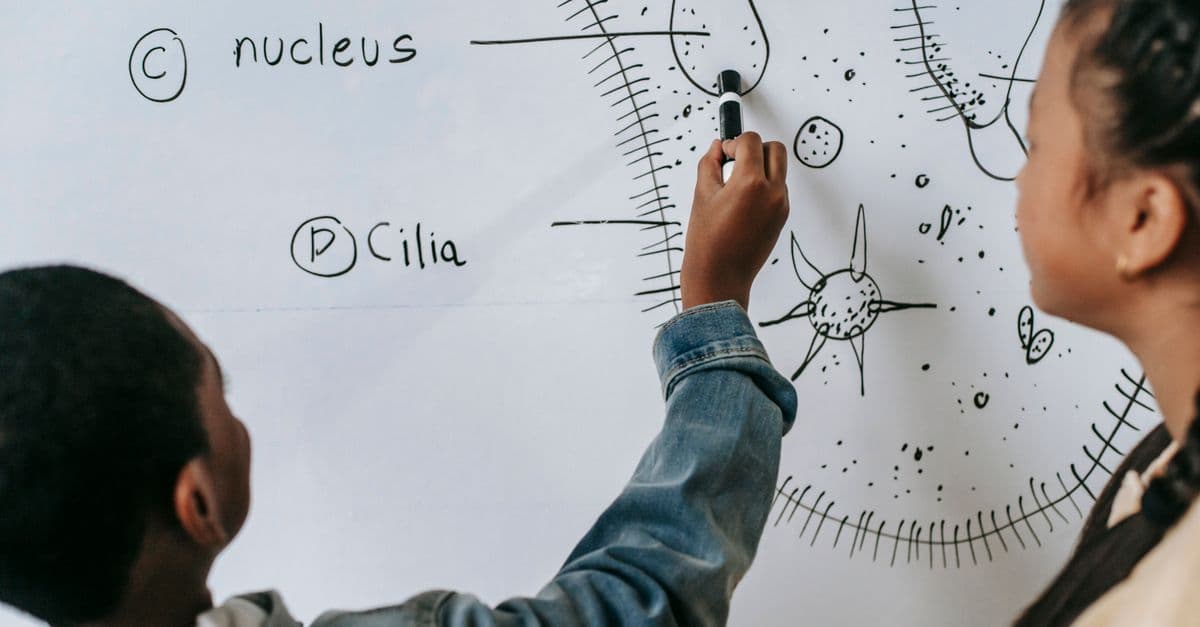
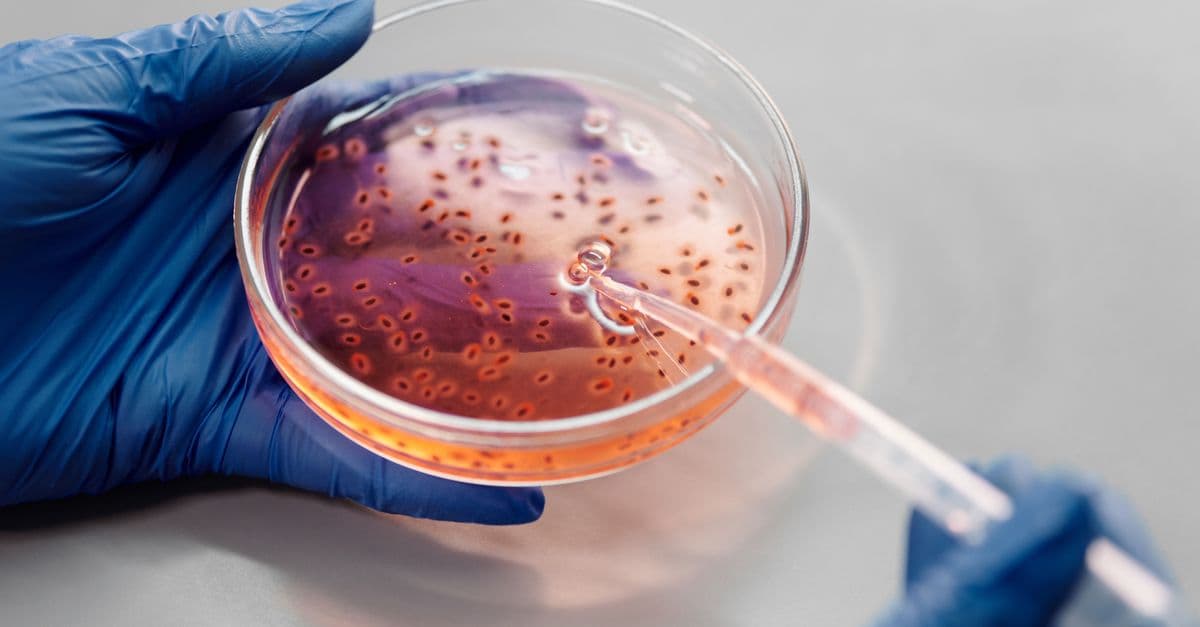
Photo: Katerina Holmes / Pexels
Every cell in your body carries a chemical instruction set roughly two meters (6.6 ft) long, folded inside a nucleus about a hundred-thousandth of a millimeter wide. That instruction set is DNA — deoxyribonucleic acid — and it does something no other molecule does at this scale: it stores information, copies itself with extraordinary accuracy, and gets translated into the proteins that build and run a living body. This article walks through exactly how that works, mechanism by mechanism, from the shape of the molecule to what happens when the code breaks down.
Educational content, not medical advice. Talk to a doctor or genetic counselor before making decisions based on genetic information. This article explains biological mechanisms; it does not diagnose or treat any condition.
Key takeaways
- DNA is a long molecule made of four chemical "letters" — A, T, G, and C — paired into a double helix.
- The order of those letters is a code that tells cells which proteins to build, and when.
- Cells copy their entire DNA before dividing, with an error rate of roughly one mistake per billion base pairs after proofreading.
- DNA is read in stages: transcription (DNA → RNA), splicing, and translation (RNA → protein).
- Mutations — typos in the code — cause some diseases, but they are also the raw material of evolution.
What is DNA, exactly?
DNA is a polymer, a long chain built from repeating units called nucleotides. Each nucleotide has three parts: a sugar (deoxyribose), a phosphate group, and one of four nitrogen-containing bases — adenine (A), thymine (T), guanine (G), and cytosine (C). String millions of these together and you get a single strand of DNA. Pair two strands together and twist them, and you get the shape everyone recognizes: the double helix.
That structure was worked out in 1953 by James Watson and Francis Crick, building directly on Rosalind Franklin's X-ray diffraction images of DNA fibers and on structural insight from Maurice Wilkins. Watson, Crick, and Wilkins shared the 1962 Nobel Prize in Physiology or Medicine for the discovery; Franklin had died in 1958 and Nobel Prizes are not awarded posthumously (Nobel Prize organization, official biographies).
The two strands of the helix are held together by hydrogen bonds between specific base pairs: A always pairs with T (two hydrogen bonds), and G always pairs with C (three hydrogen bonds). This is the base-pairing rule, and it is the single most important fact about DNA's chemistry. It is why the molecule is self-complementary — read one strand, and you already know the sequence of the other. That property is what makes DNA copyable, and it's the mechanical basis of every genetic technology built since, from PCR testing to CRISPR gene editing.
Think of the double helix like a spiral staircase built from two handrails (the sugar-phosphate backbones) connected by rungs (the base pairs). Each rung is made of two interlocking half-pieces that only fit together one way — an A-shaped half only clicks with a T-shaped half, and a G-shaped half only clicks with a C-shaped half. You can pull the staircase apart down the middle of each rung, and each half-staircase still tells you exactly what the other half looked like.
The genetic code: four letters, twenty amino acids
The human body relies on tens of thousands of distinct proteins to build tissue, run chemical reactions, and send signals between cells. Each protein is a chain of building blocks called amino acids, strung together in a precise order that determines how the protein folds and what it does. DNA encodes that order using codons — three-letter chunks of the genetic code, each specifying one amino acid or a start/stop instruction.
With four possible bases in each of three positions, there are 4³ = 64 possible codons. That's more than enough to specify the 20 standard amino acids used in human proteins, plus one start signal and three stop signals. Because there are more codons than amino acids, several codons can code for the same amino acid — biologists call this redundancy, and it acts as a built-in typo buffer: some single-letter mutations change nothing about the resulting protein.
The mapping from codon to amino acid is close to universal across life. Bacteria, oak trees, jellyfish, and humans all read essentially the same 64-codon dictionary, with only minor exceptions in a handful of organisms and organelles (mitochondria use a slightly modified code). That shared vocabulary is one of the strongest pieces of molecular evidence that all life on Earth descends from a common ancestor, a conclusion supported independently by comparative genomics across thousands of sequenced species (National Center for Biotechnology Information, "The Genetic Code").
Why isn't the genetic code one letter per amino acid?
A one-letter code could only specify 4 amino acids (one per base), and a two-letter code could specify at most 16 (4²). Cells need to encode at least 20 amino acids, so a three-letter system is the minimum length that works with margin to spare — which is exactly what evolution converged on.
How cells read DNA: transcription and translation
DNA itself almost never leaves the nucleus. It is too precious to risk damaging by dragging it out into the busy cytoplasm, and it is also too large to move efficiently. Instead, cells make disposable working copies of the sections they need, using a two-step process that converts a DNA sequence into a functioning protein.
Step 1: Transcription
An enzyme called RNA polymerase attaches to a specific starting point on the DNA, called a promoter, then unzips a short stretch of the double helix and reads one strand as a template. As it moves along, it builds a complementary copy made of RNA — a single-stranded molecule chemically similar to DNA but built from a slightly different sugar (ribose instead of deoxyribose) and using the base uracil (U) in place of thymine. This working copy, called messenger RNA (mRNA), carries the genetic message out of the nucleus and into the cytoplasm.
Before it leaves the nucleus, the raw transcript typically goes through splicing: a molecular machine called the spliceosome cuts out non-coding segments called introns and stitches the remaining coding segments, called exons, back together. Alternative splicing — stitching exons together in different combinations — is a major reason a single human gene can produce multiple different protein variants, one reason the roughly 20,000 human protein-coding genes can generate a much larger number of distinct proteins (National Human Genome Research Institute, "Alternative Splicing").
Step 2: Translation
In the cytoplasm, ribosomes — molecular machines built from RNA and protein, found by the millions in every cell — latch onto the mature mRNA and read it three letters (one codon) at a time. Each codon is matched by a transfer RNA (tRNA) molecule carrying the correct amino acid on one end and a matching three-letter anticodon on the other. The ribosome links each new amino acid to the growing chain, then releases the mRNA and moves to the next codon. When it reaches a stop codon, the finished amino acid chain is released and begins folding into its working three-dimensional shape, a process guided partly by helper proteins called chaperones.
How fast does this actually happen?
A single ribosome can add roughly 5 to 10 amino acids per second in humans, and a typical protein of a few hundred amino acids can be built in well under a minute. Multiple ribosomes often read the same mRNA strand simultaneously, so a cell can mass-produce a needed protein in a burst rather than one molecule at a time.
DNA replication: copying the blueprint with almost no errors
Before a cell divides, it must duplicate its entire genome, about 3.1 billion base pairs in a human cell, and it has to do this without introducing damaging mistakes into the next generation of cells. The process is called DNA replication, and it unfolds in three broad stages.
| Stage | What happens | Key enzyme |
|---|---|---|
| Unwinding | The double helix is pried apart into two single strands | Helicase |
| Copying | Each single strand is used as a template to build a new complementary strand | DNA polymerase |
| Proofreading and repair | Mismatched bases are detected, cut out, and corrected | DNA polymerase's exonuclease activity, plus mismatch-repair proteins |
Table: The three core stages of DNA replication in a human cell.
DNA polymerase's raw, uncorrected error rate is about one mistake per 100,000 to 1,000,000 bases added. Its built-in proofreading function, an exonuclease activity that backtracks and removes a wrongly paired base as soon as it's added, cuts that down substantially. A separate system, the mismatch repair pathway, scans the newly made strand afterward and fixes most of what proofreading missed. Together, these layered correction systems bring the final error rate down to roughly one mistake per billion base pairs, an accuracy level that is why your genome stays functionally stable across the roughly 1016 cell divisions that occur over a human lifetime (Loeb & Monnat, "DNA polymerases and human disease," Nature Reviews Genetics; Nature Scitable, "DNA Replication and Causes of Mutation").
A useful comparison: if a professional typist made one error per million keystrokes, and then had two independent editors catch nearly all of those errors before publication, the final manuscript might contain one uncaught typo per several hundred novels. That's roughly the reliability DNA replication achieves, chemically, inside a cell that has no eyes and no intelligence, only molecular shape-matching.
How does DNA polymerase know it made a mistake?
Correct base pairs (A-T, G-C) form a very specific geometric shape when they sit in the polymerase's active site. A mismatched pair distorts that shape slightly. The enzyme senses the distortion, stalls, and its proofreading domain removes the wrong base before adding the correct one and moving on.
What happens when DNA goes wrong?
Mutations are permanent changes in a DNA sequence. They happen constantly, caused by ultraviolet light, certain chemicals, viral infection, replication errors that slip past repair systems, or simple chance. The vast majority of mutations are either silent (they don't change the resulting protein, thanks to codon redundancy) or occur in non-coding regions where they have little to no functional effect. A smaller fraction land somewhere that matters.
- A single-base substitution in the HBB gene, which codes for the beta-globin subunit of hemoglobin, causes sickle-cell disease by making red blood cells rigid and crescent-shaped (CDC, "Sickle Cell Disease").
- Inherited mutations in BRCA1 and BRCA2, genes normally involved in repairing DNA damage, sharply raise lifetime risk of breast and ovarian cancer (National Cancer Institute, "BRCA Gene Mutations").
- Mutations that accumulate in specific genes over a person's lifetime, particularly in genes that control cell division, are a root cause of most cancers, which is why cancer risk climbs with age.
But mutation is not only a source of disease. Random changes in DNA, filtered generation after generation by natural selection, are the raw material of evolution. A population with zero mutation would be a population that could never adapt to a changing environment, a new pathogen, or a new food source. The same molecular process that occasionally causes disease is also the reason bacteria evolve, viruses mutate into new variants, and species diversify over geological time.
Why DNA matters in modern medicine and biotechnology
The last two decades have turned DNA from a purely theoretical molecule studied in university labs into a practical, everyday clinical tool.
Sequencing has gotten radically cheaper. The first full human genome sequence, completed by the publicly funded Human Genome Project in 2003, cost roughly $50 million per genome to produce using the technology and infrastructure available at the time. By the early 2020s, sequencing centers funded by the National Human Genome Research Institute were producing full genomes for a few hundred to about a thousand dollars, a drop of multiple orders of magnitude in under 20 years, outpacing the historical rate of Moore's Law for computer chips (NHGRI, "The Cost of Sequencing a Human Genome").
CRISPR-Cas9 lets scientists edit DNA at specific locations. Adapted from a bacterial immune defense system, CRISPR uses a guide RNA to direct the Cas9 enzyme to a precise DNA sequence, where it cuts both strands. Cells then repair the cut, and scientists can use that repair process to disable a gene or insert a corrected sequence. In December 2023, the US Food and Drug Administration approved Casgevy (exagamglogene autotemcel), the first CRISPR-Cas9-based therapy, for treating sickle-cell disease in patients age 12 and older. Casgevy works by editing a patient's own blood stem cells to reactivate production of fetal hemoglobin, which compensates for the defective adult hemoglobin sickle-cell patients produce (U.S. Food and Drug Administration, "FDA Approves First Gene Therapies to Treat Patients with Sickle Cell Disease").
mRNA vaccines work with DNA's machinery without ever touching DNA itself. The COVID-19 vaccines developed by Pfizer-BioNTech and Moderna deliver a synthetic mRNA sequence that instructs a person's own ribosomes to build a single harmless viral protein, training the immune system to recognize the real virus later. Because the mRNA is degraded by the cell within days and never enters the nucleus, it does not alter a person's DNA (Centers for Disease Control and Prevention, "Understanding mRNA COVID-19 Vaccines").
Consumer genetic testing reads a tiny fraction of the genome to estimate ancestry. Direct-to-consumer tests typically genotype several hundred thousand specific positions (SNPs) out of the 3.1 billion base pairs in the genome, comparing your pattern to reference populations to estimate ancestral origin and identify genetic relatives.
Where DNA's story gets more complicated
DNA is often described as a simple blueprint, a fixed set of instructions read the same way in every cell. That description is useful for a first pass, but it hides some of the more interesting parts of how the molecule actually functions.
Not all DNA codes for protein. Only about 1 to 2% of the human genome directly codes for proteins. The rest was once dismissively called "junk DNA," but decades of research, including the large-scale ENCODE project, have shown that much of the non-coding genome plays regulatory roles: switching genes on and off, organizing how DNA folds inside the nucleus, and producing regulatory RNA molecules that never get translated into protein at all (ENCODE Project Consortium, Nature).
Every cell in your body has (almost) the same DNA, but reads different parts of it. A skin cell and a neuron carry an essentially identical genome, yet look and behave completely differently, because different genes are switched on or off in each cell type. This is called gene expression, and it is controlled by regulatory proteins, chemical modifications to the DNA itself (epigenetics), and the three-dimensional way DNA folds inside the nucleus. Think of the genome as a cookbook every cell in the body owns an identical copy of: a liver cell and a muscle cell are simply following different recipes from the same book.
DNA damage is constant, not rare. Estimates suggest each human cell sustains tens of thousands of DNA-damaging events per day from routine cellular chemistry, radiation, and environmental exposure. The overwhelming majority are caught and fixed by dedicated repair pathways before they ever become a mutation, which is a large part of why cancer, despite constant DNA damage, remains a relatively rare outcome per cell rather than the default one.
Not every organism stores its genetic information the same way. Most viruses, including influenza and many coronaviruses, use RNA instead of DNA as their genetic material, which is one reason RNA viruses mutate faster than DNA-based organisms; RNA-copying enzymes generally lack the proofreading step that DNA polymerase has.
Frequently asked questions
Q: What's the difference between DNA and RNA? DNA is double-stranded, uses the base thymine, and is optimized for stable long-term information storage. RNA is typically single-stranded, uses uracil instead of thymine, and usually carries short-lived working copies of genetic instructions. Both are built from nucleotides, but DNA is the archive and RNA is the working memo.
Q: How much DNA do humans share with other organisms? Estimates vary by comparison method, but commonly cited figures are roughly 99.9% between any two humans, about 98.8% with chimpanzees, around 90% with mice, and lower but still substantial overlap with more distantly related species, reflecting shared evolutionary ancestry across the tree of life (NHGRI, "Genome Comparisons").
Q: Can DNA last forever? No. DNA is a chemically fragile molecule that degrades over time, especially in heat, moisture, and UV light. Under cold, dry, stable conditions, however, DNA can survive for extraordinarily long periods; scientists have successfully sequenced DNA from Neanderthal remains and from mammoth specimens tens of thousands of years old preserved in permafrost.
Q: How is DNA different from a gene? A gene is a specific stretch of DNA that codes for a particular protein or functional RNA molecule. Your full set of DNA, both coding and non-coding, is your genome. Humans have roughly 20,000 protein-coding genes, but those genes make up only about 1 to 2% of the total genome; the rest carries out structural and regulatory functions still being mapped.
Q: How does DNA actually determine physical traits like eye color? Most visible traits are influenced by multiple genes working together, not a single gene with a simple on/off switch. Eye color, for example, is shaped by variation at several genes that affect how much and what type of pigment (melanin) is deposited in the iris, which is why eye color in humans shows a continuous range rather than a small handful of discrete categories.
Q: Why do identical twins have the same DNA but sometimes look or age differently? Identical twins start with essentially the same DNA sequence, but gene expression, which genes are switched on and how strongly, can diverge over a lifetime due to different environments, exposures, and even random developmental noise. This is studied under the field of epigenetics, and it's a major reason identical twins are not perfectly identical in adulthood.
Q: Does DNA determine everything about a person? No. DNA sets a range of possibilities, but environment, developmental conditions, and chance interactions between genes and surroundings all shape the outcome. Studies suggest most complex human traits, from height to disease risk, arise from a combination of many genetic variants and non-genetic factors rather than a single deterministic gene.
Q: How do scientists actually read a DNA sequence? Modern sequencing machines use chemistry that detects each base as it's added to a growing DNA strand, typically by tracking a distinct fluorescent or electrical signal per base. High-throughput methods can now read billions of bases in parallel, which is the core technology that dropped genome sequencing costs from tens of millions of dollars to a few hundred.
Q: Can DNA be edited without CRISPR? Yes. Earlier gene-editing tools include zinc finger nucleases and TALENs, both of which use engineered proteins rather than guide RNA to target specific DNA sequences. CRISPR became dominant because it is generally cheaper, faster to redesign for a new target, and easier to use than these earlier protein-based systems.
The bottom line
DNA works by storing biological information in a four-letter chemical code, copying that code with extraordinary fidelity, and translating select portions of it into the proteins that build and run every living thing. None of this requires intention or intelligence on the molecule's part, only chemistry: shape-matching between bases, enzymes that read and correct errors mechanically, and a code that happens to be shared, with only minor variation, across every branch of life on Earth. That system has been refined by roughly four billion years of evolution, and humans have only had the tools to read and directly edit it for the last few decades. The chapter being written now, in sequencing centers and CRISPR labs worldwide, is still near its beginning.
Related Reading
Follow new articles
Add SciHub101 to your feed reader to see new science and technology stories.
About the Author
SciHub101 is an independent science and technology publication founded and edited by Buğra Sözeri, a software engineer and app developer based in Türkiye. AI tools assist with drafting and research. Source documentation in the existing archive is uneven, and articles are being reviewed and corrected. The Editorial Team byline identifies editorial responsibility; it does not certify specialist or independent human review. Where we compare products, anything built by our own team is labelled as such — see the editorial guidelines and About page for how corrections and disclosures work.
Related Articles

The Gut-Brain Connection — How Your Microbiome Affects Your Mind
Your gut and brain exchange signals through nerves, immune cells, and microbial chemicals. Here is what animal and human studies show about mood, anxiety, and cognition, and where the evidence is still thin.

The Science of Mental Health — What We Actually Know
About 1 in 7 people worldwide live with a mental disorder. The biology is real but incompletely understood, and several effective treatments exist. Here is what the evidence supports.
How Do Genes Actually Work?
A gene isn't a single thing in your body. It's a stretch of DNA that cells read to make a protein or functional RNA, switched on and off by cell type, timing, and signals. Here's how genes really work.
DNA Replication and Genetics Explained
How DNA replicates, the central dogma, mutations, epigenetics, and how consumer genetics tests like 23andMe actually work.
How Stem Cells Work and What They Can Actually Treat
A single fertilized egg becomes a complete human being, and a few of its descendants never stop being flexible. This is how stem cells work, how scientists learned to reprogram them, and which therapies have reached patients.
Human Evolution: From Primates to Homo Sapiens
Humans and chimpanzees share a common ancestor from roughly 6 to 7 million years ago. Here is how fossils, tools, and ancient DNA reconstruct what happened next.