What If We Burned All Fossil Fuels on Earth?
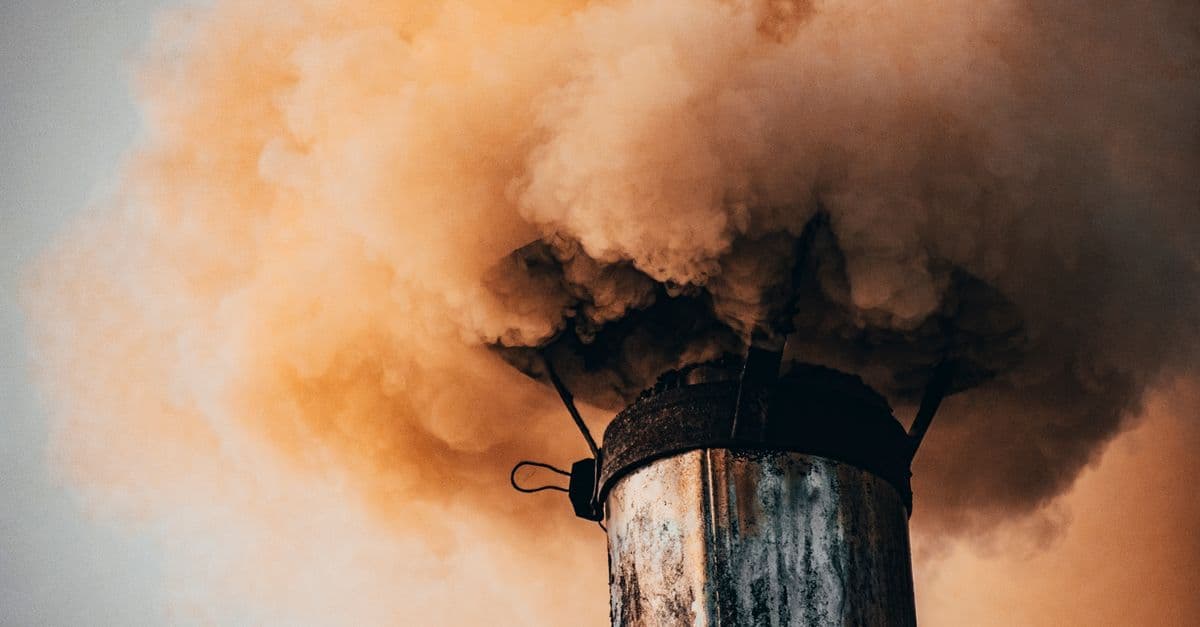
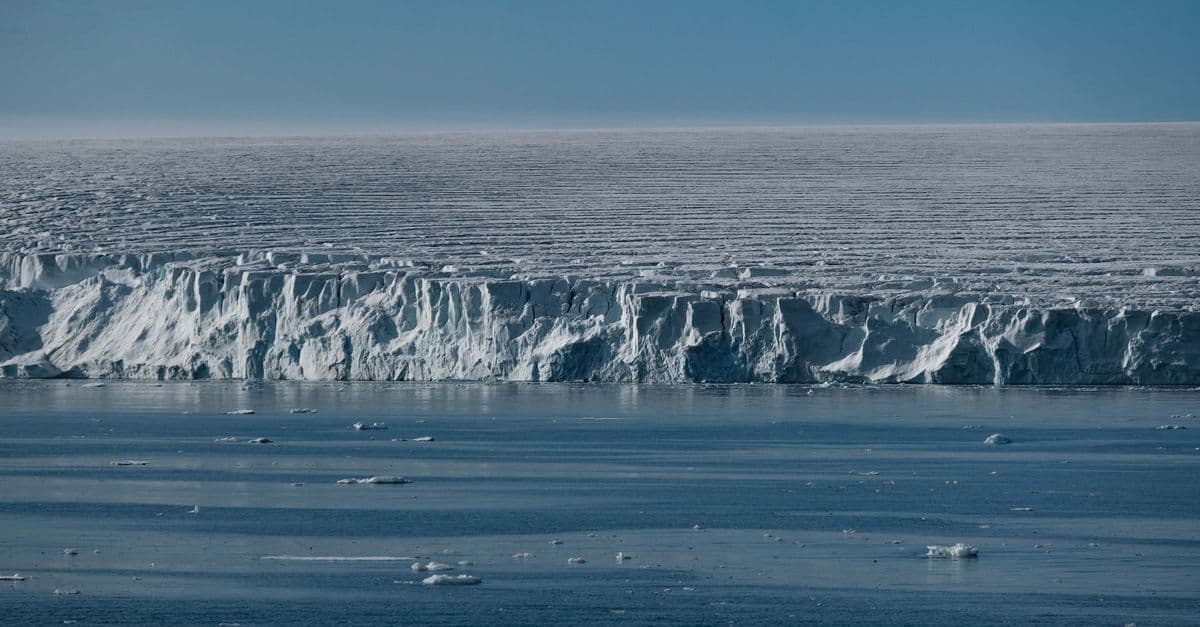
Photo: Ion Ceban @ionelceban / Pexels
The world's proven fossil fuel reserves contain roughly three times more carbon than is compatible with holding warming under 2°C, according to a 2015 Nature study led by researchers at University College London. If every barrel of oil, every seam of coal, and every cubic meter of gas that's economically recoverable today got burned, atmospheric carbon dioxide would climb far past anything recorded in the last several million years. This is a thought experiment, not a forecast. It asks what the climate system does at its physical limit, and why that limit is the reason "leave it in the ground" became a policy slogan instead of a metaphor.
Thought experiment. This article explores a hypothetical scenario for educational and speculative purposes. The events described are not predictions and should not be interpreted as warnings, advocacy, or instructions.
Key takeaways
- Proven global fossil fuel reserves hold about 746 gigatonnes of carbon (GtC), roughly three times what a 2°C-consistent carbon budget allows, per Nature (2015).
- Total resources — reserves plus everything technically extractable, including unconventional deposits — run into the thousands of gigatonnes of carbon.
- The remaining carbon budget for a 50% chance of staying under 1.5°C was about 250 GtCO₂ as of January 2023, roughly six years of emissions at the current rate, per Nature Climate Change (2023).
- If Greenland's ice sheet fully melted it would add 7.4 meters (24 feet) to sea level; Antarctica's ice holds 58 meters (190 feet) more, per NASA's Sea Level Change Portal.
- Atmospheric CO₂ hit roughly 430 parts per million in 2026, the highest level in over 2 million years, per NOAA's Global Monitoring Laboratory.
- The best analog for a multi-thousand-gigatonne carbon release is the Paleocene-Eocene Thermal Maximum, 55.8 million years ago, when 2,000 to 10,000 GtC pushed global temperatures up 5-8°C over about 200,000 years.
How much carbon is actually in the ground
Fossil fuel reserves aren't a single number. Geologists and energy economists split them into tiers based on how confident anyone is that the fuel can be pulled out of the ground at a profit, and the tier matters enormously for this thought experiment.
Proven reserves are the fuel companies have already found, measured, and judged commercially extractable at today's prices and technology. That figure sits at about 746 GtC across coal, oil, and gas combined, according to the Nature study cited above. Coal makes up the overwhelming majority of that carbon by mass, because coal seams are dense and widespread, even though coal supplies less of the world's energy than oil.
Resources are a much larger bucket. They include fuel that's known to exist geologically but isn't yet economical to extract, plus deposits that haven't been fully surveyed. Oil sands in Alberta, deepwater fields, Arctic basins, and coal seams too thin or too deep for current mining all sit in this category. Estimates for total fossil carbon resources, including unconventional sources like shale and methane hydrates, run from several thousand to over ten thousand gigatonnes of carbon, though the upper end is highly uncertain because much of it has never been drilled or surveyed in detail.
For comparison, humanity has burned about 375 GtC cumulatively between 1750 and 2011, per IPCC accounting reported by the Global Carbon Project, with several hundred more gigatonnes added since. That means the fuel already burned is a fraction of what's still sitting underground. The "burn it all" scenario in this article means the resource estimate, not just the proven-reserve figure, because that's the physical ceiling on how much carbon the planet's crust could theoretically release through fossil fuel combustion.
What burning it all would do to the climate
Why CO₂ concentration would multiply, not just add up
Pre-industrial atmospheric CO₂ sat at about 280 parts per million (ppm). By 2026, monitoring stations including NOAA's Mauna Loa Observatory in Hawaii put the annual average around 429-430 ppm, an increase of more than 50% in roughly two centuries, per NOAA. That's already the highest concentration in over 2 million years.
Burning the full resource base of coal, oil, and gas would push CO₂ concentrations to multiples of the pre-industrial baseline, not fractions higher. Climate scientists use a metric called equilibrium climate sensitivity (ECS) to translate atmospheric carbon into temperature: it's the amount of warming expected once the climate system fully equilibrates to a doubling of CO₂ concentration. The IPCC's Sixth Assessment Report puts the best estimate of ECS at 3°C, with a likely range of 2.5-4°C, per the IPCC AR6 Working Group I supplementary material. Doubling CO₂ once gets you roughly 3°C of eventual warming. Doubling it two or three times over, which is what full resource combustion implies, compounds that multiple times over, because each doubling adds roughly the same increment on top of the last, not a shrinking one.
Think of it like compound interest on a loan you can't pay down. Adding a fixed dollar amount to a balance is manageable; doubling the balance twice puts you somewhere you can't get back from with the same monthly payment. CO₂'s relationship to temperature works the same way: warming scales with the logarithm of concentration, so each doubling delivers roughly the same temperature jump, which is why going from 280 to 560 ppm and then to 1,120 ppm doesn't just add warming, it stacks full increments of it.
For perspective: how the scenarios line up
| Scenario | CO₂ trajectory | Approx. warming above pre-industrial | Primary source |
|---|---|---|---|
| Pre-industrial baseline | ~280 ppm | 0°C (reference) | NOAA |
| Today (2026) | ~429-430 ppm | ~1.2-1.5°C observed | NOAA |
| Paris Agreement goal | budget-constrained | under 1.5-2°C | UN Climate |
| Current policy trajectory | continued moderate growth | ~2.5-3°C by 2100 | IPCC AR6 WG3 SPM |
| Full proven reserve combustion | ~3x 2°C-compatible budget | well above 2°C, likely 3-5°C+ | Nature (2015) |
| Full resource base combustion (this thought experiment) | multiple CO₂ doublings | plausibly 8°C or more, by analogy to deep-time carbon releases | Paleocene-Eocene analog, see below |
Table: How different fossil fuel burn scenarios compare on warming, based on published carbon budgets and climate sensitivity estimates.
The gap between "current policy trajectory" and "full resource base combustion" is the entire point of this thought experiment. Current emissions pathways are already dangerous. Burning everything technically recoverable is a different category of outcome, one Earth's own geological record shows only during rare, catastrophic carbon-release events tens of millions of years ago.
What that much warming looked like the last time it happened
The Paleocene-Eocene Thermal Maximum
Earth doesn't need to speculate about what several thousand gigatonnes of carbon released into the atmosphere does to climate, because it already happened once. About 55.8 million years ago, a geologically rapid pulse of carbon, somewhere between 2,000 and 10,000 GtC according to competing estimates summarized in a PNAS study, entered the ocean-atmosphere system over a few thousand to twenty thousand years. The likely sources were methane hydrates, volcanic activity, or thawing permafrost and peatlands, though scientists still debate the exact mix.
The result, known as the Paleocene-Eocene Thermal Maximum (PETM), was a global average temperature rise of 5-8°C sustained for roughly 200,000 years, according to research summarized by EBSCO's science research collection and corroborated by sea-surface temperature reconstructions. Some regional records show sea-surface warming closer to 10°C. There were no permanent polar ice caps. Crocodiles and palm trees lived at latitudes near the Arctic Circle. Ocean acidification, driven by the same CO₂ dissolving into seawater, caused a documented die-off of deep-sea organisms, visible in the fossil record as a sharp drop in calcium carbonate shell material in ocean sediment cores, per a Science Advances study.
The PETM is the closest real-world analog to "what if we released thousands of gigatonnes of carbon quickly," and it's an imperfect one in a worrying direction: today's fossil fuel emissions are entering the atmosphere faster, over decades rather than thousands of years, giving ocean chemistry and ecosystems far less time to buffer the change.
What changes physically at 8°C or more
- Greenland's ice sheet melts entirely, adding 7.4 meters (24 feet) to global sea level, per NASA's Sea Level Change Portal.
- Antarctica's ice sheet melts entirely over a longer timescale, adding a further 58 meters (190 feet), also per NASA.
- Combined potential sea level rise is close to 65 meters (215 feet) if both ice sheets fully deglaciate, a process that would unfold over centuries to millennia rather than years, since ice sheets that size respond slowly even to sustained warmth.
- Ocean acidification intensifies as dissolved CO₂ lowers ocean pH, stressing calcifying organisms like corals and shellfish, a mechanism well documented in both the PETM fossil record and modern ocean chemistry monitoring.
- Wet-bulb temperatures in large parts of the tropics and subtropics would approach or exceed thresholds where the human body can no longer shed heat by sweating. The traditional benchmark, a wet-bulb temperature of 35°C sustained for six hours, comes from a 2010 PNAS paper by Sherwood and Huber; newer empirical work published on bioRxiv in 2025 and in Nature Communications suggests the real survivability threshold may be lower than 35°C for many people, depending on age, hydration, and humidity conditions.
What changes biologically
An 8-15°C temperature increase concentrated over a few centuries, far faster than the PETM's onset, would outpace the ability of most species to migrate or adapt through natural selection. Coral reefs, already stressed at 1.2°C of observed warming, would not survive combined heat and acidification. Ecosystems built around specific temperature and rainfall bands, from Arctic tundra to temperate forests, would either shift poleward faster than most species can track or collapse outright where there's nowhere left to shift to.
How the human world would change
Coastal cities and infrastructure
A large share of the world's largest cities, including Shanghai, Mumbai, Lagos, Bangkok, and Miami, sit at or near current sea level. Even a fraction of the full 65-meter potential rise, unfolding over centuries, would force the relocation of coastal infrastructure representing trillions of dollars in built assets and hundreds of millions of residents. Full ice sheet melt is a multi-century to multi-millennial process, so this wouldn't happen within a single human lifetime, but the commitment to eventual sea level rise would be locked in far sooner than the melt itself completes, similar to how a glacier calving off an ice shelf commits that ice to melt even before the last piece separates.
Agriculture and food systems
Current breadbasket regions, including the US Midwest, Ukraine's grain belt, and parts of northern China, sit in temperate zones defined by rainfall and temperature patterns that took millennia to stabilize. Multiple degrees of warming shift those patterns faster than soil, irrigation infrastructure, and crop varieties can adapt. Higher-latitude regions, including parts of Canada, Russia, and Scandinavia, could become more agriculturally productive as their growing seasons lengthen, but shifting the world's breadbasket geography would require decades of soil development, infrastructure investment, and crop breeding that current temperate farmland has already had generations to build.
Migration and conflict
Sea level rise, agricultural disruption, and heat stress in the tropics would together drive population movement at a scale without modern precedent. The World Bank's Groundswell reports, which model climate migration under various warming scenarios, project tens of millions of internal climate migrants even under moderate 2-3°C warming pathways by 2050; a scenario several degrees beyond that would multiply displacement well past those moderate-warming estimates, concentrated in regions least equipped to absorb it. History offers a caution here rather than a certainty: resource scarcity correlates with conflict risk in the research literature, but it's one factor among many, not a deterministic trigger. A related thought experiment is what if all humans disappeared.
Why we almost certainly won't burn it all
Economics increasingly work against it
A meaningful share of fossil fuel resources, particularly deep coal seams, ultra-deepwater oil, and remote Arctic deposits, cost more to extract than the fuel is worth at current and projected prices. Renewable electricity from solar and wind is now cheaper than new fossil fuel generation in most markets, according to annual cost analyses from the International Energy Agency, which changes the economics of new fossil infrastructure investment even before climate policy enters the picture.
The carbon budget makes most reserves literally unburnable
The IPCC's carbon budget concept sets a hard ceiling on emissions consistent with a given temperature target. As of January 2023, the remaining budget for a 50% chance of staying under 1.5°C was about 250 GtCO₂, equivalent to roughly six years of emissions at the current global rate, per a Nature Climate Change analysis. The same analysis found that emissions from already-existing and already-planned fossil fuel infrastructure would add about 780 GtCO₂ from 2020 onward, more than triple the remaining 1.5°C budget on its own, without a single new coal plant or oil field being built. That mismatch is the mathematical core of "unburnable carbon": most proven reserves cannot be combusted without blowing past any temperature target the world has agreed to.
Policy and capital are shifting, unevenly
Climate policy remains inconsistent across countries, but carbon pricing, renewable mandates, and fossil fuel subsidy reforms have expanded significantly since the Paris Agreement was signed in 2015. Institutional investors managing trillions of dollars in assets have introduced fossil fuel divestment or exclusion policies, which raises the cost of capital for new extraction projects even where local regulation is weak.
Common misconceptions
"We'd have to burn every last reserve for this to matter." Not true. Even burning half of proven reserves would blow past every internationally agreed temperature target. The full-resource-base scenario in this article is a ceiling for understanding the physics, not a claim that anything short of total combustion is safe.
"Renewable technology alone will prevent this automatically." Partly true, but incomplete. Falling renewable costs change the economics of new fossil investment, but existing infrastructure, from coal plants with decades of remaining operating life to oil and gas wells already drilled, keeps emitting unless retired early. Technology shifts the trend line; policy and investment decisions determine how fast the existing base gets replaced.
"It's too late for any of this to matter." Each fraction of a degree of avoided warming reduces measurable impacts, including heat mortality, crop losses, and coral reef survival, according to IPCC impact assessments. There's no threshold beyond which further mitigation stops helping.
"Developing economies need fossil fuels to industrialize the way wealthy countries did." Renewable electricity, particularly solar paired with battery storage, is now cost-competitive with new fossil generation in most of the world, which changes the economic case for the development pathway historically followed by industrialized nations.
What makes full resource combustion different from ordinary climate change
Regular climate change scenarios, even severe ones like the IPCC's higher-emissions pathways, operate on a scale of one to a few degrees over a century, with impacts that are serious but that current adaptation strategies, however imperfectly, are designed to address. Full resource combustion is different in three specific ways.
Timescale. Ordinary climate scenarios are measured in decades. The scenario in this article implies a carbon release comparable to the PETM, an event whose warming persisted for roughly 200,000 years before the climate system fully recovered.
Reversibility. Some warming can theoretically be partially reversed through large-scale carbon dioxide removal, reforestation, or enhanced weathering, though none of these currently operate at the gigatonne scale needed to meaningfully offset major emissions. A multi-thousand-gigatonne carbon release of the kind described here would commit the planet to elevated CO₂ and temperature for tens of thousands of years, well beyond the timescale of any currently conceivable removal technology.
Tipping points. Climate models identify thresholds, including Amazon rainforest dieback, permafrost carbon release, and ice sheet collapse, where warming triggers self-reinforcing feedback loops that continue independent of further human emissions. A warming trajectory of 8°C or more would very likely cross multiple such thresholds simultaneously, compounding the direct effects of CO₂ with feedback-driven additional warming.
Frequently asked questions
Q: How much CO₂ is in the atmosphere right now? A: About 429-430 parts per million as of 2026, up from roughly 280 ppm before industrialization, according to NOAA's Global Monitoring Laboratory. That's the highest concentration recorded in over 2 million years.
Q: How much carbon would burning all fossil fuel reserves actually release? A: Proven reserves alone hold about 746 gigatonnes of carbon, roughly three times what's compatible with a 2°C target, per Nature (2015). Total resources, including unconventional and undeveloped deposits, run into the thousands of gigatonnes, comparable to the carbon released during the Paleocene-Eocene Thermal Maximum 55.8 million years ago.
Q: How long does CO₂ stay in the atmosphere once emitted? A: A significant fraction is absorbed by oceans and land within decades to a century, but a meaningful portion persists for thousands of years, which is why cumulative emissions, not just annual emissions, determine long-term warming.
Q: Can carbon dioxide removal technology undo this kind of warming? A: Direct air capture, reforestation, and similar approaches currently remove a tiny fraction of a gigatonne per year worldwide. Scaling any of them to the gigatonne-per-year levels needed to meaningfully offset major emissions remains an unresolved engineering and economic challenge, not a proven solution at scale today.
Q: Would sea level rise happen immediately if all the ice melted? A: No. Full melt of the Antarctic ice sheet alone would take centuries to millennia even under sustained extreme warming, because ice sheets that large respond slowly to temperature change. The commitment to eventual sea level rise, however, can be locked in much sooner than the melt itself finishes.
Q: What's the difference between "reserves" and "resources" in this context? A: Reserves are fuel that's already found and economically extractable today, about 746 GtC. Resources include everything geologically present but not yet economical or fully surveyed, a much larger and less certain figure running into the thousands of gigatonnes of carbon.
Q: Is there historical precedent for this much carbon entering the atmosphere? A: Yes, the Paleocene-Eocene Thermal Maximum, 55.8 million years ago, released an estimated 2,000-10,000 GtC over a few thousand to twenty thousand years and drove 5-8°C of global warming sustained for roughly 200,000 years.
Q: Why do scientists say most fossil fuel reserves are "unburnable"? A: Because the carbon in known reserves exceeds the remaining carbon budget for any internationally agreed temperature target. Existing and already-planned fossil infrastructure alone would emit more than triple the remaining 1.5°C carbon budget, without any new extraction projects, per a Nature Climate Change analysis.
Q: Does this mean climate action is pointless if we can't burn it all anyway? A: No. The fact that total combustion is unlikely doesn't reduce the stakes of partial combustion. Current policy trajectories already point toward 2.5-3°C of warming by 2100, a level with serious, well-documented impacts on ecosystems, agriculture, and coastal populations, long before reaching the full-resource-base scenario described here.
The takeaway
Burning every gigatonne of fossil carbon that's technically recoverable would push Earth's climate into territory it hasn't occupied since the Eocene, tens of millions of years before humans existed, with sea levels dozens of meters higher and tropical regions pushed past the physiological limits of human heat tolerance. The reassuring part of this thought experiment is that full combustion is extremely unlikely: economics, existing carbon budgets, and shifting energy investment all point away from it. The less reassuring part is that the world doesn't need anywhere close to full combustion to cause severe, historically unprecedented disruption. Current policy trajectories, running several degrees short of the scenario modeled here, already carry consequences documented in the peer-reviewed literature. The size of the carbon still sitting underground is less a prediction than a measure of how much restraint the choice actually requires.
Read next:
Follow new articles
Add SciHub101 to your feed reader to see new science and technology stories.
About the Author
SciHub101 is an independent science and technology publication founded and edited by Buğra Sözeri, a software engineer and app developer based in Türkiye. AI tools assist with drafting and research. Source documentation in the existing archive is uneven, and articles are being reviewed and corrected. The Editorial Team byline identifies editorial responsibility; it does not certify specialist or independent human review. Where we compare products, anything built by our own team is labelled as such — see the editorial guidelines and About page for how corrections and disclosures work.
Related Articles
What If Governments Were Hiding Evidence of Alien Contact? Examining the Claim
UAP reports, leaked documents, whistleblower testimony — claims about government cover-ups of alien evidence are persistent. Here's what's actually been disclosed and what the evidence supports.

What If an Asteroid Hit Earth Tomorrow?
Asteroid impacts have shaped Earth's history — including the extinction of dinosaurs. Here's what would happen if one hit tomorrow, and the science of how we're trying to prevent it.
Climate Change Explained — The Science, Causes, and Consequences
Climate change is happening, it's caused mainly by human emissions, and the evidence comes from thousands of independent measurements. Here's the science, the consequences, and the realistic path forward.
What If All Humans Disappeared Tomorrow?
If humanity vanished overnight, Earth would begin a dramatic recovery — from nuclear meltdowns in hours to rainforest regrowth over centuries.
What If We Used AI to Reverse Climate Change?
AI is already modeling the climate with unprecedented precision. But could it actually run a planetary-scale effort to pull carbon out of the atmosphere and cool the Earth?
What If Antarctica Completely Melted?
Antarctica holds about 26.5 million cubic kilometres of ice — enough to raise global sea levels by roughly 58 metres if it all melted. Coastlines would be redrawn, hundreds of cities flooded, and global climate fundamentally restructured.