What If Nuclear War Broke Out — What Would Actually Happen to Earth?
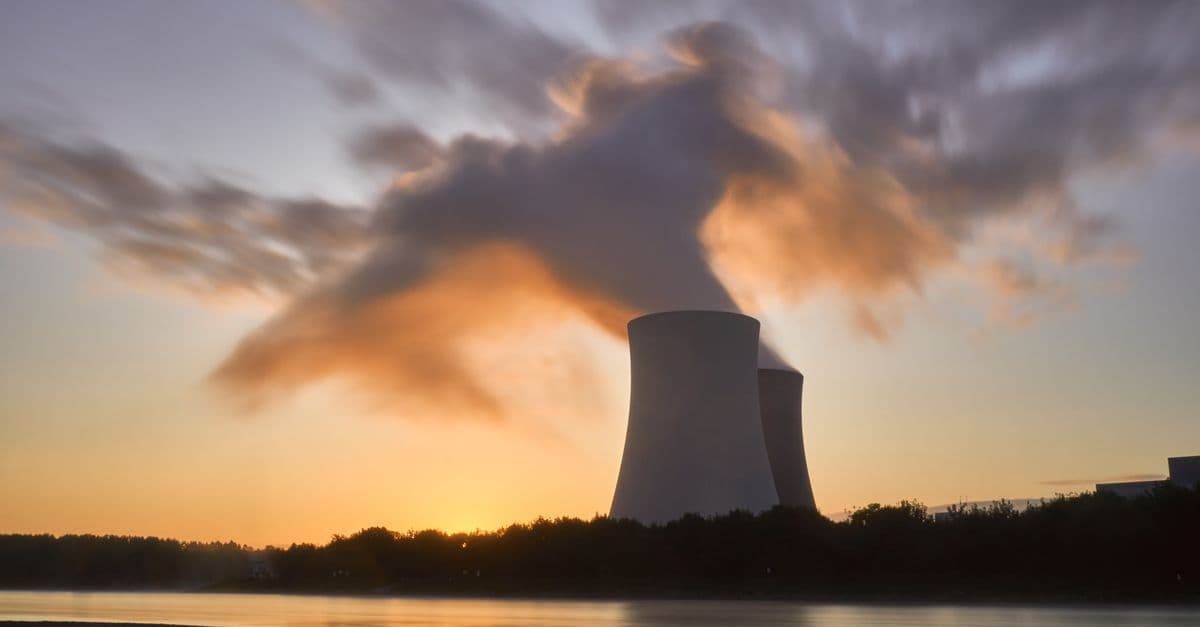
Photo: Markus Distelrath / Pexels
There are roughly 12,187 nuclear warheads in the world as of early 2026, according to the Federation of American Scientists, and the United States and Russia together hold about 86% of them. We've understood in broad strokes for eight decades that a full-scale nuclear exchange would be catastrophic. But the specific science — what precisely would happen to the atmosphere, the climate, the food supply, and human civilization — has become dramatically more detailed, and more alarming, over the past two decades of climate modeling. This is a thought experiment grounded in that research, not a prediction.
Thought experiment. This article explores a hypothetical scenario for educational and speculative purposes. The events described are not predictions and should not be interpreted as warnings, advocacy, or instructions.
The direct deaths, horrific as they would be, are almost the smaller part of the story. The mechanism that actually threatens civilization is what nuclear firestorms do to the sky.
Key takeaways
- A full-scale U.S.-Russia nuclear exchange would inject an estimated 150 million tonnes of soot into the stratosphere, blocking sunlight globally for years.
- Nuclear winter could drop global average temperatures by roughly 10°C (18°F), with continental interiors dropping far more, making most agriculture impossible.
- A 2022 study in Nature Food found a full U.S.-Russia exchange could kill more than 5 billion people through famine alone, and a "limited" India-Pakistan war could kill more than 2 billion.
- Even a regional exchange using just 100 Hiroshima-scale weapons — under 1% of the current global arsenal — is enough to trigger measurable global cooling.
- The ozone layer would lose 20-75% of its coverage depending on scenario, driven by nitrogen oxides and stratospheric heating, raising surface UV radiation to damaging levels worldwide.
The direct effects: bombs and blast
Each modern nuclear warhead is vastly more powerful than the bombs dropped on Hiroshima and Nagasaki in August 1945. The Hiroshima bomb, "Little Boy," had a yield of approximately 15 kilotons — the explosive equivalent of 15,000 tonnes of TNT. Modern U.S. warheads typically range from 100 kilotons to 1.2 megatons. Russia's currently deployed warheads run up to roughly 800 kilotons, more than 50 times the Hiroshima yield, and its retired Tsar Bomba test device in 1961 remains the largest device ever detonated at about 50 megatons — over 3,000 times Hiroshima.
Think of yield the way you'd think of an earthquake's magnitude scale rather than a simple multiplier. Doubling the yield of a weapon does not double the destroyed area, because blast energy spreads outward in three dimensions. But even accounting for that diminishing return, a single modern warhead over a city center dwarfs anything used in World War II by orders of magnitude.
A single detonation over a major city produces a sequence of effects that unfold in seconds to minutes:
- An immediate fireball, up to 3-4 km (1.9-2.5 mi) wide for a megaton-class weapon, vaporizing or incinerating everything within it.
- A blast wave that destroys reinforced concrete structures within 3-5 km (1.9-3.1 mi) and flattens wood-frame buildings out to 8-15 km (5-9.3 mi).
- Intense thermal radiation causing third-degree burns on exposed skin at 10-15 km (6.2-9.3 mi), depending on yield and visibility.
- Ionizing radiation lethal within 1-2 km (0.6-1.2 mi) of the detonation point in the first minutes.
- An electromagnetic pulse (EMP) from a high-altitude detonation, capable of disabling unprotected electronics across a continental-scale area — a separate weapons effect from a ground-burst warhead.
A single large warhead over a dense metropolitan area could kill one to two million people within minutes, largely from blast and thermal effects rather than radiation. A full-scale exchange targeting major cities, military installations, and industrial centers could kill tens to hundreds of millions of people directly, before any of the secondary effects even begin.
But the direct deaths are not the worst consequence. They are, in the language of the researchers who model this, the "easy" casualties to count.
Nuclear winter: blocking the sun
The mechanism that makes nuclear war potentially civilization-ending is not the bombs themselves but what happens to the atmosphere afterward. This idea dates to the early 1980s, when a team of scientists that included Carl Sagan published the first detailed climate models of what came to be called "nuclear winter." Modern climate modeling, using tools far more sophisticated than those 1980s models, has largely confirmed and sharpened the original warning rather than debunking it.
Urban fires caused by nuclear detonations over cities would inject massive quantities of black carbon soot into the upper atmosphere. This is fundamentally different from smoke from a forest fire or even a volcanic eruption. Black carbon absorbs sunlight rather than reflecting it, and that absorbed heat causes the soot particles to rise past the altitude where rain can wash them out — into the stratosphere, where they can persist for months to years.
Picture the stratosphere as a layer above the weather, like the top shelf of a cupboard that's too high for the household mop to reach. Rain and storms operate in the troposphere below; anything that gets lofted above that layer stays there until it slowly settles, which for stratospheric soot means years rather than the days or weeks it takes rain to clear tropospheric smoke.
Climate modeling by Alan Robock at Rutgers University, Owen Toon at the University of Colorado Boulder, and their collaborators — building on decades of atmospheric physics work — has produced sobering estimates for the largest-scale scenario, a full nuclear exchange between the United States and Russia:
- Such an exchange would inject an estimated 150 million metric tonnes of soot into the stratosphere, according to modeling published by Rutgers researchers.
- Global average temperatures would drop by roughly 10°C (18°F) within weeks of the exchange.
- In the interior of continents — the agricultural heartlands of North America, Europe, and Asia — temperatures could drop far more sharply in summer, disrupting the growing season entirely.
- The cooling would persist for five to ten years, with a slow recovery over a decade or more after that.
- Sunlight reaching Earth's surface would decrease dramatically, and precipitation would also drop substantially worldwide, compounding the loss of light with a loss of water.
This is nuclear winter. And unlike the fallout and blast effects, which are largely confined to the countries directly at war, nuclear winter is a truly global phenomenon. A nuclear war between two countries thousands of kilometers away from you would still darken your sky and freeze your growing season.
The famine scenario
This is where the casualty projections stop looking like a war story and start looking like a planetary-scale famine study, because that is exactly what the leading research now is.
A 2022 study published in Nature Food by Lili Xia, Alan Robock, and an international team of collaborators — including researchers from NASA's Goddard Institute for Space Studies, Columbia University, the Potsdam Institute for Climate Impact Research, and several other institutions — modeled food production under six different nuclear war scenarios, from a small regional exchange up to a full-scale U.S.-Russia war. Their findings, reported by Rutgers University and covered widely in outlets including Phys.org, are the most detailed food-security modeling done on this question to date:
- Under a full U.S.-Russia nuclear exchange, global caloric production would fall by roughly 90% within three to four years, and the study estimates more than 5 billion people could die from famine.
- Even under the smallest scenario modeled — an India-Pakistan conflict using around 100 Hiroshima-scale weapons, a tiny fraction of global arsenals — global average temperatures would drop and crop yields would fall enough to cause an estimated more than 2 billion deaths from famine.
- Countries in the mid-to-high latitudes, which currently produce the bulk of the world's grain exports, would be hit hardest by the cooling, turning today's breadbasket regions into net importers with nothing left to import.
- Nations that currently rely heavily on food imports, including much of the Middle East and parts of Africa, would see food availability collapse even faster than the underlying agricultural decline, because global trade itself would seize up.
The primary killing mechanism in every one of these scenarios is not radiation, and it isn't blast. It's starvation. Crops fail because there isn't enough light or warmth to grow them. Livestock die because there's no feed. The global food trade collapses because every producing nation needs to feed its own population first. Fisheries, which the Nature Food team also modeled, decline as ocean temperatures and productivity shift. The billions who survive the bombs are the ones who then have to survive years without enough food, and most modeled scenarios say a large fraction of them don't.
It's worth comparing this to a famine humanity has already lived through to grasp the scale. The 1958-1962 famine associated with China's Great Leap Forward, one of the deadliest in recorded history, is estimated to have killed on the order of 15-55 million people over four years depending on the source, and it devastated one country. The India-Pakistan nuclear winter scenario in the Nature Food study projects a death toll on the order of 100 times larger, spread across the whole planet, triggered by a war between two countries with a combined arsenal that is a small slice of the global total.
Ozone depletion: the UV catastrophe
Nuclear fireballs are hot enough that the nitrogen and oxygen that make up most of Earth's atmosphere react directly, producing large quantities of nitrogen oxides. Separately, the soot itself heats the stratosphere by absorbing sunlight, and that extra heat accelerates ozone-destroying chemical reactions. Both effects rise into the stratosphere and catalytically destroy the ozone layer that shields the surface from ultraviolet radiation.
Research led by Charles Bardeen and published in the Journal of Geophysical Research: Atmospheres in 2021 modeled this effect in detail and found that even a regional India-Pakistan-scale nuclear war injecting around five teragrams of soot into the stratosphere could deplete the global ozone burden by 20-25%, with column ozone losses over some densely populated regions reaching as high as 50%. That translates into UV index increases of 30-80% over mid-latitude regions in summer — a level at which sunburn on unprotected skin can occur in minutes rather than tens of minutes.
Elevated ultraviolet-B radiation at Earth's surface would cause a cascade of harm on top of the cooling and famine already underway:
- Dramatically higher rates of skin cancer and cataracts across the exposed global population, not just in the countries that fought the war.
- Suppressed immune function, making populations more vulnerable to infectious disease at precisely the moment medical infrastructure is failing.
- Direct damage to crop plants through effects on photosynthesis and plant DNA, compounding the cold-driven agricultural collapse rather than replacing it.
- Disruption of marine food chains through harm to phytoplankton, the microscopic organisms that form the base of nearly every ocean food web on the planet.
How does nuclear winter actually block sunlight?
Soot particles lofted into the stratosphere by nuclear firestorms absorb incoming sunlight rather than letting it reach the surface, the same optical property that makes soot look black. Because the stratosphere sits above the weather that would normally rain the particles out, that soot can remain suspended for years, acting like a semi-permanent haze that dims and cools the entire planet.
Does nuclear war destroy the ozone layer?
Yes, through two separate mechanisms. Nuclear fireballs directly produce nitrogen oxides that destroy ozone chemically, and the soot itself heats the stratosphere in a way that speeds up other ozone-destroying reactions. A 2021 study modeling a regional India-Pakistan war found a 20-25% global ozone loss, comparable to or worse than the Antarctic ozone hole at its peak, but distributed globally rather than confined to one pole.
The ozone damage compounds the agricultural failures from nuclear winter rather than running on a separate track, because crops already struggling with cold and darkness are simultaneously being hit with elevated UV that damages their ability to photosynthesize.
The radioactive fallout
Radioactive fallout — particles of irradiated material lofted by the blast and falling back to Earth — would contaminate large areas around and downwind of detonation sites. The most dangerous period is the first two weeks after a detonation, when short-lived isotopes with high radioactivity are most intense; radiation levels drop off quickly after that as those isotopes decay, following a predictable pattern often summarized as the "7-10 rule" (radiation drops roughly tenfold for every sevenfold increase in time elapsed).
Fallout works like ash from a chimney fire carried by the wind, except the ash itself is dangerous to be near, not just to breathe. Areas directly downwind of a detonation, sometimes hundreds of kilometers away, can receive lethal or near-lethal doses even though they were never targeted, while areas just off the wind's path can be relatively unaffected. That unpredictability is part of why fallout planning historically treated entire regions, not just target cities, as at risk.
Long-term contamination is a separate and much longer-lasting problem from the acute fallout danger. Isotopes like caesium-137 (half-life of about 30 years) and strontium-90 (half-life of about 29 years) persist in soil and enter food chains through plants and grazing animals. Land around Chernobyl and Fukushima — both single-reactor accidents, vastly smaller in scale than a nuclear detonation — remains partially restricted decades later, which gives a sense of how long agricultural land near major nuclear war detonation sites would likely remain unusable.
The societal collapse
Even setting aside the physical effects on climate and food, the cascade of societal failures triggered by a large-scale nuclear exchange would be devastating on its own:
| System | What breaks | Why it compounds the crisis |
|---|---|---|
| Electrical grid | Destroyed or disabled across vast regions by blast damage and EMP | Hospitals, water treatment, and communication all depend on it |
| Medical systems | Overwhelmed within hours, then collapse as supplies run out | Burn and radiation victims need care far beyond normal hospital capacity |
| Supply chains | Already fragile under normal conditions, disintegrate within days | Cities hold only days to weeks of food inventory at any given time |
| Water treatment | Requires continuous power to operate | Waterborne disease surges as sanitation infrastructure fails |
| Governance | Continuity-of-government plans exist but are untested at this scale | Coordinated famine response becomes difficult to impossible |
Table 1: How societal systems fail after a large-scale nuclear exchange, based on infrastructure interdependency modeling used in disaster planning.
The concept researchers sometimes call "nuclear anarchy" — the collapse of governance and social order in a war's aftermath — is modeled as a factor that would actively prevent the kind of coordinated international response that might otherwise mitigate some of the famine's worst effects, such as redirecting food stockpiles or organizing agricultural adaptation. In the Nature Food modeling, the caloric collapse numbers already assume significant trade disruption; a true breakdown in governance would likely make the outcomes worse than the baseline scenarios, not better.
Limited nuclear war: not safe
It's tempting to imagine that a "limited" nuclear exchange — perhaps a handful of weapons used tactically on a battlefield — would stay contained and largely local. The evidence from both the historical record and the climate modeling suggests otherwise, for several distinct reasons.
Escalation dynamics are the first problem. Once a nuclear weapon is used, the pressure to escalate is intense on both sides, because the side that was struck cannot easily know whether this is a one-off "limited" strike or the opening move of an all-out attack. Cold War-era crisis simulations and modern wargaming exercises have repeatedly found that scenarios beginning with a single "demonstration" or "limited" nuclear use tend to escalate rather than resolve, because neither side wants to be the one left more vulnerable after the exchange.
Regional climatic effects are the second problem, and they're the one the newer research has sharpened the most. The Toon et al. 2019 study published in Science Advances found that a regional India-Pakistan exchange using roughly 100 weapons — 15-kiloton, Hiroshima-class devices, not the far larger modern strategic warheads — could still inject more than five teragrams of soot into the stratosphere, enough to drop global mean temperatures by around 1.8°C (3.2°F) and cut global precipitation by roughly 8%, for at least five years. A "regional" war in this modeling produces a global climate signal.
There is no clear stopping point built into military doctrine. Nuclear strategy for limited or tactical use doesn't include a natural "equilibrium" at low weapon counts where both sides simply agree to stop. Once the taboo against nuclear use is broken, the logic that has restrained states for 80 years — that any use invites overwhelming retaliation — no longer applies cleanly to a partial exchange.
Could a nuclear war stay small?
Historical wargaming and the escalation literature both suggest it's unlikely once the first weapon is used, because neither side can verify the other's intentions in real time. Even if it did stay small in terms of weapon count, the climate modeling shows that "small" by weapon-count standards, such as 100 Hiroshima-scale devices, is still large enough to produce a measurable, years-long global cooling and famine signal.
What the current stockpiles mean
Nine countries currently have nuclear weapons: the United States, Russia, China, the United Kingdom, France, India, Pakistan, Israel (which does not officially acknowledge its arsenal), and North Korea. Total global inventory stood at approximately 12,187 warheads as of the start of 2026, according to FAS tracking, with the U.S. and Russia together holding around 86% of that total and roughly 83% of stockpiled warheads actually available for military use rather than awaiting dismantlement.
Both the U.S. and Russia maintain significant portions of their arsenals on high alert status, meaning a subset of weapons could in principle be launched within minutes of a decision to do so. Historical close calls illustrate how narrow the margin has sometimes been. On September 26, 1983, Soviet Lieutenant Colonel Stanislav Petrov was on duty when the Soviet early-warning satellite system reported an incoming U.S. missile launch, later determined to be a false alarm caused by sunlight reflecting off high-altitude clouds. Petrov judged the report implausible and declined to escalate it up the chain of command, a decision historians credit with averting a retaliatory strike. A separate incident in January 1995, when Norway launched a scientific research rocket that Russian early-warning systems briefly misidentified as a possible submarine-launched missile, is remembered as the closest the post-Cold War world has come to an accidental nuclear crisis.
These incidents matter for the same reason a near-miss on a highway matters more than the statistics of car crashes in general. They show the failure mode is not hypothetical — it has already happened, more than once, and the systems that prevented catastrophe were individual human judgment calls made in minutes, not fail-safe technology.
China is currently expanding its arsenal, India and Pakistan have fought multiple wars against each other and maintain contested, actively patrolled borders, and North Korea has continued weapons and missile development despite international sanctions. Several major arms control treaties that constrained U.S.-Russia arsenals during and after the Cold War have lapsed or been weakened in recent years. Most arms control researchers describe the current global nuclear situation as at least as complex, and arguably more dangerous in some respects, than at any point since the height of the Cold War, driven less by any single actor's stated intent and more by the growing number of nuclear-armed states and the compressed decision timelines introduced by newer delivery technologies.
Frequently asked questions
Q: Would underground bunkers save people? A: Bunkers protect against blast, thermal radiation, and the acute phase of fallout, but not nuclear winter itself. A bunker only functions as long as its food and air supply lasts, typically weeks to months for private shelters. Emerging into a world with a collapsed food system, contaminated land near targets, and non-functioning infrastructure offers limited prospects even for a well-stocked survivor.
Q: Would any country "win" a nuclear war? A: No credible modeling supports the idea of a "winning" side in a large-scale exchange. The country that strikes first might suffer fewer immediate casualties, but both combatants and every uninvolved country face the same global nuclear winter and famine consequences. This shared vulnerability is the logic behind Mutual Assured Destruction (MAD), the deterrence framework that has prevented nuclear weapons use since 1945 but that arms control experts consider increasingly fragile as more states acquire the technology.
Q: How many nuclear weapons are needed to trigger nuclear winter? A: The Toon et al. 2019 modeling found that around 100 Hiroshima-scale weapons (roughly 15 kilotons each) targeting urban areas could inject enough soot into the stratosphere to produce measurable global cooling lasting at least five years. That threshold is a small fraction of the roughly 12,187 warheads that exist worldwide today.
Q: Is nuclear war more or less likely now than during the Cold War? A: Most arms control researchers describe the current risk as comparable to or somewhat higher than during the Cold War, driven less by any single actor's intent and more by structural factors: more states now possess weapons, several major arms control treaties have lapsed, and newer technologies such as hypersonic missiles and AI-assisted early-warning systems compress the time available for human decision-making during a crisis.
Q: What would actually survive a full-scale nuclear war? A: Regions far from likely targets and in the Southern Hemisphere, such as New Zealand, parts of southern South America, and southern Africa, would likely avoid the worst of the direct blast, fallout, and initial climate shock relative to the Northern Hemisphere. However, the Nature Food modeling finds that even these regions would face severe food shortages under the largest-scale scenarios, because nuclear winter's cooling and the collapse of global trade are worldwide effects, not localized ones.
Q: What's the difference between nuclear winter and a volcanic winter? A: Both involve particles in the stratosphere blocking sunlight, but the underlying physics differ. Volcanic winters, such as the one following the 1815 Mount Tambora eruption, are driven mainly by reflective sulfate aerosols. Nuclear winter is driven by black carbon soot from urban firestorms, which absorbs rather than reflects sunlight and can loft itself even higher into the stratosphere through solar heating, making it a more efficient and potentially longer-lasting sunlight blocker per tonne of material injected.
Q: Did the original 1980s "nuclear winter" theory hold up to scrutiny? A: Broadly, yes. The concept, first modeled in detail by a team including Carl Sagan in 1983, was criticized at the time for using relatively simple climate models. Decades of subsequent research using far more sophisticated general circulation models, led largely by Alan Robock and Owen Toon's research groups, has confirmed the core mechanism and, in several respects, found the effects to be more severe and longer-lasting than the original estimates.
Q: How does an EMP from a nuclear detonation affect civilians who aren't near the blast? A: A single weapon detonated at high altitude can generate an electromagnetic pulse capable of damaging or destroying unprotected electronics, including parts of the electrical grid, across a continental-scale area, even though no blast or radiation reaches that ground beneath it directly. This means EMP effects on infrastructure like power grids and communications can extend far beyond the geographic area affected by any single warhead's blast radius.
Q: Could nuclear winter cause a mass extinction like an asteroid impact? A: The mechanisms are broadly comparable, both involve particles blocking sunlight and disrupting photosynthesis-based food chains, but the scale differs. The asteroid impact linked to the dinosaur extinction 66 million years ago is estimated to have released energy on a scale far beyond any plausible nuclear exchange. Most researchers consider a full-scale nuclear war a threat to human civilization and global food security rather than to most non-human species or the biosphere as a whole.
The takeaway
A nuclear war is not just a very large conventional war, and thinking of it that way understates the danger by orders of magnitude. The indirect effects, nuclear winter blocking sunlight for years, agricultural collapse across every latitude, ozone depletion compounding the food crisis with elevated UV, and the breakdown of the trade and governance systems that might otherwise soften the blow, make even a "limited" regional nuclear exchange a global catastrophe and a full-scale exchange a potentially civilization-ending one. The deterrence logic that has kept these weapons unused since 1945 remains, by most measures, one of the most consequential achievements in modern geopolitics. Understanding precisely what these weapons actually do to a planet's climate and food supply, not just its cities, is the strongest argument for keeping that record intact.
Read next:
Follow new articles
Add SciHub101 to your feed reader to see new science and technology stories.
About the Author
SciHub101 is an independent science and technology publication founded and edited by Buğra Sözeri, a software engineer and app developer based in Türkiye. AI tools assist with drafting and research. Source documentation in the existing archive is uneven, and articles are being reviewed and corrected. The Editorial Team byline identifies editorial responsibility; it does not certify specialist or independent human review. Where we compare products, anything built by our own team is labelled as such — see the editorial guidelines and About page for how corrections and disclosures work.
Related Articles

What If Dark Matter Doesn't Exist? Modified Gravity vs Invisible Mass
Astronomers can't see dark matter, only its gravitational effects. What if we're wrong about gravity instead? Modified gravity theories try to explain galaxies without invisible mass — and the debate is genuinely open.
What If Gravity Suddenly Became 10% Weaker?
Lower gravity sounds like a fitness boost — but the consequences would cascade through the planet, the climate, and life itself in ways most people don't expect.
How Nuclear Weapons Work — and Why They Haven't Been Used Since 1945
The bombs dropped on Hiroshima and Nagasaki fissioned less than a kilogram of material each. Modern warheads are larger, but not a thousand times larger. Here is the physics, the arms-control record, and the evidence for and against the explanations of why none has been used in war since.
What If Earth's Magnetic Field Collapsed Tomorrow?
Earth's magnetic field has weakened by about 15 percent in 150 years, according to ESA. What would actually happen if it failed outright, and what is exaggerated?

What If All Water on Earth Disappeared?
What would happen if every drop of water on Earth vanished? Explore the catastrophic consequences for life, atmosphere, and planet.
What If Earth Lost Its Axial Tilt?
Earth's 23.5° tilt creates seasons and stabilizes climate. What would happen if it vanished — or flipped to 90°?. Learn the science, key examples, and...