What If a Black Hole Appeared Next to Earth?
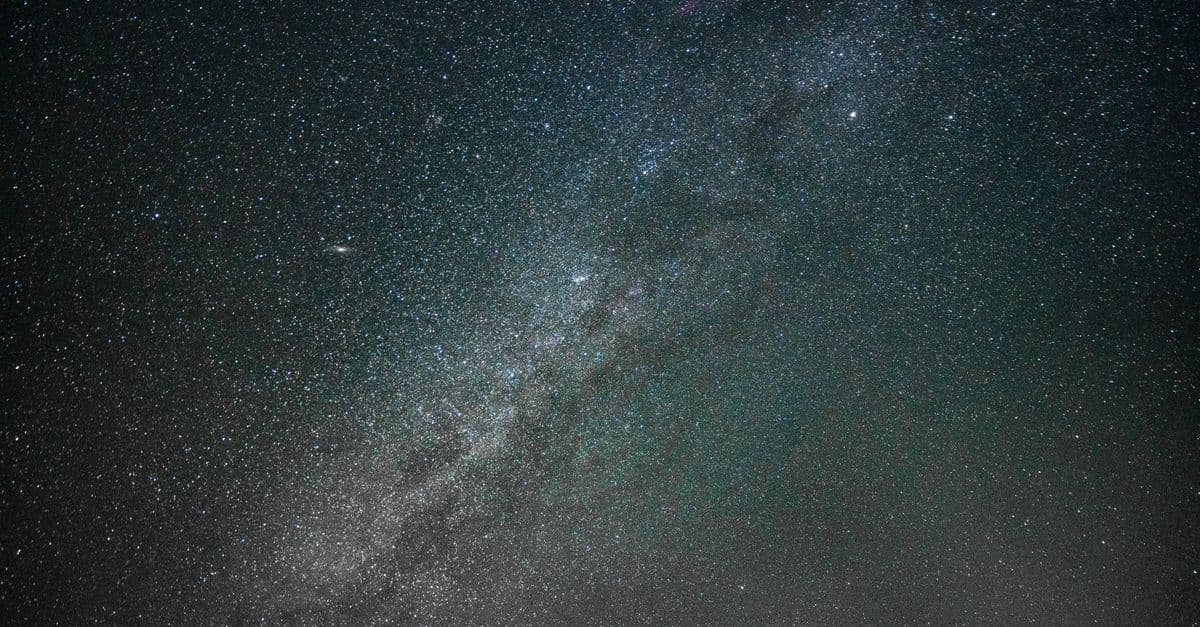
Photo: Aarin Husain / Pexels
This is a thought experiment, not a prediction. A black hole does not pull harder than any other object of the same mass, so swapping the Sun for a black hole of equal mass would leave Earth orbiting in the dark and the cold. What makes a black hole next door dangerous is subtler: tidal forces, the difference in pull between your near side and your far side. Here is what would happen if a black hole appeared next to Earth, from stellar-mass to tiny primordial ones, with the arithmetic shown.
Thought experiment. This article explores a hypothetical scenario for educational and speculative purposes. The events described are not predictions and should not be interpreted as warnings, advocacy, or instructions.
Key takeaways
- A black hole is only dangerous when you are close to it. Replace the Sun with a solar-mass black hole and Earth's orbit does not change.
- The hazard is tidal force: gravity pulling harder on the near side of an object than on the far side.
- For a 10-solar-mass black hole, Earth would be torn apart inside roughly 1.2 to 2.3 million km (about 750,000 to 1.4 million miles), depending on how rigid you assume the planet is.
- A primordial black hole with the mass of a small asteroid or mountain range would punch a very thin channel through Earth, not consume it.
- Black holes cannot simply appear. No known process creates one without a collapsing star or an equivalent concentration of mass, which is why this stays a thought experiment.
Gravity depends on mass and distance, not on being a black hole
The most common misconception is that black holes vacuum up everything nearby. NASA's black hole overview says plainly that "black holes don't suck in other matter," and that from far enough away their gravitational effects are just like those of any other object of the same mass. The scary part of a black hole is its density, which lets you get very close to a lot of mass.
Here is an analogy. Squeeze a pillow into a tight fist and its weight on a bathroom scale does not change. Hold it six feet away and it tugs on you exactly as much as before. Only if you press your face against the compressed pillow does the compression matter, because now you are near the mass instead of beyond the stuffing. A black hole is that pillow squeezed until nothing, light included, escapes from inside a certain radius.
That radius is the Schwarzschild radius, given by r = 2GM/c², where G is the gravitational constant, M is mass, and c is the speed of light. Our explainer on how black holes work goes through the geometry. The useful shortcut is that the radius grows in direct proportion to mass, at roughly 1.485 × 10⁻²⁷ meters per kilogram.
| Object | Mass | Schwarzschild radius if it were a black hole |
|---|---|---|
| Moon | 7.35 × 10²² kg | about 0.11 mm |
| Earth | 5.97 × 10²⁴ kg | about 8.9 mm |
| Sun | 1.99 × 10³⁰ kg | about 2.95 km |
| 10-solar-mass black hole | 1.99 × 10³¹ kg | about 29.5 km |
| Sagittarius A* (Milky Way's center) | about 4 million solar masses | about 12 million km |
| Hypothetical small primordial black hole | 10¹⁵ kg | about 1.5 × 10⁻¹² m |
Sources: masses from NASA's Moon and Earth fact sheets; Schwarzschild radius formula as given on Wikipedia, which lists 2.95 km for the Sun and about 8.87 mm for Earth; Sagittarius A mass of about 4 million Suns from NASA. Other rows are our calculation from the formula.*
An Earth-mass black hole would fit inside a marble's width, and yet from a kilometer away it would pull no differently than the planet does now. From one meter away, it would be a different matter: the acceleration at that distance would be about 4 × 10¹⁴ m/s², roughly 40 trillion times the gravity you feel standing on Earth. Closeness, not blackness, is the weapon.
A word on the premise. Black holes form when a massive star collapses or when mass otherwise gets packed past its own Schwarzschild radius. Nothing we know can create one next to Earth out of nothing, so for this article the black hole is simply teleported in. The interesting question is what physics does with it afterward.
Swap the Sun for a black hole: what changes and what does not
Start with the gentlest version. Remove the Sun and put a one-solar-mass black hole in its exact place. The black hole's Schwarzschild radius is 2.95 km, a speck compared with the Sun's radius of about 696,000 km. Outside that speck, the gravitational field is the same as before.
NASA states the consequence directly: the solar system "would get a lot colder," but "the planets would stay in their orbits." Earth keeps its orbital speed of 29.78 km/s (NASA Earth fact sheet), keeps its year, and keeps its tides. What disappears is light and warmth, and our look at what happens if the Sun vanished for a week covers that chilly story in detail.
This is the baseline for everything else. A black hole is dangerous in proportion to how much mass sits how close, and at 150 million km (93 million miles) a solar mass is a gentle presence. To cause trouble, a black hole has to be heavier than the Sun, or nearer, or both.
Tidal forces: the real danger
Gravity weakens with distance. If you stand near a massive object, your feet are closer to it than your head, so your feet are pulled slightly harder. The difference between those two pulls is the tidal force, and it tries to stretch you along the line toward the object while squeezing you sideways.
Picture a rubber band held between two hands, where one hand pulls a little harder than the other. The band does not move as a whole. It stretches, because the ends disagree. Tidal force is that disagreement, produced by gravity itself.
Earth already lives with this. The Moon pulls the near side of the oceans harder than the far side, which raises tides. For a body of radius R at distance d from a mass M, the tidal acceleration across it is approximately:
Δa ≈ 2GMR / d³
Two features of the formula matter. The force scales with the mass M, and it scales with the inverse cube of distance. Halve the distance and the tidal stretching grows eightfold. That steep dependence is why a black hole can be harmless at one distance and lethal at another.
The same math explains what happens to a person who gets too close. This is spaghettification, a term popularized by Stephen Hawking in A Brief History of Time (1988), which Wikipedia describes as vertical stretching and horizontal compression. We cover the experience in what would happen if you fell into a black hole. For this article, the object being stretched is not a person but the whole planet.
Tidal stress on Earth from a 10-solar-mass black hole
The table below applies the formula to Earth (radius 6,371 km, NASA) at different distances from a 10-solar-mass black hole. We express each result as a fraction or multiple of Earth's surface gravity, 9.82 m/s². For comparison, the Moon at its mean distance of 384,400 km produces about 1.1 × 10⁻⁶ m/s² across Earth's radius.
| Distance from black hole | Tidal acceleration across Earth's radius | In units of surface gravity |
|---|---|---|
| 1 AU (149.6 million km) | about 5 × 10⁻⁶ m/s² | about 5 × 10⁻⁷ g |
| 10 million km | about 0.017 m/s² | about 0.002 g |
| 2.3 million km | about 1.4 m/s² | about 0.14 g |
| 1.2 million km | about 9.8 m/s² | about 1 g |
| 384,400 km (the Moon's distance) | about 300 m/s² | about 30 g |
Our calculation using Δa = 2GMR/d³ with G = 6.674 × 10⁻¹¹ m³ kg⁻¹ s⁻², black hole mass 1.989 × 10³¹ kg, and Earth radius 6,371 km.
Look at the 1.2 million km row. There, the stretching force across Earth's radius equals Earth's own surface gravity. That is the logic behind the Roche limit, which the next section explains. The row at 1 AU is also worth noticing: about 4.6 times the Moon's tidal stress, enough to noticeably enlarge the tides, though nowhere near enough to break the planet. For a milder cousin of that stress, see what if Earth had two moons.
How close is too close? The Roche limit for Earth
A planet is held together by its own gravity. Tidal force pulls it apart. The Roche limit, first calculated by Édouard Roche in 1848, is the distance inside which a body held together only by its own gravity will disintegrate.
For a rigid spherical body falling toward a much more massive object, the limit works out to roughly d = R × (2M/m)^(1/3), where R and m are the radius and mass of the victim and M is the mass of the attacker. The same expression appears in tidal disruption event theory, where Wikipedia notes that the tidal radius is identical to the Roche limit for solid planetary bodies. For a body that behaves like a fluid and can deform, Roche's approximation raises the coefficient to about 2.44 (using the equivalent expression d ≈ 2.44 R (M/m)^(1/3)).
Real planets are neither perfectly rigid nor perfectly fluid. Earth is a rocky shell with a partly molten interior, so the true threshold sits between the two estimates.
| Black hole mass | Rigid-body limit | Fluid-body limit | Fluid limit in Moon distances |
|---|---|---|---|
| 1 solar mass | about 560,000 km | about 1.1 million km | about 2.8 |
| 10 solar masses | about 1.2 million km | about 2.3 million km | about 6.0 |
| 4 million solar masses | about 88 million km | about 170 million km | about 445 |
Our calculation from the formulas above with Earth's mass of 5.972 × 10²⁴ kg and radius of 6,371 km. These are guides, not cliffs.
Two things stand out. First, the limit grows only as the cube root of the black hole's mass. A black hole ten times heavier is only about 2.2 times more dangerous in reach. Second, a figure of about 200,000 km sometimes circulates for the 10-solar-mass case. The formula does not support it: it gives roughly 1.2 to 2.3 million km, which is three to six times the Moon's distance of 384,400 km.
The bottom row shows something counterintuitive. For a supermassive black hole like Sagittarius A*, Earth would break up at roughly 0.6 to 1.1 AU, which is outside the 12 million km event horizon. That is the same idea astronomers use to explain why a star can be shredded by a supermassive black hole before it crosses the horizon. Our comparison of stellar and supermassive black holes explains why the two types behave so differently near their edges.
One caution on all these numbers: the Roche limit formally describes a body in orbit. A fast fly-by gives tidal forces less time to act, so a planet can sometimes survive a pass somewhat inside the static limit, and may be stripped or deformed rather than destroyed. We use the limit as a rule of thumb.
Scenario 1: A 10-solar-mass black hole appears 1 AU from Earth
Suppose a 10-solar-mass black hole, with a radius of 29.5 km, appears 1 AU (149.6 million km) from Earth and starts out at rest relative to the Sun. We will ignore the Sun at first, which makes the arithmetic cleaner and, as it turns out, the real outcome worse.
The immediate tidal stress is not catastrophic. As the table shows, it is roughly 5 × 10⁻⁶ m/s², about 4.6 times what the Moon produces and about 10 times what the Sun produces. Tides would grow, but Earth would not break.
The problem is the orbit. The speed needed for a circular orbit around a 10-solar-mass object at 1 AU is about 94 km/s. Earth's speed is 29.78 km/s, about a third of that. An object moving that slowly does not circle; it falls inward on a highly elongated path.
The plunge
Working through the two-body problem under these assumptions (Newtonian gravity, Earth moving at right angles to the line to the black hole, nothing else present), Earth would swing in to a closest approach of about 0.05 AU, roughly 7.9 million km, with a speed there of about 570 km/s. The period of that orbit comes out near 44 days. These are our back-of-envelope figures, not a simulation, and the real solar system would have the Sun, the Moon, and every other planet tugging as well.
At 7.9 million km, the tidal acceleration across Earth's radius reaches about 0.035 m/s², roughly 30,000 times the Moon's. That is only about 0.4% of Earth's own surface gravity, so Earth would survive the first pass outside its Roche limit. But this would be the most violent tidal event the planet has seen since its formation, lasting for hours. Expect severe crustal stress and heating of the interior by tidal friction; the exact effects are beyond a back-of-envelope estimate. Jupiter's moon Io is the nearby example of how steady kneading by a heavy neighbor melts rock, as we describe in our piece on Io's volcanic tidal heating.
Why the real outcome is worse
With the Sun in play, the system becomes a three-body problem. Three massive bodies interacting can be chaotic, with small differences in starting conditions producing wildly different endings. The black hole is ten times heavier than the Sun, so the Sun would be pulled around too. Plausible outcomes include Earth being ejected from the solar system, being captured into a tight orbit around the black hole, or colliding with another body. None of those outcomes is gentle, and no single formula can say which one occurs.
Scenario 2: The black hole appears inside the Roche limit
Now place the same 10-solar-mass black hole 1 million km from Earth, inside both the rigid and the fluid limits. The tidal stretching exceeds Earth's own gravity. Earth is not swallowed whole. It is dismantled, in roughly this order:
- The side facing the black hole is pulled harder than the center, and the far side is pulled less. The planet elongates along the line between them.
- Rock strength cannot resist an acceleration comparable to the planet's own gravity, so the crust fractures and the partly molten mantle flows.
- Material streams off toward the black hole, forming a ribbon of debris.
- The ribbon wraps around the black hole and flattens into an accretion disc, a glowing swirl of gas heated by friction as it spirals inward.
Astronomers have seen the stellar version of this. A tidal disruption event, or TDE, happens when a star passes close enough to a supermassive black hole that tidal forces pull it apart. Per Wikipedia, about 100 TDEs were known as of May 2024, the light curve rises sharply and then fades gradually over months or years, and the events were first observed in the early 1990s with the ROSAT X-ray survey.
How long would it take?
Popular accounts often say Earth would be consumed "in days to weeks." That figure is not something we can derive or cite. Observed stellar TDEs fade over months to years, and no observation tells us how a planet-sized victim of a stellar-mass black hole would behave. The energy involved is easier to estimate than the timing.
Earth's rest-mass energy, Mc², is about 5.4 × 10⁴¹ joules. If a typical 10% of that were radiated as the material fell in (the real efficiency depends on the black hole's spin, so treat 10% as an order-of-magnitude assumption), the glow would release about 5 × 10⁴⁰ J. The Sun radiates about 1.2 × 10³⁴ J in a year, based on its nominal luminosity of 3.83 × 10²⁶ W. By this estimate, the final glow of Earth would equal a few million years of sunlight, released in a burst of X-rays and ultraviolet light. Whatever the timescale, anything within a few astronomical units would not want to be there.
Scenario 3: A primordial black hole passes through Earth
Everything so far involves stellar-mass black holes. A different class of hypothetical object is the primordial black hole, which could have formed in the first second of the universe if dense regions collapsed under their own gravity. Wikipedia reports that initial masses are modeled anywhere from about 10⁻⁸ kg to thousands of solar masses, depending on the model, and that standard inflation produces fluctuations too small to make many of them.
Nobody has confirmed that primordial black holes exist. But some mass ranges are not ruled out. A 2019 study opened a window for asteroid-mass objects, roughly 3.5 × 10⁻¹⁷ to 4 × 10⁻¹² solar masses (about 7 × 10¹³ to 8 × 10¹⁸ kg), that could in principle make up all dark matter. That makes 10¹⁵ kg, a mass comparable to a small mountain range, a sensible example for a thought experiment.
What such an object would do to Earth
A 10¹⁵ kg black hole has a Schwarzschild radius of about 1.5 × 10⁻¹² m, about one thirty-fifth the radius of a hydrogen atom. Its gravity at any given distance is tiny by black hole standards and still intense up close:
| Distance from the object | Gravitational acceleration (GM/d²) |
|---|---|
| 1 m | about 67,000 m/s² (about 6,800 g) |
| 10 m | about 670 m/s² |
| 100 m | about 6.7 m/s² |
| 1 km | about 0.067 m/s² |
Our calculation with G = 6.674 × 10⁻¹¹ m³ kg⁻¹ s⁻² and M = 10¹⁵ kg.
Now let it fly through Earth at a hypothetical 200 km/s. That speed is our assumption, chosen as a plausible order of magnitude and far above Earth's 11.2 km/s escape speed, so the object would pass through and out the other side instead of being captured. It would cross Earth's 12,742 km diameter in about a minute.
Rock near its path gets a gravitational kick. The standard approximation for a fast, close pass is Δv ≈ 2GM/(b·v), where b is the distance of closest approach. With the numbers above, Δv is roughly 0.67 m/s divided by b in meters. At one centimeter the kick is about 67 m/s. At one millimeter it is about 670 m/s. To reach kilometer-per-second speeds you have to be within about 0.7 millimeters of the track.
The physical result is a channel of intense disruption a fraction of a millimeter wide, surrounded by progressively gentler tugging out to a few meters. Seismometers might register a rumble along the track. Nothing resembling a planet-wide catastrophe follows. Earth's mass is about 6 × 10²⁴ kg, and the visitor is under one billionth of that.
Smaller primordial black holes behave the same way with less force, and heavier ones are subject to the other tight constraints from lensing and cosmic microwave background data that Wikipedia summarizes. Only objects approaching planetary mass would threaten Earth from a distance.
Hawking radiation: why small black holes do not last forever
Stephen Hawking showed that black holes radiate heat and slowly lose mass. The temperature is approximately 10²³ kelvin divided by the mass in kilograms (Wikipedia gives T ≈ 10²³/M), so heavier black holes are colder. The evaporation time grows with the cube of mass, at about 2.14 × 10⁶⁷ years times (M/solar mass)³. Our Hawking radiation explainer walks through why.
| Mass | Temperature | Evaporation time |
|---|---|---|
| 10 solar masses | about 6 × 10⁻⁹ K | about 2 × 10⁷⁰ years |
| 1 solar mass | about 6 × 10⁻⁸ K | more than 10⁶⁷ years |
| Earth mass | about 0.02 K | about 6 × 10⁵⁰ years |
| 10¹⁵ kg | about 1.2 × 10⁸ K | about 2.7 × 10²¹ years |
| 10¹¹ kg | about 1.2 × 10¹² K | about 2.7 × 10⁹ years |
Temperatures from T ≈ 1.2 × 10²³ K divided by mass in kilograms; lifetimes from the evaporation formula on Wikipedia, which assumes only photon emission. Our calculation.
The practical meaning is double-edged. For stellar-mass black holes, Hawking radiation is irrelevant on any timescale a human would care about. For tiny ones, it matters a lot. Wikipedia reports that primordial black holes below roughly 10¹² kg would have evaporated by now, with a 2008 calculation placing the cutoff near 5 × 10¹¹ kg, and that the radiation bursts expected from a dying black hole have not been detected.
It is sometimes said that a black hole of about 10¹² kg would be exploding near the end of its life today. The formula and the 2008 cutoff say otherwise: because lifetime scales with the cube of mass, a 10¹² kg black hole would take on the order of a few trillion years to evaporate by photon emission alone (our calculation from the same formula), many times the age of the universe. A black hole in its final burst now would have to be lighter, and objects in that range are exactly where observational limits are tightest.
A 10¹⁵ kg black hole, by the same formula, would shine at only a few hundred watts, comparable to a handful of light bulbs, while sitting at about 120 million kelvin. Its glow could not hurt Earth.
What would you see?
A bare black hole is invisible. It emits no light of its own, and for large black holes the Hawking glow is far below any detector. What you would notice is its effect on everything else.
- Lensing. Its gravity bends the light of stars behind it, smearing and duplicating their images into arcs. Telescopes on Earth would see the sky warped around a dark disc.
- An accretion disc, if any gas or debris fell in. Material spiraling inward heats to millions of degrees and glows in X-rays, as in the stellar TDE flares described above.
- A dark shadow. Observers have already imaged this for real. The first image of a black hole showed the glowing ring around a silhouette, in a galaxy far from ours.
Near the black hole, other effects take over, from time dilation to the one-way trip beyond the horizon, which our piece on what lies beyond the event horizon takes up.
Could any of this actually happen?
The nearest known black hole, Gaia BH1, lies about 1,560 light-years away according to its Wikipedia entry, which gives its mass as about 9.3 to 9.6 times the Sun's, and NASA rounds the distance to about 1,500 light-years. A light-year is about 63,000 AU, so Gaia BH1 sits roughly 100 million AU from us, compared with Neptune's roughly 30 AU.
Black holes also do not hunt. They follow orbits like any other massive object. For one to threaten Earth, it would have to be on a trajectory that happens to pass through the inner solar system, and nothing we know of is on such a path. This article's "appears next to Earth" premise is therefore a way of asking the physics questions, not a forecast.
What people get wrong
"A black hole pulls things in from across space." From a distance, it behaves like any object of that mass. The Moon would stay in orbit around a black hole of lunar mass, just as it does around Earth.
"Smaller black holes are less dangerous." Not necessarily at close range. Tidal forces depend on mass and distance, and a small black hole can produce enormous local forces. It is just that these forces fall off quickly, which is why the primordial case affects only a thin channel.
"Black holes live forever." In theory they evaporate through Hawking radiation, though for stellar-mass ones that takes more than 10⁶⁷ years.
"The event horizon is where the damage starts." For stellar-mass black holes, spaghettification occurs well outside the horizon. For supermassive ones, Wikipedia notes the lethal point is inside the horizon, so an astronaut could cross it without noticing strong tidal forces. A Newtonian estimate for a 2-meter-tall person at the horizon of a 4-million-solar-mass black hole gives about 0.001 m/s², tiny compared with the roughly 200 million m/s² at the horizon of a 10-solar-mass one.
Frequently asked questions
Q: Would Earth be "sucked in" by a black hole at 1 AU? A: No. Earth would orbit or fall on an elongated path, the way it responds to any heavy object. A 10-solar-mass black hole at 1 AU would greatly disturb Earth's orbit, but the disturbance comes from its large mass, not from any special suction.
Q: How close would a black hole have to be to destroy Earth? A: For a 10-solar-mass black hole, our estimate is roughly 1.2 to 2.3 million km, depending on how rigid Earth is treated. For a solar-mass black hole the range is about 560,000 to 1.1 million km. Those figures come from the Roche limit and are guides, not sharp thresholds.
Q: Could we survive near a small black hole? A: Distance matters more than size. A small black hole at a large distance is no more dangerous than any other object of the same mass. Very close up, even a small one produces strong tidal forces, because the forces scale with the inverse cube of distance.
Q: Is Earth in danger from any known black hole? A: No known black hole is on a path toward the solar system. The nearest, Gaia BH1, is about 1,560 light-years away and is part of a stable binary system.
Q: What would happen to the Moon? A: It depends on the encounter. The Moon orbits at 384,400 km, and a 10-solar-mass black hole would have to come within roughly three to six times that distance to threaten Earth itself. Short of that, the black hole's gravity would perturb the Earth-Moon pair, and the Moon could be pulled away or ejected depending on the encounter geometry.
Q: Would a tiny black hole eat the Earth from the inside? A: Not in the thought experiment above. A 10¹⁵ kg black hole moving at hundreds of kilometers per second passes through in about a minute and removes only a negligible amount of material. Real concerns about tiny black holes involve whether they could exist at all, and astronomers have not found evidence that they do.
The takeaway
The movie version of a black hole is a drain. The physics version is a very dense lump of mass whose gravity follows the same rule as every other mass: weaker with distance, and in the case of the tidal difference between near and far, weaker as the cube of distance. That is why the same object can be harmless in one scenario and devastating in another.
The numbers set the hazard zones. A 10-solar-mass black hole needs to be within about a few Moon distances to tear Earth apart, and a supermassive one reaches out to roughly an astronomical unit. A tiny primordial one passing through would leave a thread of damage too fine to notice at the planetary scale. In every case, mass and distance are the whole story, and the dramatic part of the myth, the pull from afar, is the part that does not exist.
Related reading
- What If Earth Were Twice as Big?
- What If Nuclear War Broke Out: What Would Actually Happen to Earth?
Sources
- Black Holes, NASA Science: "black holes don't suck in other matter"; solar-system example; Sagittarius A* mass; Gaia BH1 distance
- Schwarzschild radius, Wikipedia: formula and values for the Sun and Earth
- Roche limit, Wikipedia: definition, rigid and fluid formulas
- Tidal disruption event, Wikipedia: tidal radius, observation history, light curve
- Spaghettification, Wikipedia: tidal formula and the stellar versus supermassive distinction
- Hawking radiation, Wikipedia: temperature, evaporation time, primordial black hole mass cutoff
- Primordial black hole, Wikipedia: formation, mass range, allowed windows
- Gaia BH1, Wikipedia: mass and distance of the nearest known black hole
- Earth fact sheet, NASA NSSDC and Moon fact sheet, NASA NSSDC: masses, radii, distances, orbital speed
Follow new articles
Add SciHub101 to your feed reader to see new science and technology stories.
About the Author
SciHub101 is an independent science and technology publication founded and edited by Buğra Sözeri, a software engineer and app developer based in Türkiye. AI tools assist with drafting and research. Source documentation in the existing archive is uneven, and articles are being reviewed and corrected. The Editorial Team byline identifies editorial responsibility; it does not certify specialist or independent human review. Where we compare products, anything built by our own team is labelled as such — see the editorial guidelines and About page for how corrections and disclosures work.
Related Articles
What If Our Solar System Had Two Suns?
Most stars in the galaxy are in binary systems. If our solar system had two suns, Earth's orbit might be stable — or chaotic. The climate would be stranger, the sky alien, and the evolution of life might have gone very differently.
What If the Earth Stopped Spinning?
Earth spins at 1,674 km/h at the equator. If it suddenly stopped, supersonic winds would devastate the surface. If it slowed gradually, the consequences are still severe — a 6-month day, ocean redistribution, and a collapsing magnetic field.
What If You Fell Into a Black Hole?
Two perspectives, one terrifying destination. From spaghettification to the firewall paradox — the real physics of falling into a black hole.
What If a Wormhole Opened in Our Solar System?
A wormhole — a shortcut through spacetime connecting two distant points — would revolutionize physics, transportation, and our place in the universe. But the physics suggests it would also be unstable, possibly lethal, and almost certainly a one-way trip.
What If Gravity Disappeared for One Second?
What if gravity vanished for one second? The math shows orbits shift by millimeters to meters, and the ground may carry you along. A thought experiment.
What If the Sun Disappeared for One Week?
Eight minutes after the Sun vanishes, Earth goes dark. What happens to life, physics, and civilization in the days that follow?