What If Gravity Disappeared for One Second?
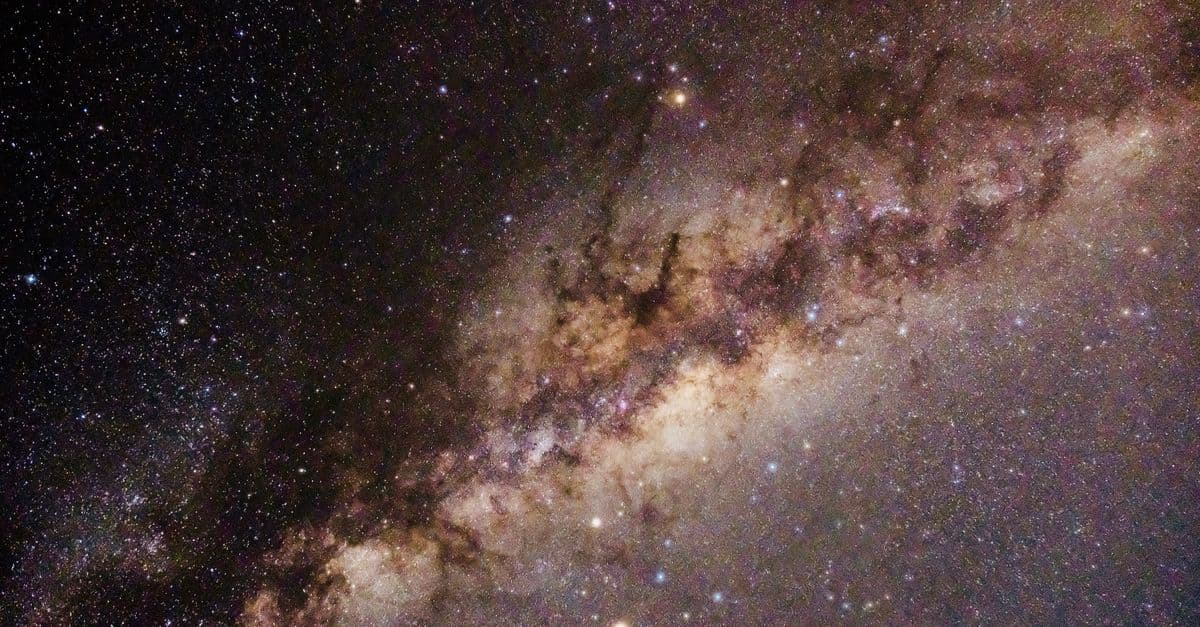
Photo: Jobert Enamno / Pexels
Suppose gravity disappeared for one second and then came back. The popular picture is chaos: people floating off chairs, oceans leaping skyward, the Moon sailing away. The arithmetic says something stranger. Orbiting bodies drift off course by millimeters to meters, and anything held up by pressure, including air, water, and rock, is shoved outward together, so on the ground the second might feel unremarkable. This article works through the numbers, shows where the popular picture breaks, and marks the one part nobody can settle.
Thought experiment. This article explores a hypothetical scenario for educational and speculative purposes. The events described are not predictions and should not be interpreted as warnings, advocacy, or instructions.
What "switching gravity off" would even mean
In general relativity, gravity is not a force that can be toggled. NASA's astrophysics outreach team puts it in one line: "General relativity states that gravity arises when mass warps spacetime; it's not a force acting at a distance" (NASA Imagine the Universe). Earth's mass does not go anywhere during our imaginary second, so the warping it causes has no reason to go anywhere either. By that standard the scenario is impossible, and a later section returns to why.
Thought experiments are allowed to bend one rule and then follow the consequences honestly. So we adopt the simplest possible rule, borrowed from Newtonian physics: for exactly one second, the gravitational force between every pair of masses is set to zero, everywhere, and then it is restored. Nothing else changes. Electromagnetic forces still hold atoms together, pressure still pushes on things, Earth still spins, and every object keeps whatever velocity it had at the instant gravity switched off.
Under that rule, matter sorts into two groups, and the whole answer depends on which group you are looking at.
- Free matter feels no force except gravity. Satellites, the Moon, and the planets belong here. They were not being held up by anything. They were falling, continuously, around a curve.
- Supported matter feels gravity plus other forces that cancel it. Rock, seawater, air, buildings, and you belong here. Something pushes up on each piece of it with exactly the force that gravity pushes down.
The first group is easy and the answer is small. The second group is where most popular accounts go wrong, so it gets most of the space below.
Two analogies will carry the rest of the piece. The first is a hammer thrower. While the athlete spins, the cable pulls the hammer onto a circle. At the instant of release, the cable force vanishes and the hammer flies off in a straight line along the circle's tangent. Free matter in orbit is the hammer: gravity is the cable. The second is a mattress. A mattress with a sleeper on it is compressed, and every spring is pushing up on the weight above it. Lift the sleeper off and the springs extend. Supported matter is the mattress: the compression is stored, and with gravity gone nothing is left to balance it.
The timeline: one second, two kinds of matter
Here is the sequence under the rules above. The figures are derived later in the article, and every one of them is an estimate for a toy model, not a measurement.
| Time | Free matter (satellites, Moon, planets) | Supported matter (ground, air, ocean, you) |
|---|---|---|
| 0.0 s | Gravity switches off. Each body keeps its velocity. | Stored pressure and elastic stress are suddenly unbalanced. |
| 0.0 to 1.0 s | Each body flies in a straight line instead of curving. | Matter is pushed outward at about 9.8 m/s², and the ground, air, and water move together. |
| 1.0 s | Moon about 1.4 mm off its circle. ISS about 4.3 m off its circle. | Surface about 4.9 m farther out and moving outward at about 9.8 m/s (35 km/h). |
| After 1.0 s | Orbits resume, very slightly altered. | Forces balance again, but the outer Earth is now moving. What that does is the open question. |
The rest of the article unpacks each cell.
How far orbiting things drift in one second
An orbit is a controlled fall. The Moon is always falling toward Earth, but it is also moving sideways so fast that the ground curves away beneath it as quickly as it drops. Take gravity away and the falling stops. The Moon then follows Newton's first law: a body keeps moving in a straight line at constant speed unless a force acts on it. For the sideways motion, that line is the tangent to its old circle.
The arithmetic of a tangent
How far does the tangent line leave the circle in a short time? For small times the answer is simple. A body moving at speed v on a circle of radius r needs an inward acceleration of v²/r to stay on the circle. If that acceleration disappears, the body ends up farther out than the circle by about half that acceleration times the time squared:
drift ≈ v² t² / (2r)
For the Moon, NASA lists a mean orbital speed of 1.022 km/s and a semimajor axis of 384,400 km (NASA Moon Fact Sheet). In one second:
- v² = (1,022 m/s)² ≈ 1.04 million m²/s².
- 2r = 2 × 384,400,000 m ≈ 768.8 million m.
- drift ≈ 1.04 million ÷ 768.8 million ≈ 0.00136 m, or about 1.4 mm.
During that second the Moon travels about 1,022 meters along its path. It leaves the circle by 1.4 millimeters, a speck by planetary standards. A claimed drift of a meter or more for this problem would be wrong by a factor of nearly a thousand.
The same sum for everything else
The table below applies the same formula to other bodies. Earth's values come from the NASA Earth Fact Sheet: an equatorial radius of 6,378 km, an average orbital speed of 29.78 km/s, and a distance from the Sun of 149.6 million km. The equatorial rotation speed of about 465 m/s is the equatorial circumference divided by the 23.9345-hour sidereal day. The ISS speed comes from the circular-orbit formula at an altitude of about 420 km, inside the 370 to 460 km range NASA gives for the station. GPS satellites orbit at a radius of about 26,600 km from Earth's center, about 20,200 km above the surface (Wikipedia: Global Positioning System).
| Body | Speed | Distance from center of motion | Drift from its circle in 1 s |
|---|---|---|---|
| Free object at Earth's equator | 0.465 km/s | 6,378 km | about 1.7 cm |
| International Space Station | about 7.66 km/s | about 6,798 km | about 4.3 m |
| GPS satellite | about 3.87 km/s | about 26,600 km | about 0.28 m |
| Moon around Earth | 1.022 km/s | 384,400 km | about 1.4 mm |
| Earth around the Sun | 29.78 km/s | 149.6 million km | about 3.0 mm |
The ISS and GPS speeds in the table are derived from the circular-orbit relation v = √(GM/r), using Earth's mass of 5.9722 × 10²⁴ kg from the NASA fact sheet and the gravitational constant G. Every drift in the right-hand column comes from the formula above.
Notice what the table says. The fast, close satellites move the farthest off their circles, and the slow, distant Moon moves the least. The drift is just half of the local gravitational acceleration times one second squared. At the ISS, where gravity is about 8.6 m/s², that is about 4.3 m. At the Moon's distance, where Earth's gravity is only about 0.0027 m/s², it is about 1.4 mm.
What happens when gravity comes back
When gravity returns, each body is a tiny bit off its old circle but has exactly the speed and direction it had a second earlier. The Moon's shift is about 1.4 mm out of 384,400 km, a fraction of roughly three parts in a trillion. A change that small leaves no measurable mark on the lunar month or on the tides. Our explainer on what causes tides shows why the Moon's distance matters for tide height and why a millimeter does not.
The ISS case is more interesting. A 4.3 meter outward shift is a real change to the station's orbit, and tracking data would show it. It is still tiny next to an orbital radius of about 6,798 km. For a satellite, a second of lost gravity is a navigation nuisance, not a disaster. For the basics of why satellites stay up at all, see how satellites orbit Earth.
Why one second is so forgiving
Drift grows with the square of time, which is why the duration is doing so much work in the question. Twice as long means four times the drift.
| Body | 1 second | 1 minute | 1 hour | 1 day |
|---|---|---|---|---|
| Moon | 1.4 mm | about 4.9 m | about 17.6 km | about 10,000 km |
| ISS | about 4.3 m | about 15.5 km | about 21,600 km | about 655,000 km |
The one-hour and one-day entries come from the straight-line geometry (the Pythagorean theorem applied to the old radius and the distance traveled along the tangent), because the small-time shortcut stops working once the drift is no longer tiny compared with the orbit. A one-second outage and a one-hour outage differ by a factor of about 13 million in the Moon's drift. That is the real lesson of the table: a second is short enough that inertia beats the missing curvature almost completely.
What happens to the air, the oceans, and the ground
Now the supported matter. The key idea is that something is holding each piece of the planet up, and that "something" is not gravity.
Pressure is the hidden partner of gravity
Consider a thin slab of air. Air pressure below the slab pushes it up. Air pressure above it pushes it down, and gravity pulls it down. In still air these three forces cancel. The equation that expresses this balance is called hydrostatic equilibrium, and a University of Texas physics text writes it as dp/dz = −ρg, where p is pressure, z is height, ρ is density, and g is the acceleration of gravity (UT Austin). In words: pressure must fall with height by exactly enough to carry the weight of the air.
The same balance holds in the oceans, where pressure climbs with depth, and in rock, where the weight of the overlying crust and mantle is carried by the stiffness of the material below.
Now set g to zero without touching the pressure. The pressure difference across the slab is still there, still pushing the slab up, and nothing pulls it down. The slab's acceleration is the leftover pressure force divided by its mass, which works out to g, directed upward. Air at every height would begin to accelerate upward at about 9.8 m/s².
Kinematics then gives the numbers. Starting from rest with constant acceleration a, distance covered is ½ a t² and speed reached is a t. For a = 9.8 m/s² and t = 1 s, that is 4.9 m and 9.8 m/s, or about 35 km/h. That is the figure in the timeline.
The ground does the same thing
Rock is under compression for the same reason air is: the weight above is carried by stress below. A simple model of the crust as a uniform elastic slab makes the point cleanly. With gravity gone and the stress still in place, every layer of the slab feels the same unbalanced stress gradient, and the whole slab accelerates upward together at g. This is a first-order picture, not a full seismology calculation, but the key feature survives in more detailed pictures: the thing that held the ground still was a balance, and the balance is broken.
So the ground, the air, and the ocean all start moving outward at nearly the same rate. Because gravity weakens slightly with height, the very high atmosphere accelerates a few percent more slowly than the ground, and that small difference is the only relative motion in the picture.
The equivalence principle makes it feel normal
If you stood on the accelerating ground, what would you feel? The physics has a name for this. A cabin at rest on Earth and a cabin in empty space accelerating at 9.81 m/s² are indistinguishable from the inside, as the Max Planck Institute's Einstein Online explains in its description of the equivalence principle: if you release an object in the accelerating cabin, the floor accelerates toward it at 9.81 m/s², the same as free fall on Earth (Einstein Online).
That is exactly our situation, with the floor being the planet's own surface. A cup you drop would "fall" because the floor rises to meet it. A ball tossed upward would trace its normal arc as seen from the ground. The ground pushes your feet upward with the force it always did, so your sense of weight would not change at all.
The equivalence principle holds exactly only for a uniform field over a small region and a short time, and Einstein Online notes that real fields vary and produce tidal effects. One second over a room-sized region is about as close to that limit as physical situations come.
Air: no loss, no blast
The atmosphere has about 5.1 × 10¹⁸ kg of mass, and the escape velocity from Earth's surface is 11.186 km/s, both from the NASA Earth Fact Sheet. Air molecules at room temperature move at roughly 500 m/s. The kinetic-theory formula v = √(3kT/m), with the nominal average molecular mass of dry air of 29 atomic mass units (HyperPhysics) and a temperature of 300 K, gives about 508 m/s. That is about 4.5% of escape speed, and one second is far too short for the fastest molecules in the tail of the distribution to leave in any quantity. The atmosphere would not leak away.
The common claim that the air rebounds in a destructive pressure pulse also needs scaling. Here is the estimate. The air column rises by 4.9 m in one second. NASA lists the atmospheric scale height, the height over which pressure falls by a factor of e, as 8.5 km. A 4.9 m shift is about 0.06% of that, so any pressure change from the stretching is of the order of 0.06% of 101,000 Pa, or about 60 Pa. Ordinary weather shifts surface pressure by many times that. In the model, the air also co-moves with the ground, which keeps the change even smaller than this rough upper bound.
The oceans: no leap, no tsunami
The world ocean holds about 1.335 billion cubic kilometers of water, according to NOAA's National Geophysical Data Center figure reported on the NOAA Ocean Service, with an average depth of 3,682 m (NOAA). In the supported-matter picture the water sits in a basin whose floor is accelerating upward at g, and the water itself is being pushed upward by its own pressure gradient at the same rate. Basin and water move together. The surface does not bulge, and there is no sudden "slam" at the end from water that had been floating free, because it was never floating free.
What you would feel in your kitchen
Run the scenario from a human point of view. You are at the kitchen counter holding a cup of coffee.
You. Your feet are on the floor, and the floor is accelerating upward at about g. You feel the same push you always do. Your inner ear and your skin report nothing unusual. If you had to guess whether anything had happened, you would not.
The coffee. It sits in the cup, which sits on the counter, and all of them ride up together. If you let go of the cup, it appears to fall at the normal rate because the counter rises to meet it. The coffee neither floats nor splashes.
The 465 m/s myth. At the equator, the surface moves eastward at about 465 m/s, roughly 1,670 km/h. The popular claim is that you would be flung off at that speed. But everything near you has the same velocity: the floor, the building, the air. Relative to your surroundings, that speed is zero. The only thing that differs is the curve of the ground, and that amounts to about 1.7 cm in a second.
An airplane at cruise. An aircraft in flight is carried by lift from moving air, not held up by the ground. In the model it keeps its velocity while the ground and the air around it accelerate upward. Seen from the ground, the plane "falls" about 4.9 m relative to the air in the second, then continues with a 9.8 m/s downward relative velocity when gravity returns. That is an abrupt sink the pilot would have to correct, not a structural failure on its face.
An astronaut on the ISS. Astronauts are already in free fall, so they feel weightless before and during the outage. They would notice nothing. The station itself drifts about 4.3 m outward from its circle, which ground controllers would later find on their tracking data.
The two readings, side by side
Many popular accounts treat everything as free matter. Putting the two readings in a table shows where they disagree.
| Claim | Free-matter reading | Supported-matter reading |
|---|---|---|
| People float away from the ground | Yes, they stop being pulled down | No, the ground rises with them |
| Oceans leap upward | Yes, nothing holds the water | No, the basin and water move together |
| Atmosphere escapes | Not in one second | Not in one second |
| Moon leaves its orbit | No, 1.4 mm shift | No, 1.4 mm shift |
| Satellites change orbit | Yes, slightly | Yes, slightly |
The disagreement is entirely about whether you count the stress that was holding things up. The reading that includes it is the more complete one, and it is the one this article follows, with the caveat that it rests on a simple model.
The part the simple model cannot settle: the restart
At t = 1 second gravity returns. In the supported-matter picture, the ground and everything riding on it sits about 4.9 m farther out and is moving outward at about 9.8 m/s, or 35 km/h. Locally the forces are balanced again, since gravity once more matches the stress gradient. A balanced force does not stop a moving object. So the first moment after the restart looks like a smooth elevator ride, not a crash.
What stops the outward motion is the rest of the planet. Gravity inside a planet weakens toward the center and is zero at the very middle, so the deep interior was pushed outward more gently than the surface layers. The outer layers are now moving outward relative to the deeper ones, and elastic forces in the planet have to absorb that mismatch. In effect, the whole planet has been struck once, and it will ring.
Whether that ringing is a shudder or a global breakup of the crust depends on numbers a back-of-envelope model cannot supply: how the elastic stiffness varies through the mantle and core, how much the rock can stretch before it breaks, and how quickly the energy spreads out as seismic waves. We flag it as unknown rather than guess. The honest summary is that the damage, if any, would come after the second, from the restart, and not during it.
Why this cannot actually happen
The scenario is impossible in the best theory of gravity we have. In general relativity, gravity is the geometry of spacetime, determined by the distribution of mass and energy. You cannot remove the geometry while leaving the mass in place, any more than you can keep a hill's shape while deleting the hill. Our overview of what spacetime is and the broader explainer on Einstein's relativity cover the idea in more depth.
There is also a causal point. If gravity switched off everywhere at once, the change would have to take effect instantly across the whole planet. In relativity, changes in the gravitational field spread at the speed of light, which is how gravitational waves behave, a topic covered in our article on gravitational waves. A simultaneous global switch-off has no mechanism in known physics.
The thought experiment is still useful. It forces a distinction that is easy to miss: gravity does not act alone. In nearly everything around you, gravity is half of a balanced pair, and the other half is pressure or stiffness. Orbits are the exception. They are pure free fall, so they are the one place where a missing force shows up directly, and even there a single second barely registers.
For related scenarios, our What-If guide lists the series, and you can compare a world where gravity suddenly became weaker or where gravity was twice as strong. For a different cosmic disaster, see what if a black hole appeared next to Earth. A close cousin on the motion side is what if Earth stopped rotating. For the basics of the force itself, start with how gravity works.
Common mistakes in how this question gets answered
- Confusing speed with displacement. A speed such as 465 m/s or 1.022 km/s sounds huge. What matters is how far a body leaves its curve in a second, and that is set by acceleration, not speed.
- Forgetting that the ground moves too. Almost every "you would fly off" story treats the ground as a fixed stage, and it is not.
- Treating orbits and pressure-supported matter as the same thing. One is a fall, the other is a balance. They respond to the loss of gravity in opposite ways.
- Using one-second numbers for longer outages. Drift scales with time squared, so extending the outage from one second to one hour changes the answer by a factor of roughly 13 million.
- Quoting round numbers without units or sources. Back-of-envelope figures for this scenario are easy to get wrong by factors of 1,000, which is why every number above is either derived on the page or cited.
FAQ
Q: Would you float away if gravity disappeared for a second? A: In the supported-matter model, no. The ground beneath you is pushed upward by its own internal stress at about 9.8 m/s², so it rises with you and your feet keep feeling the same push. If you were somehow unsupported, you would drift only about 1.7 cm from the ground's curve in one second at the equator.
Q: Would the Moon fly off into space? A: No. In one second the Moon leaves its circular path by only about 1.4 mm, using NASA's mean orbital speed of 1.022 km/s and distance of 384,400 km. When gravity returns, it resumes an orbit that differs from the old one by about three parts in a trillion.
Q: Would Earth's atmosphere blow away? A: No. Air molecules move at about 500 m/s, against an escape velocity of 11.186 km/s. The atmosphere's lower layers would rise with the ground, and a rough estimate of the resulting pressure change is on the order of 60 Pa, smaller than everyday weather variation.
Q: Would the oceans pour off the planet? A: No. The water and the basin floor are both pushed upward at about g and move together. The popular idea of a global tidal slam depends on treating the ocean as free matter, which ignores the pressure that was supporting it.
Q: Is there any scenario in physics where gravity could be turned off? A: Not in any known framework. In general relativity, gravity is spacetime curvature caused by mass and energy, and the mass does not go away. Some speculative theories involve gravity leaking into extra dimensions, but none provides a way to switch it off.
Q: What would happen to GPS satellites? A: At a radius of about 26,600 km and a speed of about 3.87 km/s, a GPS satellite would leave its circular path by about 0.28 m in one second. GPS.gov reports that smartphones are typically accurate to within 4.9 m under open sky (GPS.gov), so a 0.28 m orbit shift is small next to everyday error.
Q: Why does the article keep saying "in the model"? A: Because the premise is physically impossible, so any answer depends on how the premise is defined. The Newtonian rule used here, with gravity set to zero while every other force stays, is the most natural definition, but it is a choice.
The takeaway
A second without gravity is mostly a second of inertia winning. Orbiting bodies, which are the things most obviously held by gravity, barely change course: the Moon by 1.4 mm, the ISS by 4.3 m. The dramatic scenes in popular accounts come from treating everything as free matter, when nearly everything on and around Earth is held in place by a balance in which gravity is only half.
Remove that half and the other half takes over for a moment. The ground, the air, and the ocean all move outward together at about 9.8 m/s², and under the equivalence principle an observer riding along would feel almost exactly what standing on solid ground always feels like. The unresolved question is the restart, when a planet whose outer layers are moving at sprinter speed has to settle back into balance. That is where any real harm would live, and the most accurate thing to say about it is that a simple model cannot tell us.
Read next:
Sources
- NASA Imagine the Universe, Ask an Astrophysicist: relativity.
- NASA Goddard, Earth Fact Sheet and Moon Fact Sheet.
- NASA, International Space Station reference page.
- Wikipedia, Global Positioning System.
- University of Texas at Austin, Hydrostatic equilibrium of the atmosphere.
- Einstein Online (Max Planck Institute for Gravitational Physics), The elevator, the rocket, and gravity: the equivalence principle.
- NOAA Ocean Service, How much water is in the ocean? and How deep is the ocean?.
- HyperPhysics, Georgia State University, Kinetic temperature and molecular speeds.
- GPS.gov, GPS accuracy.
Last verified: October 2026
Follow new articles
Add SciHub101 to your feed reader to see new science and technology stories.
About the Author
SciHub101 is an independent science and technology publication founded and edited by Buğra Sözeri, a software engineer and app developer based in Türkiye. AI tools assist with drafting and research. Source documentation in the existing archive is uneven, and articles are being reviewed and corrected. The Editorial Team byline identifies editorial responsibility; it does not certify specialist or independent human review. Where we compare products, anything built by our own team is labelled as such — see the editorial guidelines and About page for how corrections and disclosures work.
Related Articles
What If Earth Stopped Rotating?
If Earth's rotation halted for good, one side would bake into permanent desert, the other would freeze into an ice sheet, and a thin twilight ring could be the only place left to farm.
What If You Fell Into a Black Hole?
Two perspectives, one terrifying destination. From spaghettification to the firewall paradox — the real physics of falling into a black hole.

What If the Sun Disappeared for One Week?
Eight minutes after the Sun vanishes, Earth goes dark. What happens to life, physics, and civilization in the days that follow?
What If Gravity Was Twice as Strong? — Science Explained
What would actually happen if gravity suddenly doubled? Your skeleton would fracture under your own weight, the atmosphere would compress into a dense killing fog, and tall buildings would collapse. But life could still evolve — just very differently.

What If Earth Doubled in Size? — Science Explained
What would actually happen if Earth suddenly doubled in size? Surface gravity would crush most life, the atmosphere would thicken into a lethal blanket, and reaching space might become impossible.
What If a Wormhole Opened in Our Solar System?
A wormhole — a shortcut through spacetime connecting two distant points — would revolutionize physics, transportation, and our place in the universe. But the physics suggests it would also be unstable, possibly lethal, and almost certainly a one-way trip.