What If a Wormhole Opened in Our Solar System?
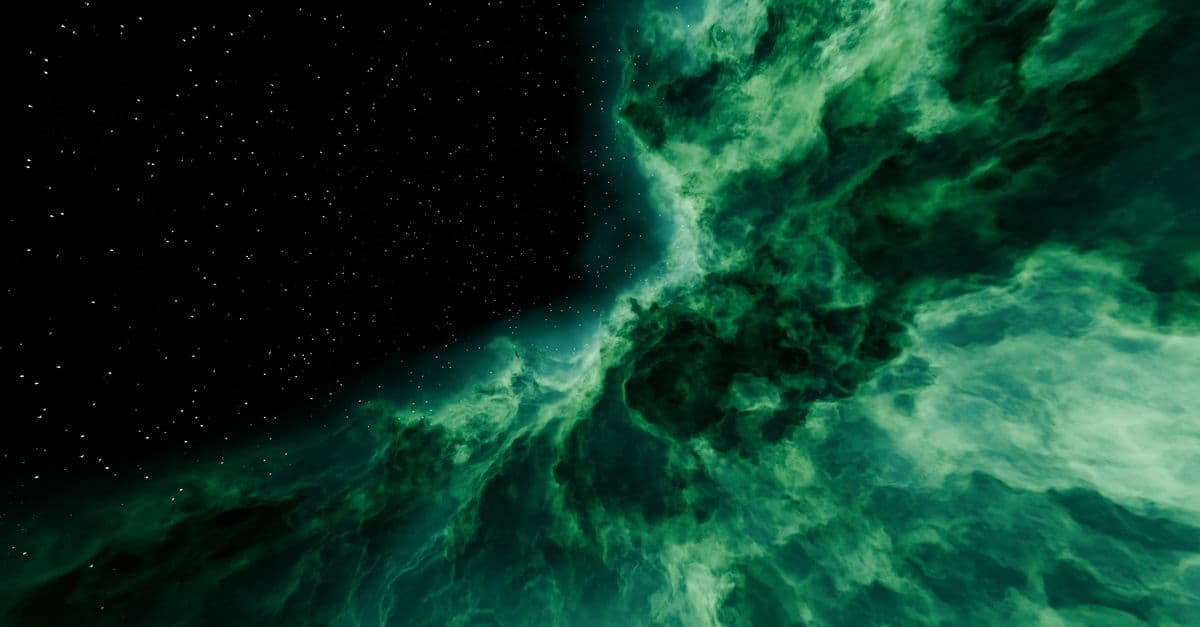
Photo: Marek Pavlík / Pexels
A wormhole is a hypothetical bridge through spacetime — two distant locations connected by a shortcut that, in principle, allows faster travel between them than light could manage by the long way around, without locally breaking the speed limit set by relativity. Wormholes fall out of the equations of Einstein's general relativity and have been a staple of science fiction for nearly a century, from Interstellar to Star Trek: Deep Space Nine. They have never been observed. Most physicists doubt they exist as stable, crossable objects anywhere in the real universe. This is a thought experiment, not a prediction: what would actually happen, physically, scientifically, and geopolitically, if one appeared in our solar system tomorrow?
Thought experiment. This article explores a hypothetical scenario for educational and speculative purposes. The events described are not predictions and should not be interpreted as warnings, advocacy, or instructions.
Key takeaways
- Wormholes are mathematically permitted by general relativity but require exotic matter with negative energy density to stay open — matter we have never observed in any usable quantity.
- Quantum inequality bounds derived by physicists L.H. Ford and Thomas Roman suggest a naturally occurring traversable wormhole would likely be close to the Planck length (about 1.6 × 10⁻³⁵ meters), not human-scale.
- Even a stable, human-scale wormhole could subject travelers to lethal tidal forces or a buildup of trapped radiation between the two mouths.
- A wormhole connecting our solar system to a distant region would upend physics, astronomy, spaceflight economics, and quite possibly geopolitics within days of confirmation.
- In 2022, physicists used Google's Sycamore quantum processor to simulate a scaled-down version of traversable wormhole dynamics — not a real wormhole, but a working demonstration that the underlying physics is internally consistent.
- No empirical evidence supports the existence of any wormhole, anywhere, at any scale.
What is a wormhole, and why does general relativity allow one?
In general relativity, spacetime is not a fixed backdrop. It is a four-dimensional geometric object whose curvature is shaped by mass and energy, the way a heavy ball placed on a stretched rubber sheet dents the sheet around it. Einstein's field equations, published in 1915, describe how that curvature relates to the matter and energy sitting inside it. Solve those equations for certain configurations of mass and energy, and you get geometries where two separate regions of spacetime are stitched together through a connecting "throat." That is a wormhole.
There are two very different families worth distinguishing, because science journalism often blurs them together.
Schwarzschild wormholes, also called Einstein-Rosen bridges, arise naturally inside the maximally extended mathematical description of a non-rotating black hole. Einstein and physicist Nathan Rosen described this bridge structure in a 1935 paper. It genuinely connects two regions of spacetime through a black hole/white hole pair. The catch: it is not traversable. The throat pinches shut and collapses to a singularity faster than any traveler, even one moving at the speed of light, could cross it. It is a real geometric feature of the equations and a mathematical dead end for transportation.
Traversable wormholes are the kind science fiction actually wants, and they were analyzed rigorously for the first time by Caltech physicist Kip Thorne and his graduate student Michael Morris in a 1988 paper in the American Journal of Physics titled "Wormholes in spacetime and their use for interstellar travel: A tool for teaching general relativity." Thorne, who later won the 2017 Nobel Prize in Physics for his work on LIGO's detection of gravitational waves, originally took up the wormhole problem at the request of Carl Sagan, who wanted a scientifically defensible way to send his novel Contact's protagonist across the galaxy without faster-than-light travel in the conventional sense.
Morris and Thorne found that keeping a wormhole's throat open against its own gravity requires exotic matter, a technical term for matter with negative energy density as measured by at least some observers. Ordinary matter, from hydrogen atoms to supernova. About 20 km wide but containing more mass than the Sun.">neutron star cores, always has positive energy density. Exotic matter would need to violate what physicists call the null energy condition, one of the foundational assumptions used across most of general relativity to prove that singularities and other pathological structures are unavoidable. Weaken that assumption and strange structures like traversable wormholes, and even theoretical warp drives, become mathematically permitted.
How a traversable wormhole would actually behave
What would it look like from the outside?
A stable traversable wormhole in our solar system would look like a sphere with strange optics, not a swirling portal. Light entering one mouth exits the other, so the sphere would display a live view of wherever the far end sits, gravitationally lensed and distorted around its edges the way background starlight bends around the Event Horizon Telescope's 2019 image of the M87 supermassive black hole. It would exert gravity according to its mass, whatever that turns out to be for an exotic-matter object, and it would sit there as a permanent, physically anomalous feature of the sky. There would be no mistaking it for anything natural.
Could you survive crossing it?
Four separate problems stack against a traveler, and each one is a serious, independently studied piece of wormhole physics rather than a plot convenience.
Tidal forces. Near the throat of a small wormhole, tidal stretching, the same differential-gravity effect that would spaghettify a person falling into a small black hole, could be severe enough to be lethal. Morris and Thorne's original 1988 paper worked backward from human survivability: they specifically constructed wormhole geometries with tidal accelerations gentle enough for a person to walk through, but doing so required the throat to be kilometers across, not meters. A naturally occurring, unengineered wormhole has no reason to land anywhere near that comfortable range.
Quantum inequality limits. In 1995, Ford and Roman derived quantum inequalities constraining how much negative energy quantum field theory allows to exist, and for how long. Applying those bounds to Morris-Thorne-style wormholes, they concluded that a wormhole satisfying known quantum field theory would likely have a throat radius close to the Planck length (roughly 1.6 × 10⁻³⁵ meters) unless the geometry involves enormous, physically implausible discrepancies between different length scales in the solution. In plain terms: the math that lets wormholes exist at all fights hard against letting them be big enough to walk through.
Instability under traffic. Sending anything through a wormhole, matter, light, even a stray photon, changes the stress-energy at the throat and can destabilize the geometry. Analyses going back to Morris, Thorne, and Ulvi Yurtsever's companion 1988 paper on wormholes and causality found that feedback effects from radiation circulating between the two mouths can grow without bound.
Radiation buildup. Once a wormhole connects two points, light and other radiation that enters one mouth can loop back through the other, re-enter, and circulate indefinitely, building in intensity each pass. Depending on the geometry, this could mean anything crossing the throat gets cooked by trapped, amplified radiation before it ever reaches the far side.
Could a wormhole become a time machine?
Yes, in principle, and this is one of the more carefully worked-out consequences of the Morris-Thorne framework rather than a speculative add-on. If you accelerate one mouth of a traversable wormhole to relativistic speed and bring it back, special-relativistic time dilation means less time passes for that mouth than for its stationary twin. The two ends fall out of sync, and once the desynchronization exceeds the light-travel time between the two mouths in ordinary space, a closed timelike curve opens up: a path through spacetime that returns to its own starting point in time as well as space. Hawking's chronology protection conjecture, still unproven either way, is essentially a bet that nature always short-circuits this before it becomes usable, whether through quantum back-reaction, energy density diverging to infinity at the mouth, or some other mechanism physicists haven't nailed down yet.
Where might the other end lead?
If a wormhole appeared in our solar system, the single most consequential open question would be what sits at the far mouth.
| Destination | What it would mean | Plausibility given known physics |
|---|---|---|
| Elsewhere in our galaxy | A direct link to a star system possibly thousands of light-years away; real-time astronomy and, eventually, one-way exploration | No known mechanism produces this, but it violates no law if the geometry is stable |
| Another galaxy | Local Group exploration on human timescales; a plausible avenue for first contact if any civilization exists at the far end | Same energy requirements as above, just a longer throat |
| The early universe | A wormhole connecting to an earlier cosmic epoch, effectively a window backward in time as well as space | Runs directly into chronology protection concerns |
| A parallel universe | Connection to a separate cosmos, possibly with different physical constants or history | Speculative even within multiverse theory; no accepted mechanism |
| A dead end (non-traversable Schwarzschild bridge) | The most likely outcome if any natural wormhole-like structure ever turns up | Consistent with what black hole physics already predicts |
Caption: Where a wormhole's far end could plausibly connect to, ranked by how much known physics would need to bend to make it happen.
Most natural mechanisms proposed for wormhole formation, discussed below, offer no reason to expect the far end lands anywhere scientifically or narratively "interesting." A wormhole formed by quantum fluctuations in the early universe, for instance, would most plausibly connect to another point in that same primordial soup, not a habitable exoplanet.
What would first contact with the other side look like?
The first evidence would almost certainly be indirect: astronomers would notice gravitational lensing from an object with no visible mass source, or radio telescopes would pick up a signal leaking through from the far mouth. Confirming what's actually on the other side would require sending an instrumented probe, and even that assumes the throat is wide enough and gentle enough on tidal forces to let a spacecraft survive the crossing intact.
What would happen to science, spaceflight, and geopolitics
Suppose, purely as a thought experiment, a stable wormhole appeared in Earth orbit with a mouth connecting to a system 50 light-years away, roughly the distance to the star system 55 Cancri.
Scientific upheaval. Every existing test of general relativity would need re-examination in light of a real-world exotic-matter object. Whatever field or mechanism holds the throat open would represent the first empirical evidence of new physics beyond the Standard Model and general relativity as currently understood, the kind of discovery that reshapes physics departments for a generation.
Engineering response. Space agencies would move fast toward robotic reconnaissance: an instrumented probe sent through first, then remote sensing of the far mouth's environment before any crewed mission is even discussed. NASA's own planetary protection protocols, currently governing contamination risk for missions to Mars and icy moons, would need an entirely new tier for a completely unknown biosphere or environment reachable in a single step.
Geopolitical stakes. A structure of this magnitude sitting in cislunar space or near-Earth orbit would immediately become the most valuable piece of real estate in the solar system. The 1967 Outer Space Treaty, which currently prohibits national appropriation of celestial bodies, was never written with anything like this in mind, and treaty negotiations over access, control, and military use would likely dominate diplomacy for years.
Migration and colonization pressure. If the far side proved to be a habitable, Earth-like environment, the wormhole would function as the first practical interstellar migration route in human history, with all the same governance, screening, and equity questions that large-scale human migration always raises, compressed into an unprecedented and untested situation.
Biological and radiological risk. Anything crossing from an unknown environment could carry pathogens, or the far side's radiation environment, atmosphere, or gravity could simply be lethal. Rigorous quarantine protocols, modeled on but far exceeding NASA's planetary protection framework, would need to be established before any large-scale traffic through the wormhole could be permitted.
This exact scenario has been mined extensively by fiction, most directly the Stargate franchise's premise of a network of wormhole gates linking inhabited worlds, and by Vernor Vinge's 1992 novel A Fire Upon the Deep, which imagines faster-than-light travel constrained by galactic "zones of thought." The fiction tends to skip past the tidal-force and radiation problems covered above; the real physics does not offer that convenience.
Could nature actually produce one?
Four mechanisms come up repeatedly in the physics literature, and none of them currently point toward a wormhole anyone could walk through.
Primordial wormholes. Some theorists have speculated that quantum fluctuations in the extremely early universe, during the Planck epoch a fraction of a second after the Big Bang, could have pinched off microscopic wormhole structures, possibly stabilized by quantum gravity effects not yet understood. If any survived to the present day, they would exist at or near the Planck scale, far too small for anything but individual particles, if that, to pass through.
Black hole pairs. Two distant rotating (Kerr) black holes can, in principle, share an Einstein-Rosen bridge in the same sense as the original Schwarzschild solution. This remains non-traversable for any classical object for the same reason the original bridge is: the throat collapses faster than light can cross it.
Quantum entanglement, the ER=EPR conjecture. In a 2013 paper, physicists Juan Maldacena and Leonard Susskind proposed that pairs of entangled particles, the kind connected by the Einstein-Podolsky-Rosen effect Einstein himself found troubling in 1935, are equivalent to a pair of black holes joined by a microscopic, non-traversable wormhole. If the conjecture holds, every entangled particle pair in the universe, including ones produced routinely in quantum computing and quantum optics labs today, has a sub-Planck-scale wormhole between them. In 2022, a team led by Caltech physicist Maria Spiropulu used Google's Sycamore quantum processor to run a deliberately simplified version of this physics, observing dynamics consistent with traversable wormhole behavior in a nine-qubit toy model, a genuine and Nature-published result, though several physicists publicly questioned in 2023 how much of real wormhole physics the simplified model actually captures. None of this produces a wormhole anyone could travel through; it demonstrates the underlying mathematics is internally consistent and testable on hardware, which is itself notable.
Engineered wormholes. An extremely advanced civilization capable of manufacturing and controlling exotic matter in bulk could, according to the equations, construct a stable traversable wormhole on purpose. That civilization would need mastery of physics far beyond anything humans currently understand, likely corresponding to a civilization well past Type II on the Kardashev scale, the classification system astronomer Nikolai Kardashev proposed in 1964 for civilizations that harness the entire energy output of their star.
In practice, no mechanism currently known to physics is expected to produce an observable, human-traversable wormhole anywhere in the universe, and engineering one from scratch sits well beyond the reach of any technology humans can currently conceive of building.
What people get wrong about wormholes
"Wormholes are basically confirmed by black hole physics." They aren't. The Einstein-Rosen bridge that shows up inside the mathematics of an idealized, non-rotating black hole is real math, but it is provably non-traversable, and real astrophysical black holes are messy, rotating, accreting objects that don't cleanly match the idealized solution anyway. The Event Horizon Telescope's images of M87* and Sagittarius A* confirm black holes exist and match general relativity's predictions for their shadows; they say nothing about wormholes.
"The 2022 quantum computer experiment created a real wormhole." It didn't, and the researchers involved were explicit about this at the time. The Sycamore experiment simulated the dynamics predicted for a specific toy model of wormhole physics using qubits standing in for the relevant quantum degrees of freedom. It is evidence the underlying theoretical framework behaves consistently, not evidence that a spacetime shortcut opened in a lab in Santa Barbara.
"Exotic matter is basically antimatter." No. Antimatter, first predicted by Paul Dirac in 1928 and now routinely produced in particle accelerators like CERN's Antiproton Decelerator, has ordinary positive energy density; it just carries opposite charge from its matter counterpart. Exotic matter, as the term is used in wormhole physics, refers specifically to negative energy density, a much stranger and, outside the Casimir effect's minuscule scale, entirely unobserved property.
"If wormholes are mathematically allowed, they must exist somewhere." General relativity's field equations are extremely permissive; solving them backward from a desired geometry, as Morris and Thorne explicitly did, will always produce some configuration of matter and energy that would produce that geometry. Whether that configuration can actually exist in our universe is a separate and much harder question, and for exotic matter in bulk, the honest current answer is that nothing in observed physics supports it.
Frequently asked questions
Q: What is a wormhole in simple terms? A: A wormhole is a hypothetical shortcut through spacetime connecting two distant points, predicted mathematically by Einstein's general relativity. Picture folding a sheet of paper so two far-apart points touch, then punching a hole through both layers: the hole is the wormhole, and the fold represents curved spacetime rather than physical distance.
Q: Has a real wormhole ever been observed? A: No. No telescope, gravitational wave detector, or particle experiment has ever detected a wormhole. What was demonstrated in 2022 was a quantum computer simulation of wormhole-like dynamics in a simplified theoretical model, not a physical wormhole.
Q: Why do wormholes need exotic matter? A: Without something holding it open, a wormhole throat collapses under its own gravity faster than light can cross it, exactly like the non-traversable Einstein-Rosen bridge inside a black hole. Morris and Thorne showed in 1988 that keeping the throat open requires matter with negative energy density, which violates the null energy condition assumed by most of standard general relativity.
Q: Could a wormhole be used for time travel? A: Mathematically, yes. Accelerating one mouth of a traversable wormhole relative to the other creates a time difference between the two ends, which can open a closed timelike curve. Stephen Hawking's chronology protection conjecture argues physical effects would destroy the wormhole before this became usable, but the conjecture remains unproven.
Q: How big would a wormhole need to be to survive crossing it? A: Morris and Thorne's original calculations suggested a throat kilometers across would be needed to keep tidal forces survivable for a human traveler. Quantum inequality limits derived by Ford and Roman in 1995 suggest naturally formed wormholes would instead sit near the Planck length, roughly 1.6 × 10⁻³⁵ meters, far too small for anything but perhaps subatomic particles.
Q: What's the difference between a wormhole and a black hole? A: A black hole is a region where gravity is so strong that nothing, not even light, can escape once it crosses the event horizon; it is a one-way trap. A traversable wormhole, if one could exist, would be a two-way passage connecting two separate regions of spacetime, with no event horizon and, in principle, an exit on the other side.
Q: Is the ER=EPR conjecture the same as saying wormholes are common? A: No. ER=EPR, proposed by Maldacena and Susskind in 2013, suggests that entangled particle pairs are connected by microscopic, non-traversable wormholes. If true, wormholes in this sense would indeed be common, since quantum entanglement is common, but they would exist at a scale far too small to transport anything and offer no shortcut for travel.
Q: Could an advanced civilization build a wormhole on purpose? A: Only with technology far beyond anything humans currently understand how to build, since it would require producing and controlling exotic matter in bulk. Physicists generally place this requirement well beyond Type II on the Kardashev scale, the scale astronomer Nikolai Kardashev devised in 1964 to rank civilizations by their command of energy.
Q: What would happen if a wormhole suddenly appeared near Earth? A: This is a hypothetical scenario, not a prediction: it would trigger an immediate and unprecedented scientific, engineering, and geopolitical response, likely involving robotic reconnaissance before any crewed exploration, revised planetary protection protocols against unknown biological risk, and intense international negotiation over the treaty framework, control, and use of a structure the 1967 Outer Space Treaty never anticipated.
Q: Do physicists think wormholes will ever be discovered? A: Most physicists remain skeptical that macroscopic, traversable wormholes exist anywhere in the observable universe, largely because the exotic matter needed to hold one open has never been detected in usable quantities and quantum inequality bounds argue against large stable throats. The mathematics remains a legitimate and actively studied area of general relativity and quantum gravity research, distinct from a claim that such objects are out there waiting to be found.
The takeaway
Wormholes sit at an unusual place in physics: fully permitted by the equations, entirely unsupported by observation. Kip Thorne and Michael Morris showed in 1988 exactly what it would take to build one that a person could survive crossing, and every subsequent line of research, from Ford and Roman's quantum inequalities to the 2022 quantum computer simulations, has narrowed rather than widened the gap between what the math allows and what nature appears to actually provide. If a wormhole ever did appear in our solar system, it would be the single most consequential physical discovery in human history, not because it would let us wander the galaxy on a whim, but because it would mean something is fundamentally true about spacetime that no experiment has ever confirmed. Until then, the wormhole remains exactly what it has been since 1935: a legitimate solution to Einstein's equations, and nothing more.
Read next:
Follow new articles
Add SciHub101 to your feed reader to see new science and technology stories.
About the Author
SciHub101 is an independent science and technology publication founded and edited by Buğra Sözeri, a software engineer and app developer based in Türkiye. AI tools assist with drafting and research. Source documentation in the existing archive is uneven, and articles are being reviewed and corrected. The Editorial Team byline identifies editorial responsibility; it does not certify specialist or independent human review. Where we compare products, anything built by our own team is labelled as such — see the editorial guidelines and About page for how corrections and disclosures work.
Related Articles
What If Humans Evolved on a Low-Gravity Planet?
Gravity shapes everything about an animal — its skeleton, muscles, circulatory system, even brain. Humans evolved on a 1g planet. On a Mars-like 0.38g world, we'd be taller, lankier, weaker, and likely shorter-lived from chronic bone and circulatory problems.
What If Cosmic Expansion Suddenly Reversed?
The universe has been expanding for 13.8 billion years, and dark energy is currently accelerating that expansion. If it suddenly reversed and the universe began contracting, we would be heading toward a 'Big Crunch' — but the change would be too slow for any individual to notice.
What If You Fell Into a Black Hole?
Two perspectives, one terrifying destination. From spaghettification to the firewall paradox — the real physics of falling into a black hole.
What If Gravity Disappeared for One Second?
What if gravity vanished for one second? The math shows orbits shift by millimeters to meters, and the ground may carry you along. A thought experiment.
What If a Black Hole Appeared Next to Earth?
How close would a black hole have to be to destroy Earth? The answer depends on its mass and distance, and the numbers are stranger than the myth of a cosmic drain.
Wormholes Explained — Shortcuts Through Spacetime
Wormholes: theoretical tunnels through spacetime. Einstein-Rosen bridges, exotic matter, traversability, ER=EPR, and time travel paradoxes explained.