What If Time Travel Were Physically Possible? The Real Physics Behind the Idea

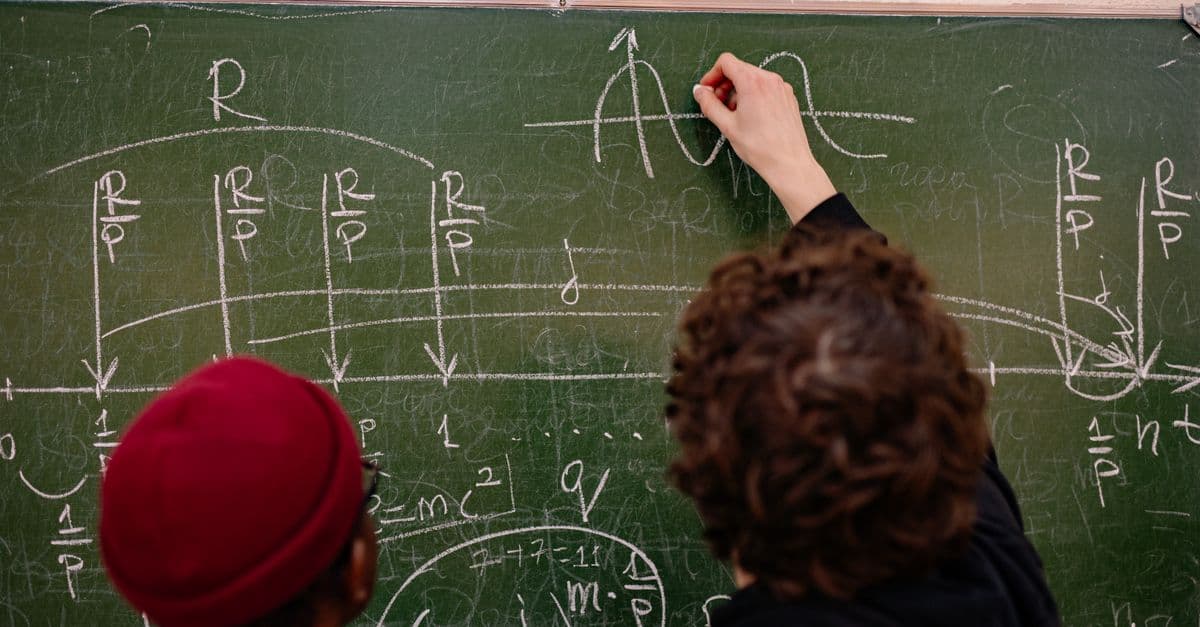
Photo: Clarence Chan / Pexels
Time travel forward already exists, and it has been measured directly. Astronauts who spend months on the International Space Station return home a fraction of a second younger than the twins they left on Earth. Backward time travel — the sci-fi kind where you undo a mistake or meet a younger version of yourself — is a different problem entirely. Einstein's equations of general relativity technically allow it, but only under conditions so extreme that no known process in the universe can produce them. This is a thought experiment grounded in real physics, not a prediction that anyone will build a working time machine.
Thought experiment. This article explores a hypothetical scenario for educational and speculative purposes. The events described are not predictions and should not be interpreted as warnings, advocacy, or instructions.
Key takeaways
- Forward time travel already happens and has been measured with atomic clocks — special relativity (speed) and general relativity (gravity) both slow time relative to other observers.
- Backward time travel is allowed by specific, exotic solutions to Einstein's field equations — rotating universes, infinite cylinders, and wormholes — but every known solution requires conditions we cannot produce: negative energy, infinite mass, or infinite length.
- The grandfather paradox has two serious physics-based resolutions: Igor Novikov's self-consistency principle and the many-worlds branching interpretation. Neither has been tested.
- Stephen Hawking's chronology protection conjecture argues quantum effects destroy any closed time-like curve before it can form — a position most physicists lean toward, though it remains unproven.
- No experiment, in over a century of relativity research, has ever detected backward time travel or a closed time-like curve.
Forward time travel is not hypothetical — it is measured and corrected for daily
Special relativity says a clock moving relative to you ticks slower than yours. General relativity adds a second effect: a clock sitting in a stronger gravitational field also ticks slower than one further away. Both predictions sound abstract until you realize they are load-bearing parts of infrastructure you use every day.
The first direct macroscopic proof came in 1971, when physicist Joseph Hafele and astronomer Richard Keating flew four cesium-beam atomic clocks around the world on commercial airliners, once eastbound and once westbound, then compared them to a reference clock at the US Naval Observatory. The eastbound clocks, moving in the same direction as Earth's rotation and therefore fastest relative to the planet's center, lost 59 ± 10 nanoseconds. The westbound clocks, effectively moving slower in that frame, gained 273 ± 7 nanoseconds. Both results matched Einstein's predictions within the margin of error (Hafele-Keating experiment results).
GPS satellites make the same effect a matter of daily engineering. Each satellite orbits roughly 20,200 kilometers (12,552 miles) up, moving at several kilometers per second. Special relativity, from the speed alone, would make its clock lose about seven microseconds a day relative to the ground. But general relativity dominates: sitting in Earth's weaker gravity at that altitude, the satellite's clock gains about 45 microseconds a day. The net effect is a gain of about 38 microseconds a day, and GPS receivers correct for it in every calculation. Left uncorrected, that drift would compound into a navigation error of roughly 10 kilometers (6.2 miles) every 24 hours — GPS positioning would be useless within a day.
This is not a small-scale curiosity. It is the same physics that would let a real spacecraft, given enough speed, jump meaningfully into the future. A ship traveling at 99.9% the speed of light could complete what looks like a 100-year journey to an outside observer while its crew experienced only about 4.5 years — the crew would step off the ship into an Earth a century older than the one they left. Nothing about that scenario requires new physics. It requires an engine that does not exist yet.
How Einstein's equations technically permit going backward
General relativity does not describe time as a fixed backdrop. It describes spacetime as a flexible geometric structure that mass and energy bend. Once you accept that gravity is geometry, a strange consequence follows: in principle, spacetime could be bent so severely that it loops back on itself, creating what physicists call a closed time-like curve (CTC) — a path through spacetime that returns to its own starting point in time as well as space. Follow one, and you would revisit an earlier moment of your own history.
No known process in nature has ever built one. But general relativity's equations are geometric rules, not a list of approved configurations, and mathematicians have found several theoretical spacetimes where CTCs exist as valid solutions. Each one comes with a catch severe enough that it has never been ruled out as "impossible" and never been demonstrated as achievable.
The Gödel universe: proof that the math allows it
In 1949, the logician Kurt Gödel — a close colleague of Einstein's at the Institute for Advanced Study in Princeton — found an exact solution to Einstein's field equations describing an entire universe filled with rotating dust, spinning as a whole rather than expanding. Gödel showed that in this model, every point in spacetime lies on a closed time-like curve: an observer anywhere in this universe could, in principle, travel a loop that brought them back to their own past (Gödel's 1949 rotating universe solution).
Our universe is not rotating and is expanding, not static, so the Gödel solution does not describe reality. Its significance is narrower but still important: it proved that nothing in the mathematical structure of general relativity forbids backward time travel outright. The theory that correctly predicts GPS drift, gravitational lensing, and gravitational waves also permits, somewhere in its solution space, universes where the past is reachable.
The Tipler cylinder: an engineering wall, not a physics wall
In 1974, physicist Frank Tipler analyzed what would happen around an infinitely long, ultra-dense cylinder spinning rapidly around its long axis. He found that the extreme frame-dragging effect — spacetime itself being "dragged" around by the rotating mass — would create closed time-like curves in the region just outside the cylinder (Tipler cylinder, 1974).
Unlike wormhole time machines, a Tipler cylinder does not require exotic negative-energy matter, which made it theoretically interesting. But Tipler's proof only worked for a cylinder of infinite length, and an infinite object cannot be built. Whether a finite, sufficiently fast-spinning cylinder could still produce the effect remains unresolved. Tipler suggested it might; he never proved it, and no one has since.
Wormholes: the version that shows up most in physics papers, and in the sister article on this site
A wormhole is a hypothetical bridge connecting two distant points in spacetime, popularized by physicist Kip Thorne's work advising the 1997 film Contact. In 1988, Thorne, Michael Morris, and Ulvi Yurtsever published the paper that made wormhole time machines a serious research topic: if a wormhole could be held open, one mouth could be accelerated to near light speed and returned, and time dilation between the two mouths would turn the wormhole into a tunnel connecting different moments in time, not just different places (Morris, Thorne & Yurtsever, "Wormholes, Time Machines, and the Weak Energy Condition," Physical Review Letters, 1988).
The catch, as Thorne's own team pointed out, is that keeping a wormhole open requires negative energy density — matter that violates what physicists call the weak energy condition. We know negative energy density exists at quantum scales, in effects like the Casimir effect between closely spaced conducting plates, but nothing known produces it in quantities large or stable enough to hold a macroscopic wormhole open. This site's companion piece, What If a Wormhole Opened in Our Solar System?, covers the traversability physics and exotic-matter problem in depth; this article focuses specifically on what a wormhole time machine would mean for causality, not on the mechanics of walking through one.
Cosmic strings: theoretical objects that were never found
Cosmic strings are hypothetical, extremely thin, extremely dense defects in spacetime theorized to have formed in the early universe, some models predict them as byproducts of phase transitions shortly after the Big Bang. Physicist J. Richard Gott showed in 1991 that if two infinitely long cosmic strings passed each other at close to the speed of light, their combined gravitational field could generate closed time-like curves in the region between them. Decades of astronomical surveys, including gravitational lensing searches designed specifically to look for them, have found no confirmed cosmic strings. The scenario remains purely theoretical on two levels: the objects themselves are unconfirmed, and the near-light-speed collision required is itself an engineering fantasy.
What backward time travel would actually break, and the two ways physicists say it might not
The grandfather paradox is the objection everyone reaches for first: travel back and prevent your grandfather from meeting your grandmother, and you would never be born, which means you could never have traveled back to stop the meeting in the first place. It is not a throwaway thought experiment. It is the reason most physicists who take closed time-like curves seriously also spend serious effort on how causality could survive them.
How does the Novikov self-consistency principle resolve the grandfather paradox?
Physicist Igor Novikov proposed that any events occurring on a closed time-like curve must be self-consistent by necessity, not by convenient coincidence. If you traveled back intending to prevent your grandfather from meeting your grandmother, something would always intervene — the gun would jam, you would arrive too late, you would mistake someone else for him. The universe, in this view, does not permit contradictory histories to occur, the same way physics does not permit you to be in two places at once. It is a constraint on what outcomes are physically allowed, not a claim that some external force is actively stopping you.
Does the many-worlds interpretation solve the paradox differently?
Yes. Under the many-worlds reading of quantum mechanics — the same interpretation used to explain quantum superposition, where physicist Hugh Everett proposed that every quantum measurement branches reality into multiple simultaneously existing outcomes — going backward and changing the past does not rewrite your original timeline. It creates, or lands you in, a separate branch where the change occurred. The original timeline, and the version of you that existed in it, continues unaffected. Paradoxes dissolve because the past you visit and the past you came from are, strictly speaking, different histories. This site's companion article on parallel universes covers the broader physics case for branching realities, including inflation and string theory versions of the multiverse that are independent of time travel.
Both resolutions are internally consistent physics, not hand-waving. Neither has been tested, because no closed time-like curve has ever been observed. They make different predictions about what would happen if backward time travel became real, which is itself a clue that we do not yet have a complete theory that covers both quantum mechanics and general relativity at once — the two frameworks disagree about what a time machine would actually do.
Why most physicists bet against it ever working: chronology protection
In 1992, Stephen Hawking published a formal argument against all of this working, called the chronology protection conjecture. His claim, published in Physical Review D, was that quantum field effects — specifically, vacuum fluctuations that would build up and amplify near a forming closed time-like curve — would generate enough energy density to destroy the spacetime configuration, or the region around it, before the loop could ever fully form (Hawking, "Chronology Protection Conjecture," Physical Review D 46, 603, 1992). He described it, with characteristic humor, as physics enforcing "a chronology protection agency" that keeps the universe safe for historians.
Hawking's proof was not airtight. It assumed a semiclassical approach — treating gravity classically while quantizing the matter fields — because physics does not yet have a complete, experimentally verified theory of quantum gravity that could settle the question rigorously. Some physicists have pointed out that Hawking's own argument technically requires the very negative-energy conditions it is trying to rule out, and later papers have both defended and challenged the specific mechanism he proposed. What survives from the 1992 paper is less a proof and more a strong, widely shared expectation: most physicists think something in the full quantum picture prevents closed time-like curves from forming, even though general relativity's classical equations do not forbid them.
Hawking also ran what he called an experimental test, tongue firmly in cheek. In 2009, he hosted a party for time travelers, complete with balloons and a banner, but mailed the invitations only after the party had already happened. If backward time travel were possible and future humans knew about the party, someone should have shown up. Nobody did. Hawking treated it as informal evidence, not proof, that backward time travel does not exist, at least not yet, and not in a form future humans have chosen to use for party attendance.
The physicist who is still trying to build one
Not every serious researcher has abandoned the engineering question. Ronald Mallett, a professor emeritus of physics at the University of Connecticut, spent decades developing a theoretical framework based on ring lasers — devices that create a circulating loop of light. Mallett solved Einstein's field equations for a rotating beam of light and argued that a sufficiently intense, sufficiently fast circulating loop could twist the spacetime around it enough to generate closed time-like curves, similar in spirit to the Tipler cylinder but built from light instead of mass (Ronald Mallett's ring-laser time machine proposal).
Mallett's own motivation is personal: he began working on time travel theory as a child after his father's death, hoping decades of physics might one day let him send a message to the past. Other physicists, including Ken Olum and Allen Everett, have published critiques arguing that Mallett's proposed device would need to be larger, by many orders of magnitude, than the observable universe to produce a detectable effect, and that some of the underlying calculations do not hold up under closer scrutiny. Mallett has continued refining the proposal. It illustrates something true across every serious time-machine proposal on this list: the physics is debatable at the level of interpretation, but the engineering requirement, in every single case, is somewhere between "beyond current technology" and "physically unbuildable in any universe with our laws."
What people get wrong about time travel physics
"Einstein's theory proves time travel is impossible." It does not. It proves forward time dilation is real and measured, and it leaves backward time travel as a mathematically permitted but physically unrealized possibility. The two claims get conflated constantly in casual science writing, and the distinction matters: one is confirmed engineering, the other is an open theoretical question.
"A wormhole is basically the same thing as a time machine." Not automatically. A static wormhole just connects two points in space at the same moment in time, the way a very long tunnel would. It only becomes a time machine if one end is put into relative motion, or placed in a different gravitational field, long enough to build up a time offset between its two mouths. The wormhole itself is the shortcut; the time-travel capability is a second step layered on top of it.
"If backward time travel were possible, we would have met time travelers by now." This is a real argument, sometimes called the Fermi-paradox-style objection to time travel, but it assumes time machines, if built, would only ever reach back to before their own construction. Most serious time-machine proposals share this limitation: the machine can only send something as far back as the moment the machine itself was switched on. Under that logic, the absence of visitors from the future is exactly what you would expect if no time machine has been built yet anywhere in the future light cone reachable from here, not necessarily evidence that time travel is impossible in principle.
"Quantum mechanics already lets information move backward in time." Some experiments in quantum mechanics — delayed-choice experiments, for instance — produce results that look retrocausal if described carelessly, but no experiment has ever demonstrated that usable information can be sent backward in time. Every result remains consistent with ordinary forward causality once analyzed carefully, and this is one of the more common places pop-science writing overstates what quantum weirdness actually permits.
The scoreboard: what each approach requires, and why none of them work yet
| Mechanism | Physicist(s) / year | What it requires | Status |
|---|---|---|---|
| Speed-based forward dilation | Einstein, 1905 (special relativity) | High relative velocity | Confirmed and measured (Hafele-Keating, CERN muon storage ring) |
| Gravity-based forward dilation | Einstein, 1915 (general relativity) | Strong gravitational field or altitude difference | Confirmed and corrected for daily (GPS) |
| Gödel rotating universe | Kurt Gödel, 1949 | An entire universe rotating instead of expanding | Mathematically valid, does not describe our universe |
| Tipler cylinder | Frank Tipler, 1974 | Infinitely long, ultra-dense, rapidly spinning mass | Requires an infinite object; unbuildable |
| Traversable wormhole time machine | Morris, Thorne, Yurtsever, 1988 | Negative energy density (exotic matter) to hold the wormhole open | No macroscopic source of exotic matter known |
| Cosmic string collision | J. Richard Gott, 1991 | Two infinitely long cosmic strings passing near light speed | Cosmic strings themselves remain undetected |
| Ring-laser time machine | Ronald Mallett, ongoing | A circulating light loop far more intense than current lasers allow | Disputed calculations; would require a device larger than the observable universe by some critiques |
Table: Proposed mechanisms for backward time travel in general relativity, what each one requires, and why none is currently achievable.
Frequently asked questions
Q: Has anyone ever actually traveled in time? Yes, in the forward direction only. Every astronaut who has spent time in orbit, and every GPS satellite in the sky, is running on a slightly different clock than people on the ground, a direct, measured consequence of relativity. Backward time travel has never been observed or demonstrated.
Q: What is the grandfather paradox, in plain terms? It is the logical problem created if you travel back and prevent your own birth by interfering with your ancestors, since that would erase the very trip that let you interfere in the first place. Physicists resolve it either through Novikov's self-consistency principle, where the universe never allows a contradictory outcome to occur, or through the many-worlds interpretation, where you branch into a new timeline instead of erasing your own.
Q: Could we ever travel back to before the Big Bang? Almost certainly not, under current cosmology. In standard Big Bang models, time itself, as a coordinate, begins at that event. There is no "before" in the ordinary sense to travel to, the same way there is no point north of the North Pole.
Q: Why haven't we met any time travelers, if it is theoretically possible? Several explanations are consistent with the physics: backward time travel may simply be impossible once quantum gravity is fully understood, or any time machine that gets built can only reach back as far as its own activation date, meaning nobody could visit us before one exists. Hawking's tongue-in-cheek 2009 party for time travelers, advertised only after the fact, drew no attendees.
Q: Does quantum mechanics allow time travel on its own? Not in a way that has been demonstrated. Certain interpretations, including some retrocausal proposals, involve apparent backward influences in the math, but no experiment has shown information actually traveling backward in time. The apparent weirdness in delayed-choice experiments remains fully consistent with standard forward causality once worked through carefully.
Q: What is a closed time-like curve, exactly? It is the technical term physicists use instead of "time machine." It describes any path through four-dimensional spacetime that eventually returns to its own starting point in both space and time, the geometric signature that would let an object or observer revisit its own past.
Q: Is Ronald Mallett's ring-laser time machine taken seriously by physicists? It is taken seriously enough to have been peer-reviewed and debated in physics journals, but it is far from consensus. Critics, including Ken Olum and Allen Everett, argue the calculations understate the scale of device needed, potentially by many orders of magnitude beyond anything buildable.
Q: Do black holes let you travel through time? Not in the way wormholes theoretically could. Falling into a black hole subjects you to extreme gravitational time dilation, and from an outside observer's perspective, you appear to freeze at the event horizon, but you do not get access to your own past. The companion article What Would Happen If You Fell Into a Black Hole? covers what a real infall would look like, including spaghettification and the horizon paradox, in detail.
Q: What would have to be true for a real time machine to get built? At minimum, physics would need to confirm that exotic matter with negative energy density can exist in stable, macroscopic quantities, or that a finite rotating structure can generate closed time-like curves the way Tipler's infinite cylinder does mathematically. Beyond that, a working theory of quantum gravity would need to settle whether Hawking's chronology protection conjecture is correct. Neither condition has been met.
The takeaway
Forward time travel is not speculative physics. It is measured, engineered, and corrected for in the GPS receiver in your phone. Backward time travel is the genuinely open question: Einstein's equations permit it under specific, extreme conditions, none of which any known process in the universe can currently produce, and most physicists suspect a deeper layer of physics, quantum gravity, will eventually rule it out entirely. The honest scientific position sits between science fiction and flat denial: the math allows a door, but nothing we know how to build can open it, and no one has ever walked through one.
Read next:
Follow new articles
Add SciHub101 to your feed reader to see new science and technology stories.
About the Author
SciHub101 is an independent science and technology publication founded and edited by Buğra Sözeri, a software engineer and app developer based in Türkiye. AI tools assist with drafting and research. Source documentation in the existing archive is uneven, and articles are being reviewed and corrected. The Editorial Team byline identifies editorial responsibility; it does not certify specialist or independent human review. Where we compare products, anything built by our own team is labelled as such — see the editorial guidelines and About page for how corrections and disclosures work.
Related Articles

What If the Moon Landing Was Faked? Why the Physics Says Otherwise
The Apollo conspiracy is one of the most enduring science myths. Here's exactly why every claim it makes contradicts physics, and how we know the missions really happened.

What If the Earth Were Actually Flat? The Science That Proves It Isn't
Flat Earth claims are easy to test — just look around. Here are nine independent lines of evidence anyone can verify, and why every flat-Earth model fails physics.

What If the Speed of Light Were Slower?
If the speed of light were dramatically lower — say, 100 km/h — relativistic effects would dominate everyday life. Cars would gain mass as they accelerated, time would dilate for joggers, and the universe would look profoundly different.
Why Time Moves Slower Near Gravity
Time moves slower near gravity because mass curves spacetime, and general relativity says clocks deeper in that curvature tick at a measurably slower rate.

The Michelson-Morley Experiment: The Failure That Changed Physics
In 1887, Michelson and Morley tried to measure Earth's motion through the ether and found nothing. That null result demolished a century of physics and paved the way for Einstein.

What Is Gravity? From Newton to Einstein
Gravity explained: Newton's universal law, Einstein's curved spacetime, gravitational waves, and why GPS satellites must correct for it.