What If You Fell Into a Black Hole?
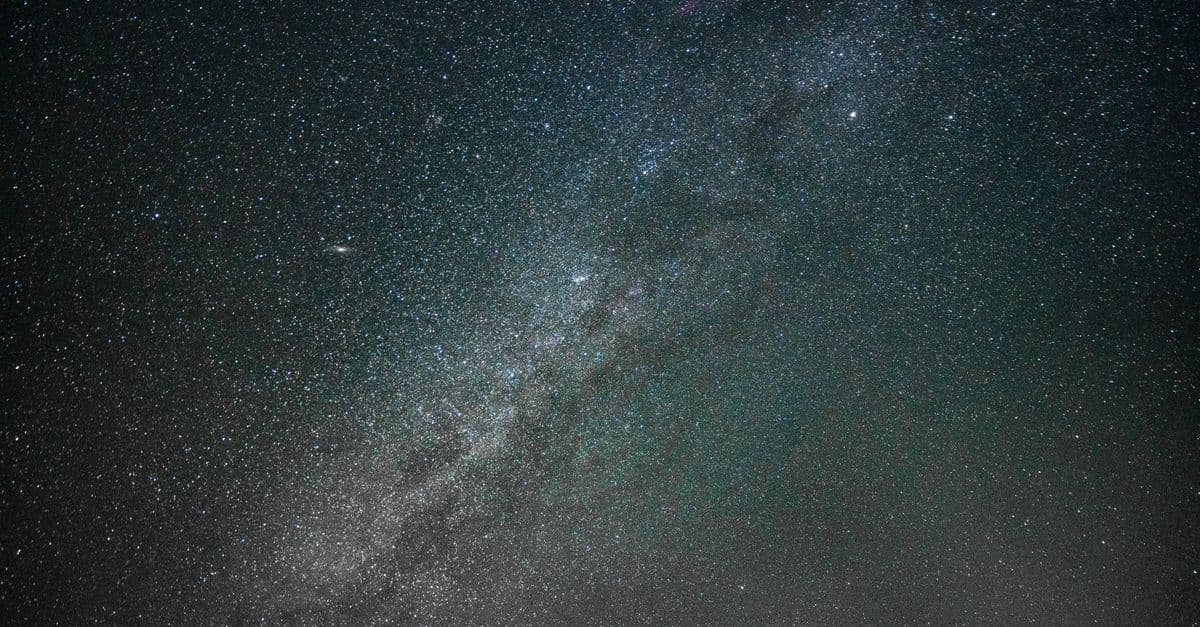
Photo: Samara Hammer / Pexels
Black holes are among the most extreme objects in the universe — regions where gravity is so strong that not even light can escape. But what would actually happen if you fell into one? The answer depends on the size of the black hole, the laws of quantum mechanics, and some of the deepest unsolved problems in theoretical physics. This is a thought experiment, not a survival guide — the real physics is far stranger, and more nuanced, than science fiction suggests.
Thought experiment. This article explores a hypothetical scenario for educational and speculative purposes. The events described are not predictions and should not be interpreted as warnings, advocacy, or instructions.
Key takeaways
- For a stellar-mass black hole: tidal forces shred you before you even reach the event horizon — spaghettification begins thousands of kilometers out.
- For a supermassive black hole: crossing the horizon might feel completely uneventful. Doom comes later.
- Time dilation: a distant observer sees you freeze at the horizon and fade away. You experience no such freezing.
- The firewall paradox (Almheiri et al., 2012) remains one of the biggest unsolved problems in physics.
- Information is probably not destroyed — but we don't yet know how it escapes.
- Real tidal disruption events, like AT2019qiz observed by the Zwicky Transient Facility, show what actually happens to a star that strays too close to a supermassive black hole.
What a Black Hole Actually Is
A black hole forms when enough mass gets crushed into a small enough volume that its escape velocity — the speed needed to break free of its gravity — exceeds the speed of light. Nothing, not even light, can travel fast enough to leave once inside that boundary. This is not a hole in the ordinary sense. It is a region of spacetime warped so extremely that the normal rules of "up," "down," and "away" stop applying.
Astrophysicists sort black holes into three broad classes by mass. Stellar-mass black holes, formed when massive stars collapse at the end of their lives, typically weigh 5 to 50 times the mass of the Sun. Intermediate-mass black holes, weighing hundreds to tens of thousands of solar masses, are rarer and harder to detect, though the Hubble Space Telescope has found candidate evidence for them in dense star clusters. Supermassive black holes, weighing millions to billions of solar masses, sit at the centers of nearly every large galaxy, including our own Milky Way.
The Laser Interferometer Gravitational-Wave Observatory (LIGO) confirmed the physical reality of stellar-mass black holes directly in September 2015, when it detected gravitational waves from two black holes — roughly 36 and 29 solar masses — spiraling into each other 1.3 billion light-years away (Abbott et al., 2016, Physical Review Letters). That single detection converted black holes from elegant mathematical predictions into observed, measured astrophysical objects.
The Event Horizon: A Point of No Return
The event horizon is the boundary of a black hole — the surface beyond which escape is physically impossible. It is not a solid wall, has no physical texture, and emits no radiation visible to the naked eye. If you crossed it under the right conditions, you might feel nothing unusual in that instant.
Yet it represents one of the most profound boundaries in nature. The reason nothing escapes is pure spacetime geometry, not some special force field. General relativity tells us that inside the event horizon, all future-pointing paths in spacetime lead inward, toward the singularity. Even a photon traveling at the speed of light cannot redirect itself outward. Space itself is falling inward faster than light can swim against it — like trying to paddle upstream against a current that moves faster than you can swim, no matter how hard you push.
For a stellar-mass black hole (roughly 5–50 times the Sun's mass), the event horizon spans just tens of kilometers, comparable to the width of a city. For supermassive black holes like M87* (6.5 billion solar masses, imaged by the Event Horizon Telescope in 2019) or Sagittarius A* at our galaxy's center (approximately 4.3 million solar masses, per the 2022 EHT Collaboration results), the horizon stretches millions to billions of kilometers, far larger than the orbit of Mercury for the most massive examples.
This size difference has a critical consequence for what you'd experience on the way in, and it's the single most important variable in this entire thought experiment.
Why does black hole size matter so much?
A black hole's event horizon radius scales linearly with mass, but the tidal force at that horizon scales inversely with the cube of the radius. Bigger black holes have gentler tidal forces at their horizon, not stronger ones — a supermassive black hole's horizon is so far from its concentrated mass that the pull barely differs across your body.
Spaghettification: When Tidal Forces Take Over
Gravity weakens with distance. When you fall toward a compact object, the gravitational pull on your feet, closer to the black hole, is significantly stronger than on your head. This tidal force stretches you lengthwise and compresses you sideways, a process astrophysicists call spaghettification. It's the same physics that raises Earth's tides twice a day, just turned up to a lethal intensity.
The tidal acceleration across an object of length d is approximately proportional to GMd/R³, where G is the gravitational constant, M is the black hole's mass, and R is your distance from its center (NASA GSFC Space Math). The cube in that denominator is the key: as you get twice as close, the stretching force doesn't double, it multiplies by eight. That's why the transition from "fine" to "shredded" happens so abruptly.
For a stellar-mass black hole, tidal forces at the event horizon are catastrophic. You would be stretched into a thin stream of particles long before you crossed the horizon, ripped apart and threaded into plasma, thousands of kilometers out. Astronomers have documented exactly this kind of destruction happening to real stars. In one well-studied tidal disruption event, AT2019qiz, observed by the Zwicky Transient Facility and a coordinated observing campaign led by the University of Birmingham, a star that wandered too close to a supermassive black hole roughly 30 million light-years away was torn apart, its shredded material flaring in visible and ultraviolet light for months (Nicholl et al., 2020, Monthly Notices of the Royal Astronomical Society).
For a supermassive black hole, the situation is radically different. The horizon is so far from the singularity that tidal forces there are gentle, comparable to what you feel standing on Earth. You could cross the event horizon of a sufficiently large black hole without feeling anything unusual. The fatal stretching only comes later, as you plunge deeper toward the center.
Stellar vs. Supermassive: Which Is More Survivable?
The type of black hole you fall into determines almost everything about your experience. Here is how the two main categories compare.
Table: Stellar-mass vs. supermassive black hole — what you would experience
| Feature | Stellar-Mass Black Hole | Supermassive Black Hole (e.g., M87*) |
|---|---|---|
| Typical mass | 5–50 solar masses | Millions–billions of solar masses |
| Event horizon radius | ~15–150 km | ~3 million–30 billion km |
| Tidal force at horizon | Lethal — spaghettification before crossing | Gentle — survivable at the boundary |
| Where spaghettification occurs | Well outside the horizon | Deep inside, well after crossing |
| Time to singularity after crossing | Microseconds to milliseconds | Minutes to hours |
| Crossing the horizon feels like | You never reach it — already dead | Unremarkable (equivalence principle) |
| Hawking temperature | ~tens of nanokelvin | Essentially indistinguishable from absolute zero |
| Real-world examples | Cygnus X-1, V404 Cygni | M87*, Sagittarius A* |
| "Most survivable" to cross? | No | Yes, briefly |
For the purpose of thought experiments, a supermassive black hole like M87* is "most survivable" only in the narrow sense that you would actually cross the horizon while alive. What follows after is still certain death. There is no version of this thought experiment that ends with you coming back out.
Two Perspectives: Outside Observer vs. Falling Observer
One of the most counterintuitive features of black hole physics is that two observers experience the same event in completely irreconcilable ways, and both descriptions are physically valid within their respective reference frames. This isn't a paradox in the sense of a logical contradiction; it's a consequence of relativity itself, where "simultaneous" and "now" don't mean the same thing for observers in different gravitational environments.
The Outside Observer's View
To someone watching from a safe distance, you appear to slow down as you approach the horizon. Light from your body is gravitationally redshifted, shifted toward longer, redder wavelengths, and your clock appears to tick more slowly. As you approach the horizon asymptotically, you appear to freeze there, dimming into infrared and eventually radio waves over cosmological timescales. From outside, you never quite cross.
This is gravitational time dilation, a confirmed prediction of Einstein's general relativity. It's not exotic or speculative: GPS satellites orbit in a weaker gravitational field than Earth's surface, so their onboard clocks run measurably faster than ground clocks and require constant correction to keep positioning accurate to within meters (Ashby, 2003, Living Reviews in Relativity). A black hole's horizon is just the same physics dialed up until the time dilation becomes infinite.
Your Own View (The Infalling Observer)
From your own perspective, you experience no freezing, no special sensation, and no visible boundary when you cross the event horizon of a supermassive black hole. Your local clock runs at its normal rate. The equivalence principle, the cornerstone of general relativity, demands this: you cannot distinguish free fall in a gravitational field from floating in empty space. There is no local measurement that would tell you the moment you crossed.
Think of it like the horizon of the ocean. A ship sailing away doesn't fall off an edge; it simply becomes too small to see from shore, gradually vanishing below the curve of the Earth, even though from the ship's own deck nothing dramatic has happened. The event horizon works the same way, except the "curve" is spacetime itself, and the vanishing is total and permanent.
What you do notice: the star field above you compresses into a brilliant ring as gravitational lensing bends all incoming light into your forward hemisphere. The entire observable universe crowds into an ever-shrinking halo overhead. This ring-shaped light concentration would be the last extraordinary view before the singularity claims you.
How is this different from what movies show?
Films like Interstellar consulted physicist Kip Thorne to render gravitational lensing with genuine accuracy, particularly the warped accretion disk around the fictional black hole Gargantua. But the survivable crossing shown in that film relies on a supermassive black hole with gentle tidal forces at the horizon; it is not representative of the vast majority of black holes, which are stellar-mass and lethal long before the horizon.
Inside the Horizon: What Physics Knows, and Doesn't
Once past the horizon, an uncomfortable fact of spacetime geometry takes over: the singularity is not a place in space but a moment in your future. You cannot avoid it any more than you can avoid tomorrow. All spatial directions point inward from your perspective; there is no "away." Physicists sometimes describe this by saying that inside the horizon, space and time effectively swap roles: what was a direction you could freely choose becomes a direction you are compelled to travel, and what was an inevitable forward march of time becomes, in a sense, just another direction, though a doomed one.
Classical general relativity predicts the singularity is a point of infinite density, a mathematical breakdown of the theory itself. This traces back to the Penrose singularity theorems, which showed in 1965 that under very general conditions, gravitational collapse must produce a singularity, not merely a mathematical curiosity of idealized symmetric models (Penrose, 1965, Physical Review Letters). Roger Penrose shared the 2020 Nobel Prize in Physics for this work.
Most physicists believe quantum gravity, a complete theory we do not yet possess, would replace this infinite-density point with something finite. String theory and loop quantum gravity each suggest different resolutions, sometimes replacing the singularity with a extremely dense but finite core, or even a theoretical "bounce" into a white hole. Neither has been confirmed, and neither can currently be tested, because no signal can escape the horizon to tell us which, if either, is correct.
Do Rotating Black Holes Change the Picture?
Almost all real black holes rotate, because the stars and gas clouds that formed them carried angular momentum that had to go somewhere. A rotating black hole, described mathematically by the Kerr metric, has a more complex internal structure than the simplified non-rotating (Schwarzschild) black hole used in most introductory explanations.
Rotating black holes have two horizons instead of one, and, in the idealized mathematics, a ring-shaped singularity rather than a point. Some solutions to the equations even suggest the theoretical possibility of passing through the ring into a different region of spacetime entirely, though physicists broadly agree this is likely an artifact of oversimplified, perfectly symmetric mathematical models rather than a real escape route. Real, physically formed black holes are almost certainly far messier inside, and the extreme sensitivity of the inner region to any perturbation, known as mass inflation, likely destroys any such exotic structure the instant real matter or radiation falls in.
Both M87* and Sagittarius A* are measured to be rotating black holes, and their spin actually shapes the observed images from the Event Horizon Telescope, tilting and distorting the glowing photon ring captured in the famous 2019 and 2022 images.
The Firewall Paradox: Would You Burn at the Horizon?
In 2012, Almheiri, Marolf, Polchinski, and Sully (AMPS) published a paper arguing that preserving quantum mechanics requires the event horizon to be, not the gentle boundary general relativity describes, but a firewall, a surface of extremely high-energy radiation that would incinerate anything crossing it (Almheiri et al., 2013, Journal of High Energy Physics).
The paradox arises from three individually well-established principles that cannot all simultaneously be true:
- Equivalence principle (general relativity): an infalling observer notices nothing special at the horizon.
- Monogamy of quantum entanglement (quantum mechanics): a particle cannot be maximally entangled with two systems at once.
- Unitarity (quantum mechanics): information is preserved, nothing is permanently lost.
AMPS showed these three are mutually contradictory once you account for a black hole that has evaporated past its informational "halfway point." Something must break. Either the equivalence principle fails at the horizon, or unitarity fails, or some deeper principle supersedes both.
Juan Maldacena and Leonard Susskind proposed a possible resolution: ER = EPR, suggesting entangled particle pairs are connected by microscopic, non-traversable wormholes, resolving the entanglement conflict without requiring a literal wall of fire (Maldacena & Susskind, 2013, Fortschritte der Physik). As of 2026, no consensus resolution to the firewall paradox exists. It remains one of the most actively debated open questions in theoretical physics, discussed regularly at conferences on quantum gravity and holography.
Hawking Radiation and the Information Paradox
Stephen Hawking showed in 1974 that black holes are not perfectly black. Quantum effects near the horizon cause pairs of virtual particles to appear spontaneously throughout empty space, a normal (if strange) feature of quantum field theory. Ordinarily these pairs recombine and vanish almost instantly. But when this happens right at the boundary of a black hole, one particle can fall inward while the other escapes as Hawking radiation (Hawking, 1975, Communications in Mathematical Physics). Over immense timescales, the black hole radiates energy, loses mass, and eventually evaporates entirely.
This creates the information paradox. If everything that fell into the black hole is destroyed along with it, quantum information appears to be permanently lost. But the principle of unitarity, one of the bedrock rules of quantum mechanics, forbids this: information can be scrambled beyond any practical recognition, but it cannot vanish from the universe outright. The leading hypothesis, supported by more recent work on "islands" in the black hole interior using holographic methods, is that information escapes encoded in subtle quantum correlations within the Hawking radiation itself, but the precise physical mechanism by which this happens for a real, astrophysical black hole remains unknown.
For scale: the Hawking temperature of a stellar-mass black hole is a few tens of nanokelvin, colder than any laboratory on Earth has ever achieved. The cosmic microwave background, the leftover glow from the early universe, sits at 2.7 kelvin. Because the microwave background is far warmer than a typical black hole's own radiation, such black holes are currently absorbing far more energy than they radiate and will not fully evaporate for an estimated 10⁶⁷ years or more, vastly longer than the current age of the universe (roughly 13.8 billion years).
Could a black hole ever evaporate fast enough to matter?
Only very small ones. Hawking temperature scales inversely with mass, so a black hole with the mass of a mountain, roughly the mass of an asteroid packed into a proton-sized volume, would evaporate explosively within a human lifetime. No such primordial black hole has ever been directly detected, though their possible existence remains an active area of dark matter research.
What You Would Actually Experience: Step by Step
For a supermassive black hole, your theoretical best-case scenario for survival, here is the sequence:
- Approaching from afar: a dark silhouette surrounded by a glowing accretion disk. Gravitational lensing bends light into the characteristic "shadow" photographed by the Event Horizon Telescope for M87* in 2019 and Sgr A* in 2022.
- Nearing the photon sphere: the region where light itself can orbit the black hole. Light bending becomes dramatic. Stars and the accretion disk's own light wrap around into a ring. The sky visibly warps.
- Crossing the event horizon: no physical sensation for a sufficiently massive black hole. The star field above compresses into a brilliant ring as all external light crowds into your forward hemisphere.
- Inside the horizon: you cannot signal outward, ever, under any circumstance. The singularity is not ahead of you in space, it is ahead of you in time.
- Approaching the singularity: tidal forces ramp toward infinity. Classical physics breaks down. Quantum gravity, a theory that does not yet exist in complete form, would be needed to describe what follows.
For a stellar-mass black hole, you never reach step 3. Tidal forces become fatal far outside the horizon, and the entire sequence above compresses into a single, brief, catastrophic event.
Common Misconceptions About Falling Into a Black Hole
"A black hole would suck in everything nearby, like a vacuum." This is probably the most persistent misunderstanding in popular science coverage. Gravity at a given distance depends only on the enclosed mass, not on how compact that mass is. If the Sun instantly became a black hole of identical mass, Earth's orbit would not change at all, though the Solar System would obviously go dark. Black holes are dangerous only within a relatively small volume around them.
"You'd get spaghettified right at the event horizon, every time." As this article has laid out, that's true only for stellar-mass black holes. For sufficiently massive black holes, spaghettification happens well inside the horizon, not at it.
"Time literally stops for you at the horizon." Time appears to stop from an outside observer's point of view. From your own reference frame, your personal clock, your heartbeat, your thoughts, all continue at their normal pace. This is a subtlety that even some documentaries get wrong by conflating the two perspectives.
"You could see the whole future of the universe flash by if you got close enough." This idea, popularized in some science fiction, isn't quite right either. While extreme gravitational time dilation is real, an infalling observer does not actually witness the external universe's entire future history compressed into a final instant; the redshifted light from outside becomes so faint and stretched that it effectively fades from view rather than accelerating into a highlight reel.
"Black holes are holes to another universe." Wormhole-like mathematical solutions exist in idealized, perfectly symmetric equations for rotating black holes, but there's no evidence, and considerable theoretical reason to doubt, that a real black hole formed from collapsing matter provides any kind of usable passage anywhere.
Frequently Asked Questions
Q: Would you die instantly when crossing the event horizon? A: It depends entirely on the black hole's mass. For a stellar-mass black hole, tidal spaghettification kills you before you reach the horizon. For a supermassive black hole like M87*, crossing the horizon may feel completely uneventful; death comes later as tidal forces build toward the singularity.
Q: Could you escape after crossing the event horizon? A: No. By definition, the event horizon is the boundary beyond which escape is physically impossible. All future-pointing paths inside lead to the singularity, regardless of speed or direction, or how powerful your engines are.
Q: Is the singularity a physical place? A: General relativity predicts a point of infinite density, but most physicists regard this as a mathematical artifact indicating the theory breaks down at extreme scales. Quantum gravity, once fully developed, is expected to replace the singularity with something finite and physical.
Q: What does the universe look like from inside a black hole? A: All external light is compressed into a shrinking ring in your forward field of view due to gravitational lensing. The view would be surreal, the entire external universe concentrated into a bright halo overhead, with the rest of your sky darkening around it.
Q: How long would you survive after crossing Sagittarius A's horizon?* A: Sagittarius A* has a mass of roughly 4.3 million solar masses and an event horizon on the order of 12 million kilometers, per the 2022 Event Horizon Telescope results. After crossing, proper time before tidal forces become fatal is on the order of tens of seconds to minutes.
Q: Does the firewall paradox mean you'd actually burn up at the horizon? A: Possibly, if the AMPS hypothesis is correct. However, this is unresolved. Many physicists expect a resolution that preserves the equivalence principle, ensuring no special sensation at the horizon. No confirmed answer exists as of 2026.
Q: Would a rotating black hole feel different to fall into than a non-rotating one? A: Yes. Real black holes almost all rotate, and their internal structure, described by the Kerr metric, includes two horizons rather than one. The extreme frame-dragging near a rotating black hole would drag any infalling observer into a spiral rather than a straight plunge, though the broad outcome, tidal destruction, remains the same.
Q: Has anyone actually observed a star being torn apart by a black hole? A: Yes. Astronomers regularly catalog "tidal disruption events," including AT2019qiz, a star destroyed by a supermassive black hole roughly 30 million light-years away and studied in detail by a University of Birmingham-led team using the Zwicky Transient Facility and other observatories. These events show up as sudden flares of light lasting weeks to months.
Q: How do we know black holes exist if light can't escape them? A: Indirectly, but with extraordinary precision. We observe their gravitational effects on nearby stars and gas, detect X-rays from superheated material swirling into them, image their silhouettes against background light (as the Event Horizon Telescope did for M87* and Sgr A*), and detect gravitational waves from black holes merging, as LIGO first did in 2015.
Q: Could a human-scale black hole ever be created on Earth? A: Concerns about this arose around the Large Hadron Collider's 2008 startup. Physicists concluded that even if microscopic black holes were produced in particle collisions, they would evaporate via Hawking radiation almost instantly and pose no danger, and no such black holes have been observed in over a decade of LHC operation.
The takeaway
Falling into a black hole sits at the intersection of our best-confirmed physical theories and our deepest unsolved puzzles. General relativity describes the geometry of curved spacetime with extraordinary precision; quantum mechanics governs the microscopic world with equal accuracy. A black hole is the place where both theories are simultaneously required, and where, as of today, they disagree. The firewall paradox, the information paradox, and the mystery of the singularity are not science fiction. They are open research questions at the frontier of physics, discussed in the same journals that report on gravitational wave detections and Event Horizon Telescope images.
What we do know: the experience depends enormously on the black hole's mass, two observers of the same event have irreconcilable but both valid descriptions, and crossing an event horizon, at least for a supermassive black hole, is as undramatic an ending as the universe can offer. Everything genuinely strange happens after that, in a region no signal has ever escaped to describe.
For more on black hole physics, see our complete guide to black holes and how they form. Also see What if a black hole appeared next to Earth? for tidal force physics at planetary distances, and the complete space guide for broader context on how astronomers study these objects.
Sources
- Almheiri, A., Marolf, D., Polchinski, J., & Sully, J. (2013). "Black holes: Complementarity or firewalls?" Journal of High Energy Physics, 2013(2). https://doi.org/10.1007/JHEP02(2013)062
- Hawking, S. W. (1975). "Particle creation by black holes." Communications in Mathematical Physics, 43(3), 199–220. https://link.springer.com/article/10.1007/BF02345020
- Event Horizon Telescope Collaboration (2019). "First M87 Event Horizon Telescope Results." The Astrophysical Journal Letters, 875(1).
- Event Horizon Telescope Collaboration (2022). "First Sagittarius A* Event Horizon Telescope Results." The Astrophysical Journal Letters, 930(2). https://iopscience.iop.org/article/10.3847/2041-8213/ac6674
- Penrose, R. (1965). "Gravitational collapse and space-time singularities." Physical Review Letters, 14(3), 57–59. https://journals.aps.org/prl/abstract/10.1103/PhysRevLett.14.57
- Maldacena, J., & Susskind, L. (2013). "Cool horizons for entangled black holes." Fortschritte der Physik, 61(9), 781–811. https://doi.org/10.1002/prop.201300020
- Abbott, B. P., et al. (LIGO Scientific Collaboration) (2016). "Observation of Gravitational Waves from a Binary Black Hole Merger." Physical Review Letters, 116, 061102. https://journals.aps.org/prl/abstract/10.1103/PhysRevLett.116.061102
- Ashby, N. (2003). "Relativity in the Global Positioning System." Living Reviews in Relativity, 6, 1. https://link.springer.com/article/10.12942/lrr-2003-1
- Nicholl, M., et al. (2020). "An outflow powers the optical rise of the nearby, fast-evolving tidal disruption event AT2019qiz." Monthly Notices of the Royal Astronomical Society, 499(1), 482–504. https://academic.oup.com/mnras/article/499/1/482/5909791
- NASA Goddard Space Flight Center Space Math. "Black Holes and Tidal Forces." https://spacemath.gsfc.nasa.gov/blackh/4Page33.pdf
- Thorne, K. S. (1994). Black Holes and Time Warps: Einstein's Outrageous Legacy. W. W. Norton & Company.
- Wald, R. M. (1984). General Relativity. University of Chicago Press.
Follow new articles
Add SciHub101 to your feed reader to see new science and technology stories.
About the Author
SciHub101 is an independent science and technology publication founded and edited by Buğra Sözeri, a software engineer and app developer based in Türkiye. AI tools assist with drafting and research. Source documentation in the existing archive is uneven, and articles are being reviewed and corrected. The Editorial Team byline identifies editorial responsibility; it does not certify specialist or independent human review. Where we compare products, anything built by our own team is labelled as such — see the editorial guidelines and About page for how corrections and disclosures work.
Related Articles
What If Gravity Disappeared for One Second?
What if gravity vanished for one second? The math shows orbits shift by millimeters to meters, and the ground may carry you along. A thought experiment.

What If Earth Lost Its Axial Tilt?
Earth's 23.5° tilt creates seasons and stabilizes climate. What would happen if it vanished — or flipped to 90°?. Learn the science, key examples, and...
What Happens Inside a Black Hole — Beyond the Event Horizon
The event horizon is the point of no return — beyond it, not even light can escape. But what actually happens inside? The physics gets strange fast: time and space swap roles, the singularity may not be what we think, and quantum mechanics breaks everything.
What If a Wormhole Opened in Our Solar System?
A wormhole — a shortcut through spacetime connecting two distant points — would revolutionize physics, transportation, and our place in the universe. But the physics suggests it would also be unstable, possibly lethal, and almost certainly a one-way trip.
What If a Black Hole Appeared Next to Earth?
How close would a black hole have to be to destroy Earth? The answer depends on its mass and distance, and the numbers are stranger than the myth of a cosmic drain.
What Are Black Holes Made Of? Peering into the Universe's Darkest Mystery
Black holes aren't made of "stuff" in the normal sense — they're regions of spacetime where matter has been crushed past every known state. Here's what physics actually says is inside.